

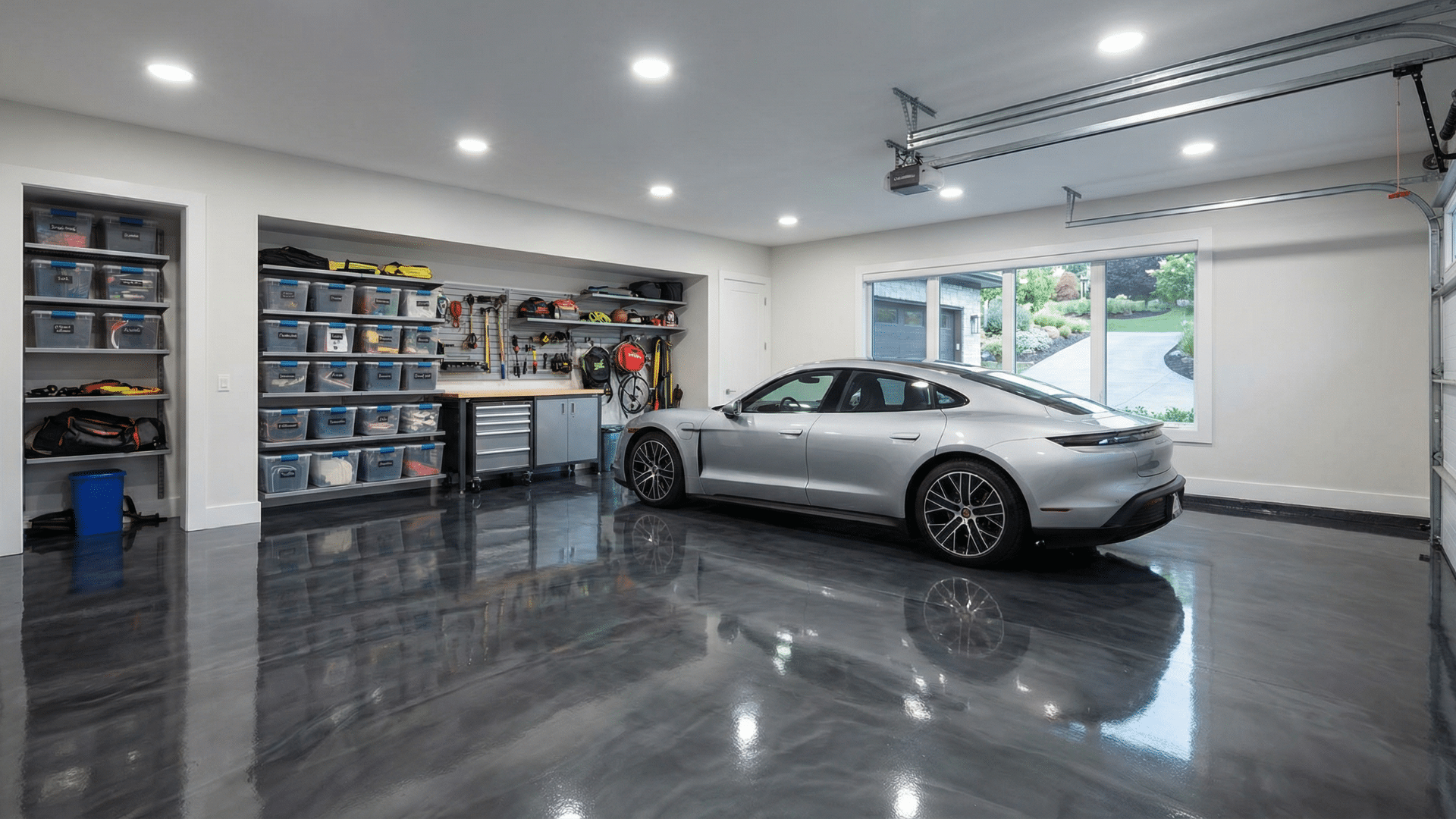
A garage floor takes more abuse than most surfaces in a home. It bears the weight of vehicles, handles oil spills, moisture, road salt, and constant foot traffic.
Over time, bare concrete cracks, stains, and wears down. That is why many homeowners consider garage floor coatings a long-term solution.
The right coating can improve durability and make the space easier to clean. It can also give the garage a more finished and polished look.
With several garage floor coating options available today, it becomes important to understand how they compare before making a final decision.
The Importance of Garage Floor Coatings
A garage floor endures constant stress throughout the year. Vehicle tires track in dirt, moisture, and road salt, while oil and brake fluid can leave deep stains that are difficult to remove.
Heavy tools and equipment may fall and chip the surface, and over time, untreated concrete begins to crack, fade, and show signs of wear.
As the surface breaks down, dust increases, and routine cleaning becomes more frustrating and time-consuming.
Garage floor coatings provide a durable protective layer that shields the concrete from moisture, stains, and surface damage.
Many homeowners now view the garage as more than simple storage; it often functions as a workshop, home gym, or extended living area. For these uses, selecting the right garage floor coating options becomes increasingly important.
Common Types of Garage Floor Coatings
There are several popular garage floor coatings on the market. Each has its own strengths and limits. The most common types include:
1. Epoxy Garage Floor Coatings
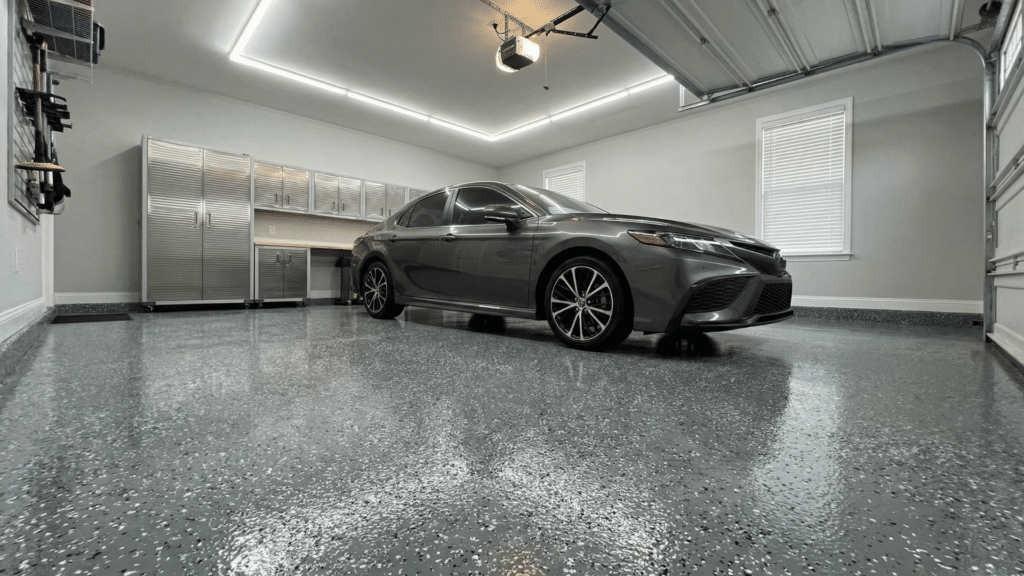
A two-part coating made by mixing epoxy resin and a hardener. When combined, they create a chemical reaction that forms a thick, rigid, plastic-like surface bonded to the concrete.
How It Works: Epoxy is applied to the concrete surface to create a protective layer. Proper surface grinding or etching ensures the coating bonds securely.
Key Benefits:
- Thick coating that can hide minor cracks and surface flaws
- Strong resistance to oil, gasoline, brake fluid, and household chemicals
- Good abrasion resistance from tires and foot traffic
- Wide range of colors, metallic finishes, and decorative flake systems
- Lower material cost compared to polyurea systems
- Suitable for many DIY kits
Limitations:
- Long curing time (24–72 hours before use)
- Sensitive to humidity and cold temperatures during installation
- Can turn yellow if exposed to direct sunlight
- A rigid surface may chip under heavy impact
Typical Lifespan: 5–10 years with proper installation and maintenance.
Cost: Approx $3–$7 per sq. ft.
Best For: Homeowners seeking a balance between cost, durability, and decorative appearance.
2. Polyurea Garage Floor Coatings
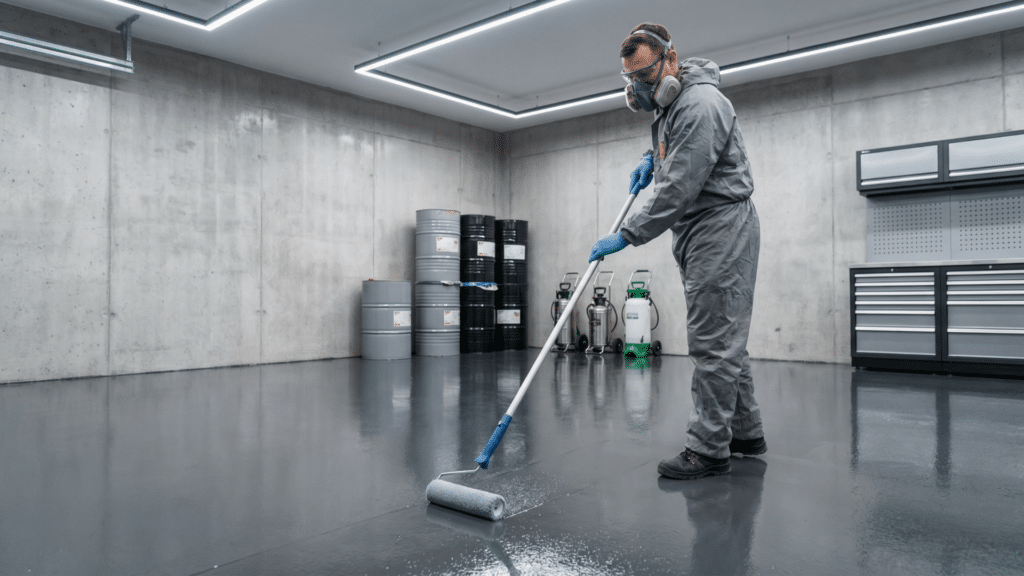
A high-performance elastomer coating that chemically bonds deep into concrete. It forms a flexible yet extremely durable surface.
How It Works: Polyurea penetrates into the pores of the concrete, creating a strong mechanical and chemical bond. It cures rapidly, often within hours.
Key Benefits:
- Extremely fast curing time (often ready for light use the same day)
- Flexible surface that resists cracking from temperature changes
- Excellent chemical resistance
- High impact resistance
- Strong adhesion reduces peeling
- Performs well in both hot and cold climates
Limitations:
- Higher upfront cost
- Very short working time during installation
- Professional tools and experience are usually required
Typical Lifespan: 10–20 years, depending on traffic and maintenance.
Cost: Approx $6–$12 per sq. ft.
Best For: High-traffic garages, heavy vehicles, workshops, and homeowners prioritizing long-term durability.
3. Polyaspartic Garage Floor Coatings
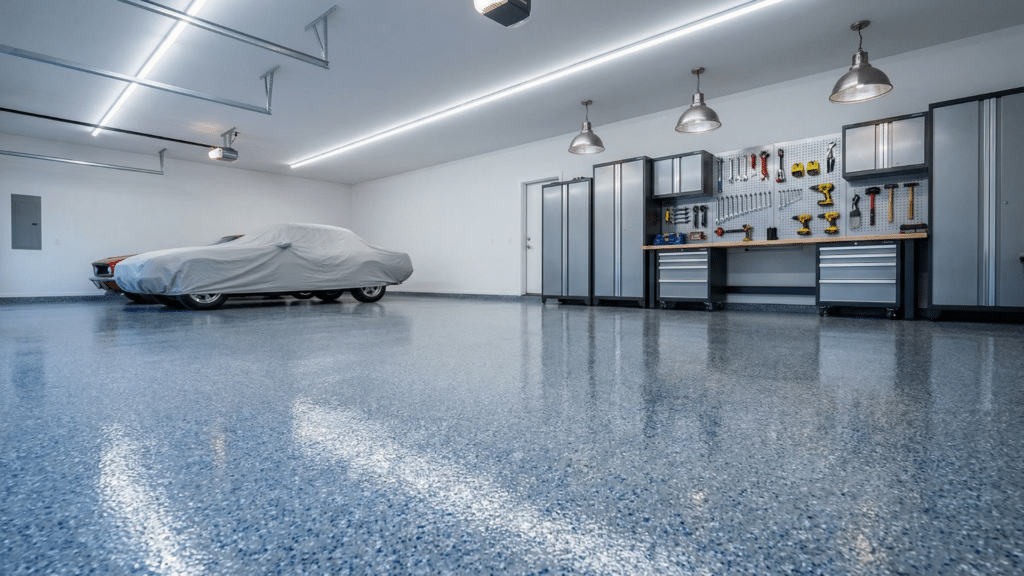
A modified form of polyurea engineered to improve UV resistance and allow more controlled curing times.
How It Works: Polyaspartic coatings are often applied as a topcoat over epoxy or polyurea. They create a clear, glossy protective layer that seals decorative flakes.
Key Benefits:
- High UV resistance prevents yellowing
- Fast curing with adjustable working time
- Strong surface hardness
- Excellent moisture resistance
- Can be applied in a wide temperature range
- Enhances gloss and color depth
Limitations:
- Higher material cost
- A thin layer may not hide surface imperfections
- Requires precise surface preparation
Typical Lifespan: 10–20 years when part of a multi-layer system.
Cost: Approx $6–$12+ per sq. ft.
Best For: Homeowners wanting a durable, high-gloss finish with strong sun protection.
4. Acrylic Sealers
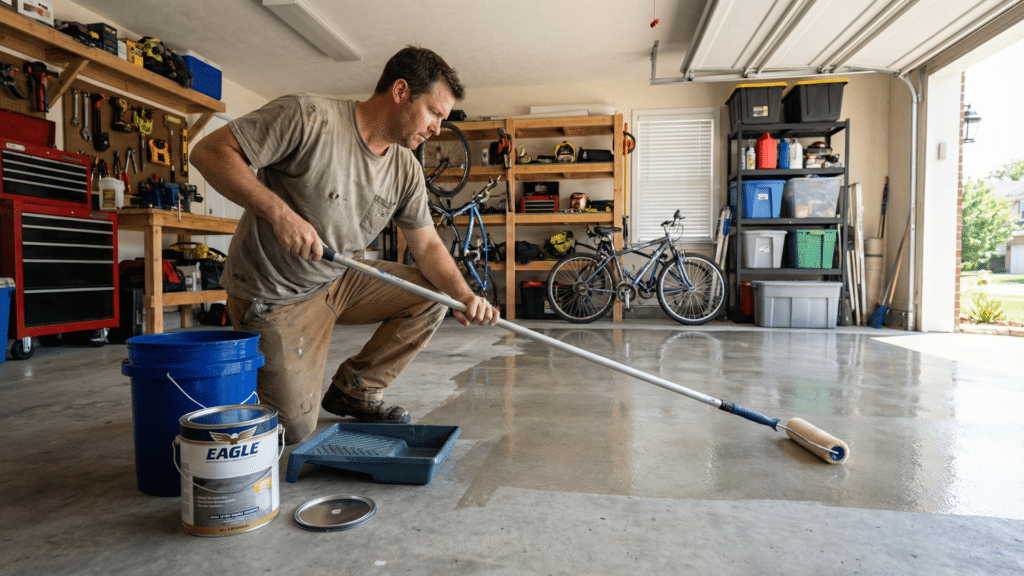
A thin, film-forming coating applied to the surface of concrete to provide basic protection and improve appearance.
How It Works: Acrylic sealers sit on top of the concrete and create a light protective barrier. They are typically water-based or solvent-based.
Key Benefits:
- Low material cost
- Simple DIY application with roller or sprayer
- Quick drying time
- Improves color and reduces dust
- Suitable for temporary protection
Limitations:
- Thin coating offers limited durability
- Can peel under hot tires
- Less resistant to oil and chemical spills
- Requires frequent reapplication
Typical Lifespan: 1–3 years, depending on traffic.
Cost: Approx $1–$3 per sq. ft.
Best For: Light-use garages or short-term budget projects.
5. Concrete Stains and Densifiers
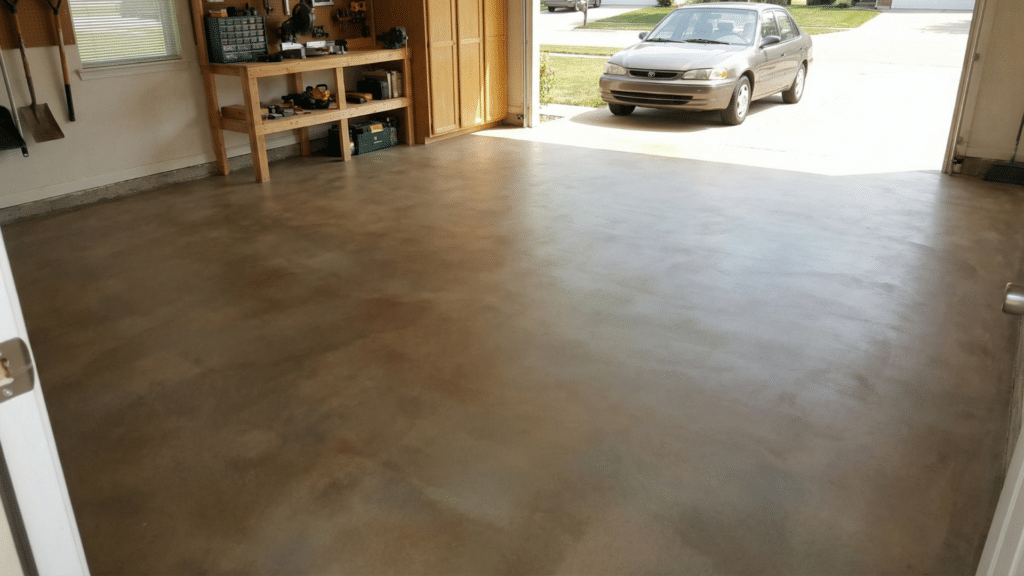
Concrete stains add color by penetrating into the surface. Densifiers are chemical treatments that react with the concrete to harden it.
How They Work: Stains soak into the concrete, changing its color without forming a thick surface layer. Densifiers chemically strengthen the surface by reducing porosity and dusting.
Key Benefits:
- Natural, decorative finish
- Improves surface hardness (densifiers)
- Reduces concrete dust
- Low maintenance once applied
- Enhances appearance without thick coating buildup
Limitations:
- Do not create a strong protective barrier
- Limited resistance to heavy chemical spills
- Minimal impact protection
- May require sealing for added durability
Typical Lifespan: Varies widely; densifiers can last many years, but stains may fade over time.
Cost: Approx $2–$6 per sq. ft.
Best For: Garages focused on improved appearance and dust control rather than heavy-duty protection.
Comparing All Garage Floor Coating Options
The table below outlines the key differences between epoxy, polyurea, polyaspartic, acrylic sealers, and concrete stains or densifiers to help determine which garage floor coating option fits specific needs.
| Feature | Epoxy | Polyurea | Polyaspartic | Acrylic Sealer | Stains / Densifiers |
|---|---|---|---|---|---|
| Material Type | Two-part resin and hardener | Flexible elastomer coating | Modified polyurea with UV stability | Thin film-forming coating | Penetrating color treatment/surface hardener |
| Bonding Strength | Strong surface bond | Deep penetrating bond | Strong bond with topcoat protection | Surface-level adhesion | Penetrates into concrete |
| Flexibility | Rigid once cured | Highly flexible | Moderately flexible | Minimal flexibility | No surface film flexibility |
| Curing Time | 24–72 hours | A few hours | 1 day or less | Several hours | Varies; usually fast |
| Installation Difficulty | DIY-friendly with prep | Professional installation recommended | Professional installation preferred | Easy DIY | Moderate DIY |
| Temperature Tolerance (Install) | Sensitive to cold and humidity | Wide temperature range | Wide temperature range | Moderate tolerance | Minimal temperature limits |
| UV Resistance | May yellow over time | Better UV resistance | Excellent UV stability | Can fade | Depends on the sealer used |
| Chemical Resistance | Good | Excellent | Excellent | Limited | Limited without a sealer |
| Impact Resistance | Moderate; can chip | High due to flexibility | High | Low | Low |
| Thickness | Thick coating layer | Thinner but penetrates deeply | Thin topcoat layer | Very thin | No surface build-up |
How to Choose the Best Garage Floor Coating
Choosing the best garage floor coating requires careful evaluation of how the garage is used, the level of protection needed, and the long-term value of each option. The following points can help guide the decision.
- Assess Garage Usage: Consider whether the space is used only for parking or also as a workshop, gym, or storage area. Heavy traffic and equipment require more durable garage floor coatings.
- Set a Realistic Budget: Compare upfront costs with long-term value. Some garage floor coating options cost less initially but may need replacement sooner.
- Evaluate Durability Needs: Look at resistance to chemicals, impact, and abrasion. Garages with heavy tools or vehicle maintenance require stronger coatings.
- Consider Climate Conditions: Temperature and humidity affect performance and installation. Some coatings handle cold or heat better than others.
- Review Installation Requirements: Decide between DIY-friendly systems, such as epoxy kits, and professional-grade options, such as polyurea.
- Check Curing Time: Fast-curing coatings allow quicker return to use, which may be important for busy households.
- Think About Maintenance: Some coatings require minimal upkeep, while others may need periodic resealing.
- Compare Lifespan: A longer-lasting coating may offer better value over time, even with a higher initial cost.
To Conclude
Choosing the best garage floor coating requires balancing cost, durability, and long-term performance. Epoxy remains a reliable and affordable option for many homes.
Polyurea and polyaspartic systems offer faster curing and greater flexibility, making them strong choices for heavy use.
Acrylic sealers and concrete treatments work for lighter applications but provide less protection. The right decision depends on how the garage is used, the local climate, and the expected level of maintenance.
A well-installed coating can protect concrete for years while improving the overall look of the space. Compare your options carefully and select the solution that fits your needs and budget.