

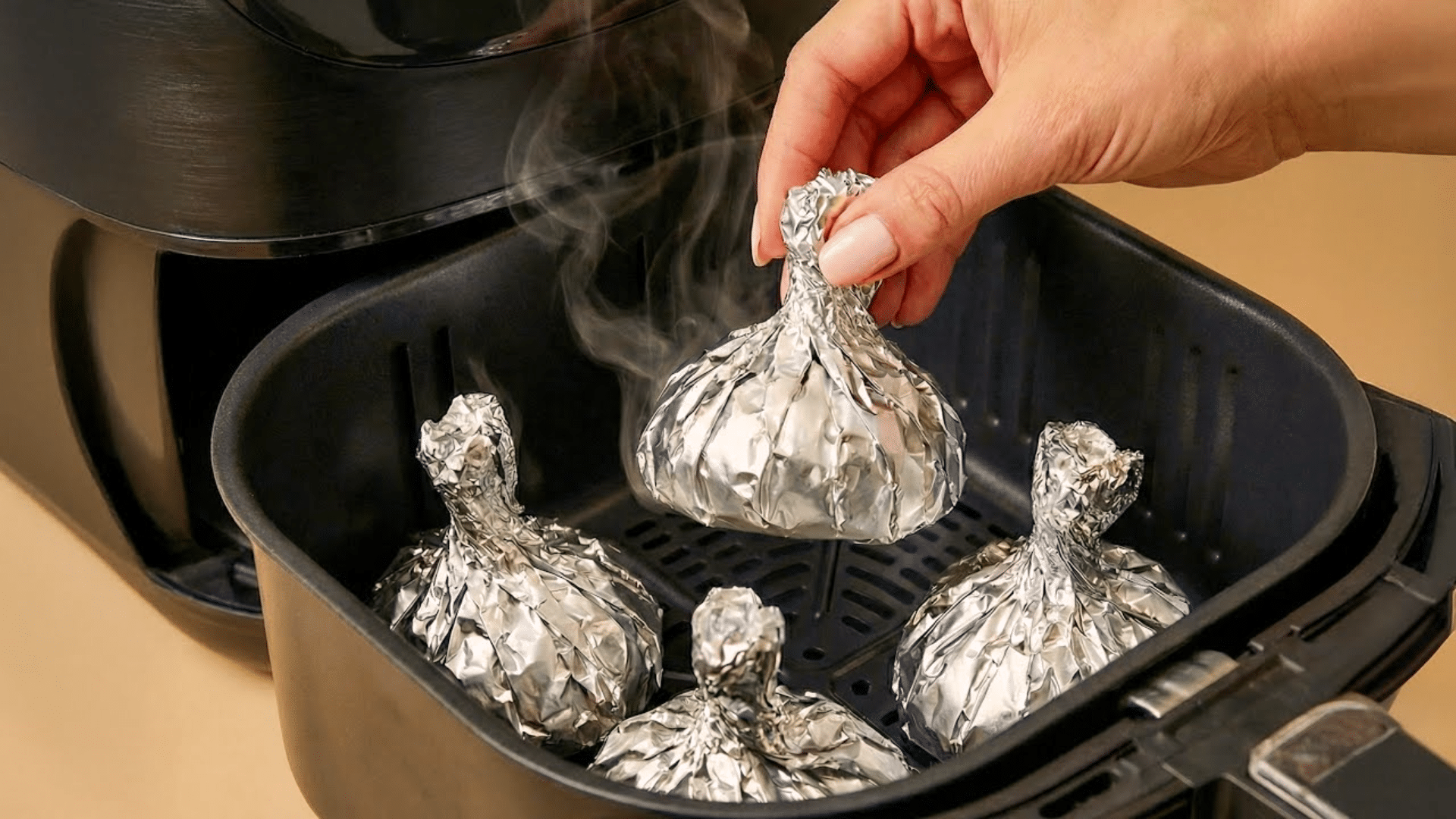
You open the air fryer, food ready to go, and reach for aluminium foil out of habit. Then you stop.
Can you put foil in an air fryer, or is that about to ruin your meal or your machine? That quick pause is exactly why this question keeps coming up.
Air fryers cook food fast using strong heat and steady airflow.
Foil feels helpful for easy cleanup and better cooking, but it also raises concerns about safety, damage, and blocked airflow. Many people want clear answers before trying it even once.
This article explains whether aluminium foil is safe to use in an air fryer, when it works, when it does not, and how to use it the right way.
By the end, you will know what actually works, what to avoid, and how to cook with confidence instead of guessing.
Can You Put Foil in An Air Fryer without Damage?
Yes, you can put foil in an air fryer without damage, but only when it is used the right way.
The foil should never cover the entire basket or block airflow, because air fryers rely on hot air moving freely to cook food.
If airflow is blocked, food may cook unevenly, and the appliance can overheat. Always place foil at the bottom of the basket or tray and keep it weighed down with food so it does not move around.
Loose foil can touch the heating element, which increases the risk of burning.
Foil works best for foods that drip or stick, not for light items that need full air contact. When placed correctly, foil does not harm the air fryer.
Problems usually happen when foil is used carelessly or without thinking about air circulation.
How to Use Foil in an Air Fryer?
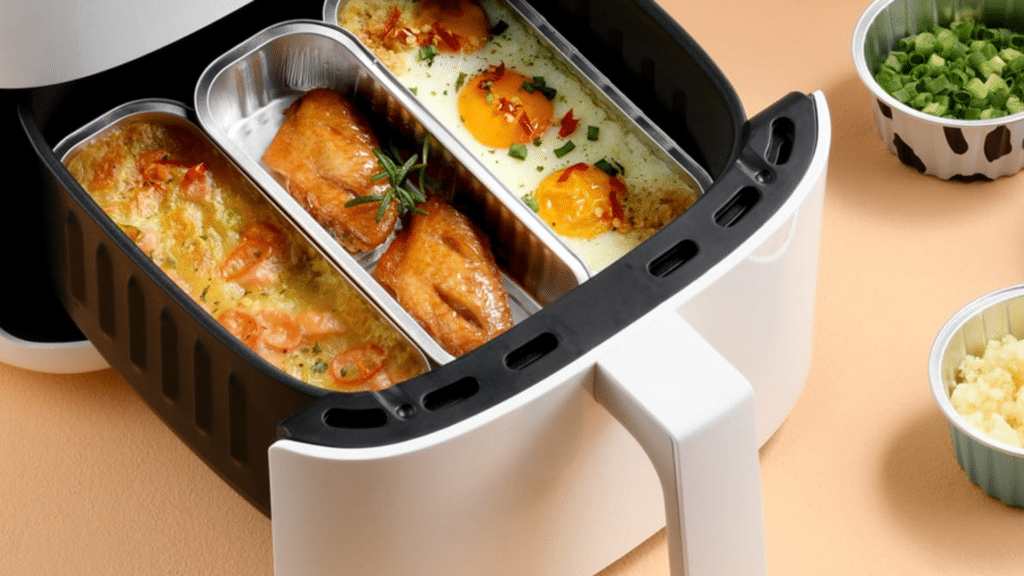
Using foil the right way helps prevent damage and keeps cooking safe. These steps show how to use foil without blocking airflow or causing problems.
Step 1: Prepare the Foil Before Cooking
Start by tearing off a small piece of foil that fits only the area you need. Never use a large sheet that covers the full basket.
Air fryers depend on open airflow to work properly. If foil blocks vents or holes, heat can build up fast.
Always keep foil flat and avoid folding up the sides.
Smaller pieces are easier to control and safer to use. This simple step helps food cook evenly while protecting the air fryer from overheating.
Step 2: Place the Foil in the Correct Spot
Foil should always go in the basket or tray, not near the heating element. Place it flat at the bottom and put food directly on top so it stays in place while cooking.
Loose foil can lift during air circulation and touch hot parts, which is unsafe.
Avoid wrapping food tightly unless a recipe clearly says to do so.
Proper placement allows hot air to move freely around the food, helping it cook evenly and reducing the risk of burning or overheating inside the air fryer.
Step 3: Choose Foods that Work Well with Foil
Foil works best for foods that drip, stick, or release grease during cooking. Meats, marinated items, and foods with sauces are good options.
Avoid using foil for light foods that need full air contact to turn crisp.
Foil should never block airflow, even when placed under food.
Choosing the right foods allows hot air to circulate properly, helps food cook evenly, and prevents heat buildup or airflow problems inside the air fryer.
Step 4: Remove Foil Safely After Cooking
Once cooking is finished, allow the basket to cool before removing the foil. Hot foil can tear easily and spill grease if handled too quickly.
Fold the foil inward to trap crumbs and drips before throwing it away.
Never reuse foil that looks burnt or damaged inside the air fryer. Careful removal protects your hands from burns and keeps cleanup simple.
This final step also helps maintain your air fryer and prevents mess or damage after cooking.
Air Frying Tips for Better and Safer Cooking
Small changes in how you use an air fryer can make a big difference. These tips help improve results while keeping your appliance working properly.
- Leave space between food so hot air can move freely
- Avoid overcrowding the basket, even for small items
- Keep vents and basket holes clear at all times
- Preheat the air fryer when the recipe calls for it
- Use the right temperature to prevent burning or drying
- Shake or flip food only when needed
- Keep the heating element area clear of foil or paper
- Clean the basket often to avoid grease buildup
What Homeowners Say About Using Foil in an Air Fryer?
Many users on Reddit agree that using foil in an air fryer is generally safe when done correctly.
Several people point out that an air fryer works like a small fan oven, so foil will not melt or release anything harmful at normal cooking temperatures.
The main concern raised is airflow. Users repeatedly mention that placing foil under food can restrict air movement, which may lead to uneven cooking or a softer outer texture. Some even say it defeats the purpose of air frying.
A few cooks explain they only use foil for messy foods, such as cheese-stuffed meats or batters, where dripping is an issue.
Health concerns were mentioned, but most users felt there was no clear evidence of harm.
Overall, Reddit users stress using foil sparingly and only when airflow is not blocked.
When You Should Not Use Aluminium Foil?
In some cases, using foil can cause more harm than good. These situations explain when foil should be avoided completely.
1. When Foil Can Block Airflow
Foil should not be used when it covers basket holes or blocks vents. Air fryers rely on steady airflow to cook food evenly.
When foil blocks that flow, heat builds up and food cooks unevenly.
This can also strain the appliance over time. Avoid lining the entire basket or wrapping foil around the sides.
If air cannot move freely, cooking results suffer, and safety risks increase. In these cases, skipping foil helps the air fryer work the way it was designed to.
2. When Cooking Light or Dry Foods
Foil should be avoided when cooking light foods that need full air contact.
Items like toast, thin vegetables, or small snacks rely on open airflow to turn crisp. Foil blocks that contact and can leave food soft or unevenly cooked.
Light foods may also fail to hold foil down, allowing it to lift during cooking.
This increases the chance of foil touching hot parts. For these foods, cooking directly on the basket gives better and safer results.
3. When Foil Can Touch the Heating Element
Never use foil if there is a chance it can reach the heating element. Loose or oversized foil can shift during cooking due to strong airflow.
If foil touches hot parts, it can burn or cause damage.
This risk is higher when foil is not secured by food or is placed too high in the basket. Keeping foil away from heating elements is critical.
If safe placement is not possible, foil should not be used at all.
Risks of Using Aluminium Foil in an Air Fryer
Some issues can occur if foil is used the wrong way. Knowing these risks helps prevent cooking problems and damage.
- Blocked airflow that leads to uneven cooking
- Heat buildup that can cause overheating
- Foil lifting and touching the heating element
- Burnt food due to trapped heat
- Damage to the basket or tray over time
- Grease is pooling instead of draining properly
- Longer cooking times caused by poor air circulation
Best Alternatives to Aluminium Foil in an Air Fryer
Some options work better than foil and are easier to use. These alternatives help keep airflow steady and cooking results consistent.
1. Parchment Paper Liners
Parchment paper liners made for air fryers are a safer choice for many foods.
They are pre-cut with holes that allow hot air to flow freely. This helps food cook evenly without blocking airflow.
Parchment works well for sticky foods, baked items, and light meals that need crisp edges. Unlike foil, it does not trap heat or reflect it back onto food.
Use only air fryer–safe parchment to prevent lifting or burning during cooking.
2. Silicone Air Fryer Liners
Silicone liners are reusable and designed to fit inside the basket without blocking airflow.
They work best for foods that release grease or sauces. The raised edges help contain mess while allowing air to circulate underneath food.
Silicone is heat-safe and flexible, making cleanup easy. These liners are ideal for regular use and reduce waste compared to foil.
They are especially helpful when cooking meats or marinated foods that tend to drip.
3. Cooking Directly on the Basket
For many foods, skipping liners altogether gives the best results. Cooking directly on the basket allows full airflow on all sides, which improves crisping.
This method works well for frozen foods, vegetables, and snacks.
It also removes the risk of blocked vents or shifting liners.
Regular cleaning keeps the basket safe and effective. When airflow matters most, using the basket alone is often the simplest and safest option.
Conclusion
Using aluminium foil in an air fryer can be helpful, but only when it is done the right way.
Foil is generally safe when it stays flat, does not block airflow, and is held down by food. It works best for greasy or sticky items where cleanup matters.
At the same time, foil should be avoided when it can lift, touch the heating element, or block air from moving freely.
In those cases, it can cause uneven cooking or safety issues. The key takeaway is simple.
Think about airflow first, then decide if foil makes sense for what you are cooking. When in doubt, safer options or no liner at all often work better.
Have you tried using foil in your air fryer? Share what worked for you or what did not in the comments below.