


I used to think a comforter and a duvet were the same thing. You might feel the same, especially when shopping online or setting up your bed.
The names get mixed up a lot, and it can get confusing fast.
In this guide, I will explain what a comforter is and how it compares to other bedding types, such as duvets and quilts.
You will learn what each one is and how they are used. I will also share which one may work better for your needs. By the end, you will know what to look for before you buy.
This will help you avoid wasting money and make your bed more comfortable and easy to manage every day.
What’s a Comforter?
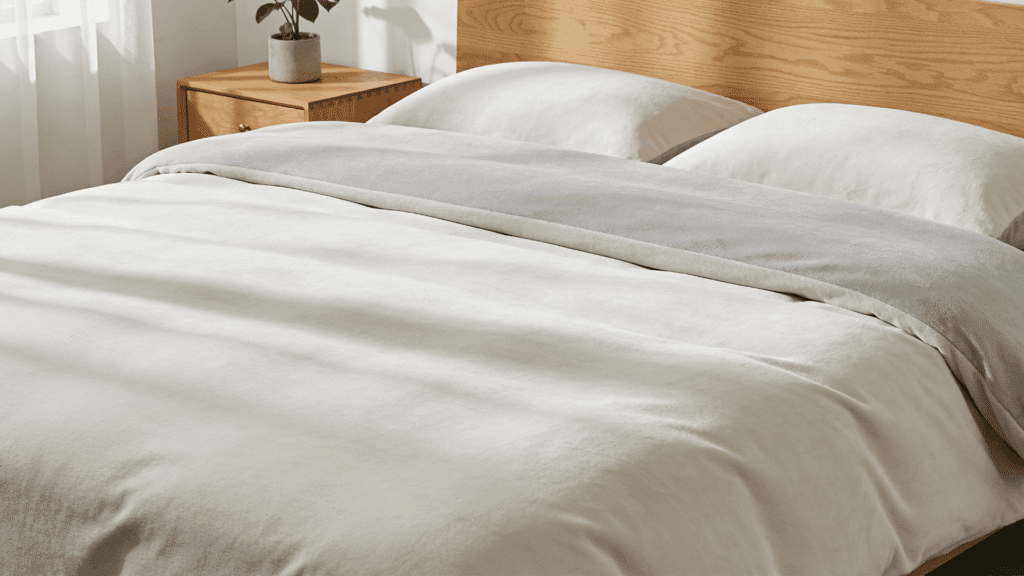
A comforter is a thick, fluffy blanket filled with soft material like cotton, polyester, or down, and stitched into one single piece.
It is designed to keep you warm while giving your bed a clean, finished look.
You usually place it on a flat sheet so it doesn’t come into direct contact with your skin. Most people use it as the main top layer of their bed.
One key thing to know is that a comforter is ready to use on its own. Unlike a duvet, it does not require a separate cover, making it easier to manage.
It is also different from a quilt, which is thinner and better for light use or warmer weather.
Comforters are thicker, softer, and better for everyday comfort and warmth, especially during cooler nights.
Why People Use Comforters?
Comforters make everyday bedding simple and comfortable. They bring together warmth and style without adding extra steps to your routine.
- Warmth without bulk: Comforters provide steady warmth on their own, so you don’t need to stack multiple blankets. This keeps your bed light but still cozy.
- Adds style easily: A comforter comes in many colors and patterns, helping your bed look neat and put together with very little effort.
- Simple to use:No cover is needed, so you can place it right on your bed and start using it right away without extra setup.
- Great for daily use: Comforters are designed for everyday use, making them a reliable, low-maintenance choice for most homes.
Comforter vs Duvet vs Quilt: Key differences
These three bedding types may look similar, but they serve different uses. Below is a clear breakdown to help you choose the right one.
1. Basic Structure
A comforter is a thick blanket filled with synthetic fiber or down and stitched so the filling stays in place.
It comes ready to use and does not need a cover. A duvet is a soft insert that goes inside a removable cover, which works like a pillowcase.
A quilt is thinner and made by stitching three layers together, often with simple or patterned designs.
Each one has a different build, which affects how it feels, how warm it is, and how you use it daily.
2. Warmth and Thickness
Comforters are usually medium to thick and give steady warmth, making them good for most seasons.
Duvets can change in warmth based on the insert you pick, so you can use a light one in summer and a heavy one in winter.
Quilts are the lightest option and work best in warm weather or as an extra layer.
If you need more warmth, a duvet gives more control. Quilts are better for light use and keeping things cool.
3. Ease of Cleaning and Maintenance
Comforters are a single piece, so washing them can take more space and effort, especially if you have a small washing machine at home.
Duvets are easier to clean because you can remove the cover and wash it often while keeping the insert protected inside.
Quilts are lightweight and simple to wash, making them easy to handle without much trouble.
If you want low-maintenance bedding, a duvet is a great choice. Quilts also work well for quick cleaning and regular everyday use.
4. Style and Bed Appearance
Comforters come in many colors and prints, so you can match them with your room without much effort.
Duvets offer more flexibility since you can change the cover anytime without replacing the insert inside. Quilts often feature stitched patterns and give your bed a clean and simple look.
If you like to update your room style often, a duvet works best.
Comforters and quilts provide a more fixed style, but they still come in a wide range of designs to choose from.
5. Cost and Long-Term Value
Comforters are usually budget-friendly and come ready to use, so you do not need to buy anything extra.
Duvets can cost more at first because you need both an insert and a cover, but they often last longer with proper care.
Quilts sit in the middle when it comes to price and can stay in good shape for years.
If you want a simple and low-cost option, a comforter works well, while a duvet offers better long-term value and flexibility.
Comforter vs Duvet vs Quilt: Key Differences at a Glance
Compare design, warmth, and care in one place. This table helps you quickly spot which bedding option fits your routine, comfort needs, and cleaning preferences without going into long details.
| Feature | Comforter | Duvet | Quilt |
| Basic Design | Single-piece, stitched filling | Insert + removable cover | Thin, layered stitching |
| Warmth Level | Medium to high warmth | Adjustable (depends on insert) | Light warmth |
| Ease of Use | Ready to use, no setup | Needs cover and insert setup | Easy to use, like a blanket |
| Cleaning | Washed as a whole piece | Cover washed separately, insert less often | Easy to wash and maintain |
| Best Use | Everyday bedding | Flexible, style + warmth control | Decorative or warm weather use |
How a Comforter Is Made?
A comforter has two main parts: an outer shell and an inner fill. Knowing how they work together helps you understand what makes a good one.
The outer shell is made from cotton, polyester, or a blend of the two. It wraps around the fill and holds everything in place. Most shells are tightly woven to stop fill from poking through.
The inner fill, down, feathers, or polyester fiberfill, is spread evenly across the shell before both layers are sewn together.
Once filled, the layers are stitched in a pattern, squares, channels, or diamonds. This keeps the fill from bunching up in one spot after washing. It also controls how warmth spreads.
Smaller sections hold heat evenly. Larger ones shift filling and create uneven warmth.
The edges are then sealed with a border stitch, giving you a comforter that holds its shape wash after wash.
Common Fabric Options for Comforters
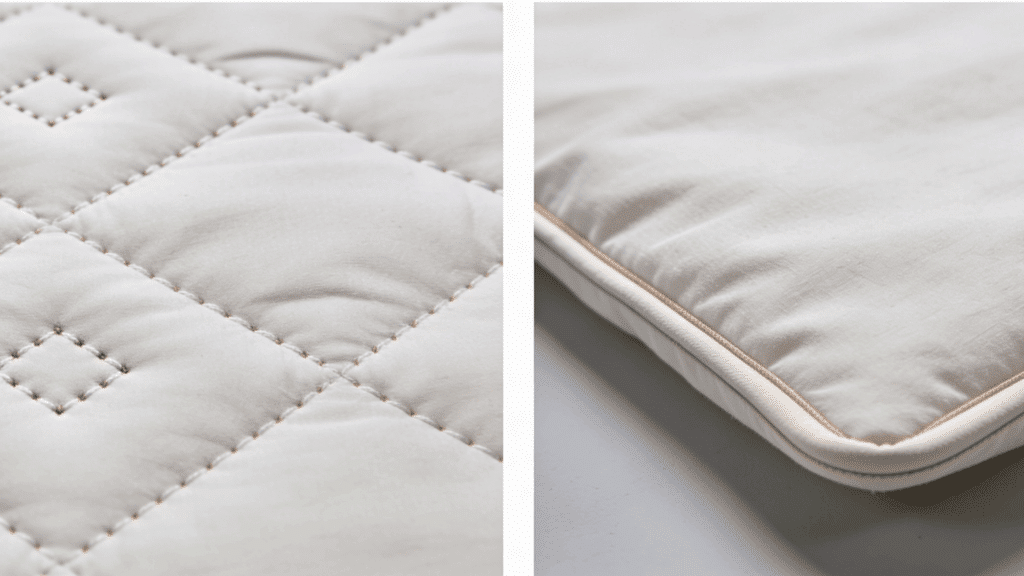
The outer fabric affects how your comforter feels and performs each night. Each material offers a different balance of comfort, care, and temperature control.
1. Cotton
Cotton is one of the most common materials used for comforter shells because it feels soft and natural on the skin. It allows air to flow freely, helping prevent overheating during sleep.
This makes it a good choice for year-round use. Cotton is also easy to clean and holds up well after many washes.
It works for most people, especially if you want something simple, breathable, and low maintenance for daily comfort and long-term use at home.
2. Silk
Silk feels smooth and soft on the skin, which makes it very comfortable to sleep with.
It stays cool, so it works well during warm nights or if you often feel hot while sleeping. This material is light and gentle, adding a relaxed feel to your bedding.
However, silk is delicate and needs careful washing to avoid damage.
It may not handle rough use or frequent machine washing well. It suits people who want comfort and a light feel but can manage extra care.
3. Wool
Wool is a warm, durable material that performs well in cooler conditions.
It has natural moisture-wicking properties, which means it can pull sweat away from your body while you sleep. This helps keep you dry and comfortable through the night.
Wool comforters often feel heavier than other options, which some people find cozy and secure.
It is a solid choice if you want warmth without feeling damp, especially during colder seasons or in cooler bedrooms.
4. Bamboo or Eucalyptus
Bamboo- or eucalyptus-based rayon is becoming increasingly popular for comforters due to its soft, smooth texture.
It feels light and breathable, which helps regulate body temperature.
This makes it a great option for hot sleepers or warm climates. The material also helps manage moisture, so you stay dry at night.
It offers a clean and fresh feel without being too heavy, making it suitable for everyday use while still providing comfort and ease.
How to Care for a Comforter Properly?
Taking care of your comforter helps it stay soft, clean, and long-lasting. With simple habits, you can keep it fresh without too much effort.
- Regular airing: Let your comforter air out once a week to remove moisture and keep it fresh.
- Use a top sheet: Place a flat sheet under it to reduce direct contact and limit dirt buildup.
- Wash with care: Follow the label instructions and use a gentle cycle with mild detergent.
- Dry completely: Make sure it is fully dry to avoid odors or mold inside the filling.
- Spot cleaning: Clean small stains quickly instead of washing the whole comforter often.
- Avoid over-washing: Washing too frequently can damage the filling and reduce its lifespan.
- Store properly: Keep it in a breathable bag in a dry place when not in use.
Pros and Cons of Comforter
It gives a quick, clear view to help you compare key points easily. You can understand what fits your comfort, care routine, and daily use without reading long explanations.
| Pros | Cons |
| Easy to use with no extra setup | Can be bulky to wash at home |
| Provides steady warmth for daily use | Takes longer to dry after washing |
| Available in many colors and designs | Style cannot be changed without replacing it |
| Works well as a complete top layer | May feel too warm in hot weather |
| Budget-friendly and widely available | Filling can shift over time with heavy use |
How to Choose the Right Comforter?
A few simple checks can make your choice easier and more practical. Focus on what fits your sleep habits and daily use.
- Warmth level: Pick a thickness that matches your local weather and how warm you feel while sleeping.
- Fill type: Choose between down or synthetic based on comfort, allergies, and budget.
- Fabric material: Go for breathable fabrics like cotton if you want better airflow at night.
- Size selection: Select a size slightly larger than your bed for better coverage and comfort.
- Weight feel: Decide if you prefer a light comforter or a heavier one for a more secure feel.
- Ease of care: Check washing instructions to ensure it fits your cleaning routine at home.
- Budget range: Set a budget and choose the best quality you can afford for long-term use.
Conclusion
Choosing the right bedding doesn’t have to feel confusing once you understand what each option offers.
A comforter stands out for its ease, comfort, and ready-to-use design, making it a practical choice for everyday living.
You may prefer soft cotton, lightweight bamboo, or a warmer option, and the right choice depends on how you sleep and what feels best to you.
Think about your routine, your comfort level, and how much effort you want to put into care.
That’s what really guides the right decision. At the end of the day, your bed should feel like a place you look forward to every night.
Have you tried using a comforter, duvet, or quilt?
Share your experience in the comments below. I’d love to hear what works best for you!
Frequently Asked Questions
How Long Does a Comforter Usually Last?
A comforter typically lasts between five and ten years. Its lifespan depends on the material quality, washing frequency, and daily use. Proper care helps maintain its shape, comfort, and warmth.
What Size Comforter Should Be Used for Each Bed?
Choose a comforter that matches your bed size, such as twin, full, queen, or king. Slightly oversized options provide better coverage and create a fuller, more comfortable appearance.
Can Comforters Cause Allergies?
Some comforters may trigger allergies due to dust mites or natural fills like down. Using hypoallergenic materials and washing regularly can help reduce allergens and improve overall sleep comfort.
Are Comforters Safe for All Seasons?
Comforters can be used in every season. Lightweight ones are better for warm weather, while thicker options provide more warmth during colder months for balanced comfort throughout the year.
How Often Should a Comforter Be Replaced?
A comforter should be replaced when it loses shape, warmth, or becomes uneven. Signs like stains, odors, or thinning fabric indicate it’s time for a new one for better hygiene.