

Staying committed to fitness goals can feel like a constant battle. It’s easy to skip workouts when the gym is miles away or when motivation runs low. What if there was a better solution?
Turning a basement into a personal workout space offers convenience that commercial gyms simply can’t match.
No more commute time, no waiting for equipment, and no monthly membership fees eating away at the budget. The real challenge, though, isn’t just creating a gym; it’s designing one that makes someone actually want to work out.
This blog shares practical ideas that change ordinary basements into energizing fitness spaces where motivation comes naturally.
Planning Your Basement Home Gym Ideas on a Budget
Smart planning turns budget constraints into creative opportunities. A well-thought-out approach ensures every dollar spent contributes to a functional, motivating workout space that meets specific fitness needs.
- Assess the Available Space: Measure the basement dimensions and note obstacles like support beams, low ceilings, or utility areas that affect equipment placement.
- Set a Realistic Budget: Determine how much money can be allocated for flooring, equipment, and upgrades without straining finances.
- Define Fitness Goals: Identify preferred workout types, cardio, strength training, yoga, or mixed routines, to guide equipment choices.
- Prioritize Essential Equipment: Focus on versatile, multi-purpose gear that delivers maximum workout variety without cluttering the space.
- Plan for Proper Ventilation: Ensure adequate airflow through fans, windows, or HVAC adjustments to keep the space comfortable during intense sessions.
- Consider Lighting and Ambiance: Choose bright, energizing lighting that mimics natural daylight and enhances motivation throughout workouts.
Basement Home Gym Ideas for Your Home Workout Space
The correct design elements change a basic basement into an inviting fitness haven. Thoughtful choices in layout, decor, and functionality create an environment that inspires consistent workouts and long-term commitment.
1. Industrial-Style Strength Training Gym
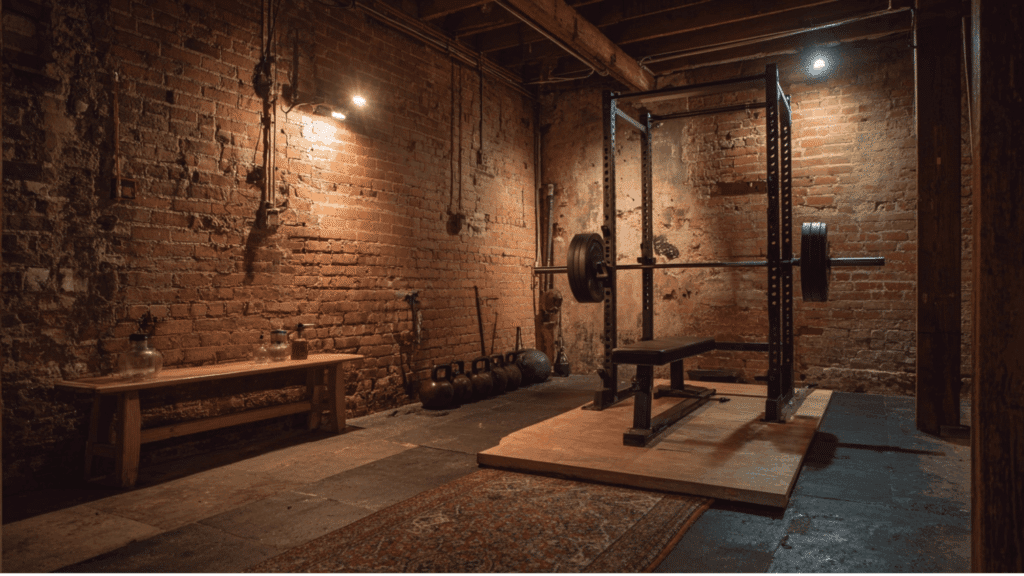
This basement gym embraces a raw, power-driven atmosphere with exposed brick walls, black steel squat racks, and concrete or rubber flooring.
Heavy barbells, bumper plates, and wall-mounted storage keep equipment accessible and organized.
Minimal decor, industrial lighting, and matte finishes enhance the gritty aesthetic, making it ideal for serious lifters who want a motivating, no-frills environment focused purely on strength and performance.
2. Minimalist Free-Weight Workout Space
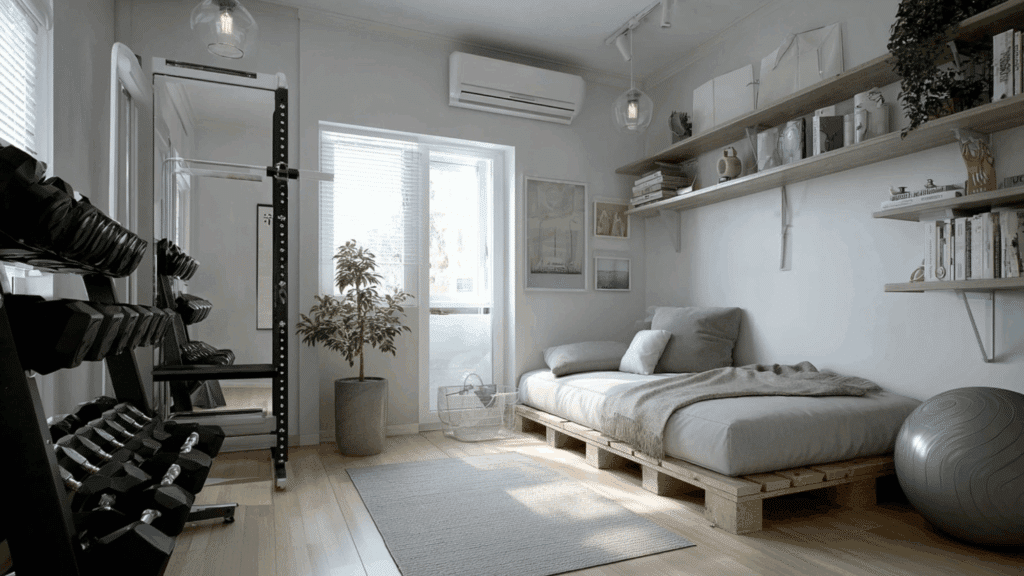
Designed for simplicity and mental clarity, this setup features clean white or neutral walls, open shelving, and carefully arranged dumbbells and kettlebells.
The clutter-free layout creates a calm yet functional workout zone that supports focus and consistency.
Subtle lighting, hidden storage, and a balanced layout make this gym perfect for users who value aesthetics, efficiency, and a peaceful training environment.
3. Compact Cardio-Focused Basement Gym
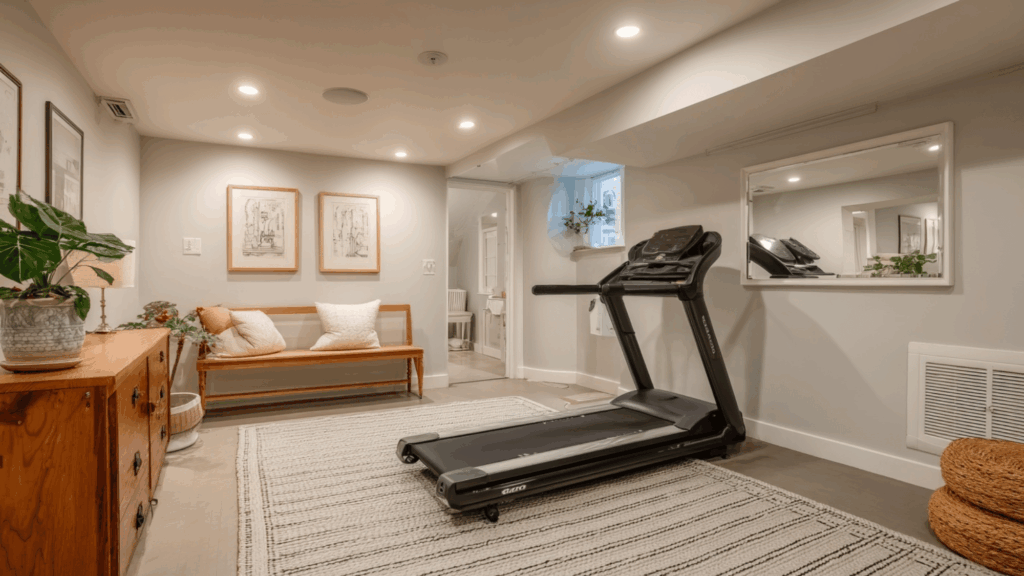
This idea is tailored for small basements where space efficiency matters most.
Foldable cardio machines, like a treadmill, a stationary bike, or a rowing machine, allow flexibility without crowding the room.
Slim wall mirrors visually expand the area while improving workout form. Light color palettes and smart storage help maintain an energetic, open feel that supports daily cardio routines without overwhelming the space.
4. CrossFit-Inspired Functional Training Area
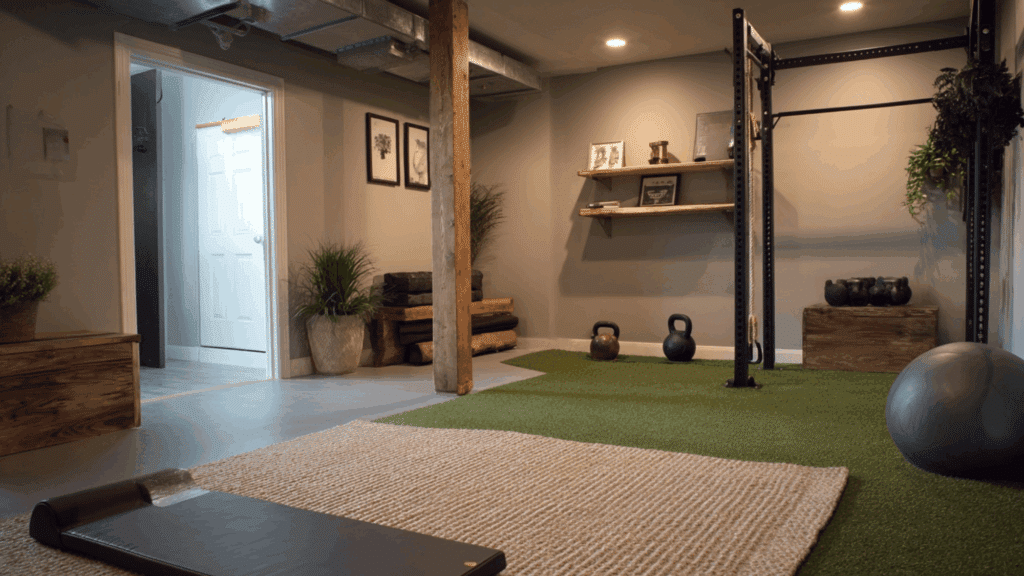
A high-energy basement gym built for movement variety and intensity, this setup includes turf flooring, pull-up rigs, kettlebells, medicine balls, and plyometric boxes.
Open floor space allows for dynamic HIIT circuits and functional workouts.
Durable materials, bold accents, and wall-mounted storage support fast-paced training while keeping the environment organized, motivating, and adaptable for different fitness levels.
5. Powerlifting Basement Gym Setup
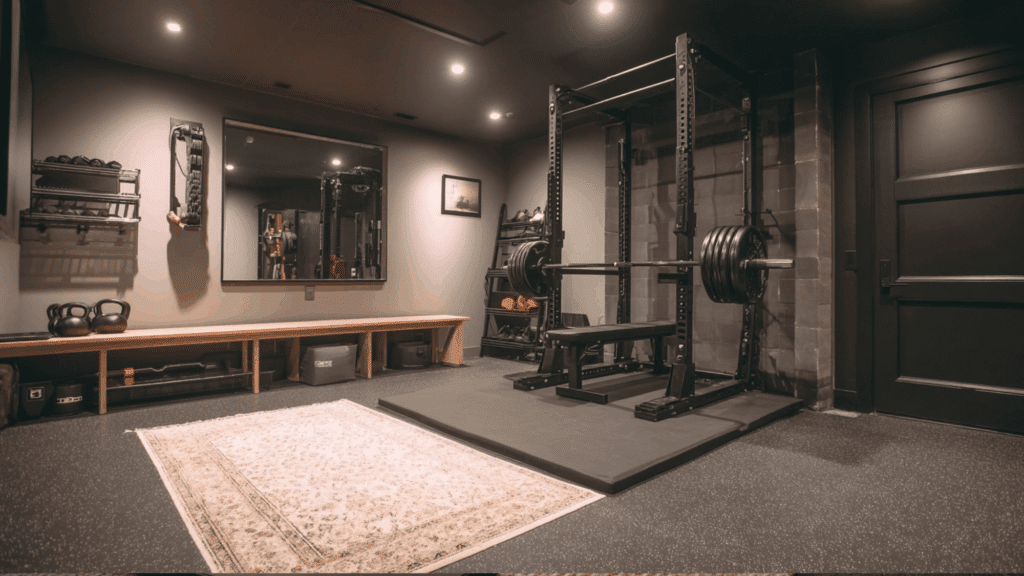
Focused on heavy compound lifts, this gym centers around a solid lifting platform with squat racks, deadlift bars, and calibrated plates.
Soundproofing elements help manage noise, making it basement-friendly.
Reinforced flooring ensures safety and stability during heavy lifts. The layout prioritizes function over style, creating a dedicated space for lifters committed to progressive strength training.
6. Yoga and Stretching Studio with Mirrors
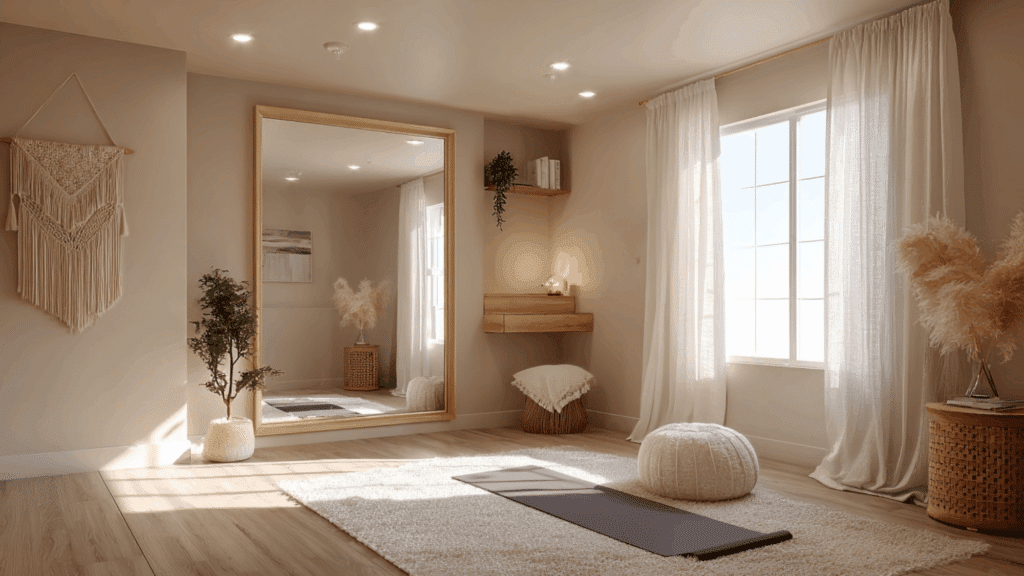
This basement transformation emphasizes calm and flexibility with bamboo or cork mats, soft flooring, and full-wall mirrors. Dimmable lighting allows mood control for relaxation or focused practice.
Neutral tones and minimal accessories reduce distractions, supporting mindful movement.
Ideal for yoga, mobility, and recovery sessions, this setup creates a peaceful retreat that balances physical wellness with mental relaxation.
7. Boxing and Kickboxing Training Zone
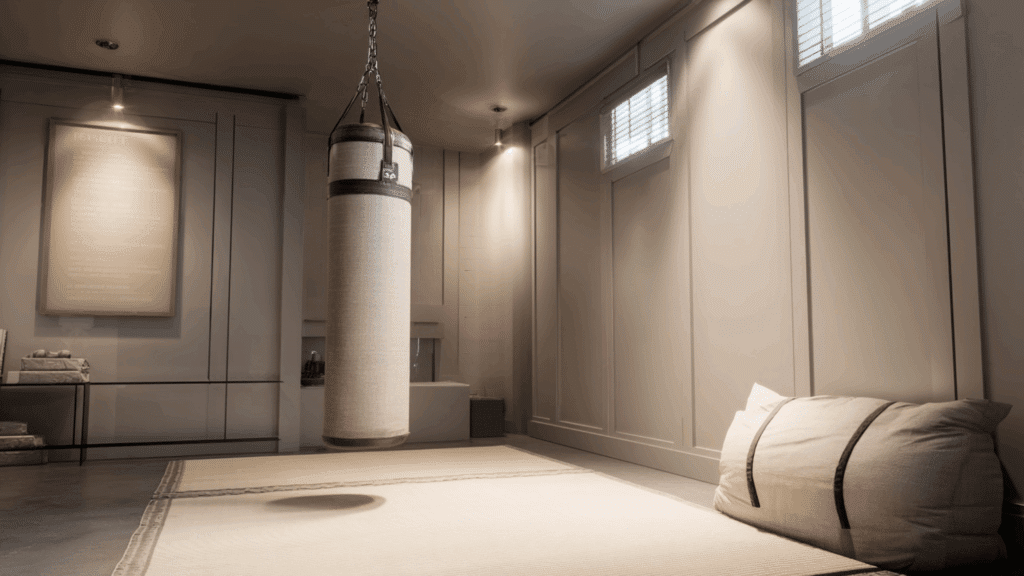
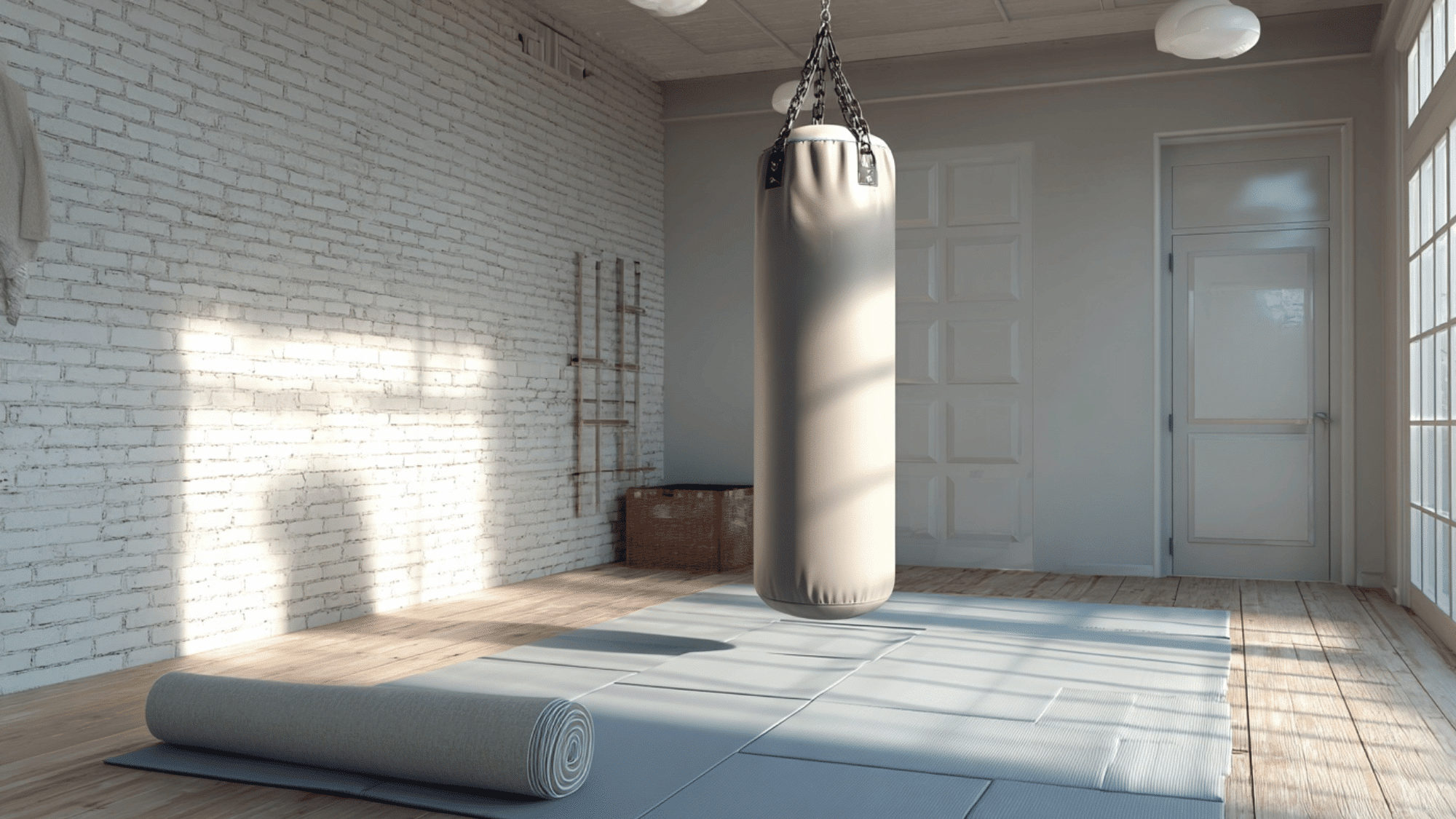
Built for intensity and endurance, this gym includes heavy bags, speed bags, padded flooring, and wall-mounted gloves. Motivational posters and bold lighting amplify the fight-club energy.
Adequate spacing ensures safe movement for footwork and drills.
This setup suits cardio-heavy training styles, stress relief, and skill development while delivering a powerful, adrenaline-driven workout experience at home.
8. Multi-Purpose Family Fitness Room
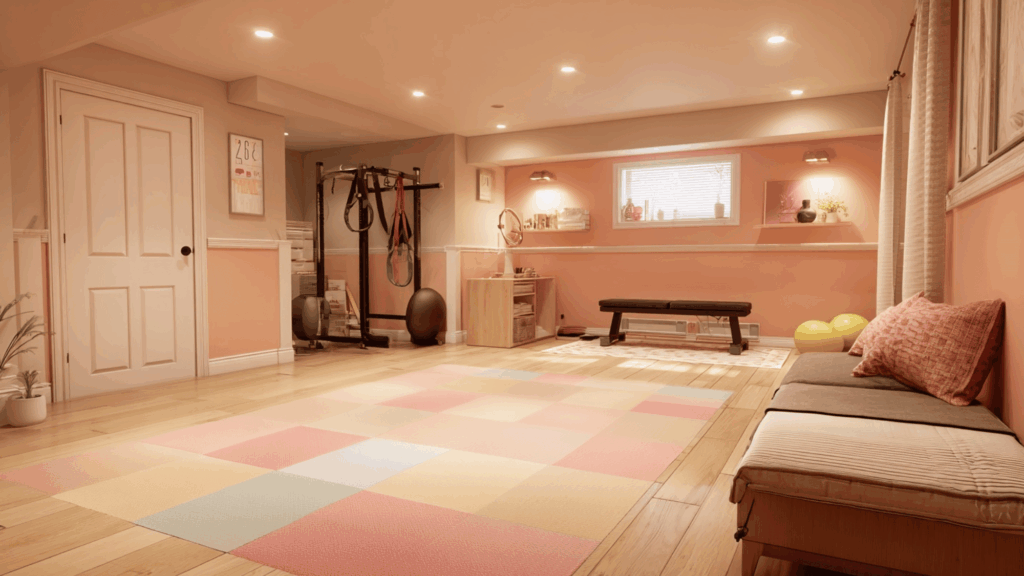
This versatile basement gym accommodates all ages with adjustable benches, resistance bands, light weights, and open turf areas.
Modular equipment allows quick transitions between adult workouts and kid-friendly activities. Durable, easy-to-clean materials support frequent use.
The design balances fitness and play, making it ideal for families who want an inclusive space that encourages healthy habits together.
9. High-Tech Smart Gym with Mounted Screens
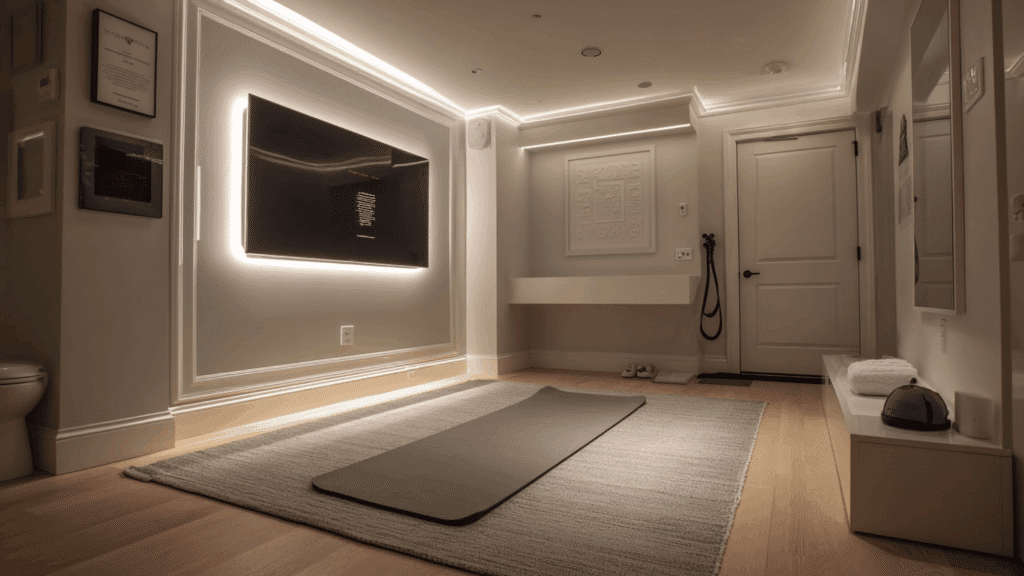
A modern basement gym featuring wall-mounted screens for workout apps, virtual classes, and performance tracking. Sensor mats, smart mirrors, and cable machines integrate technology with training.
Clean lines, LED lighting, and sleek finishes create a futuristic feel. This setup appeals to tech-savvy users who enjoy data-driven workouts, guided sessions, and a highly interactive fitness environment.
Color Schemes and Decor Tips for Motivational Gyms
Strategic color choices and thoughtful decor elements create an atmosphere that boosts motivation and makes every training session more enjoyable.
| Color/Decor Element | Effect & Application |
|---|---|
| Energizing Reds & Oranges | Increases heart rate and intensity; ideal for cardio zones and high-energy workout areas. |
| Calming Blues & Greens | Promotes focus and relaxation; perfect for yoga corners and stretching spaces. |
| Bold Black & White | Creates a sleek, professional gym aesthetic; works well with any equipment color. |
| Motivational Wall Art | Inspirational quotes and fitness posters reinforce goals and push through tough workouts. |
| Mirrors on Walls | Expands visual space while allowing form checks during exercises. |
| Accent Walls | One vibrant wall adds personality without overwhelming the entire space. |
| Natural Wood Tones | Brings warmth and organic feel; balances industrial gym equipment. |
| Proper Lighting | Bright, adjustable lights mimic daylight and energize morning and evening sessions. |
To Conclude
With careful planning, smart equipment choices, and creative use of colors and decor, anyone can build a motivating workout environment right at home.
The key lies in creating a space that feels personal and energizing rather than bland or intimidating.
Small improvements make big differences. Fresh paint, good lighting, and motivational touches turn forgotten basement corners into fitness sanctuaries.
The convenience of working out steps away from the living room eliminates excuses and builds consistency. Start small, focus on essentials, and watch as that basement changes into the ultimate fitness retreat.