

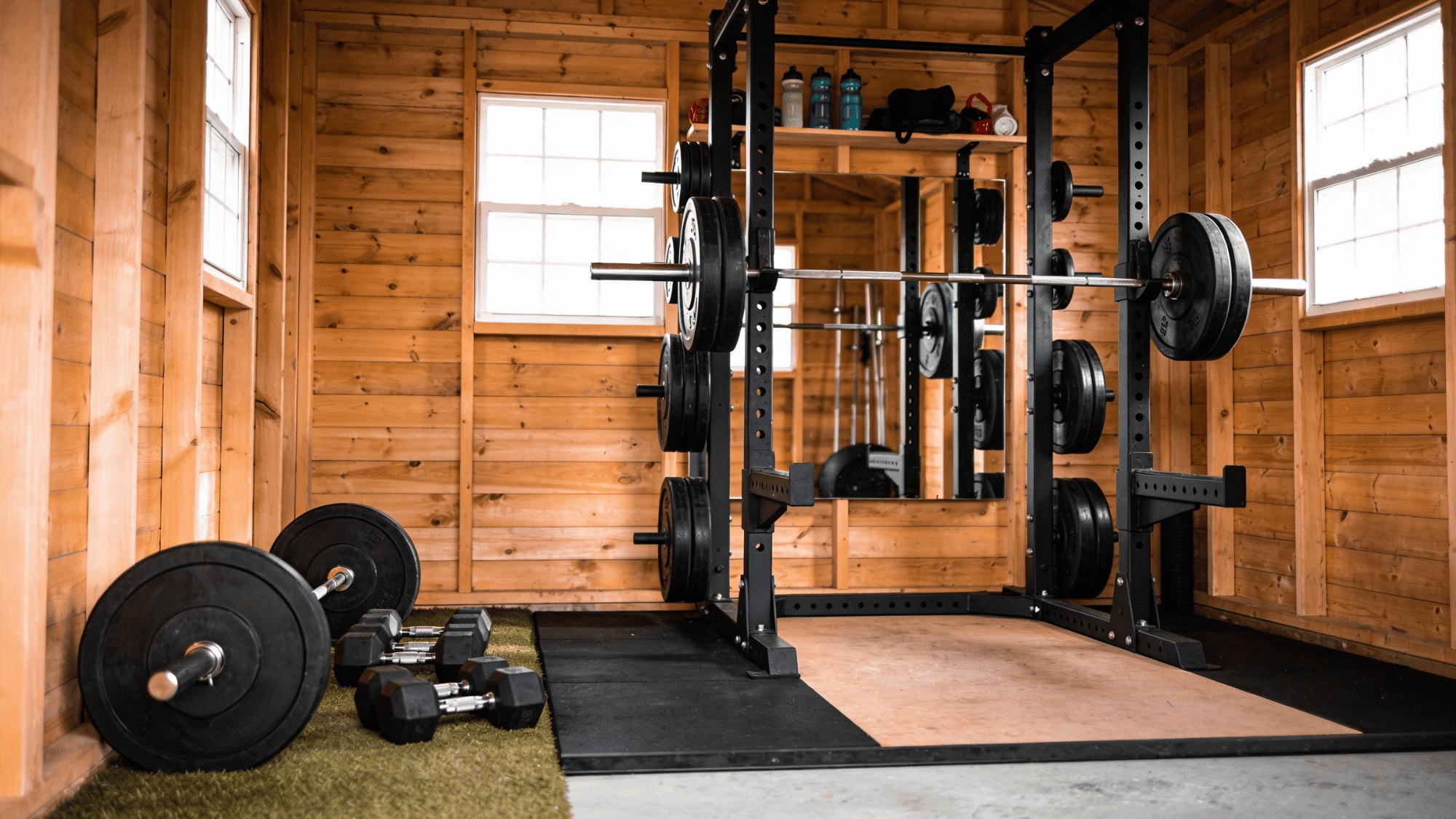
Getting fit doesn’t need to drain your wallet or require fancy equipment. Many people skip workouts because gym memberships feel too expensive or the nearest fitness center sits miles away.
But most homes already contain items that can double as workout gear. A sturdy chair becomes a bench press. Filled water bottles turn into dumbbells.
These everyday objects offer real resistance and support for strength training, cardio, and flexibility work.
No special trips to sports stores or waiting for delivery trucks. Just grab what’s already sitting in your house. This blog breaks down a practical way to build a home gym using things most households already own.
How Much Does a Home Gym Typically Cost?
Setting up a traditional home gym can hit the budget hard. Basic equipment like dumbbells, a bench, and a yoga mat might run $300 to $500. Add a treadmill or weight rack, and costs jump to $1,000 or more.
High-end setups with multiple machines easily reach $3,000 to $5,000.
But household items cost nothing extra. That backpack already paid for itself years ago. Those water jugs? Already in the pantry.
Books sitting on shelves make perfect weights. This approach turns a potential thousand-dollar investment into a zero-dollar solution.
Smart swaps mean keeping cash in the bank while still building strength and stamina at home.
Easy DIY Home Gym Equipment Ideas
Turning household items into workout gear takes minutes, not hours. These simple swaps require zero construction skills or special tools. Just grab what’s available and start moving toward fitness goals today.
1. Concrete Dumbbells
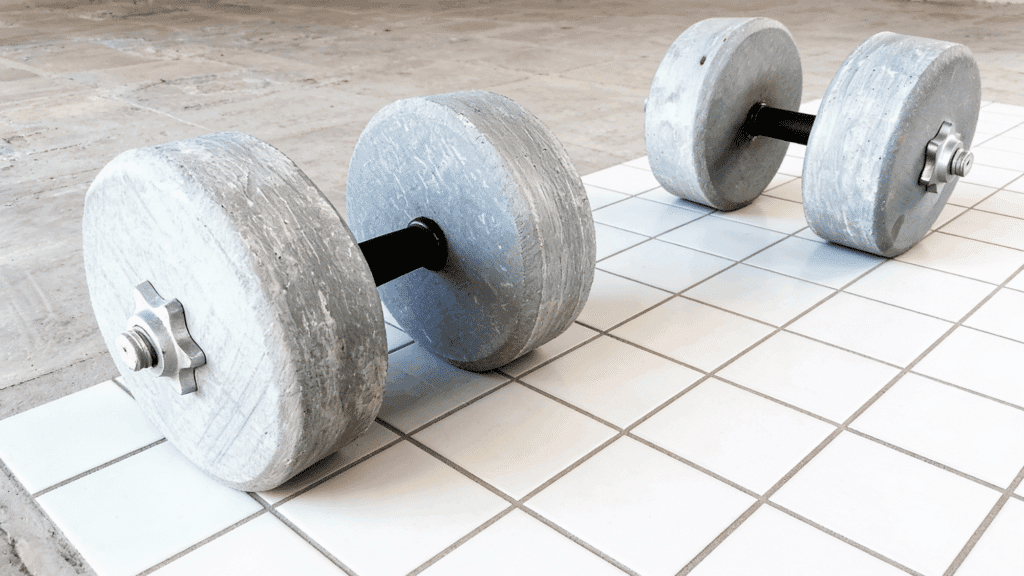
Concrete dumbbells provide affordable strength training, customizable weights, and durability, perfect for beginners or home workouts, allowing progressive overload without expensive gym equipment while improving grip stability and long-term.
How to Make It:
- Mix cement with water to a thick consistency
- Pour into molds with metal handles centered
- Let the concrete cure completely
- Sand rough edges if needed
Budget: Low-cost, usually under $10–15
Materials Needed: Cement, water, metal rod or pipe, plastic molds
2. Sandbag Weights
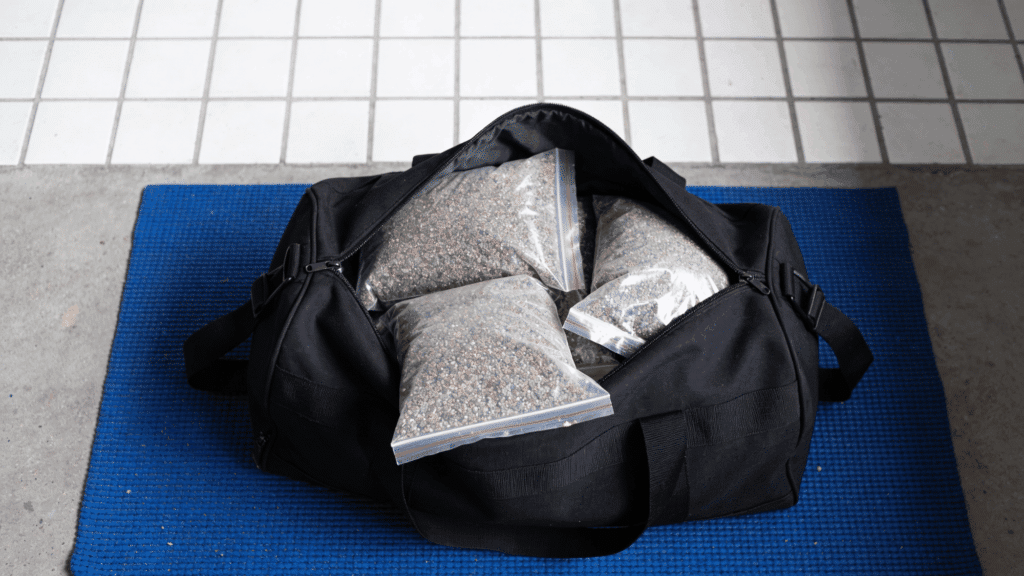
Sandbag weights are versatile training tools improving strength, stability, and conditioning, ideal for functional workouts at home, offering adjustable resistance and safe handling while supporting full body exercises.
How to Make It:
- Fill sturdy bags with sand
- Seal inner bags tightly
- Place inside a durable outer bag
- Reinforce seams with tape
Budget: Under $15
Materials Needed: Sand, duffel bag, plastic bags, duct tape
3. Resistance Band Door Anchor
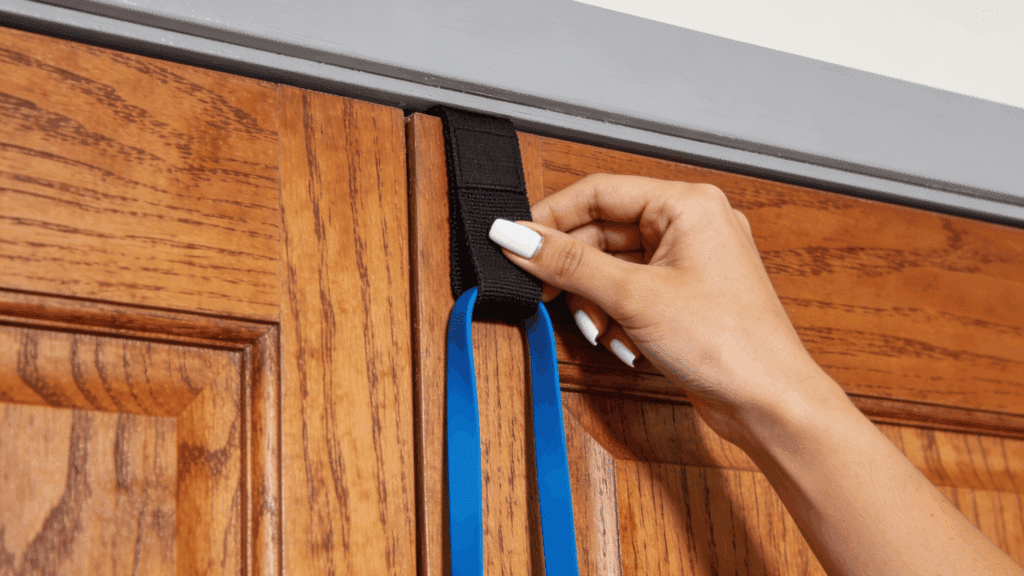
Resistance band door anchors create secure attachment points for bands, enabling full-body workouts at home, improving strength and mobility while saving space and avoiding bulky equipment purchases.
How to Make It:
- Tie a knot in a strong fabric strap
- Insert a knot behind a closed door
- Loop the resistance band through the strap
- Test stability before exercising
Budget: Under $5
Materials Needed: Strong fabric strap or towel, resistance bands
4. PVC Pipe Squat Rack
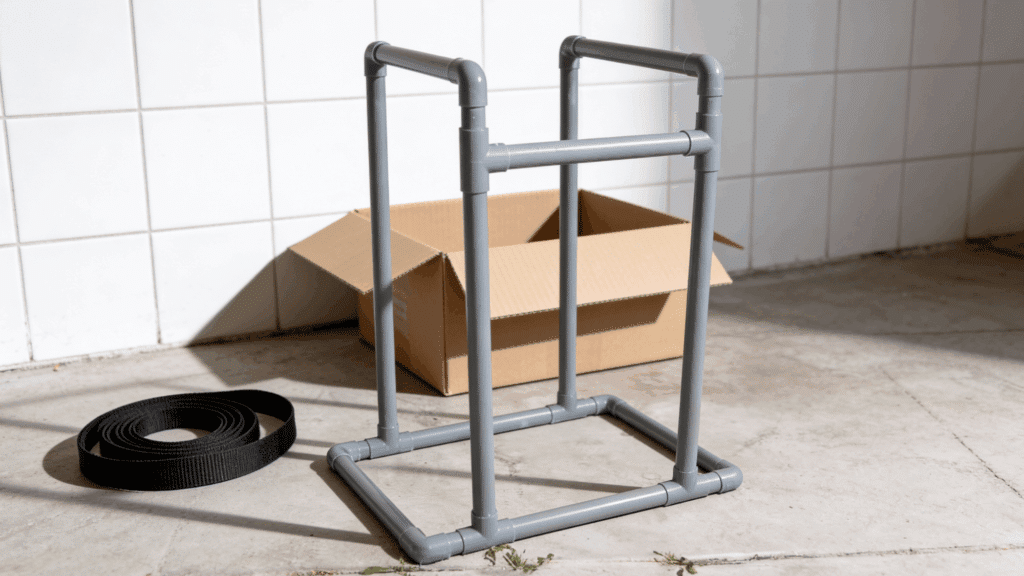
PVC pipe squat racks offer lightweight, budget-friendly support for barbell training, suitable for controlled home workouts, helping improve squats and presses without investing in heavy metal frames.
How to Make It:
- Cut PVC pipes to measurements
- Assemble the frame using connectors
- Glue joints securely
- Test rack with light loads
Budget: $20–30
Materials Needed: PVC pipes, connectors and PVC glue
5. Towel Slider (Household Fabric on Floors)
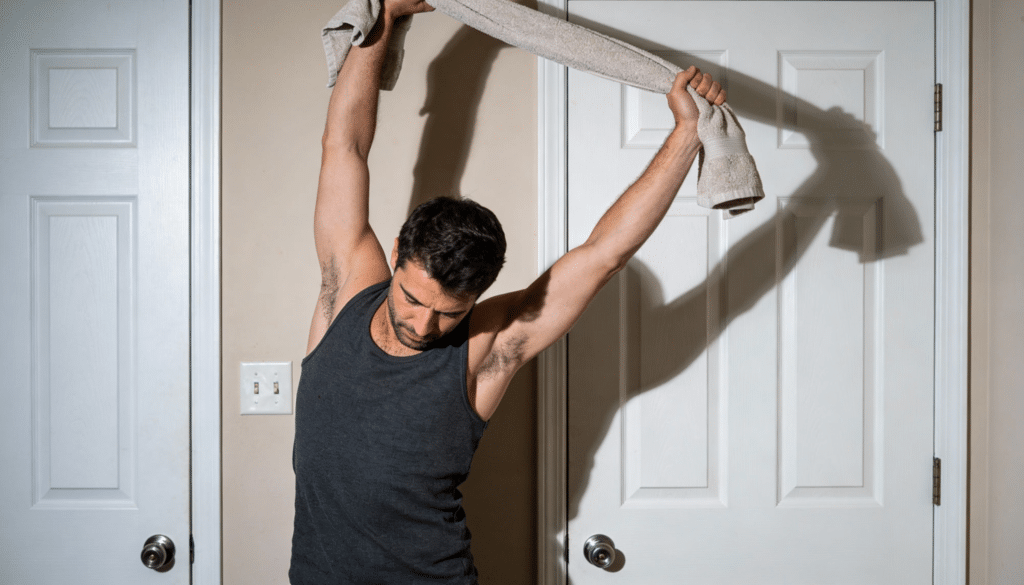
Towel sliders improve core strength and mobility by adding instability to exercises, ideal for smooth floors, supporting lunges and planks without special equipment or high costs.
How to Make It:
- Fold towels evenly
- Place under hands or feet
- Use on smooth flooring
- Clean towels after workouts
Budget: Free
Materials Needed: Old towels or fabric pieces
6. Pull-Up Bar from Steel Pipe
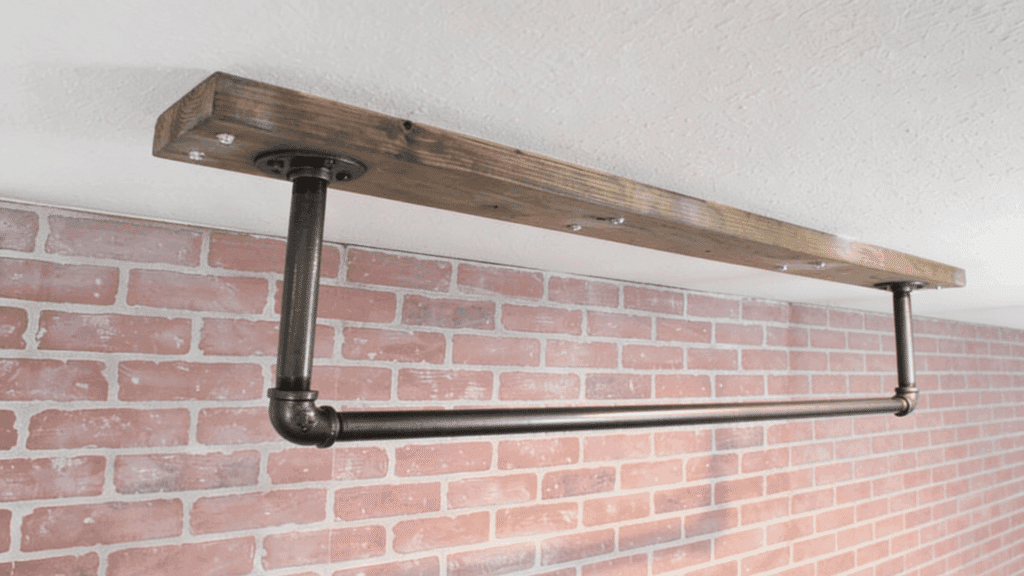
Steel pipe pull-up bars provide sturdy upper body training at home, supporting pull-ups and hangs, improving grip and back strength while utilizing unused doorways or wall spaces.
How to Make It:
- Measure doorway width
- Cut the steel pipe accordingly
- Secure pipe with wall flanges
- Test the weight capacity carefully
Budget: $25–40
Materials Needed: Steel pipe, wall flanges, screws, drill
7. Weighted Backpack
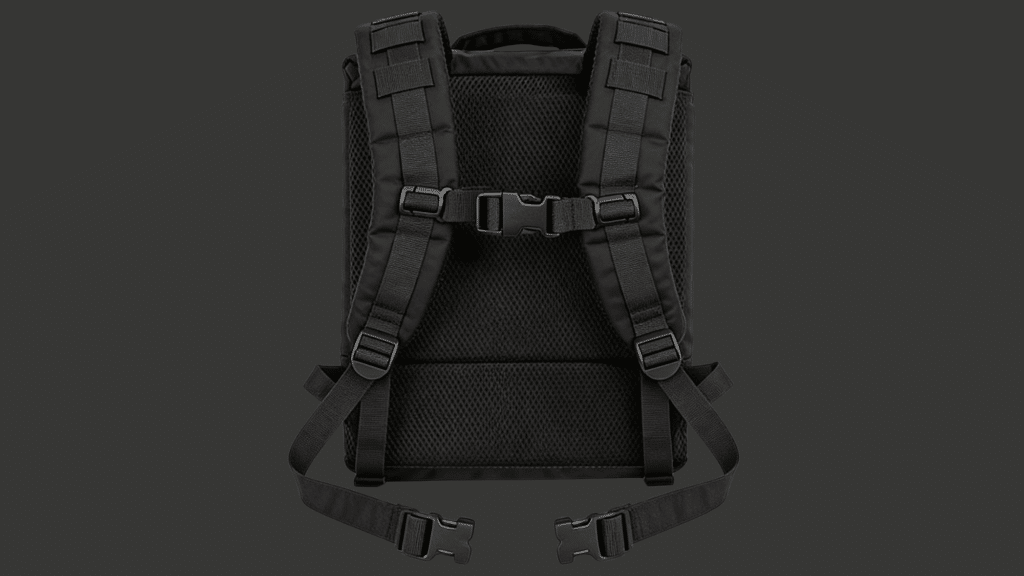
Weighted backpacks create adjustable resistance for walking, squats, and conditioning, offering convenient strength training using household items while improving posture and endurance without specialized gear.
How to Make It:
- Place weights inside the backpack
- Distribute weight evenly
- Secure zippers tightly
- Wear snugly during workouts
Budget: Free–$10
Materials Needed: Backpack, books, bricks, or weights
8. Battle Ropes from Climbing Rope

DIY battle ropes deliver intense cardio and strength workouts, boosting endurance and power, easily made at home using durable rope anchored securely for safe high-intensity training.
How to Make It:
- Buy a thick climbing rope
- Cut to the desired length
- Tape rope ends securely
- Anchor around a sturdy post
Budget: $20–40
Materials Needed: Climbing rope, tape, anchor point
9. Plyometric Jump Box
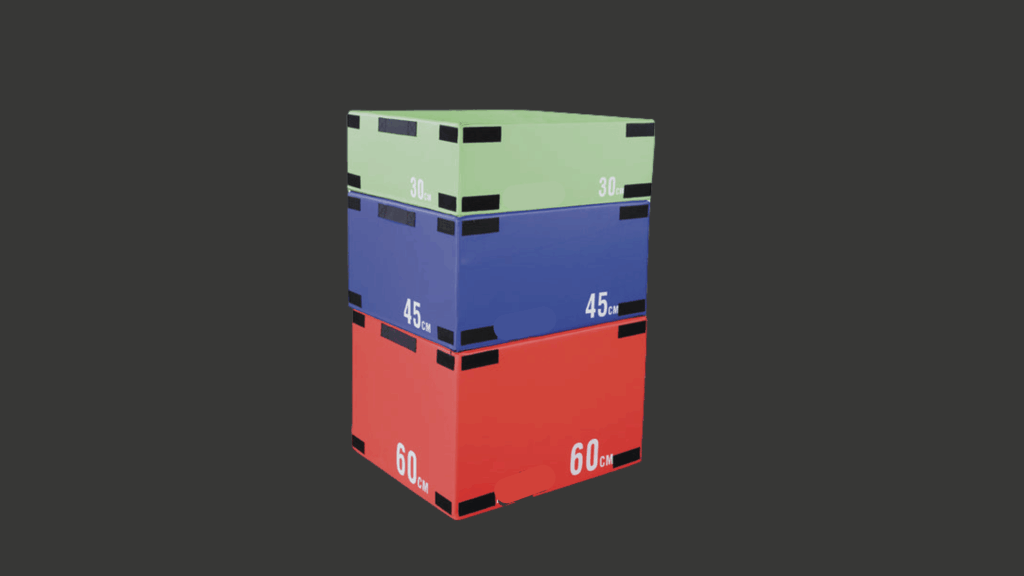
Plyometric jump boxes enhance explosive power and coordination, essential for athletic training, and can be built at home to support jumps, step-ups, and conditioning drills.
How to Make It:
- Cut plywood to size
- Assemble the box structure
- Reinforce corners securely
- Sand edges smooth
Budget: $30–50
Materials Needed: Plywood, screws, drill, sandpaper
10. Suspension Trainer from Straps
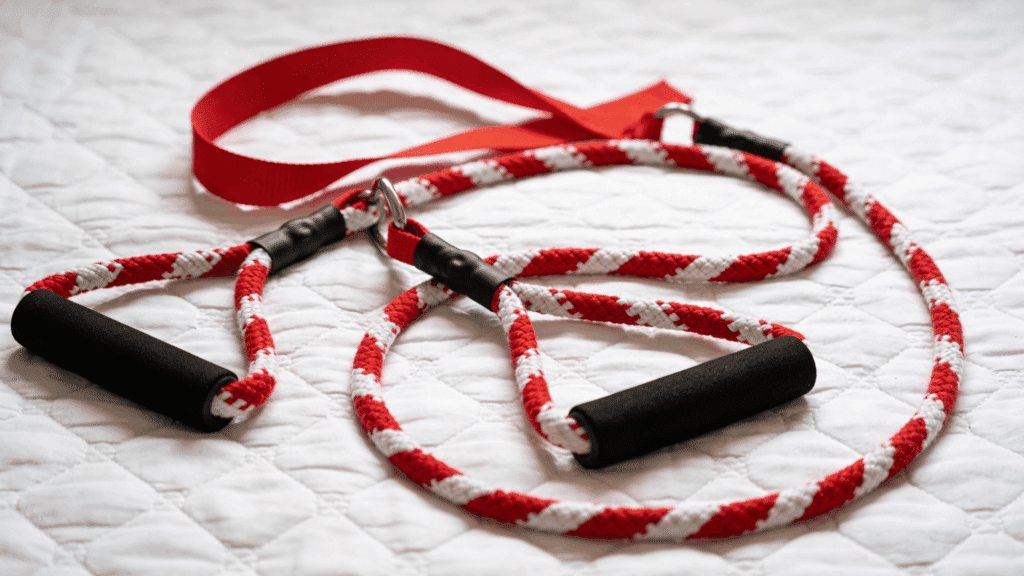
Suspension trainers use bodyweight resistance to build strength and stability, offering scalable workouts at home while improving balance, coordination, and core engagement efficiently.
How to Make It:
- Use strong nylon straps
- Attach handles securely
- Anchor straps to the door or beam
- Adjust the length for exercises
Budget: $15–25
Materials Needed: Nylon straps, handles and carabiners
11. Kettlebell from Paint Can
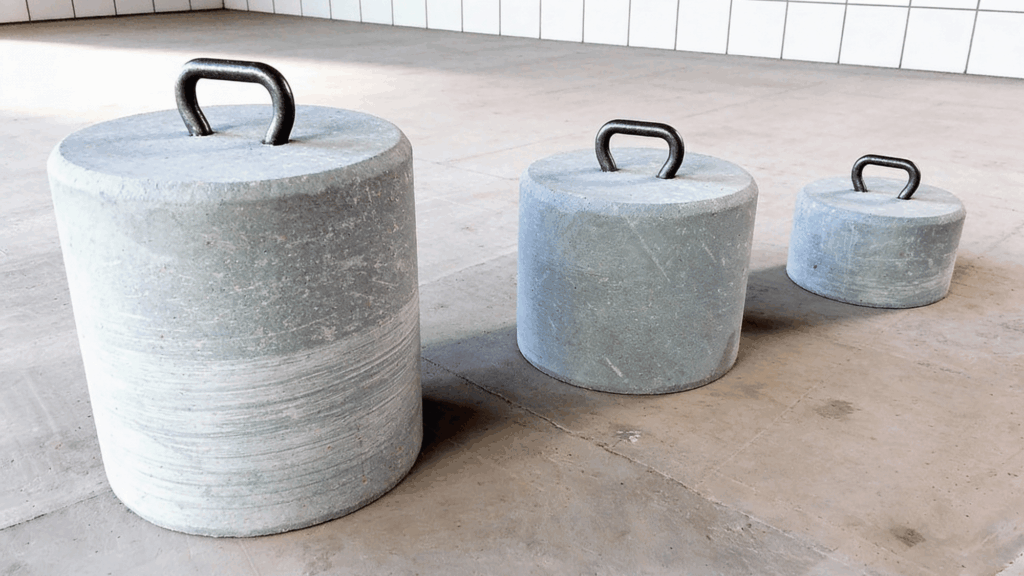
Paint can kettlebells provide functional strength training, ideal for swings and carries, offering an inexpensive alternative to traditional kettlebells while allowing customizable weight at home.
How to Make It:
- Fill the paint can with sand or concrete
- Seal the lid tightly
- Reinforce the handle grip
- Allow the concrete to cure
Budget: Under $10
Materials Needed: Paint can, sand or cement, tape
12. Medicine Ball from Old Basketball
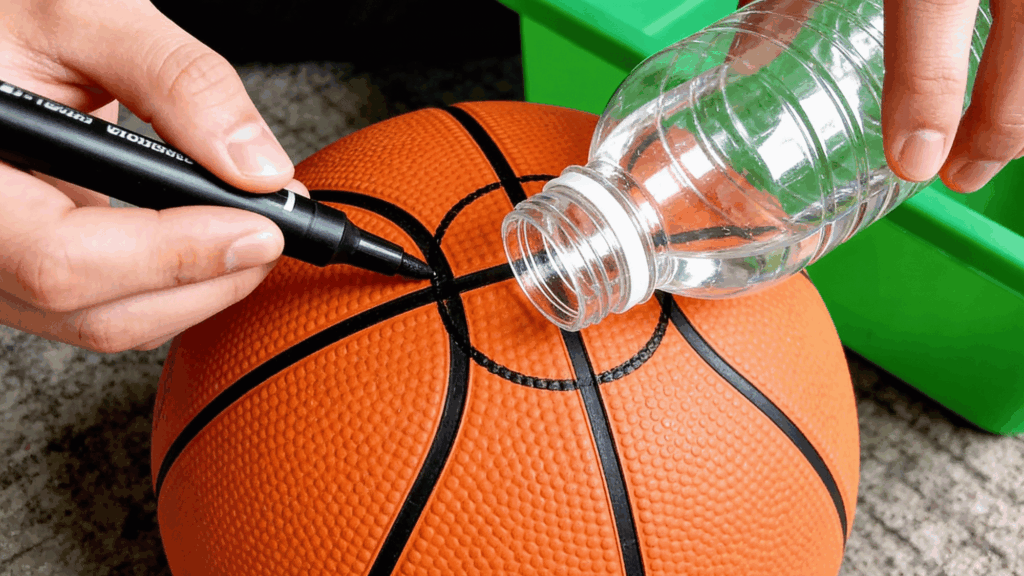
DIY medicine balls add dynamic resistance for throws and core work, created from old basketballs to support strength and conditioning exercises without purchasing expensive equipment.
How to Make It:
- Cut a small opening in the ball
- Fill with sand gradually
- Seal opening securely
- Test weight balance
Budget: Under $10
Materials needed: Old basketball, sand and strong adhesive
13. Wall-Mounted Dip Bars
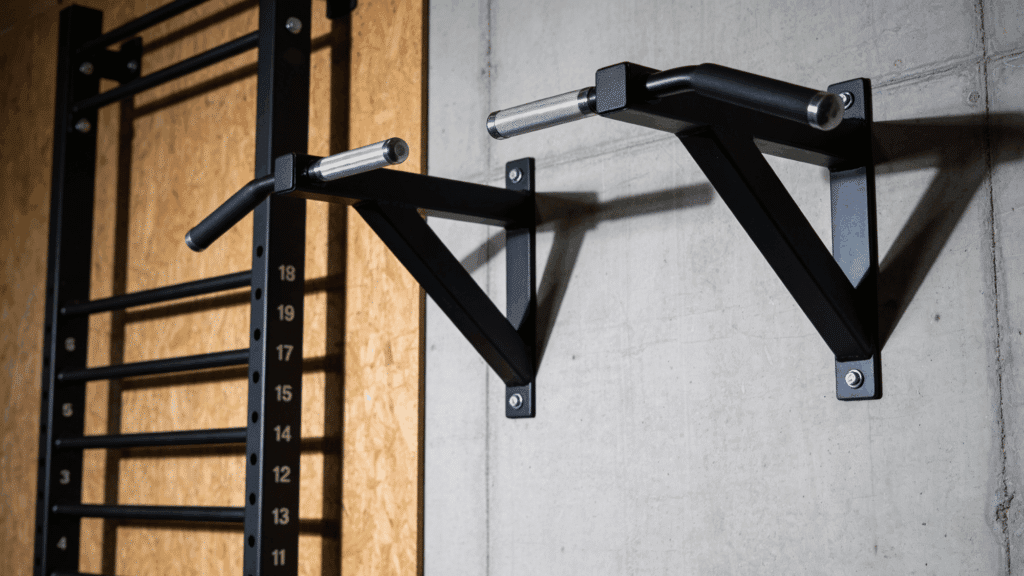
Wall-mounted dip bars support upper body pushing strength, enabling dips and holds at home while saving floor space and providing stable, effective bodyweight training options.
How to Make It:
- Measure wall spacing
- Install metal bars securely
- Anchor into wall studs
- Test load capacity
Budget: $30–60
Materials Needed: Metal bars, wall anchors, screws
Common DIY Home Gym Mistakes to Avoid
Creating a home gym with household items works great, but some missteps can lead to injuries or wasted effort. Knowing what to avoid helps keep workouts safe and effective.
- Using damaged items that could break mid-exercise and cause injury.
- Overloading containers or bags beyond their capacity, risking tears or spills.
- Skipping warm-ups because the gym is “just at home.”
- Ignoring proper form since no trainer is watching.
- Creating uneven weights that throw off balance during lifts.
- Placing equipment on slippery floors without proper grip or mats.
Conclusion
Building a home gym doesn’t require a big budget or a spare room filled with shiny machines. These household items provide the resistance and support needed for a solid fitness routine.
Starting small matters more than starting perfect. Pick two or three items from this list and test them out. Add more as workouts become routine.
The goal isn’t replicating a commercial gym at home. It’s removing barriers that keep people from moving their bodies regularly.
Sometimes the best equipment is the stuff already sitting around, just waiting for a new purpose.