

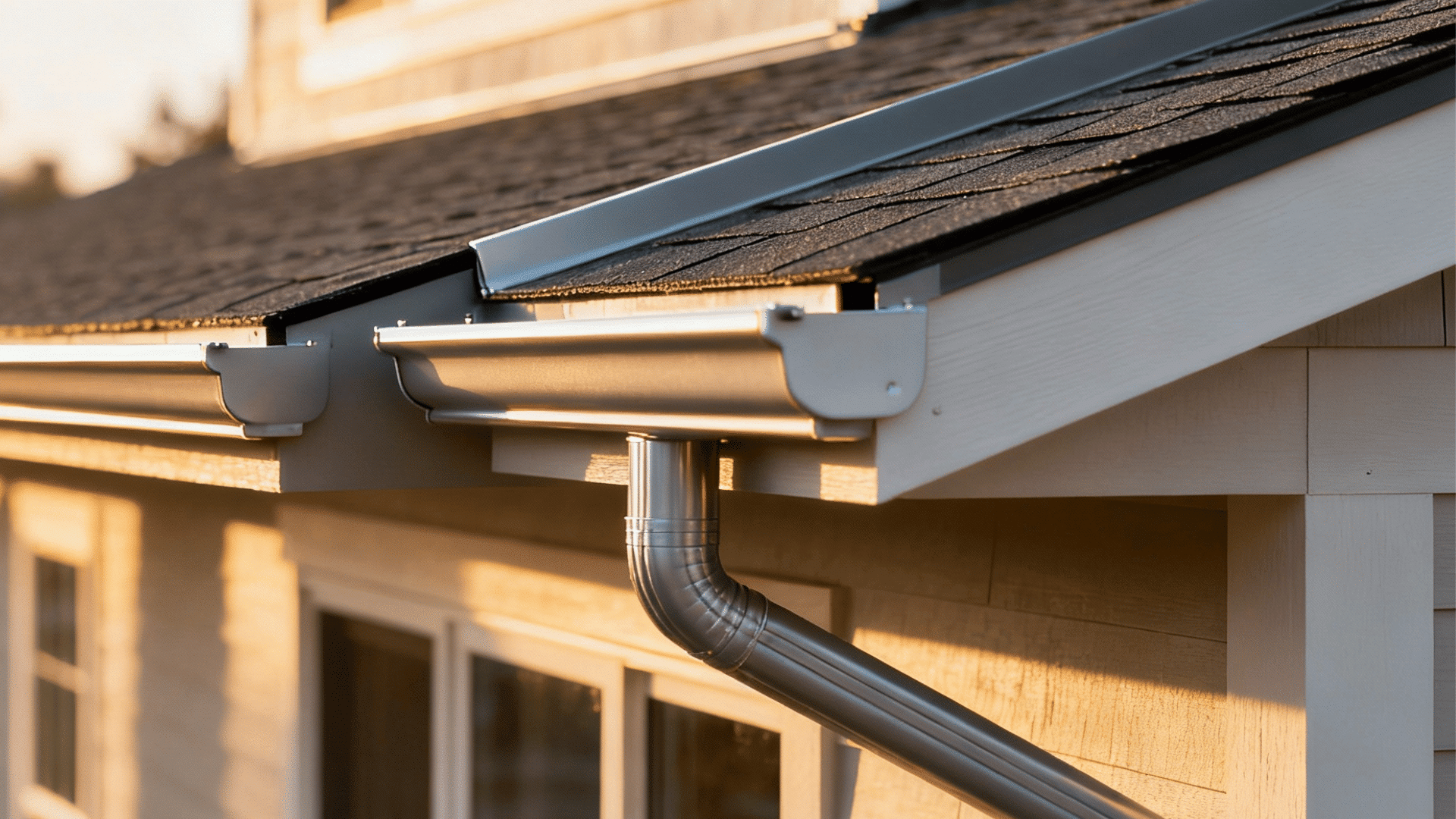
Choosing the right gutter size is an important part of caring for any home. Gutters help guide rainwater away, and the size plays a big role in how well they work.
Many homeowners want a simple way to understand the basic options before making a choice.
Standard sizes are often used because they fit most homes and are easy to install. With the right size, a gutter system can last longer and work more smoothly.
This guide helps readers see what to think about before picking the best option for their home.
What are Standard Gutter Sizes?
Standard gutter sizes refer to the most commonly used widths designed to handle typical residential and light commercial water flow.
The two most popular profiles, K-style and half-round, come in a range of widths to suit different roof sizes, rainfall levels, and architectural styles.
Most homes use 5-inch gutters, while 6-inch systems are chosen for larger roofs or areas with heavy rainfall.
Downspouts are similarly sized to match the gutter’s capacity, with 2″ x3″ and 3″ x4″ being the most common pairings.
Material options such as aluminum, steel, copper, and vinyl are available in these standard sizes, giving homeowners flexibility in style, durability, and budget.
- K-Style Gutters: 5″, 6″, 7″
- Half-Round Gutters: 5″, 6″, 7″
Step-By-Step Instructions for Measuring Gutter Size

Use the step-by-step instructions below to measure your roof area and determine the gutter size your home truly needs.
1. Calculate the Square Footage of Your Roof
Measure the length and width of each roof section that drains into a gutter system. Multiply length by width for each section, then add all sections together to determine the total square feet.
For complex roofs with multiple planes, break down into rectangular sections for easier calculation and greater accuracy.
2. Calculate the Pitch of Your Roof
Roof pitch represents the slope or angle of your roof, expressed as a ratio of vertical rise to horizontal run:
- Use a level and a tape measure from your attic or against the roofline
- Measure 12 inches horizontally from the roof surface
- Measure the vertical distance from that point to the roof
- Express as a ratio (example: 6 inches of rise = 6:12 pitch)
3. Multiply Your Roof’s Square Footage by a Number Determined by the Roof’s Pitch
Apply a pitch multiplier to your roof’s square footage to account for increased water velocity on steeper roofs:
- Flat to 3:12 pitch: Multiply by 1.0
- 4:12 to 6:12 pitch: Multiply by 1.1
- 7:12 to 9:12 pitch: Multiply by 1.2
- 10:12 to 12:12 pitch: Multiply by 1.3
4. Use the Resulting Number to Choose the Right Gutter Size
Match your calculated drainage area to standard gutter capacities to determine appropriate sizing:
- Up to 2,500 sq ft: 5-inch gutters with 2×3-inch downspouts
- 2,500 to 5,500 sq ft: 6-inch gutters with 3×4-inch downspouts
- 5,500+ sq ft: 7-inch or larger commercial gutters
Different Types of Gutter Sizes
Before selecting a system, it’s helpful to know the different gutter sizes available and how each one performs.
1. K-Style Gutter
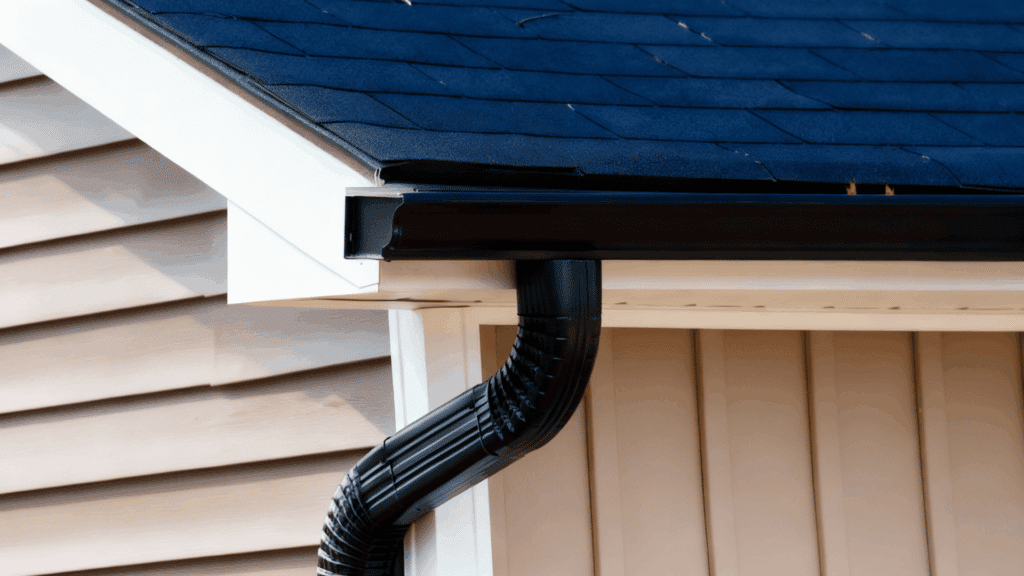
K-style gutters feature a decorative profile resembling crown molding, with a flat back and bottom for easy installation against fascia boards.
The angular design holds more water than comparable half-round gutters while complementing contemporary architectural styles.
| Pros | Cons |
|---|---|
| Higher water capacity than a half-round of the same width | Interior corners collect debris more easily |
| Matches modern home aesthetics and trim profiles | More difficult to clean due to the angular shape |
2. Half-Round Gutter
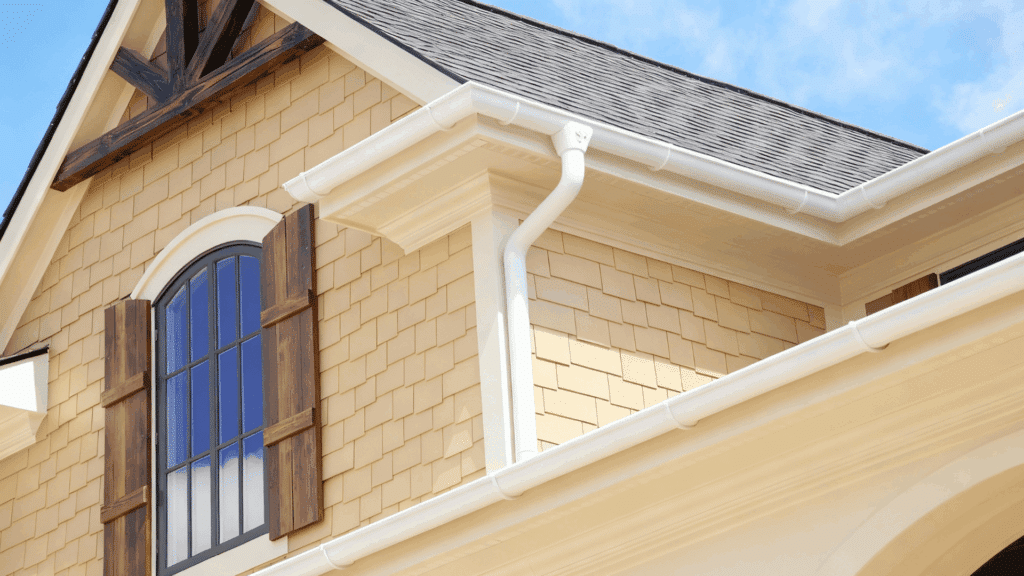
Half-round gutters display a semicircular cross-section that complements historic, Victorian, and traditional architectural styles.
Typically available in 5-inch and 6-inch diameters, these gutters offer smooth interior surfaces that facilitate easier debris removal and maintenance.
| Pros | Cons |
|---|---|
| Smooth interior prevents debris accumulation and clogs | Lower water capacity than the K-style of equal size |
| Classic aesthetic perfect for historic home restorations | Requires specialized brackets, increasing installation costs |
Oversized Gutters: When You Really Need Them?

Oversized gutters, typically 7-inch or 8-inch systems, are designed to handle significantly more water than standard ones.
You need them when your roof produces a large volume of runoff due to steep pitch, expansive surface area, or multiple rooflines that channel water into one section.
Homes located in regions with heavy or frequent rainfall also benefit from oversized gutters, as they minimize overflow and reduce the risk of foundation damage.
These larger systems offer better protection for fascia boards, landscaping, and siding by ensuring water is directed away efficiently.
While they cost more upfront, oversized gutters provide long-term peace of mind in high-demand drainage situations.
How to Choose the Right Gutter Size
A few key considerations will help you choose a gutter size that fits your home’s design and drainage needs.
- Consider Local Rainfall Intensity: Areas with heavy or frequent rainfall often require wider gutters, such as 6-inch or 7-inch systems, to prevent overflow and protect the home.
- Evaluate Roof Size: Larger roofs produce more runoff, so they need gutters with higher capacity to manage increased water volume.
- Factor in Roof Pitch: Steep roof angles cause water to flow faster, making oversized gutters a better fit for capturing and channeling runoff efficiently.
- Assess Roofline Complexity: Homes with multiple valleys or intersecting roof sections often direct water to single points, requiring larger gutter systems.
- Match Downspout Size: Ensure downspouts are appropriately sized for your gutter width to maintain smooth water flow without backups or overflow.
- Consider Material and Durability: Some materials, like steel or copper, perform better for larger gutter systems and heavy water loads.
Average Cost Differences by Gutter Size
The table below breaks down the average cost differences between common gutter sizes to help you budget more accurately.
| Gutter Size | Material Cost (per linear foot) | Installed Cost (per linear foot) | Best For |
|---|---|---|---|
| 4-inch | $3 – $6 | $6 – $10 | Small roofs, sheds, and low rainfall areas |
| 5-inch | $4 – $8 | $8 – $14 | Standard residential homes |
| 6-inch | $6 – $12 | $12 – $20 | Larger roofs or moderate to heavy rainfall |
| 7-inch | $9 – $16 | $18 – $30 | High-flow areas, steep roofs, and metal roofs |
| 8-inch | $12 – $20 | $24 – $40 | Large commercial buildings or extreme rainfall |
Common Mistakes to Avoid
Avoid these frequent gutter sizing and installation errors to keep your home protected and your drainage system running smoothly.
- Choosing Gutters Based on Price Alone: Opting for the cheapest option often leads to undersized or low-quality gutters that fail to handle heavy rainfall.
- Ignoring Roof Pitch and Size: Steep or large roofs shed water more quickly, and using small gutters can cause frequent overflow and foundation damage.
- Mismatching Downspout Size: Pairing large gutters with small downspouts restricts water flow, reducing overall drainage efficiency.
- Overlooking Local Rainfall Requirements: Homes in high-rain areas need wider gutters, but many homeowners choose standard sizes without considering local climate.
- Neglecting Proper Slope and Installation: Poor installation prevents water from flowing smoothly, causing pooling, sagging, or leaks.
- Failing to Maintain Gutters Regularly: Clogged gutters can’t perform properly, regardless of size, leading to overflow and water damage.
Conclusion
Understanding standard gutter dimensions and knowing how to measure gutter size accurately are fundamental skills for any homeowner planning installation, replacement, or repair projects.
The right gutter size depends on multiple factors, including your roof’s square footage, pitch angle, local rainfall intensity, and architectural considerations.
While measuring gutter size may seem straightforward, ensuring compatibility with downspouts and calculating adequate capacity requires careful attention to detail and understanding.
Consult with licensed gutter installation professionals who can assess your property’s specific needs and recommend the optimal sizing for maximum protection and performance.