

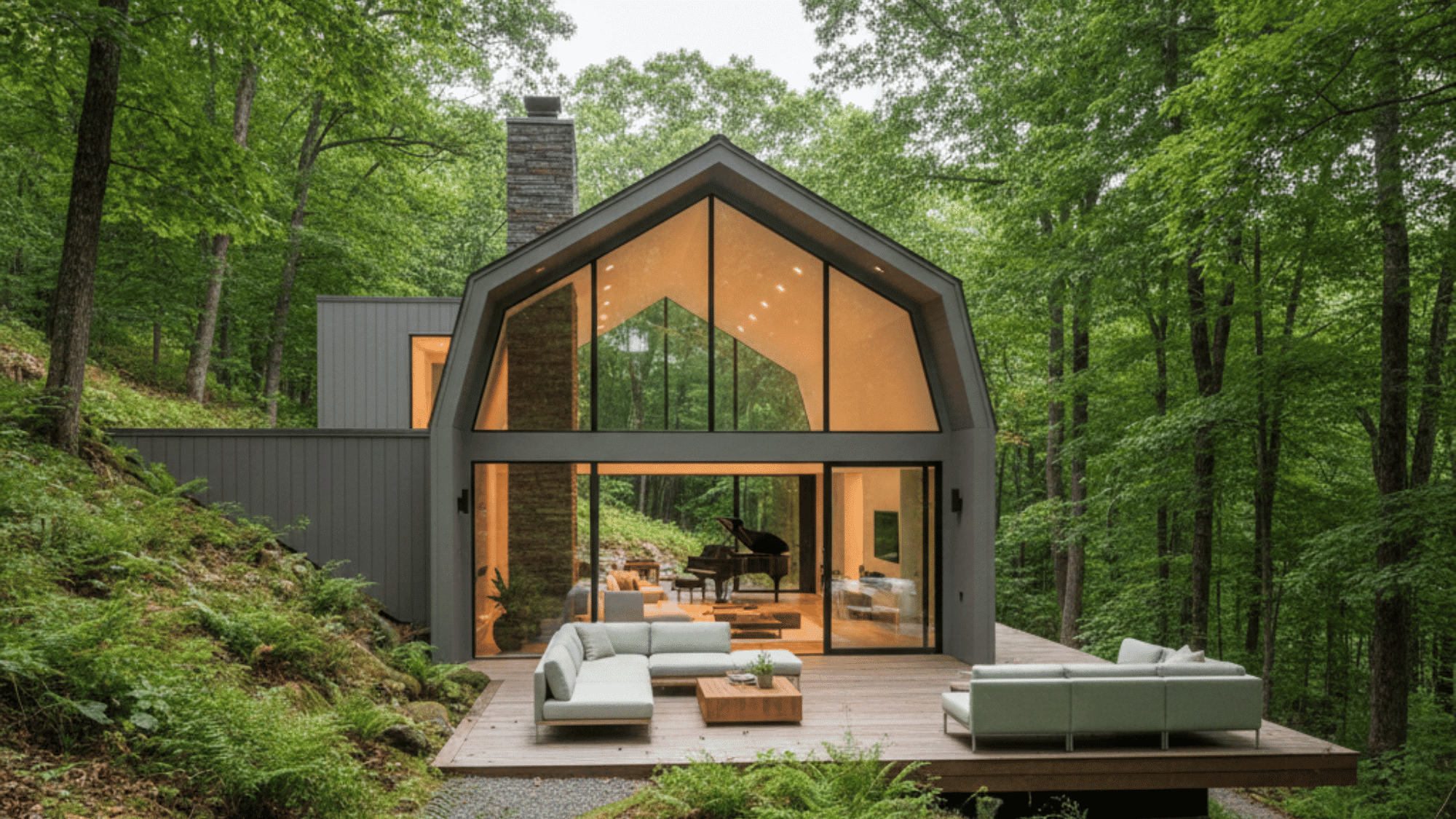
Some houses have a way of stopping people in their tracks. Dutch Colonial homes are exactly that kind of house.
With their distinct rooflines and old-world charm, these homes have stood the test of time and still show up in neighborhoods across the country.
There’s a lot more to this style than just the shape of the roof. From its origins in early America to the details that make it so recognizable, Dutch Colonial design has quite a story to tell.
And for anyone curious about what makes these homes tick, this blog covers it all
What is a Dutch Colonial House?
A Dutch Colonial house is a style of home that traces its roots back to the early Dutch settlers who came to America in the 1600s.
These homes are best known for their gambrel roofs (double-sloped roofs) that give the houses a barn-like look from the outside. The design is practical, spacious, and easy to spot.
Over the years, the style picked up new features and spread across different parts of the country.
Today, Dutch Colonial homes sit in a sweet spot between historic character and everyday comfort, making them a popular choice for homeowners who love classic architecture.
Key Characteristics of Dutch Colonial Architecture
Dutch Colonial homes have several defining features that set them apart. Each element tells a story of practical design rooted in history.
1. The Gambrel Roof
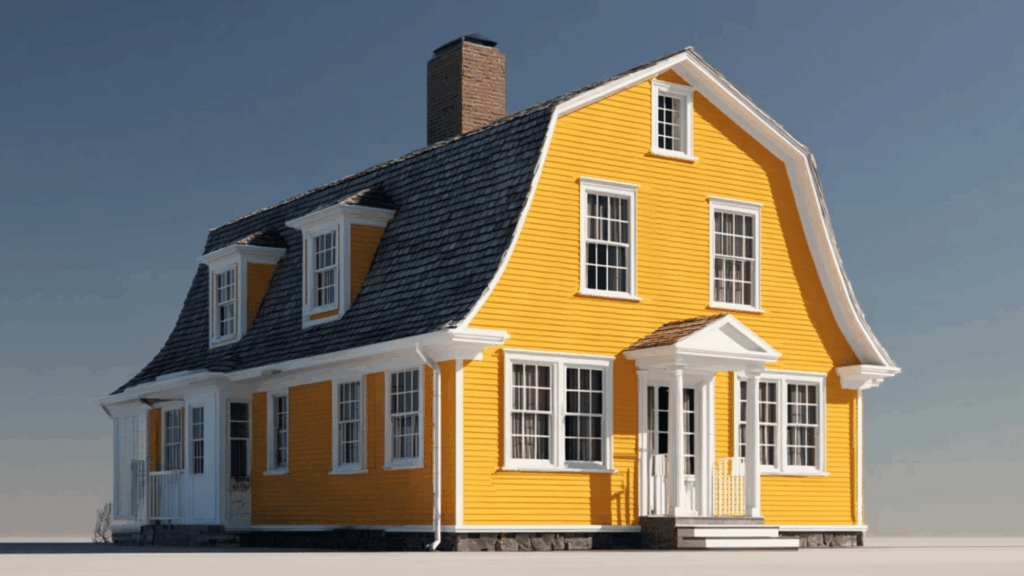
The gambrel roof is the most iconic feature of Dutch Colonial architecture.
It has two slopes on each side: the lower slope is steep, and the upper slope is gentler. This design creates extra usable space in the upper level of the home.
It also gives the house that signature barn-like silhouette that makes it so easy to recognize from the street.
2. Flared Eaves

One detail that truly stands out in Dutch Colonial homes is the flared eaves. The roofline extends outward and curves slightly upward at the edges, creating a distinctive overhang.
This wasn’t just for looks; it helped direct rainwater away from the walls and foundation. Today, this feature remains one of the clearest signs that a home follows the Dutch Colonial style.
3. Symmetrical Facade
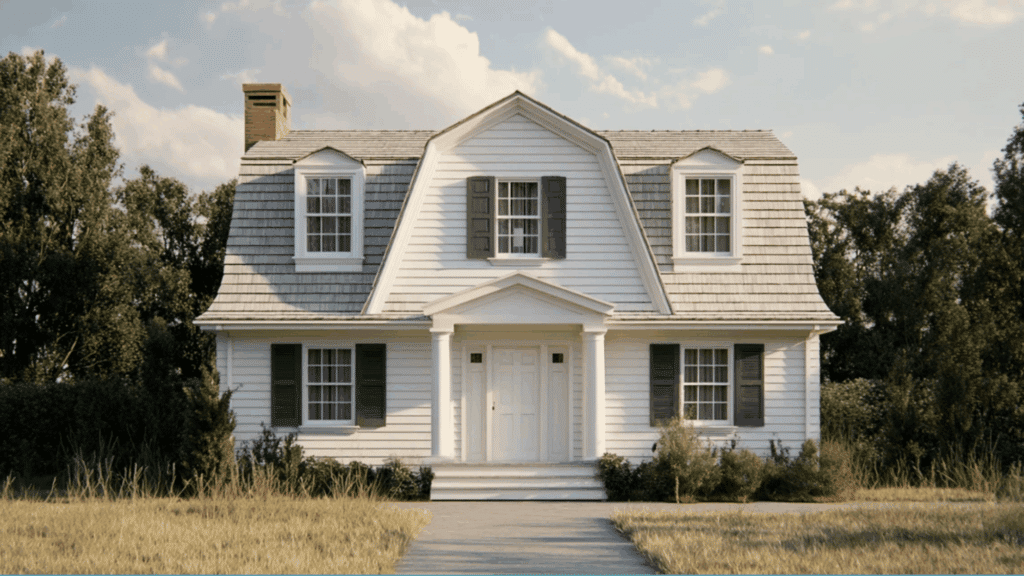
Dutch Colonial homes almost always have a balanced, symmetrical front.
Windows line up evenly on both sides of the front door, giving the home a neat and orderly appearance. This sense of balance was important to early Dutch builders.
It made the home look well-planned and solid, and that same quality continues to give these homes strong curb appeal even today.
4. Shed Dormers
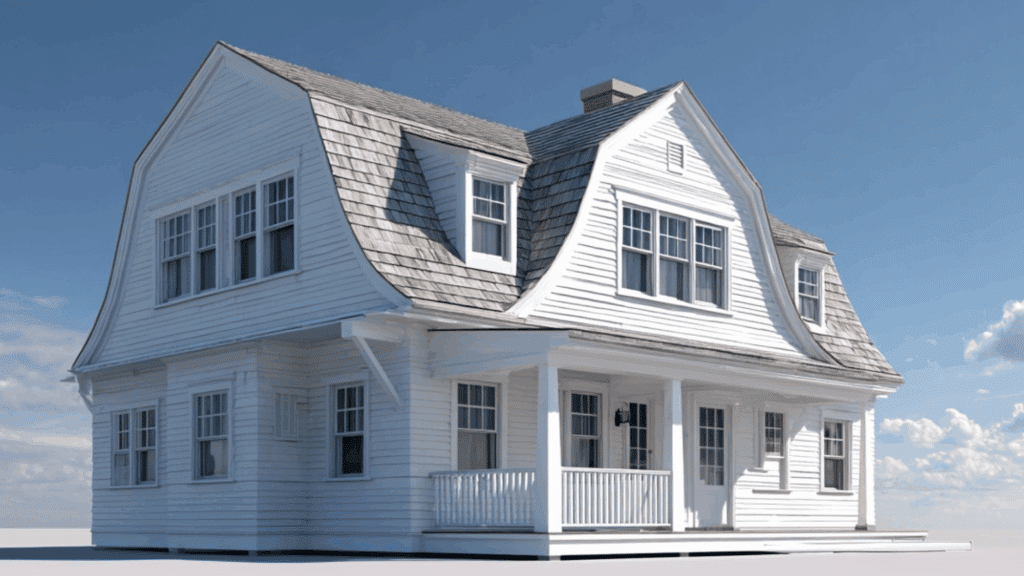
Shed dormers are a common addition to Dutch Colonial homes. These are wide, flat-roofed windows that extend out from the gambrel roof, bringing in natural light and adding headroom to the upper floor.
Unlike smaller individual dormers, shed dormers run nearly the full width of the roof. They make the upper level feel open and bright rather than cramped or cave-like.
5. Dutch Door
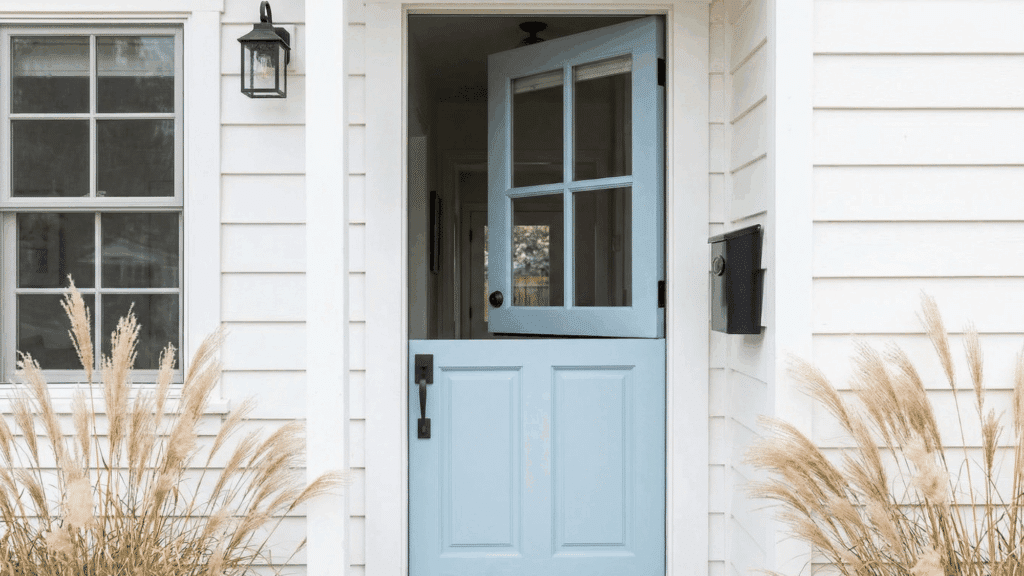
The Dutch door is a charming and functional feature tied directly to this architectural style.
It splits horizontally in the middle, so the top half can open while the bottom stays shut. Early settlers used this design to keep animals out while letting fresh air in.
Many homeowners still use Dutch doors today, and they add a warm, welcoming character to the home’s entrance.
6. Brick or Wood Exterior
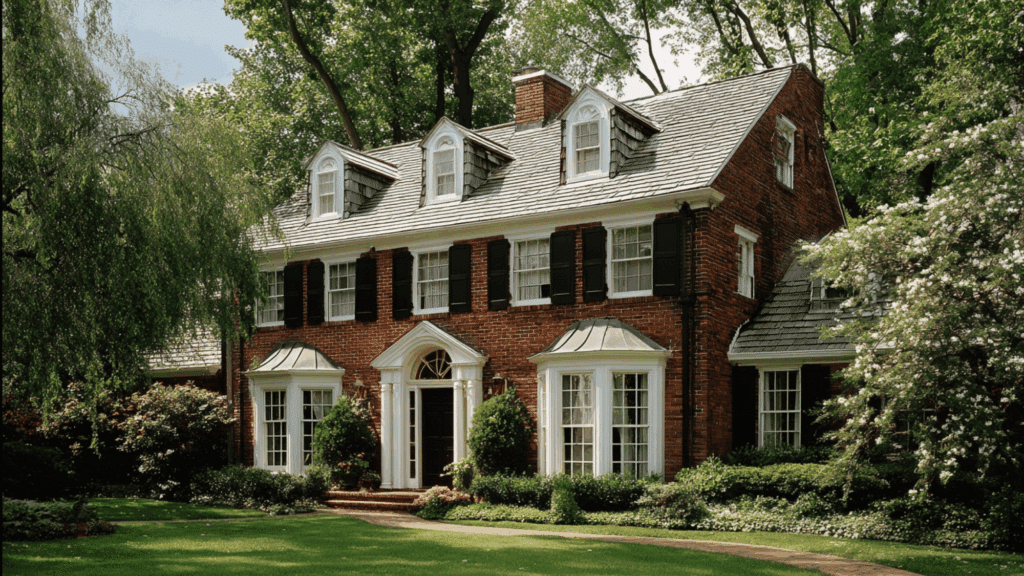
Dutch Colonial homes traditionally used brick or wood for their exteriors. Early Dutch settlers in America relied on locally available materials, so brick was common in areas where clay was easy to find.
Wood clapboard siding was equally popular. Both materials gave the homes a sturdy, long-lasting finish. Many Dutch Colonial homes today still feature these classic exterior materials, keeping that historic look intact.
The History of Dutch Colonial Houses in America
The story of Dutch Colonial houses in America begins in the early 1600s.
Dutch settlers arrived in what is now New York and New Jersey, bringing their building traditions with them. They built homes that could handle the local climate while still feeling familiar.
Over time, these homes took on a life of their own, blending Dutch building methods with American materials and needs. The style grew in popularity through the 18th and 19th centuries.
By the early 1900s, it had seen a major revival. Architects and homeowners alike looked back at this classic design and gave it a fresh start.
Dutch Colonial vs Other Colonial House Styles
Colonial architecture comes in many forms. Here is a quick look at how Dutch Colonial compares to other popular colonial house styles.
| Feature | Dutch Colonial | British Colonial | French Colonial | Spanish Colonial |
|---|---|---|---|---|
| Roof Type | Gambrel roof with flared eaves | Gabled or hipped roof | Hipped roof with wide overhangs | Low-pitched red tile roof |
| Exterior Material | Brick or wood clapboard | Brick or wood siding | Stucco or wood | Stucco with adobe |
| Key Feature | Shed dormers and Dutch doors | Symmetrical facade with shutters | Wraparound porches | Arched doorways and courtyards |
| Origin in America | New York and New Jersey | New England and the South | Louisiana and Mississippi | Florida, Texas, California |
| Window Style | Double-hung, evenly spaced | Double-hung with shutters | Tall, narrow with shutters | Small, deeply set windows |
| Overall Look | Barn-like, charming, historic | Formal, balanced, traditional | Light, airy, Southern charm | Warm, earthy, Mediterranean feel |
Remodeling and Modern Updates for Dutch Colonial Houses
Updating a Dutch Colonial home does not mean losing its charm. These changes help blend historic character with modern-day comfort and function.
- Open Up the Floor Plan: Removing non-structural interior walls creates a more open, connected living space that suits today’s lifestyle.
- Upgrade the Shed Dormers: Replacing old dormer windows with larger, energy-efficient ones brings in more natural light and improves insulation across the upper floor.
- Add a Modern Kitchen: Updating the kitchen with clean-lined cabinetry and quality appliances gives the home a fresh feel without disturbing its overall historic character.
- Refinish the Exterior Siding: Fresh paint or new wood clapboard siding in a period-appropriate color instantly refreshes the home’s curb appeal and protects it from weather damage.
- Install a New Dutch Door: Replacing a standard front door with an updated Dutch door keeps the style intact while adding a functional and eye-catching entry point.
- Update the Bathrooms: Swapping out dated fixtures for cleaner, more modern options gives bathrooms a practical upgrade while keeping the overall warmth of the home’s interior style.
Conclusion
Dutch Colonial homes have earned their place in American architectural history for good reason.
The gambrel roof, flared eaves, and Dutch doors are not just design choices; they are marks of a style built to last. For homeowners drawn to character and craftsmanship, this style delivers on both fronts.
Modern updates can bring these homes up to speed without stripping away what makes them special.
So whether the goal is restoring an older Dutch Colonial or building fresh with this style in mind, one thing is clear: this is a design worth knowing, appreciating, and living in.