

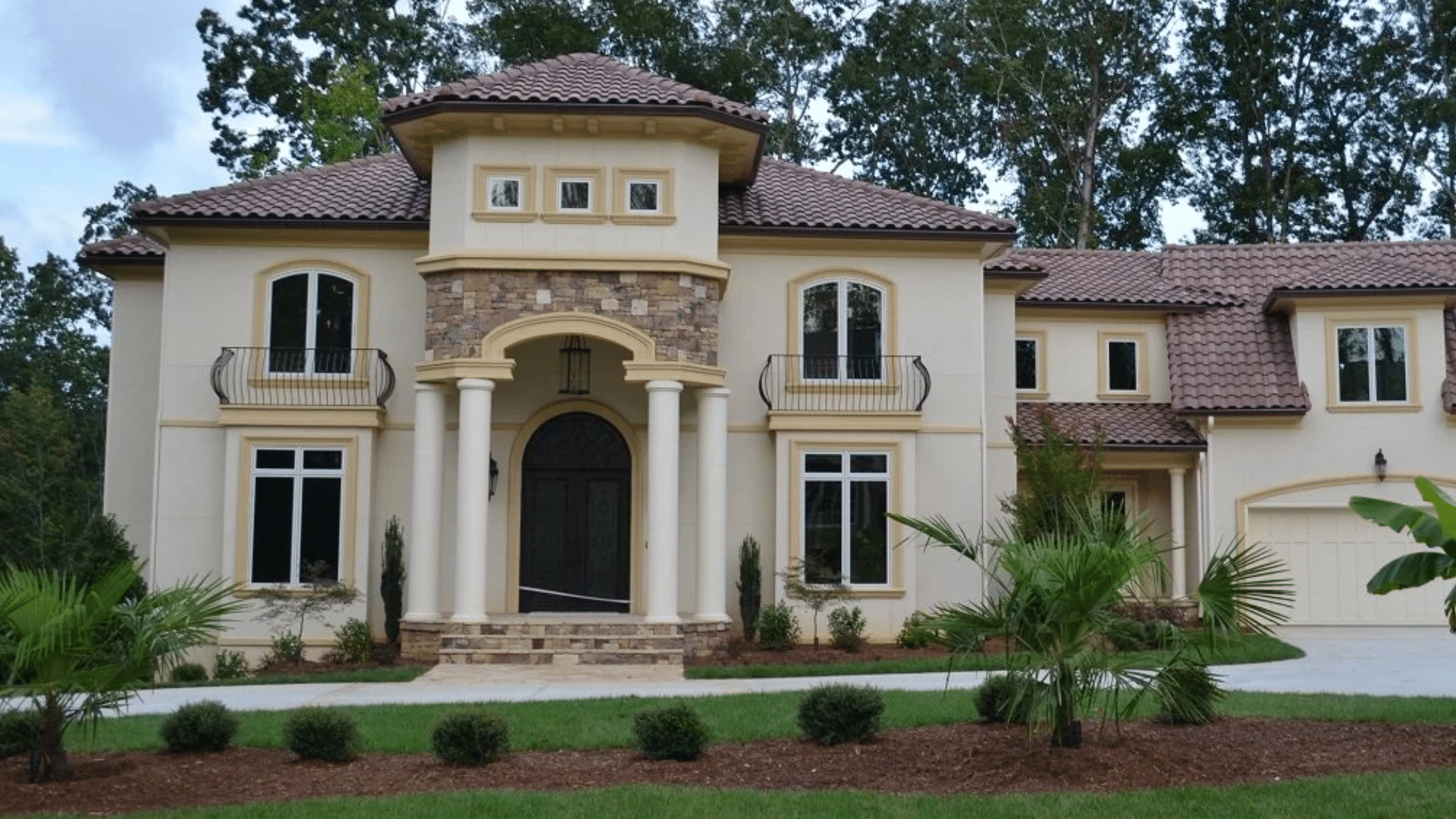
Building a home is a big decision, and the material you choose matters more than most people think. A concrete home is built using solid concrete walls or panels instead of standard wood framing.
More homeowners are paying attention to this option today because it offers strength, long life, and steady indoor comfort.
Concrete homes also handle heat, cold, and noise better, which makes them appealing in many parts of the US.
In this guide, you’ll learn everything you need to know before planning one. I have shared common floor plans, layout options, and popular design styles.
You’ll also learn about how concrete homes compare to traditional houses.
If you are thinking about building from scratch or choosing a new plan, this article helps you understand what works, what to avoid, and plan.
What Is a Concrete Home?
A concrete home is a house built mainly using concrete instead of wood framing. The walls, and sometimes the floors and roof, are made from solid materials that are poured or set in place.
Common options include poured concrete, concrete blocks, and precast concrete panels.
These materials form the main structure of the home, not just the foundation.
Unlike standard houses that rely on wood studs and drywall, concrete homes use solid walls that feel heavier and more stable.
This difference affects how the home handles heat, noise, and long-term wear.
Concrete homes are often planned with simple layouts and clean lines because the material works best with clear shapes and strong support.
While planning takes more effort, the result is a strong home built to last for many years.
Popular Concrete House Floor Plans
Concrete works best with layouts that feel open, simple, and well planned. These floor plans focus on easy movement, smart spacing, and daily comfort.
1. Open Floor Plan Concrete Homes
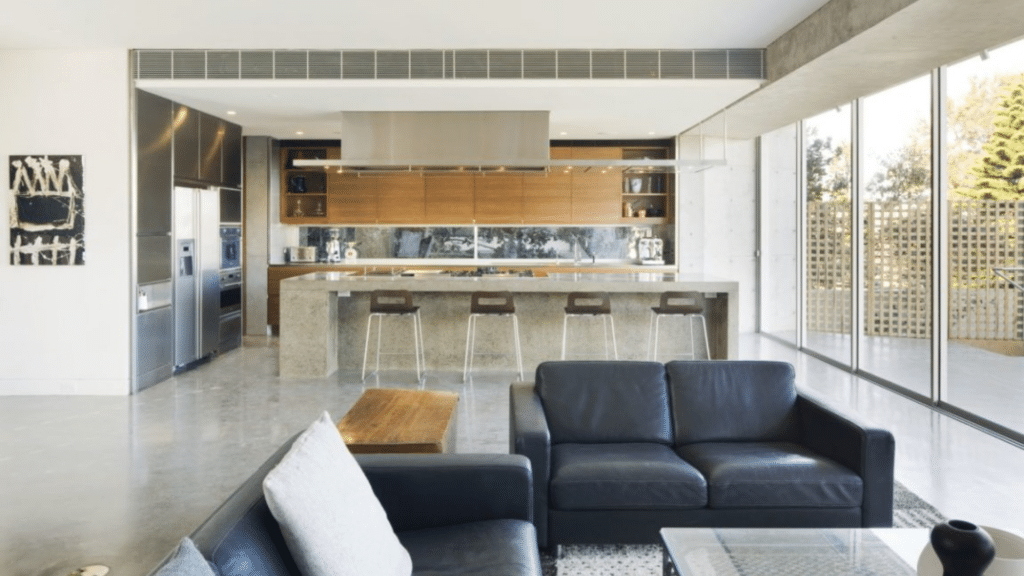
Open floor plans are a common choice for concrete homes because the material supports wide, open spaces with fewer interior walls.
This layout connects the kitchen, dining, and living areas, which helps light move through the home.
Concrete walls also help control noise and temperature in open spaces. For everyday living, this design makes homes feel larger and easier to use.
It works well for families, gatherings, and modern living needs without wasted space.
2. Modern Concrete Home Design
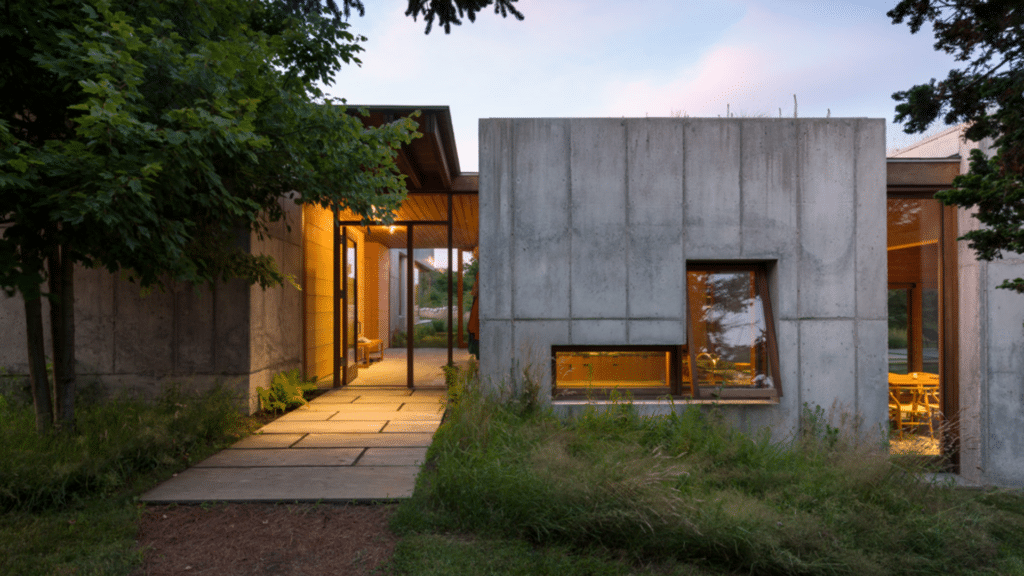
Modern concrete homes use clean lines, open spaces, and simple layouts.
Flat roofs and large windows are common because concrete supports wide openings with fewer walls. This style focuses on easy movement and natural light, which helps rooms feel open and calm.
Concrete also pairs well with wood and glass, softening the overall look.
For everyday living, modern designs keep rooms connected and reduce wasted space while staying easy to maintain.
3. Minimalist Concrete Home Style
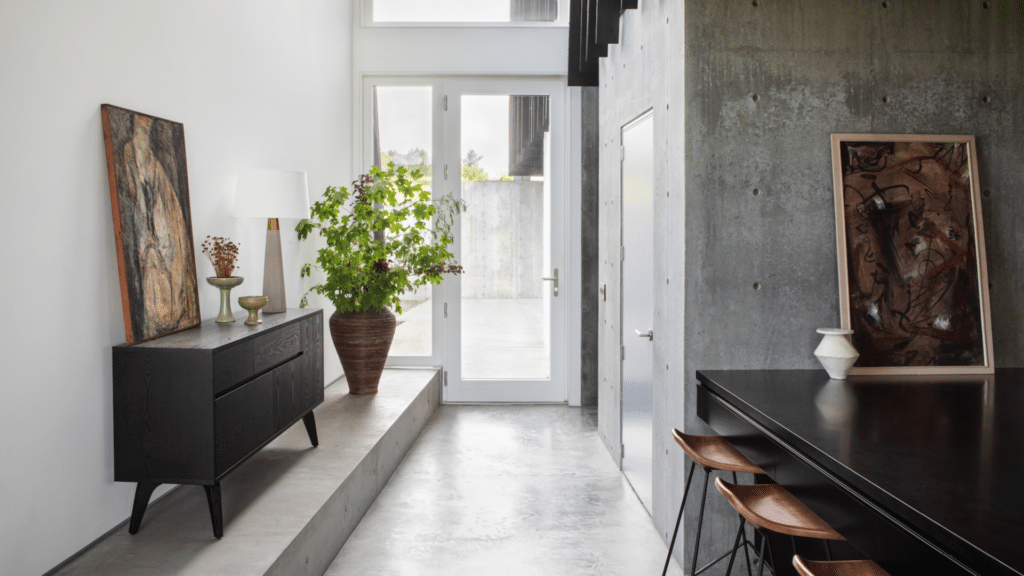
Minimalist concrete homes focus on simple layouts and fewer details. The goal is to keep spaces open and clutter-free.
Concrete walls work well here because they reduce the need for extra finishes. Rooms are designed for clear movement and basic function, which makes daily tasks easier.
Storage is often built into walls to save space.
This style suits homeowners who want a clean, low-maintenance home with a calm and practical feel.
4. Industrial-Inspired Concrete Homes
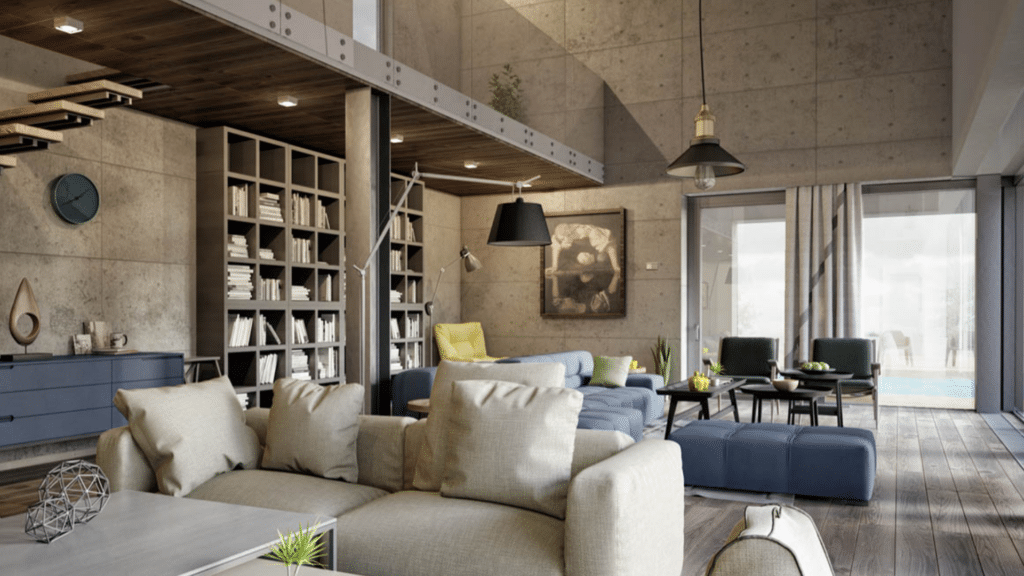
Industrial concrete homes highlight raw materials and simple finishes. Exposed concrete walls, open ceilings, and wide spaces are common features.
This style works well with concrete because the material is strong and needs little covering.
Large open rooms allow flexible use for work, family time, or hobbies.
Everyday living feels open and flexible, and the design supports easy changes without heavy remodeling or added structure.
Pros and Cons of Building a Concrete Home
Concrete homes offer long-term benefits, but they also come with a few challenges. Understanding both sides helps you decide if this building style fits your plans.
| Pros | Cons |
| Strong structure that resists storms and wear | Higher upfront building cost |
| Long-lasting materials with low upkeep | Requires detailed planning early on |
| Better control over indoor temperatures | Fewer builders specialize in concrete |
| Helps reduce outside noise | Design changes are harder after construction starts |
| Can lower energy bills over time | Construction timelines may be longer |
How to Choose the Right Concrete Home Plan?
Early planning helps avoid changes later and keeps the build process on track. Clear choices also make it easier to manage time, cost, and layout needs.
- Lot Size and Shape: Choose a plan that fits your land without forcing layout changes or wasted space.
- Climate Conditions: Pick designs that handle heat, cold, wind, or moisture common in your area.
- Budget Limits: Set a firm budget early since concrete homes often cost more upfront.
- Plan Type Choice: Custom plans offer flexibility, while pre-made plans save time and reduce costs.
- Future Needs: Think about extra rooms, storage, or lifestyle changes down the road.
- Layout Flexibility: Select a plan that allows small updates later without major structural work.
Concrete Homes vs Traditional Houses
Both home types serve the same purpose but offer different living experiences. Looking at daily use makes the differences easier to understand.
| Feature | Concrete Homes | Traditional Wood Houses |
| Upfront Cost | Higher initial build cost | Lower initial build cost |
| Long-Term Maintenance | Needs less repair over time | Requires regular upkeep |
| Durability | Strong and long-lasting | More prone to wear |
| Indoor Comfort | Holds steady indoor temperatures | Temperature changes more easily |
| Noise Control | Blocks outside noise better | Allows more outside sound |
| Lifespan | Built to last for decades | Shorter lifespan with more repairs |
Common Mistakes to Avoid when Building Concrete Homes
Small decisions early on can have a big impact later. Clear planning helps prevent delays, extra costs, and layout problems.
- Skipping detailed planning: Rushing the plan stage often leads to changes that raise costs during construction.
- Underestimating the budget: Concrete builds need accurate cost estimates to avoid running out of funds midway.
- Choosing the wrong floor plan: A layout that does not match daily needs can feel cramped or awkward to use.
- Ignoring climate needs: Designs not suited for local weather can increase energy bills over time.
- Making late design changes: Adjustments after building starts are costly and hard to fix with concrete.
- Not hiring experienced builders: Lack of concrete experience can cause delays and quality issues.
Is Concrete Homes Right for You?
A concrete home can be a good fit if your lifestyle, budget, and long-term plans line up with what this type of build offers.
These homes work well for people who want long-lasting strength and less worry about repairs over time.
If you plan to stay in your home for many years, concrete can make sense because it holds up well and needs less upkeep. Budget also matters.
The upfront cost is higher, so it helps if you can plan carefully from the start.
Concrete homes are often best for homeowners who value stable indoor comfort, quieter spaces, and simple layouts.
They also suit areas with harsh weather, where strong walls matter more.
Before choosing a plan, think about how you live now and how that may change later. A concrete home works best when it matches your daily needs and future goals.
Conclusion
Choosing a concrete home is about picking a layout that fits how you live, not just a strong material.
Throughout this guide, you learned what concrete homes are, common floor plans, design styles, and the planning choices that matter most.
The right plan helps your home feel comfortable, easy to move through, and built for long-term use.
Taking time to think about layout, budget, and future needs can save stress and costs later.
If you are early in the process, this is the best moment to research plans, compare options, and ask the right questions.
A well-chosen design makes a real difference once construction starts.
If you have built or plan to build a concrete home, share your thoughts in the comments. Your insight could help others make better decisions.