

Some homes feel calm the moment you see them. The space looks open, balanced, and easy to live in. That feeling is often what draws people to Japanese design, even if they do not know why at first.
In this guide, you will learn everything you need to know about Japanese-style houses in a clear and simple way.
You will learn how these homes began, what defines traditional designs, and how modern versions fit today’s lifestyles.
If you are researching home styles or planning future ideas, this article is written for you.
The goal is to make the details easy to understand without adding confusion. By the end, you will know what makes this style work and whether it fits your needs.
What Is a Japanese-Style House?
A Japanese-style house is built around balance, function, and calm living. The layout focuses on open spaces, flexible rooms, and smooth movement from one area to another.
Many homes use sliding doors instead of fixed walls, which helps rooms change purpose during the day.
Natural materials play a big role, especially wood, paper, and stone, because they connect the home to nature.
Floors often sit low to the ground, and furniture stays minimal to reduce clutter. Another key idea is the strong indoor and outdoor connection, such as gardens or courtyards.
At its core, a Japanese-style house is about using space wisely.
It values simplicity, comfort, and everyday ease rather than decoration. The goal is a home that feels practical, calm, and easy to live in.
These principles guide daily life and shape how people move inside.
History of Japanese House Design
Japanese house design has changed over many centuries, shaped by daily life, climate, and cultural values.
Early homes were built with wood and raised floors to handle heavy rain and humidity. This design helped keep spaces dry and cool.
As families grew and social customs formed, layouts became more organized and purposeful.
Rooms were designed to serve more than one use, which matched a simple and flexible way of living. Cultural beliefs also influenced home design, especially the focus on balance and order.
Nature played an important role, so homes often opened toward gardens or outdoor spaces.
Over time, these ideas stayed strong even as building methods improved. While materials and tools evolved, the core goals remained the same.
Japanese houses continued to focus on comfort, practicality, and harmony with the environment and daily routines.
Key Features of Traditional Japanese Houses
Traditional Japanese houses follow clear design rules shaped by daily life and nature. Each feature focuses on comfort, flexibility, and simple living.
1. Tatami Flooring
Tatami flooring is one of the most recognizable features of traditional Japanese houses. These mats are made from woven straw and provide a soft surface for daily activities.
Room sizes are often planned using tatami measurements, which keeps spaces balanced and organized.
Tatami helps regulate indoor temperature by staying cool in warm weather and warm in cooler months.
Shoes are removed before stepping on them, which supports cleanliness. This flooring also reduces the need for large furniture, helping rooms stay open and easy to use.
2. Sliding Doors and Partitions
Sliding doors replace fixed walls in many traditional Japanese homes. Shoji doors are lightweight and allow soft natural light to pass through, while fusuma doors provide privacy when needed.
These doors slide along tracks, making it easy to change room layouts.
Spaces can open for gatherings or close for quiet time.
This flexibility makes homes feel larger and more practical. Sliding doors also improve airflow and lighting, which supports comfort in smaller living areas.
3. Natural Wood Construction
Wood is the main building material in traditional Japanese houses. It is chosen for its strength, flexibility, and ability to handle changes in weather.
Wooden beams and columns are often visible and kept simple, showing natural textures.
This approach creates a warm and calm interior. Wood also works well in areas prone to earthquakes because it can bend without breaking.
Repairs are easier, which helps homes last for many years with proper care.
4. Connection to Outdoor Spaces
Traditional Japanese houses are designed to stay close to nature and daily rhythms. Many include an engawa, a narrow wooden platform that runs along the edge of the home.
This space works as a bridge between indoor rooms and the outdoors.
Gardens are placed where they can be viewed from inside, adding calm without taking up space.
Sliding doors help fresh air and natural light move through the house, making daily living feel quiet, balanced, and closely tied to the surrounding environment every single day.
Differences Between Traditional and Modern Japanese Styles
These differences reflect changing lifestyles, building methods, and space needs while keeping core design ideas rooted in balance.
| Aspect | Traditional Japanese Style | Modern Japanese Style |
| Layout | Flexible rooms that change purpose throughout the day | Fixed room layouts designed for specific functions |
| Materials | Natural materials like wood, paper, and straw | Mix of natural materials with concrete, steel, and glass |
| Flooring | Tatami mats are used across living and sleeping areas | Wood, tile, or polished concrete floors |
| Doors and Walls | Sliding doors and movable partitions | A combination of sliding doors and solid walls |
| Furniture | Low furniture or floor seating with minimal pieces | Standard-height furniture with a clean, simple look |
| Outdoor Connection | Strong visual link to gardens and courtyards | Outdoor spaces are used more as functional extensions |
| Technology Use | Minimal technology integrated into the home | Modern systems for lighting, heating, and storage |
| Design Focus | Practical use and balance in daily living | Comfort, efficiency, and modern lifestyle needs |
Different Types of Japanese Houses
Japanese houses come in several forms, each shaped by location, purpose, and daily living needs. These types show how design adapts to space, climate, and lifestyle over time.
1. Minka

Minka are traditional homes once lived in by farmers, craftsmen, and merchants, mainly in rural areas.
They are built using natural materials like wood, bamboo, clay, and straw sourced locally. Steep thatched roofs help protect the house from heavy rain and snow.
Inside, rooms stay open with few permanent walls, allowing spaces to change use throughout the day.
A central hearth often served for cooking and warmth. Minka focuses on durability, flexible living, and practical design shaped by seasonal work and family life.
2. Machiya
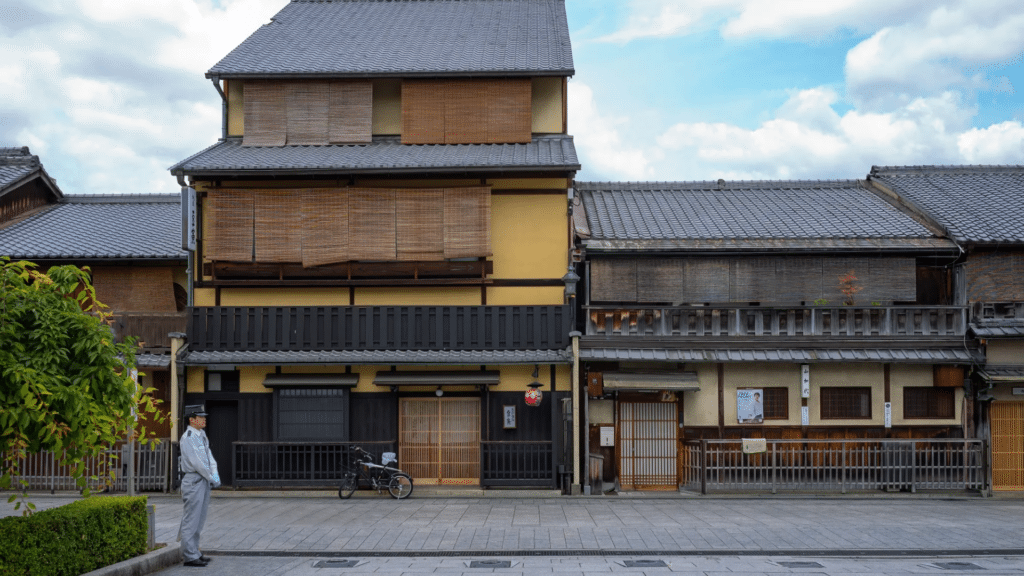
Machiya are narrow wooden townhouses commonly found in historic cities such as Kyoto. They were built on long, narrow plots, which created deep layouts stretching away from the street.
The front area often functioned as a shop, while living spaces sat further inside.
Small inner courtyards bring natural light and airflow into darker areas. Wooden lattice windows offer privacy while allowing air to pass through.
Machiya homes blend business and family life while making efficient use of limited urban space.
3. Ryokan

Ryokan are traditional inns that reflect classic Japanese residential design. They include tatami flooring, sliding doors, and low furniture to keep rooms open and flexible.
During the day, rooms are cleared for sitting or dining, while futons are laid out at night for sleeping.
Many ryokan feature shared bathing areas and carefully designed gardens.
The layout focuses on comfort, relaxation, and hospitality rather than storage or long-term use. Ryokan shows how traditional house design supports rest and quiet living.
Is a Japanese-Style House Right for You?
These points focus on daily habits and comfort rather than looks, helping you decide if this housing style fits your routine.
- You prefer open layouts that allow rooms to change purpose during the day
- If you value simple spaces with less furniture and fewer visual distractions
- You are comfortable removing shoes indoors and keeping floors clean
- You enjoy natural light, fresh air, and a close link to outdoor areas
- If you like using natural materials such as wood and paper in home design
- You are okay with limited storage and a more minimal approach to living
- You want a home that focuses on calm daily routines rather than decoration
Conclusion
Japanese-style houses show how thoughtful design can shape daily life. From flexible layouts to natural materials, every detail serves a clear purpose.
These homes are not just about how they look, but how they feel to live in.
You can see how tradition and modern needs come together in simple, practical ways. Whether you like classic designs or newer styles, there is something useful to take from this approach to housing.
It encourages calm routines, better use of space, and a closer connection to the surroundings.
As you think about these ideas, consider which parts could fit into your own home or future plans.
If you have lived in a Japanese-style house, visited one, or drawn inspiration from it, share your experience in the comments below. Your thoughts may help others decide.