

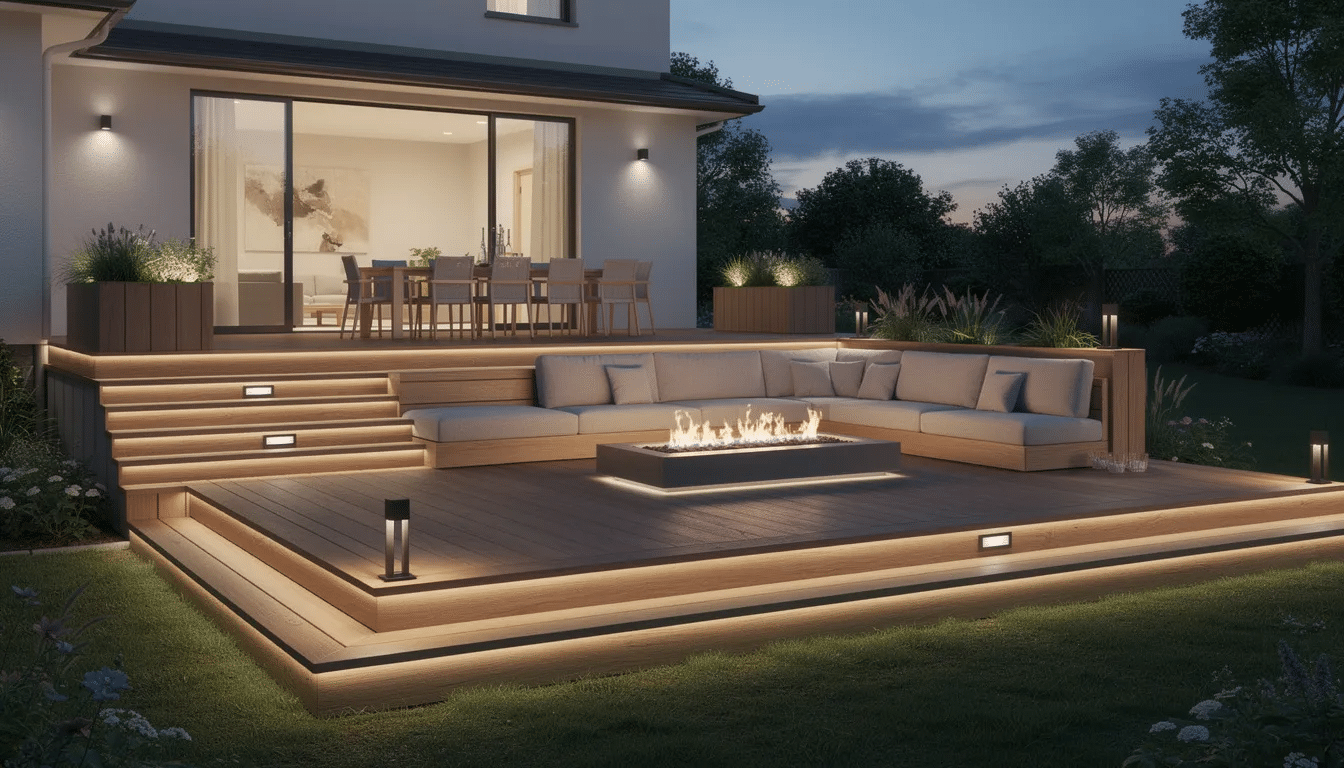
Let’s be real: a deck is often seen as just an extension of the house, but in truth, it’s your personalized, open-air living room. For far too long, homeowners have settled for those boring, builder-grade square boxes that have zero personality. That’s where Olympic Decks comes in. We know that when you approach your outdoor space with a custom mindset, the results are transformative. We’re talking about turning a simple patch of backyard into an extraordinary haven for relaxation, dining, and entertaining.
Designing a custom deck requires looking beyond simple dimensions; it’s about flow, function, and finesse. The goal isn’t just to add square footage – it’s to integrate a new, intentional living space that complements your home and fits your unique lifestyle.
The Architectural Harmony: Designing a Seamless Transition
The most extraordinary custom decks don’t look like additions; they seem like they were born with the house. If you slap a generic rectangle onto a home, it’s just going to look like a bandage.
Matching sightlines is the number one thing people forget. Your railing height shouldn’t slice right through your living room view; the levels need to complement your interior layout.
Material echoes ensure your deck doesn’t feel like a foreign object. Got stone veneer on the house? Let’s use that for the support pillars to tie it all together.
Stop settling for the square! The power of shape means incorporating curves and angles to break up the monotony. Even a simple 45-degree angle on the boards can make a small space look massive.
Zone by Zone: Planning for Multifunctional Outdoor Living
A custom deck shouldn’t be one giant dance floor. It needs to be designed around distinct activities. We call this strategy “Zoning.”
The dining anchor prevents you from carrying a hot turkey platter 50 feet. We position the main dining area close to the kitchen for easy access. Alternatively, we can create a designated BBQ spot complete with prep counters.
The relaxation nook is your personal escape. We create secluded corners perfect for deep seating or cozy fire pits. Often, we use a slight level change or built-in planters to define this space without walls.
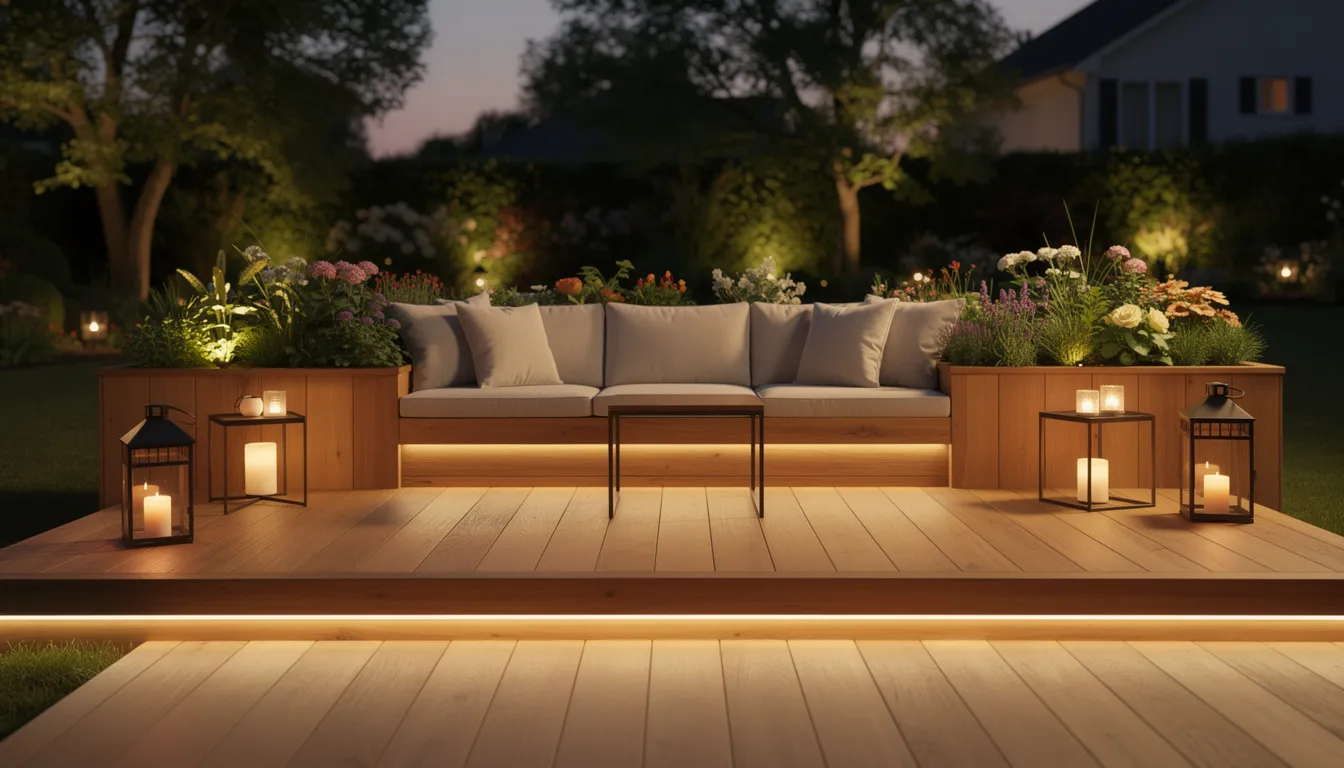
Built-in elements are superior because furniture blows away, but built-ins stay forever. We love designing benches that double as waterproof storage for your cushions. How about a designated bar rail along the edge? That’s not just a railing; it’s the perfect place to set your drink while you watch the sunset.
High-Impact Details: The Finishing Touches
The difference between a “nice” deck and a “wow” deck usually lies in the details you don’t notice at first glance.
- Invisible railings (glass panels or cable systems for unobstructed views).
- Integrated lighting (LED stair risers and border lights for evening ambiance).
- Premium finishes (high-end composites or hardwoods for texture and longevity).
The “Boring” (But Critical) Planning Stuff
Building a custom deck is exciting, but the difference between a dream project and a disaster lies in the details. Here is the stuff you absolutely cannot ignore.
- The permit reality: You need permits. Period. Building codes regulate everything from railing heights to specific property line setbacks, and skipping this step puts your resale value at risk. A professional contractor handles this paperwork for you, ensuring compliance without the headache.
- Sun & shade strategy: Before we dig a single footing, look at the sky. We position your deck to catch the morning light while blocking the harsh afternoon heat. If your yard is a heat trap, we frame attachment points for a pergola right from the start.
- The foundation: This is where most DIY builds quietly fail. To prevent winter ground movement from heaving your structure, footings must extend 36+ inches deep (below the frost line), while joist spacing needs to be tightened to 12 inches on center for composite materials so the boards never sag or feel “bouncy” underfoot.
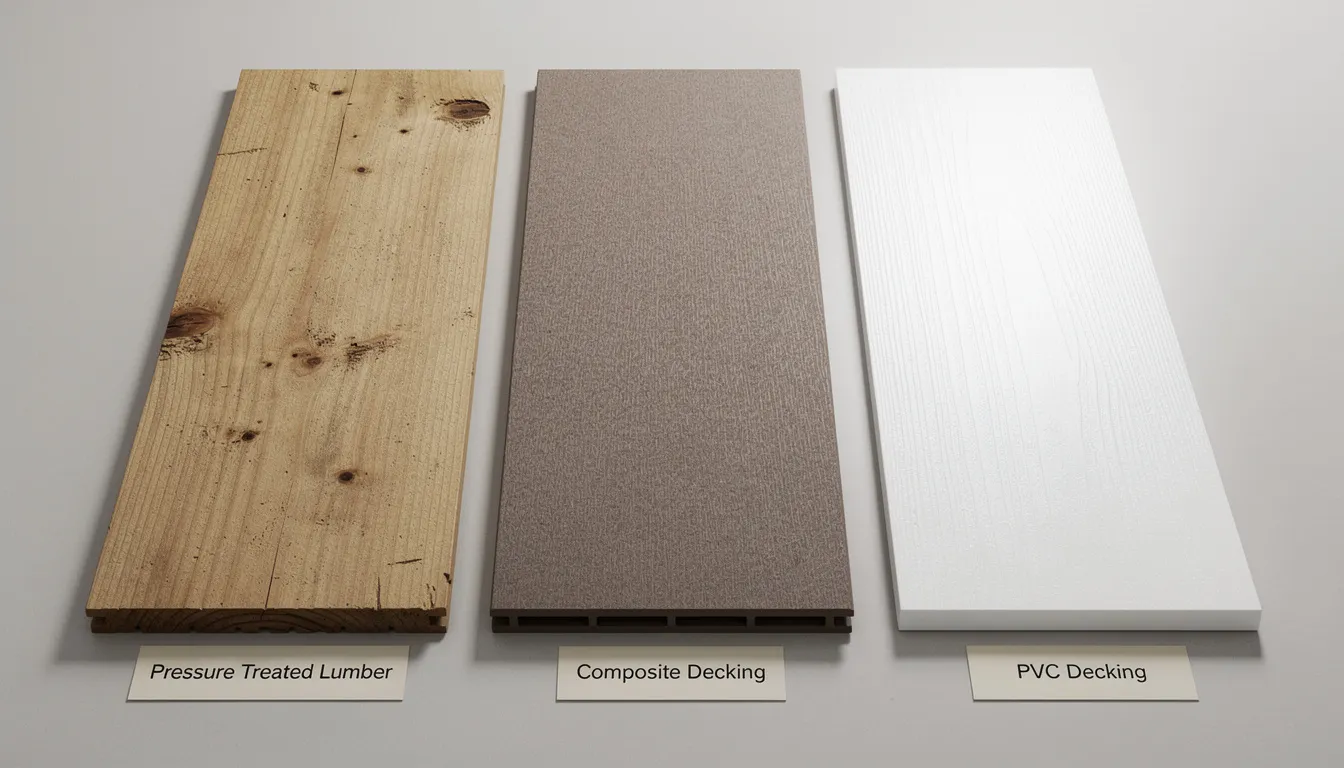
Materials: What Are You Paying For?
Here is the breakdown of where your money goes and what you get in return.
| Material Type | Cost Range (per sq ft) | Maintenance Level | Best For |
|---|---|---|---|
| Pressure Treated | $ | High (stain every 2-3 years) | Budget builds |
| Composite | $$ | Minimal (soap & water) | The “Set it and forget it” crowd |
| Cedar/Redwood | $$$ | Moderate (seal periodically) | Purists who love natural wood |
| PVC | $$$$ | Zero | Ultimate durability |
Choose pressure treated lumber if you are watching the budget. Just know you pay for the initial savings with sweat equity, requiring a fresh stain every 2–3 years.
Select composite decking for a “set it and forget it” solution. It costs more upfront but lasts 25+ years without ever seeing a paintbrush or rotting from moisture.
Consider cedar or redwood if you crave that authentic look. These premium woods cost 15–20% more than standard lumber and still need periodic sealing to keep their rich color.
Professional Installation vs. DIY Considerations
Feel free to DIY simple rectangles under 200 square feet. If you have the tools and know the local codes, it’s a rewarding project.
Call in the experts for anything complex. If your vision involves multi-levels or hot tubs, you need professional deck construction and design, not just a drill. These builds require structural engineering that goes beyond a weekend hobby. Hiring a contractor buys you peace of mind. You aren’t just paying for labor; you’re paying for permits, warranties, and the guarantee that your deck is safe and legal.
Always verify the paperwork. Check for valid licensing and insurance, because a cheap bid usually means cut corners on the things you can’t see.
Conclusion
A custom deck isn’t just a construction project; it’s an investment in how you live. Whether you choose the warmth of cedar or the ease of composite, the secret lies in matching the design to your specific lifestyle.
Extraordinary outdoor spaces don’t happen by accident – they are the result of smart planning and expert hands. Done right, you aren’t just building a deck; you’re creating the favorite room in your house for decades to come.
FAQ
How much weight can a deck support? Standard decks hold about 50 lbs per square foot. But if you want a hot tub, tell us immediately – those require double the structural strength. Never put a hot tub on a standard deck!
What’s the best time to build? Late spring is standard, but winter is the secret weapon. If the ground isn’t frozen, off-season builds often mean faster permits and better contractor availability.
Does a deck add value to my home? Absolutely. You typically recoup 65-80% of costs at resale. In many markets, a custom outdoor space is the tipping point that sells the house.
Do I need special insurance? Attached decks are usually covered automatically. However, for detached builds or luxury outdoor kitchens, give your agent a quick call just to be safe.