

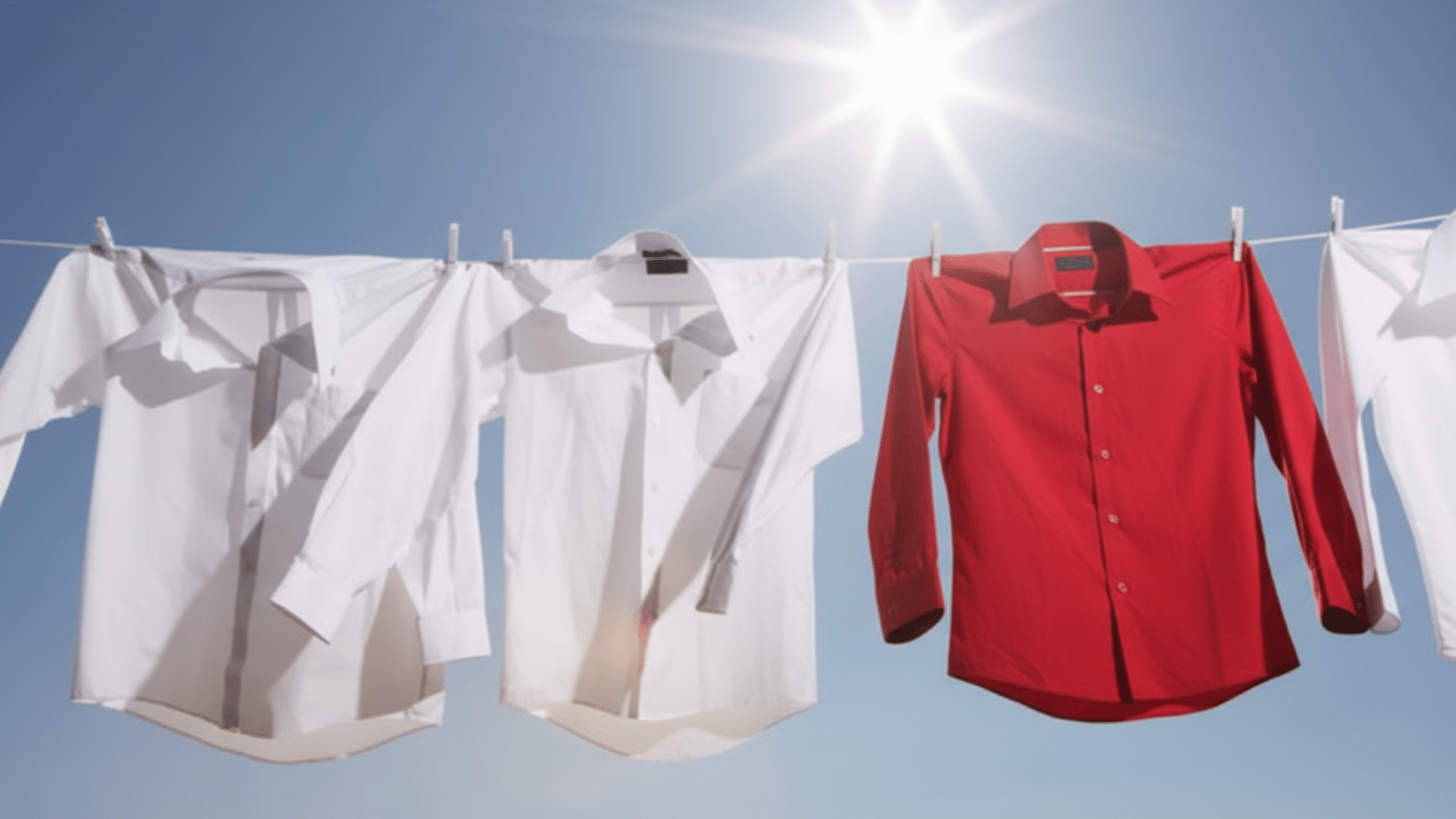
Air drying clothes is part of daily life for many people. Freshly washed clothes often get hung on a rack, a line, or a chair and left to dry on their own.
Still, the waiting time can raise questions. Damp shirts, heavy jeans, or thick towels do not dry at the same pace. This makes it hard to plan laundry around busy days.
This article talks about how long drying usually takes and why the wait is not always the same.
By the end, readers will have a better sense of what air drying involves and why drying time can feel unpredictable.
How Air Drying Clothes Works
Air drying clothes means letting wet laundry dry on its own without using a dryer. Water slowly leaves the fabric and moves into the air.
This happens through airflow, warmth, and time. No machines are involved. Clothes are usually hung on a line, placed on a drying rack, or laid flat.
The drying process starts as soon as clothes come out of the wash. The wetter the item, the longer it will take to dry. Thick fabrics hold more water. Thin fabrics release water faster. Air drying clothes depends on many small factors working together.
Some people air-dry clothes every day. Others only do it when the weather is nice. In both cases, drying time can change from load to load.
Average Time for Air Drying Clothes
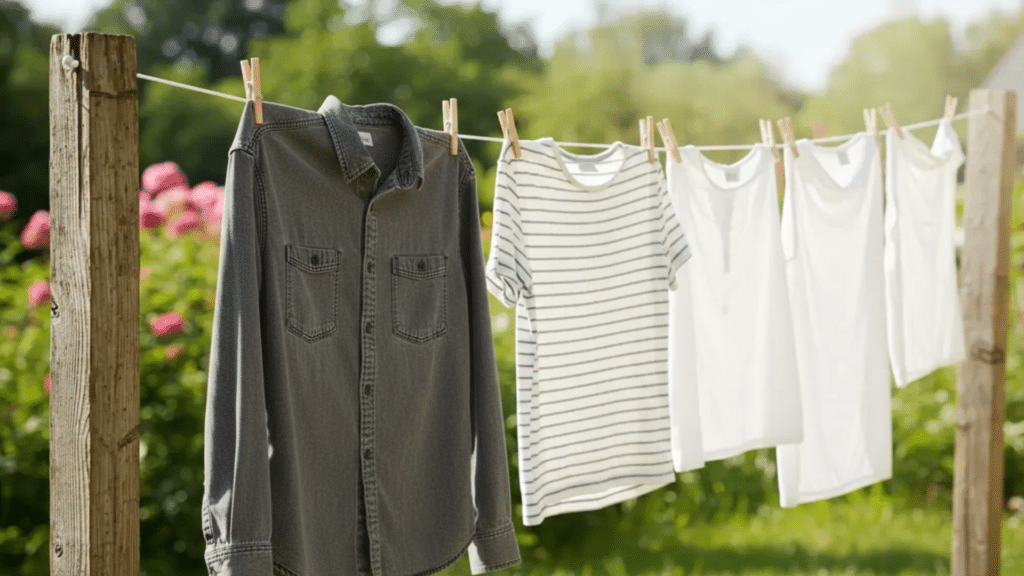
There is no single answer for how long clothes take to air dry. Still, general time ranges help set expectations.
- Light clothes like t-shirts may dry in 2 to 4 hours
- Medium items like cotton pants may take 4 to 8 hours
- Heavy items like jeans or towels may take 8 to 24 hours
These times can be shorter or longer based on conditions. Air drying clothes outside is often faster than indoors. Warm air speeds up drying. Still air slows it down.
Drying time is also affected by how wet the clothes are after washing. Clothes that are well spun in the washer dry faster.
Air Drying Clothes Indoor vs. Outdoor
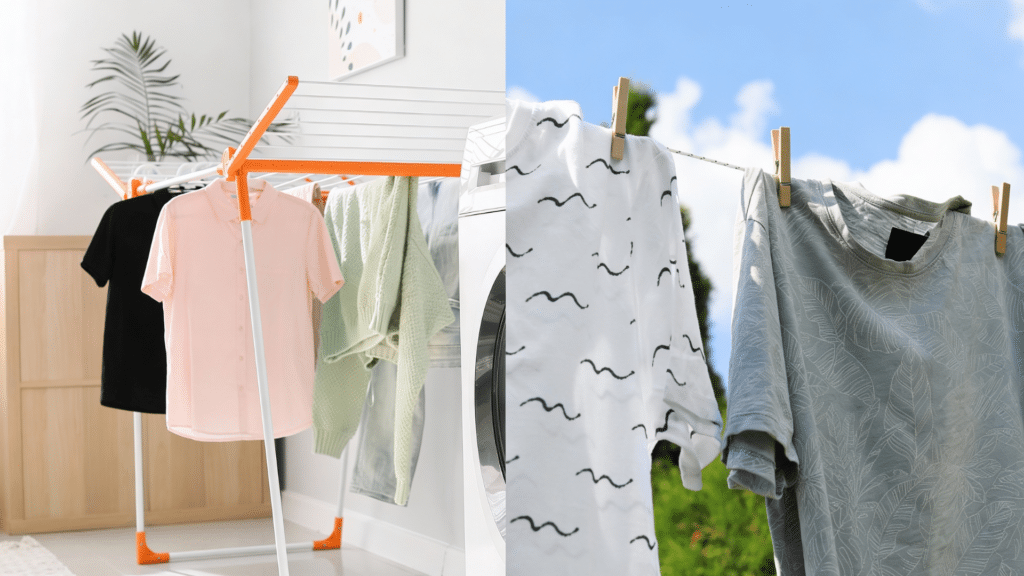
Air drying clothes can be done indoors or outdoors. Both methods work, but drying time and results can be different.
| Factor | Air Drying Clothes Indoors | Air Drying Clothes Outdoors |
|---|---|---|
| Drying time | Slower, often 6 to 24 hours | Faster, often 1 to 8 hours |
| Airflow | Limited air movement | Natural wind helps dry |
| Sunlight | Little or no direct sun | Sun helps speed drying |
| Weather impact | Not affected by rain or cold | Strongly affected by the weather |
| Humidity | Can build up indoors | Usually lower in the open air |
| Space needed | Racks or hangers inside | Lines, racks, or open space |
| Smell risk | Higher if the air is still | Lower due to fresh air |
| Best for | Small loads and daily use | Large loads and thick items |
How Weather, Season, and Time Affect Air Drying
Weather, season, and even the time of day all affect how long clothes take to air dry. Temperature, airflow, and moisture in the air work together. Small changes in these factors can speed up drying or slow it down.
Warm Weather
Warm air helps clothes dry faster because it can hold more moisture. In summer, water leaves fabric more easily.
Outdoor drying in warm weather may take only 1 to 3 hours for light items.
Sunlight also helps clothes dry more evenly. Indoor drying improves in summer, too, because air moves better and feels less damp.
Cold Weather
Cold air slows evaporation because it holds less moisture. In winter, clothes often take much longer to dry, especially indoors.
Windows are usually closed, which limits airflow. Thick items like jeans and towels may take 12 to 36 hours to dry fully.
Spacing clothes farther apart and using a fan helps. Outdoor winter drying may work in dry climates, but it usually takes much longer.
Wind and Airflow
Wind is one of the most helpful factors for air drying clothes. Moving air pulls moisture away from fabric and replaces it with drier air.
Even on cool days, steady wind can shorten drying time. Indoors, fans help create airflow and improve drying speed.
Rain and Cloudy Conditions
Rain adds moisture to the air, which slows drying. Wet air makes it harder for water to leave clothes.
Cloudy skies also reduce warmth, which adds to longer drying times. Clothes left outside during rain may not dry at all and can stay damp for many hours.
Humidity Levels
Humidity means how much water is already in the air. High humidity slows air drying clothes because the air cannot absorb much more moisture.
Clothes may stay damp even after many hours. Low humidity helps clothes dry faster, even without strong heat or wind.
Overnight
Air drying clothes overnight is common, especially indoors. This works best when there is steady airflow. Light clothes may dry fully by morning, but heavy items often stay damp.
Using a fan overnight helps move air and reduce drying time. Checking clothes early helps prevent storing damp laundry
Fabric Type and Drying Speed
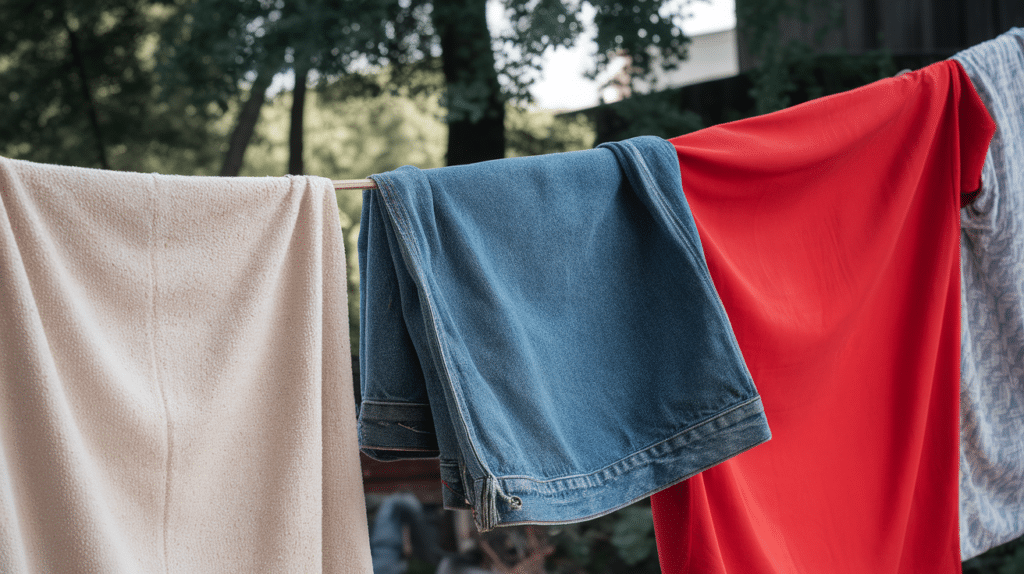
| Fabric Type | How Fast Does It Dry | Reason |
|---|---|---|
| Polyester | Fast | Holds very little water |
| Nylon | Fast | Lightweight and smooth |
| Linen | Medium to fast | Loose weave allows airflow |
| Cotton | Medium to slow | Absorbs a lot of water |
| Denim | Slow | Thick and tightly woven |
| Wool | Slow | Traps moisture in fibers |
| Terry cloth | Very slow | Thick loops hold water |
| Blended fabrics | Medium | Mix of fast and slow fibers |
How to Speed Up Air Drying Clothes
Several simple steps can reduce drying time.
- Shake clothes before hanging
- Use a high spin cycle
- Space clothes apart
- Use fans indoors
- Open windows when possible
- Hang thick items wide open
Signs Clothes are Fully Dry
Before putting clothes away, it helps to check if they are fully dry.
- No damp spots: Fabric feels dry all over, including thick areas.
- No cool feeling: Clothes do not feel cool to the touch.
- Dry seams: Seams, cuffs, and waistbands are fully dry.
- No heavyweight: Clothes feel light, not water-logged.
- No musty smell: Fabric smells fresh, not damp.
- Even texture: No stiff or wet patches remain.
To Conclude
Air drying clothes works best when expectations match real drying time. Clothes do not dry instantly, and rushing the process often leads to damp spots or odors.
Paying attention to airflow, spacing, and fabric weight helps avoid these issues. Small changes, like flipping clothes or moving them to better air flow, can improve results.
With steady habits, air drying becomes more predictable and easier to manage.
Use the tips in this guide to adjust how and where clothes dry. Apply them to your next wash and make air drying part of a smoother laundry routine.