

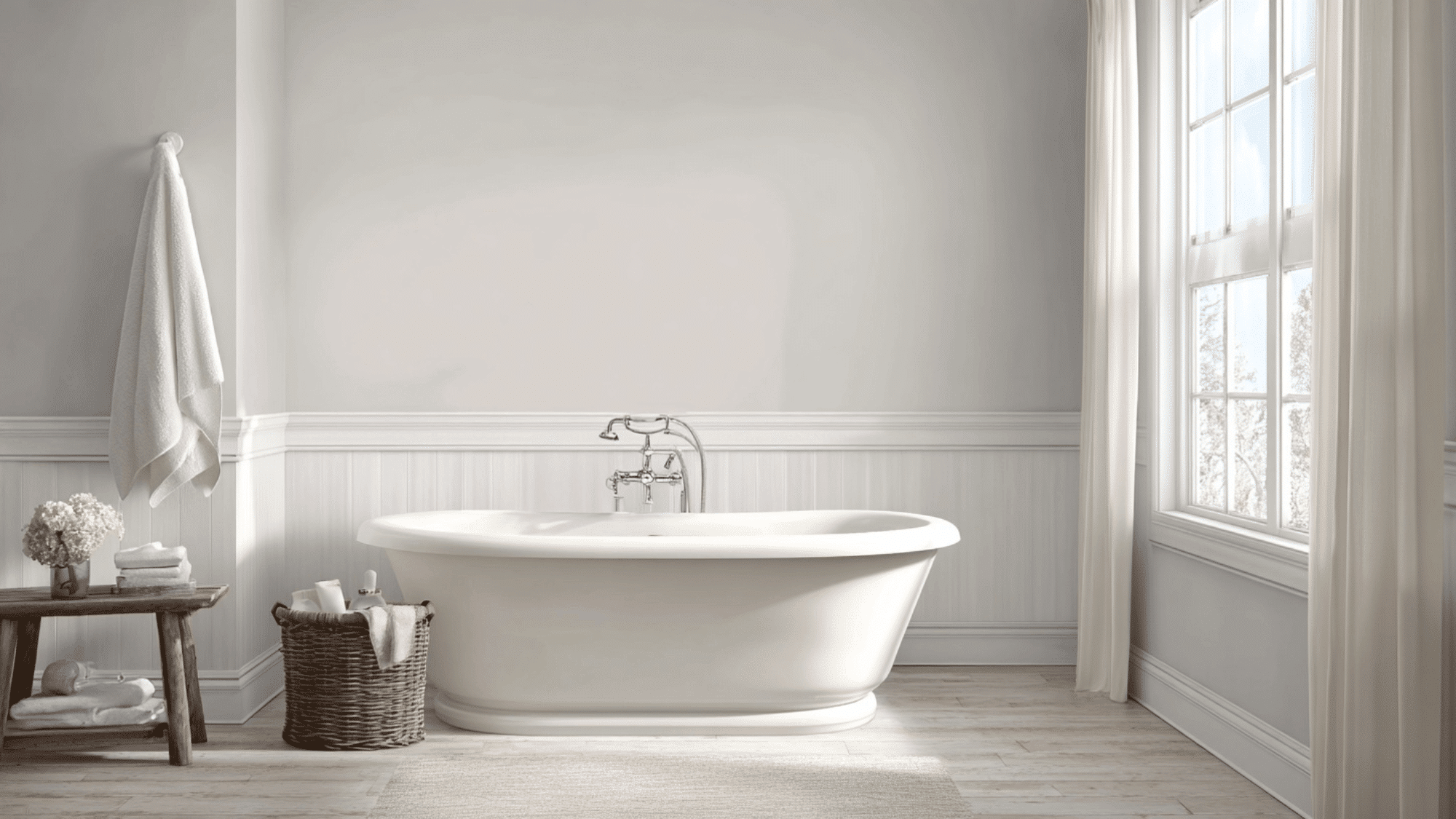
Picking paint for a bathroom feels simple until you’re standing in the store staring at options like “satin,” “semi-gloss,” and “eggshell.” What do these even mean? And why does it matter?
Bathrooms face moisture, steam, and splashes every single day. The wrong finish can lead to peeling paint, mildew growth, and walls that look dingy no matter how much you scrub them. That’s frustrating and costly.
Choosing the right paint finish protects your walls and keeps your bathroom looking fresh for years.
This blog breaks down each paint finish option so you can choose the best one for your bathroom.
The Importance of Moisture-Resistant Paints in Bathrooms
Bathrooms create the perfect storm for paint problems. Hot showers send steam into the air. Water splashes from sinks and tubs. All that moisture seeps into walls and ceilings.
Regular paint can’t handle this. It absorbs water, which leads to bubbling, peeling, and ugly stains.
Worse yet, trapped moisture becomes a breeding ground for mold and mildew. Those black spots aren’t just unsightly; they’re health hazards.
Moisture-resistant paints are built differently. They contain special additives that repel water and resist mold growth.
This means walls stay protected even in the steamiest conditions. Investing in the right paint saves money on repairs and keeps bathrooms looking clean longer.
Top Paint Finishes Explained for Bathrooms
Paint finishes for bathrooms range from flat to high-gloss, each offering different levels of shine and durability. Understanding how each finish performs with moisture helps narrow down the best choice for your space.
1. Flat or Matte Finish
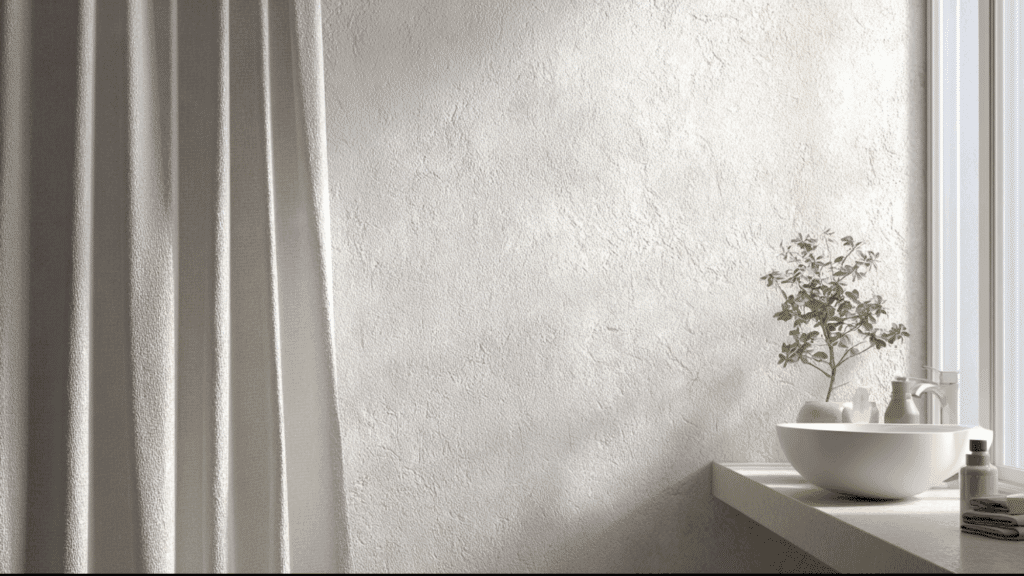
Flat paint has no shine at all. It hides wall imperfections beautifully and creates a smooth look.
But it’s not ideal for bathrooms because it absorbs moisture easily and can’t handle regular cleaning without showing marks or damage.
| Pros | Cons |
|---|---|
| Hides wall flaws well | Absorbs moisture |
| Creates a smooth appearance | Hard to clean |
| Shows scrub marks |
2. Eggshell Finish
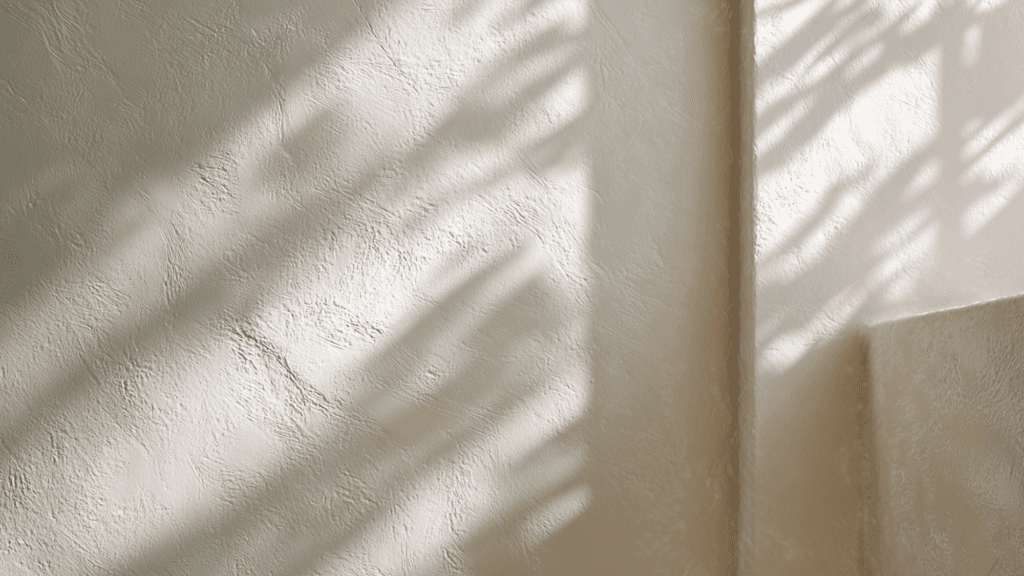
Eggshell offers a subtle sheen that’s just barely noticeable. It’s more durable than flat paint and handles light cleaning reasonably well.
However, it still struggles with heavy moisture exposure and frequent scrubbing, making it better suited for powder rooms than full bathrooms.
| Pros | Cons |
|---|---|
| Slight sheen | Limited moisture resistance |
| Easier to clean than flat | Not very durable |
| Hides minor imperfections | Shows wear over time |
3. Satin Finish
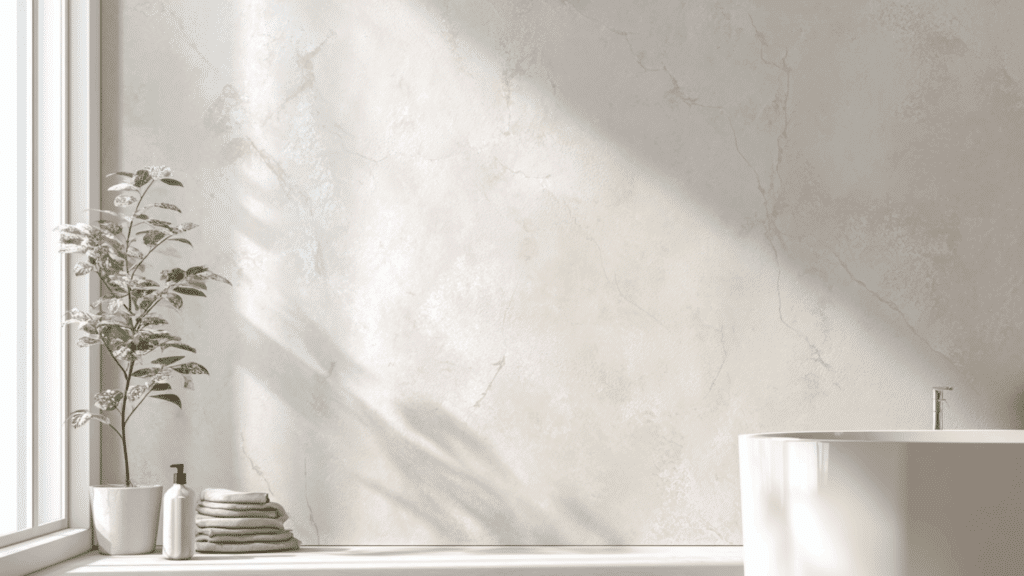
Satin strikes a nice balance between shine and practicality. It has a soft glow that looks great on walls and stands up to moisture better than flatter finishes.
It cleans easily and resists mildew growth, making it a popular bathroom choice.
| Pros | Cons |
|---|---|
| Good moisture resistance | Shows application flaws |
| Easy to clean | May need touch-ups |
| Resists mildew |
4. Semi-Gloss Finish
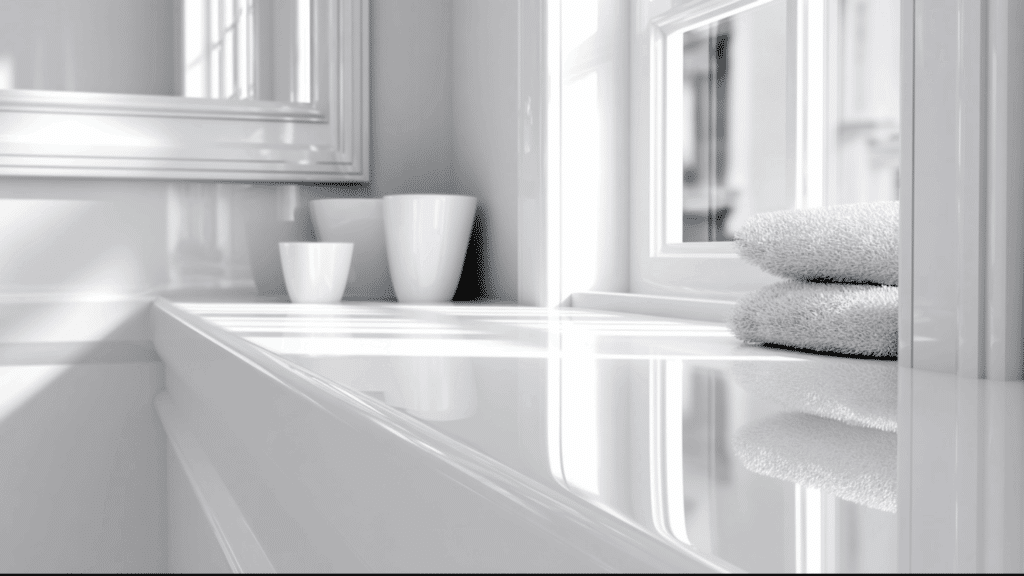
Semi-gloss paint has a noticeable shine and handles moisture like a champ. It’s highly durable, cleans effortlessly, and resists mold growth.
Many people use it on bathroom walls, trim, and doors. The downside? That shine highlights every wall imperfection and dent.
| Pros | Cons |
|---|---|
| Excellent moisture resistance | Highlights wall flaws |
| Very easy to clean | Shiny appearance |
| Highly durable | Requires smooth walls |
5. High-Gloss Finish
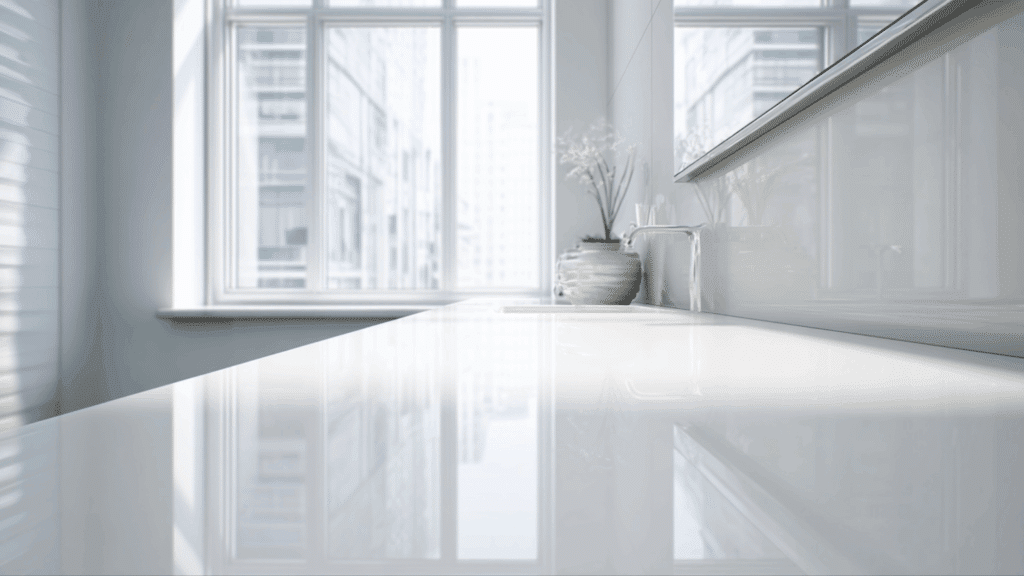
High-gloss delivers maximum shine and the toughest protection against moisture. It’s extremely easy to wipe clean and nearly impossible for mold to penetrate.
But that mirror-like finish shows every bump and imperfection, so it works best on smooth surfaces like trim and cabinets.
| Pros | Cons |
|---|---|
| Maximum moisture protection | Shows every imperfection |
| Easiest to clean | Very reflective |
| Extremely durable | Best for trim only |
Eco-Friendly Low-VOC Options for Humid Bathrooms
Low-VOC paints release fewer harmful chemicals into the air while still providing moisture protection. These eco-friendly options create healthier bathrooms without sacrificing durability or mold resistance.
| Paint Type | VOC Level | Key Features | Best For |
|---|---|---|---|
| Zero-VOC Paint | 0-5 g/L | No harsh fumes, safe for sensitive individuals, dries quickly | Small bathrooms with poor ventilation |
| Low-VOC Paint | 5-50 g/L | Minimal odor, good coverage, widely available | Standard bathrooms with regular ventilation |
| Natural Paint | Varies | Made from plant-based ingredients, biodegradable, breathable | Eco-conscious homeowners |
| Milk Paint | Very Low | Non-toxic, unique matte finish, requires sealing for moisture areas | Accent walls in well-ventilated bathrooms |
| Clay Paint | Very Low | Naturally moisture-regulating, mold-resistant, earthy finish | Powder rooms and guest bathrooms |
What Finish Paint for Your Bathroom is the Best
Most experts point to satin and semi-gloss finishes as the best choices for bathrooms.
Satin offers enough sheen to repel moisture without looking overly shiny. It cleans easily and hides minor wall flaws. This makes it perfect for bathroom walls where you want a soft, polished look that still handles humidity.
Semi-gloss takes durability up a notch. Its higher shine creates a tougher barrier against water, steam, and mildew.
It wipes clean effortlessly, which matters in high-traffic bathrooms. Many homeowners use semi-gloss on trim, doors, and ceilings while keeping satin on the walls.
The right choice depends on your bathroom’s ventilation and the amount of moisture it experiences. Good ventilation? Satin works great. Heavy steam? Semi-gloss offers better protection.
How to Apply Bathroom Paint for Pro Results
Proper application makes all the difference between paint that lasts and paint that peels. Following these steps ensures a professional finish that stands up to bathroom moisture.
1. Prep the Walls Thoroughly: Clean walls with a degreaser to remove soap scum and oils. Fill cracks and holes with spackle. Sand smooth once dry for better paint adhesion.
2. Improve Ventilation Before Starting: Open windows and run exhaust fans while painting. Good airflow helps paint dry properly and prevents moisture from affecting the fresh coat during application.
3. Use Quality Primer First: Apply a moisture-resistant primer designed for bathrooms. This creates a protective barrier and helps topcoat paint stick better, especially on previously painted surfaces.
4. Apply Thin, Even Coats: Don’t overload your brush or roller. Two thin coats work better than one thick coat. Thin layers dry faster and resist dripping or peeling.
5. Let Each Coat Dry Completely: Wait the full recommended time between coats, usually 4-6 hours. Rushing this step traps moisture under the paint and leads to bubbling or cracking.
6. Paint Ceiling and Trim Last: Start with walls, then move to the ceiling and trim. This prevents drips from ruining finished surfaces and makes cutting in edges much easier.
7. Wait Before Using the Bathroom: Give paint at least 24-48 hours to cure fully before showering. Early moisture exposure can ruin all your hard work and cause premature paint failure.
Real Community Tips: What Homeowners Swear By
Homeowners who’ve tackled bathroom painting projects have strong opinions based on real experience. Many agree that sheen matters, but product quality matters more.
One painter notes,
“In my first 15 years doing residential work I didn’t paint a single bathroom or kitchen semi-gloss,”
suggesting satin works fine for most homes.
Another expert advises,
“I suggest satin or semi-gloss especially if there is poor ventilation. If the customer doesn’t like a sheen at all, then I recommend a higher quality eggshell that dries hard.”
The consensus?
“A higher sheen will be more moisture resistant. This has diminishing returns though. A semigloss finish will be marginally more moisture resistant than an eggshell finish.”
Invest in quality paint rather than worrying about the sheen level.
To Conclude
Choosing the right paint finish for your bathroom doesn’t have to be complicated. Satin and semi-gloss work well for most spaces, but your specific needs matter more than following strict rules.
Consider your bathroom’s ventilation. Think about how much moisture builds up. Factor in whether you prefer a subtle or shiny look.
Grab quality supplies and take your time. The results are worth the effort.
Steamy showers or quick rinses? Drop your bathroom setup in comments; we’ll recommend the best finish for you.