

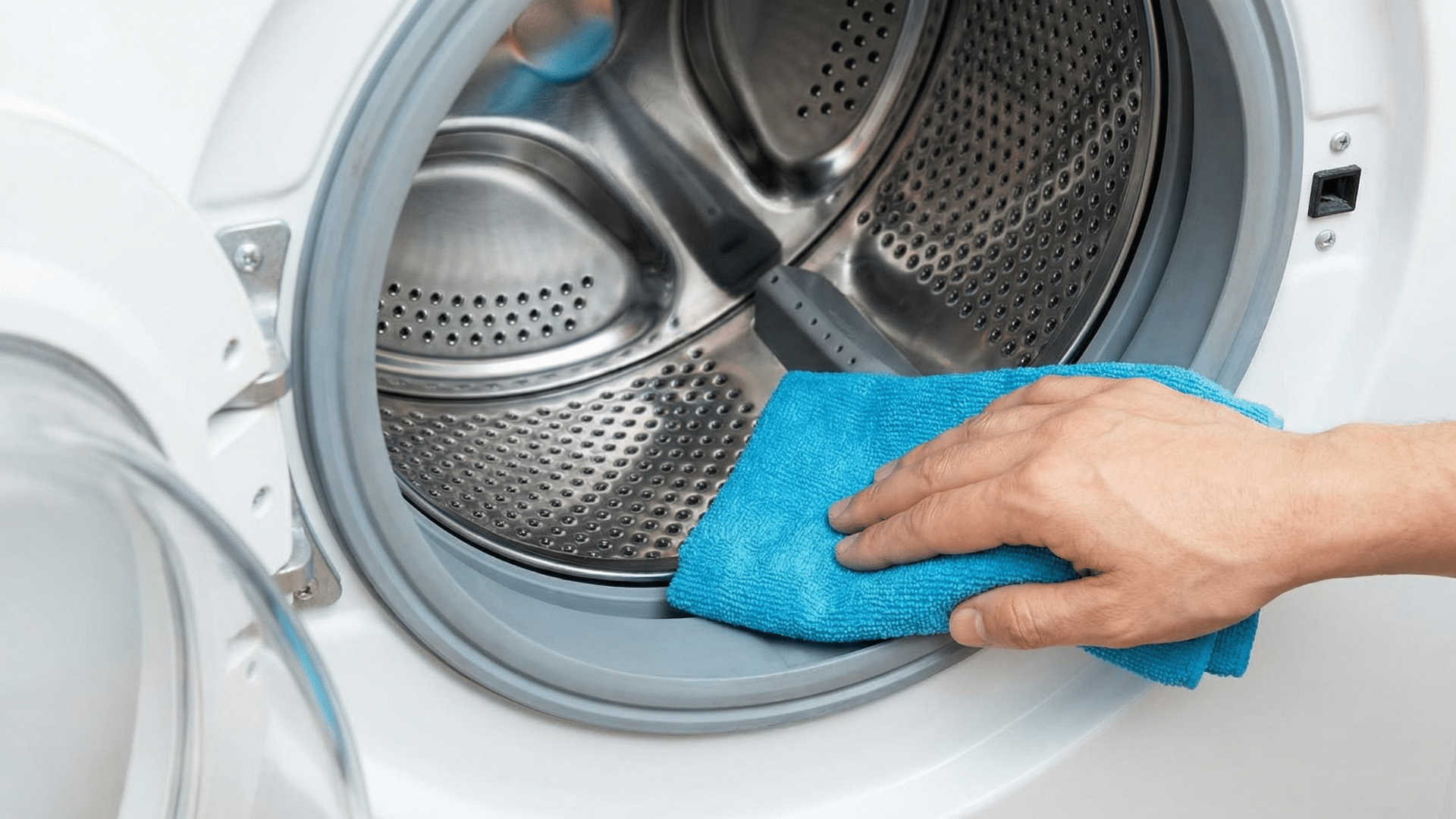
A washing machine is one of the hardest-working machines in the home. It helps clean clothes day after day. But over time, the machine itself can get dirty.
Soap scum, lint, and even mold can build up inside. This can cause bad smells and affect how well it works.
Many people don’t think about cleaning their washer until there’s a problem. But keeping it clean is easy with the right steps.
It doesn’t take fancy tools or strong cleaners. Just a few simple items from home can help.
This blog shares an easy way to clean a washing machine so it stays fresh and runs better for longer.
Why Washing Machine Cleaning is Important
It’s easy to think your washer stays clean because it handles soap and water. But over time, dirt, lint, and leftover detergent can build up inside.
Fabric softeners leave a sticky layer, and trapped moisture can lead to mold or mildew. If you have hard water, you may also notice mineral spots or stains.
These hidden messes can cause your washer to smell bad, slow down, or leave clothes less clean. You might even deal with draining problems.
Regular washing machine cleaning helps avoid these issues. It also keeps your machine working well and lasting longer.
A few simple steps every month can make laundry easier and your washer more reliable.
Signs Your Washing Machine Needs Cleaning
Sometimes, you may not notice a smell, but the washer still needs cleaning. Look for these signs:
- Clothes smell damp even after washing.
- The drum looks dull or has spots.
- Wash cycles take longer than usual.
- Water doesn’t drain well.
- You see lint, grime, or black marks inside.
If you spot these signs, it’s time to do a full cleaning.
How Often Should You Clean Your Washer?
Most people clean their washing machine only when there’s a problem. But it’s better to clean it regularly.
- Light use (once or twice a week): Clean every 2–3 months.
- Heavy use (daily): Clean once a month.
- If you notice a smell: Clean right away.
Even if the machine looks clean, it can still have buildup inside. A regular cleaning schedule helps prevent problems.
What You’ll Need
| Item | Use Case |
|---|---|
| White vinegar | Breaks down buildup and kills odor-causing mold |
| Baking soda | Helps scrub and remove smells |
| Sponge or old toothbrush | Scrubs tight spaces and rubber seals |
| Clean cloth or rag | Wipes surfaces dry after cleaning |
| Small bowl or measuring cup | Helps pour vinegar or baking soda easily |
| Water | Used for rinsing and wiping |
| Optional: Hydrogen peroxide | For mold or deep cleaning (use with care) |
| Optional: Bleach | For severe buildup or odor (only if safe) |
How to Clean a Front-Load Washing Machine
Front-load washers work well but tend to hold more moisture inside. This makes it easier for mold and bad smells to form if the machine is not cleaned often. Below are easy steps you can follow at home.
Step 1: Clean the Door Seal
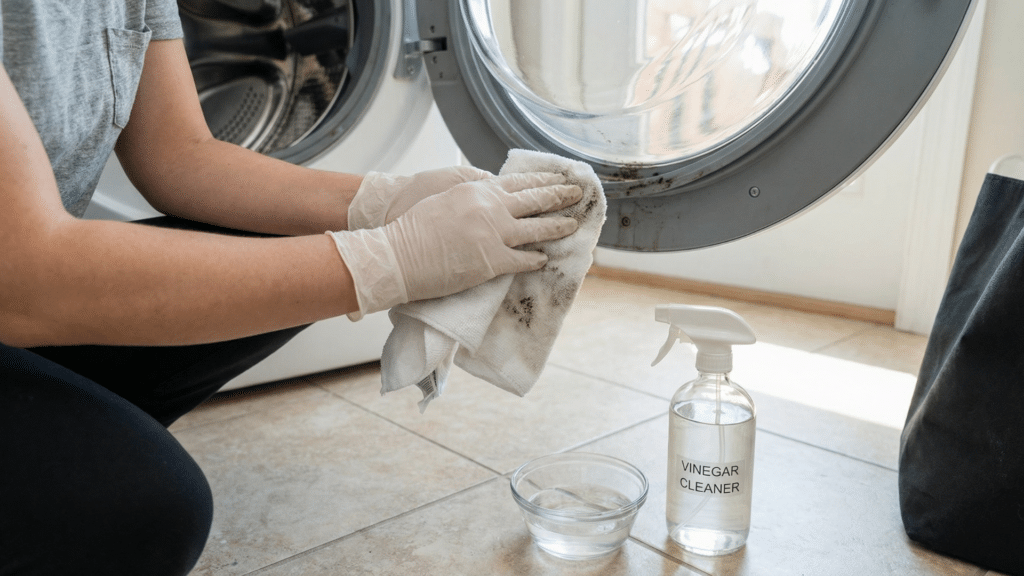
Start by opening the washer door. Look at the rubber ring that lines the edge; this is called the gasket. Mix vinegar and water in a small bowl. Use a cloth to wipe down the rubber area.
For dirt stuck in the folds, use an old toothbrush to scrub gently. Be sure to pull back the rubber flap to check for lint, hair, or mold. After cleaning, dry the seal with a clean cloth.
Step 2: Run a Cleaning Cycle
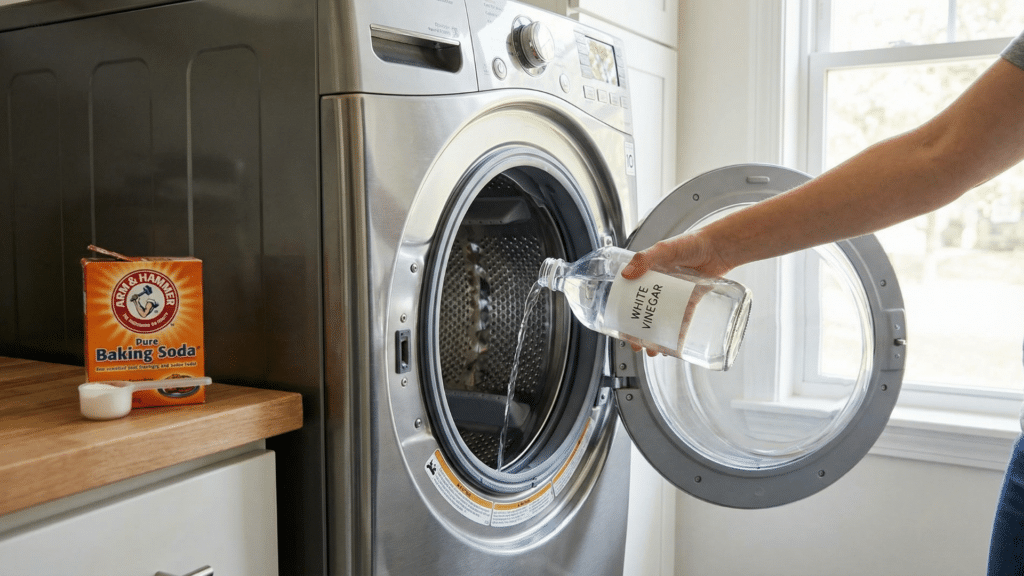
Next, clean the inside of the drum. Pour 2 cups of white vinegar into the drum. Then, sprinkle 1/4 cup of baking soda directly inside the drum, not in the detergent drawer.
Run a hot water cycle without any clothes. This helps remove leftover soap, kill mold, and get rid of any smells.
Step 3: Clean the Detergent Drawer
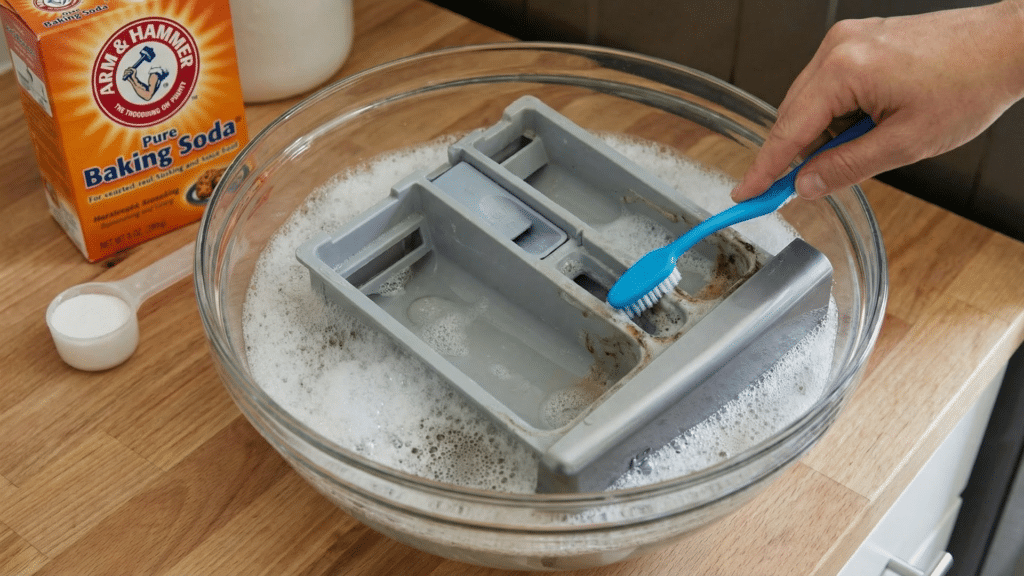
Remove the drawer where you usually pour detergent and fabric softener. Place it in warm, soapy water and let it soak for a few minutes.
Use a sponge or toothbrush to scrub all parts, especially corners where buildup hides. Once it looks clean, rinse it well and dry it with a towel before sliding it back into place.
Step 4: Wipe the Inside
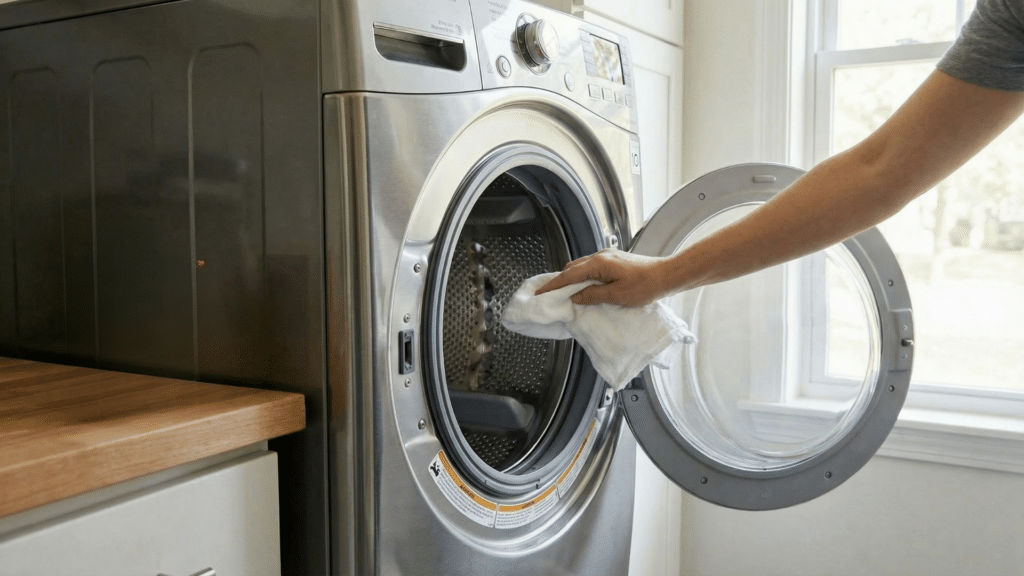
After the cleaning cycle ends, open the washer door and wipe the inside of the drum with a clean, dry cloth. This helps remove any leftover moisture.
It’s also a good idea to leave the washer door open for a few hours. This lets the inside air out and helps prevent mold from forming again.
Step 5: Clean the Drain Filter (If Your Washer Has One)
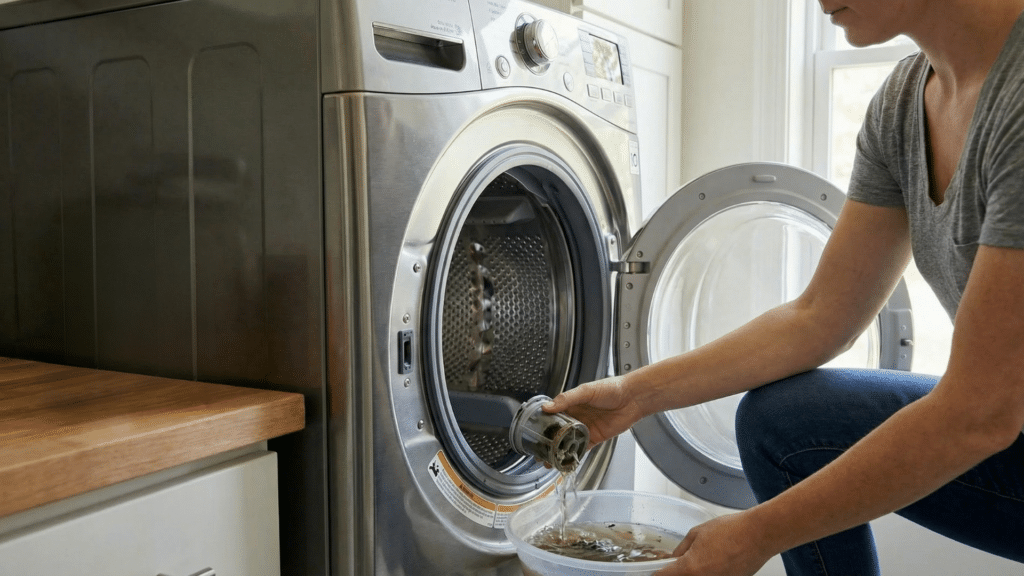
Some front-load washing machines have a small drain filter near the bottom front panel. Open the panel to reach the filter. Twist the cap gently and place a small bowl under it to catch any water that comes out.
Take out the filter and remove any lint, hair, or debris. Rinse the filter under running water, then place it back inside and close the panel.
How to Clean a Top-Load Washing Machine
Top-load washing machines are easier to clean than front-load models, but they can still collect soap scum, dirt, and bad smells over time. A few basic steps will help keep your top-loader fresh and working well.
Step 1: Run a Hot Vinegar Cycle
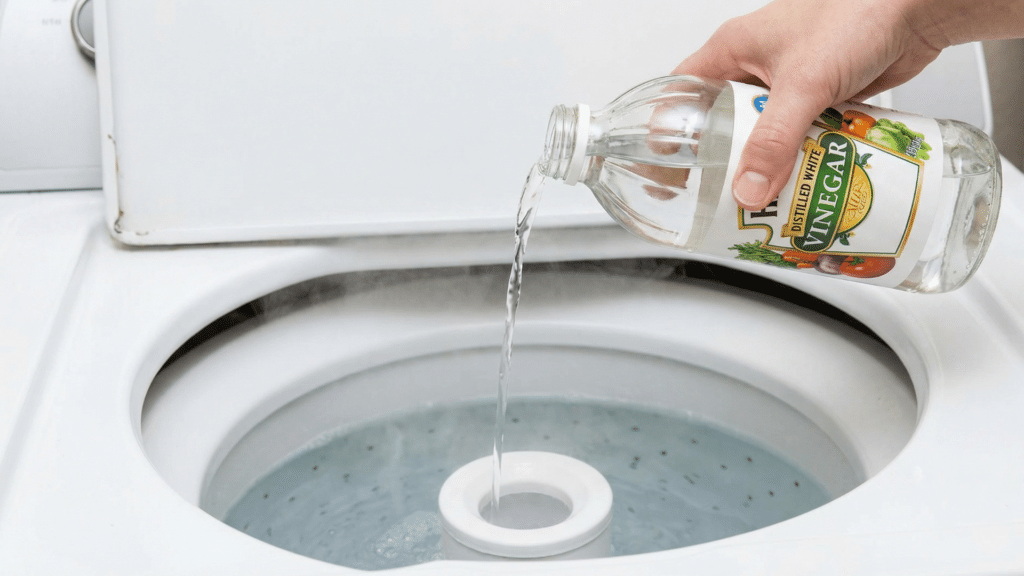
Start by setting your washer to the hottest and largest load setting. While it fills with water, pour 4 cups of white vinegar into the drum.
Once it’s full, stop the cycle and let the vinegar water sit in the machine for about one hour. This gives the vinegar time to break down the buildup and kill bacteria inside the drum.
Step 2: Scrub the Inside Parts
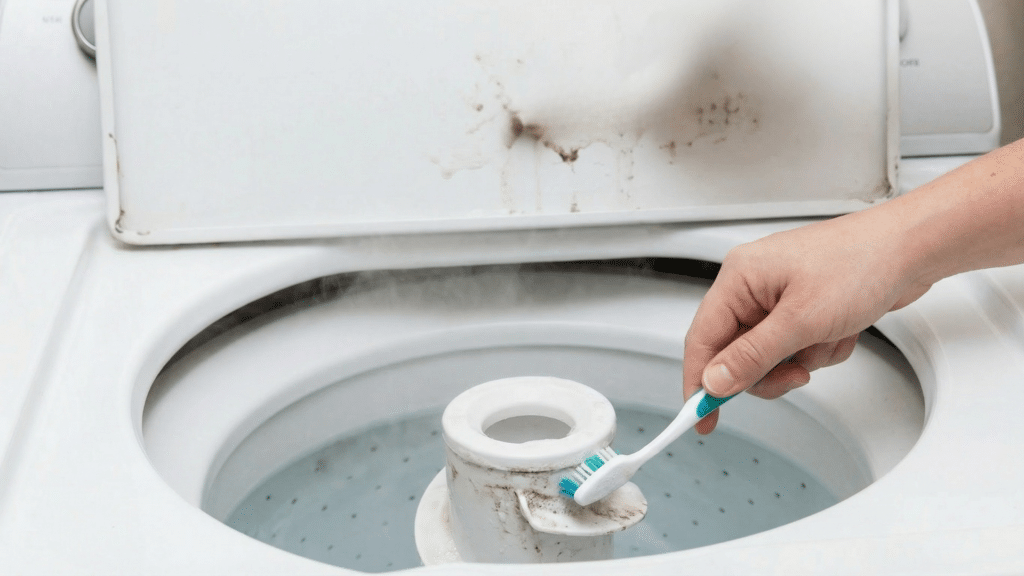
While the vinegar water is soaking, use a sponge or cloth dipped in the same vinegar solution to clean the top parts of the washer.
Wipe the lid, control panel, and the area under the lid where grime often collects. Don’t forget to clean around the agitator, the tall piece in the center of the drum. Use an old toothbrush to scrub any tight spots or hard stains.
Step 3: Finish the Vinegar Cycle
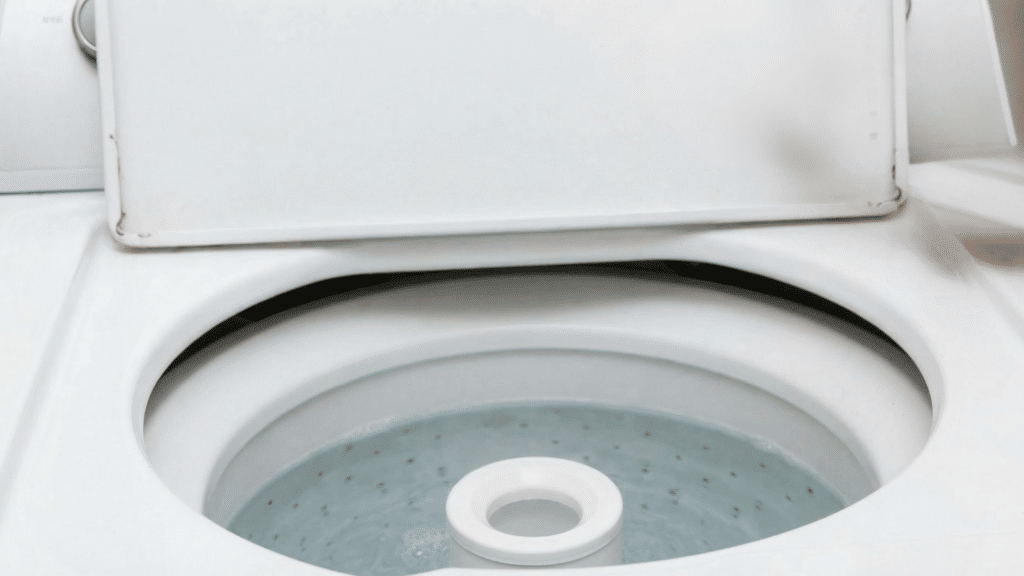
After the one-hour soak, restart the washer and let it finish the whole cycle. This will rinse out the vinegar and remove loosened dirt from the drum.
Step 4: Run a Baking Soda Cycle
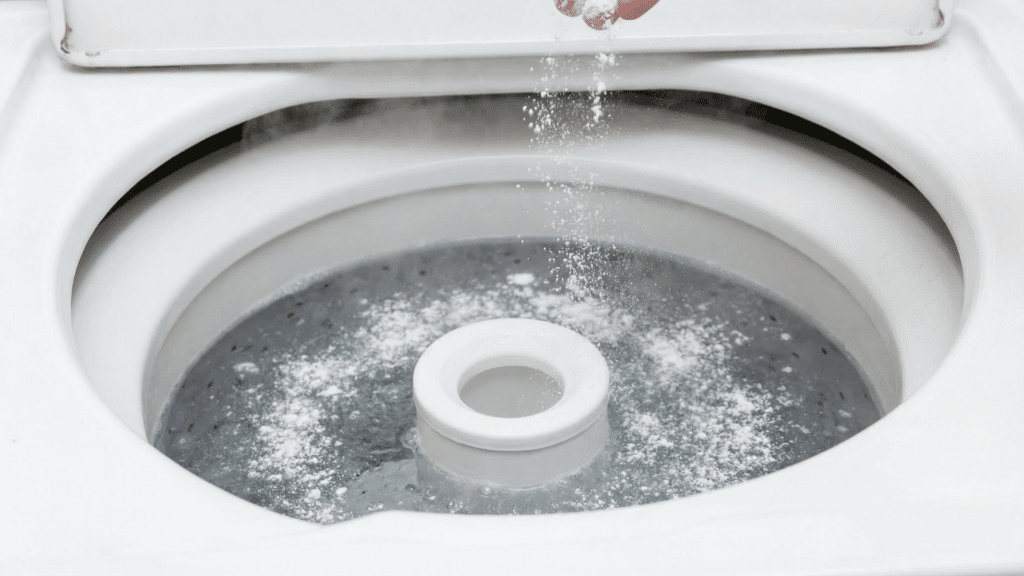
Once the vinegar cycle is complete, fill the washer again with hot water on the largest setting. This time, add 1 cup of baking soda to the drum.
Let it run through a full cycle without stopping. The baking soda helps clear out any leftover smells and leaves the washer fresh and clean.
Step 5: Wipe it Down and Let it Air Dry
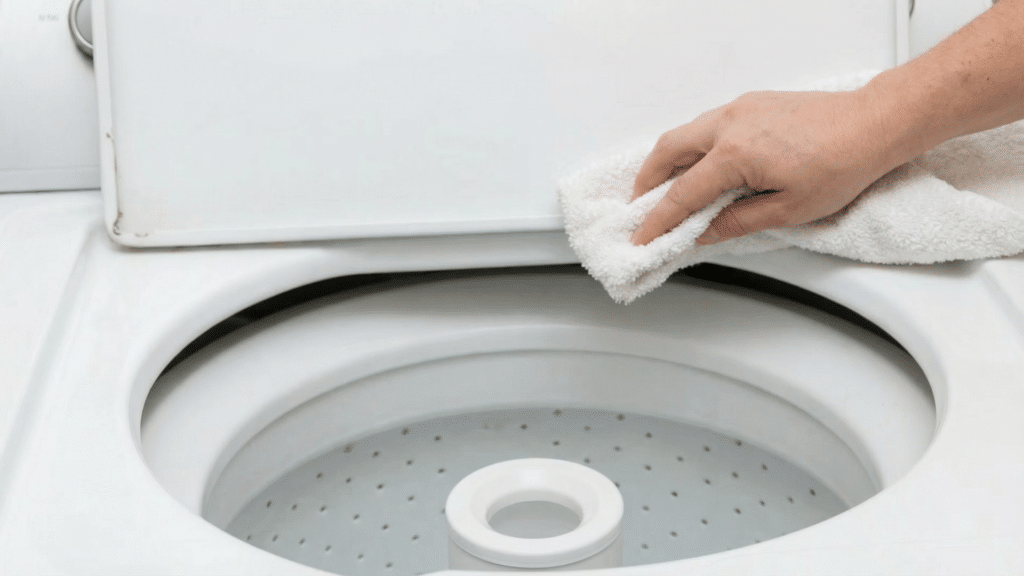
After the final rinse, open the lid and wipe the inside of the washer with a clean, dry cloth. Make sure to get the drum, the lid, and the top edges.
Then leave the lid open for a few hours so the inside can dry thoroughly. This helps prevent mold and keeps the washer smelling fresh.
Do Tablets or Bleach Help with Washing Machine Cleaning?
Washer cleaning tablets can be a quick and easy way to clean your machine. You place one tablet into the drum and run a hot, empty wash cycle.
These tablets help remove light buildup and odors inside the washer. They work well for regular maintenance, especially if your washer isn’t too dirty.
For tougher jobs, some people use bleach. Bleach is strong and can kill mold, mildew, and bacteria. If you choose to use it, only add 1/2 cup at a time and always run a full hot cycle with no clothes.
Never mix bleach with vinegar or other cleaners, as this can create harmful fumes. Use bleach only once in a while when other methods don’t work well enough.
Common Washing Machine Cleaning Mistakes to Avoid
Avoiding a few simple mistakes can help your washer stay fresh and work better. Here are things you shouldn’t do:
- Don’t use too much soap or fabric softener. It can leave behind sticky buildup.
- Don’t close the door or lid right after a wash. Let it air out to stay dry.
- Don’t forget to clean the rubber seal or detergent drawer; they collect grime, too.
- Don’t use strong cleaners unless your washer’s manual says it’s safe.
- Don’t skip regular cleaning. Waiting too long can cause bad smells and buildup.
To Conclude
A clean washing machine makes a big difference. It smells better, works better, and helps your clothes come out truly clean.
You don’t need special tools or strong chemicals to keep it in good shape, just basic items and a little time. Doing this once a month can prevent bigger issues later.
Small habits, like leaving the lid open or wiping the seal, also help a lot. Don’t wait for a smell or stain to appear. Keep your washer fresh with these easy steps.
Try the method that works best for your machine and start your washing machine cleaning routine today.