

Setting goals is one thing, but turning them into reality is another. That’s where most people get stuck.
Dreams can feel fuzzy and far away without something concrete to focus on. Vision boards help bridge that gap. They turn abstract ideas into visual reminders that keep motivation alive every single day.
Creating one doesn’t require artistic skills or expensive supplies. With just a few basic materials and some focused thinking time, anyone can put together a powerful tool for staying on track.
The process is simple, fun, and surprisingly effective at bringing clarity to what matters most.
What is a Vision Board?
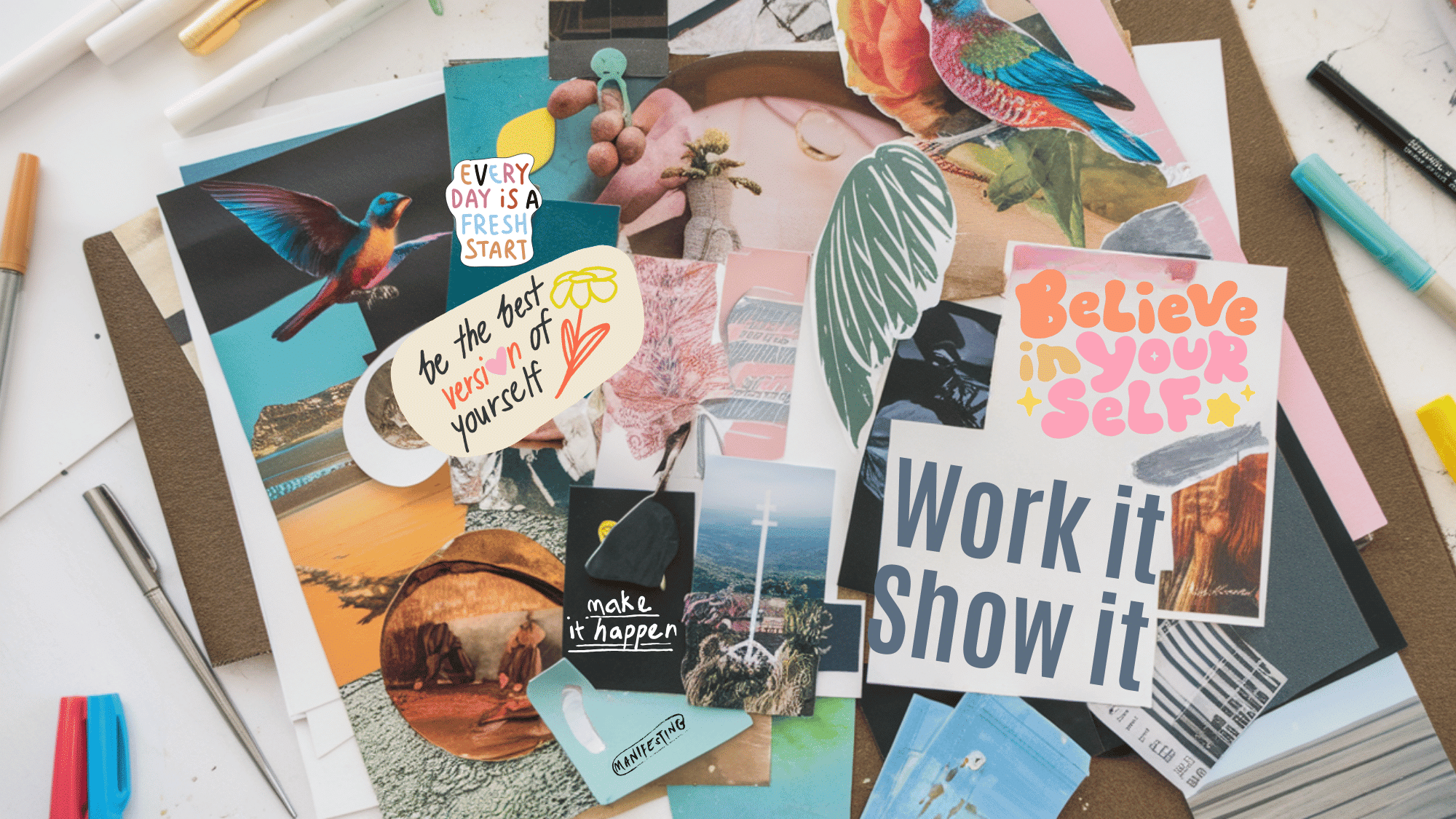
A vision board is a collection of images, words, and quotes arranged on a single surface. It represents goals, dreams, and things someone wants to achieve.
Think of it as a visual map of desired outcomes. Most people use poster boards, corkboards, or even digital platforms to create theirs.
The items placed on it serve as daily reminders of what’s being worked toward.
Photos of dream homes, career milestones, travel destinations, or personal achievements typically fill these boards. They work by keeping aspirations front and center, making abstract goals feel more tangible and achievable.
Why Creating a Vision Board Helps You Achieve Your Goals
Vision boards tap into the brain’s visual processing power. Seeing goals regularly keeps them active in the mind, which influences daily decisions and actions.
When aspirations are displayed prominently, they’re harder to ignore or forget. This constant visual reinforcement creates a psychological pull toward those objectives.
The act of selecting images and arranging them also clarifies what truly matters. It forces people to get specific about their desires rather than keeping them vague.
Plus, looking at a vision board triggers positive emotions and motivation, especially during challenging times when giving up feels tempting.
Step-by-Step Process of Creating a Vision Board
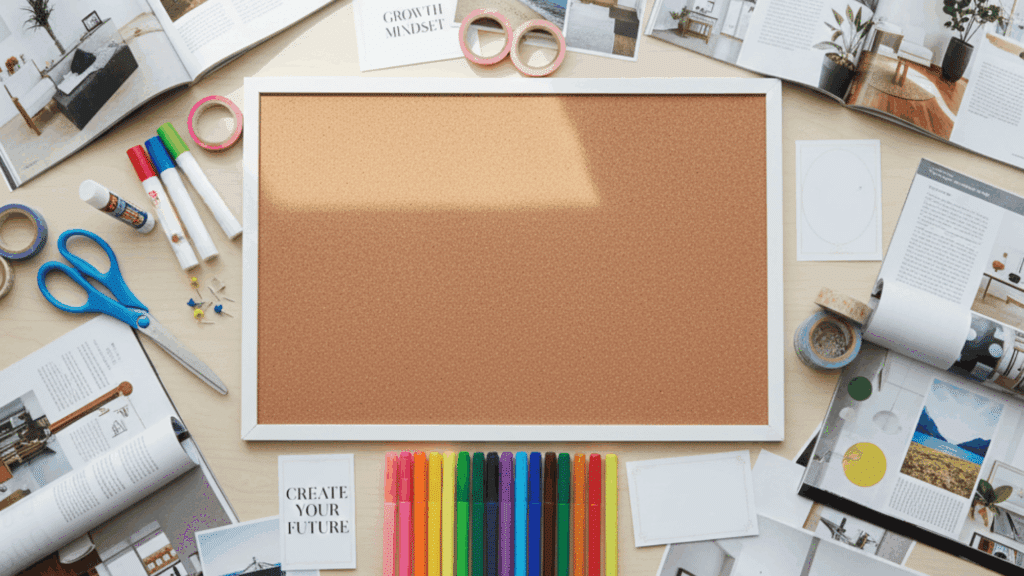
This step-by-step process explains how to create a vision board by defining goals, selecting the right format, gathering materials, designing intentionally, and using consistent visualization for results.
Step 1: Clarify Your Goals and Intentions
Before creating a vision board, you must define what you truly want. Clear goals give your board direction and meaning.
Focus on:
- Career, health, relationships, finances
- Short-term and long-term goals
- Emotional outcomes, not just achievements
Write goals in the present tense, ensure they align with values, and avoid vague desires. Strong intention creates a focused and purposeful vision board.
Step 2: Choose the Right Type of Vision Board
Selecting the right vision board format depends on your lifestyle, habits, and preferences. The format should support consistency and visibility.
| Type | Best For |
|---|---|
| Physical | Hands-on creators |
| Digital | Mobile-focused users |
| Journal | Reflective planners |
Choose one that fits your routine and keeps goals visible daily.
Step 3: Gather Vision Board Supplies and Materials
Once the format is chosen, collect materials that support creativity and clarity. Supplies should feel inspiring, not overwhelming.
Common materials include:
- Magazines or printed images
- Scissors, glue, and board
- Quotes, affirmations, markers
For digital boards, use design tools and saved images. Having everything ready keeps the process focused and distraction-free.
Step 4: Find Images, Words, and Quotes That Inspire You
Choose images and words that create a strong emotional response rather than a logical appeal.
Visuals should reflect how you want your life to feel, not just what you want to achieve. Personal relevance matters more than trends.
When your vision board triggers excitement, confidence, or motivation, it becomes easier to stay focused and emotionally connected to your goals.
Step 5: Arrange and Design Your Vision Board
Design influences how often you engage with your vision board. A clean, intentional layout improves focus and recall.
Design tips:
- Group goals by life area
- Use whitespace for clarity
- Highlight top priorities
- Use consistent colors or themes
- Avoid overcrowding
There’s no perfect layout. Arrange elements intuitively, ensuring your most important goals immediately catch your attention.
Step 6: Activate Your Vision Board Daily
A vision board works through repetition and awareness. Activation means engaging with it consistently.
Daily practices include:
- Visualizing goals for 2–5 minutes
- Reading affirmations aloud
- Placing the board where it is often seen
Consistency builds focus and reinforces action. A vision board succeeds when paired with intentional habits.
Digital Vision Boards: How to Create One Online
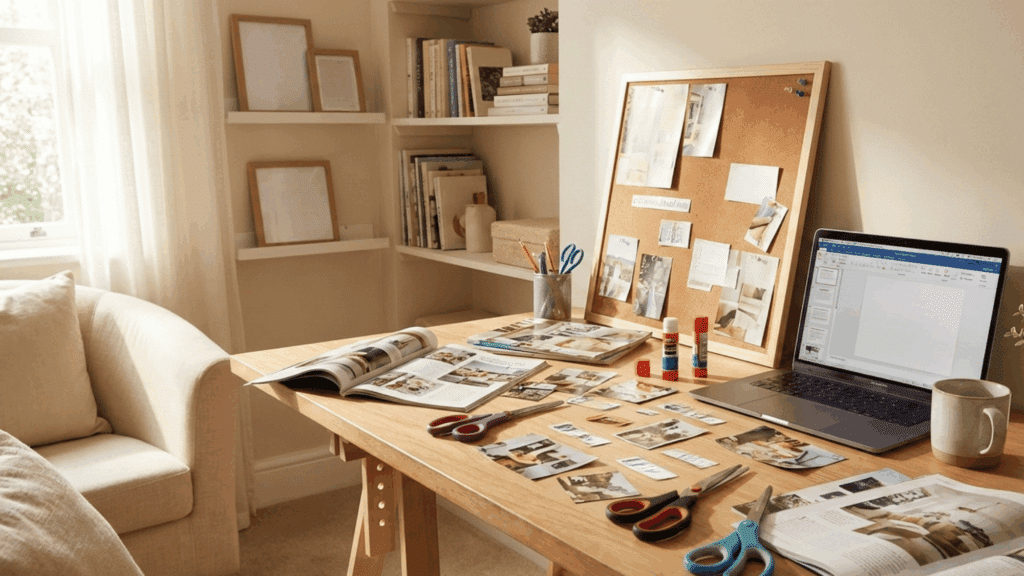
Digital vision boards offer flexibility and convenience. They’re accessible anytime on phones, tablets, or computers. Perfect for people who prefer screen-based tools over physical materials.
Best Apps and Tools:
- Canva: Offers free templates specifically designed for vision boards with drag-and-drop features
- Pinterest: Create secret boards to collect and organize inspiring images in one place
- Notion: Build customizable pages with images, text, and goal-tracking features combined
- Phone Wallpaper: Set vision board images as lock screens for constant daily visibility
Step-by-Step Digital Process:
1. Choose a platform that matches personal preferences and technical comfort level: Consider factors like ease of use, accessibility, and features needed. Beginners might prefer Canva’s templates, while tech-savvy users could enjoy Notion’s customization options.
2. Search and save images that represent goals using keywords related to aspirations: Type specific terms like “dream house,” “career success,” or “healthy lifestyle” into search bars. Save images that trigger positive emotions and align with personal objectives clearly.
3. Arrange visuals in a layout that feels inspiring and easy to view: Experiment with different arrangements until finding one that flows naturally. Group similar themes together or create a collage style that draws the eye across all elements.
4. Add motivational text or affirmations to reinforce the visual elements: Layer short, powerful phrases over images or beside them. Use readable fonts and contrasting colors so text stands out without overwhelming the visuals themselves.
5. Set as wallpaper or bookmark for quick access throughout the day: Make the vision board visible by setting it as a device background or saving the link in frequently visited places for regular viewing and motivation.
Vision Board Affirmations and Examples
Affirmations add powerful verbal reinforcement to visual elements. They transform vision boards from simple picture collections into active tools for mindset shifts and personal growth.
Affirmation Examples:
- I am attracting abundance and opportunities into my life every day.
- My goals are within reach, and I take consistent steps toward them.
- I trust the timing of my life and remain patient with my progress.
- Success flows to me naturally because I work hard and stay focused.
- I deserve all the good things coming my way.
- Every challenge I face makes me stronger and wiser.
- I am creating the life I’ve always dreamed of living.
- My potential is limitless, and I refuse to settle for less.
- I celebrate small wins while working toward bigger achievements.
- Financial freedom is possible for me, and I’m making it happen.
- I am becoming the best version of myself one day at a time.
The Final Thoughts
Creating a vision board isn’t just about cutting pictures and pasting them somewhere visible. It’s about getting intentional with desires and keeping them alive in everyday awareness.
The process itself brings clarity, helping sort through what really matters versus what sounds good on paper.
Whether choosing a physical board on the wall or a digital version on a phone, the key lies in consistent viewing and genuine connection to the images chosen.
Start small if needed. Add to it over time as goals evolve. The most important step is simply beginning and letting the visual reminders guide daily choices toward the life that’s been imagined.