

A cut flower garden layout helps you grow flowers in an organized and practical way. When you plan the layout first, you save time, reduce guesswork, and avoid common planting problems.
A clear plan makes it easier to care for plants, move through the garden, and cut flowers without damaging nearby stems.
Good planning also helps your garden stay productive from the start. This guide explains how to design and plan a cut flower garden layout step by step.
You’ll learn how to choose the right location, decide on the best size and shape, and arrange flowers for easy cutting.
It also covers spacing, raised beds, walkways, and planning blooms for the whole season.
By the end, you’ll understand how to create a layout that works well, looks organized, and supports healthy flower growth.
Why a Cut Flower Garden Layout Matters?
A cut flower garden layout matters because it directly affects how well your plants grow and how many flowers you can harvest.
A clear layout improves air flow, sunlight reach, and root space, which helps plants stay healthy and produce more blooms. When flowers have enough room, they face fewer disease issues and grow stronger stems.
A smart layout also makes harvesting easier. You can reach plants without stepping on soil or bending stems, which saves time and reduces damage.
Easy access means faster cutting and less strain on plants. Poor layout planning often leads to overcrowding, tangled growth, and wasted space. Paths may feel tight, and plants may compete for light and water.
Poor spacing can lower flower yield and make the garden harder to manage.
A thoughtful layout keeps the garden organized, productive, and simple to work in throughout the season.
How to Choose the Right Spot for Your Garden?
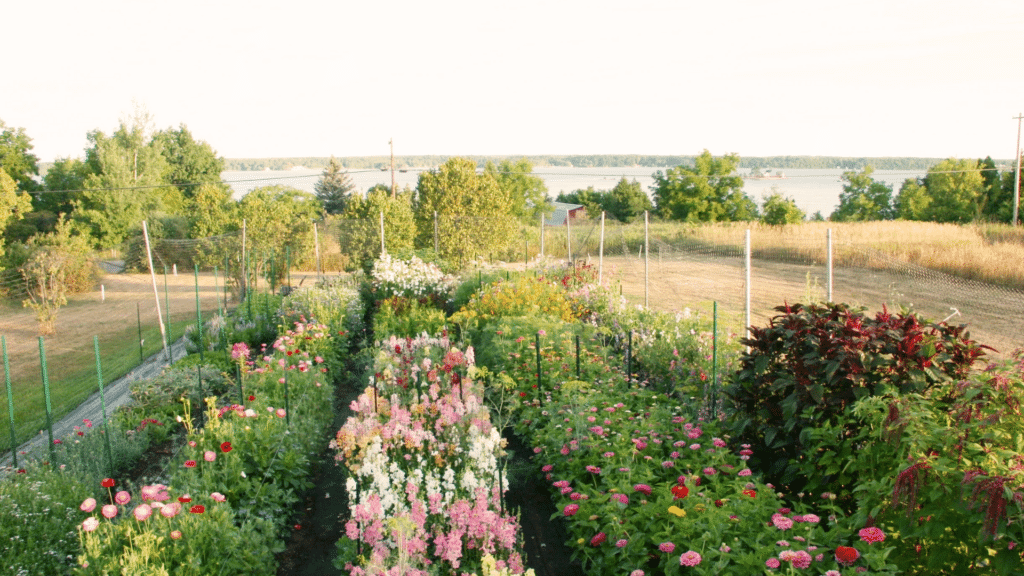
Choosing the right spot is key to a successful cut flower garden layout. Most cut flowers need full sunlight for at least six to eight hours a day to grow strong stems and healthy blooms.
Without enough light, plants may grow tall and weak. Good drainage is just as important.
Soil that holds too much water can cause root problems and slow growth. Proper airflow helps plants dry faster after rain and lowers the risk of disease. The garden should also be easy to reach.
A spot close to your home or path makes watering, weeding, and cutting flowers simple.
If the area feels hard to access, it often gets neglected.
A well-chosen location supports healthy plants and makes daily care easier, saving time and effort while keeping the garden productive throughout the season.
Planning Your Cut Flower Garden Size and Shape
Choosing the right size and shape helps your garden stay easy to manage and productive. A clear plan keeps planting, cutting, and care simple from the start.
1. Decide the Right Garden Size
The size of your cut flower garden should match your time, space, and goals. A smaller garden is easier to manage and works well for beginners.
Larger gardens need more time for watering, weeding, and cutting.
Start with a size you can care for weekly without stress. You can always expand later. Planning size early helps avoid overcrowding and makes spacing easier.
A realistic garden size keeps plants healthy and prevents burnout during busy growing seasons.
2. Choose a Shape that Fits Your Space
The shape of your garden should fit your yard and how you move through it. Long rows work well for open spaces and make cutting fast.
Block or bed layouts suit smaller yards and raised beds. Straight edges help with spacing and walking paths.
Avoid awkward shapes that waste space or block access. A simple shape makes planting easier and keeps the garden organized.
Good shape planning improves flow and helps you reach plants without stepping on soil.
3. Match Layout to Your Gardening Goals
Your garden layout should support what you want from it. If you cut flowers often, plan wider paths and easy access.
For seasonal bouquets, smaller grouped beds work well. Think about how many flowers you want each week. Layout choices affect how much you can harvest and how often you replant.
Planning with goals in mind helps you avoid unused space or crowded beds.
A goal-based layout keeps the garden productive and easier to maintain all season.
How to Arrange Flowers for Easy Cutting?
Arranging flowers for easy cutting makes daily garden work faster and cleaner. Start by grouping plants by height so taller flowers sit behind shorter ones.
This keeps blooms visible and prevents shading. Tall plants at the back also reduce the need to reach over stems.
Keep all flowers within arm’s reach from paths. This setup helps you cut without stepping into beds or compacting soil.
Clear access from walkways protects roots and keeps plants upright.
Place flowers you cut often near main walkways. These may include fast-growing or repeat bloomers.
When these plants are easy to reach, harvesting feels quick and simple. Poor placement can lead to bent stems, missed blooms, and extra effort.
A smart arrangement keeps cutting smooth, reduces plant damage, and helps the garden stay neat throughout the season.
Spacing Rules for Healthy Flower Growth
Proper spacing supports strong stems, steady growth, and easier garden care. It also helps plants stay clean and simple to manage through the season.
- Leave enough space between plants so air can move freely
- Good airflow helps reduce disease and mold issues
- Follow the seed packet spacing instead of guessing
- Crowded plants often grow weak stems and fewer blooms
- Wider spacing makes watering and weeding easier
- Roots need room to spread and absorb nutrients
- Tight spacing can cause plants to compete for light
- Space rows far enough to reach plants without stepping on soil
- Extra space improves visibility and cutting access
Using Raised Beds in a Cut Flower Garden
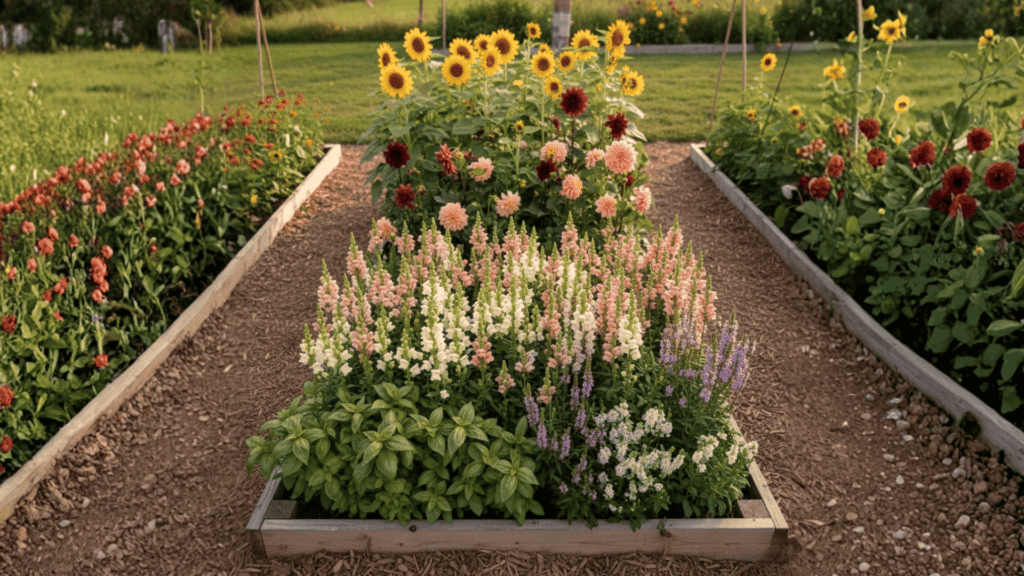
Using raised beds in a cut flower garden makes planting and cutting easier. Raised beds improve soil control, which helps roots grow strong and drain well.
Better drainage keeps plants from sitting in wet soil after rain.
Beds should be narrow enough to reach the center from both sides. A width of about three to four feet works well for most gardeners. Easy reach from the edges prevents stepping on soil and damaging roots.
Raised beds also warm up faster in spring, which helps early growth. They work best in areas with poor soil, heavy clay, or drainage problems.
Raised beds can also help keep rows neat and paths clear.
When space is limited, they offer a clean and simple layout that stays easy to manage through the growing season.
Planning Paths and Walkways Between Beds
Planning paths and walkways between beds helps keep a cut flower garden easy to manage.
Paths give you a clear place to walk so you don’t step on soil or damage roots. Defined walkways protect plants and make cutting safer and faster.
Paths should be wide enough to move comfortably with tools or baskets. A width of about 18 to 24 inches works well for most gardens.
Comfortable path width also makes weeding and watering easier. Simple materials work best for garden walkways.
Mulch, wood chips, straw, or gravel are low-cost and easy to maintain.
These materials help reduce mud and keep shoes clean after rain. Well-planned paths improve access, protect plants, and help the garden stay neat.
A good walkway setup saves time and keeps daily garden tasks simple throughout the season.
How to Plan Blooms for the Whole Season?
A steady bloom plan keeps flowers coming instead of arriving all at once. Good layout planning helps you cut consistently from spring through fall.
1. Plan for Blooms
Choose flowers that bloom at different times so your garden stays active all season. Early bloomers fill gaps at the start of the year, while mid-season flowers carry most of the harvest.
Late bloomers keep production going when others slow down.
Place these groups in separate sections so care and cutting stay simple. This setup avoids large bloom gaps and prevents everything from flowering at once.
Planning bloom timing helps you enjoy fresh cuts without long breaks.
2. Understand Succession Planting Basics
Succession planting means sowing the same flower in stages instead of all at once. This spreads blooms over several weeks.
Use small sections of the garden for repeat plantings every few weeks. Once one group finishes, another is ready to cut. This method works well for fast-growing flowers.
It also keeps beds productive longer. Succession planting reduces waste and supports steady harvests.
A planned layout makes it easier to track planting dates and manage space.
3. Use Layout to Support Steady Harvesting
A clear layout helps you track bloom stages and plan replanting. Group flowers by planting time so older plants don’t mix with new ones.
Keep space open for future sowings. This prevents crowding and makes upkeep easier.
Layout planning also helps you rotate crops and refresh beds. When harvesting follows a plan, cutting feels smoother and faster.
A layout built for steady harvesting keeps the garden productive and easier to manage throughout the season.
Common Cut Flower Garden Layout Mistakes to Avoid
Small layout errors can lead to extra work and poor results. Knowing what to skip helps keep the garden easy to manage and productive.
- Planting flowers too close together
- Ignoring recommended spacing on seed packets
- Forgetting to leave space for paths and walkways
- Placing tall plants where they block sunlight
- Mixing early and late bloomers without a plan
- Making beds too wide to reach comfortably
- Skipping room for future succession planting
- Choosing a hard-to-access garden location
- Overfilling beds with too many flower types
Conclusion
Planning a cut flower garden layout does not need to feel complicated. When you focus on location, spacing, paths, and bloom timing, the garden becomes easier to care for and more productive.
A clear layout supports healthy growth and easy cutting while fitting your space and routine.
If you are just getting started, keep things simple. Start small, choose easy-to-grow flowers, and leave room to adjust as you learn.
Even a basic plan can make a big difference over time.
Take a few minutes to sketch your layout and think through how you will move through the garden.
Have you already planned or planted a cut flower garden? Share what worked for you or what you learned in the comments below.