

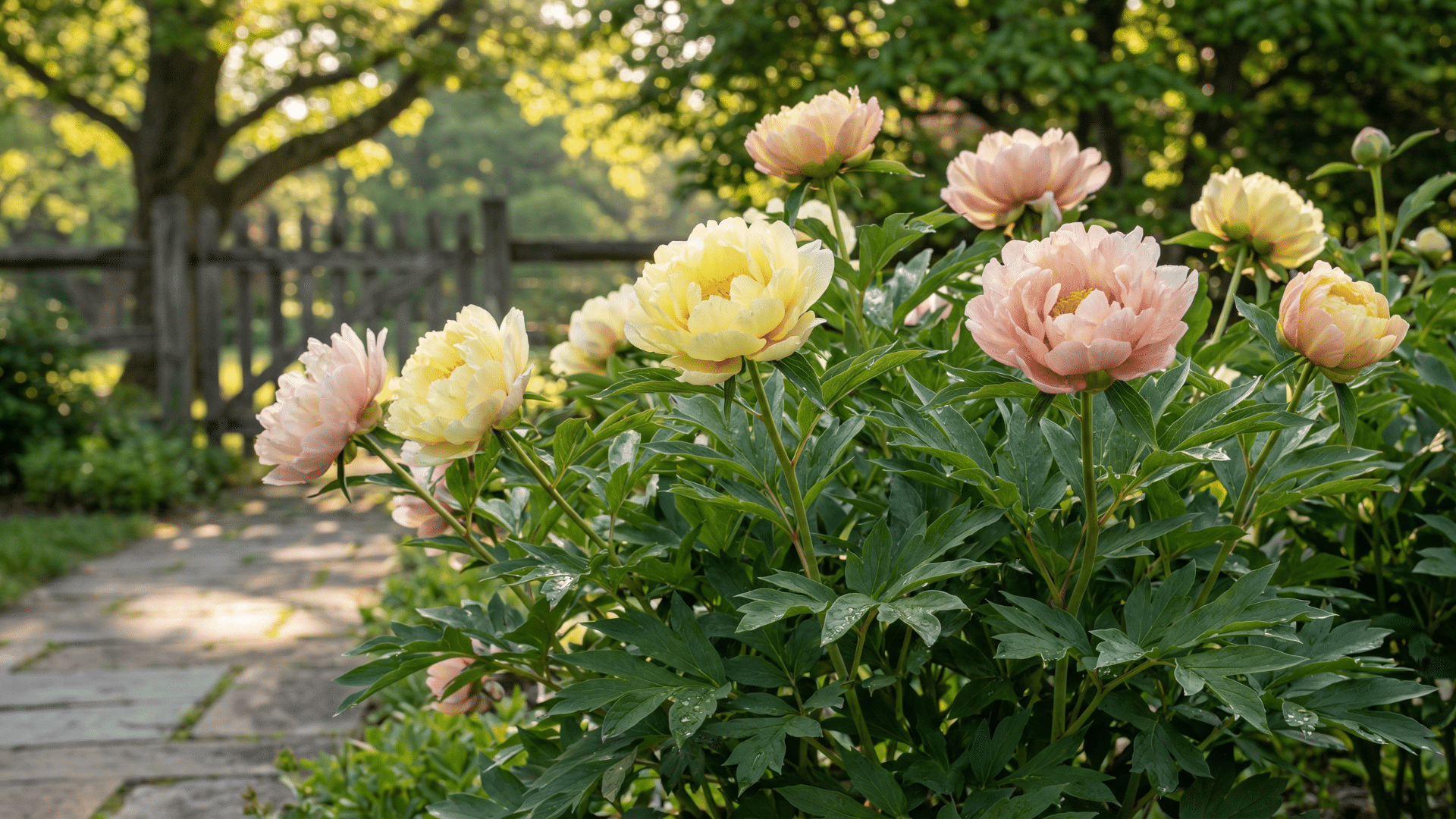
Itoh peonies are a popular hybrid known for their large blooms and strong stems. They combine the best traits of tree peonies and herbaceous peonies, making them a favorite in many gardens.
These plants offer bold color and a long bloom season, but they still need the right care to perform well. Proper planting and steady maintenance help them stay healthy year after year.
Gardeners often choose Itoh peonies for their beauty and reliability. With the right approach, these plants can thrive in many climates.
This guide explains how to plant and care for Itoh peonies so they grow strong and bloom with confidence each season.
Understanding Itoh Peonies
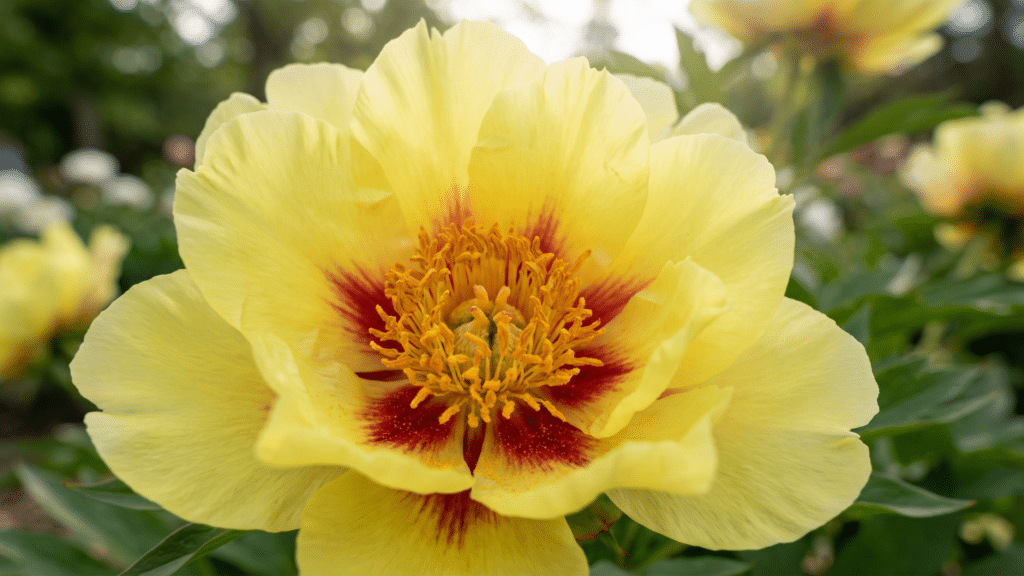
Itoh peonies, also known as intersectional peonies, are hybrids developed by crossing herbaceous peonies (Paeonia lactiflora) with tree peonies (Paeonia suffruticosa).
The goal was to combine the large, often exotic blooms of tree peonies with the cold hardiness and full dieback habit of herbaceous types.
Unlike tree peonies, Itoh peonies die back to ground level each winter. Unlike herbaceous peonies, they produce thick, rigid stems that support oversized flowers without staking.
Their foliage is deeply divided, glossy, and remains attractive well into autumn, giving them ornamental value even after flowering ends.
Mature plants typically form rounded clumps, reaching two to three feet tall and wide.
Their growth habit is balanced and symmetrical, and because of their hybrid vigor, they tend to produce more blooms per plant than wide traditional varieties once fully established.
Common Itoh Peony Color Groups
| Flower Color | Popular Varieties | Why Gardeners Choose Them |
|---|---|---|
| Yellow | Bartzella, Garden Treasure | Strong stems, abundant blooms, rare, clear yellow tones |
| Pink | Julia Rose, Pink Ardour | Soft to vibrant shades, color shifts as flowers mature |
| Red | Scarlet Heaven, Lollipop | Bold color impact, upright growth, reliable flowering |
| White/Cream | Cora Louise, First Arrival | Dark center flares, elegant look, sturdy structure |
Bloom time generally falls in late spring to early summer, slightly after herbaceous peonies and before many summer perennials. Planting multiple cultivars with staggered bloom times can extend the flowering window.
Where Itoh Peonies Thrive Best
Understanding how these hybrids respond to climate, sunlight, and soil conditions makes the difference between moderate growth and exceptional flowering.
Climate and Hardiness
Itoh peonies perform reliably in USDA Zones 4 through 8. They require a period of winter dormancy and adequate chilling hours to trigger bud formation. In very mild climates with insufficient winter cold, flowering may decline over time.
In colder zones, they demonstrate excellent freeze tolerance once established, as their crown sits safely below the soil surface.
Sunlight Requirements
Full sun is ideal, meaning at least six hours of direct light daily. Light intensity directly affects bud formation and stem strength.
In hotter regions, particularly Zones 7 and 8, light afternoon shade can prevent petal bleaching and extend bloom life. However, excessive shade significantly reduces flowering. A plant grown in too much shade may produce lush foliage but very few blooms.
The relationship between light exposure and bloom density is one of the most important factors in intersectional peony care.
Soil Requirements and Drainage
Drainage is critical. Itoh peonies possess thick, fleshy storage roots that are highly susceptible to rot in waterlogged soil. Unlike fibrous-rooted perennials, they do not tolerate prolonged saturation.
Ideal soil characteristics include:
- Loamy texture
- Slightly acidic to neutral pH (6.5–7.0)
- Rich organic content
- Consistent but not excessive moisture retention
Heavy clay soils should be amended with compost prior to planting. In areas with persistent drainage issues, raised beds offer a safer long-term solution than repeated attempts to correct soil.
Planting Depth and Early Root Development
Planting depth governs bloom response more than fertilization, watering, or pruning.
The crown, where the growth eyes are located, must sit one to two inches below the soil surface. This shallow positioning allows winter temperatures to properly trigger bud initiation.
When planted deeper than two inches:
- The plant grows foliage normally.
- Bud formation is suppressed.
- Flowering may fail entirely.
Many gardeners respond by feeding the plant more heavily, which worsens the imbalance.
The planting hole should be wide enough to allow lateral root spread but not deeper than necessary. Overly deep planting is the most common cause of flowering failure.
Core Care Practices for Itoh Peonies
Once established, Itoh peonies rely on consistent seasonal care to maintain strong growth and reliable blooms.
Watering Strategy
Watering should encourage deep, stable root systems. During the first year, moisture must remain even while roots establish. Deep watering once or twice weekly is far more beneficial than light daily irrigation, which keeps roots shallow and vulnerable.
Established plants tolerate moderate drought but respond best to consistent moisture during spring bud formation. Excessive water, however, reduces oxygen in the root zone and invites crown rot. Observing soil moisture several inches below the surface is more reliable than watering on schedule.
Fertilizing Itoh Peonies
Itoh peonies are efficient nutrient users and rarely benefit from heavy feeding. A balanced fertilizer applied in early spring, as shoots emerge, supports seasonal growth. A light post-bloom feeding may assist in strengthening the root system for the following year.
Excess nitrogen produces large foliage at the expense of flowers. Stopping fertilization by late summer allows stems to mature fully before winter dormancy.
Mulching and Crown Protection
A moderate layer of mulch stabilizes soil temperature and reduces weed competition. Two to three inches of organic mulch is sufficient. The crown must remain exposed; burying it under mulch restricts airflow and increases the risk of fungal infection.
In colder climates, winter mulch protects against freeze-thaw cycles but should be reduced as spring growth begins.
Pruning, Deadheading, and Seasonal Cutback
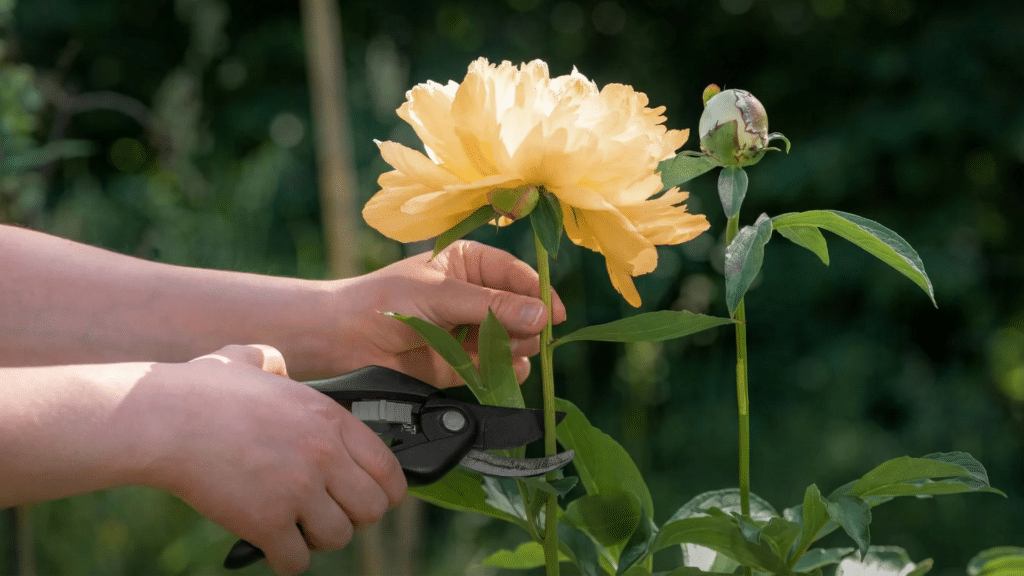
Removing spent blooms prevents energy from being diverted into seed production. Stems should be cut back to a healthy leaf set rather than stripped aggressively.
In late fall, after frost collapses foliage, stems are cut to ground level. This annual cutback is essential in intersectional peony care because complete dieback removes overwintering disease spores and prepares the plant for clean spring emergence.
Division and Transplanting
Unlike many perennials, Itoh peonies prefer stability. Division is only necessary when overcrowding limits performance or relocation becomes unavoidable.
Early fall remains the safest time for dividing established clumps. Each division must include multiple healthy eyes and sufficient root mass. Bloom production may temporarily decline as the plant reestablishes itself, but patience restores performance.
Seasonal Maintenance for Itoh Peonies
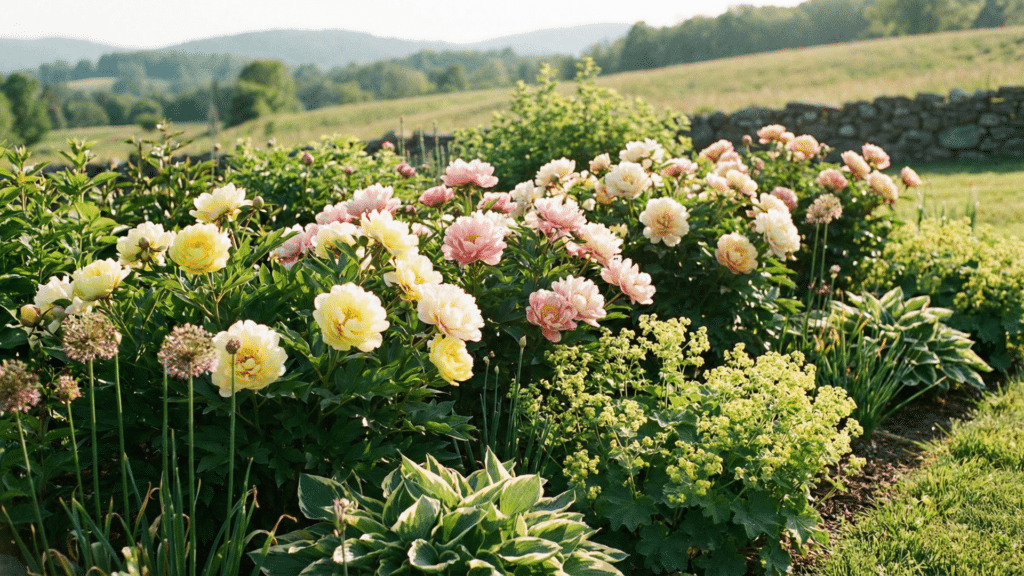
Itoh peonies follow a clear annual growth cycle, and care should align with what the plant is doing in each season.
| Season | What the Plant Is Doing | Recommended Actions | What to Avoid |
|---|---|---|---|
| Early Spring | Shoots emerge and stems elongate; buds begin forming | Apply balanced fertilizer as growth appears; maintain even moisture; check drainage | Heavy nitrogen feeding; disturbing young shoots; overwatering cold soil |
| Late Spring (Bloom Period) | Buds open; flowering peaks | Keep soil consistently moist; deadhead spent blooms to redirect energy to roots | Cutting back healthy foliage, allowing seed formation |
| Summer (Post-Bloom) | Foliage builds carbohydrate reserves for next year | Leave leaves intact; water during extended drought; monitor for disease | Early foliage removal; excessive fertilizing |
| Early Fall | Root growth increases as temperatures cool | Top-dress lightly with compost if needed; divide only if necessary | Heavy feeding late in the season; aggressive pruning |
| Late Fall | Foliage dies back; plant enters dormancy | Cut stems to ground level after frost; remove debris | Cutting back before frost, leaving diseased material in beds |
| Winter | Crown remains dormant; chilling supports bud formation | Apply light mulch in cold zones after the soil freezes | Thick mulch over crown; waterlogged soil |
Common Problems and Corrective Measures
Even well-grown Itoh peonies can show signs of stress when growing conditions fall out of balance. Most problems stem from planting depth, drainage, light exposure, or nutrient management rather than from serious disease.
Healthy Foliage but No Blooms
Usually caused by planting the crown too deep or insufficient winter chill. Lift and reset the crown so the eyes sit 1–2 inches below the soil surface. Ensure the plant receives at least six hours of direct sunlight daily.
Yellowing Leaves During the Growing Season
Most often linked to poor drainage or overwatering. Improve soil structure, reduce irrigation frequency, and confirm that water is not collecting around the crown.
Gray Mold on Buds or Stems (Botrytis Blight)
Develops in cool, damp conditions with limited air circulation. Remove infected material immediately, avoid overhead watering, and ensure proper spacing between plants.
Weak Stems or Reduced Bloom Size
Frequently, the result of excessive shade or heavy nitrogen feeding. Increase light exposure if possible and switch to a balanced fertilizer applied only in early spring.
Crown Rot or Soft Tissue at The Soil Level
Indicates prolonged water saturation or mulch piled against the base. Improve drainage and pull mulch several inches away from the crown.
Buds that Fail to Open
Often triggered by sudden temperature swings, inconsistent moisture, or fungal infection. Maintain even watering during bud development and monitor for early disease symptoms.
Bloom Development and Maturity Timeline
Itoh peonies build performance gradually, strengthening their root system before reaching full flowering potential.
| Growing Year | Primary Focus of the Plant | What to Expect Above Ground | What This Means for Care |
|---|---|---|---|
| Year 1 | Root establishment and carbohydrate storage | Limited blooms or none; moderate foliage growth | Focus on consistent moisture and correct depth; avoid overfertilizing |
| Year 2 | Expansion of the crown and stronger stem formation | Increased foliage density; noticeable improvement in bloom count | Maintain balanced feeding and allow full foliage retention after bloom |
| Year 3 and Beyond | Full energy allocation to flowering and structural stability | Multiple strong stems; heavy bloom production; improved flower size | Continue steady seasonal care; avoid unnecessary division |
Mature clumps often produce dozens of blooms supported by rigid stems that rarely require staking. Long-term reliability develops as the root system strengthens year after year.
Final Thoughts
Itoh peonies stand out for their combination of strength and refinement. Once established, they bring structure, balance, and dependable color to the garden in a way few perennials can match.
Their performance improves with time, and mature clumps often become focal points rather than supporting plants.
The key is to give them the right start and allow them to settle without unnecessary interference. When grown with patience and attention to fundamentals, these hybrids develop into long-lived, resilient performers.
If you’re planning to add Itoh peonies to your landscape, use this guide as your reference and build your planting strategy with confidence this season.