

Planning a kitchen can feel confusing when every cabinet seems different.
That is why knowing standard cabinet sizes matters before you buy, replace, or redesign anything.
The right measurements help cabinets fit well, line up with appliances, and leave enough walking space. They also save time, money, and stress during installation.
This guide explains standard kitchen cabinet sizes, including common heights, widths, and depths used today.
You will learn how base cabinets are sized, what measurements to expect, and how to check your own space correctly.
I will share some simple tips to avoid common measuring mistakes. By the end, you will know what sizes work best and how to plan with confidence before making any cabinet decision.
What Are Standard Kitchen Cabinet Sizes?
Standard kitchen cabinet sizes are the common measurements most cabinet makers use for height, width, and depth.
These sizes are based on years of kitchen planning and everyday use, not guesswork. Manufacturers follow these size ranges because they fit well in most homes and work with standard appliances.
Standard sizes help cabinets align with stoves, dishwashers, and refrigerators without the need for changes.
They also keep countertops at a comfortable height for cooking and prep. Using standard measurements makes kitchen layouts easier to plan and install.
It also helps reduce mistakes during ordering and setup.
Standard cabinet sizes support smooth installation and better spacing, which saves time and cost.
When cabinets follow set sizes, homeowners have more options and fewer surprises during a remodel or replacement project.
Standard Kitchen Cabinet Sizes
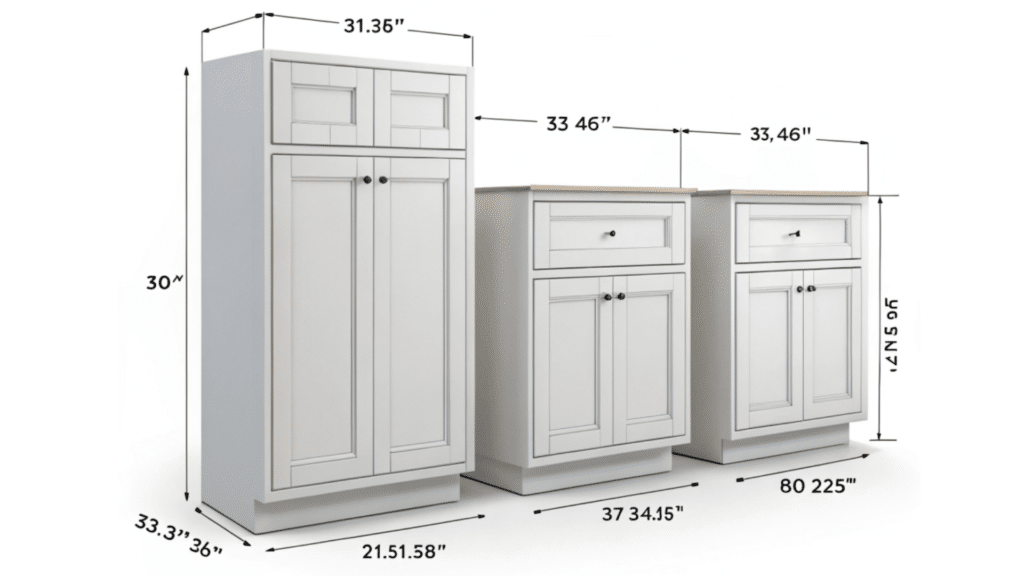
Knowing basic cabinet dimensions helps you plan a kitchen that fits well and works smoothly. These measurements guide layout, appliance spacing, and countertop placement.
1. Kitchen Base Cabinet Height
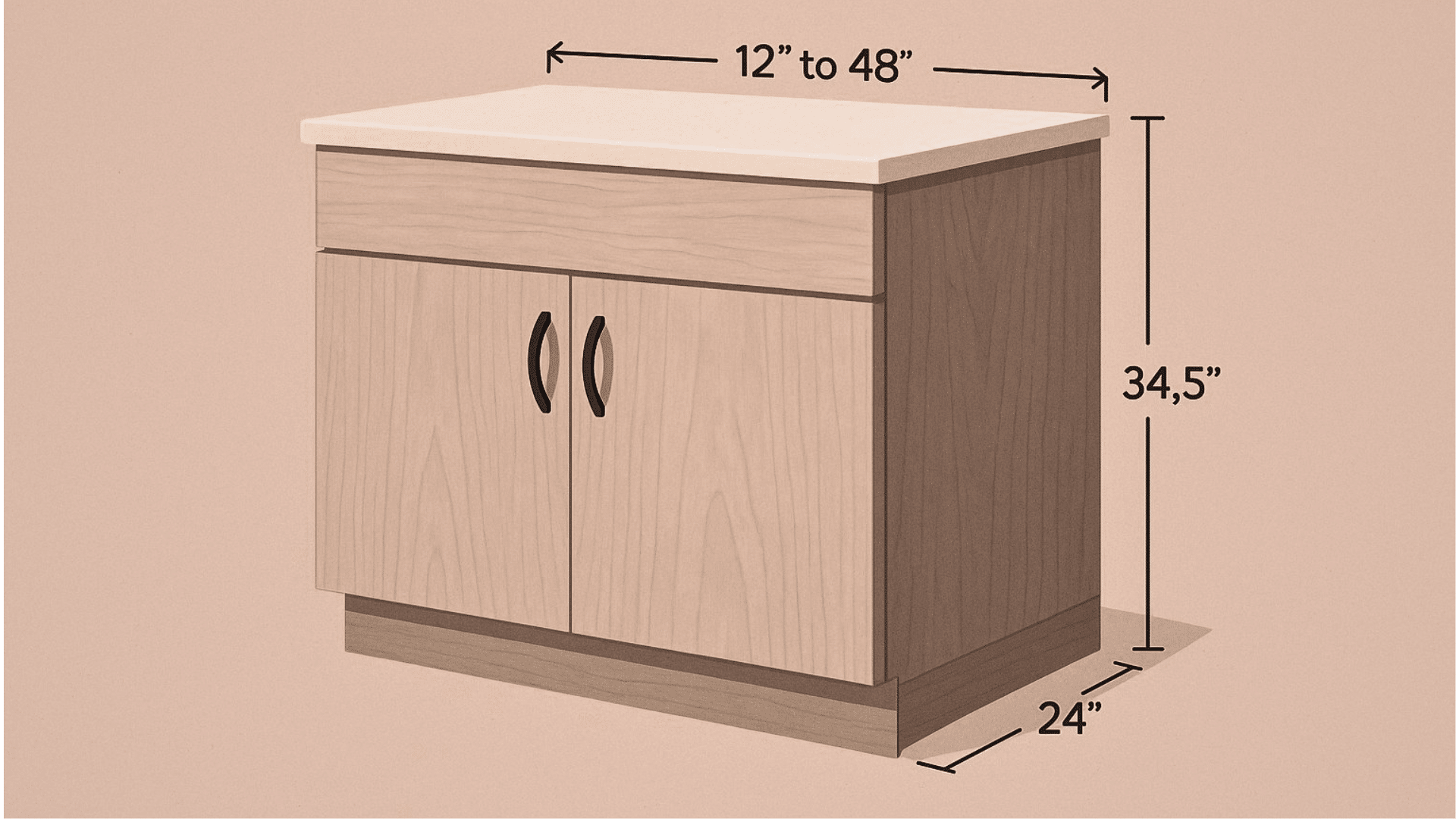
The standard height for base cabinets is 34.5 inches, measured from the floor to the top of the cabinet box.
With a countertop added, the total height usually reaches 36 inches. This height works well for most people and keeps prep work comfortable.
This measurement stays the same in most kitchens, which makes planning easier. It also helps appliances like dishwashers slide into place without gaps.
Keeping this height consistent helps cabinets line up evenly across the kitchen.
2. Kitchen Base Cabinet Depth
Base cabinet depth is usually 24 inches from front to back. This size gives enough space for storage while keeping countertops easy to reach.
Standard depth works with most countertops and appliances, so everything fits together cleanly.
Cabinets deeper than this can feel bulky and reduce walking space.
Shallower cabinets may limit storage. Sticking to standard depth helps keep aisles clear and makes daily kitchen tasks more comfortable and practical.
3. Kitchen Base Cabinet Width
Base cabinet widths come in set sizes, often ranging from 9 inches to 48 inches. These options allow cabinets to fit different layout needs.
Using standard widths makes it easier to fill wall space without odd gaps.
Smaller widths work well for tight spots, while wider cabinets provide more storage.
Since manufacturers follow these sizes, replacement or future changes are simpler. Choosing the right width helps balance storage, layout, and overall kitchen flow.
Standard Kitchen Cabinet Size Chart at a Glance
This chart will help you quickly compare common cabinet sizes used in most kitchens. Use it as a reference when planning layouts or checking space requirements.
| Cabinet Type | Standard Width (inches) | Standard Height (inches) | Standard Depth (inches) |
| Base Cabinets | 9–48 | 34.5 | 24 |
| Wall Cabinets | 9–36 | 12–42 | 12 |
| Tall Cabinets | 18–36 | 84–96 | 24 |
| Sink Base Cabinets | 30–36 | 34.5 | 24 |
| Corner Base | 33–36 | 34.5 | 24 |
| Corner Wall | 24–36 | 12–42 | 12 |
| Drawer Base | 12–36 | 34.5 | 24 |
| Pantry Cabinets | 18–30 | 84–96 | 24 |
Measure the Size of Standard Kitchen Cabinets
Before you start measuring, take time to understand cabinet placement, wall spacing, and appliance clearance so your numbers stay accurate and useful during the planning stage.
1. Gather the Right Tools
Before you start, collect all the tools you need, so you don’t stop halfway through.
Use a steel tape measure, pencil, paper, and a level. A steel tape gives more accurate results than a soft one. Always measure in inches and write numbers clearly.
Double-check that your tape measure starts at zero correctly.
Never rely on memory. Writing each number down right away helps prevent errors and saves time later.
2. Measure Wall Length and Height
Start by measuring the full length of each wall where cabinets will go. Measure from corner to corner at countertop height.
Then measure the wall height from floor to ceiling. Take measurements in more than one spot, since walls are not always straight.
Use the smallest number as your final measurement.
This avoids cabinets that don’t fit. Write each wall measurement separately so nothing gets mixed up later.
3. Check Doors, Windows, and Obstacles
Measure the location of doors, windows, outlets, vents, and switches. Note how far each item is from the nearest wall and the floor.
Measure the width and height of windows and doors, including trim.
These details help plan cabinet placement without blocking anything.
Missing this step can cause costly changes. Draw a simple sketch of the wall and label each obstacle clearly for reference.
4. Measure Base and Upper Cabinet Space
For base cabinets, measure from the floor to the top of where the cabinet will sit, not the countertop.
For upper cabinets, measure from the floor to the bottom and top of the cabinet area. Standard spacing matters, but always measure your actual space.
Do not assume standard sizes will fit.
Confirm clearance between base and upper cabinets to ensure enough working space.
5. Double-Check Every Measurement
Go back and re-measure everything once you finish. This helps catch small mistakes that can cause big problems later.
Compare your numbers to your sketch and notes. If two measurements don’t match, measure again.
Accuracy matters more than speed. Taking a few extra minutes now can save money, time, and stress during cabinet installation.
Tips for Accurate Cabinet Measurements
These points help keep your measurements clean, clear, and easy to follow when working with standard cabinet sizes. Small details matter and can prevent costly ordering or fitting issues later.
- Use a steel tape measure for better accuracy than soft or cloth tapes
- Measure in inches and stay consistent throughout the process
- Always write numbers down right away instead of relying on memory
- Measure walls in more than one spot and use the smallest number
- Check floors and walls with a level to spot uneven areas
- Measure from finished surfaces, not unfinished walls or subfloors
- Note all obstacles like outlets, pipes, vents, and switches
- Create a simple sketch and label every measurement clearly
- Avoid rounding numbers up or down
- Double-check every measurement before placing any cabinet order
How Cabinet Sizes Affect Kitchen Layout?
Cabinet sizes play a big role in how a kitchen looks and works. Using standard cabinet sizes helps keep walkways clear and prevents the space from feeling tight or crowded.
Cabinets that are too narrow can leave wasted gaps. The right sizes help keep clear paths for moving, cooking, and cleaning.
Proper cabinet depth makes it easier to reach items without bumping into doors or appliances.
Correct cabinet height keeps upper cabinets within reach and prevents them from crowding the room. Cabinet width also affects storage. Wider cabinets hold more but need more wall space.
Smaller cabinets offer flexibility in tight kitchens. Matching cabinet sizes to the room helps appliances line up correctly.
It also keeps countertops level and usable. When cabinet sizes fit the layout, the kitchen feels balanced, open, and easier to use every day.
Conclusion
Measuring kitchen cabinets may seem simple, but small mistakes can lead to big problems later, especially when working with cabinet sizes. Taking your time, using the right tools, and writing everything down makes a real difference.
Careful measurements help cabinet sizes fit better, line up with appliances, and leave enough room to move around.
They also help you avoid wasted money, delays, and frustration during installation. Before you buy or plan anything, pause and measure again.
That extra step can save you hours of fixing issues later.
If you’ve measured cabinets before, you know how helpful a clear plan with standard cabinet sizes can be. If this is your first time, trust the process and stay patient.
I’d love to hear how measuring went for you. Share your experience, tips, or lessons learned in the comments below.