

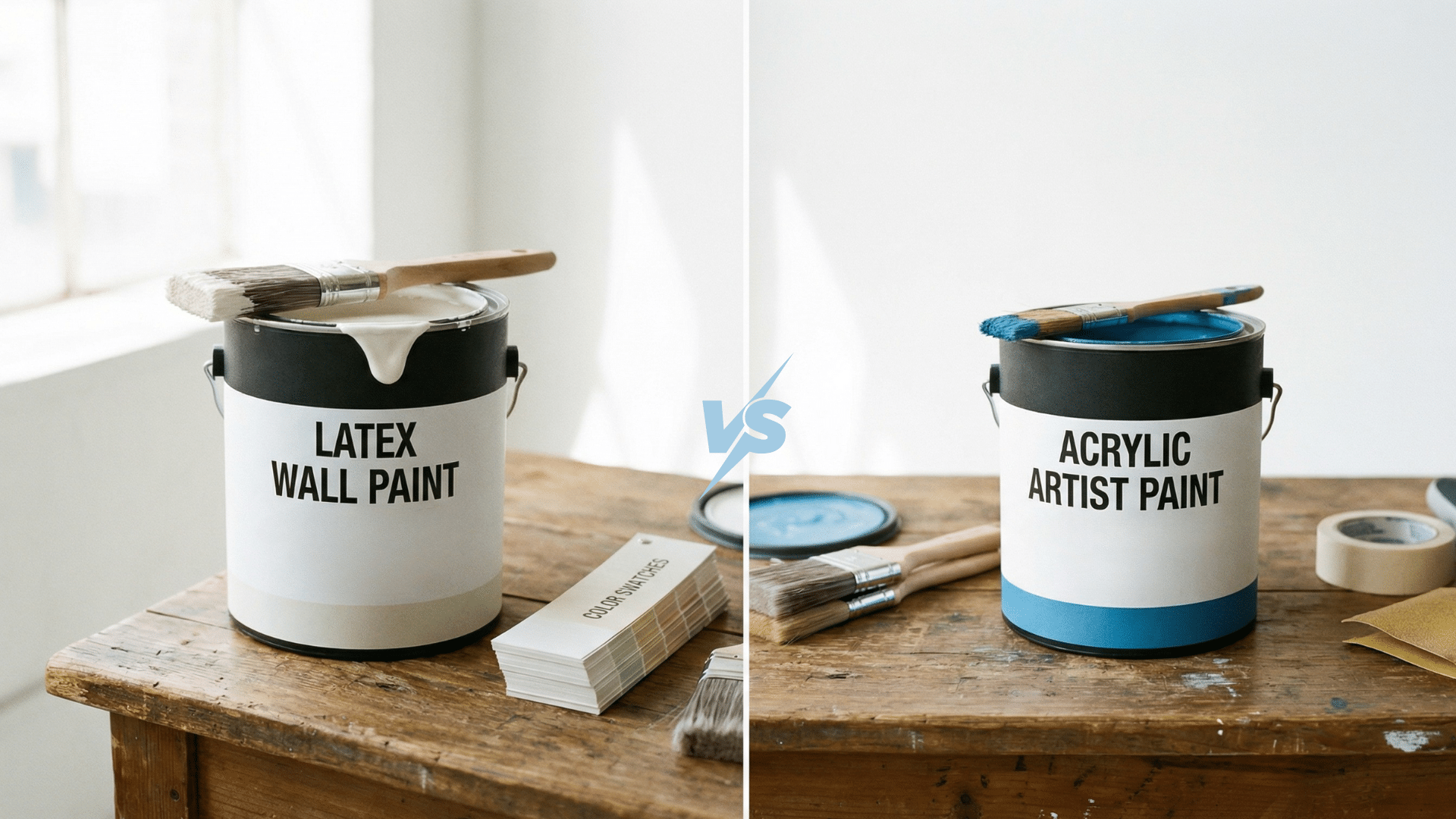
Painting starts with a big decision: what kind of paint to use. Latex and acrylic are two common choices, but they aren’t the same.
Both are water-based, yet they work differently and are better for different jobs. Some paints are easier to clean. Others hold up better outside.
Picking the wrong one can lead to problems like peeling or fading. That’s why it’s important to understand how they compare.
This blog will explain the key differences, list the pros and cons of each, and show where each type works best, so readers can choose the right paint for their next project with ease.
What is Latex Paint?
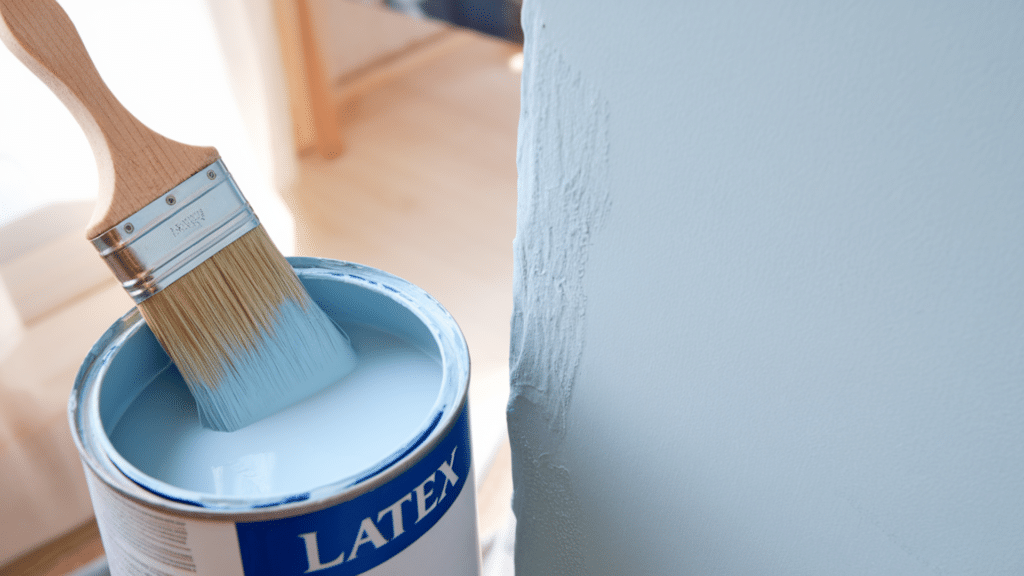
Latex paint is water-based. Even though the name says “latex,” it usually does not contain real latex rubber anymore. It is made of water, pigment (color), and a binder that holds everything together. The binder in latex paint is usually a plastic resin.
Key Features of Latex Paint:
- Dries quickly
- Easy to clean with water
- Low odor
- Good for walls and ceilings
- Available in many finishes (flat, eggshell, satin, etc.)
What is Acrylic Paint?
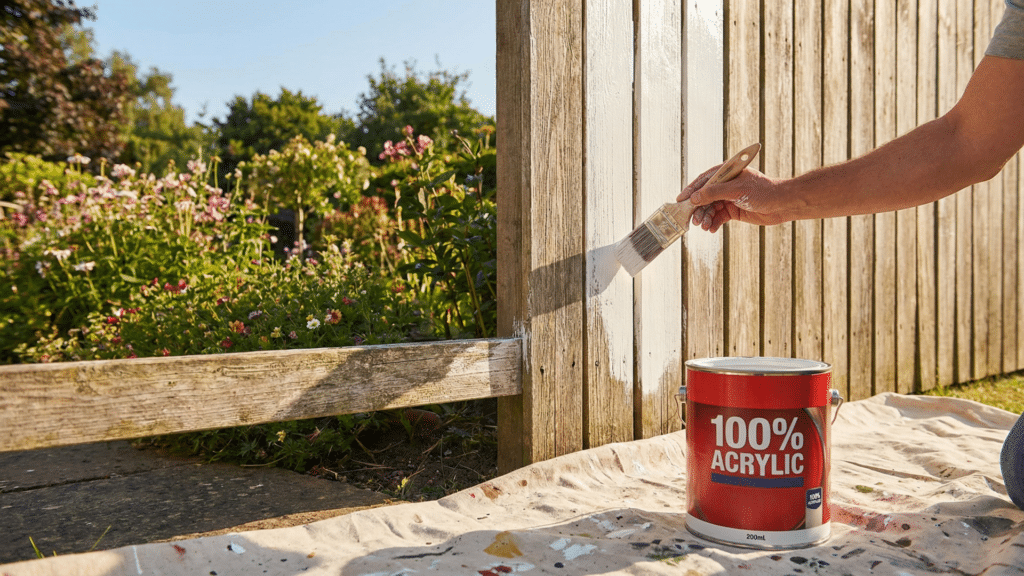
Acrylic paint is also water-based, but it uses acrylic resin as the binder. This resin makes it stronger and more flexible than latex paint. Acrylic paint is known for sticking well to many surfaces and lasting a long time.
Key Features of Acrylic Paint:
- More elastic and flexible
- Great for outdoor use
- Resists cracking and fading
- Can be used on many surfaces
- Takes longer to dry than latex
Main Differences Between Latex and Acrylic Paint
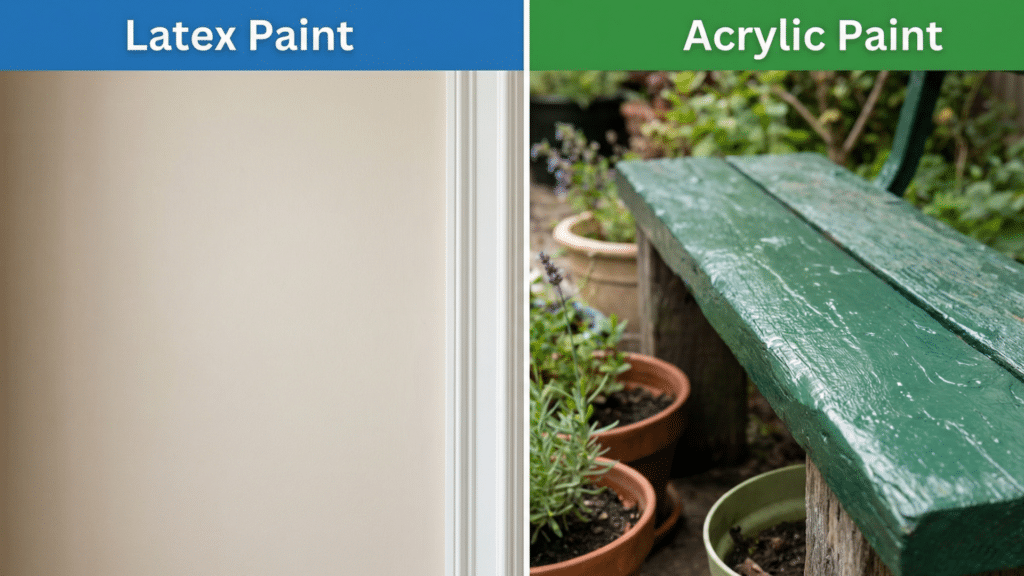
Latex and acrylic paints may look alike, but they behave in different ways. The difference comes from how each paint is made and how it reacts after drying. Understanding these differences helps users choose the right paint for their project.
1. Binder and Paint Makeup
Latex paint uses a vinyl or plastic-based binder. This binder is softer and works well on indoor surfaces that do not move much. It gives smooth coverage but is not very strong when exposed to harsh conditions.
Acrylic paint uses an acrylic resin binder. This resin is stronger and more flexible. It helps the paint stick better and last longer, especially on surfaces that expand or shrink.
2. Flexibility After Drying
Latex paint dries into a firm layer. Once dry, it does not stretch very well. Over time, this can lead to small cracks, especially in areas with temperature changes.
Acrylic paint stays flexible even after drying. It can bend and move with the surface. This flexibility helps prevent cracking and peeling, making it better for surfaces under stress.
3. Durability and Wear Resistance
Latex paint holds up well indoors where there is little moisture or sun exposure. However, it can fade or wear down faster in tough conditions.
Acrylic paint is made to last longer. It resists fading, cracking, and surface damage. This makes it a stronger choice for areas that need long-term protection.
4. Best Surface Types
Latex paint works best on smooth indoor surfaces. These include drywall, plaster, and previously painted walls. It spreads easily and gives an even look.
Acrylic paint works well on many surface types. It sticks better to wood, metal, concrete, and masonry. This makes it useful for both indoor and outdoor projects.
5. Indoor and Outdoor Use
Latex paint is mainly used indoors. It performs well in rooms like bedrooms, living rooms, and hallways where conditions stay stable.
Acrylic paint is better for outdoor use. It handles sun, rain, heat, and cold much better than latex. This makes it the safer choice for exterior walls and trim.
6. Moisture and Water Resistance
Latex paint can absorb moisture over time. In damp areas, this may cause bubbling or peeling if not properly protected.
Acrylic paint resists water much better. It forms a tight seal that keeps moisture out. This makes it suitable for humid areas and outdoor surfaces.
7. Drying Time and Work Speed
Latex paint dries quickly. It is often dry to the touch within an hour and ready for another coat in a few hours. This helps finish jobs faster.
Acrylic paint usually takes longer to dry. It needs more time between coats, but this slower drying helps create a stronger final layer.
8. Ease of Use and Cleanup
Latex paint is easy to use and beginner-friendly. It spreads smoothly and cleans up easily with soap and water.
Acrylic paint may feel thicker and needs careful application. Cleanup is still water-based, but dried paint can be harder to remove.
9. Cost and Value
Latex paint is usually less expensive. It is a good option for large indoor areas where cost matters.
Acrylic paint costs more, but it offers better strength and longer life. The higher price often pays off for outdoor or high-use areas.
Quick Summary Table
| Feature | Latex Paint | Acrylic Paint |
|---|---|---|
| Binder | Vinyl/plastic | Acrylic resin |
| Flexibility | Low | High |
| Durability | Medium | High |
| Indoor Use | Excellent | Good |
| Outdoor Use | Poor | Excellent |
| Cost | Lower | Higher |
| Moisture Resistance | Low | High |
| Beginner Friendly | Yes | Moderate |
How to Tell the Difference in the Store
Paint cans are often labeled clearly, but not always. Look for words like:
- “100% Acrylic” = acrylic paint
- “Acrylic Latex” = latex paint with some acrylic resin
- “Latex” = standard latex paint
Ask a store worker if you’re not sure. Some labels use terms that are hard to read.
Paint Finishes: What Works Best?
Both latex and acrylic paints come in different finishes. These affect how shiny or flat the surface looks.
| Finish | Best For | Shine Level |
|---|---|---|
| Flat | Ceilings, low-traffic rooms | No shine |
| Eggshell | Bedrooms, living rooms | Low shine |
| Satin | Kitchens, bathrooms | Medium shine |
| Semi-gloss | Trim, doors, cabinets | Noticeable shine |
| Gloss | Furniture, windows | High shine |
Final Thoughts: Which Paint is Better?
There’s no one answer for every job. It depends on what you’re painting.
- Use latex paint for indoor walls, ceilings, and low-cost updates.
- Choose acrylic paint for outdoor projects, furniture, and areas that need long-lasting results.
Both paints have their place. The right one depends on where you’re using it, your budget, and how much time you want to spend.
If you’re painting inside and want a quick, easy job, latex is your friend. If you’re painting outside or want a strong finish that lasts, go with acrylic.