

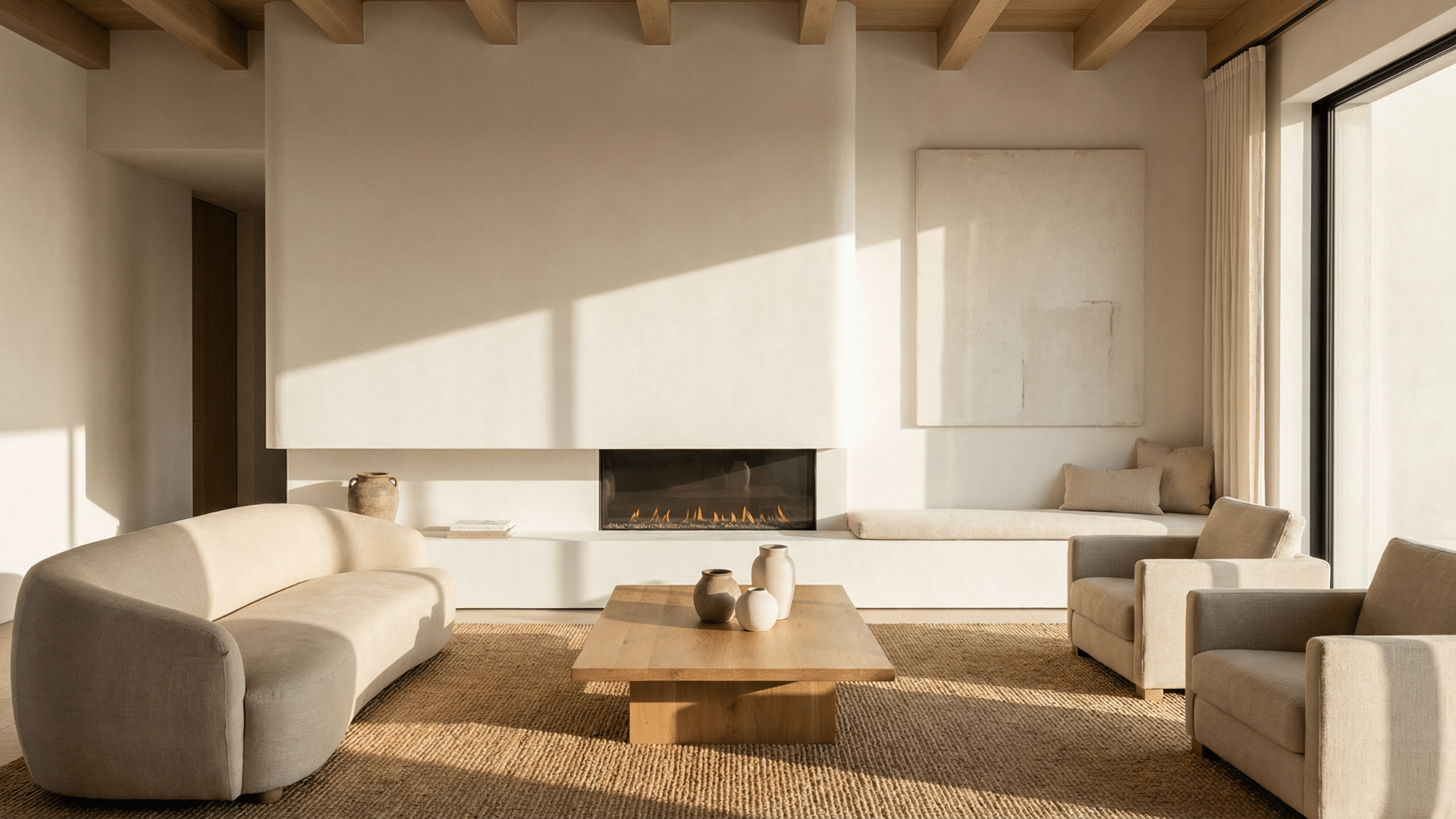
A plaster fireplace has the power to shape the mood and character of an entire room. Its smooth finish and soft texture create a refined focal point that feels natural rather than overpowering.
The material carries a classic quality, yet it adapts easily to clean modern interiors and more classic settings.
Gentle curves, sharp edges, and subtle detailing can all be formed through plaster, allowing the design to feel both intentional and artistic.
As light moves across its surface, it adds quiet depth and warmth. This post presents inspiring plaster fireplace design ideas that bring balance, style, and architectural interest into the home.
Why Choose a Plaster Fireplace?
A plaster fireplace delivers a clean, sculpted appearance that feels integrated into the home’s architecture rather than added as an afterthought.
Unlike brick or stone, plaster forms a seamless surface without visible joints, giving the fireplace a smooth and refined presence.
It can be shaped into crisp modern lines or soft curves, depending on the desired style. Plaster also pairs well with neutral color palettes, allowing subtle texture to create depth without overwhelming the room.
Its flexibility supports custom features like built-in shelving or niches, making it ideal for homeowners seeking thoughtful, cohesive plaster fireplace ideas.
Understanding Different Plaster Finishes
Before selecting a design, it helps to understand the types of finishes available. The finish affects both the appearance and the overall mood of the fireplace.
| Plaster Finish Type | Appearance & Texture | Best For | Design Impact | Maintenance Level |
|---|---|---|---|---|
| Smooth Troweled Finish | Flat, sleek, and uniform surface with minimal texture | Modern, minimalist, and contemporary homes | Creates a clean and refined look that emphasizes structure and proportion | Low; easy to dust and maintain |
| Venetian Plaster | Layered finish with subtle sheen and depth | Elegant, formal, or high-ceiling spaces | Adds visual movement and a polished, upscale feel | Moderate; may require careful cleaning to preserve the sheen |
| Textured Hand-Applied | Slightly irregular surface with natural variation | Mediterranean, rustic, or Spanish-style interiors | Brings warmth, character, and handcrafted charm | Moderate; texture may collect light dust |
| Lime-Based Plaster | Soft, chalky appearance with tonal variation | Organic, coastal, or earthy interiors | Creates a breathable, natural look with subtle dimension | Moderate; benefits from sealing for durability |
| Microcement Finish | Smooth but slightly industrial texture | Modern, industrial, and loft-style homes | Offers a streamlined, architectural presence with added durability | Low to moderate; highly durable when sealed |
| Polished Plaster | Glossy, reflective finish with depth | Luxury and statement interiors | Enhances light reflection and adds dramatic elegance | Moderate; surface care required to maintain shine |
Plaster Fireplace Ideas to Inspire Your Design
The following ideas highlight different shapes, finishes, and architectural approaches that can transform a simple fireplace into a defining feature of the home.
1. Floor-to-Ceiling Plaster Fireplace Wall
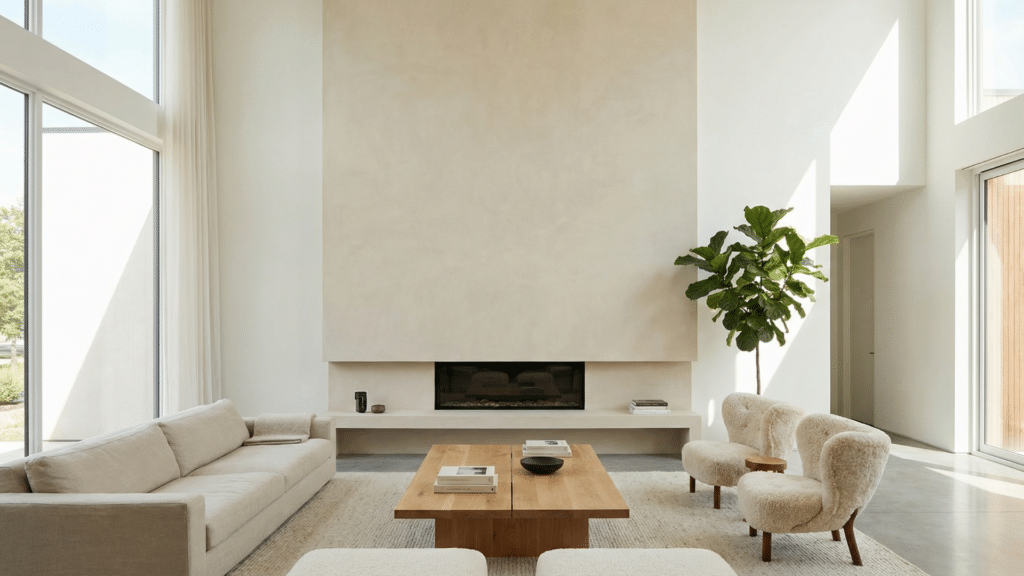
A full-height plaster fireplace creates architectural drama without relying on ornamentation.
Extending the plaster from floor to ceiling removes visual breaks and draws the eye upward, making the room feel taller and more expansive.
Why It Works
- Creates a strong vertical focal point
- Eliminates visual clutter
- Enhances ceiling height
Design Considerations
Use a smooth or lightly textured finish to maintain elegance. Avoid excessive trim or heavy mantels. Instead, allow the height and proportion to carry the design. In rooms with tall ceilings, this approach prevents the fireplace from feeling undersized.
Pair with:
- Low-profile furniture
- Neutral upholstery
- Minimal wall art
2. Curved Plaster Fireplace
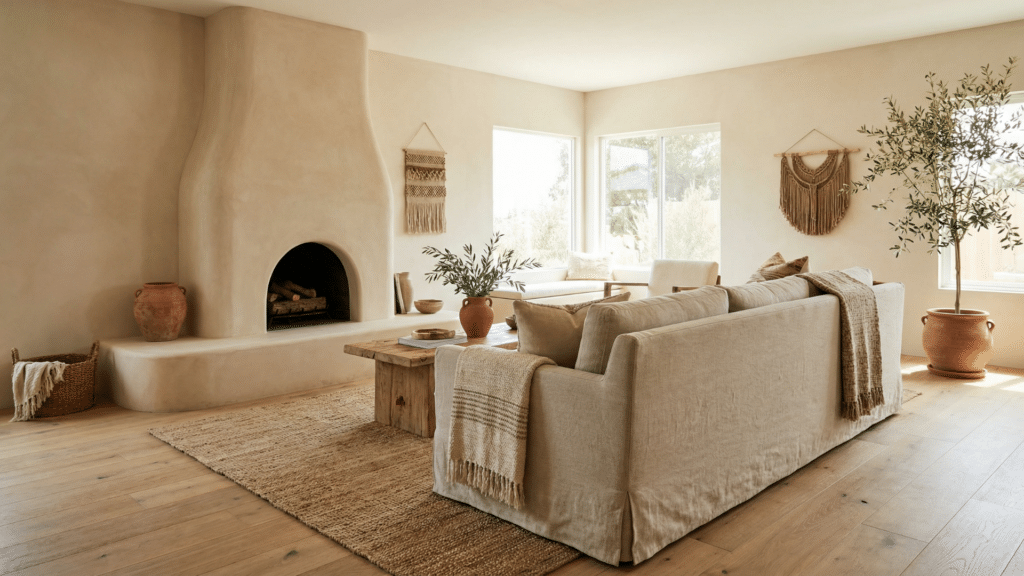
A curved plaster fireplace introduces softness and sculptural movement into a space. Instead of sharp corners and rigid framing, gentle arcs create a more relaxed and organic focal point.
The curved structure feels intentional and custom, especially in homes that lean toward Mediterranean, coastal, or modern organic styles.
Why It Works
- Softens harsh architectural lines
- Adds sculptural interest without extra décor
- Creates a welcoming, fluid visual flow
Design Considerations
Keep the plaster finish slightly textured to emphasize depth and shadow along the curves. Avoid overly glossy finishes, as they can distract from the shape. Rounded edges work best when the surrounding furniture also carries soft silhouettes.
Pair with:
- Rounded coffee tables
- Linen or boucle seating
- Arched doorways or windows
3. Built-In Plaster Fireplace with Shelving
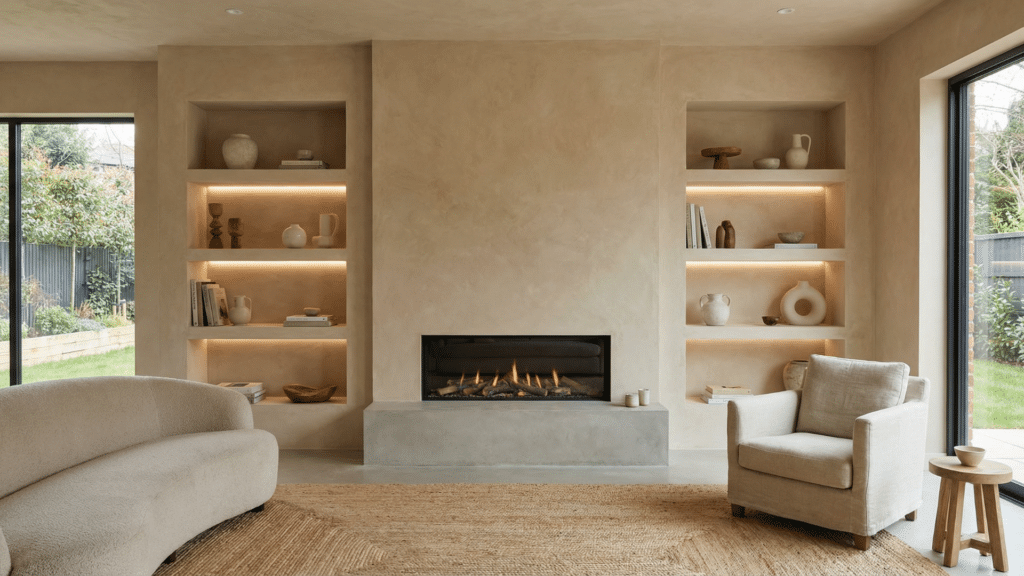
Integrating shelving directly into the plaster structure creates a cohesive feature wall.
Instead of adding separate bookcases, the fireplace and storage become one architectural element, which enhances both function and design clarity.
Why It Works
- Creates a seamless, built-in look
- Maximizes vertical wall space
- Balances storage and visual impact
Design Considerations
Recess shelves slightly to create dimension. Consider integrated LED lighting to highlight décor and add depth to the plaster surface. Keep shelf styling minimal so the fireplace remains the dominant feature. Avoid overcrowding with decorative objects.
Pair with:
- Neutral ceramic pieces
- Stacked books
- Subtle recessed lighting
4. Linear Modern Plaster Fireplace
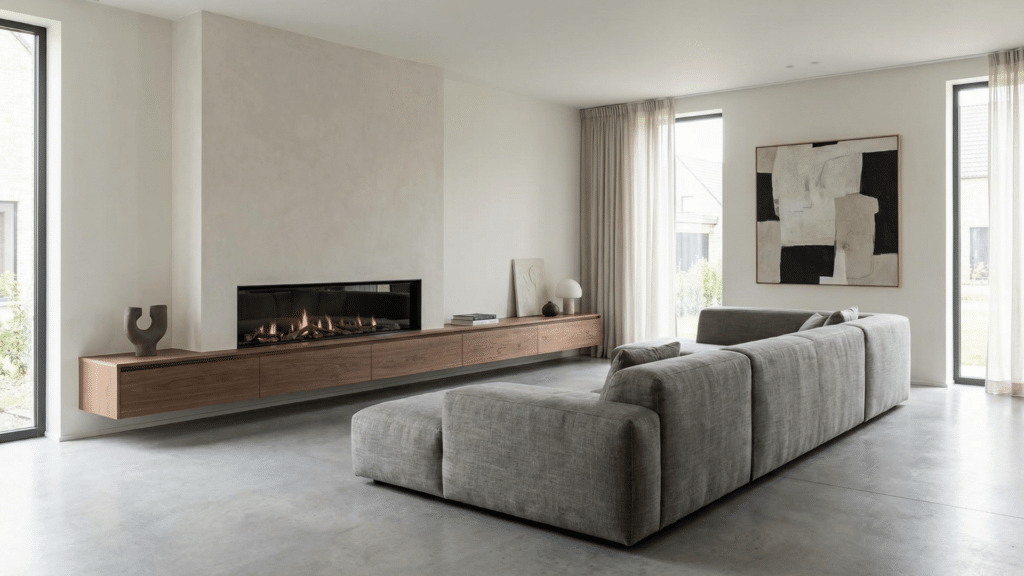
A horizontal firebox framed by smooth plaster creates a sleek and contemporary look. This style emphasizes width rather than height, making it perfect for long walls and open layouts.
Why It Works
- Enhances clean, modern interiors
- Creates visual balance on wide walls
- Supports minimal décor
Design Considerations
Use a matte plaster finish to reduce glare. Maintain symmetry around the firebox for a refined appearance. If incorporating a television, align proportions carefully so neither element overwhelms the other.
Pair with:
- Floating media consoles
- Sectional sofas
- Large-scale abstract art
5. Plaster Fireplace with Wood Mantel
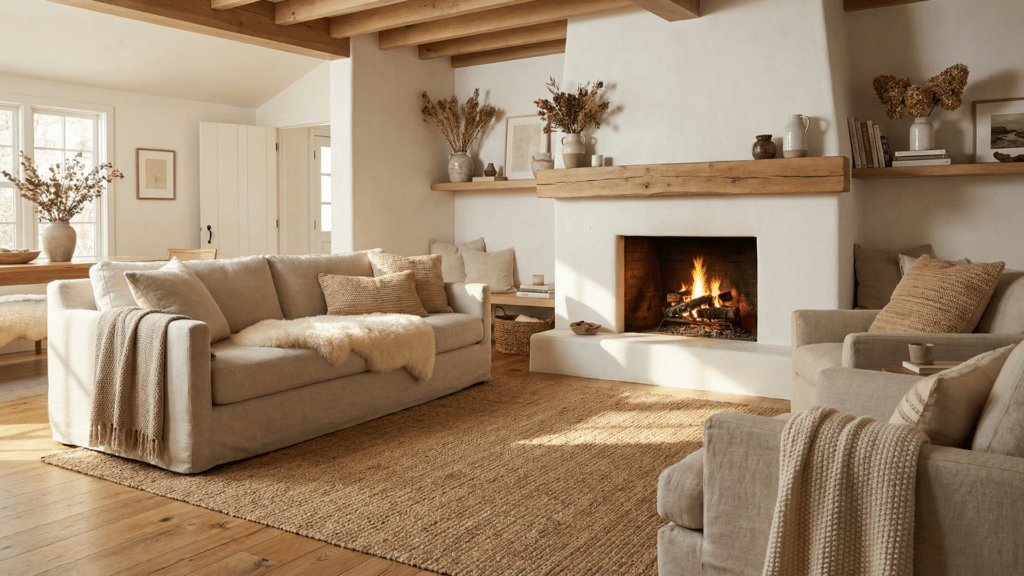
Combining plaster with a wood mantel introduces contrast and warmth. The smooth surface of plaster highlights the natural grain and texture of wood, creating a balanced focal point.
Why It Works
- Adds warmth to minimal interiors
- Introduces material contrast
- Softens stark white plaster
Design Considerations
Choose wood tone carefully. Light oak creates a Scandinavian feel, while darker reclaimed beams lend a rustic feel. Keep the mantel proportionate to the fireplace scale to avoid visual imbalance.
Pair with:
- Natural fiber rugs
- Warm metal accents
- Earth-toned upholstery
This approach remains one of the most versatile plaster fireplace ideas across design styles.
6. Mediterranean Textured Plaster Fireplace
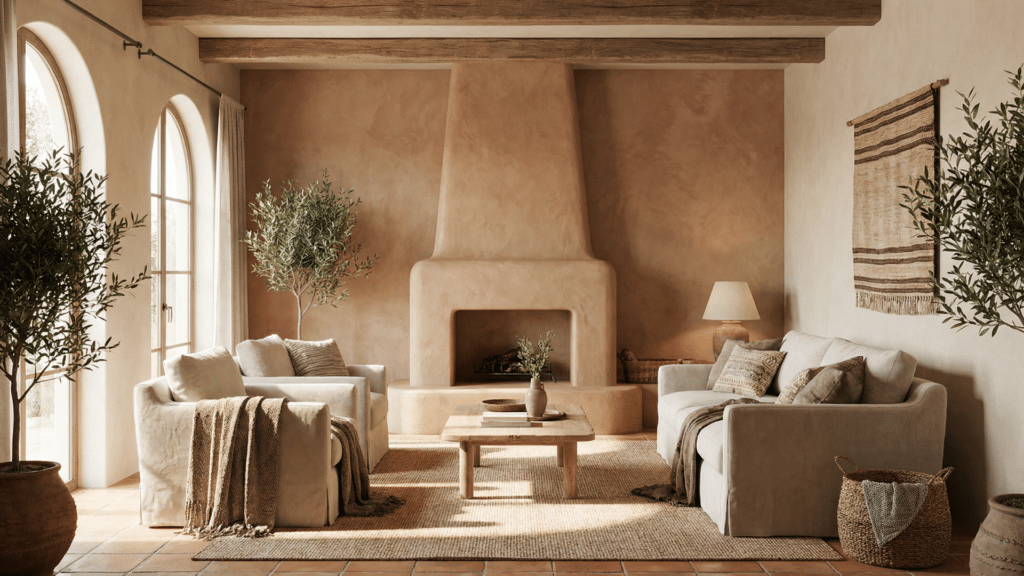
A textured plaster finish with soft edges evokes Mediterranean architecture. The surface appears hand-applied, with subtle movement that reflects light differently throughout the day.
Why It Works
- Adds depth and authenticity
- Creates a relaxed, timeless atmosphere
- Pairs well with warm color palettes
Design Considerations
Use warm beige, sand, or clay tones. Incorporate rounded corners instead of sharp edges. Avoid overly sleek furniture that conflicts with the rustic quality of the plaster.
Pair with:
- Terracotta tiles
- Woven textiles
- Wooden ceiling beams
This is one of the warmest plaster fireplace ideas for traditional or coastal homes.
7. Plaster Fireplace with Recessed Niche
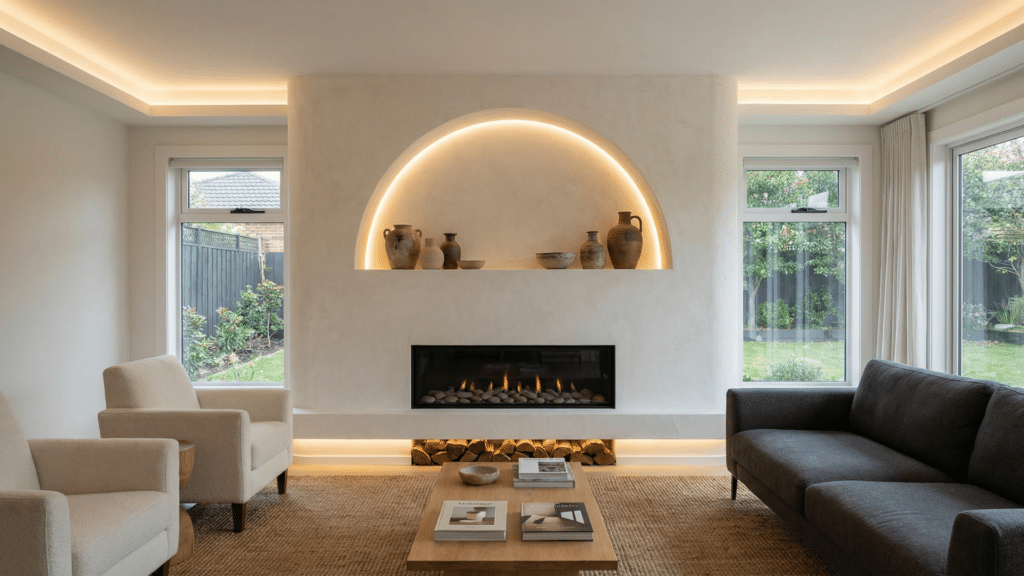
A recessed niche adds architectural detail without clutter. It creates depth while maintaining the fireplace’s clean structure.
Why It Works
- Introduces dimension
- Provides subtle display space
- Enhances custom appearance
Design Considerations
Keep niche proportions balanced with the firebox. Use lighting to highlight the interior depth. Avoid overcrowding the niche with too many decorative items.
Pair with:
- Sculptural ceramics
- Framed artwork
- Decorative firewood storage
8. Double-Sided Plaster Fireplace
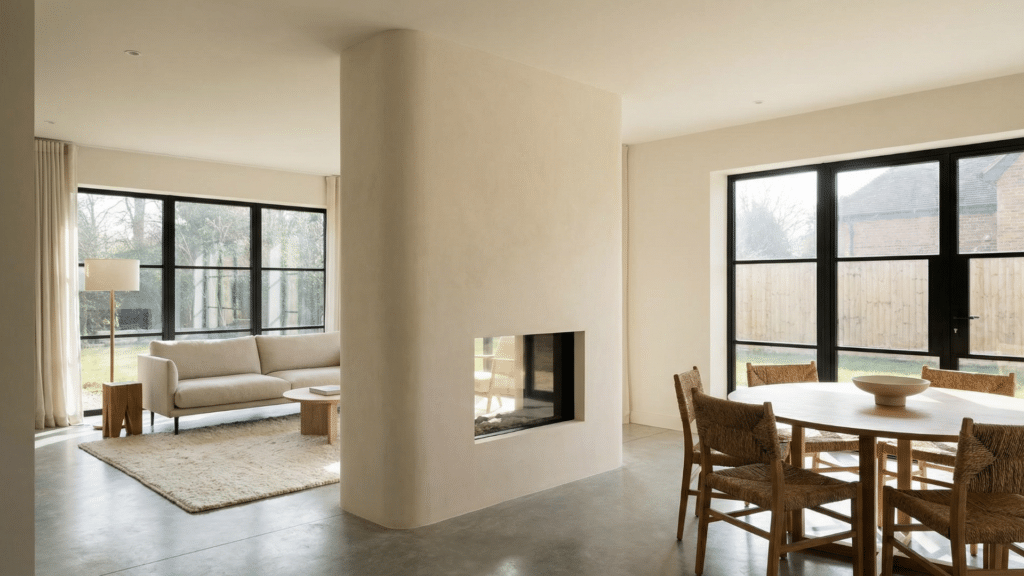
A double-sided plaster fireplace connects two spaces while maintaining openness. It acts as a visual divider without blocking light or sightlines.
Why It Works
- Defines zones in open layouts
- Provides warmth to multiple areas
- Maintains architectural continuity
Design Considerations
Ensure structural balance so both sides feel equally finished. Keep plaster texture consistent across all visible surfaces. Avoid heavy mantels that disrupt flow.
Pair with:
- Open dining layouts
- Neutral flooring
- Large windows
9. Extended Hearth Plaster Fireplace
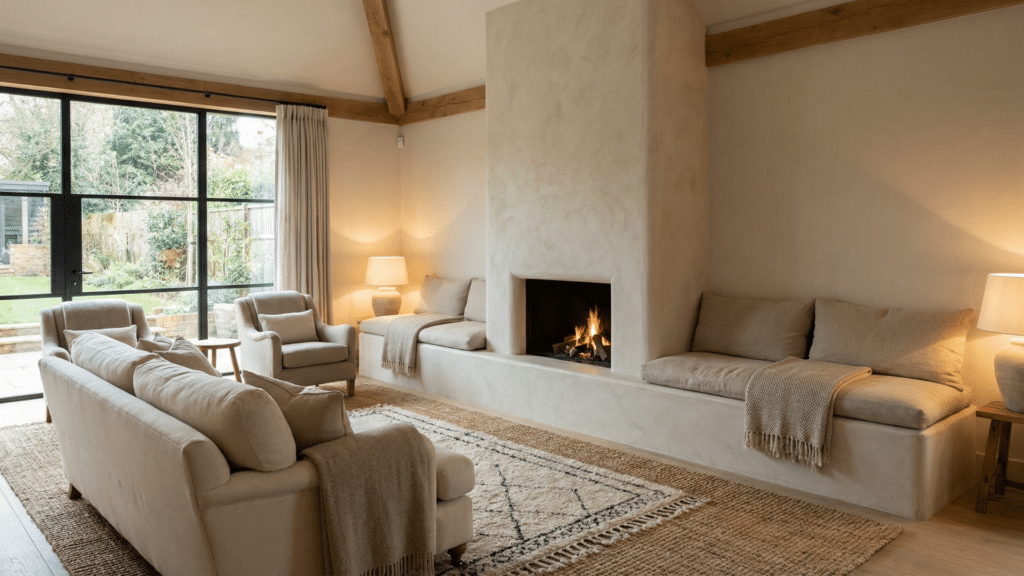
Extending the hearth outward creates seating and adds depth to the structure. The fireplace becomes interactive rather than purely decorative.
Why It Works
- Encourages gathering
- Enhances functionality
- Adds architectural layering
Design Considerations
Ensure the hearth extension remains proportional to the room size. Consider adding subtle cushioning if used for seating. Use durable plaster or integrate stone for added protection.
Pair with:
- Floor cushions
- Minimal coffee tables
- Layered area rugs
10. Monochromatic Plaster Fireplace
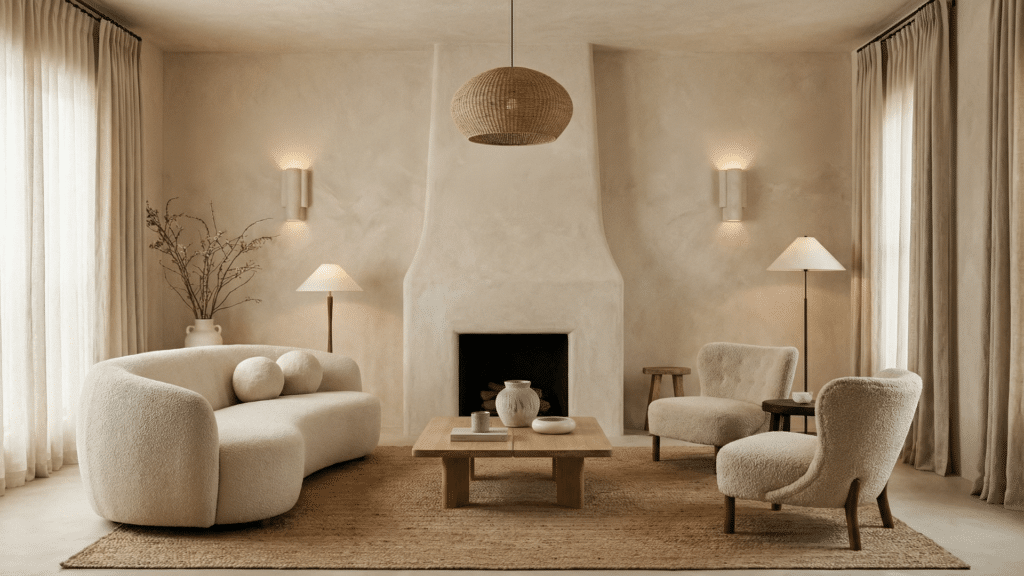
Matching the fireplace color to the surrounding walls creates cohesion and subtle elegance.
Why It Works
- Maintains visual harmony
- Allows texture to stand out
- Prevents design overload
Design Considerations
Choose a warm, neutral tone to avoid a sterile feel. Focus on lighting to highlight the plaster’s texture and shadow lines.
Pair with:
- Soft neutral furniture
- Minimal décor
- Subtle layered lighting
11. Geometric Statement Plaster Fireplace
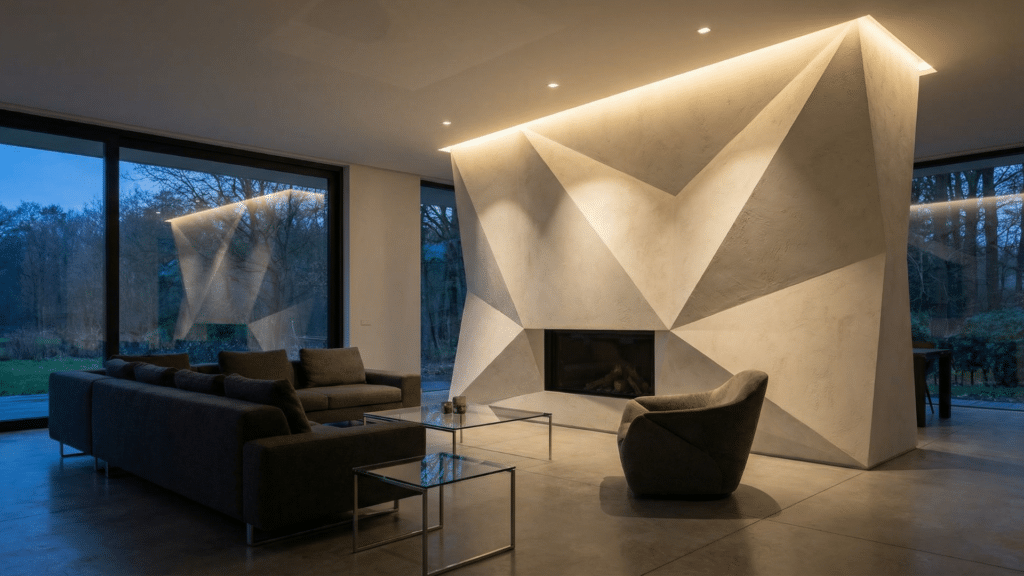
Bold shapes create a strong architectural identity. Plaster allows custom forms that feel sculpted rather than assembled.
Why It Works
- Adds dramatic presence
- Becomes a conversation piece
- Reinforces modern architecture
Design Considerations
Limit additional wall décor to avoid competing with it. Use lighting strategically to emphasize angles and edges.
Pair with:
- Contemporary furniture
- Clean-lined sofas
- Statement lighting
12. Outdoor Plaster Fireplace
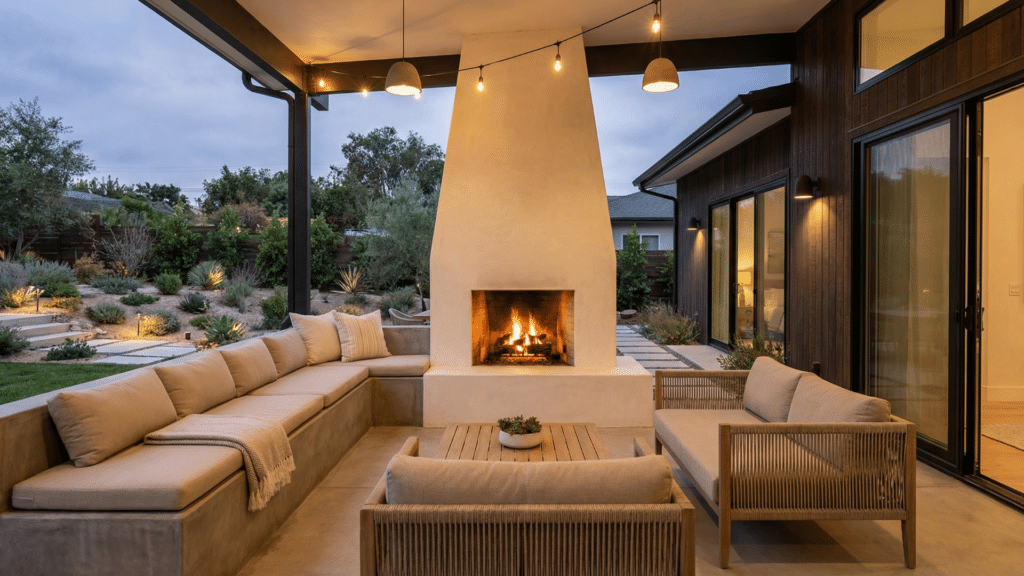
An outdoor plaster fireplace extends living space into patios or covered terraces. When properly sealed, plaster performs well in exterior environments.
Why It Works
- Creates an outdoor focal point
- Defines seating areas
- Enhances ambiance
Design Considerations
Use weather-resistant finishes and proper sealing. Keep the structure simple to complement the landscaping rather than overpower it.
Pair with:
- Built-in benches
- Warm outdoor lighting
- Neutral patio furniture
13. Dark-Toned Plaster Fireplace
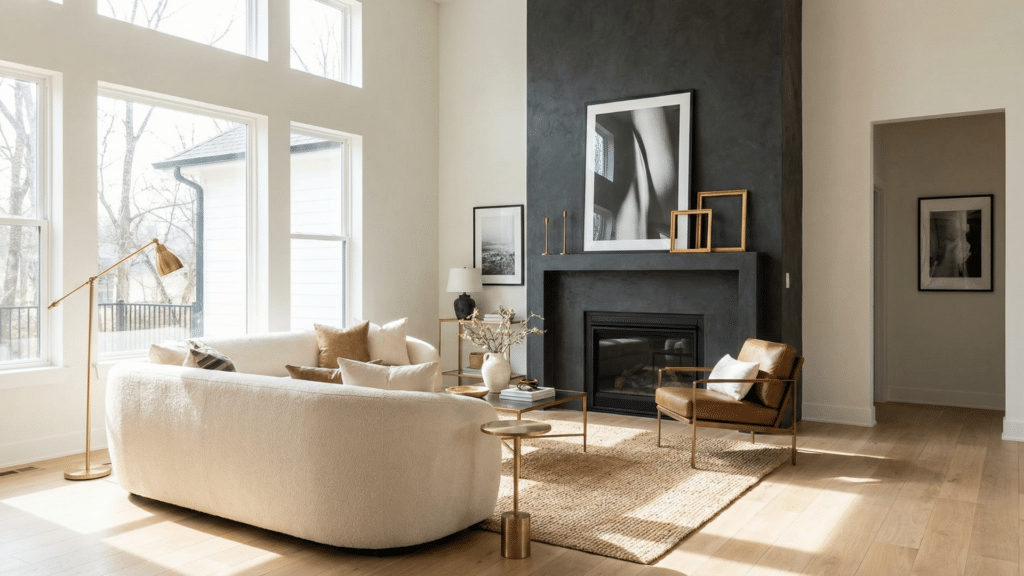
Darker plaster shades create mood and sophistication. Instead of blending in, the fireplace commands attention.
Why It Works
- Adds contrast in bright rooms
- Creates a dramatic focal point
- Enhances modern interiors
Design Considerations
Ensure sufficient natural or layered lighting. Pair with lighter surrounding walls to prevent heaviness.
Pair with:
- Light wood flooring
- Cream or beige upholstery
- Brass or black metal accents
How to Style Around a Plaster Fireplace
Styling should enhance, not compete with, the fireplace. Consider the following:
- Use low-profile furniture to maintain visual balance
- Add textured fabrics like linen or wool for warmth
- Keep wall décor minimal to let the plaster stand out
- Choose lighting that highlights the surface texture
A plaster fireplace often speaks for itself. Thoughtful styling ensures the room feels cohesive.
Wrapping Up
A well-designed plaster fireplace does more than hold a fire. It gives the room a clear focal point and adds strong structure.
The right shape, finish, and size can change how the entire space feels. Planning matters. Think about the texture, the color, and how natural light will hit the surface during the day.
When designed with care, the fireplace will blend smoothly with the rest of the home.
Look back at the ideas shared above, study your space, and start planning a plaster fireplace that fits your style and supports your long-term goal.