

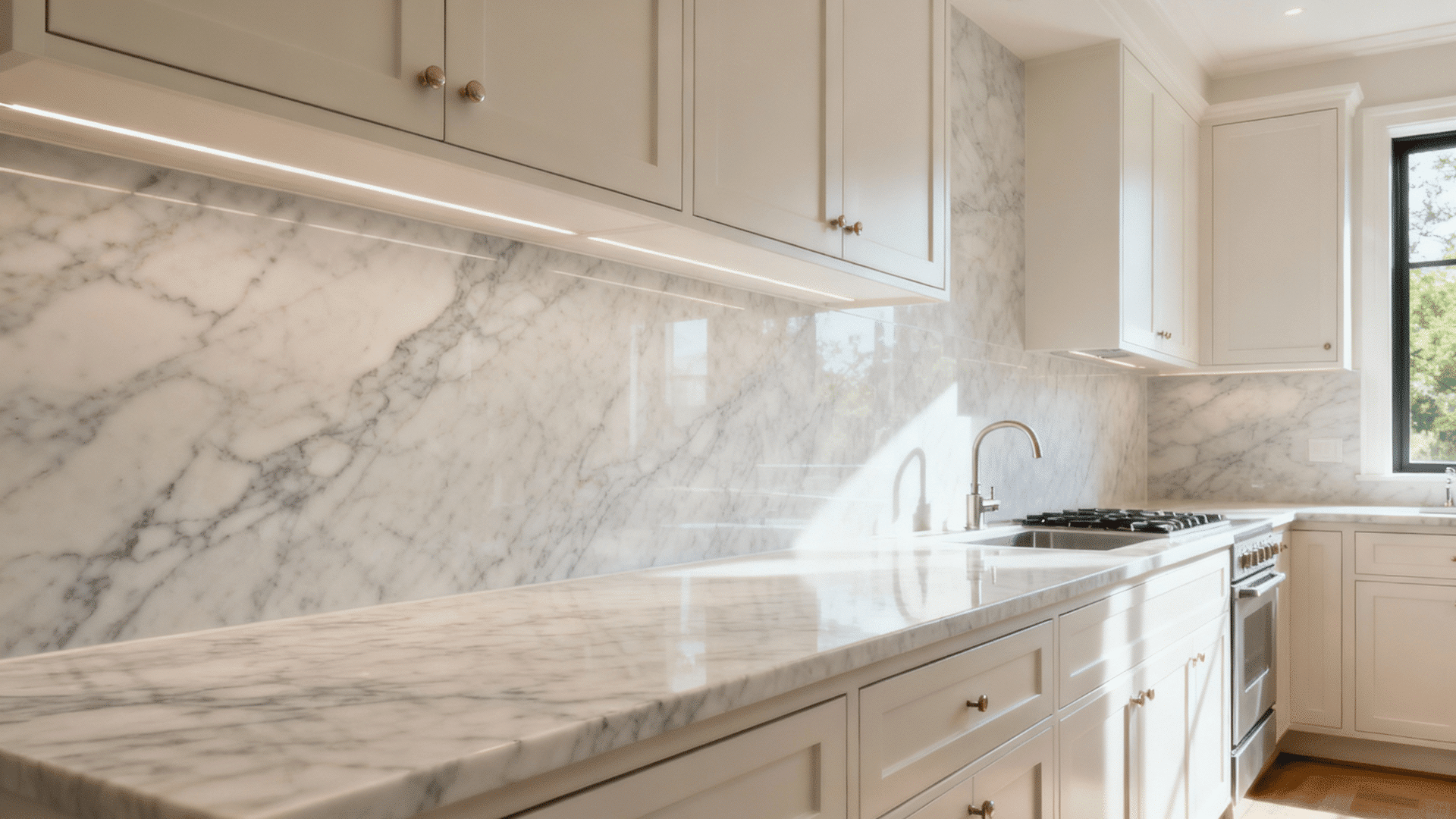
When it comes to selecting the perfect backsplash material for your kitchen, quartz has emerged as an increasingly popular choice among homeowners and designers alike.
If you’re considering a kitchen renovation or simply looking for your backsplash options. Understanding the unique advantages of quartz can help you make an informed decision.
This engineered stone material combines natural beauty and modern innovation, creating surfaces that retain their pristine appearance for years.
We’ll see everything you need to know about quartz backsplashes, from their practical benefits and design versatility to helping you determine if this premium material is the right fit for you.
What is a Quartz Backsplash?
A quartz backsplash is a sleek, durable surface made from engineered quartz, a blend of natural quartz minerals, resins, and pigments.
Unlike traditional tile backsplashes that rely on multiple pieces and grout lines, a quartz backsplash is typically installed as a smooth, seamless slab.
This creates a clean, modern look that pairs beautifully with both contemporary and classic kitchen designs.
Because quartz is non-porous, it resists stains, moisture, and bacteria without needing to be sealed, making it an excellent choice for busy kitchens.
Homeowners often choose quartz to match their countertops, resulting in a cohesive, high-end appearance. Available in a wide range of colors and patterns offer both style and practicality.
Key Advantages of Choosing Quartz as a Backsplash
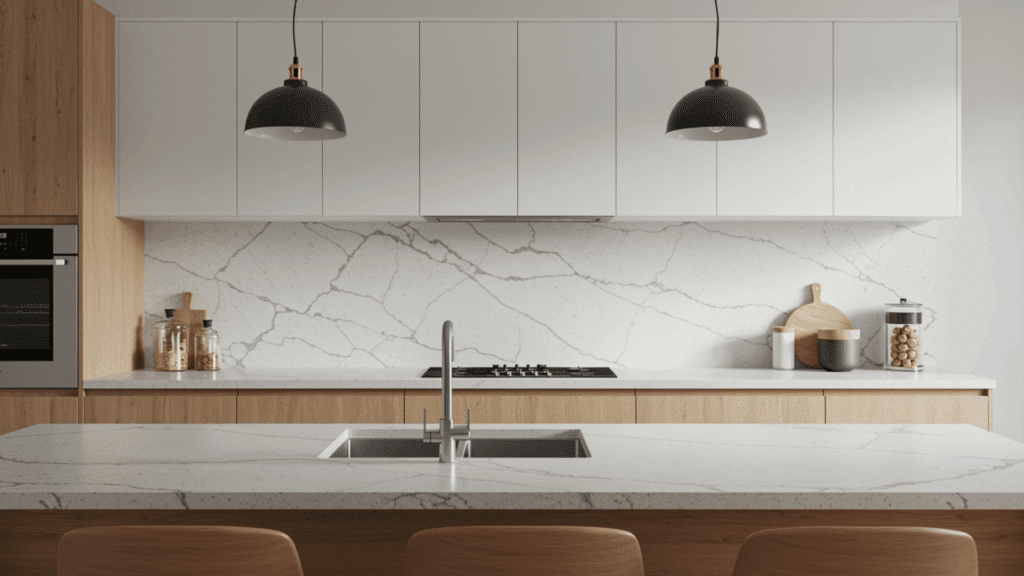
Here are the top reasons quartz has become a go-to backsplash option for today’s homeowners.
1. Durable and Long-Lasting: Quartz is engineered for strength, making it resistant to scratches, chips, and everyday wear. It holds up exceptionally well in high-traffic kitchens.
2. Seamless, High-End Appearance: A quartz backsplash delivers a smooth, grout-free look that feels clean, modern, and luxurious. When matched with quartz countertops.
3. Wide Range of Styles: From soft marble-look veining to bold patterns and solid tones, quartz offers consistent colors and designs that work with any kitchen style.
4. Easy to Maintain: Cleaning requires only mild soap and water. With no grout lines to scrub, upkeep stays quick and simple.
5. Moisture and Bacteria Resistant: Its non-porous surface helps prevent the growth of mold or bacteria, making it a hygienic choice for cooking spaces.
6. Heat and Chemical Resilience (With Care): Quartz handles everyday kitchen heat and basic cleaning products well, staying durable as long as strong chemicals and excessive heat.
Design Ideas for Quartz Backsplashes
If you’re looking to add durability to your space, these quartz backsplash design ideas deliver both style and function.
1. Full-Height Quartz Slab Backsplash
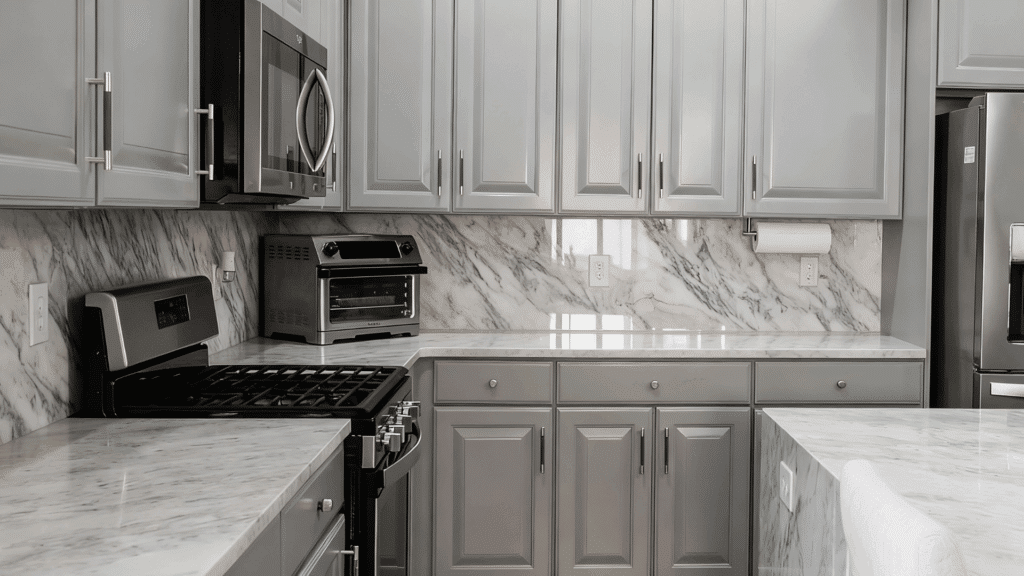
A full-height quartz backsplash extends from countertop to ceiling, creating a dramatic, seamless focal point in your kitchen.
This design eliminates grout lines and maximizes visual impact, making spaces feel larger and more luxurious. It’s particularly stunning behind ranges or in open-concept kitchens.
The continuous surface also simplifies cleaning and maintenance while showcasing the quartz’s natural beauty and veining patterns without interruption.
2. Quartz with Bold Veining
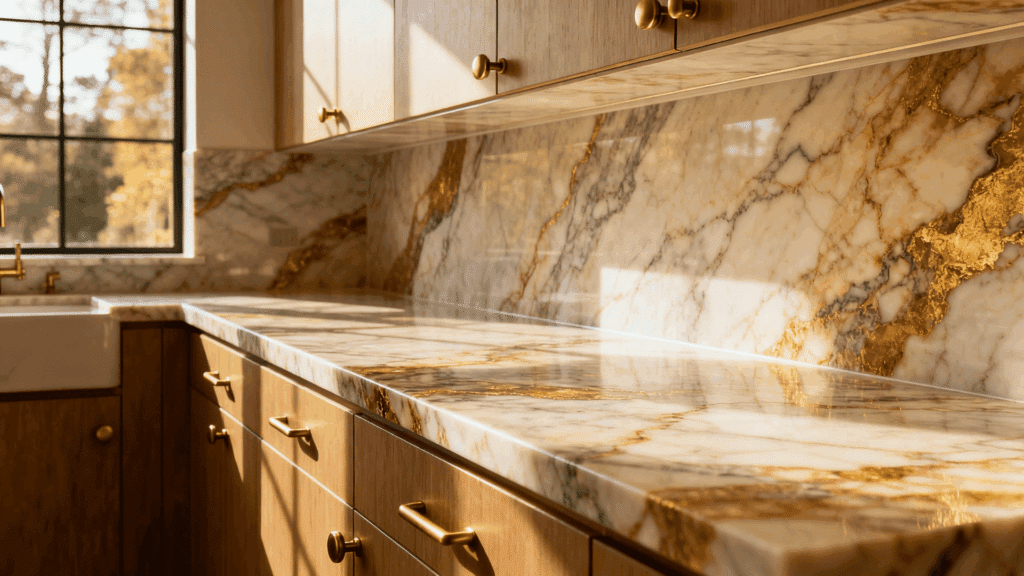
Bold-veined quartz backsplashes bring artistic drama to kitchens, mimicking natural marble’s striking patterns without the maintenance concerns.
These eye-catching designs feature dramatic streaks, swirls, or contrasting veins that create movement and visual interest. Perfect for contemporary or transitional spaces.
Choose veining in complementary or contrasting colors to your cabinetry and countertops, transforming your backsplash into a conversation-worthy architectural element.
3. Minimalist White or Solid-Color Quartz
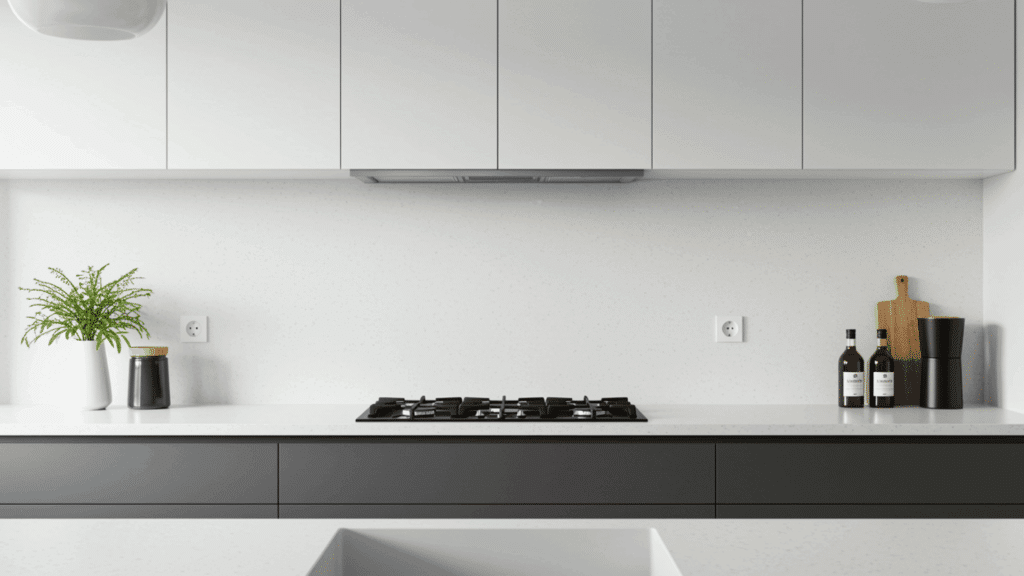
Clean, solid-color quartz backsplashes embody modern minimalism and offer endless versatility.
White, cream, gray, or black quartz creates a sophisticated backdrop that complements any design style while making spaces feel bright and open.
Solid colors are ideal for small kitchens, as they create visual continuity without overwhelming the space, and they provide a neutral foundation for changing décor.
4. Quartz that Matches the Countertop
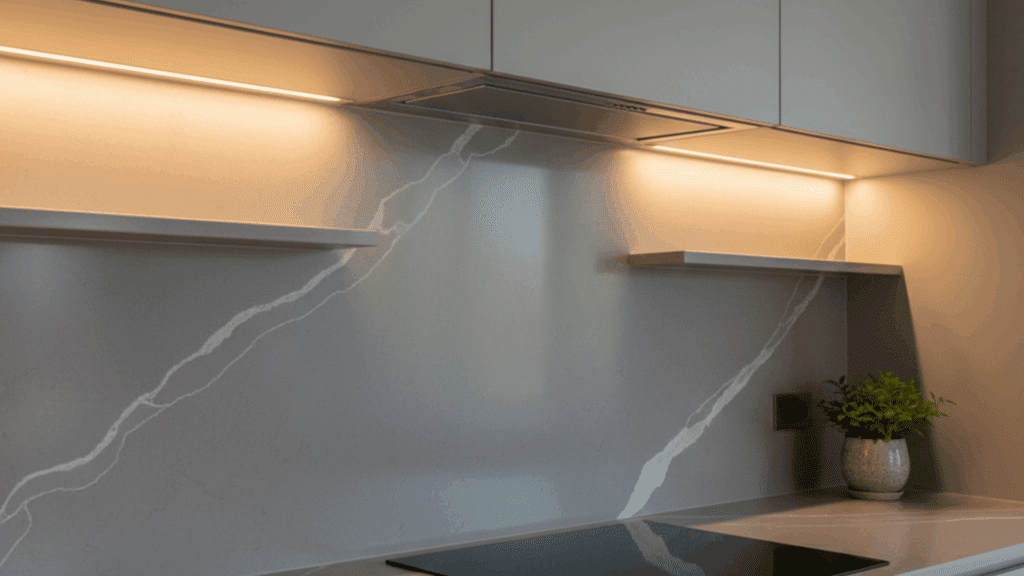
Matching your quartz backsplash to your countertops creates a cohesive, streamlined aesthetic that flows seamlessly throughout the kitchen.
It’s particularly effective in smaller kitchens or when you want a monochromatic look. The continuous color and pattern reduce design complexity while maintaining aesthetics.
This approach also simplifies material selection and ensures perfect color coordination between surfaces.
5. Mixed Textures: Matte, Polished, or Honed Finishes
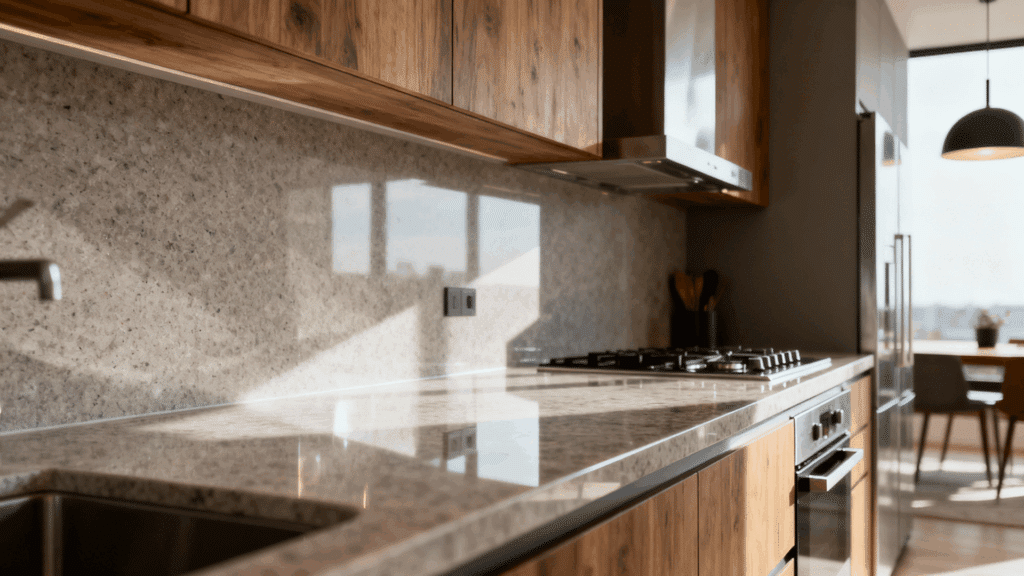
Combining different quartz finishes adds depth and tactile interest to your kitchen design. Pair polished countertops with matte or honed backsplashes to create a subtle contrast.
Matte finishes offer contemporary sophistication and hide fingerprints, while polished surfaces reflect light and enhance colors.
Honed finishes provide a soft, velvety appearance that’s both modern and aesthetic. This textural variation creates a visual dimension without competing patterns or colors.
6. Waterfall Effect Across Counters and Backsplash
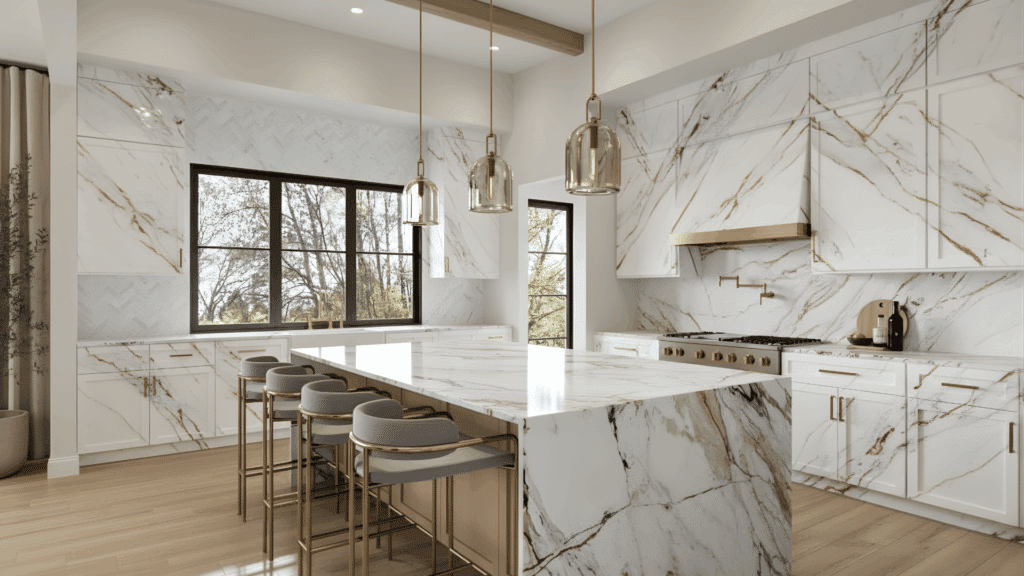
The waterfall design extends quartz seamlessly from countertops down cabinet sides and up the backsplash, creating a continuous, flowing appearance.
This ultra-modern technique showcases the material’s beauty while establishing a striking architectural feature. The uninterrupted veining pattern creates movement and luxury.
This design works beautifully on kitchen islands or peninsulas, elevating the entire space with sculptural elements and demonstrating superior craftsmanship and attention to detail.
Quartz vs. Tile Backsplash: Which Should You Choose?
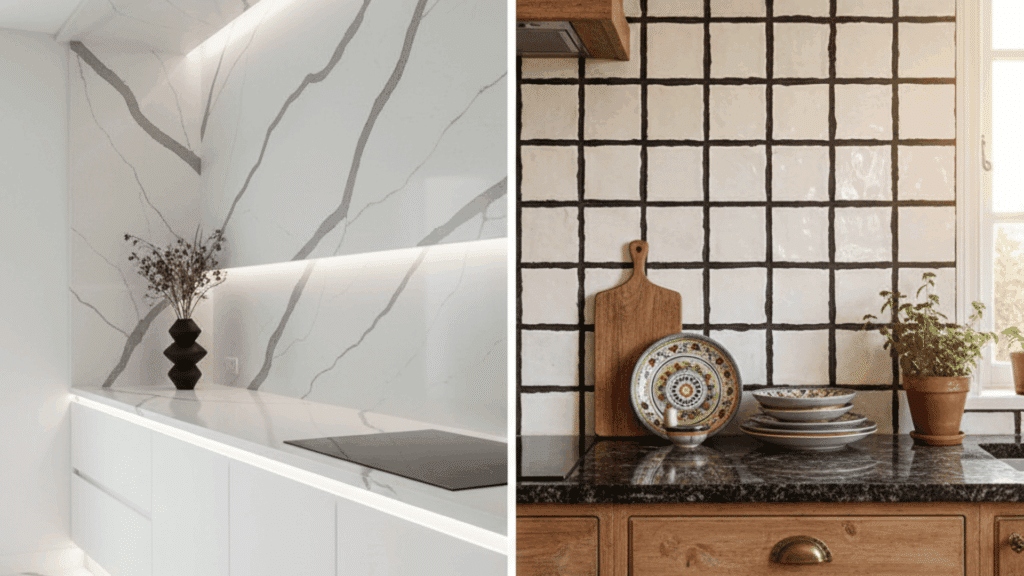
This simple chart highlights the key differences between quartz and tile backsplashes at a glance.
| Feature | Quartz | Tile |
|---|---|---|
| Look | Seamless, modern slab | Highly customizable designs |
| Durability | Very durable, non-porous | Durable, but grout can stain or crack |
| Maintenance | Easy to clean; no sealing | More upkeep; grout needs cleaning/sealing |
| Heat Resistance | Moderate; caution near cooktops | Generally good, varies by tile type |
| Cost | Higher, especially for full slabs | More budget-friendly options |
| Installation | Professional install required | Easier and often DIY-friendly |
| Design Variety | Many colors/patterns, uniform look | Endless colors, shapes, textures |
Is Quartz Suitable for Your Needs?
Quartz is an excellent backsplash option for many kitchens, but it shines best when it aligns with your lifestyle, design goals, and budget.
If you prefer a low-maintenance, easy-to-clean surface, quartz is a great match. It requires no sealing and resists stains, moisture, and daily wear, making it ideal for busy households.
Quartz is also a strong fit if your design vision leans toward a sleek, modern, or cohesive look, especially when paired with matching quartz countertops.
However, if you’re working with a tight budget or want bold textures and intricate patterns, tile may be more flexible.
Consider how much you value durability, simplicity, and a seamless aesthetic to determine whether quartz is the best choice for your home.
Maintenance Tips
With just a few easy habits, you can maintain the beauty and durability of your quartz backsplash for years.
- Daily Cleaning Routine: Wipe the backsplash with a soft cloth or sponge and mild dish soap mixed with warm water.
- Avoid Harsh Chemicals: Do not use bleach, oven cleaners, strong solvents, or highly acidic products, as they can damage the resin binders.
- Handle Spills Promptly: Clean oil, coffee, juice, or sauce spills right away to avoid potential discoloration over time.
- Prevent Heat Damage: Avoid placing hot pans or appliances directly against the backsplash to protect the surface from thermal stress.
- Stick to Soft Tools: Use microfiber cloths or non-scratch pads instead of abrasive scrubbers or steel wool.
Conclusion
Throughout this, we’ve seen the compelling advantages that make quartz backsplashes an excellent investment for modern kitchens.
While the initial cost may be higher than traditional tile options, the long-term benefits, including minimal upkeep, lasting beauty, and increased home value, make quartz a worthwhile.
Consult with experienced contractors, find samples in person, and take the first step toward creating the beautiful, functional kitchen you’ve always imagined!