


Vaughan, a vibrant city in Ontario’s York Region, has seen remarkable growth over the past few decades. Nestled just north of Toronto, it blends suburban charm with urban accessibility, drawing families and professionals alike. With its mix of historic neighborhoods and modern developments, homeowners here often grapple with balancing aesthetic appeal, functionality, and environmental considerations when it comes to home improvements. One area that has gained increasing attention is the selection and installation of windows and doors, particularly as climate patterns shift and energy demands rise. This guide explores how these elements have evolved in Vaughan’s homes, offering insights into materials, styles, and best practices that align with the region’s unique needs.
Understanding Vaughan’s Architectural Heritage and Its Influence on Modern Choices
Vaughan’s history is rich with influences from early European settlers, evident in the preserved structures around areas like Kleinburg Village. This quaint spot, known for its art galleries and the McMichael Canadian Art Collection, features homes with traditional wooden frames and multi-pane windows that echo Victorian and Georgian styles. As the city expanded in the late 20th century, incorporating communities like Woodbridge and Maple, architectural trends shifted toward more contemporary designs, incorporating larger glass surfaces and sleek entryways.
In recent years, Statistics Canada data from the 2021 Census highlights that over 60% of Vaughan’s dwellings are single-detached houses or semi-detached units, many built between 1981 and 2000. These older homes often require updates to meet current building codes, which emphasize energy conservation. For instance, Natural Resources Canada reports that residential buildings account for about 17% of the country’s total energy use, with heating and cooling making up a significant portion. In Vaughan’s climate, where winters can dip to -20°C and summers reach 30°C, choosing the right fenestration— that’s the technical term for windows, doors, and related openings— becomes crucial for maintaining indoor comfort without excessive energy consumption.
Homeowners in Vaughan might consider how local landmarks, such as the historic Thornhill Village with its heritage buildings, inspire modern adaptations. Replacing outdated units with ones that mimic period styles but incorporate advanced insulation can preserve neighborhood character while improving efficiency. Keyword clusters like energy-efficient glazing, thermal break frames, and low-emissivity coatings are often discussed in renovation circles here, as they help reduce heat loss by up to 30%, according to Canadian energy audits.
Materials Matter: From Traditional Wood to Advanced Composites
When delving into the materials used for windows and doors in Vaughan, it’s essential to start with the classics. Wood has long been favored for its natural warmth and versatility, seen in many of the city’s older estates. However, in a region prone to humidity and temperature fluctuations, untreated wood can warp or rot, leading to higher maintenance costs. Environment and Climate Change Canada notes that Ontario experiences an average of 150 frost days annually, exacerbating such issues.
Fiberglass and vinyl have emerged as popular alternatives, offering durability without the upkeep. Fiberglass, in particular, expands and contracts minimally with temperature changes, making it ideal for Vaughan’s variable weather. A 2023 study by the Canadian Home Builders’ Association found that fiberglass installations in Ontario homes reduced energy bills by an average of 15-20% compared to aluminum counterparts. Vinyl, often reinforced with steel or aluminum, provides excellent insulation and comes in various colors to match exteriors, blending seamlessly with the modern townhomes sprouting up near highways like the 400 and 407.
For doors, steel and fiberglass dominate, with wood-core options for those seeking a premium feel. These materials not only withstand the elements but also enhance security, a priority in growing suburbs. Integrating features like multi-point locking systems and impact-resistant glass addresses concerns in areas like Vellore Village, where community safety is paramount.
- Energy-saving window frames, insulated door cores, and weather-resistant seals form a trifecta for Vaughan homes, helping to mitigate the 25% heat loss typical through poorly fitted openings, as per NRCan data.
- Sustainable material sourcing, recycled content composites, and low-VOC finishes are gaining traction, aligning with Canada’s push toward net-zero emissions by 2050.
- Custom sizing options, heritage-style grilles, and noise-reduction laminates cater to the diverse housing stock, from bungalows in Pine Valley to high-rises in the Vaughan Metropolitan Centre.
These elements ensure that replacements not only function well but also contribute to the overall livability of homes in this dynamic city.
 Design Trends Shaping Vaughan’s Home Exteriors
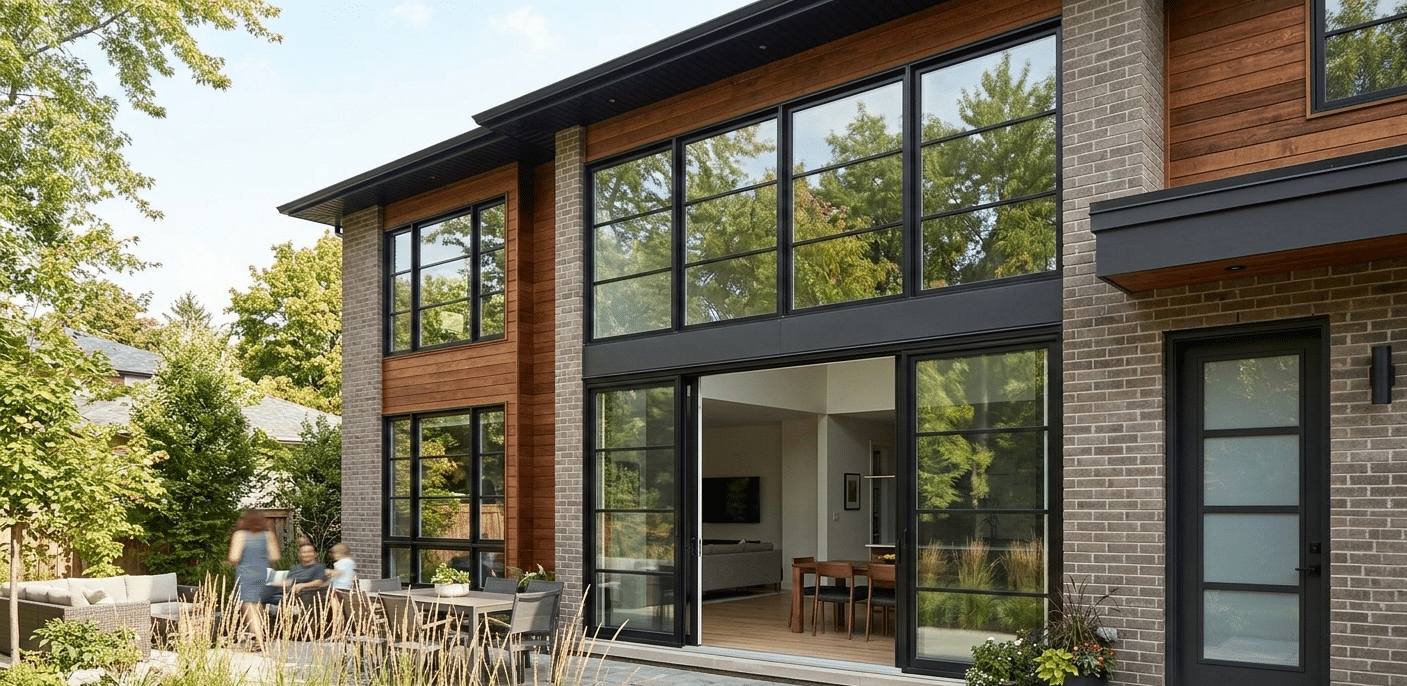 Design Trends Shaping Vaughan’s Home Exteriors
Vaughan’s design scene is influenced by its proximity to Toronto, where minimalist and industrial aesthetics prevail, yet it retains a nod to traditional Canadian motifs. Large picture windows that frame views of local green spaces, like the Kortright Centre for Conservation, are increasingly common, allowing natural light to flood interiors and connect residents with nature.
Sliding patio doors have evolved from basic aluminum tracks to sophisticated systems with slim profiles and automated features, perfect for entertaining in backyards during Vaughan’s short but vibrant summers. According to a 2024 report from the Ontario Ministry of Energy, homes with optimized daylighting see a 10-15% reduction in artificial lighting needs, promoting both cost savings and well-being.
Color palettes are shifting too, with earth tones and bold accents reflecting the autumn foliage at Boyd Conservation Park. Black-framed windows, for example, add a contemporary edge to brick facades, while frosted glass doors provide privacy without sacrificing light in densely packed neighborhoods.
Incorporating smart technology, such as sensor-equipped entries that integrate with home automation, addresses the tech-savvy demographic in Vaughan. With over 40% of residents aged 25-54 per the latest census, these innovations resonate, offering convenience amid busy lifestyles.
Environmental Considerations in Window and Door Selections
As climate awareness grows, Vaughan’s homeowners are prioritizing eco-friendly options. The city’s commitment to sustainability, evident in initiatives like the Vaughan Green Directions Plan, encourages choices that minimize environmental impact. Double or triple-pane glass filled with argon gas reduces thermal transfer, cutting greenhouse gas emissions from heating by up to 40%, based on Environment Canada figures.
Water conservation ties in indirectly; efficient seals prevent leaks that could lead to mold, a common issue in Ontario’s humid climate. Recycling old units through programs like those from the Canadian Plastics Industry Association ensures materials don’t end up in landfills, with over 70% of vinyl being recyclable.
In areas near the Humber River, flood-resistant designs with elevated thresholds and reinforced frames protect against extreme weather events, which have increased by 20% in frequency over the last decade, per Canadian climate data.
- Climate-adaptive fenestration, UV-protective coatings, and passive solar designs help Vaughan homes combat the projected 2-4°C temperature rise by mid-century.
- Biodiversity-friendly features, bird-safe glass patterns, and low-impact manufacturing processes support local ecosystems, including the nearby Rouge National Urban Park.
- Long-term durability ratings, warranty-backed installations, and maintenance-free exteriors extend product lifespans, reducing waste in a city where construction debris accounts for 30% of landfill volume.
These practices not only benefit the environment but also enhance property resilience in Vaughan’s evolving landscape.
Installation Best Practices for Optimal Performance
Proper installation is key to reaping the benefits of new windows and doors. In Vaughan, where soil conditions vary from clay-heavy in the east to loamy in the west, ensuring a level frame prevents future issues like drafts or misalignment. Professional assessments, often guided by the National Building Code of Canada, recommend using expandable foam insulation and flexible caulking to seal gaps, achieving airtightness that can lower energy use by 10-25%.
Timing matters too; spring and fall are ideal, avoiding the extremes of winter frost or summer heat that could affect adhesives. A 2022 survey by the Better Business Bureau of Canada found that 85% of homeowners who hired certified installers reported higher satisfaction rates. Many residents turn to experienced local providers when planning replacement windows and doors Vaughan projects to ensure compliance with regional codes and optimal long-term results.
For heritage properties in places like Nashville Road, matching historical profiles while upgrading to modern standards requires expertise in retrofitting, preserving the charm that makes Vaughan unique.
 Maintenance Strategies to Extend Longevity
 Maintenance Strategies to Extend Longevity
Once installed, regular care keeps windows and doors performing well. In Vaughan’s salty winters, cleaning tracks and lubricating hinges prevents corrosion, especially on metal components. Annual inspections for seal integrity can catch problems early, avoiding the 15-20% efficiency loss from degraded weatherstripping, as noted in Ontario energy reports.
For glass surfaces, using non-abrasive cleaners maintains clarity, while checking for condensation buildup signals potential insulation failures. In pollinated areas near farms in rural Vaughan, screens with finer meshes reduce allergen entry, improving indoor air quality.
- Routine cleaning protocols, seasonal adjustment checklists, and professional tune-up services form a comprehensive maintenance plan for Vaughan residences.
- Warranty compliance tips, replacement part sourcing, and DIY inspection guides empower homeowners to stay proactive.
- Emergency repair strategies, storm damage assessments, and insurance claim preparations are vital in a region with occasional severe weather.
Adopting these habits ensures longevity, aligning with Canada’s average home lifespan of 50-70 years.
Integrating Windows and Doors with Overall Home Systems
Windows and doors don’t exist in isolation; they interact with HVAC, lighting, and security systems. In smart homes proliferating in Vaughan’s new developments, like those in the Carrville District, integrating motorized shades with window sensors optimizes energy use, potentially saving 12-18% on utilities per NRCan studies.
Ventilation strategies, such as operable casement windows paired with cross-breeze doors, enhance natural airflow, reducing reliance on air conditioning during mild shoulder seasons.
For accessibility, wider doorways and low-threshold entries cater to aging populations, with Vaughan’s senior demographic growing by 25% since 2016.
Community and Regulatory Influences on Choices
Vaughan’s municipal bylaws, including those from the City of Vaughan Building Department, mandate compliance with energy standards like those in the Ontario Building Code. Incentives through programs like the Canada Greener Homes Grant, which has disbursed over $500 million since 2021, encourage upgrades.
Neighborhood associations in places like Islington Woods often have guidelines to maintain aesthetic cohesion, influencing style selections.
Engaging with local events, such as the Vaughan Home Show, provides opportunities to learn about trends and connect with experts.
Future Outlook: Innovations on the Horizon
Looking ahead, advancements like electrochromic glass that tints on demand and 3D-printed custom frames promise to revolutionize the field. In Vaughan, where innovation hubs like the Vaughan Healthcare Centre Precinct thrive, these technologies could integrate with AI-driven home management.
With Canada’s commitment to reducing building emissions by 40% by 2030, expect more focus on net-zero ready designs.
- Emerging smart glass technologies, integrated IoT connectivity, and adaptive thermal barriers will define the next generation.
- Circular economy practices, upcycled material innovations, and zero-waste manufacturing aim for sustainability.
- Personalized design software, virtual reality previews, and augmented reality installations will streamline the selection process.
These developments position Vaughan homes at the forefront of efficient, stylish living.
Frequently Asked Questions
What factors should Vaughan homeowners consider when choosing new windows and doors?
Key considerations include the local climate’s impact on materials, energy efficiency ratings like those from ENERGY STAR Canada, and how the design complements the home’s architecture. Budgeting for installation and long-term maintenance also plays a role, with average costs ranging from $500-$1500 per unit based on Ontario market data.
How do energy-efficient windows and doors contribute to home value in Vaughan?
Upgrades can increase property values by 5-10%, according to Real Estate Board of Greater Vancouver and Toronto data analogs. They appeal to buyers seeking lower utility bills and modern features, especially in competitive markets like Vaughan’s.
Are there specific styles that suit Vaughan’s historic areas?
Yes, styles like divided-light casements or French doors with grilles work well in heritage zones, blending old-world charm with contemporary performance. Consulting local preservation guidelines ensures compliance.
What maintenance is required for windows and doors in Ontario’s weather?
Regular cleaning, seal checks every six months, and professional inspections annually help. In winter, clearing ice buildup prevents damage, while summer UV protection extends finishes.