

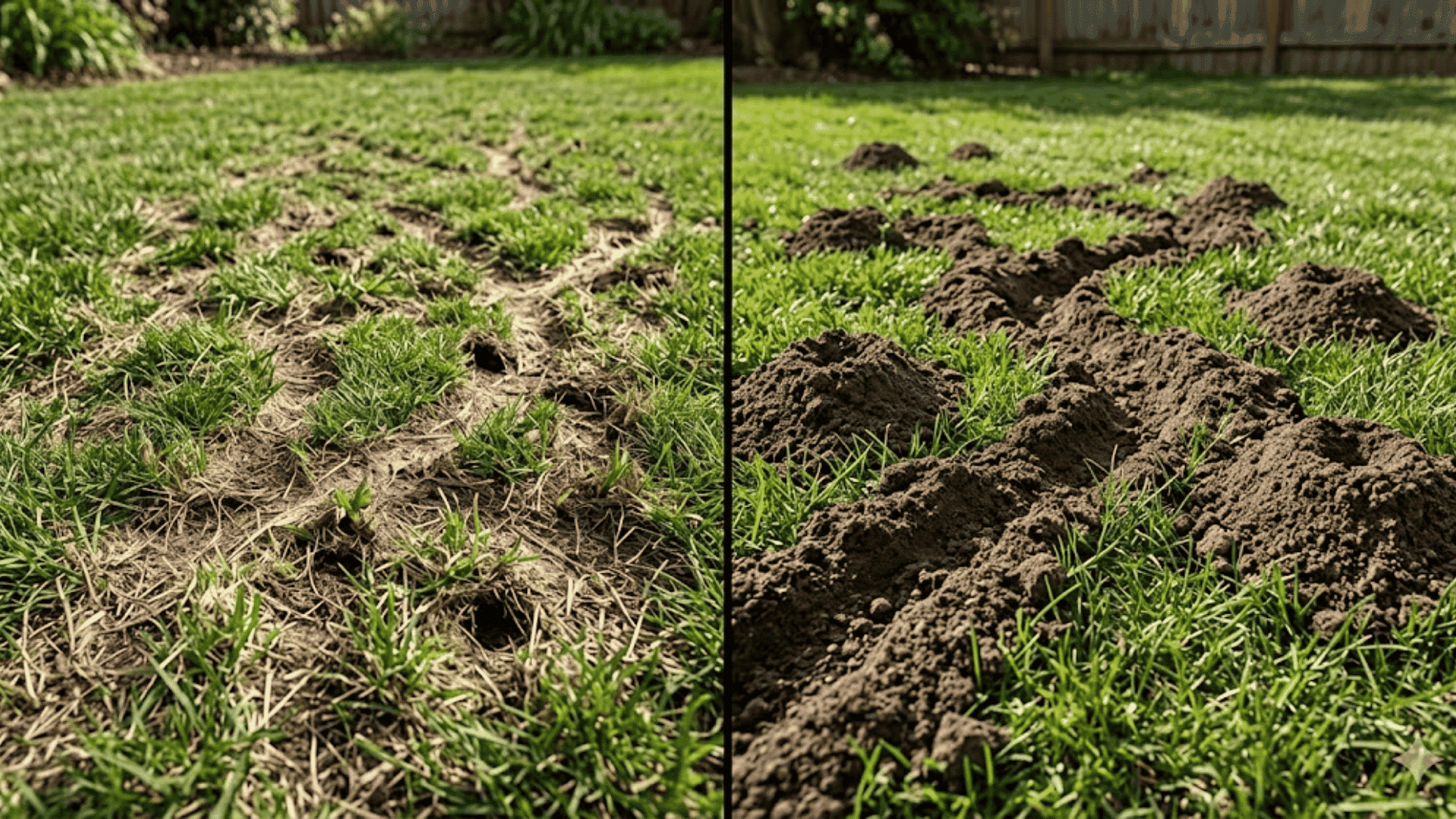
I used to feel confused when I saw strange tracks and dying patches in my yard. At first, I thought it was just one pest causing the trouble.
But after looking closer, I realized it could be two different animals.
Mixing them up leads to the wrong fix and more damage. Knowing the difference helps you protect your yard better.
Getting help from a pest control expert can also give you a clear answer and a long-term fix, so your lawn stays in better shape.
In this article, I’ll explain the key differences between these two small animals.
You’ll learn how their damage looks, where they live, and what signs to watch for. I’ll also share simple tips to help you spot the right problem early.
And by the end, you will know exactly what’s damaging your yard and what steps you can take to fix it the right way.
What Are Voles and Moles?
Voles and moles are small animals that live in or under your yard, but they behave very differently. Voles are small, mouse-like rodents that stay close to the surface.
They move through grass and eat plants, roots, and bark. This can damage lawns, gardens, and young trees.
Moles are insect-eating mammals that live underground most of the time. They dig tunnels to search for worms and grubs in the soil.
Moles do not eat plants, but their digging can disturb roots and create uneven ground.
The main difference is what they eat and how they move. Voles stay near the top and damage plants, while moles dig deeper and affect the soil.
Knowing this helps you spot the problem faster and take the right steps to fix it.
Lawn Vole vs Mole Damage: How to Identify?
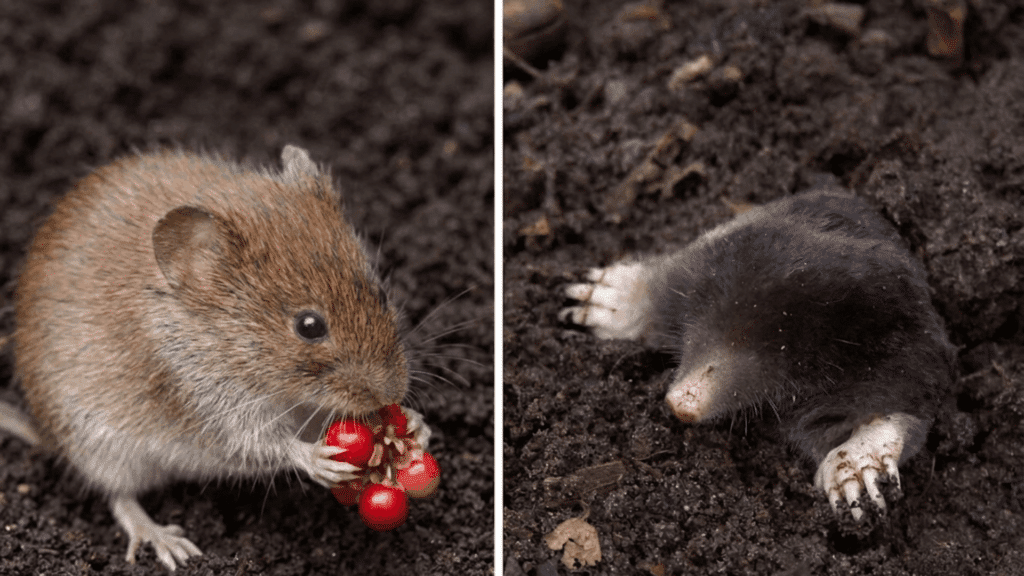
Lawn damage can look similar at first, but the cause is often different. Understanding the signs helps you choose the right fix and avoid bigger issues.
1. Surface Runways vs Raised Tunnels
Vole damage often shows as thin, visible paths on the lawn surface. These runways look like narrow trails where grass is flattened or missing.
Voles move above ground or just under light cover. Moles create raised tunnels under the soil surface.
These tunnels form soft ridges that push the ground upward.
When pressed, they collapse easily. This raised, uneven pattern is a strong sign of mole activity rather than vole movement.
2. Plant Damage vs Soil Disruption
Voles mainly damage plants by chewing on roots, stems, and bark near the ground. This often leads to weak growth or dying plants.
Moles do not eat plants at all. They dig through soil to find insects like worms and grubs.
Their digging can still harm plants by disturbing roots. However, the main issue with moles is loose soil and uneven ground, not direct feeding on plants like voles.
3. Entry Holes vs Mounds
Voles leave small entry holes near their surface runways. These holes are usually clean, shallow, and often hidden under grass or mulch.
They can be easy to miss. Moles leave larger and more obvious signs, such as soil mounds.
These mounds form when moles push dirt up while digging deeper tunnels. If loose piles of soil appear in the yard, it is more likely caused by moles than voles.
4. Shallow Feeding vs Deep Digging
Voles stay close to the surface because they feed on plants. Their damage spreads across the lawn in a more even and shallow pattern.
Moles dig deeper and create wide tunnel systems underground. These tunnels may not always be visible, but raised ridges often show their path.
The depth and pattern of the damage can help clearly identify which animal is active in the yard.
Lawn Vole vs Mole Damage: Key Differences at a Glance
Understanding these differences side by side makes it much easier to spot the exact cause of damage in your lawn—here’s a simple comparison table to guide you:
| Feature | Lawn Vole Damage | Mole Damage |
|---|---|---|
| Surface vs Underground Activity | Creates visible surface runways and tunnels | Digs deeper underground tunnels with raised ridges |
| Type of Damage Caused | Chews roots, bark, and grass directly | Disturbs soil while searching for insects |
| Visual Lawn Signs | Narrow trails, small holes, and plant damage | Raised ridges and soil mounds across the lawn |
| Food Source | Feeds on plants, roots, and vegetation | Eats insects, grubs, and earthworms |
| Lawn Impact Pattern | Causes patchy, uneven grass loss | Creates bumpy, lifted soil areas without eating plants |
Long-Term Lawn Protection Tips
Keeping your lawn safe takes steady care and attention over time. Small habits can help prevent pests from coming back again.
- Keep grass at the right height: Regular mowing prevents thick cover where pests like to hide and move safely.
- Water the lawn properly: Deep but less frequent watering helps roots grow strong and reduces soft soil conditions.
- Remove yard clutter: Clear leaves, wood piles, and debris to limit safe nesting spots for pests.
- Control insects early: Reducing grubs and worms lowers the food source that attracts moles.
- Use barriers in key areas: Install mesh or fencing around garden beds to block entry and protect roots.
- Check the lawn often: Regular inspection helps catch early signs before the problem spreads further.
Common Areas Where Voles and Moles Hide
Voles and moles choose places that give them food, cover, and safety. Voles often hide near thick grass, mulch, and garden beds where they can stay close to plants they eat.
They also move along fence lines and under shrubs where they feel protected.
Moles stay underground in moist soil where insects like worms and grubs are easy to find.
They prefer areas with soft soil that is easy to dig. You may notice their tunnels in lawns, near trees, or in open yard spaces.
Both pests avoid open, exposed areas and stick to spots where they can move without being seen.
Checking these common hiding places can help you spot early signs and take action before the damage spreads further.
How to Get Rid of Voles and Moles?
Taking simple preventive steps early can save your lawn from serious damage. These are some effective ways to keep both voles and moles away:
- Maintain a clean yard: Clear away thick mulch, weeds, and debris to reduce safe hiding spots and nesting areas.
- Improve lawn health: Keep grass strong with proper watering, mowing, and fertilizing to make it less appealing.
- Install barriers: Use underground mesh or fencing around garden beds to block entry points effectively.
- Reduce food sources: Control grubs and insects to make your lawn less attractive to moles searching for food.
- Trim vegetation regularly: Short grass and trimmed plants remove cover that voles use for protection.
Which Pest Causes More Lawn Damage?
Both voles and moles can damage a lawn, but they do it in different ways. Voles cause direct plant damage by eating roots, grass, and bark.
This can lead to dead patches and weak plants. Their damage spreads across the surface and can grow quickly.
Moles cause indirect damage by digging tunnels under the soil. These tunnels lift the ground and make the lawn uneven.
They can also disturb plant roots, but they do not eat plants.
In most cases, voles are more harmful to plants, while moles affect the lawn’s surface and structure.
The level of damage depends on how many are present and how long they stay. Knowing which pest is active helps you decide the best way to protect your yard.
When to Call an Expert for Lawn Pest Damage?
Some lawn issues go beyond basic home fixes and need proper inspection. Getting expert help early can save time, money, and further damage.
- Damage keeps spreading: If new patches, tunnels, or trails keep appearing, the problem is likely active and growing.
- Unsure about the pest: When it’s hard to tell if voles or moles are causing the issue, an expert can give a clear answer.
- DIY methods are not working: If home treatments fail after repeated tries, professional tools and methods may be needed.
- Severe lawn or plant damage: Large dead areas, damaged roots, or uneven ground are signs the issue has gone too far.
- Multiple pests present: Sometimes more than one pest is involved, which makes control harder without expert help.
- Safety concerns: Handling traps or treatments without proper knowledge can be risky, so expert support is safer.
Conclusion
Dealing with lawn damage can feel frustrating, especially when it’s hard to tell what’s causing it.
Now that you understand the difference between voles and moles, it becomes much easier to read the signs and take the right action.
Each pest leaves its own clues, and spotting them early can save your lawn from bigger problems later.
The key is to act based on what you see, not guesswork.
Simple steps can help, but serious issues may need expert support. Paying attention to changes in your yard makes a big difference over time.
Have you dealt with voles or moles before? Share your experience or tips in the comments below.
Your insight could help others facing the same problem.