

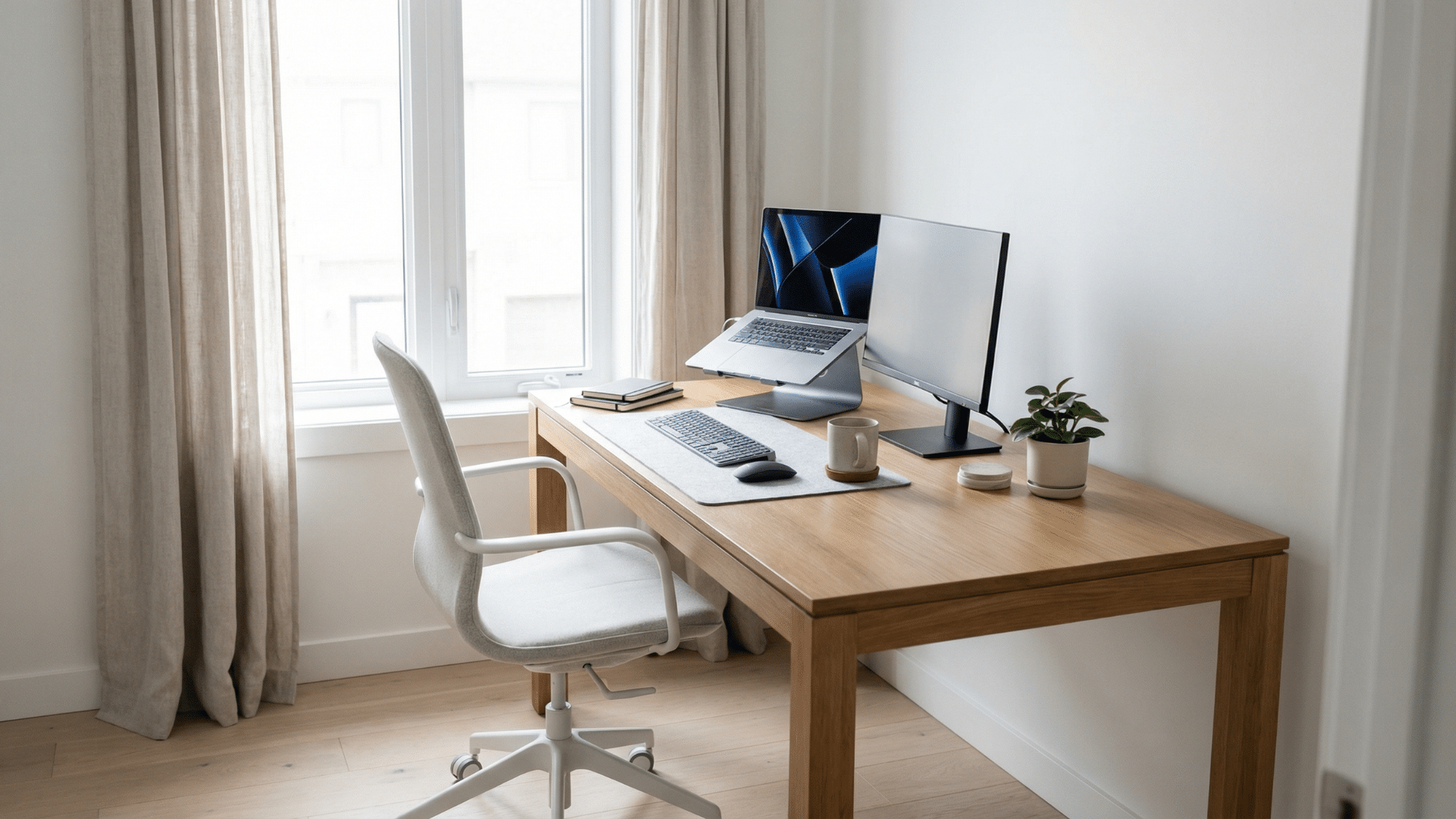
Choosing the right desk begins with understanding its size. Desk dimensions affect comfort, movement, and how well a room functions.
A desk that is too small can limit workspace and feel restrictive. One that is too large can crowd the room and reduce flexibility. For many people, finding the right balance can be challenging. Standard desk sizes provide a practical starting point.
With the right measurements in mind, it becomes simpler to create a workspace that feels organized and efficient.
This guide explains standard desk sizes and why they are important when selecting furniture for home or office use.
The Importance of Choosing the Right Desk Size
Desk dimensions directly affect comfort, productivity, and health. A poorly sized desk can cause strain on the neck, shoulders, and back. It can also reduce work efficiency by limiting the surface area for essential tools.
A properly sized desk supports:
- Comfortable seating posture
- Adequate leg clearance
- Enough surface area for equipment
- Proper monitor positioning
- Smooth movement around the workspace
In both home and office settings, selecting the correct desk size improves workflow and reduces long-term physical discomfort. This is why understanding standard desk sizes is important before making a purchase.
Standard Desk Dimensions: Height, Width, and Depth
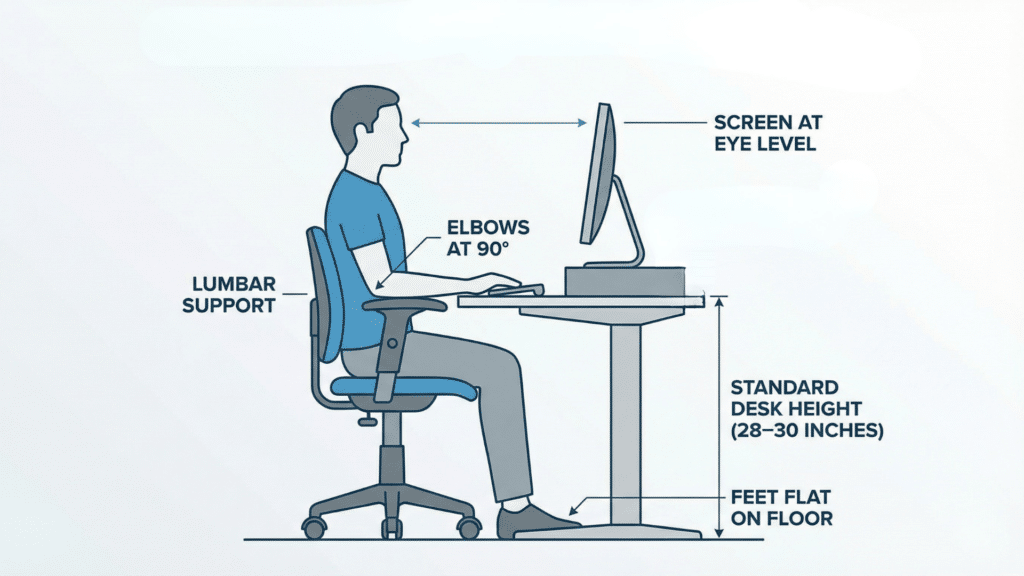
Standard desk dimensions are built around comfort, function, and everyday work needs. Before choosing a desk, it is important to understand how height, width, and depth work together to create a practical and supportive workspace.
Height
Height is the most consistent measurement across different desk types. The standard desk height for most office desks ranges from 28 to 30 inches (71–76 cm) from the floor to the desktop. This range is designed for individuals of average height, typically 5’8” to 5’10”.
This measurement allows the forearms to rest comfortably on the desk while keeping the elbows at about 90 degrees. Proper alignment at this angle reduces strain on the shoulders and wrists during extended work sessions.
Desk height is standardized based on average seated elbow height. When seated correctly:
- Feet should rest flat on the floor.
- Knees should form roughly a 90-degree angle.
- Forearms should remain parallel to the ground.
If a desk is too high, the shoulders lift unnaturally. If it is too low, users may hunch forward. Both situations lead to discomfort over time.
Width
Desk width determines the amount of horizontal workspace available. The width required depends on usage.
Typical Desk Width Range:
- Small desks: 30 to 40 inches
- Standard desks: 48 to 60 inches
- Large executive desks: 60 to 72 inches or more
A 48-inch desk is often considered the minimum for comfortable computer work. It provides enough space for a monitor, keyboard, and limited additional items.
For dual monitors or paperwork-heavy tasks, 60 inches or more is recommended.
Depth
Desk depth affects how far back equipment can be placed and how much usable surface area exists.
Typical Desk Depth Range:
- Compact desks: 20 to 24 inches
- Standard desks: 24 to 30 inches
- Executive desks: 30 to 36 inches
A depth of at least 24 inches is recommended for computer work. This allows for a proper monitor distance of 20 to 30 inches from the eyes. Shallow desks may save space, but can limit monitor placement and reduce comfort.
Standard Desk Dimensions by Type
Different desk types are designed for different tasks and environments. While standard desk sizes provide general guidance, each desk style follows its own typical dimension range.
Writing Desk Dimensions
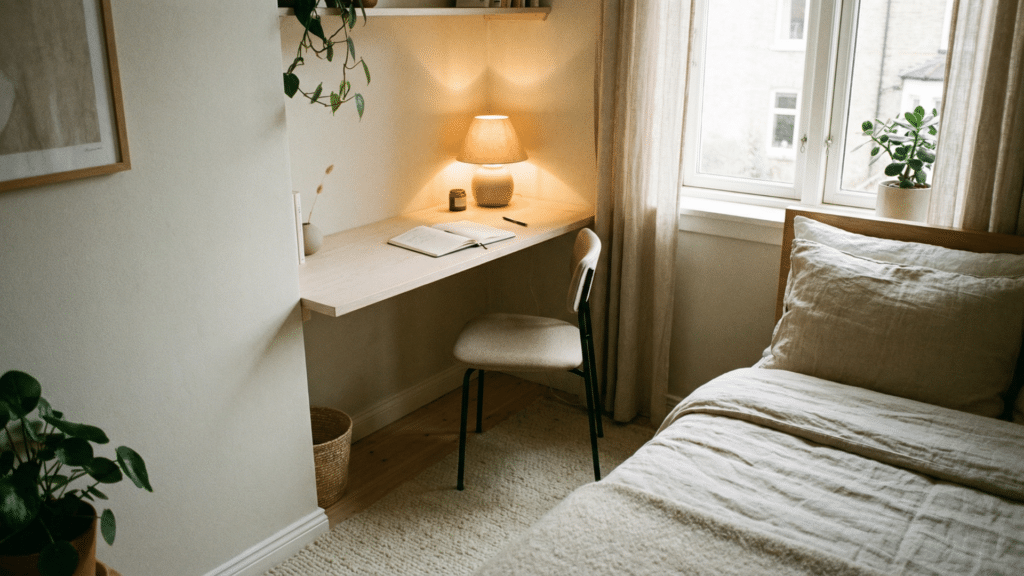
Writing desks are simple in design and usually do not include heavy storage or large surfaces. They are intended for light tasks such as reading, journaling, or laptop work. Because of their compact footprint, they work well in bedrooms, apartments, and small home offices.
Typical Writing Desk Dimensions
| Measurement | Standard Range |
|---|---|
| Height | 28–30 inches |
| Width | 36–48 inches |
| Depth | 20–24 inches |
A writing desk with a depth of 20–24 inches provides enough space for notebooks or a laptop without overwhelming a small room. However, it may feel limited for larger desktop setups.
Computer Desk Dimensions
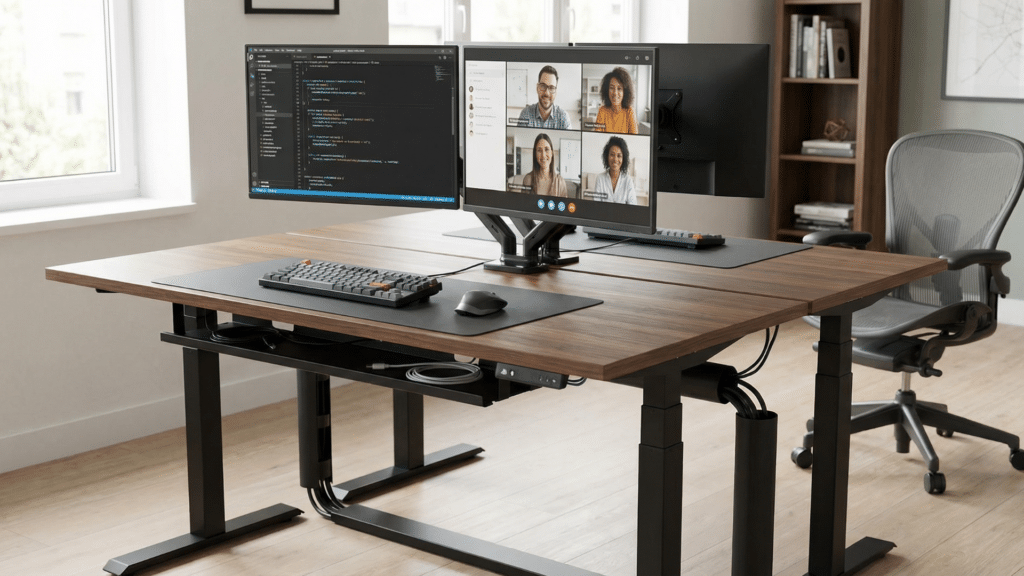
Computer desks are designed to support monitors, keyboards, and related accessories. They often include cable management features, keyboard trays, or dedicated CPU storage areas.
Typical Computer Desk Dimensions
| Measurement | Standard Range |
|---|---|
| Height | 28–30 inches |
| Width | 48–60 inches |
| Depth | 24–30 inches |
A minimum depth of 24 inches is recommended to maintain proper monitor viewing distance. Wider models, especially those at 60 inches, allow space for dual monitors or additional equipment.
Executive Desk Dimensions

Executive desks are larger and built for professional office settings. They are designed to provide a strong visual presence and extensive surface area. These desks often support meetings, paperwork organization, and multiple electronic devices.
Typical Executive Desk Dimensions
| Measurement | Standard Range |
|---|---|
| Height | 29–30 inches |
| Width | 60–72 inches |
| Depth | 30–36 inches |
The increased depth allows documents to be spread out while keeping monitors positioned comfortably. Executive desks are best suited for spacious rooms due to their size.
L-Shaped Desk Dimensions
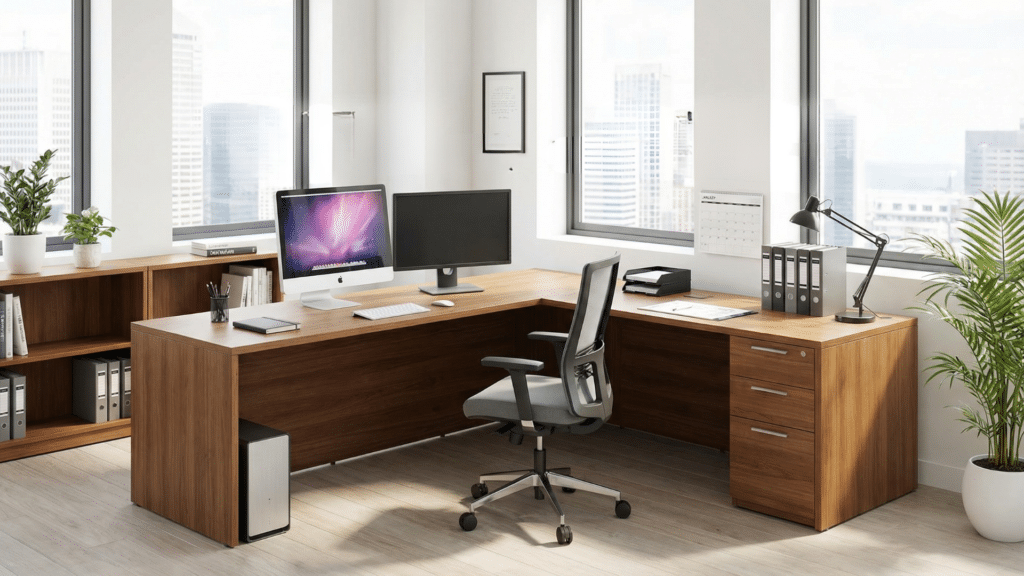
L-shaped desks are designed to maximize corner space and create separate work zones. They are popular in both home and corporate offices because they enable multitasking at a single workstation.
Typical L-Shaped Desk Dimensions
| Measurement | Standard Range |
|---|---|
| Height | 28–30 inches |
| Width (per side) | 48–72 inches |
| Depth | 24–30 inches |
Each side typically functions as its own work surface. One section may hold a computer setup, while the other can support writing tasks or additional equipment.
U-Shaped Desk Dimensions
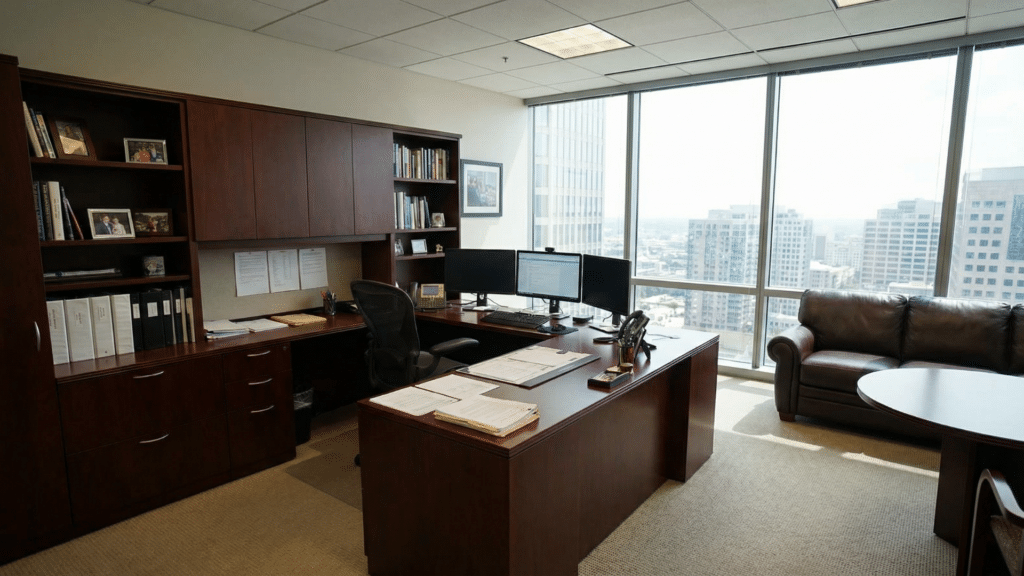
U-shaped desks are commonly used in executive offices or professional environments that require extensive surface area and storage. They surround the user on three sides, creating a highly functional workspace.
Typical U-Shaped Desk Dimensions
| Measurement | Standard Range |
|---|---|
| Height | 29–30 inches |
| Overall Width | 70–90 inches |
| Depth | 24–36 inches |
Because of their large footprint, U-shaped desks require a significant amount of floor space. They are best suited for private offices rather than small rooms.
Standing Desk Dimensions
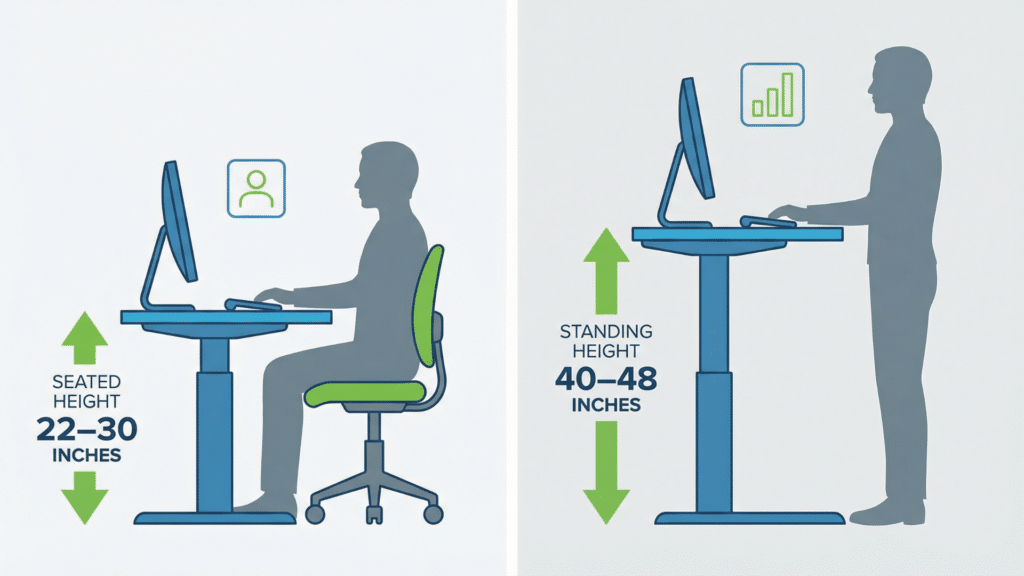
Standing desks allow users to alternate between sitting and standing throughout the day. This flexibility supports movement and can reduce prolonged sitting.
Fixed-height standing desks are usually 40–42 inches tall
Adjustable standing desks offer a broader range to accommodate different users.
Typical Adjustable Standing Desk Range
| Mode | Height Range |
|---|---|
| Sitting Mode | 22–30 inches |
| Standing Mode | 40–48 inches |
Adjustability is important because standing elbow height varies between individuals. A properly adjusted standing desk keeps elbows at approximately 90 degrees while the user stands upright.
Desk Legroom and Knee Space Requirements
Legroom is an essential part of a comfortable and functional workspace. Even when a desk meets standard desk sizes for height and width, limited space underneath can reduce comfort and restrict natural movement.
Proper knee and leg clearance allows users to sit comfortably without feeling cramped, especially during extended work sessions.
Minimum Clearance Guidelines
For most desks, the recommended minimum under-desk clearance includes:
- Height clearance: At least 24 inches
- Width clearance: At least 20 inches
- Depth clearance: At least 18 inches
Height clearance ensures enough vertical space between the floor and the underside of the desk so the thighs fit comfortably.
Width clearance allows for natural leg positioning and small adjustments while seated. Depth clearance prevents knees from pressing against drawers, panels, or structural supports.
How Desk Dimensions Support Ergonomic Comfort
Desk dimensions have a direct impact on posture, comfort, and overall well-being. Standard desk sizes are designed with general ergonomic principles in mind, but proper setup remains essential to prevent strain during daily work.
Important ergonomic factors to consider include:
- Monitor placement: Desk depth should allow the screen to sit 20–30 inches from the eyes, with the top of the monitor at or slightly below eye level.
- Elbow positioning: Desk height should keep elbows at about 90 degrees, with forearms parallel to the floor while typing.
- Wrist alignment: The keyboard and mouse should be positioned so wrists remain straight and relaxed.
- Legroom: Sufficient knee clearance allows feet to stay flat on the floor, reducing pressure on the lower body.
- Chair alignment: An adjustable chair should be set to the desk height to maintain proper seated posture.
When desk dimensions align with these ergonomic guidelines, the workspace becomes more comfortable and supports better focus throughout the day.
How to Choose the Right Desk Size
Choosing the right desk size starts with understanding how the space will be used. First, measure the available area in the room, including wall width and clearance for chair movement.
Next, consider the type of work being done. Computer setups, dual monitors, or paperwork-heavy tasks require wider and deeper surfaces.
Compare these needs with standard desk sizes to find a suitable match. It is also important to check desk height for proper posture and comfort.
Finally, think about storage requirements and room layout. A well-sized desk should fit the space comfortably while supporting daily tasks without crowding the room.
Wrapping Up
Desk dimensions influence more than layout. They shape how a person works each day and how comfortable that work feels over time.
A desk that fits the body and the room creates a smoother workflow and a more organized space. Careful planning prevents wasted space, awkward posture, and unnecessary upgrades later.
Taking accurate measurements and comparing them with standard desk sizes leads to smarter decisions. The right choice supports focus and long-term use without strain.
Review your room measurements, evaluate your work setup, and use these guidelines to confidently select a desk that fits your needs today and in the future.