

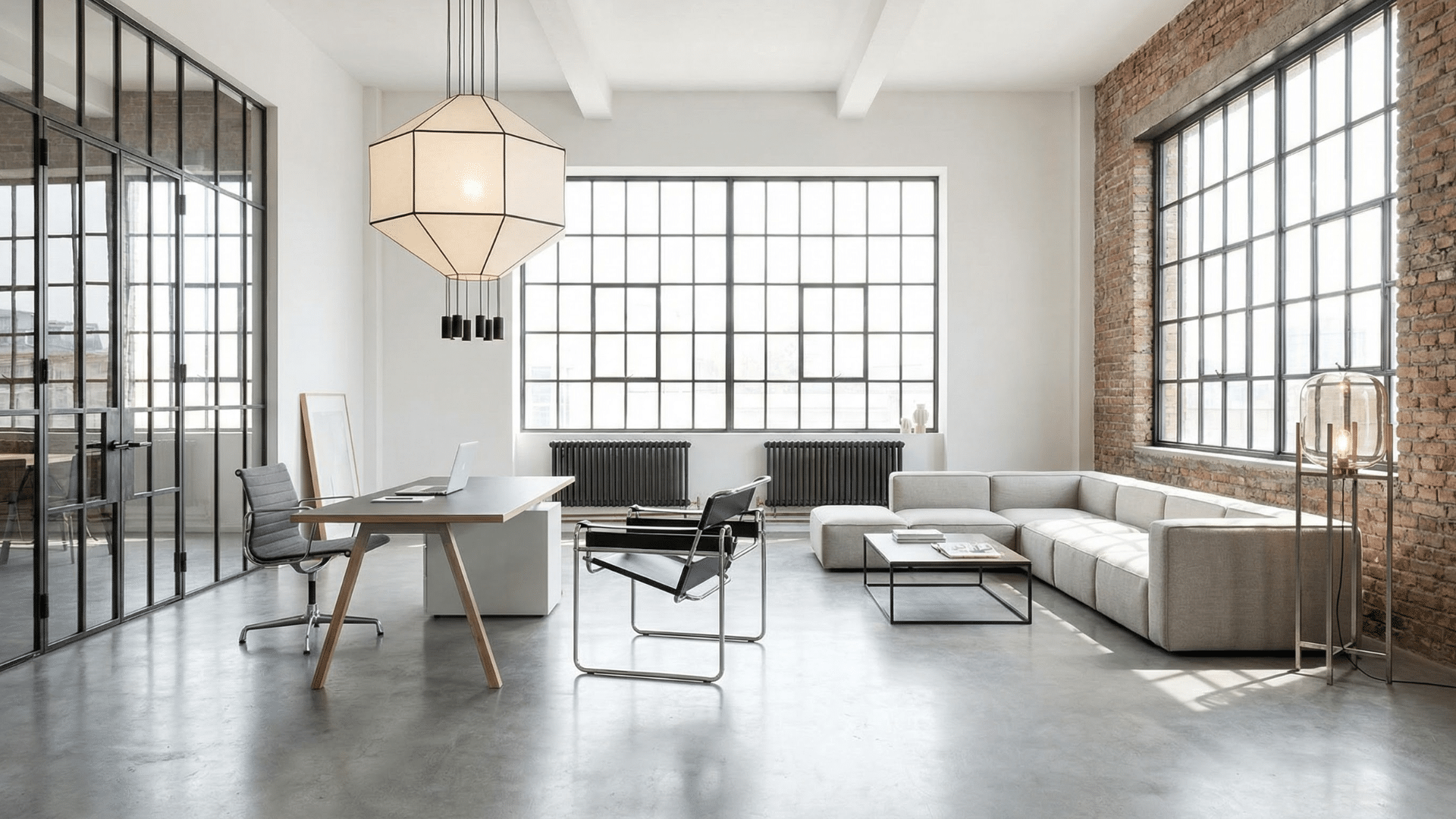
Bauhaus interior design is one of the most influential styles of the 20th century, reshaping how people think about space, furniture, and purpose within the home.
It moved away from heavy ornament and focused instead on clarity, balance, and function, creating interiors that feel intentional rather than decorative.
Rooted in a broader design philosophy, Bauhaus brought together art, craftsmanship, and modern industry in a new and practical way.
Its ideas helped define the look of modern living and continue to influence interiors today.
To fully understand this style, it is important to examine its guiding principles, overall character, and lasting impact.
What is Bauhaus Interior Design?
Bauhaus interior design style is rooted in a design movement that began in Germany in 1919.
It was founded by architect Walter Gropius, who established the Bauhaus School with a clear goal: to bring art, craftsmanship, and modern industry together under one unified vision.
The movement did not treat architecture, furniture, or decorative arts as separate disciplines. Instead, it viewed them as parts of a single system that should work in harmony.
Interiors were not meant to be decorated for display. They were meant to serve daily life with clarity, efficiency, and purpose.
At its core, the Bauhaus interior design style is based on the belief that form should follow function. Every object, material, and layout decision must have a reason.
The Historical Background of Bauhaus
The Bauhaus School operated in Germany from 1919 to 1933, first in Weimar, then in Dessau, and finally in Berlin. Its timeline was short, but its influence was immense.
The school emerged during a period of social and industrial change after World War I, when Germany faced economic hardship and political instability. Designers and architects sought new ways to rebuild society through practical, affordable design.
The Bauhaus rejected historical imitation, which had dominated architecture and interiors in the 19th century.
Instead of copying classical columns or Victorian ornament, it promoted modern forms that reflected industrial progress. Steel, glass, and concrete became symbols of a new era.
When the Nazi regime forced the school to close in 1933, many Bauhaus teachers emigrated to the United States and other countries, spreading its ideas globally.
This migration ensured that the Bauhaus interior design style would shape modern architecture far beyond Germany.
Key Characteristics of Bauhaus Interior Design Style
Bauhaus interior design style can be recognized by several defining traits. These characteristics work together to create a cohesive and purposeful space.
1. Clean Lines and Simple Forms
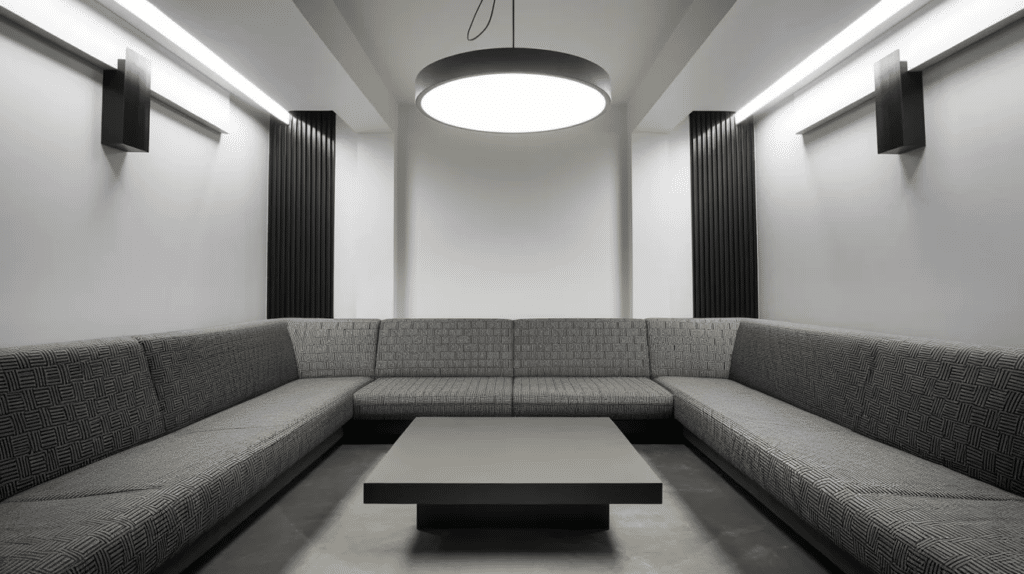
Bauhaus interiors rely on straight lines, geometric shapes, and balanced proportions. Curves may appear, but they are controlled and intentional rather than decorative.
Rectangles, squares, and circles are common in furniture, lighting, and architectural features.
The simplicity of these forms creates visual order. Instead of drawing attention to individual decorative pieces, the overall structure of the room becomes the focus.
2. Open and Functional Layouts
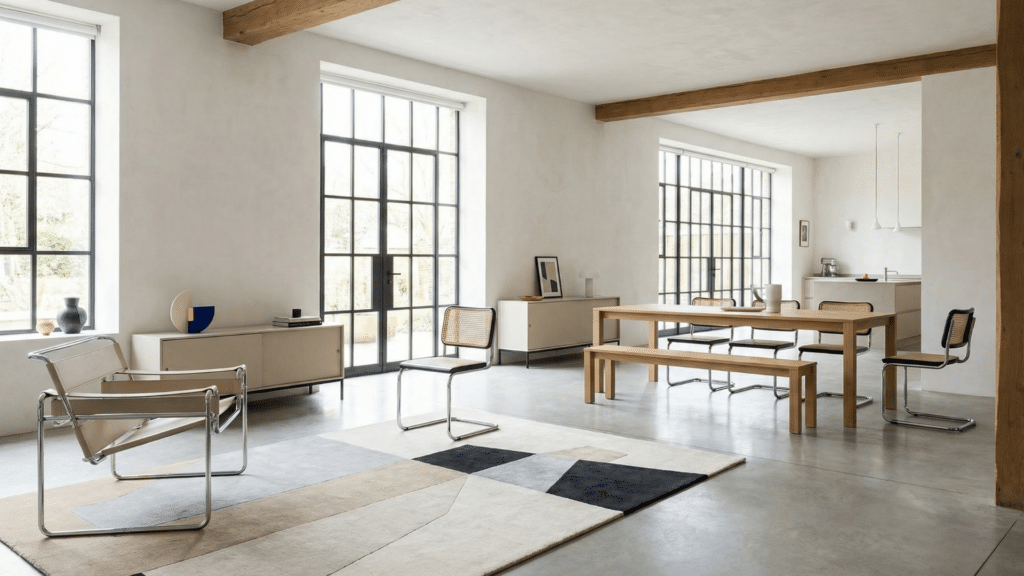
Space planning is essential in Bauhaus interiors. Rooms are arranged to maximize light, airflow, and movement.
Open layouts are common, especially in living and working areas. Walls are used only when necessary.
Furniture placement is deliberate and practical. Every object has a clear function within the space, and circulation paths remain unobstructed. This results in interiors that feel spacious even when square footage is limited.
3. Neutral Color Palettes with Bold Accents
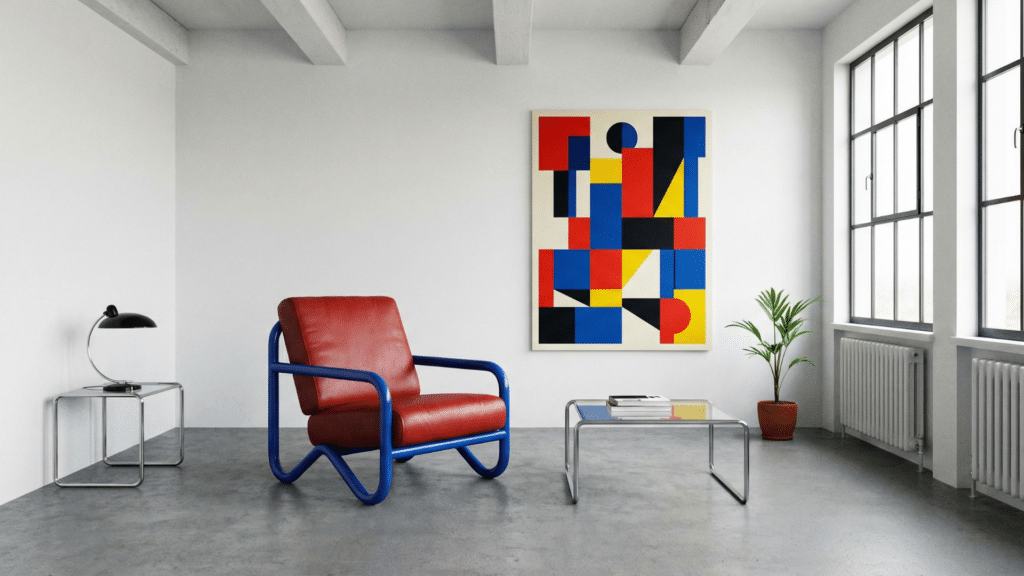
Bauhaus interior design style often uses a neutral base of white, gray, black, or beige. These tones create a calm background that highlights form and structure.
However, the movement also embraced primary colors such as red, blue, and yellow, often used as accents.
Color was applied with purpose rather than decoration. It might define a wall plane, emphasize a structural element, or create contrast in furniture. The result is controlled visual energy rather than visual clutter.
4. Industrial Materials
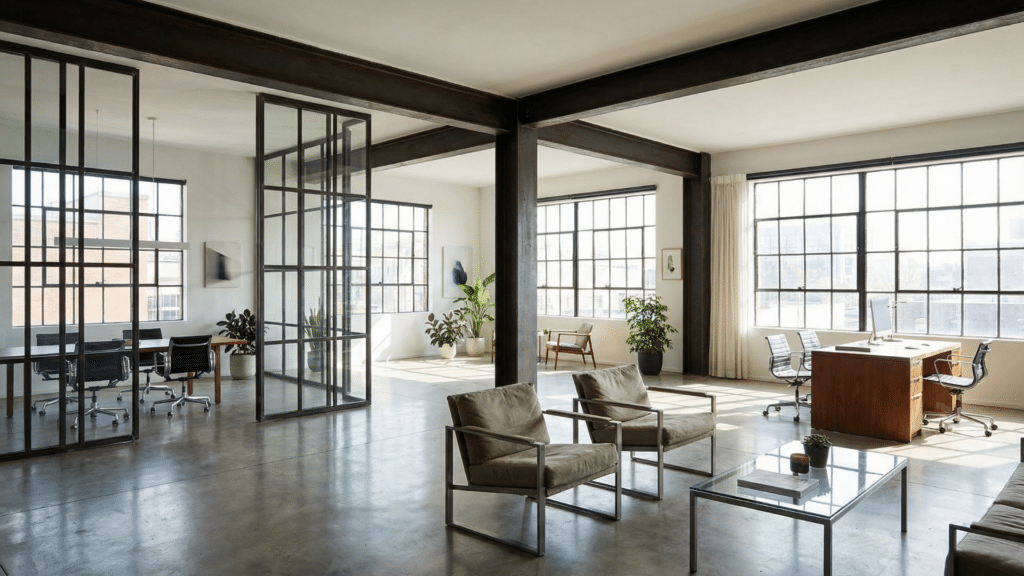
The Bauhaus celebrated materials associated with modern industry. Steel tubing, glass panels, plywood, and concrete were commonly used.
These materials were not hidden or covered with decorative finishes. Instead, their natural qualities were showcased.
For example, tubular steel chairs designed by Marcel Breuer revealed their structural frame instead of concealing it. Glass walls allowed light to move freely through buildings. The honesty of materials was considered a moral and aesthetic choice.
5. Minimal Ornamentation
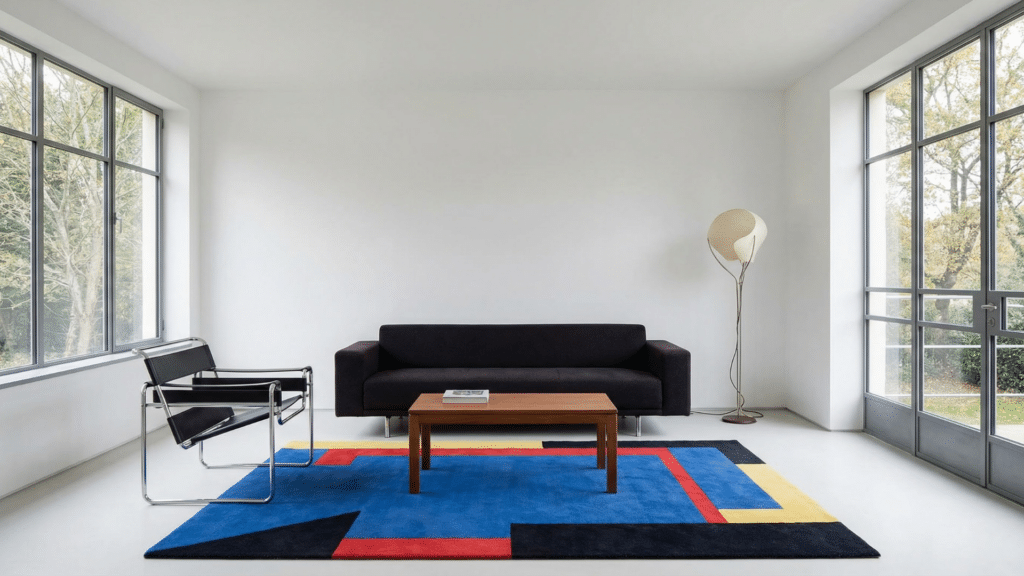
Ornament in the Bauhaus interior design style is minimal and often absent. Surfaces are smooth and unadorned.
Patterns are rare and usually geometric. Decorative moldings, carvings, and elaborate trims are avoided.
This does not mean that Bauhaus interiors are cold or sterile. Instead, they rely on proportion, material contrast, and thoughtful composition to create visual interest.
Bauhaus Furniture Design
Bauhaus furniture reflects the core ideas of the Bauhaus interior design style: function, simplicity, and modern production.
Key Features
- Designed for function first, not decoration
- Suitable for mass production
- Focused on affordability and practicality
- Used modern materials like tubular steel, glass, and plywood
- Exposed frames and visible structure
- Clean lines and clear geometric forms
Well-Known Examples
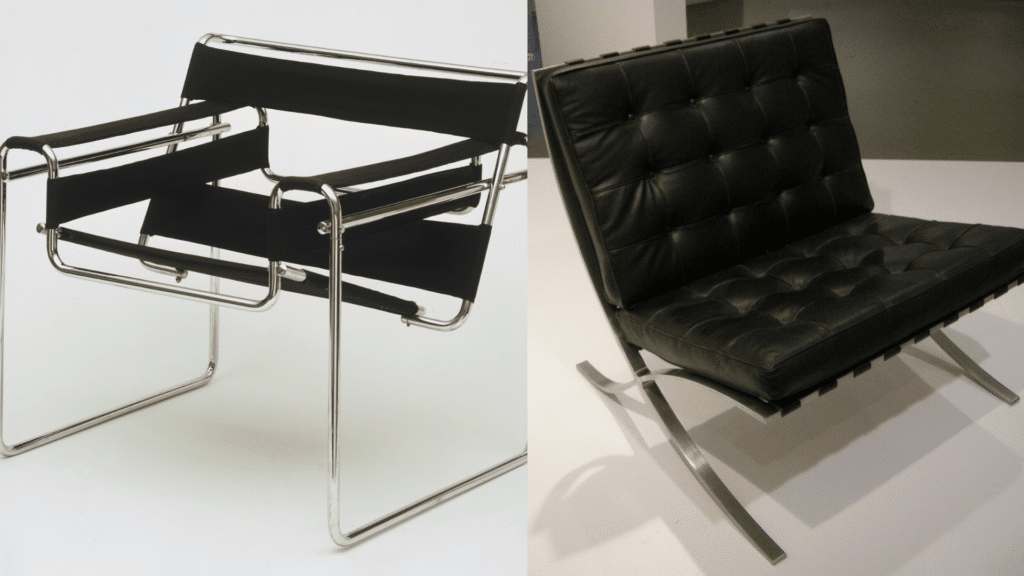
- Wassily Chair: Tubular steel frame with leather or canvas seating
- Barcelona Chair: Steel frame with structured leather cushions
The overall goal was clarity, strength, and ease of use, without unnecessary detail.
How Bauhaus Differs from Other Design Movements
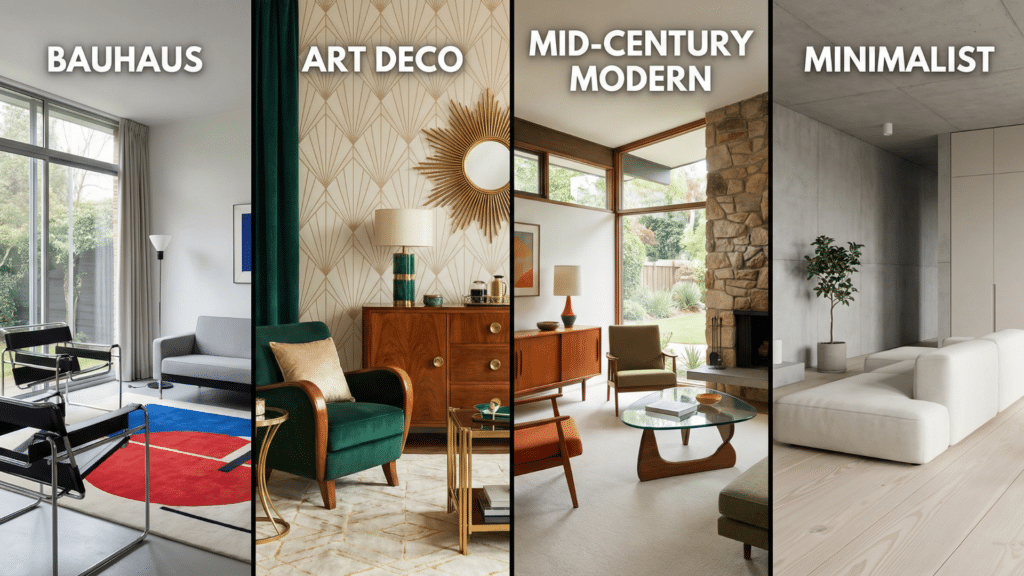
To better understand the Bauhaus interior design style, it helps to compare it with other major design movements. While some styles share certain traits, their goals, materials, and visual impact often differ significantly.
| Feature | Bauhaus | Art Deco | Mid-Century Modern | Minimalism |
|---|---|---|---|---|
| Time Period | 1919–1933 | 1920s–1940s | 1940s–1960s | Late 20th century |
| Core Focus | Function and practicality | Luxury and visual drama | Comfort and modern living | Simplicity and reduction |
| Design Philosophy | Form follows function | Decoration and glamour | Functional with warmth | Remove excess for calm spaces |
| Materials | Steel, glass, concrete | Marble, brass, lacquer | Wood, plastic, metal | Concrete, glass, neutral materials |
| Ornamentation | Minimal to none | Decorative patterns and details | Limited but present | Very little to none |
| Color Use | Neutral base with primary accents | Bold colors and metallic tones | Earth tones and muted shades | Mostly neutral and soft tones |
| Visual Feel | Structured and industrial | Rich and dramatic | Warm and organic | Clean and restrained |
| Social Mission | Affordable design for all | Often linked to a luxury lifestyle | Designed for modern families | Focus on mental clarity and space |
How to Apply Bauhaus Interior Design Style in a Modern Home
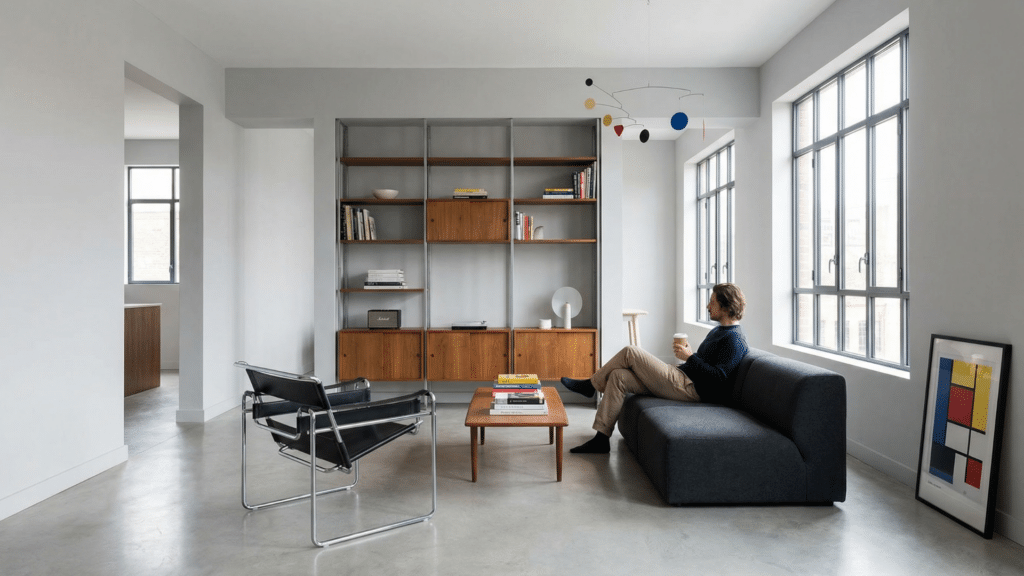
Adopting the Bauhaus interior design style today requires thoughtful planning rather than simply removing decoration.
- Focus on Function First: Each room should be evaluated based on its purpose. Furniture should support daily activities without crowding the space. Multipurpose pieces can enhance efficiency.
- Choose Honest Materials: Opt for materials such as metal, glass, wood, and concrete in their natural state. Avoid excessive surface treatments that hide structure.
- Keep the Color Palette Controlled: Use a neutral foundation and introduce color deliberately. Primary tones can be used sparingly for visual interest.
- Reduce Clutter: Storage solutions should be integrated and organized. Surfaces should remain clear to emphasize form and structure.
How to Recognize a Bauhaus Interior Today
Modern interiors influenced by Bauhaus often include open layouts, neutral color schemes, and industrial materials. Furniture appears light and functional. Decorative objects are limited and carefully selected.
Walls may be painted white or gray, while a single accent in primary color adds contrast. Floors are often wood, concrete, or tile with minimal pattern. Storage is integrated and unobtrusive.
Although contemporary interpretations may soften the industrial edge with warmer materials, the underlying principles of clarity and function remain consistent.
Wrapping Up
Bauhaus interior design style remains one of the most important movements in modern design because it changed how people think about space, furniture, and purpose.
The movement combined art and industry in a practical way that still influences homes, offices, and public buildings today.
By understanding its history, guiding principles, and key features, it becomes easier to recognize its lasting impact.
If you are planning a redesign, consider applying Bauhaus principles to create a space that values clarity, balance, and purposeful design.