

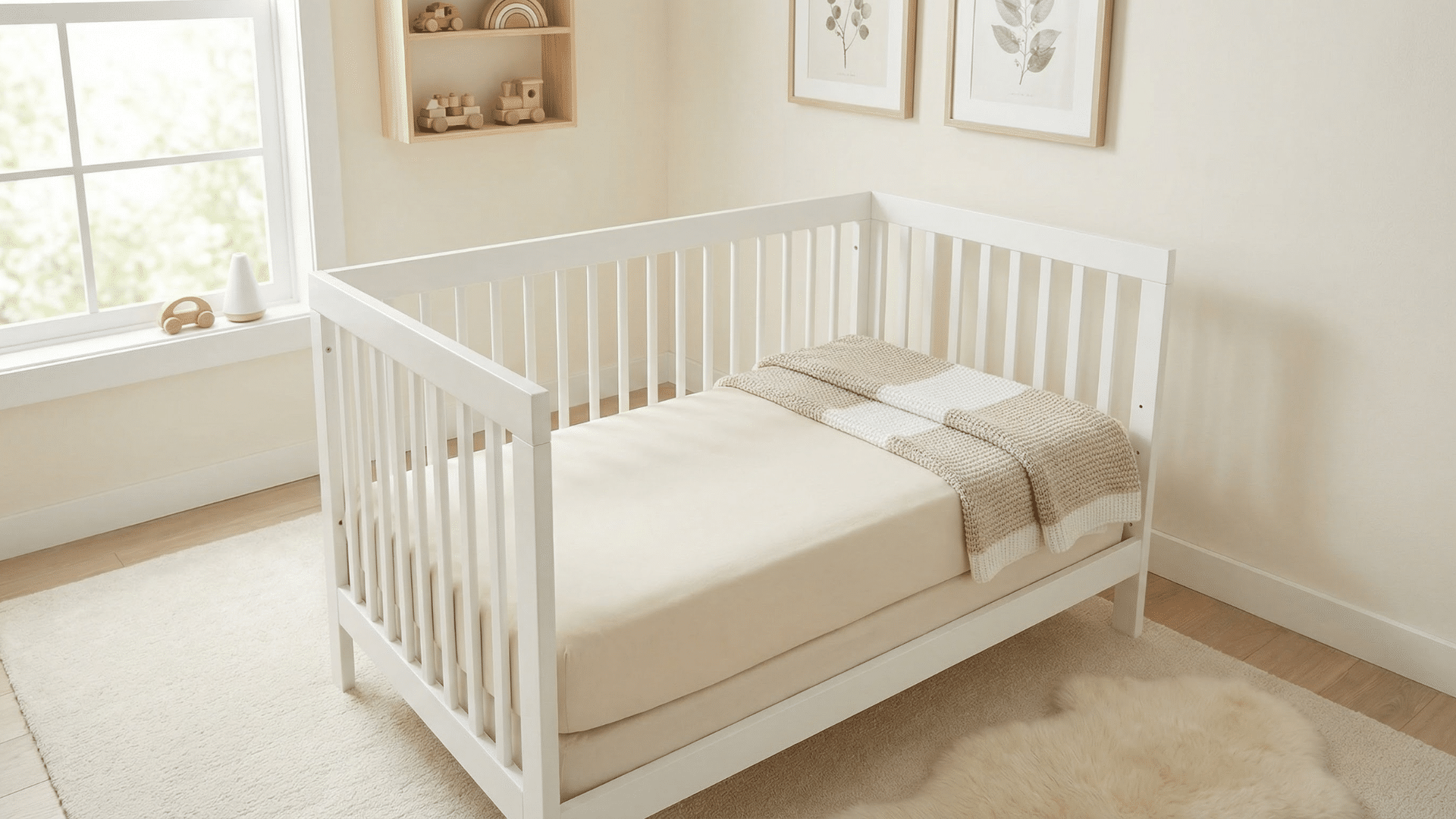
The crib may look sturdy and well-built, but the mattress inside tells the real story. Even a small gap can raise concern.
A mattress that feels too snug can cause just as much doubt. Size matters more than many expect, and the wrong fit can turn a simple setup into a source of worry.
Parents often pause and question if what they see is normal. Clear standards help remove that uncertainty.
This guide explains crib mattress size in plain language. It focuses on fit, safety, and the common concerns people share when setting up a baby’s crib.
Understanding the Standard Crib Mattress Size
The standard crib mattress size in the United States is regulated for safety. A full-size crib mattress is designed to fit full-size cribs that follow federal guidelines. These standards were created to reduce the risk of gaps, shifting, and unsafe sleep environments.
In general, a standard crib mattress measures about 52 inches long and 28 inches wide. The thickness usually ranges up to 6 inches, though many mattresses are between 4 and 6 inches thick.
These crib mattress measurements are not random. They are based on rules set by the Consumer Product Safety Commission (CPSC), which regulates crib and mattress sizing to promote infant safety.
However, knowing the numbers alone is not enough. Proper fit depends on both the crib and the mattress meeting the same sizing standards.
Why a Proper Crib Mattress Fit is Critical for Safety
A crib mattress must fit snugly inside the crib frame. If there are gaps between the mattress and the crib sides, a baby could roll into that space. This increases the risk of suffocation or entrapment.
If the mattress is too small:
- Gaps may appear along the sides or corners.
- The mattress may slide or shift.
- The fitted sheet may not stay secure.
If the mattress is too large:
- It may bow upward at the edges.
- It can be difficult to insert into the crib.
- Pressure may damage the crib frame.
A correct fit supports safe sleep practices. Pediatric guidelines recommend placing babies on a firm, well-fitted mattress with no loose bedding. Proper crib mattress measurements are a key part of that setup.
Federal Safety Standards for Crib Mattress
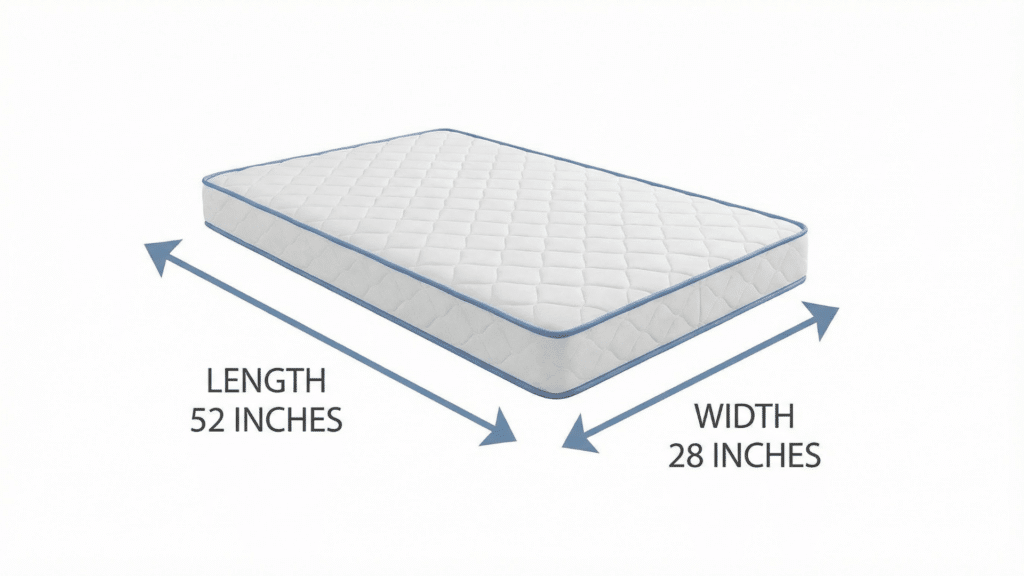
In the United States, full-size cribs and mattresses must follow federal guidelines. According to CPSC standards:
- The interior crib length must be approximately 52 3/8 inches.
- The interior crib width must be approximately 28 5/8 inches.
- The mattress must be designed to fit within these dimensions.
- There is allowed tolerance in manufacturing, but it is minimal. The goal is to ensure that mattresses and cribs labeled “standard” or “full-size” are compatible.
It is important to understand that older, antique, and imported cribs may not comply with these rules. That is where sizing confusion often begins.
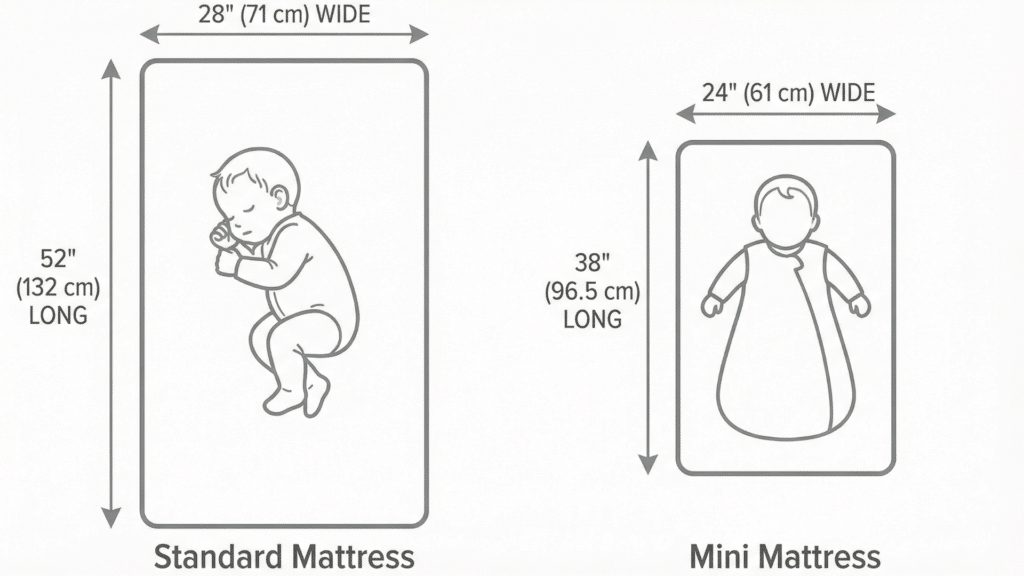
Standard Crib vs Mini Crib Mattress Size
| Feature | Standard Crib Mattress | Mini Crib Mattress |
|---|---|---|
| Typical Length | About 52 inches | About 38 inches |
| Typical Width | About 28 inches | About 24 inches |
| Thickness | Usually 4–6 inches | Usually 3–5 inches |
| Federal Regulation (U.S.) | Yes, federally standardized | No strict federal size standard |
| Fits Which Crib Type | Full-size standard cribs | Mini cribs only |
| Common Use | Primary nursery crib | Small spaces, travel, or secondary rooms |
| Sheet Size Required | Standard crib sheets | Mini crib sheets |
Standard crib mattress measurements are regulated in the United States to ensure safety and consistent fit. Mini crib mattresses, however, can vary slightly by brand and manufacturer. Always measure your crib’s interior before purchasing to confirm compatibility.
How to Measure a Crib Mattress Correctly
Even when buying a mattress labeled “standard,” it is wise to measure both the crib and the mattress.
Step 1: Measure the Interior of the Crib
Use a measuring tape and measure:
- Inside length from one end panel to the other
- Inside width from side rail to side rail
Do not measure the outer frame. Only measure the interior sleeping space.
Step 2: Measure the Mattress
Lay the mattress flat on the floor. Measure:
- Length from top to bottom
- Width from side to side
- Thickness from the bottom to the top surface
Compare your numbers with standard crib mattress measurements. Small variations of about half an inch may be normal, but large differences signal a problem.
The Two-Finger Rule for Proper Fit
A simple way to test mattress fit is the “two-finger rule.” Place the mattress inside the crib. Try sliding two fingers between the mattress edge and the crib frame.
- If more than two fingers fit, the mattress may be too small.
- If fewer than two fingers fit, the mattress is likely snug enough.
This rule offers a quick visual and physical check. It does not replace measuring, but it helps confirm a safe fit.
Crib Mattress Thickness and Height Considerations
Thickness affects more than comfort. It also impacts crib safety and mattress support.
Most standard crib mattresses are no thicker than 6 inches. Thicker mattresses may not fit correctly within crib rails or may raise the sleeping surface too high.
As a baby grows and begins to stand, the crib mattress height should be lowered. A mattress that is too thick can reduce the effective height of crib sides, increasing the risk of climbing or falling.
Always follow the crib manufacturer’s instructions regarding maximum mattress thickness.
Foam vs Innerspring Crib Mattress Size Differences
Both foam and innerspring mattresses follow standard crib mattress measurements. However, they behave differently.
Foam Mattresses
- Lightweight
- May arrive compressed
- Expand after opening
- Slight size variation during expansion
Innerspring Mattresses
- Heavier
- Hold shape immediately
- Less expansion delay
Foam mattresses may appear smaller when first opened until they fully expand. It is important to wait before evaluating the final fit.
Why Older Cribs May Not Fit Standard Mattresses
Antique or secondhand cribs often cause sizing issues. Before 2011, crib safety regulations were different. Drop-side cribs were common, and size tolerances varied more widely.
If a crib was manufactured before modern federal rules:
- It may not match current crib mattress measurements.
- Replacement mattresses may not fit correctly.
- Safety standards may not be met.
Using an outdated crib can create both sizing and structural concerns. Experts recommend using cribs that meet current safety regulations.
Convertible Cribs and Mattress Fit
Convertible cribs transition into toddler beds or full beds. However, during the crib stage, they still use the standard crib mattress size.
Parents sometimes assume a convertible crib needs a special mattress. In most cases, it does not. The same crib mattress measurements apply.
When converting to a toddler bed:
- The same mattress is typically used.
- Guardrails may be added.
No resizing is usually required.
International Crib Mattress Size Differences
Crib sizing is not universal. If a crib is imported or purchased outside the United States, the mattress dimensions may not follow the same standard. This is one of the most common reasons parents experience unexpected gaps or tight fits.
Common International Crib Mattress Sizes
| Country/Region | Typical Mattress Size |
|---|---|
| United States | 52 in x 28 in |
| United Kingdom | 120 cm x 60 cm |
| Continental Europe | Often 120 cm x 60 cm or 140 cm x 70 cm |
| Australia | 130 cm x 69 cm (varies by manufacturer) |
These measurements are not interchangeable with U.S. standards. Even small differences in length or width can create visible gaps when mixing an international crib with a U.S. mattress, or the other way around.
Before purchasing, always confirm:
- The country where the crib was manufactured
- The interior crib dimensions
- The exact listed mattress measurements
Avoid assuming that the term “standard” means the same thing worldwide. Country-specific sizing rules must match for a safe and secure fit.
What if the Mattress is Slightly Off?
Manufacturing tolerances allow a small variation, usually around half an inch.
If your mattress measures:
- 51.5 inches instead of 52 inches
- 27.5 inches instead of 28 inches
It may still fall within an acceptable range, provided it passes the two-finger rule and shows no dangerous gaps. If gaps exceed two fingers or appear wide enough to trap an arm or leg, replace the mattress.
Signs Your Crib Mattress Does Not Fit Safely
Even if a mattress is labeled as standard size, it may not always fit your crib correctly. Small differences in crib mattress measurements, older crib models, or manufacturing variations can affect the final fit. The following signs indicate that the mattress may not be safe for use:
- Noticeable gaps larger than two fingers between the mattress and crib sides
- Visible spacing at the corners that looks wide enough to trap a baby’s arm or leg
- The mattress shifts easily when pressed or moved
- Edges of the mattress bow upward or do not sit flat inside the crib frame
- The mattress must be forced or squeezed into position
- The fitted sheet does not stay tight and secure around the corners
- The mattress surface tilts instead of lying evenly and flat
- Uneven compression along one side of the mattress
If any of these issues appear, recheck the crib mattress measurements and compare them to the crib’s interior dimensions. A snug, firm, and stable fit is essential for safe sleep.
Final Thoughts
Crib mattress size may seem like a small detail, but it directly affects how secure a crib feels day after day.
A well-fitted mattress supports stability, proper sheet placement, and a firm sleep surface. Taking time to confirm accurate crib mattress measurements now can prevent problems later.
Review your crib’s interior dimensions, carefully check the product specifications, and make adjustments if needed.
If you have doubts, measure again before settling on a final choice.