

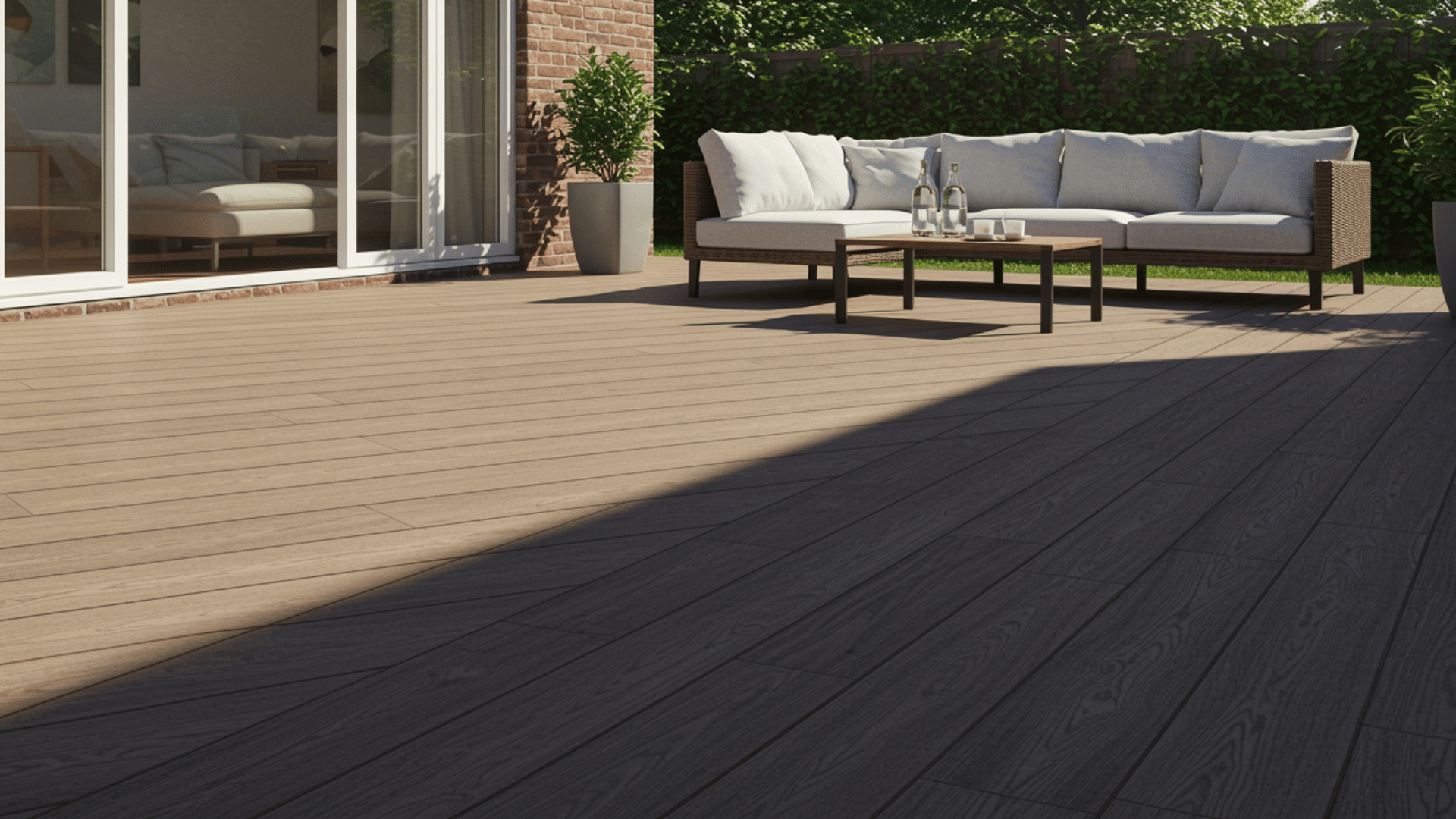
Composite decking is popular because it lasts longer and looks good. But just like anything outside, it can get dirty over time.
Rain, dust, leaves, and even mold can make it look dull or slippery. Cleaning it the right way helps the deck stay safe and keeps it looking fresh.
Some people look for help online or ask friends what works best.
This blog gives helpful tips in a clear, easy-to-follow format. It covers how to clean the deck step by step, with tools that are simple to find.
What is Composite Decking?
Composite decking is a durable, low-maintenance alternative to traditional wood decking.
It’s made from a blend of wood fibers and recycled plastics, creating boards that resist fading, staining, rotting, and warping far better than natural lumber.
Because the material isn’t prone to splintering or cracking, it offers a smoother, more comfortable surface underfoot.
Composite boards often include a protective outer layer, called a cap, which shields them from moisture, mold, and everyday wear.
With a wide range of colors and styles, composite decking provides the look of wood with significantly less upkeep, making it a long-lasting choice for modern outdoor living.
Tools & Materials You’ll Need
| Category | Item |
|---|---|
| Basic Cleaning | Soft-bristle brush |
| Dish soap / Mild detergent | |
| Bucket | |
| Garden hose with nozzle | |
| Deep Cleaning | Dawn Power Wash |
| Composite deck cleaner | |
| Optional Tools | Pressure washer (≤3100 PSI) |
| Fan-tip nozzle | |
| Safety & Prep | Gloves |
| Broom |
Step-by-Step Process: How to Clean Composite Decking
Follow these simple steps to remove dirt, stains, and buildup while preserving the beauty of your composite decking.
Step 1: Clear the Deck
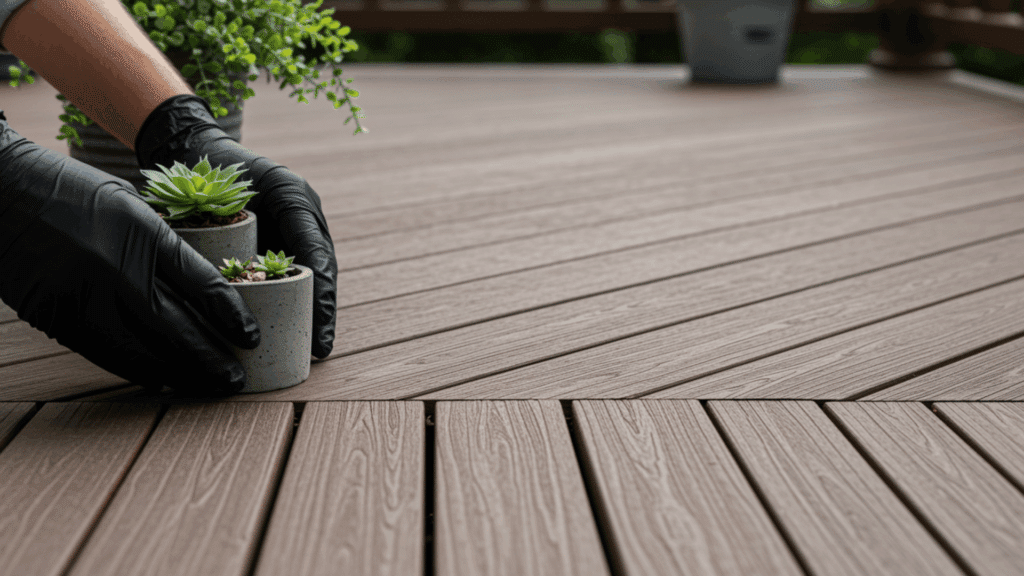
Before you begin cleaning, remove all furniture, planters, grills, and decorative items from your composite deck.
This ensures you can access every section without obstacles and prevents the cleaning solution from damaging your belongings. Don’t forget to relocate smaller items, such as doormats or tools.
Clearing the entire surface also helps you identify problem areas that need extra attention, such as stains or mildew spots that may have been hidden under furniture.
Step 2: Remove Debris
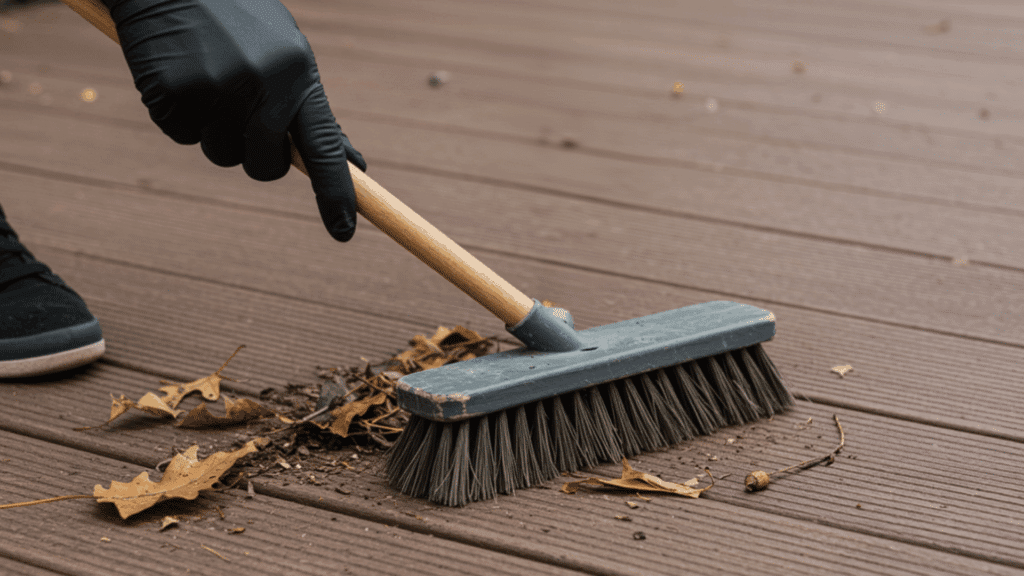
Use a soft-bristle broom or leaf blower to sweep away loose dirt, leaves, twigs, and other debris from the deck surface.
Pay special attention to the gaps between boards where debris tends to accumulate. A putty knife or similar tool can help dislodge stubborn material stuck between planks.
Removing this debris first prevents it from turning into muddy residue when you apply water and cleaner, making your cleaning process more efficient and effective.
Step 3: Prepare the Cleaner
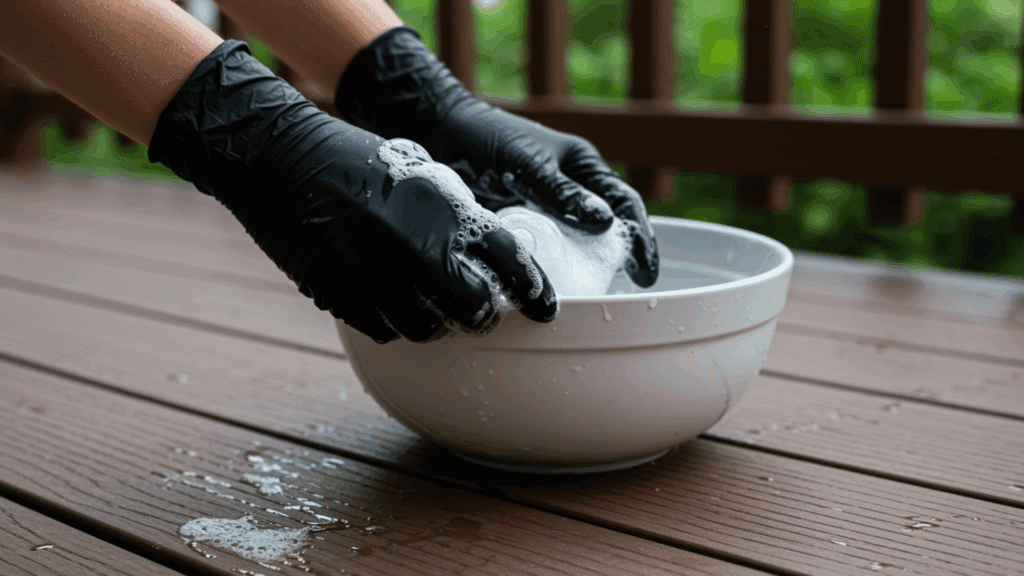
Mix your chosen cleaning solution according to the manufacturer’s instructions or create a simple homemade cleaner using mild dish soap and warm water.
For standard cleaning, use about two tablespoons of soap per gallon of water. If tackling mold or mildew, consider using a composite-safe cleaner or oxygen bleach solution.
Always avoid chlorine bleach as it can damage composite materials. Have your bucket, cleaning solution, and soft-bristle brush ready before proceeding.
Step 4: Section Off the Deck
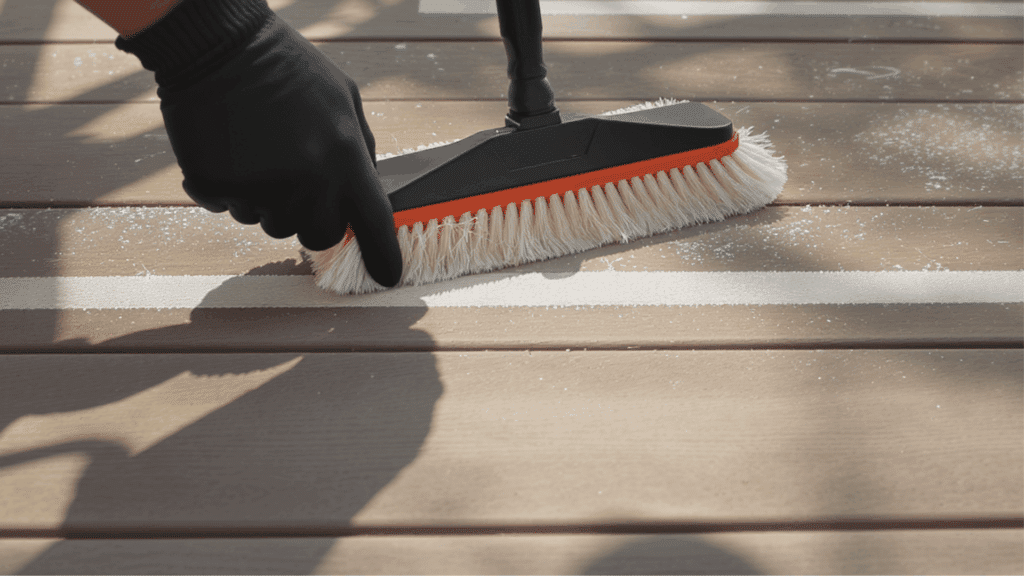
Divide your deck into manageable sections, typically working in 10-15-square-foot areas at a time. This approach prevents the cleaning solution from drying on the surface before you can scrub.
Start from one end and work systematically toward the other, planning your path so you don’t trap yourself in a corner.
Sectioning also makes the job less overwhelming and ensures thorough, consistent cleaning across the entire deck surface without missing spots.
Step 5: Clean and Rinse the Deck
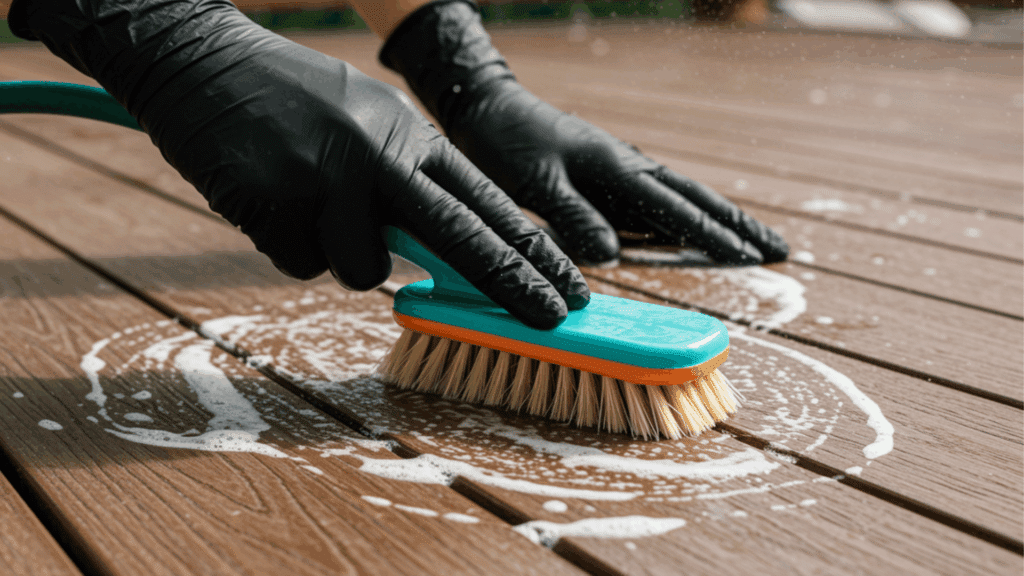
Apply your cleaning solution to one section at a time using a mop or by pouring it directly onto the surface.
Scrub gently with a soft-bristle brush in the direction of the grain pattern, paying extra attention to stained or dirty areas. Let the solution sit for 5-10 minutes if needed for stubborn stains.
Rinse thoroughly with a garden hose, ensuring all soap residue is removed before moving to the next section.
Step 6: Dry the Deck

Allow your composite deck to air dry completely, which typically takes 24-48 hours depending on weather conditions and humidity levels.
Good airflow helps speed up the drying process, so choose a breezy, sunny day if possible. Avoid walking on the deck excessively while it’s wet to prevent slip hazards and footprint marks.
Once dry, inspect the surface for any missed spots or persistent stains that might need additional treatment before returning furniture and accessories.
Step 7: Final Look
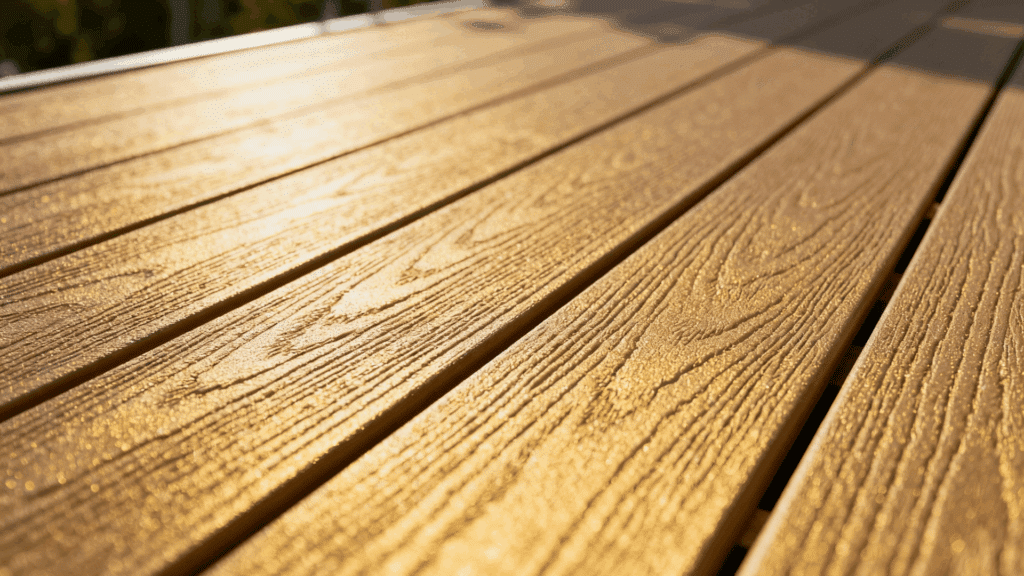
Conduct a thorough inspection of your newly cleaned composite deck, checking for any remaining stains, mildew, or areas you may have missed.
Touch up problem spots as needed. Examine the gaps between boards to ensure they’re clear of debris. Once satisfied with the results, return your furniture and accessories to the deck.
Regular maintenance every few weeks will keep your composite decking looking pristine and extend its lifespan, making future cleaning sessions quicker and easier.
How Often Should You Clean Composite Decking?
Composite decking is low-maintenance, but it still needs regular cleaning to stay in great condition.
In most climates, a deep clean twice a year,typically in spring and fall, is enough to remove built-up dirt, pollen, and grime.
However, a quick monthly rinse helps keep surface debris from settling into the board grooves, especially if your deck is shaded or surrounded by trees.
Weekly sweeping is also recommended to prevent leaves, dust, and moisture from accumulating, which can encourage mold growth.
Overall, a consistent routine ensures your composite deck maintains its color, durability, and slip resistance, with far less effort than traditional wood decking.
Common Mistakes to Avoid
Even the most durable composite decks can lose their beauty if you fall into these common cleaning mistakes.
- Using harsh chemicals like bleach or ammonia: These can discolor the boards, damage the capstock, and void manufacturer warranties.
- Scrubbing with wire brushes or abrasive pads: These scratch the composite surface, making it more prone to staining and mildew.
- Using a pressure washer incorrectly: Holding the nozzle too close or using excessive PSI can gouge or strip the decking.
- Ignoring gaps between deck boards: Clogged debris traps moisture, leading to mold growth and board swelling.
- Cleaning in direct, harsh sunlight: Heat causes cleaners to evaporate too quickly, reducing effectiveness and causing blotchy results.
Community Insights and Conversations
Real homeowners share practical advice on cleaning composite decking without causing damage. Many emphasize keeping the process simple and gentle.
One user notes;
“Don’t power wash it, just use soap and water like you would your car nothing harsh though, just dish soap.”
For tougher marks, others have had success with targeted cleaners. As one person mentions,
“I use Dawn Power Wash and a brush. It took rust stains right off my deck.”
Some users are open to pressure washing, but with strict caution, explaining that;
“a pressure washer with no greater than 3100 PSI and a fan attachment can be used to remove dirt or mud.”
Conclusion
Keeping a composite deck clean is not hard, but it does take regular care. Gentle tools, mild soap, and quick stain removal help keep the deck looking good and safe to use.
Many people on forums say that simple steps, done often, work best. You don’t need strong cleaners or fancy gear, just the right habits.
A clean deck makes your outdoor space more inviting and helps the material last longer. It also keeps your home looking neat.
Start with what you have and clean a little at a time. It makes a big difference.