

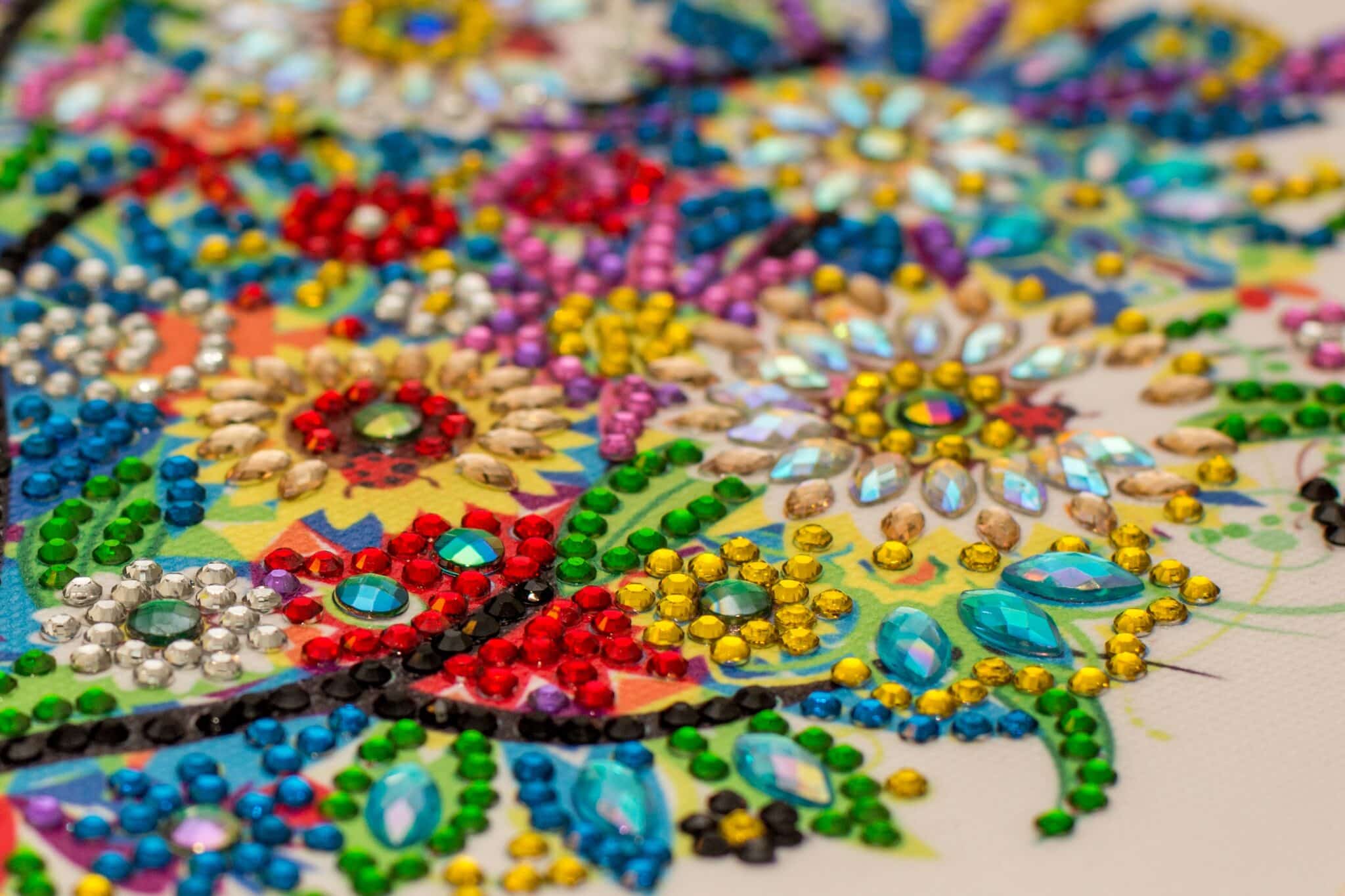
Should You Seal Your Diamond Painting?
Sealing your diamond painting helps secure the drills and protect the artwork from dust, dirt, and movement. It’s helpful in many situations, but not always necessary.
When Sealing Is Recommended
You’ll benefit from sealing if:
- You completed a round drill painting
- You’re working on a partial drill canvas
- You plan to hang the canvas without glass
- You notice loose drills or popping diamonds
- The artwork will be handled or moved often
When Sealing Isn’t Necessary
You can usually skip sealing if:
- You used square drills with tight alignment
- Your kit uses poured glue adhesive
- You’ll frame the artwork behind glass
- You prefer the original sparkle and texture
Types of Sealers for Diamond Painting
There are three main categories of sealants: brush-on, spray, and resin. Each gives a different finish.
Brush-On Sealers
Brush-on sealers are beginner-friendly and the most popular option.
Pros: easy to use, affordable, strengthens drill adhesion, works well for round drills.
Cons: may reduce sparkle slightly, can leave brush strokes, may dull AB drills.
Works best for everyday projects and paintings displayed without glass.
Spray Sealers
Spray sealers protect your artwork without flattening the diamonds.
Pros: preserves texture, no brush strokes, fast application.
Cons: must be used outdoors, risk of overspray, less strong on edges.
Works best for full-drill canvases and for preserving shine.
Resin Sealers
Resin gives your painting a thick, glossy, glass-like finish.
Pros: extremely durable, waterproof, very shiny.
Cons: heavier, irreversible, more expensive, long curing time.
Works best for high-end pieces or artwork displayed long-term.
Tools and Supplies You’ll Need
- Sealer of your choice
- Soft brush (for brush-on products)
- Roller or heavy book
- Tweezers
- Protective surface
- Silicone spatula or toothpick (for resin)
- Paper towels
- Optional: heat gun for resin bubbles
How to Prepare Your Painting Before Sealing
Remove Dust and Debris
Use a soft, clean brush to sweep away lint from the drills.
Press Down All Drills
Use a roller, book or tweezers to make sure every diamond is firmly pressed into the adhesive.
Check for Gaps or Missing Drills
Inspect the canvas closely and fill in any missing drills before sealing.
Lay the Painting Flat and Protect Your Work Area
Use cardboard, newspaper, or parchment paper to keep surfaces clean.
How to Seal a Diamond Painting: Step-By-Step Instructions
Method 1: Brush-On Sealers
- Stir the product gently.
- Dip a soft brush and apply a thin, even coat.
- Brush in one direction to avoid streaks.
- Let dry for 20–30 minutes.
- Apply a second coat if you want more shine or firmness.
- Check edges to make sure they are covered.
Method 2: Spray Sealers
- Move the canvas to a ventilated area or outdoors.
- Hold the can 12–18 inches from the artwork.
- Spray in slow, sweeping motions.
- Let dry for about 30 minutes.
- Apply a second light coat if desired.
- Avoid spraying too close to prevent drips.
Method 3: Resin Sealers
- Combine resin and hardener according to instructions.
- Pour a small amount onto the canvas.
- Spread evenly with a spatula or silicone tool.
- Use a toothpick for edges.
- Remove bubbles with low heat.
- Allow 12–24 hours to cure without touching.
How Long Does the Sealer Take to Dry?
Brush-on sealers usually dry in 20–45 minutes. Spray sealers dry in about 30 minutes. Resin typically requires 12–24 hours to cure fully.Humidity, temperature, and application thickness can affect drying times.
Pros and Cons of Sealing Your Diamond Painting
Pros
- Prevents diamonds from popping off
- Protects from dust and dirt
- Strengthens adhesion on round drills
- Helps maintain the artwork over time
- Makes cleaning easier
Cons
- May reduce sparkle depending on the product
- Can dull AB drills
- Brush strokes may be visible with brush-on sealers
- Resin is heavy and permanent
- Mistakes are difficult to undo
Frequently Asked Questions
Does sealing reduce sparkle?
Brush-on sealers may reduce sparkle slightly. Spray sealers and resin usually preserve or enhance shine.
Should I seal before or after framing?
Yes, seal before framing if not using glass. If framing behind glass, sealing is optional.
Can you use Mod Podge on diamond paintings?
Yes, Mod Podge Gloss and Mod Podge Matte are commonly used.
Is sealing necessary for large canvases?
Not required, but helpful if the artwork will be moved often.
Can I clean a sealed diamond painting?
Yes, you can wipe sealed paintings gently with a damp cloth.