

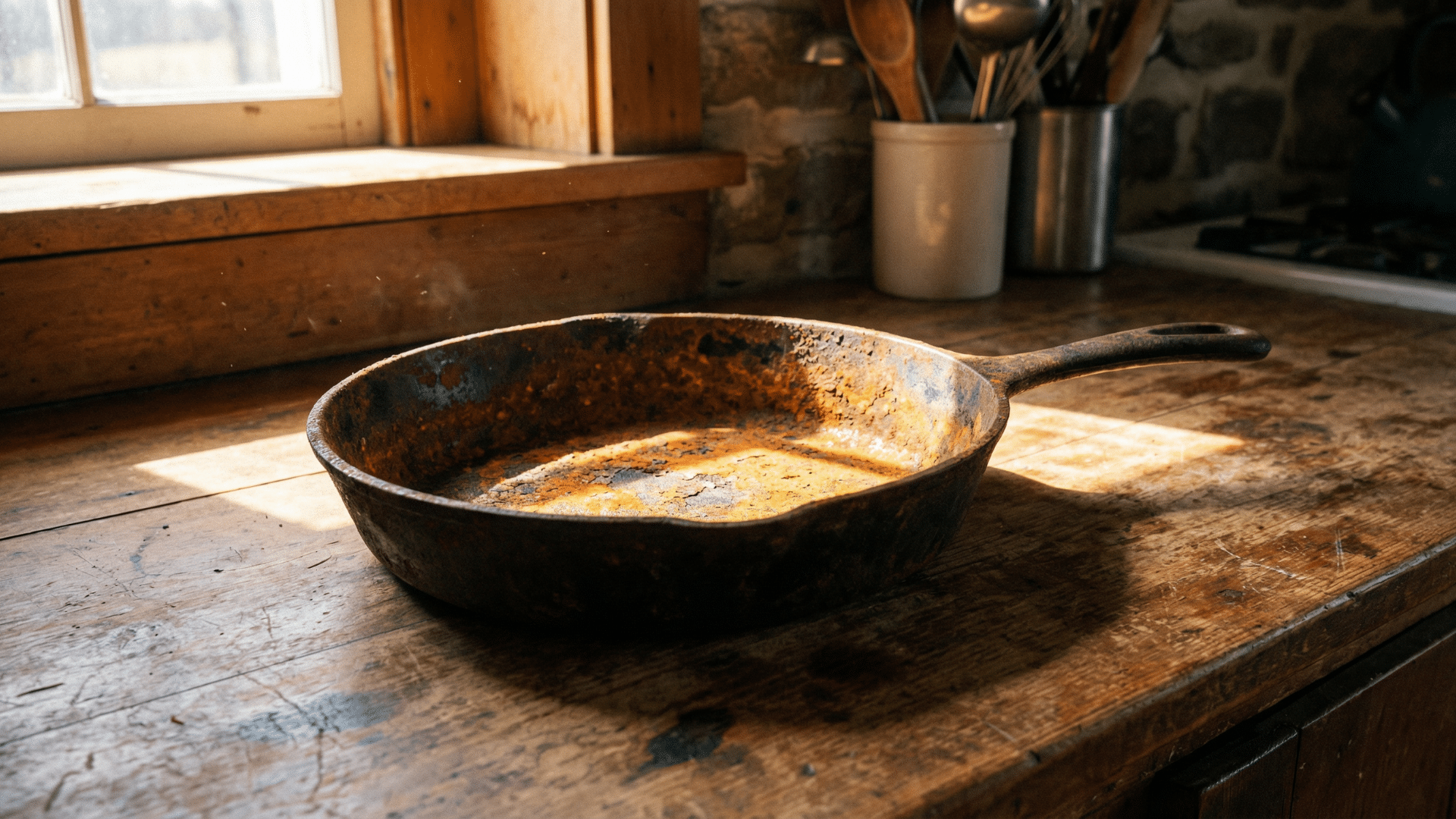
A cast-iron pan can last for generations, but only if it’s cared for the right way.
Many people find an old skillet tucked away in a cabinet or pick one up at a yard sale, only to see it’s covered in rust.
At first, it may look like it’s ruined. But don’t worry. There’s a way to bring it back.
This blog shares simple tips, real user advice, and a step-by-step guide to help you clean and restore your cast iron.
You don’t need fancy tools or harsh products. Just time, patience, and a few basic supplies. Let’s get started on making your pan shine again.
Why Does Cast Iron Rust?
Cast iron is strong but not rust-proof. It rusts when water or moisture sits on its surface. This can happen if the pan is washed and not dried right away.
It can also happen if the pan is stored in a damp place or left soaking in the sink. Even a little water can lead to rust if the pan isn’t cared for properly.
The good news? A rusty cast-iron pan is not ruined. In most cases, the rust only affects the top layer.
With some basic tools, a little time, and the right steps, the pan can be cleaned and brought back to life. Once cleaned and seasoned again, the pan can look and work like new.
What You’ll Need
Here are some basic items used in rust removal:
- Steel wool or a scrub pad
- Mild dish soap (optional)
- Baking soda or vinegar (optional)
- Clean cloth or paper towels
- Cooking oil (vegetable, flaxseed, or canola)
- Oven or stovetop for seasoning
You don’t need all of these. Different methods use different tools. Some people even use a potato and salt to scrub!
Step-by-Step Guide: How to Remove Rust from Cast Iron
Ready to bring your rusty cast iron back to life? Follow these easy steps to clean off the rust and re-season your pan. This guide includes tips real users have tried at home, so you know what actually works.
Step 1: Scrub Off the Rust
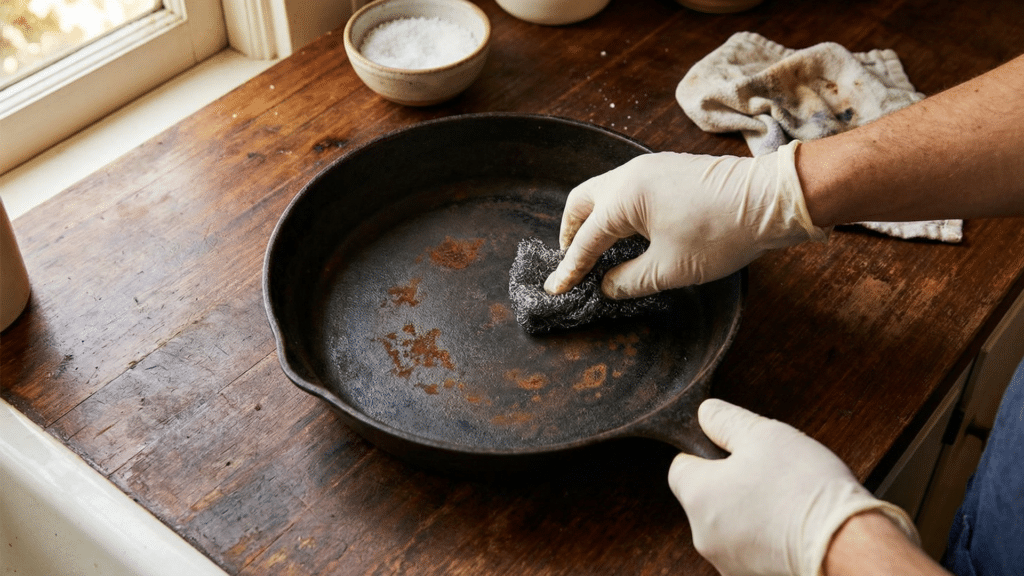
Start by scrubbing the rusty areas. Use steel wool, a wire brush, or a scrubbing pad. Don’t be afraid to scrub hard. You want to remove all the rust, even if it takes time.
Tip from users: Many people in cast iron groups say it’s okay to scrub deep. You won’t damage the pan unless you use sharp tools like a knife.
Step 2: Use Baking Soda or Vinegar (Optional)
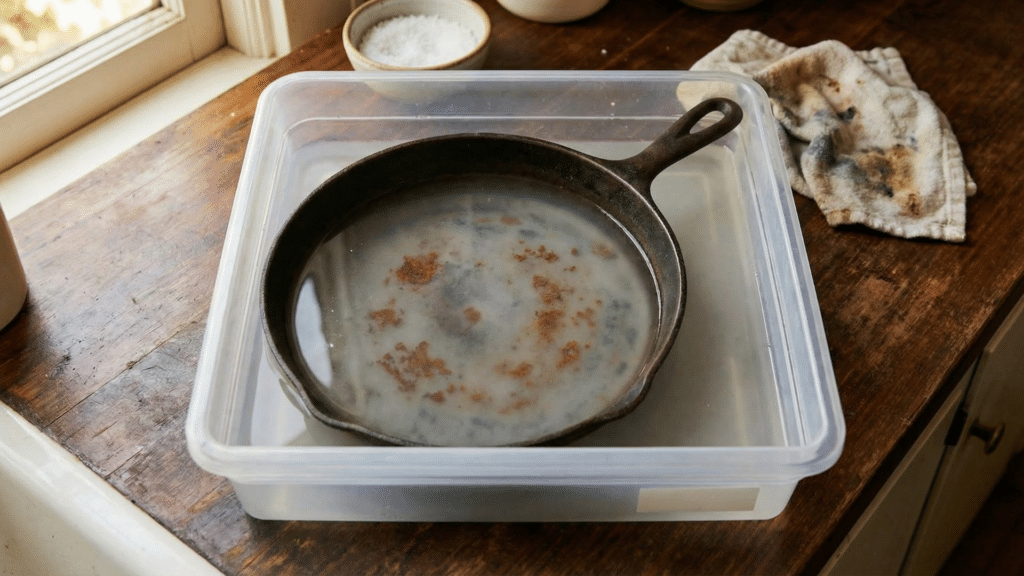
If the rust is heavy, you can soak the pan.
- Mix equal parts white vinegar and water.
- Soak the rusty cast iron for 1–2 hours.
- Do not soak too long; it can damage the metal.
Then rinse the pan and scrub again.
Tip from forums: Some people add baking soda after soaking to help with cleaning. Others just scrub again without it.
Step 3: Rinse and Dry
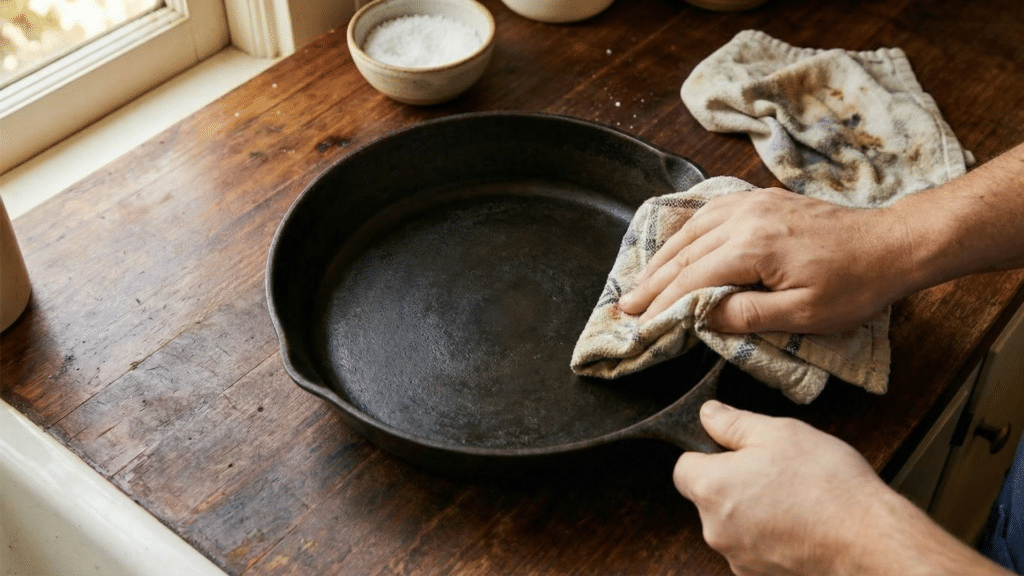
Rinse the pan well with clean water. You can use mild soap if you like, but rinse it all off. Then dry the pan completely.
Important: Do not let the pan air dry. Wipe it dry right away and put it on the stove or in the oven for a few minutes to remove leftover moisture.
Step 4: Re-Season the Cast Iron

Seasoning protects cast iron and gives it a smooth, non-stick surface. Here’s how to do it:
- Rub a thin layer of oil on the whole pan, inside, outside, and handle.
- Wipe off any extra oil with a paper towel.
- Place the pan upside down in the oven at 450°F (230°C).
- Bake for 1 hour.
- Let it cool inside the oven.
Tip: Some users repeat this step 2–3 times to build up a strong seasoning layer.
Community Tips and Tried Methods
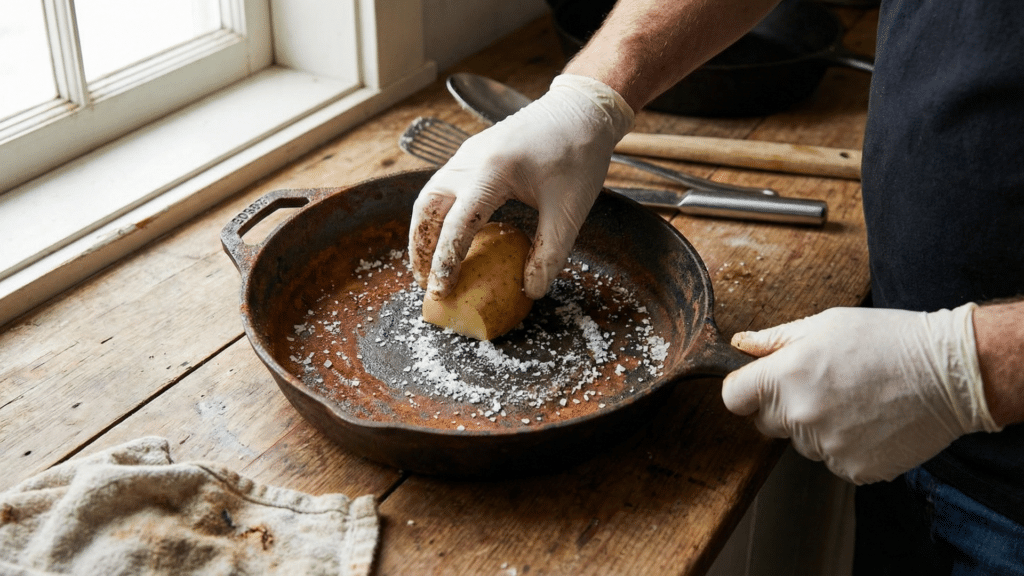
Over the years, many cast-iron users have shared clever ways to clean rusty pans. Below are a few popular tricks people use beyond the basic steps.
Using Salt and a Potato
Some home cooks use a cut potato and kosher salt to scrub off rust. The salt works like sandpaper, and the potato’s natural acid helps clean the surface.
- Pour salt into the pan.
- Scrub with the cut side of a raw potato.
- Rinse, dry, and season.
User tip: One Reddit user said this method worked well for light rust and kept their pan smooth without scratching.
Using a Drill Brush
For heavy rust, some users attach a wire brush to a power drill. This method removes thick rust fast and is great for old or badly stored cast iron.
Caution: This method will strip off all seasoning. Use it only if you plan to fully reseason your pan from scratch.
The Electrolysis Method
This is a more advanced cleaning method. It uses an electric current in a water solution to pull rust off the pan. Some collectors and cast-iron fans use this for deep cleaning.
Note: It works well but takes special tools and safety steps. Most people don’t need this method for light or moderate kitchen rust.
How to Keep Cast Iron from Rusting Again
Once your pan is clean and seasoned, it’s important to care for it the right way. These easy habits will help prevent rust and keep your cast iron in great shape for years to come:
- Dry it Right After Washing: Never let the pan air dry. Always wipe it dry and heat it on the stove for a few minutes to remove all water.
- Oil it After Each Use: After cooking and cleaning, wipe a bit of oil on the pan while it’s still warm. This keeps the seasoning strong.
- Store in a Dry Place: Avoid storing in damp areas like under the sink. If you live in a humid area, put a paper towel inside the pan to absorb moisture.
- Don’t Soak in Water: Never leave cast iron soaking. Even a short soak can lead to rust.
To Conclude
Fixing a rusty cast-iron pan might seem hard at first, but it’s really just a few clear steps. Scrub off the rust, dry it well, and build up the seasoning again.
Many people online have shared their ways of doing it, and this guide brings them together to help make it easier for you.
Once you’ve done it, the pan can last for years and cook even better than before.
Try one of the methods in this guide and share what worked for you. Got a favorite trick? Drop it in the comments below!