

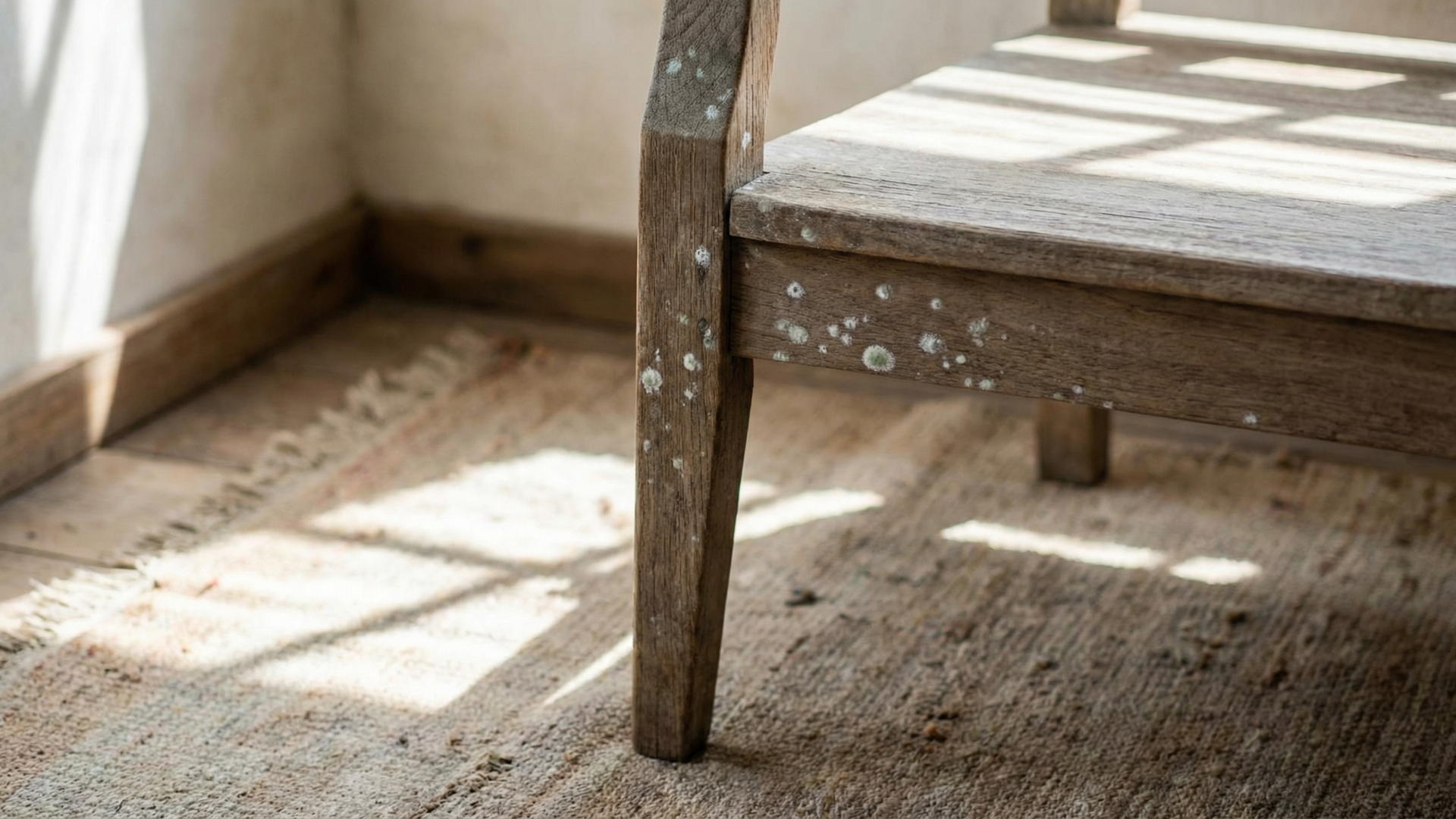
Mold on wood furniture is a common problem in many homes. It can show up after a water spill, a humid day, or time spent in storage.
The spots look bad and can even smell musty. Some people feel worried when they see it, but mold can be cleaned with care. It does not mean the furniture must be thrown away.
This blog will help readers understand how to clean mold safely and easily. The steps are simple and use items most people already have at home.
Before starting, it’s good to know why mold grows and what to watch for. Keeping furniture clean helps protect it for years.
What Causes Mold on Wood Furniture?
Mold can grow almost anywhere, but wood is a common target. Wood has tiny holes and grains that hold moisture. Mold likes dark, damp places with little airflow.
If furniture is kept near a window, in a basement, or close to a bathroom, it is more likely to develop mold. Mold can also grow after floods, water spills, or days with high humidity.
Even sealed wood can grow mold if the surface cracks or stays wet. Mold spores float in the air, land on damp spots, and spread quickly.
Cleaning mold right away is important. Mold can damage the surface and slowly sink deeper into the wood. The longer it stays, the harder it becomes to remove. Mold can also affect indoor air and may cause sneezing, allergies, headaches, or breathing problems.
Signs of Mold on Wood Furniture
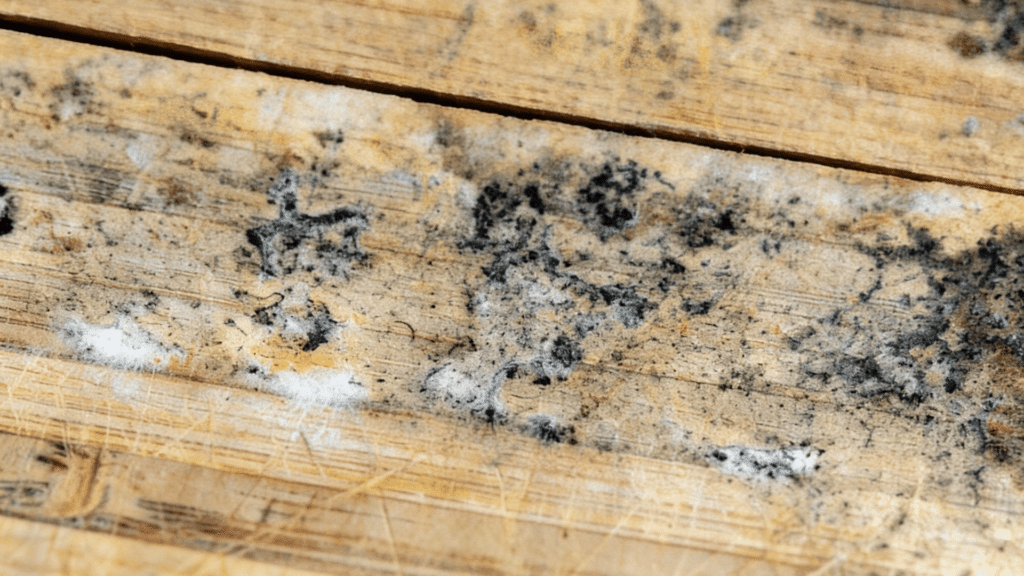
Not all spots are mold. Look for these signs:
- Green, black, or white fuzzy spots
- Musty or sour smell
- Sticky or wet areas on the surface
- Soft or dark patches on the wood
- Paint or finish peeling off
Check under cushions, behind drawers, and on the legs of chairs or tables. These places don’t get much light and are often missed.
Tools and Items You’ll Need
| Tool / Item | What It’s Used For |
|---|---|
| Soft cloth or sponge | Wiping mold without scratching the wood |
| Spray bottle | Holding and applying vinegar, peroxide, or other solutions |
| Dish soap | Mild cleaner for light mold and grime |
| White vinegar | Natural mold killer, good for most types of mold |
| Baking soda | Helps remove mold smell and light stains |
| Rubbing alcohol | Kills mold and dries fast without soaking the wood |
| Hydrogen peroxide (3%) | Stronger than vinegar, used for deep mold |
| Water | Mixing with cleaners and rinsing cloths |
| Rubber gloves | Protects hands during cleaning |
| Face mask (N95 or similar) | Keeps you from breathing in mold spores |
| Safety glasses or goggles | Protects eyes from spray and spores |
| Sandpaper (fine grit) | Lightly sanding deep mold or stained wood |
| Wood polish or oil | Adds shine and protection after cleaning |
| Vacuum with HEPA filter | Removes loose mold without spreading it in the air |
Step-by-Step: How to Clean Mold Off Wood Furniture
Cleaning mold off wood furniture takes care and patience. The steps below use safe, simple items and work for most light-to-moderate mold cases. Follow them in order for the best results.
Step 1: Dry the Furniture First
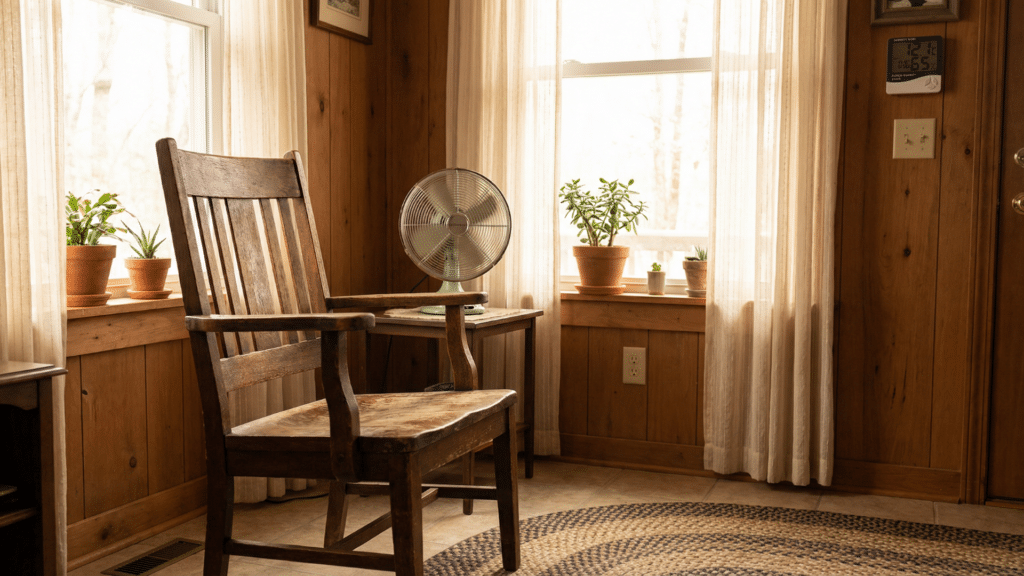
Mold grows in damp spots, so drying is the first and most important step. Never try to clean wet wood. Doing so can push mold deeper into the wood, making it harder to remove later.
Place the furniture in a warm, dry space. If possible, move it outdoors on a sunny day. Use a fan or open windows to help speed up drying. Let the furniture dry fully before doing anything else.
Step 2: Remove Loose Mold with a Vacuum (Optional)
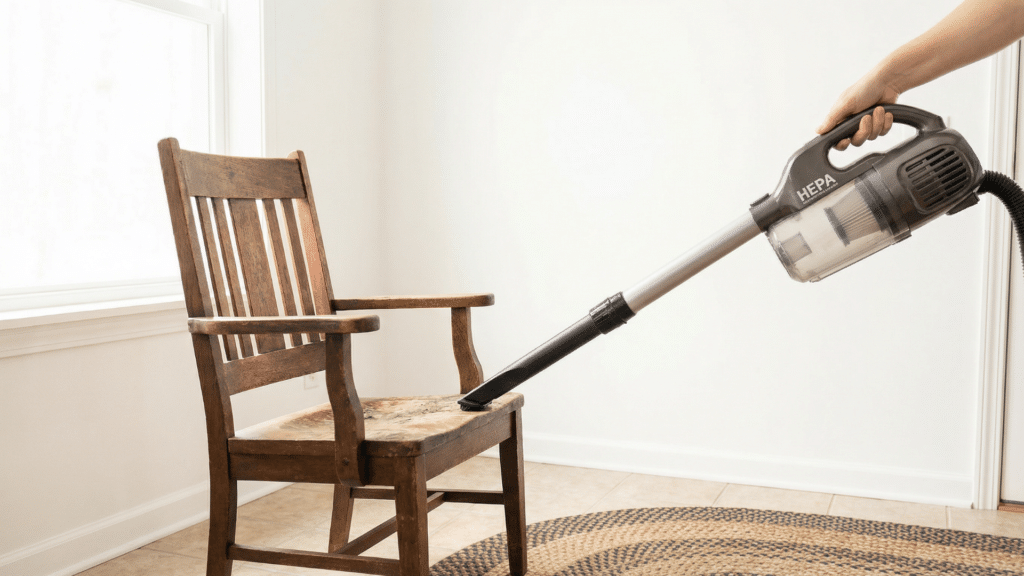
If you see loose mold or dust on the surface, a vacuum with a HEPA filter can help remove it. Gently run the vacuum over the moldy area without using a brush tool.
This helps avoid scratches on the wood. Make sure to empty the vacuum outside when you’re done, and clean the filter and hose. This step is optional, but it helps stop mold spores from spreading in the air.
Step 3: Clean Surface Mold with Soap and Water
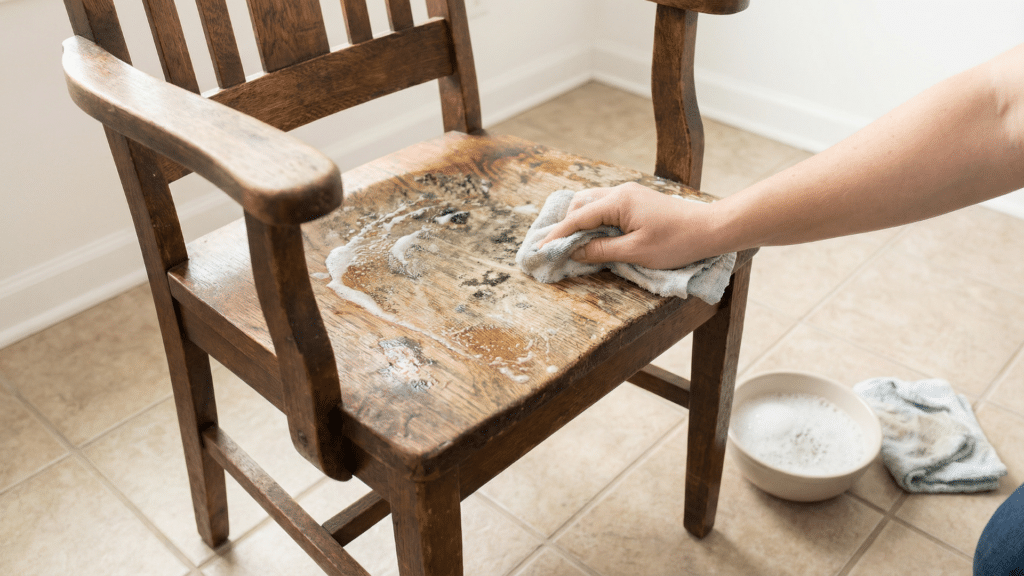
Mix a small amount of dish soap with warm water in a bowl. Dip a soft cloth into the soapy water and wring it out so it’s just damp, not soaking wet. Gently wipe the moldy area.
Avoid scrubbing hard, which can damage the wood’s finish. Keep rinsing the cloth in clean water and wringing it out as you go.
After cleaning, dry the surface right away with a clean towel. This method works best for light surface mold and everyday buildup.
Step 4: Kill Mold with Vinegar or Baking Soda
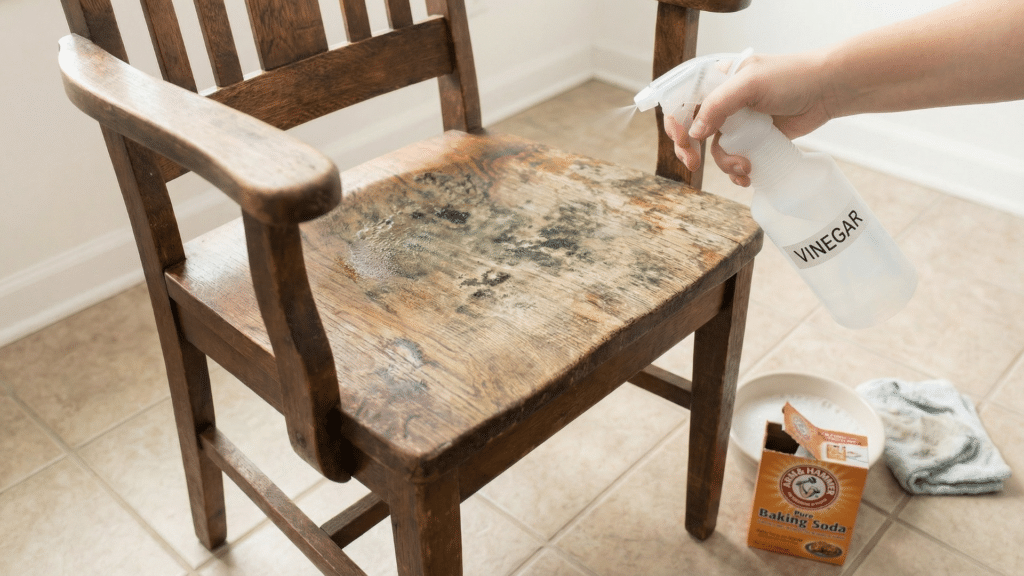
For deeper cleaning, white vinegar works well. Pour it into a spray bottle and lightly spray the moldy area. Let it sit for about an hour.
Then wipe it off with a clean cloth. Don’t rinse the vinegar off; it keeps working even after it dries. The smell will go away over time.
If the furniture smells musty, you can use baking soda. Mix 1 tablespoon of baking soda with 1 cup of water.
Spray the mix onto the furniture, let it sit for 15 to 20 minutes, and then wipe it off. Baking soda helps remove odor and freshen the wood.
Step 5: Use Alcohol or Hydrogen Peroxide for Stubborn Mold
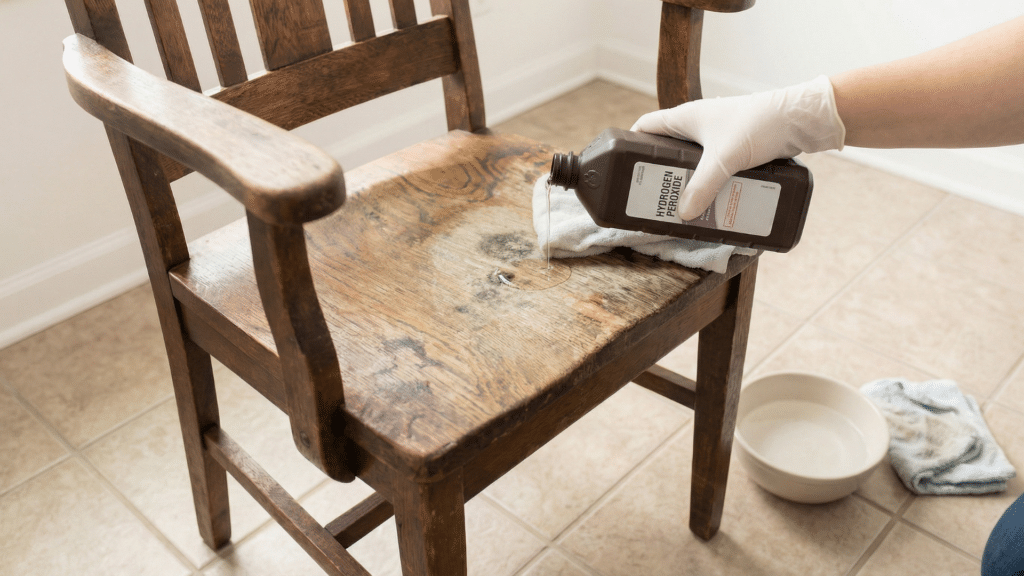
If vinegar doesn’t fully remove the mold, try rubbing alcohol or hydrogen peroxide. These are stronger options but still safe for wood when used carefully.
- For rubbing alcohol: mix equal parts alcohol and water.
- For hydrogen peroxide: use 3% strength straight from the bottle.
Apply either one with a soft cloth or spray bottle. Let it sit for 10 to 15 minutes to kill mold spores. Then wipe the surface dry.
Always test a small hidden spot first; these cleaners may lighten dark finishes. Avoid letting them sit too long on painted or stained wood.
Step 6: Finish with Sanding and Polishing
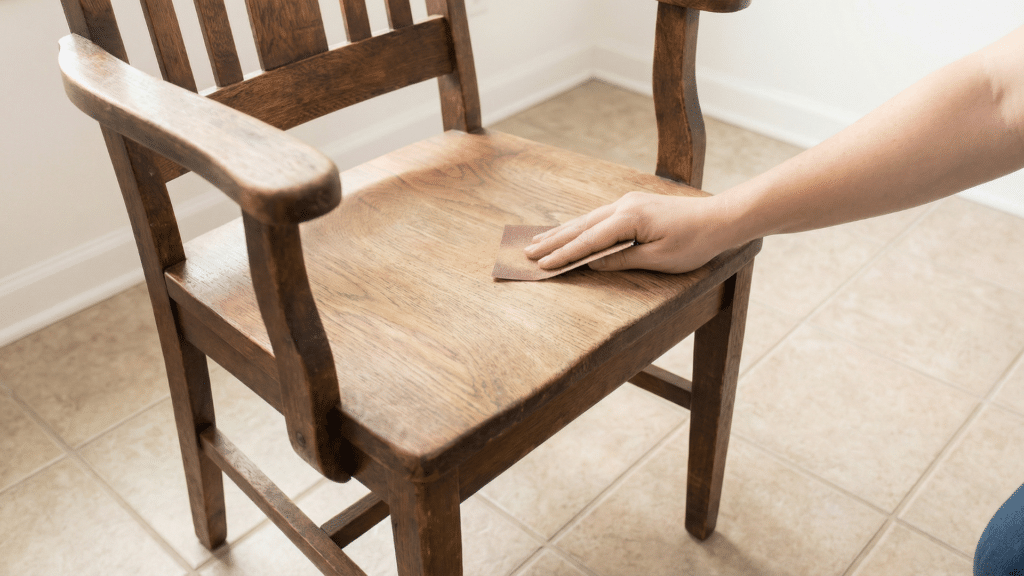
If the mold has left a stain or gone deeper into the wood, sanding may be needed. Use fine-grit sandpaper and gently rub the area until the dark spots are gone.
Be careful not to sand too much, especially on thin wood or antique furniture. Wipe away the dust with a dry cloth.
After cleaning or sanding, the wood may look dull or dry. Bring it back to life with a wood oil or polish.
Apply it with a clean cloth, let it soak in, and then buff gently. This step adds protection and keeps the furniture looking its best.
What Not to Use on Moldy Wood Furniture
Some cleaning tools and products can do more harm than good. They might damage the wood or worsen the mold problem. Here’s what to avoid:
| What to Avoid | Why It’s a Problem |
|---|---|
| Bleach | It can damage the wood’s finish and doesn’t soak deep enough to kill all mold spores. |
| Too Much Water | Water adds moisture, which can feed mold and cause swelling or warping in the wood. |
| Steel Wool / Hard Brushes | These can scratch or remove the wood’s finish, leaving it exposed and more at risk. |
| Hair Dryers or Heat Guns | They may dry the surface but trap mold deeper inside the wood. Heat may also damage finishes. |
| Strong Chemicals | Harsh cleaners may discolor the wood or break down sealants or varnish. |
Stick to safe, gentle methods like vinegar, baking soda, or hydrogen peroxide. These work well and protect your furniture at the same time.
How to Stop Mold from Coming Back
Cleaning mold is just the first step. To keep it from coming back, you need to control moisture and airflow. These simple habits can help prevent future mold on your wood furniture:
- Keep rooms dry with fans or dehumidifiers
- Open windows often to let fresh air move through
- Avoid placing wood furniture near damp spots like bathrooms or leaky windows
- Clean up spills right away before water soaks into the wood
- Use coasters and table mats to block water from drinks or food
- Check stored furniture every few weeks, especially in basements or garages
With a little care, you can stop mold before it starts.
Real Tips from People Who Faced Mold on Wood
Many people have shared their mold-cleaning stories online. These tips come from real users in forums, blogs, and home care groups. They show what worked for others and may help you decide what to try first.
“I used vinegar and baking soda. The smell was gone by the next day.”
This simple mix works well for light mold and bad odors.
“Moving the furniture outside in the sun helped a lot.”
Sunlight and fresh air help dry out the wood and stop mold from growing.
“Don’t wait. The longer mold sits, the worse it gets.”
Acting fast is one of the best ways to keep furniture from getting damaged.
“Use peroxide for deep mold, but test it first, it lightened my wood.”
Hydrogen peroxide is strong. Always test it on a hidden spot before use.
“I sealed the wood afterward with oil, and the mold never came back.”
Finishing with wood oil or polish helps protect the surface from new mold.
These simple tips are based on real experience, not just theory. While every case is different, they show that safe, low-cost steps can make a big difference.
To Conclude
Mold on wood furniture may look scary, but it can be cleaned with the right steps. Start by drying the wood, then use safe items like vinegar, baking soda, or soap.
Be gentle and avoid harsh cleaners, as they can harm the surface. After cleaning, dry the furniture well and add polish to protect it.
Keeping the air dry and cleaning up spills promptly will help prevent mold from returning. Regular checks also go a long way in keeping wood fresh and clean. Don’t wait for mold to spread; act early.
Have mold on your wood furniture? Use these tips today and give your furniture a fresh new life.