

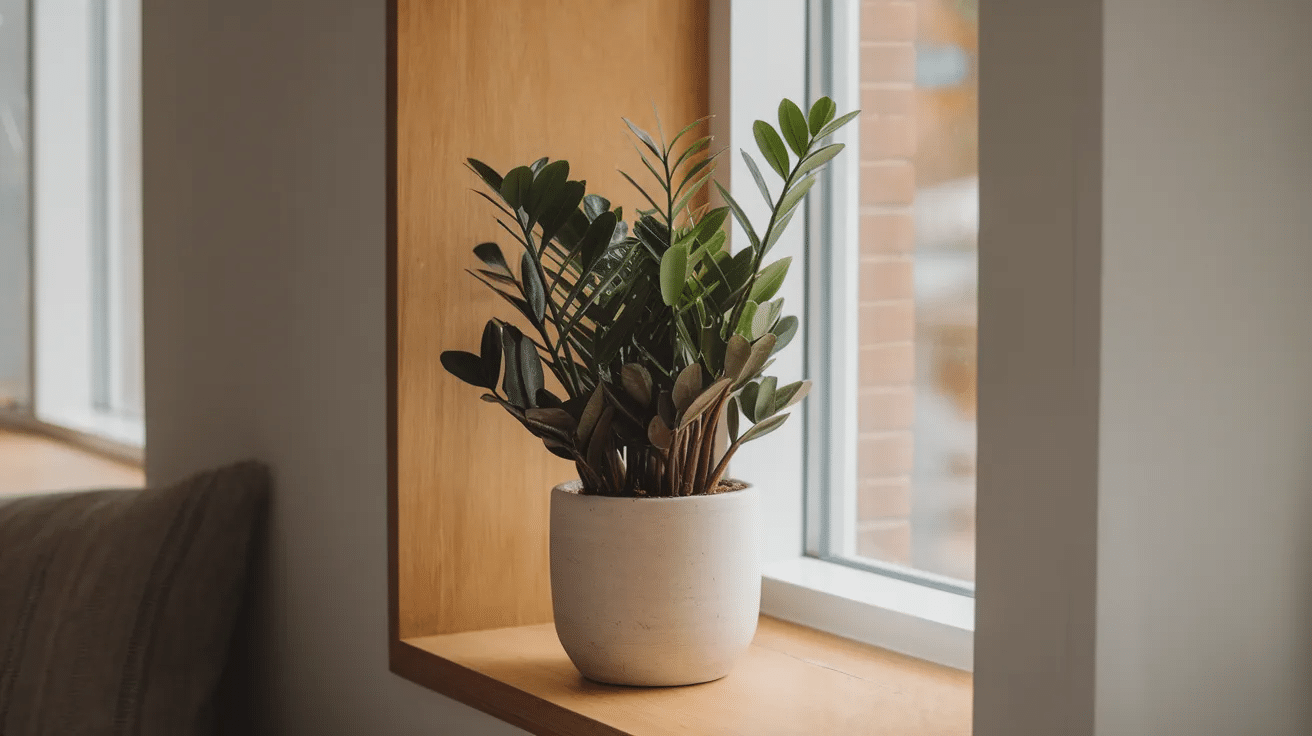
The ZZ plant is one of the easiest houseplants to grow. It looks good in any room and fits many home styles. People often choose it for its shiny green leaves and simple care.
This plant can tolerate low light and does not need much water. Many use it to bring a touch of nature inside. It can stay healthy even when forgotten for days.
The ZZ plant is a strong choice for busy people or those new to plants. It asks for little but gives a lot.
With the right spot and care, it can grow for years. There are many reasons to keep a ZZ plant indoors.
What is a ZZ Plant?
The ZZ plant (Zamioculcas zamiifolia) is a tropical plant from eastern Africa. It’s known for its thick, waxy leaves that grow on upright stems.
These leaves are dark green and shiny, giving the plant a polished look year-round.
It’s a slow grower, but it’s also very tough. The ZZ plant survives drought, low light, dry air, and even a bit of neglect.
These traits make it well-suited to indoor growing, even in rooms where other plants might struggle.
Why Keep a ZZ Plant Indoors?
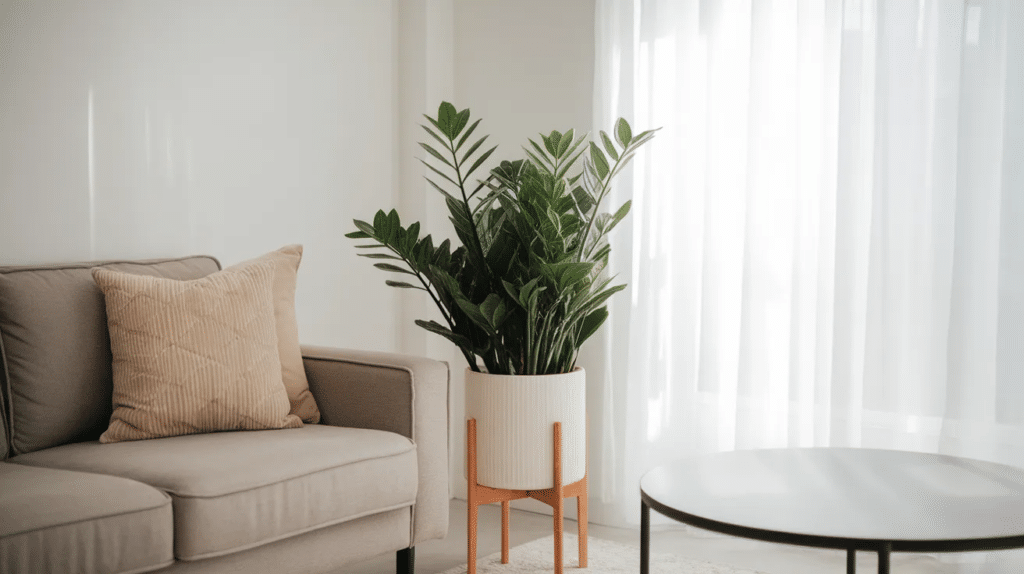
Keeping a ZZ plant indoors is a simple way to add fresh green color to a home without extra work. It is strong, easy to care for, and does well in many indoor spaces
1. It’s Low-Maintenance
One of the biggest benefits of the ZZ plant indoors is that it needs very little care. It does not need frequent watering. It does not need misting. It also does not need a sunny window to stay healthy.
This is the kind of plant that can still look good even when life gets busy. It can go weeks without water and still stay green and strong.
2. It Tolerates Low Light
Many houseplants need bright, natural light to survive. The ZZ plant does not. It grows well even in low-light areas, which makes it a great indoor plant.
It can do fine in places like:
- Bedrooms with small windows
- Bathrooms with no windows
- Offices with only fluorescent lights
- Dark corners of the living room
This is why the ZZ plant is a smart choice for apartments, small homes, and rooms that receive little sunlight.
3. It Helps Clean the Air
The ZZ plant may help clean indoor air by reducing common indoor toxins like benzene, toluene, and xylene. It will not replace a full air purifier, but it can still help keep the air cleaner.
When combined with good airflow, regular cleaning, and other plants, it can help make indoor spaces feel fresher over time.
4. It Adds Green without the Fuss
The ZZ plant has thick, dark green leaves that stay shiny and neat. It does not drop leaves often and usually keeps its shape with little effort.
It can be used to brighten up:
- Shelves
- Coffee tables
- Corners
- Window sills
It brings a clean, modern look to a room without needing constant attention.
Light Needs for ZZ Plants Indoors
The ZZ plant is among the most adaptable when it comes to light. Here’s how it handles different spaces:
| Light Level | How It Grows |
|---|---|
| Bright indirect | Best growth and fuller leaves |
| Low light | Slower growth, but still healthy |
| No sunlight (LEDs) | Survives well in artificial light |
Avoid placing it in direct sunlight, which can burn the leaves.
ZZ Plant Varieties You Can Grow Indoors
There are a few kinds of ZZ plants to choose from:
Regular ZZ Plant
- Dark green, upright leaves
- Most common and widely sold
Raven ZZ
- New leaves start green, turn deep purple-black
- Unique and striking
Zenzi ZZ
- Shorter, compact shape with curly leaves
- Great for desks and small shelves
Variegated ZZ
- Leaves have white or yellow streaks
- Rare and more expensive
All these varieties grow well indoors with the same care needs.
How to Pot and Repot a ZZ Plant
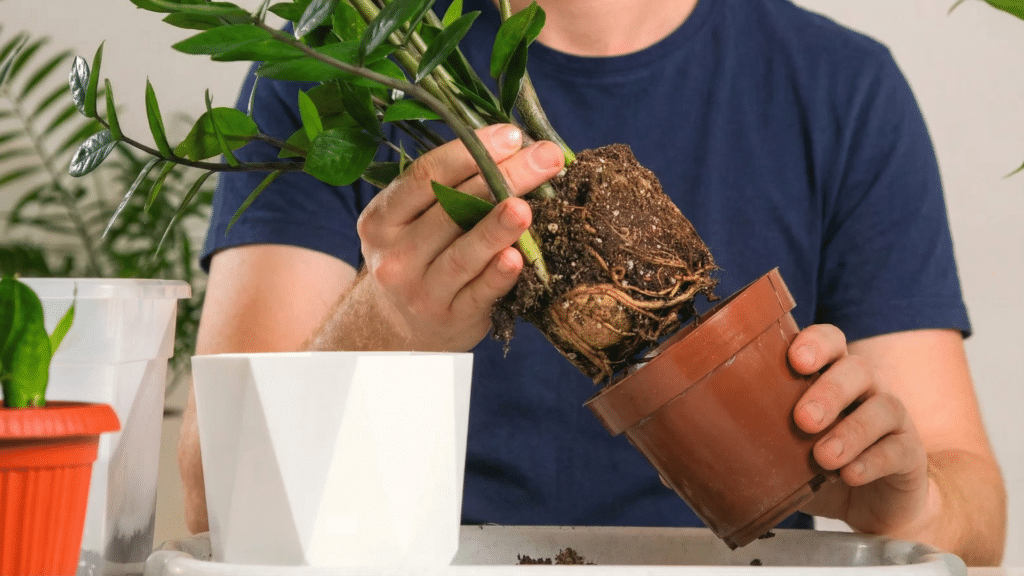
ZZ plants don’t need to be repotted often, but they will outgrow their container over time. A fresh pot and new soil can help your plant stay healthy and grow stronger.
Best Time to Repot: Spring is the best season to repot a ZZ plant. That’s when it starts growing again after winter. But since ZZ plants are tough, you can repot them any time of year if needed.
How to Repot Step-by-Step:
1. Choose a new pot that is one size bigger than the old one. It must have a hole at the bottom for drainage.
2. Use fast-draining soil, like cactus or succulent mix. This keeps roots from sitting in water.
3. Take the plant out gently by tipping the pot and supporting the base.
4. Loosen the roots if they are packed tightly. Cut off any soft, black, or mushy roots.
5. Place the plant in the new pot, fill in around it with fresh soil, and press lightly to hold it in place.
6. Water the plant lightly right after repotting, just enough to moisten the soil.
After repotting, place your ZZ plant in a bright spot with indirect light and avoid heavy watering for the first week. Let it settle in its new home.
Watering, Soil, and Climate Tips
Keeping a ZZ plant healthy indoors is simple if you follow a few key rules for water, soil, and room conditions.
How Often to Water
ZZ plants do not need much water. In fact, giving them too much can do more harm than good.
- Water every 2–3 weeks.
- Let the top 2 inches of soil dry before watering again.
- In winter, water even less, about once a month.
A good rule is to do the “dry test” by touching the soil. If it feels dry, then it’s time to water. If it still feels damp, wait a few more days.
Best Soil and Drainage
ZZ plants like soil that drains quickly. Use a light mix made for succulents or cacti. This helps water move through the soil so the roots don’t sit in it too long.
- Always use a pot with a hole at the bottom.
- Never let water collect in the pot.
- Wet soil leads to root rot, which can kill the plant.
Ideal Temperature and Humidity
ZZ plants do well in normal indoor temperatures. They like it best between 65°F and 75°F (18–24°C).
- They can handle dry air from heaters in the winter.
- They also do fine in air-conditioned rooms in summer.
- No misting or humidifier is needed.
This makes them perfect for homes, offices, and apartments year-round. They don’t need special care to adjust to the seasons, as long as you avoid placing them near cold drafts or hot vents.
Common Problems and How to Fix Them
Even though it’s low-maintenance, the ZZ plant can have a few issues:
| Problem | Cause | Fix |
|---|---|---|
| Yellow leaves | Overwatering | Let the soil dry before watering again |
| Brown tips | Underwatering or dry air | Water a bit more or move slightly |
| Drooping stems | Too much water or a dark spot | Reduce water, move to a brighter area |
| Root rot | Poor drainage | Repot in dry, fresh soil |
Most problems come from watering too often. Less is more with this plant.
ZZ Plant Cleaning and Care Tips
To keep your ZZ plant looking its best, it’s important to clean the leaves now and then. Clean leaves not only look nice, but they also help the plant “breathe” and make food through photosynthesis:
- Wipe the leaves gently with a soft, damp cloth every 2 weeks. This removes dust and keeps the leaves shiny and healthy.
- Check for dry or yellow leaves and remove them by gently trimming near the base. This keeps the plant tidy and helps it focus on new growth.
- Don’t use leaf-shine products or sprays. These can block the pores on the leaves and harm the plant over time.
To Conclude
The ZZ plant stands out for how easy it is to care for and how well it fits into everyday spaces. It asks for little but gives back steady growth, bold green leaves, and a clean look.
It stays strong through missed waterings, low light, and dry air. You don’t need much to keep it happy, just the right soil, an open spot, and an occasional wipe-down.
It’s quiet, dependable, and always fresh. If you want a plant that looks great with minimal effort, the ZZ plant is a smart pick.
Bring one home and see how simple indoor greenery can be.