

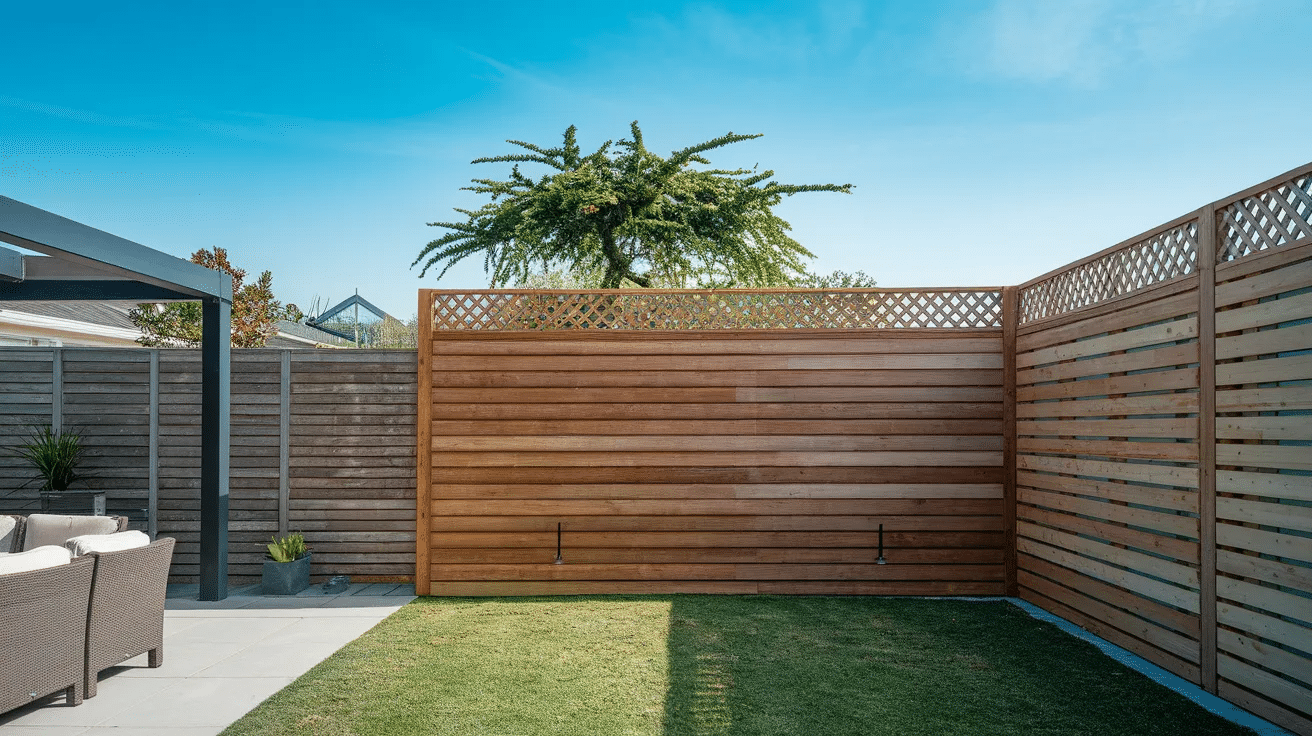
Choosing a wood fence starts with understanding the style. Each design changes how a space looks and works.
A solid fence can block views and reduce noise. A decorative pattern can frame a yard without making it feel closed off. Even small details, like board direction or top shape, make a big difference.
This guide covers wood fence styles commonly used in homes. Each one serves a clear purpose and offers a distinct look.
Before picking materials or calling a contractor, it helps to know what’s out there. The right style won’t just fit the space, it’ll improve how it feels.
What to Know About Wood Fence Styles Before You Choose?
Wood fence styles refer to the way boards are arranged, shaped, and spaced to create different looks and functions. Some styles are built for full privacy, while others focus on visual appeal or defining space without closing it off.
The direction of the boards (vertical or horizontal), the shape of the top edge, and the spacing between slats all play a role in how the fence performs and feels.
Before choosing a style, it’s helpful to think about a few key things:
- Purpose: Do you need privacy, decoration, security, or just a boundary?
- Climate: Some woods last longer in wet or hot areas than others.
- Maintenance: Solid styles may need more upkeep than open designs.
- Budget: More detailed styles often cost more to build.
- Rules: Check with your city or HOA for height or design limits.
Understanding these basics makes it easier to find a wood fence style that truly fits your space and needs.
Most Popular Wood Fence Styles with Names
This list breaks down common wood fence styles, making it easier to compare designs and pick the right one for your space.
1. Solid Board Fence
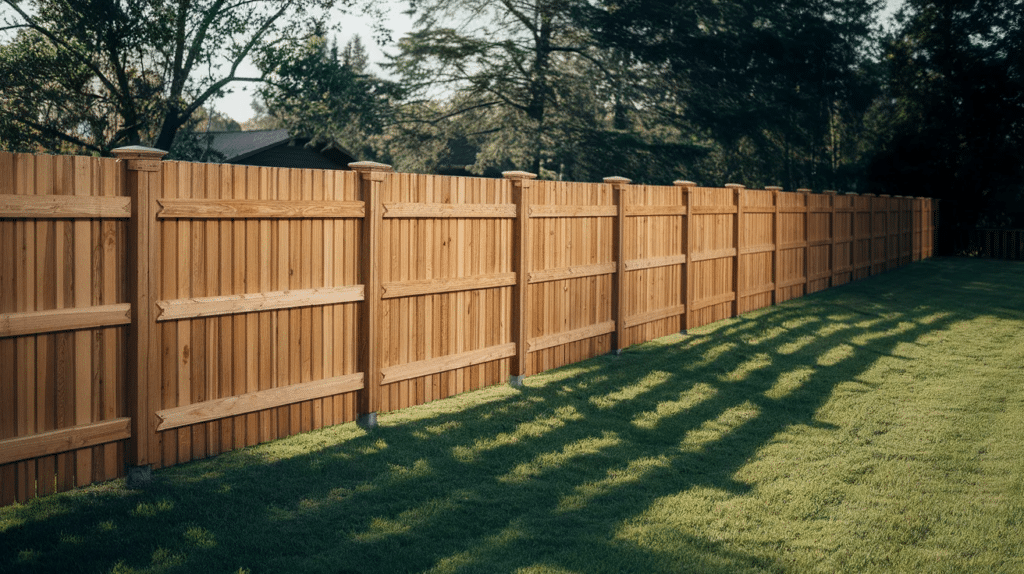
Tall vertical wooden boards are installed tightly together with no gaps. It typically has a flat or dog-ear top for a clean, simple finish.
Main Purpose / Function: Creates a full-privacy barrier and shields outdoor areas from view and sound.
Best Use Cases:
- Backyard privacy
- Blocking sightlines near busy streets
- Fencing off pools or patios
Pros and Cons:
| Pros | Cons |
|---|---|
| Full privacy | Blocks airflow completely |
| Helps reduce noise | Can feel bulky or too plain |
| Great for property security | Prone to warping if not sealed |
Design Tips: Use stained wood for a warm, natural finish, or paint it to match your home’s style. Consider adding trim or lattice on top for added interest.
Estimated Cost Range: $18–$35 per linear foot
2. Picket Fence
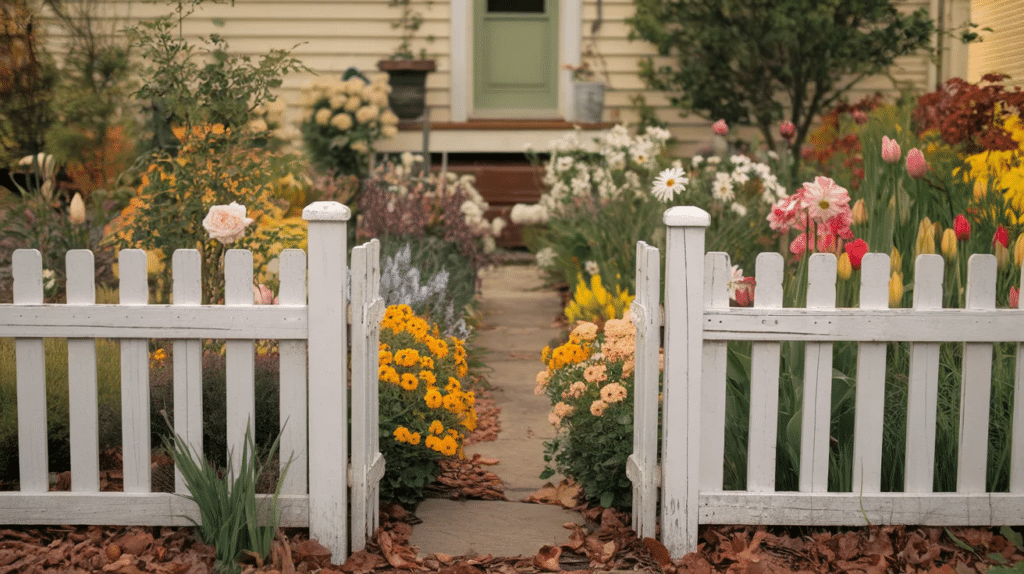
A low fence made of evenly spaced vertical boards with pointed or rounded tops. Often painted white, it’s known for its classic charm.
Main Purpose / Function: Defines property lines and adds curb appeal without blocking views.
Best Use Cases:
- Front yards
- Flower gardens
- Walkway borders
Pros and Cons:
| Pros | Cons |
|---|---|
| Decorative and welcoming | Offers little privacy |
| Budget-friendly | Doesn’t block wind or noise |
| Easy to repair or repaint | Not ideal for security |
Design Tips: For a modern twist, try a dark-colored stain or use wider pickets. Keep spacing uniform for a clean look.
Estimated Cost Range: $10–$25 per linear foot
3. Shadowbox Fence
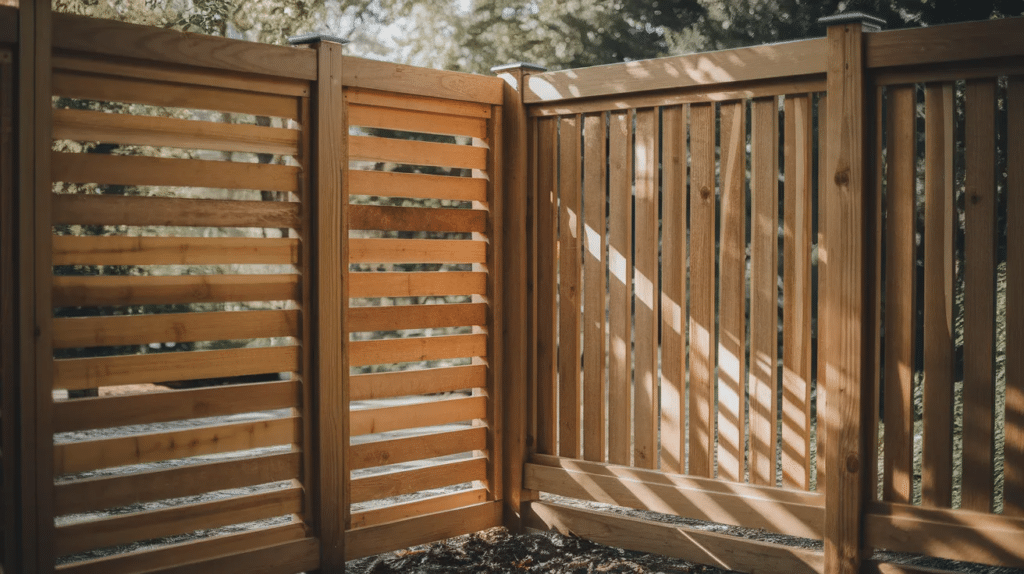
Alternating boards are attached to both sides of the fence rails in a staggered pattern. This creates a semi-private fence with airflow and depth.
Main Purpose / Function: Provides privacy while allowing some visibility and ventilation.
Best Use Cases:
- Property line between neighbors
- Wind-prone areas
- Families wanting privacy without a heavy look
Pros and Cons:
| Pros | Cons |
|---|---|
| Same finished look on both sides | Slight visibility through angles |
| Allows air to pass through | Uses more wood = higher cost |
| Durable and strong | More time to install |
Design Tips: Stain both sides evenly for a balanced look. Keep spacing between boards consistent for the best effect.
Estimated Cost Range: $20–$38 per linear foot
4. Board-on-Board Fence
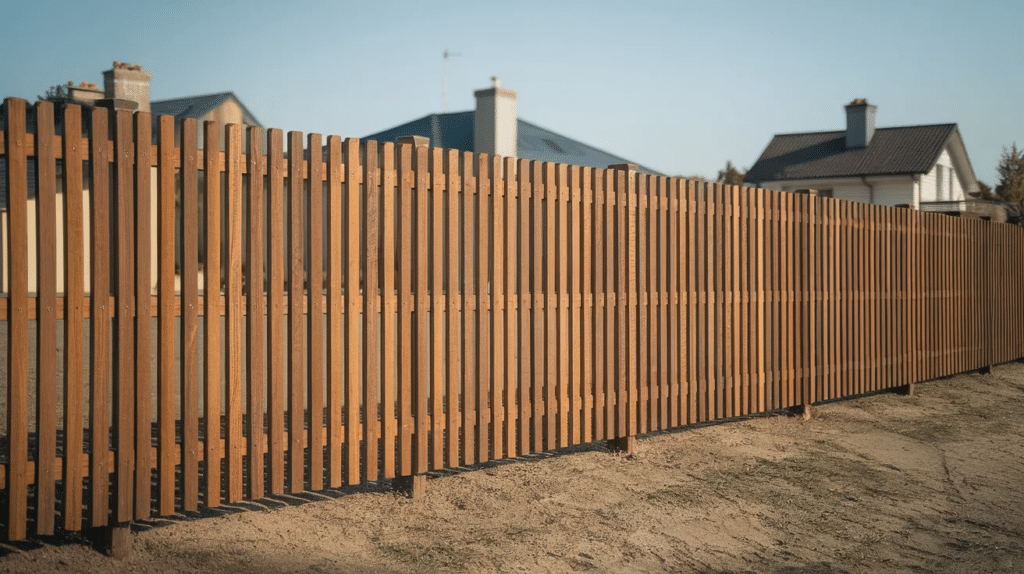
Vertical boards are installed with overlapping layers, one on top of the other, leaving no gaps even if the wood shrinks.
Main Purpose / Function: Provides full privacy and blocks visibility completely, even over time.
Best Use Cases:
- Backyard fencing
- High-security areas
- Homes in windy locations
Pros and Cons:
| Pros | Cons |
|---|---|
| 100% privacy, even with shrinkage | Uses more material = higher cost |
| Strong and durable | Takes longer to install |
| Good for windy areas | Can look heavy without detail |
Design Tips: Add a top cap for a polished finish. Use pressure-treated or rot-resistant wood to prevent damage.
Estimated Cost Range: $22–$40 per linear foot
5. Split Rail Fence
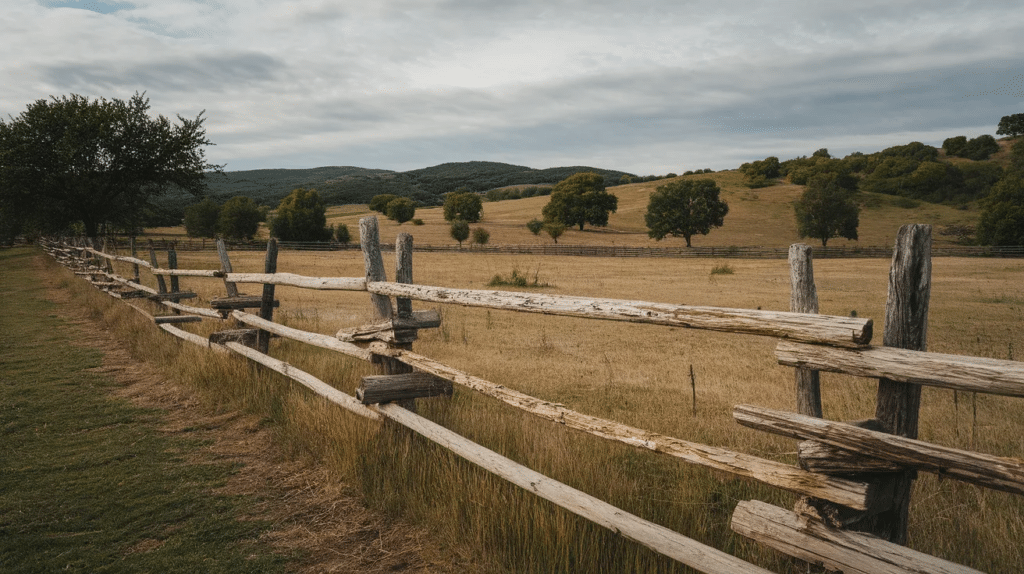
A rustic fence made with horizontal wooden rails held between vertical posts. It has large open gaps and a natural look.
Main Purpose / Function:
Defines property lines without blocking the view.
Best Use Cases:
- Farms or ranches
- Large properties
- Decorative country-style fencing
Pros and Cons:
| Pros | Cons |
|---|---|
| Easy to install | Not for privacy or security |
| Low-cost option | Gaps allow pets or children through |
| Rustic charm | Limited design variety |
Design Tips: Use rough-cut wood for a traditional look. Add wire mesh if you need to contain animals or pets.
Estimated Cost Range: $10–$20 per linear foot
6. Horizontal Slat Fence
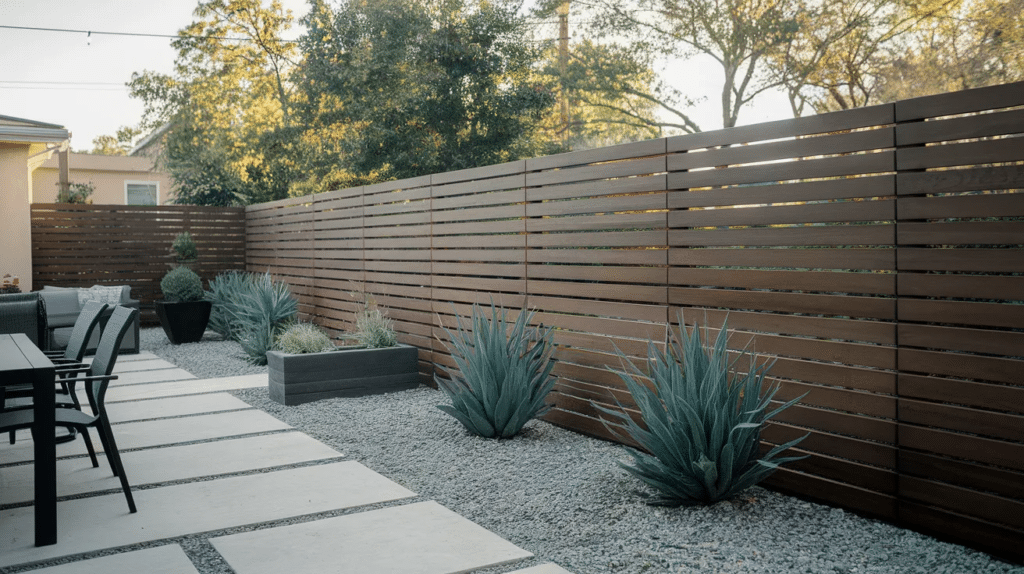
Wooden boards are installed horizontally between posts for a clean, modern look. Spacing between boards may vary.
Main Purpose / Function: Offers modern style with optional privacy depending on board spacing.
Best Use Cases:
- Contemporary homes
- Stylish backyards
- Urban patios
Pros and Cons:
| Pros | Cons |
|---|---|
| Sleek, modern design | May cost more than vertical fences |
| Customizable spacing | Needs precise installation |
| Can provide privacy or openness | Wood may warp if not sealed well |
Design Tips: Use cedar or redwood for better durability. Choose minimal spacing for added privacy.
Estimated Cost Range: $25–$50 per linear foot
7. Dog-Ear Fence
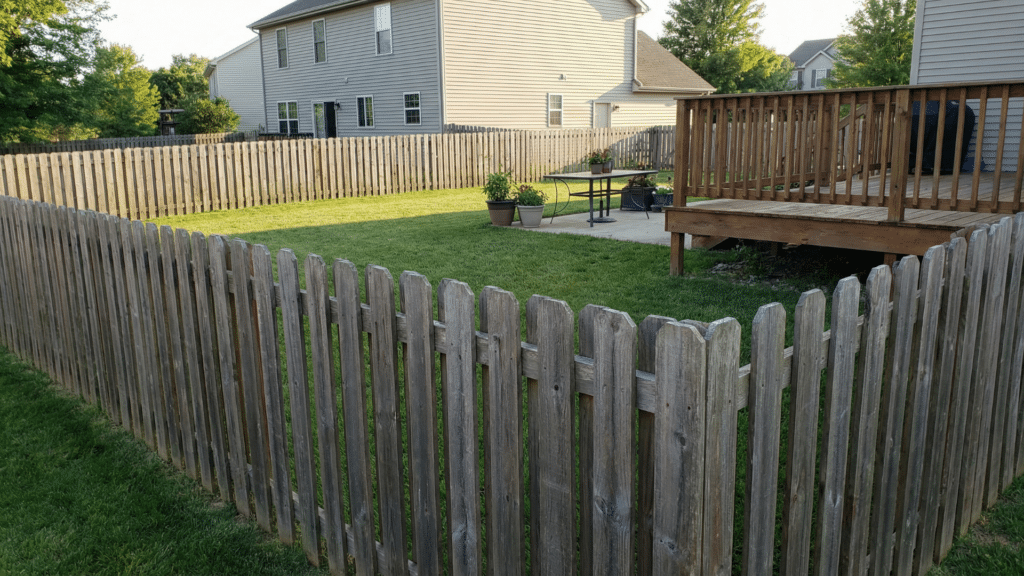
Vertical boards with top corners clipped off at a 45-degree angle, creating a “dog ear” shape.
Main Purpose / Function: Affordable privacy fence with a softer top detail.
Best Use Cases:
- Suburban backyards
- Basic privacy fencing
- Property line definition
Pros and Cons:
| Pros | Cons |
|---|---|
| Cost-effective | Plain design may lack character |
| Easy to build and repair | May warp over time if untreated |
| Offers full privacy | Limited decorative appeal |
Design Tips:
Use staggered board heights for a slightly varied top line. Paint or stain to enhance appearance.
Estimated Cost Range: $15–$28 per linear foot
8. Stockade Fence
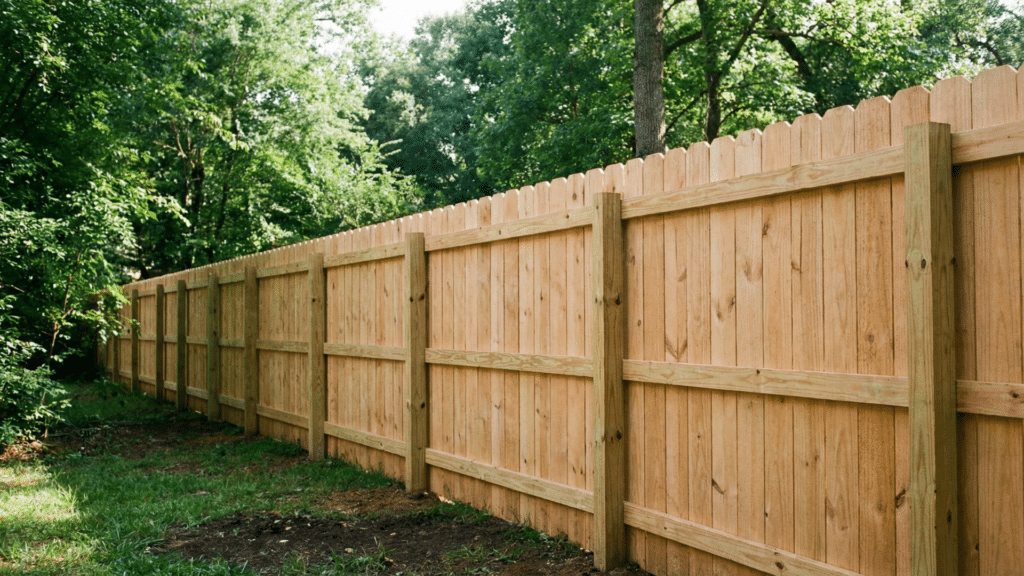
Tightly placed vertical boards with pointed tops. Looks solid and secure, similar to old fort-style fencing.
Main Purpose / Function: Offers full privacy and strong security.
Best Use Cases:
- Enclosed backyards
- Urban or suburban homes
- Noise reduction
Pros and Cons:
| Pros | Cons |
|---|---|
| High privacy and security | Lacks airflow |
| Great for sound control | Boards may warp if untreated |
| Simple and solid design | Looks one-sided (unfinished back) |
Design Tips: Use pre-assembled panels for quicker installation. Add a top trim to soften the harsh edges.
Estimated Cost Range: $18–$30 per linear foot
9. Louvered Fence
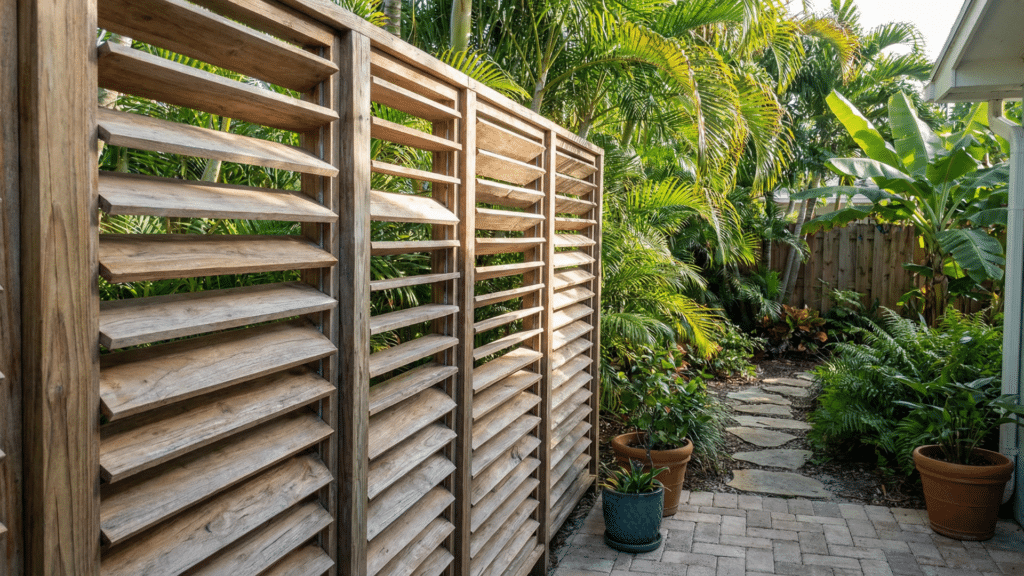
Angled horizontal boards are attached to allow airflow while blocking direct lines of sight.
Main Purpose / Function:
Provides privacy, good airflow, and a clean look.
Best Use Cases:
- Outdoor patios
- Pool areas
- Homes in warm climates
Pros and Cons:
| Pros | Cons |
|---|---|
| Allows air to pass through | Complex design = higher labor cost |
| Offers angled privacy | Less common, harder to DIY |
| Sleek and modern appearance | Can trap dirt between boards |
Design Tips: Use darker stains for a sleek, high-end look. Space louvers carefully to control the privacy level.
Estimated Cost Range: $25–$45 per linear foot
10. Post and Rail Fence
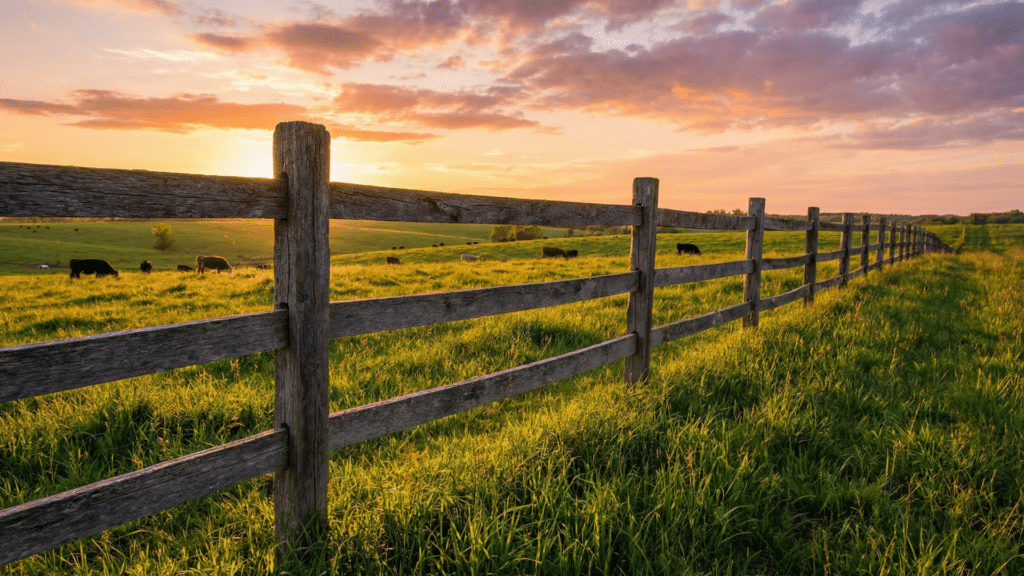
Horizontal rails are fixed between large wooden posts. Simple and open structure.
Main Purpose / Function: Marks large areas clearly without full enclosure.
Best Use Cases:
- Rural land
- Driveways
- Fields or large gardens
Pros and Cons:
| Pros | Cons |
|---|---|
| Easy to install | Doesn’t provide privacy |
| Great for large properties | Offers little security |
| Traditional look | May need wire mesh for animals |
Design Tips: Use thick, treated posts for long-term strength. Add mesh for functional use with pets or livestock.
Estimated Cost Range: $8–$15 per linear foot
11. Cap and Trim Fence
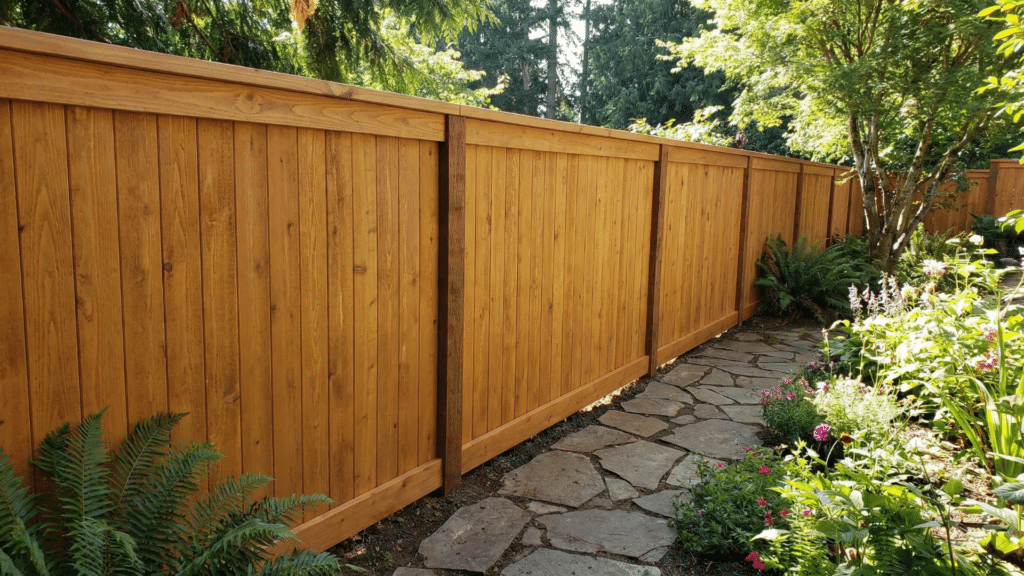
A standard fence enhanced with a horizontal top cap and bottom trim for a finished, framed appearance.
Main Purpose / Function: Adds style and strength to privacy fences.
Best Use Cases:
- Decorative privacy fences
- High-end residential homes
- Stylish suburban fencing
Pros and Cons:
| Pros | Cons |
|---|---|
| Elegant and finished look | Slightly higher material cost |
| Adds structure to the fence | Requires more carpentry skills |
| Works with many fence types | Not ideal for basic DIY builds |
Design Tips: Pair with board-on-board or solid board styles for best results. Use contrasting stain colors for the cap and body.
Estimated Cost Range: $22–$42 per linear foot
12. Vertical Slat Fence
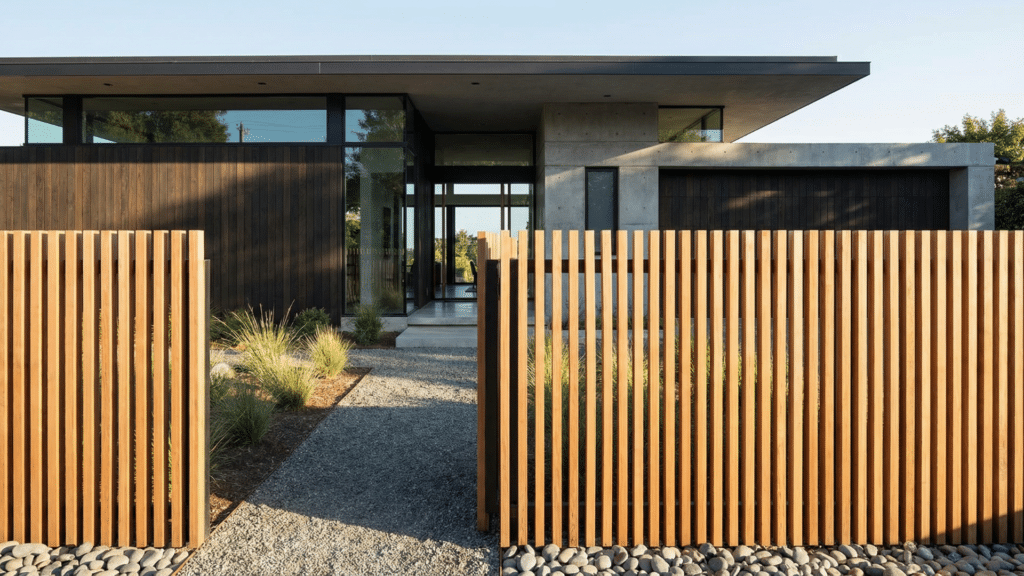
Narrow vertical boards installed with equal spacing for a balanced, modern look.
Main Purpose / Function: Creates visual boundaries with some level of openness.
Best Use Cases:
- Front yards
- Modern homes
- Entryways
Pros and Cons:
| Pros | Cons |
|---|---|
| Clean, simple design | Limited privacy |
| Great for smaller areas | May require frequent maintenance |
| Matches modern architecture | Gaps may vary with board shrinkage |
Design Tips: Choose uniform slats and tight spacing for a minimalist style. Use taller boards for semi-private versions.
Estimated Cost Range: $18–$30 per linear foot
13. Basket Weave Fence
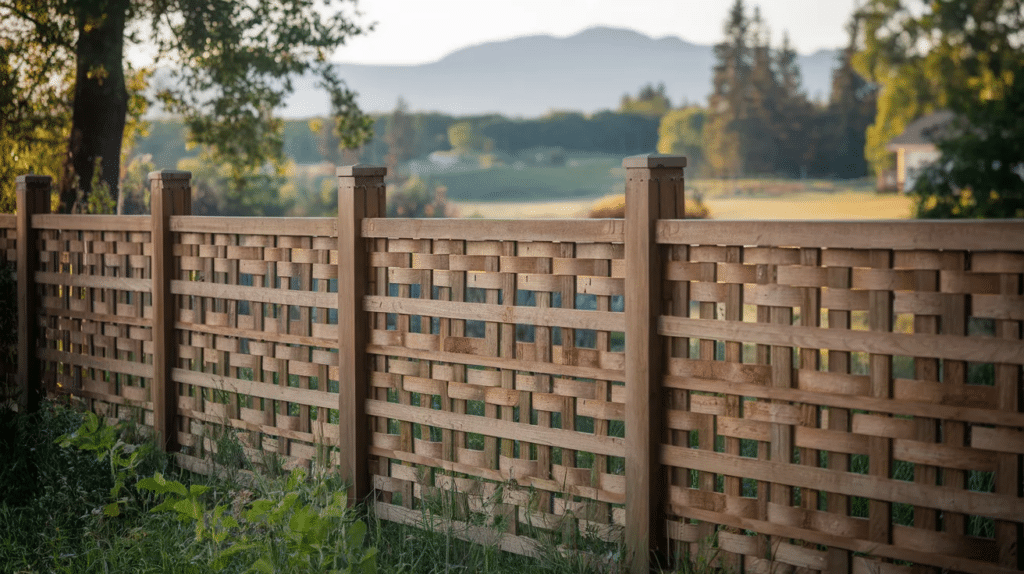
Horizontal boards are woven in and out of vertical posts to create a wave or woven appearance.
Main Purpose / Function: Decorative fencing with privacy and texture.
Best Use Cases:
- Decorative yards
- Artistic landscaping
- Statement fencing
Pros and Cons:
| Pros | Cons |
|---|---|
| Unique textured appearance | More time to build |
| Offers good privacy | May be hard to repair |
| Adds depth and shadow lines | Can sag if not installed properly |
Design Tips: Use uniform board lengths and secure ends well. Works best in flat terrain.
Estimated Cost Range: $20–$40 per linear foot
14. Estate Fence (Crossbuck)
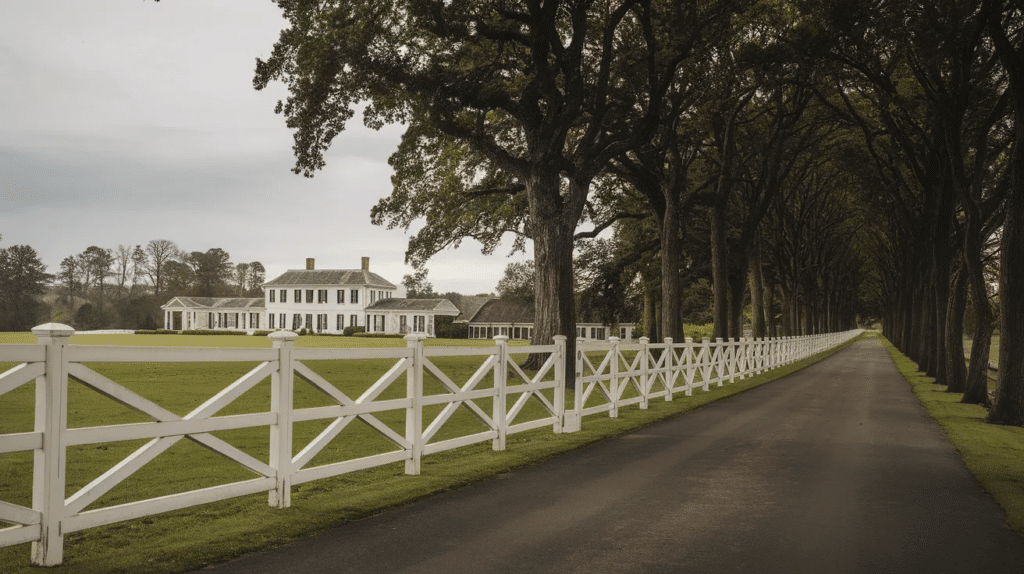
Horizontal rails crossed in an “X” pattern between posts, usually seen along long driveways or in front of large homes.
Main Purpose / Function: Adds a formal and elegant look to entrances or large spaces.
Best Use Cases:
- Estate entrances
- Large front yards
- Driveway fencing
Pros and Cons:
| Pros | Cons |
|---|---|
| Decorative and classy | Not for privacy |
| Frames long areas well | Higher labor cost for cross-work |
| Strong visual appeal | Limited flexibility in design |
Design Tips: Paint white or black for contrast. Use with columns for an estate-style look.
Estimated Cost Range: $18–$35 per linear foot
15. Pallet-Style Fence
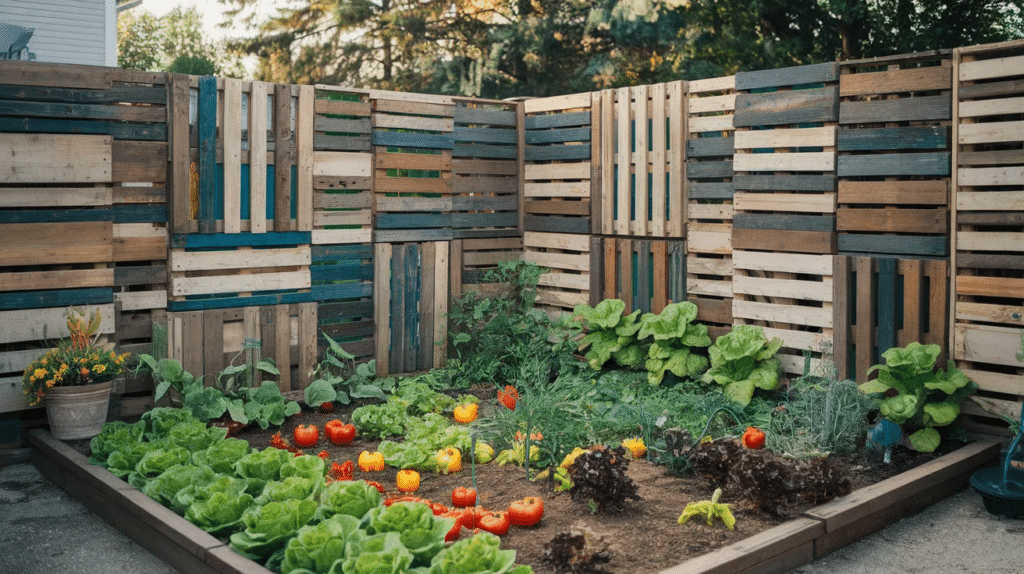
DIY-style fencing built from reused wooden pallets or cut boards, often rustic and irregular.
Main Purpose / Function: Provides a low-cost boundary with a creative touch.
Best Use Cases:
- DIY gardens
- Temporary fences
- Rustic or farmhouse settings
Pros and Cons:
| Pros | Cons |
|---|---|
| Very budget-friendly | Not long-lasting |
| Great for DIY projects | Boards may be uneven |
| Eco-friendly if reusing | May need frequent repairs |
Design Tips: Seal and sand reused wood for safety. Paint can unify the look if the boards are mismatched.
Estimated Cost Range: $5–$12 per linear foot
16. Gothic Point Fence
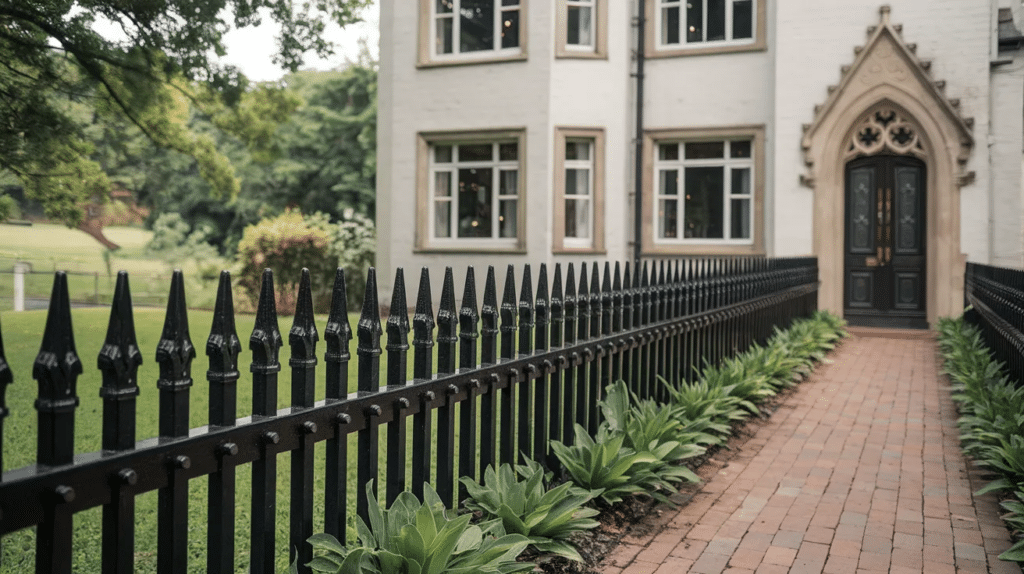
Pickets with sharp pointed tops shaped like Gothic arches or spears.
Main Purpose / Function: Adds classic detail to picket fences while keeping a sharp, formal look.
Best Use Cases:
- Historic homes
- Front gardens
- Decorative fences
Pros and Cons:
| Pros | Cons |
|---|---|
| Stylish and traditional | Pointed tops can be a hazard |
| Decorative but still open | Less privacy |
| Easy to maintain | May require trimming over time |
Design Tips: Pair with brick or stone bases for a more formal appearance.
Estimated Cost Range: $12–$26 per linear foot
17. Lattice-Top Fence
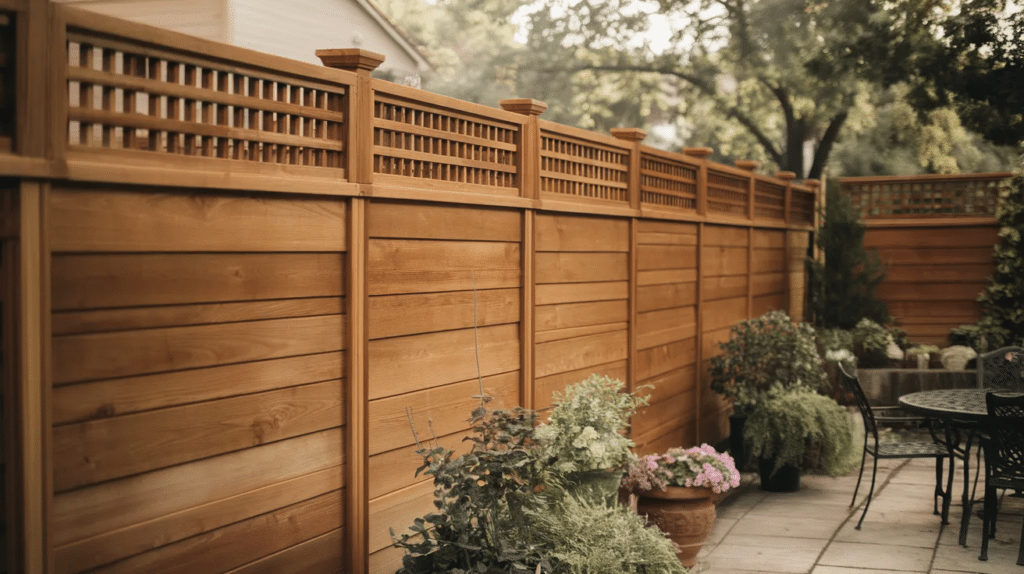
A solid fence style with a decorative lattice pattern added to the top section.
Main Purpose / Function: Blends privacy with light and air flow at the top.
Best Use Cases:
- Stylish backyard fencing
- Garden borders
- Transitional fences
Pros and Cons:
| Pros | Cons |
|---|---|
| Stylish and functional | Lattice may be fragile |
| Adds height without bulk | More detailed work during install |
| Good for climbing plants | Not full privacy at the top |
Design Tips: Use a diamond or a square lattice, depending on the design theme. Paint the lattice a contrasting color for added effect.
Estimated Cost Range: $20–$38 per linear foot
Fence Height Guide for Different Needs
Fence height plays a major role in both function and appearance. A few extra feet can mean the difference between a decorative border and full privacy.
- Privacy: For full privacy, fences are usually 6 to 8 feet tall. Solid board, board-on-board, and shadowbox styles work best at this height.
- Front Yard Decoration: Front yard fences are more about curb appeal than blocking views. A height of 3 to 4 feet is common for picket or low slat styles.
- Pet Containment: For small pets like dogs under 30 pounds, a 3.5 to 4-foot fence may be enough. Larger breeds may need a 6-foot fence or higher.
- Pool Fencing: Most pool safety codes require fences to be at least 4 feet tall and to have no large gaps. Check your local laws for specifics.
- Garden or Border Fences: Low fences around flower beds or walkways can be as short as 2 to 3 feet, just enough to define space without blocking the view.
- Wind and Noise Reduction: For cutting wind or traffic noise, solid fences 6 feet and up work best. Taller fences also offer stronger wind resistance if built well.
Wrapping Up
Wood fence styles offer more than just looks. The right design can solve real problems, like blocking noise, adding shade, or keeping pets safe.
It’s not just about appearance, but how the fence works for your everyday life. Think about how much air or light you want to pass through.
Decide how closed-off or open the space should feel. A fence should match the way the space is used, not just how it looks.
Ready to plan your fence? Use this guide to compare styles side by side, and pick the one that fits your space and your needs best.