

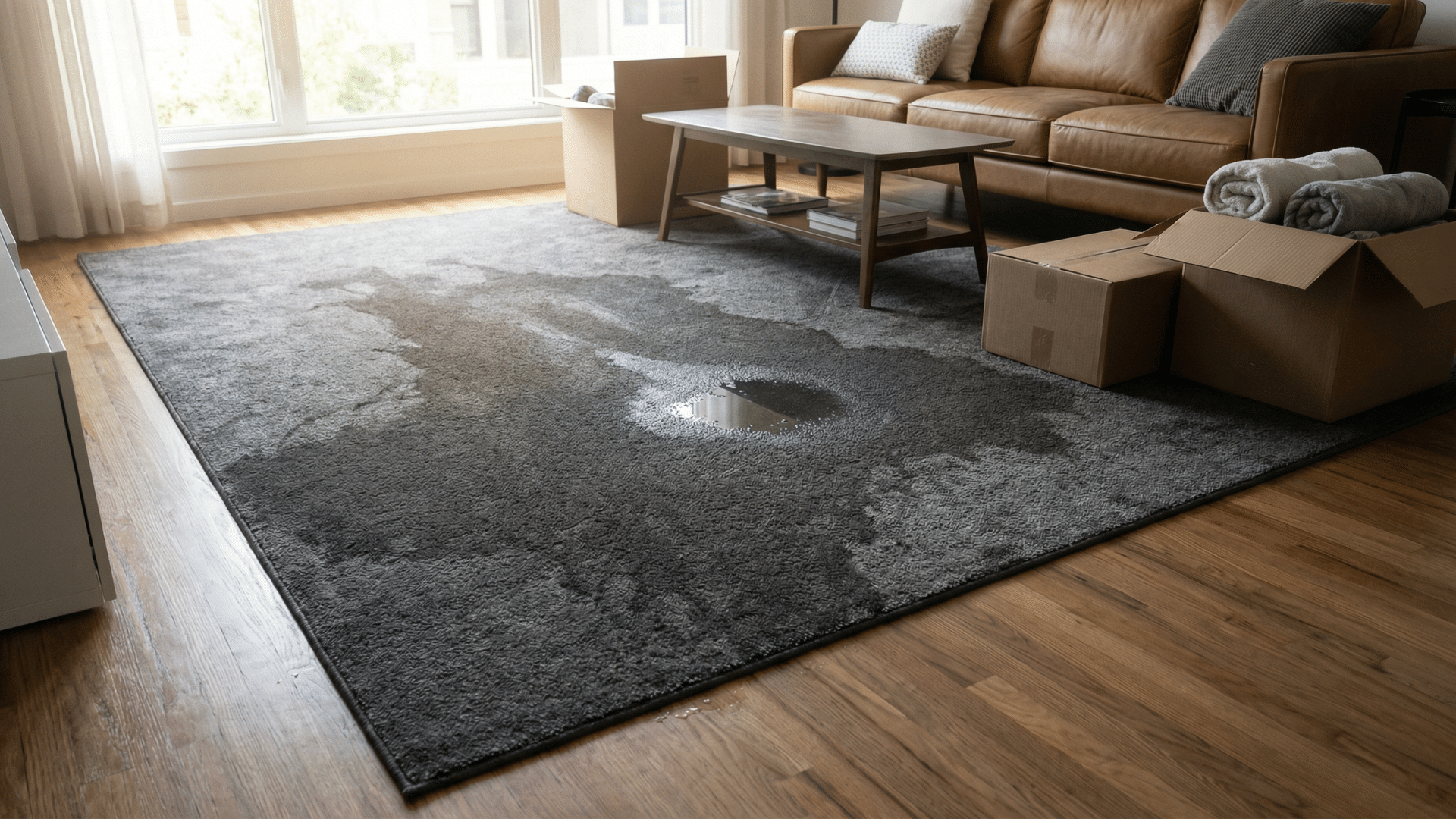
A soaked carpet can cause more than just inconvenience; it can lead to lingering odors, water damage, and mold growth if not addressed promptly.
Acting fast is key, but not everyone has access to industrial equipment or professional help.
Fortunately, there are practical, effective ways to dry a wet carpet using basic tools and smart techniques.
This blog brings together reliable methods and tips that have worked in real situations, helping prevent long-term issues without overcomplicating the process.
From minor spills to major leaks, drying out a carpet doesn’t have to be overwhelming. With the right steps, it’s possible to restore comfort and cleanliness to any space.
Why is it Important to Dry Wet Carpet Quickly?
When carpet remains wet for more than 24 to 48 hours, moisture can penetrate deeply into the fibers and padding.
This creates the perfect environment for mold and mildew to grow.
Mold isn’t just unpleasant; it can also cause health problems, especially for people with allergies or asthma.
In addition to mold, trapped moisture can warp floorboards, weaken subfloors, and lead to expensive repairs. The faster you act, the better chance you have to avoid permanent damage.
Common Causes of Wet Carpet
Before drying a carpet, it helps to understand where the water came from. This can affect how you clean and dry it.
- Leaking pipes or appliances (like washing machines or dishwashers)
- Overflowing sinks, bathtubs, or toilets
- Heavy rain or flooding through doors or windows
- Spilled drinks or broken containers
- High humidity or condensation near windows and walls
Each of these sources may need a slightly different approach, but the goal remains the same: dry wet carpet quickly and fully.
Steps to Dry Wet Carpet Quickly and Effectively
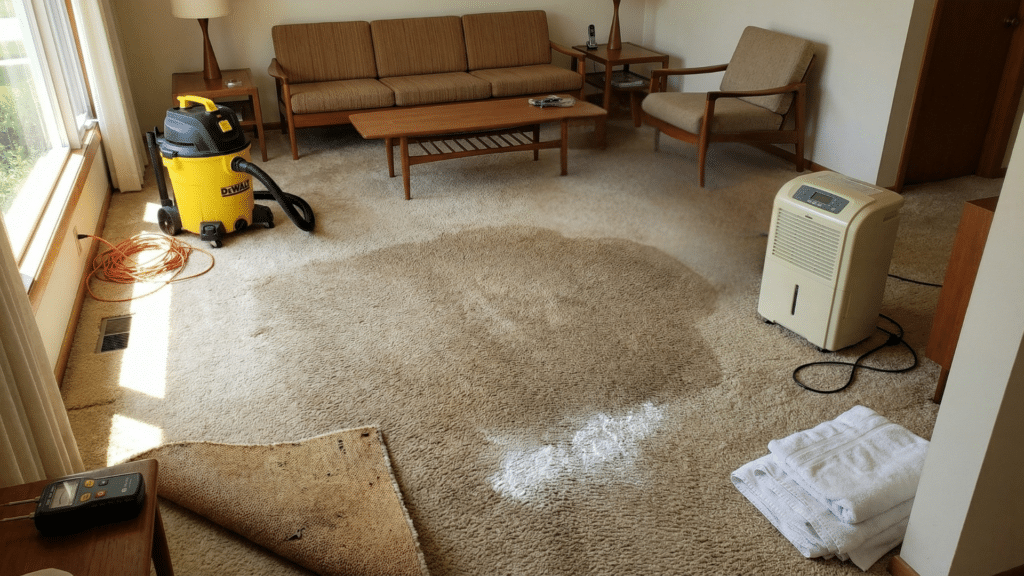
If the carpet is wet, acting fast makes all the difference. The steps below offer clear, easy-to-follow ways to dry wet carpet using simple tools and proven methods. These tips work for small spills, soaked spots, or larger water issues.
Step 1: Stop the Source of Water
Before drying anything, stop more water from getting into the carpet. This could mean shutting off a leaking pipe, placing towels at a door, or moving furniture away from a flooded area. If the source isn’t fixed, drying the carpet won’t help in the long run.
Step 2: Remove Standing Water Immediately
Use towels, mops, or a wet/dry vacuum (also called a shop vac) to soak up as much water as possible. The more water you remove upfront, the faster the drying process will be.
Tips:
- Use thick, absorbent towels and press them firmly into the carpet.
- Change towels often to avoid spreading moisture around.
- A wet vacuum is more effective than a regular vacuum and is safe for water.
Step 3: Pull Up the Carpet if Needed
In serious cases where the carpet is completely soaked, lifting it from the corners may help dry the padding and subfloor underneath. This step can prevent hidden mold and damage.
How to do it safely:
- Use gloves and gently pull up a corner.
- Check the padding and floor for signs of water damage.
- If the padding is soaked, it may need to be replaced.
- Let the carpet rest on blocks or plastic containers to allow air underneath.
This step is not always necessary for small spills or surface dampness, but is helpful in flood situations.
Step 4: Increase Air Circulation
Air movement is one of the most important ways to dry wet carpet. The faster the air flows across the surface, the quicker the moisture evaporates.
Try the following:
- Turn on ceiling fans or portable fans.
- Open windows and doors for cross ventilation.
- Use box fans aimed directly at the wet area.
- If possible, run your HVAC system’s fan setting to circulate indoor air.
You can also rent commercial air movers if dealing with a large area. These push a high volume of air and are often used in water restoration.
Step 5: Use Dehumidifiers to Remove Moisture
A dehumidifier pulls moisture from the air, which speeds up drying and helps prevent mold. Even if the carpet feels dry on the surface, humidity in the room can slow the process.
Best practices:
- Place the dehumidifier in the center of the room or near the wet carpet.
- Keep doors and windows closed while it runs.
- Empty the tank often or connect a hose for continuous drainage.
- Let it run for 24 to 48 hours after the carpet feels dry.
Step 6: Apply Baking Soda or Carpet Powder
Once you’ve removed most of the moisture, sprinkle baking soda over the area. It helps absorb remaining dampness and reduce odor.
How to use:
- Let the baking soda sit for several hours, ideally overnight.
- Vacuum it up thoroughly using a strong vacuum.
- Repeat if the carpet still smells musty.
You can also use commercial carpet-drying powders, but avoid products with strong perfumes, as they may mask deeper problems such as mold.
Step 7: Clean the Carpet to Prevent Mold and Odor
Even after drying, it’s a good idea to clean the carpet, especially if the water source was contaminated (e.g., floodwater or a bathroom leak).
Use the following options:
- Carpet shampooers with hot water and a mild cleaning solution
- DIY vinegar and water spray (1 part white vinegar to 2 parts water)
- Enzyme-based cleaners for pet urine or organic spills
After cleaning, run the fans and dehumidifiers again to ensure no moisture remains in the fibers or padding.
Step 8: Check for Mold and Damage
After the carpet dries, inspect it carefully.
Look for:
-
Discoloration or dark spots
- Musty smell that doesn’t go away
- Damp padding underneath
- Warping or soft spots in the floor
If you find any of these signs, it may be best to call a water damage expert. Mold can grow underneath carpets without being visible.
How Long Does it Take to Dry Wet Carpet?
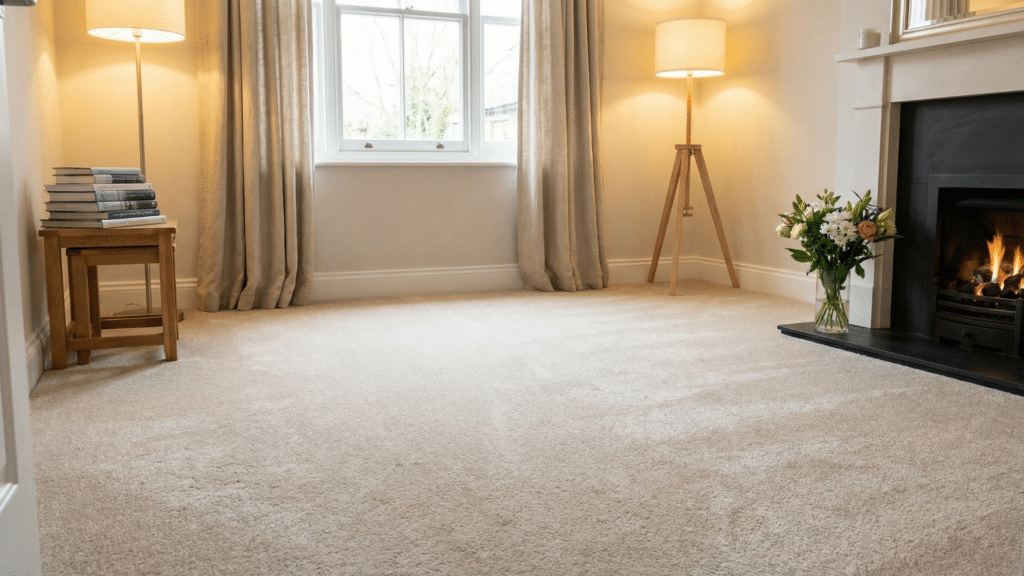
Drying time depends on how wet the carpet is, the tools used, and the room’s airflow and humidity. Here’s a general breakdown to help estimate how long it might take in different situations:
| Situation | Estimated Drying Time | Notes |
|---|---|---|
| Light surface spill | 6 to 12 hours | Dries faster with fans and good ventilation |
| Small area, medium dampness | 12 to 24 hours | May feel dry on top but still damp underneath |
| Deep water soak, no padding removed | 24 to 48 hours | Use fans, a dehumidifier, and lift carpet corners if possible |
| Water reached the padding or subfloor | 2 to 3 days or more | Padding takes longer to dry; may need replacement |
| High humidity or poor airflow | Up to 72 hours or longer | Slows evaporation; dehumidifier strongly recommended |
| After carpet cleaning | 4 to 10 hours | Varies based on machine and room airflow |
Tools That Help Dry Wet Carpet Faster
Some tools make the job easier and faster:
- Wet/Dry Vacuum: removes water from carpet surface and fibers.
- Box Fans or Air Movers: increase airflow.
- Dehumidifier: reduces indoor humidity.
- Moisture Meter: checks for dampness inside carpet layers.
- Carpet Shampooer: cleans after drying to remove smells and bacteria.
Most of these tools can be rented at local hardware stores or home centers.
Can You Dry Carpet without Removing It?
Yes, it is possible to dry carpet without removing it, especially if the moisture is only on the surface or limited to a small area.
Use towels to absorb as much water as possible, then run fans and a dehumidifier to speed up the drying process.
Open windows if the weather allows, or use a heater to improve airflow. Avoid walking on the damp area to prevent damage.
However, if water has soaked through to the padding or subfloor, lifting the carpet may be necessary to fully dry it and prevent mold. Always check for hidden moisture underneath.
To Conclude
A wet carpet can lead to serious issues if not dried properly, including unpleasant odors, mold growth, and damage to the flooring beneath.
Acting quickly is essential, but the process doesn’t have to be complicated.
With the right combination of tools, such as fans, dehumidifiers, and moisture-absorbing materials, it’s possible to remove water effectively and prevent long-term problems.
Thoroughly cleaning the area after drying also helps maintain a safe and healthy home environment. Want more easy home care tips? Check out the rest of our blog.