

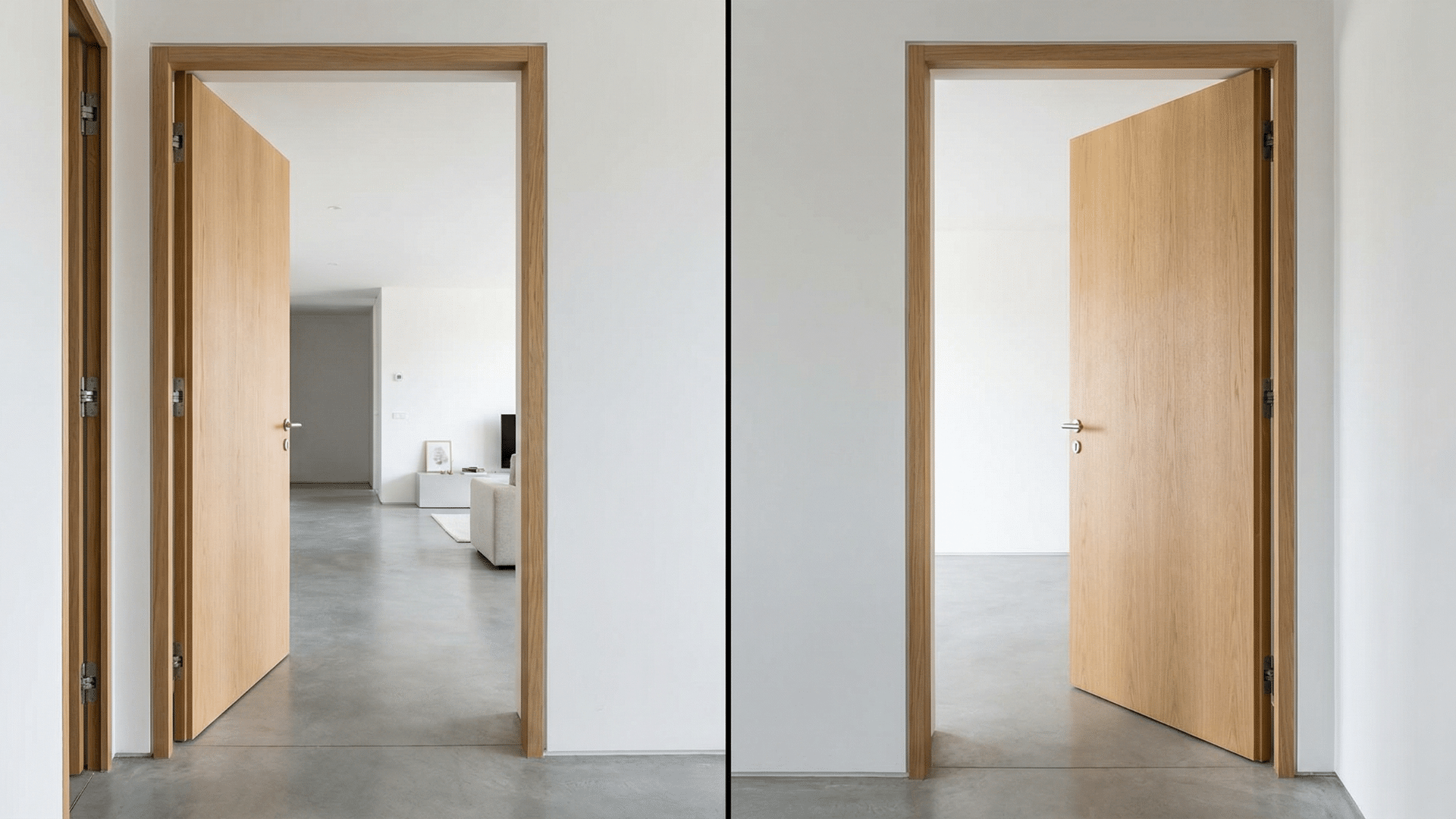
Left-hand or right-hand, knowing the difference between these two types of doors can save time, money, and frustration.
A door that swings the wrong way can block walkways, bump into furniture, or make a space harder to use. That’s why door handing matters, especially during installation or remodeling.
Choosing the wrong door swing can cause daily annoyances, like bumping into furniture or blocking light switches. It can even affect the flow of a room.
That’s why it’s important to get it right the first time. This guide explains what left-hand and right-hand doors are, how to tell them apart, and how to pick the best one for your space.
What Does Door Handing Mean?
Door handing refers to the direction a door opens and which side the hinges are on. It’s used to indicate whether a door swings to the left or to the right.
This is called the door swing direction, and it helps determine how a door operates in a room. You’ll often hear terms like:
- Left-Hand (LH)
- Right-Hand (RH)
- Left-Hand Reverse (LHR)
- Right-Hand Reverse (RHR)
These are especially important when ordering pre-hung doors, custom doors, or any commercial or fire-rated doors that require precise configuration.
Why is Door Swing Direction Important?
The way a door swings might seem like a small detail, but it can greatly affect how a room feels and functions. Picking the wrong swing direction can lead to daily frustration and poor use of space. Below are some key reasons why door swing direction matters:
- Space Planning: A door that swings the wrong way may block cabinets, hit furniture, or make it hard to reach light switches.
- Safety: Outward-swinging doors are often safer in public buildings, allowing quicker exits during emergencies.
- Accessibility: People using wheelchairs or walkers may need a specific swing direction for easier entry and exit.
- Building Codes: Some local codes or fire regulations require doors to swing in a certain way for safety and compliance.
Choosing the correct door swing direction helps avoid costly mistakes and supports a more comfortable, usable space.
The Four Common Types of Door Swings
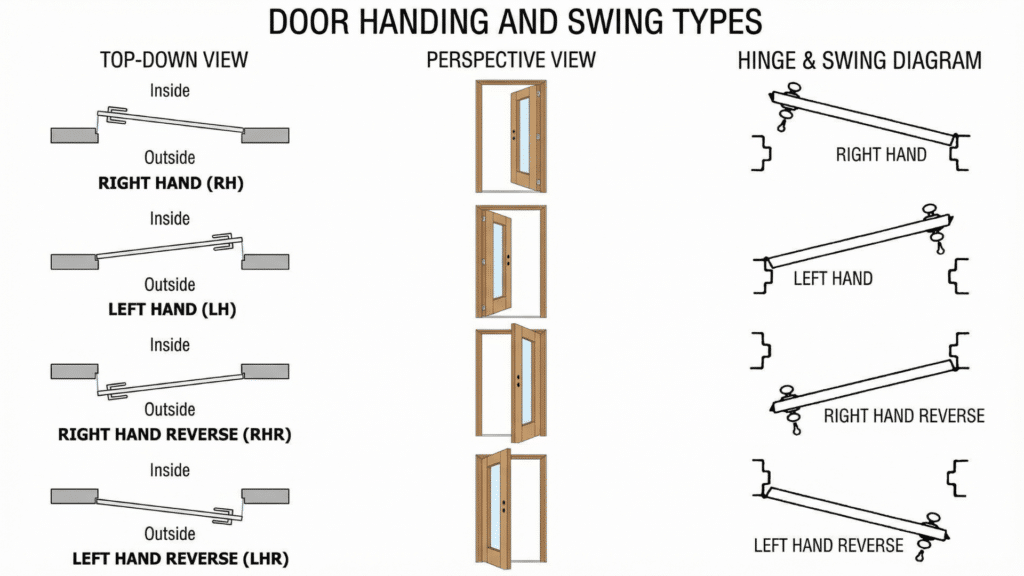
Door handing is based on two factors:
- Which side are the hinges on
- Whether the door swings inward (pull) or outward (push)
Below is a simple breakdown of each type:
| Door Type | Hinge Location | Opens (Push/Pull) | Swings Toward |
|---|---|---|---|
| Left-Hand (LH) | Left | Pull (Inward) | Left |
| Right-Hand (RH) | Right | Pull (Inward) | Right |
| Left-Hand Reverse (LHR) | Left | Push (Outward) | Right |
| Right-Hand Reverse (RHR) | Right | Push (Outward) | Left |
Quick Tips to Remember:
- Pull + Hinges on Left = Left-Hand (LH)
- Pull + Hinges on Right = Right-Hand (RH)
- Push + Hinges on Left = Left-Hand Reverse (LHR)
- Push + Hinges on Right = Right-Hand Reverse (RHR)
This format helps homeowners, DIYers, and contractors quickly identify the correct door handing for their project. Always double-check your door’s hinge side and swing direction before ordering or installing.
How to Tell if a Door is Left or Right-Handed
You don’t need any special tools or technical knowledge to figure out a door’s handing. There are two simple methods to determine whether a door is left-handed or right-handed.
Method 1: The Standing-Inside Method
To use this method, stand inside the room the door opens into. Place your back against the door frame on the side where the hinges are mounted. Now, observe the direction the door swings. If it swings open to your left, then it’s a Left-Hand (LH) door.
If it swings open to your right, it’s a Right-Hand (RH) door. This approach works best for interior doors that swing inward, such as those in bedrooms or bathrooms.
Method 2: The Push-Pull Rule
With this method, begin by facing the door from the side it opens to. Pay attention to how the door moves. If you pull the door toward you, it swings inward. If you push the door away from you, it swings outward, also known as a reverse swing.
Once you know the swing direction, check the location of the hinges. If the hinges are on the left and the door pulls inward, it’s a Left-Hand (LH) door.
If the hinges are on the right and the door pulls inward, it’s a Right-Hand (RH) door. If the hinges are on the left and the door pushes outward, it’s a Left-Hand Reverse (LHR).
If the hinges are on the right and the door pushes outward, it’s a Right-Hand Reverse (RHR).
Interior Doors vs Exterior Doors
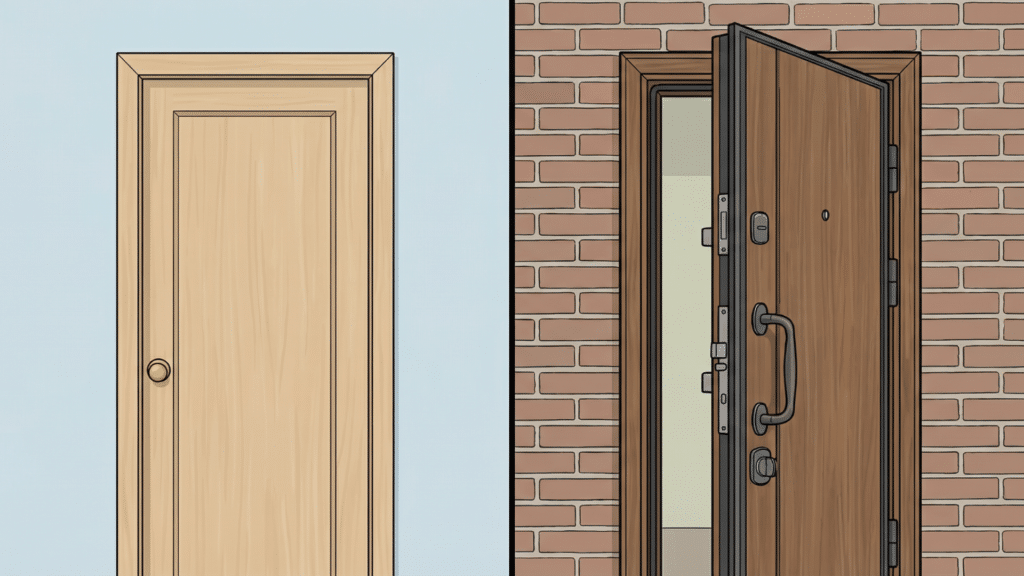
While the handing method is similar for both interior and exterior doors, interior and exterior doors often serve different purposes and follow different design standards. Here’s a quick comparison:
| Feature | Interior Doors | Exterior Doors |
|---|---|---|
| Typical Swing Direction | Usually swing inward into the room | Often swing inward, but some may swing outward for security or weather protection |
| Primary Purpose | Provide privacy and separate rooms | Provide security, insulation, and weather resistance |
| Door Material | Often hollow core, lightweight wood, or MDF | Typically solid core, metal, fiberglass, or solid wood |
| Security Features | Minimal, often just a latch or simple handle | Reinforced with deadbolts, strong frames, and weatherstripping |
| Weather Resistance | Not designed to withstand outdoor conditions | Built to handle rain, wind, sun, and temperature changes |
| Installation Focus | Focus on interior layout and room flow | Focus on safety, energy efficiency, and durability |
| Cost | Generally less expensive | More costly due to materials and security needs |
When to Use a Left-Hand or Right-Hand Door
The right door handing depends largely on how the room is designed and how people use the space. A door should support movement, not interfere with it. Below are key factors to consider when choosing a left-hand or right-hand door.
1. Wall and Furniture Placement
Start by looking at the layout of the room. A door should open against a clear wall whenever possible. If it swings into a space where furniture, cabinets, or shelving are placed, it may not open fully.
This can make the room feel cramped and limit usable space. Choosing the correct door swing direction helps keep the layout functional and prevents the door from becoming an obstacle.
2. Light Switch Position
Light switch placement is often overlooked but plays an important role. In most homes, light switches are installed near the latch side of the door.
Ideally, the door should open away from the switch so it remains easy to reach as soon as you enter the room. If the swing blocks access to the switch, it can become frustrating over time.
3. Traffic Flow
Consider how people move through the space each day. In high-traffic areas such as hallways, kitchens, or offices, the door should open without interrupting movement.
A poorly chosen door swing direction can force people to step back or squeeze around the door. The goal is to create smooth and natural movement throughout the room.
4. Security and Exterior Use
For exterior doors, security and weather protection are major concerns. Some outward-swinging doors offer better resistance against forced entry because the door frame supports the door more securely.
Outward swings can also improve water resistance in certain climates. However, local building codes may regulate how exterior doors are installed, so it’s important to check requirements before deciding.
How Builders and Suppliers Use Handing Terms
When working with builders, door suppliers, or hardware stores, it’s important to speak their language. Manufacturers often use specific terms:
- Pre-hung doors will be labeled with hanging information.
- Commercial doors often list handings on architectural drawings.
- Fire-rated doors may require a certain handing type for compliance.
Providing the wrong handling can delay your project or lead to expensive mistakes. Always double-check before placing an order.
Handing for Sliding, Pocket, Barn, and Double Doors
Not all doors use traditional handing. Styles like sliding, pocket, and barn doors don’t swing on hinges, so left-hand or right-hand labels usually don’t apply.
- Sliding doors move left or right along a track and don’t require swing direction. You only need to choose which way the door should slide based on the wall space.
- Pocket doors slide into a wall cavity. While they technically have a “hand” based on the pocket’s location, they’re rarely labeled as LH or RH.
- Barn doors also slide along a wall and aren’t classified by handing, but their layout still affects access and design.
- Double doors use handing for the active leaf, the door that opens first. If the right panel opens first and has hinges on the right, it’s a right-hand active door. If the left panel opens first with hinges on the left, it’s a left-hand active door. Always refer to product specs when ordering
Door Handing and ADA Compliance
ADA guidelines help make doors easier and safer for people with disabilities. Choosing the right door handing helps meet those standards.
| ADA Requirement | How It Relates to Door Handing |
|---|---|
| Clear Floor Space | The door shouldn’t swing into the required wheelchair space. |
| Swing Direction | Must allow easy, safe entry without blocking paths. |
| Handle Type | Lever handles work better than round knobs. |
| Opening Force | Doors should open with minimal effort, especially inward swings. |
| Approach Side | Handing should match the natural path of movement. |
Tips for Choosing the Right Door
Choosing the correct door handing isn’t just about left or right; it’s about what works best for your space. Keep these tips in mind before making a decision
- Walk through the space: Act out how the door would open to see if it feels natural and unobstructed.
- Measure clearances: Ensure there’s enough space for the door to open fully without hitting furniture or walls.
- Note light switch placement: Choose a swing direction that makes it easy to reach the switch as you enter.
- Check codes if remodeling: Some local building codes or permits require specific door swings.
- Talk to your installer or supplier: They can help confirm the correct handling before you place your order.
Final Thoughts
Choosing between a left-hand and right-hand door doesn’t have to be confusing. Once you understand how swing direction and hinge placement work together, making the right choice becomes easy.
The door handing you select can impact comfort, safety, and how well a space functions day to day. Always take time to consider layout, traffic flow, and convenience before deciding.
If you’re still unsure, speak with a supplier or installer before buying. Getting the details right up front can save time and trouble later.
For more practical home tips like this, be sure to check out our other guides and resources.
Frequently Asked Questions
Is Door Handing the Same Worldwide?
No. Some countries reverse the meaning of left-hand and right-hand depending on local standards. Always confirm against drawings or manufacturer specifications.
Do Closet Doors Follow the Same Rules?
Yes, if they are hinged. Bi-fold and sliding closet doors don’t require traditional handing terms.
How Do I Label Doors on a Blueprint?
Architects usually label doors with a “door schedule” that shows handing, dimensions, materials, and hardware. If you’re creating your own plan, use top-down diagrams and clearly mark the hinge and swing direction.