

Furniture shopping sounds simple. But walk into any store, and things get confusing fast.
There are sofas, couches, loveseats, and sectionals. Most people have seen them. Many have sat on one. But when it comes to actually buying one, the questions start piling up.
What makes a sectional different? Is it the right fit for a small living room? Can it work in an open space? And why do so many people swear by them?
These are fair questions. And the answers might change the way a buyer thinks about their next furniture purchase. Read on to get a clear picture of what a sectional sofa really is.
About Sectional Sofa
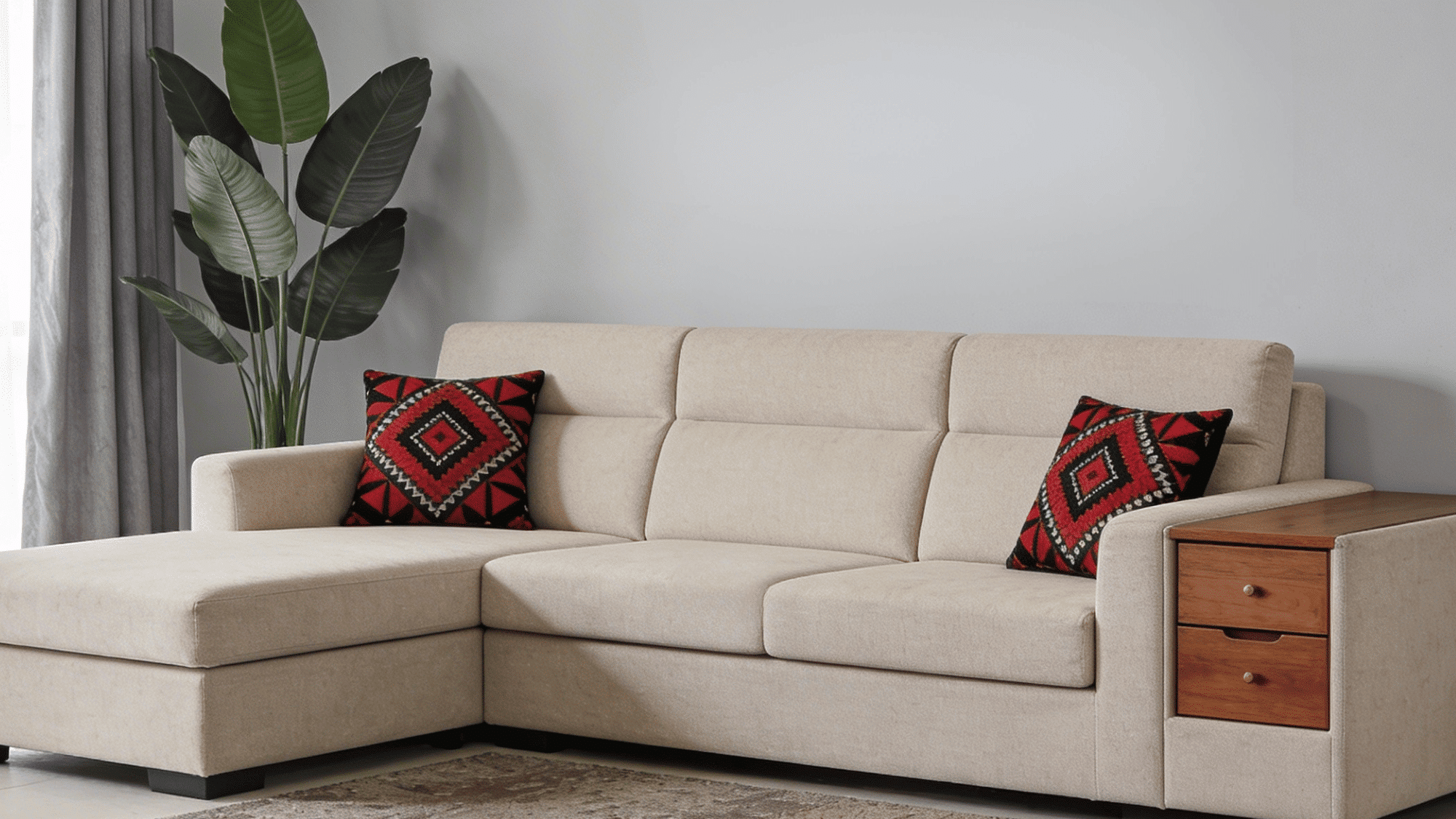
A sectional sofa is a large seating piece made up of multiple connected sections. Each section joins together to form one big, unified sofa.
Most sectionals come in an L-shape or U-shape, making them great for filling up a living room.
Unlike a regular sofa, a sectional gives more seating space. It works well for families, frequent hosts, or anyone who loves stretching out after a long day.
The sections can often be rearranged, giving homeowners some flexibility with their layout.
What are the Benefits of a Sectional Sofa?
A sectional sofa does more than just fill a room. Following is a look at what makes it a smart pick:
- More seating: A sectional seats more people than a standard sofa.
- Flexible layout: The sections can be rearranged to suit different room setups.
- Great for lounging: The wide surface makes it perfect for relaxing or napping.
- Fills large rooms well: It adds a sense of balance to big, open living spaces.
- Works for many styles: Sectionals come in a variety of designs, colors, and fabrics.
What are the Different Pieces of a Sectional Sofa?
A sectional sofa is built from several individual pieces. Each one plays a specific role in the overall setup.
1. The Corner Piece
The corner piece sits where two sections meet. It gives the section its L-shape or U-shape form. Without it, the sofa loses its structure. It also adds extra seating and ties the whole layout together neatly.
2. The Armless Chair
An armless chair is a straight section with no armrests. It slots between other pieces to add more seating. It keeps the sofa looking clean and connected. Most sectionals include at least one or two of these.
3. The Chaise
The chaise is the long, extended section of a sectional. It supports the legs and is perfect for stretching out. Most people place it at one end of the sofa. It adds a relaxed, lounge-like feel to any living room.
4. The Wedge
A wedge is a wider corner piece used in curved sectionals. It helps the sofa bend smoothly instead of sitting at a sharp angle. Not every sectional has one, but it works great in round or curved layouts.
5. The Ottoman
An ottoman is a backless, armless piece that works as a footrest or extra seat. It often comes as part of a sectional set. It adds more function to the sofa and gives the living room a more complete, put-together look.
Common Sectional Sofa Configurations Explained
Sectional sofas come in several shapes and setups. Each configuration suits a different room size and lifestyle need.
1. L-Shaped Sectional Sofa
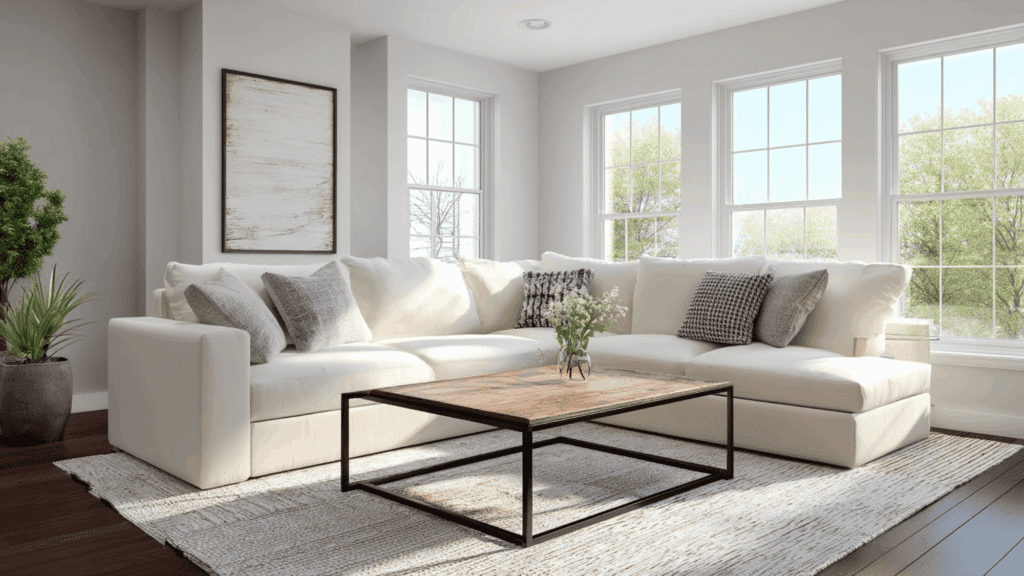
The L-shaped sectional is the most popular configuration out there. It fits neatly into a corner and works well in both small and large living rooms.
One side runs straight while the other extends at a right angle. It gives plenty of seating without taking up too much floor space, making it a practical choice for most homes.
2. U-Shaped Sectional Sofa
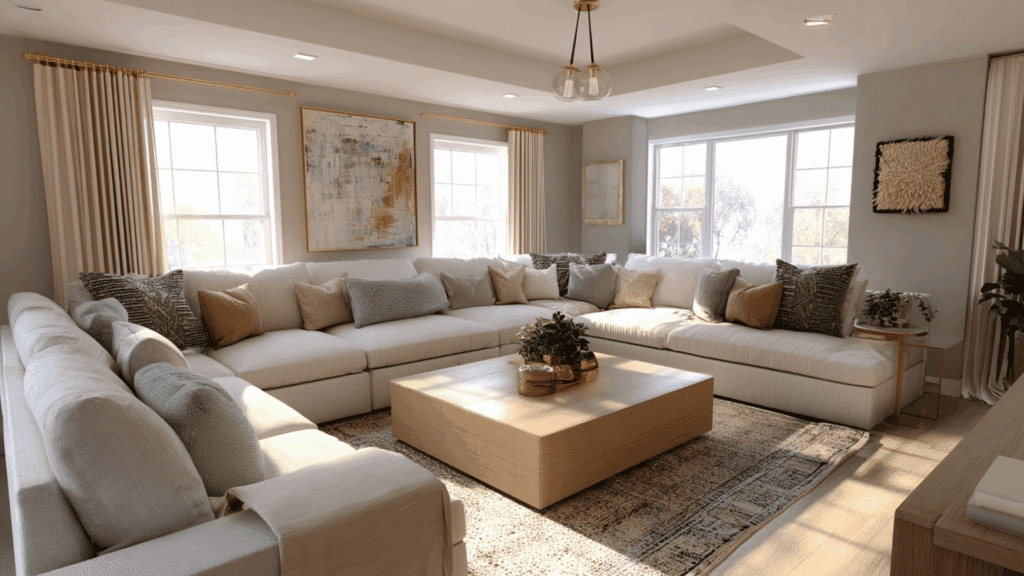
The U-shaped sectional wraps around three sides, creating a cozy, enclosed seating area.
It works best in larger living rooms where there is enough floor space to support its size. Families and frequent hosts tend to love this setup.
It seats many people at once and makes the living room feel warm and welcoming for gatherings.
3. Curved Sectional Sofa
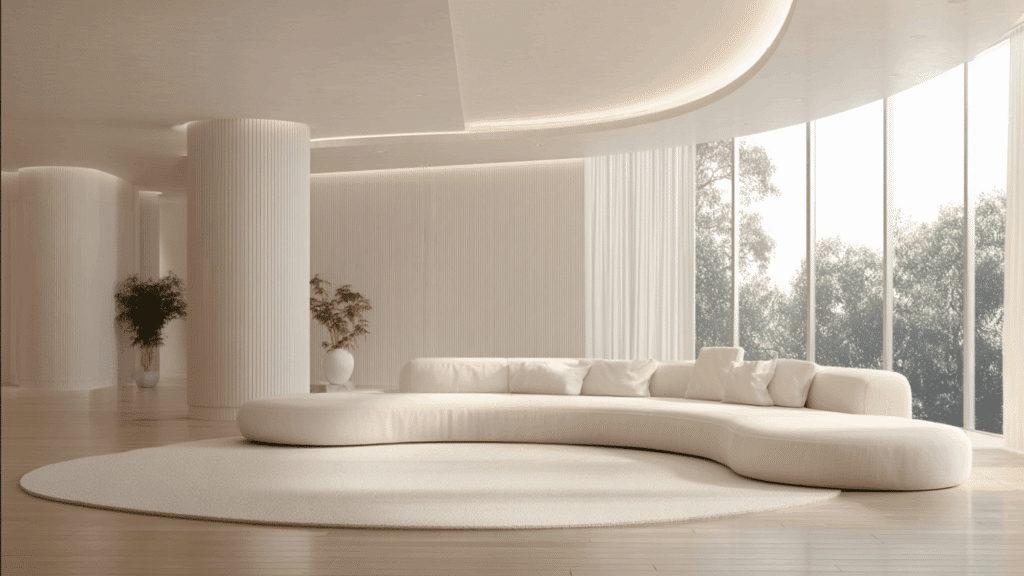
A curved sectional has a gently rounded shape instead of sharp corners. It adds a soft, stylish look to any living room.
This configuration works well in open-plan spaces where a straight sofa might feel too rigid. The curved design also encourages face-to-face conversation, making it a great pick for social living rooms.
4. Modular Sectional Sofa
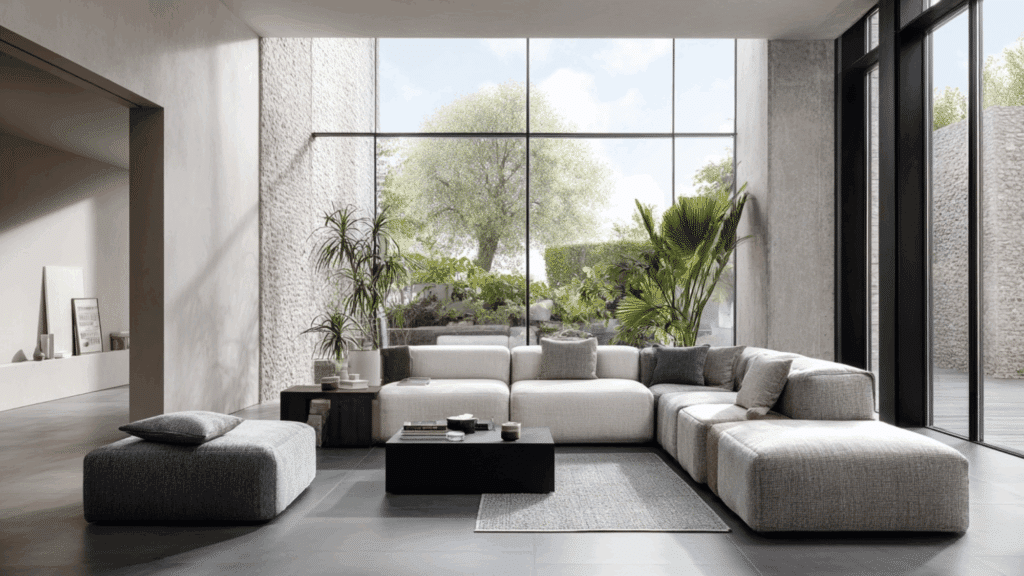
A modular sectional is built from individual pieces that can be arranged in any way.
Homeowners can add, remove, or shift sections to fit their space. It is one of the most flexible configurations available. As the room changes or the family grows, the sofa can change right along with it without needing a full replacement.
5. Pit Sectional (Deep Seating Style)
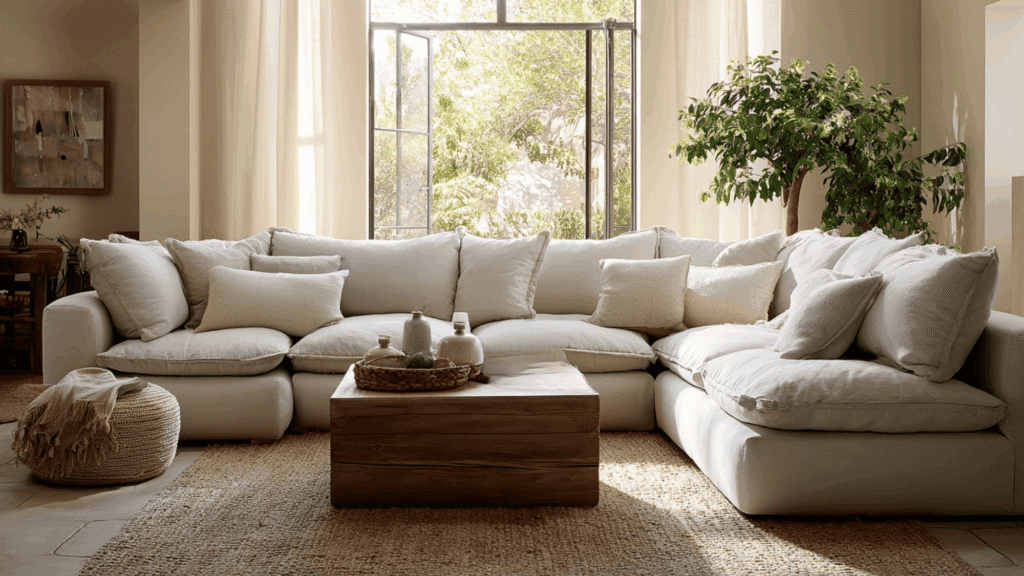
A pit sectional sits low to the ground and features extra-deep seats. It is built for maximum comfort and a laid-back feel.
The low profile gives it a relaxed, casual look that works well in media rooms or large living spaces. Once someone sits down in a pit sectional, getting up quickly becomes the hardest part.
How Sectional Sofas Can Be Arranged in a Living Room
A sectional sofa can fit into almost any living room layout. Placement makes all the difference in how the space feels.
- Facing a TV: Positioning the sectional toward the screen creates a perfect home theater setup.
- Open-concept space divider: A sectional can act as a natural divider between the living and dining areas.
- Small living room corner setup: Tucking the sectional into a corner saves floor space and keeps the room open.
- Large family room layout: A U-shaped sectional fills a big room and gives everyone a comfortable spot to sit.
- Apartment-friendly arrangement: A smaller L-shaped sectional fits snugly into tight apartment spaces without overcrowding the room.
Sectional Sofa vs Regular Sofa: What’s the Difference?
Both options have their strengths. The right choice depends on the room size, lifestyle, and seating needs.
| Feature | Sectional Sofa | Regular Sofa |
|---|---|---|
| Size | Large, made up of multiple sections | Compact, single-piece design |
| Seating Capacity | Seats 4 to 8 people comfortably | Seats 2 to 4 people typically |
| Room Fit | Best for large or open spaces | Works well in smaller rooms |
| Layout Flexibility | Can be rearranged in multiple ways | Fixed shape, limited placement options |
| Style Variety | Comes in many shapes and configurations | Available in standard designs |
| Price Range | Generally costs more due to size | More budget-friendly option |
| Comfort Level | More surface area for lounging | Good for upright, casual seating |
| Moving Ease | Easier to move section by section | Can be tricky to move as one piece |
How to Choose the Right Sectional Sofa for Your Home
Picking the right sectional sofa takes a little thought. It is not just about finding something that looks good in a showroom. The sofa needs to work well in the actual living space at home.
Start by measuring the room. A sectional that is too big will make the space feel cramped. One that is too small will look out of place.
Next, think about how the room gets used. A family with kids needs something durable. Someone who hosts often needs more seating. And anyone working with a tight space needs a configuration that fits without crowding the room.
The fabric, color, and style all matter too. But getting the size and layout right should always come first.
The Bottom Line
A sectional sofa is more than just a large piece of furniture. It changes how a living room feels, functions, and flows.
The right configuration can make a small space feel smart, and a large room feel complete.
At the end of the day, the best sectional is one that fits the space, suits the lifestyle, and holds up over time. Take the measurements, think about daily use, and pick a style that feels right.
Still unsure which sectional works best? Check out our detailed buying guide to make the decision easier.