

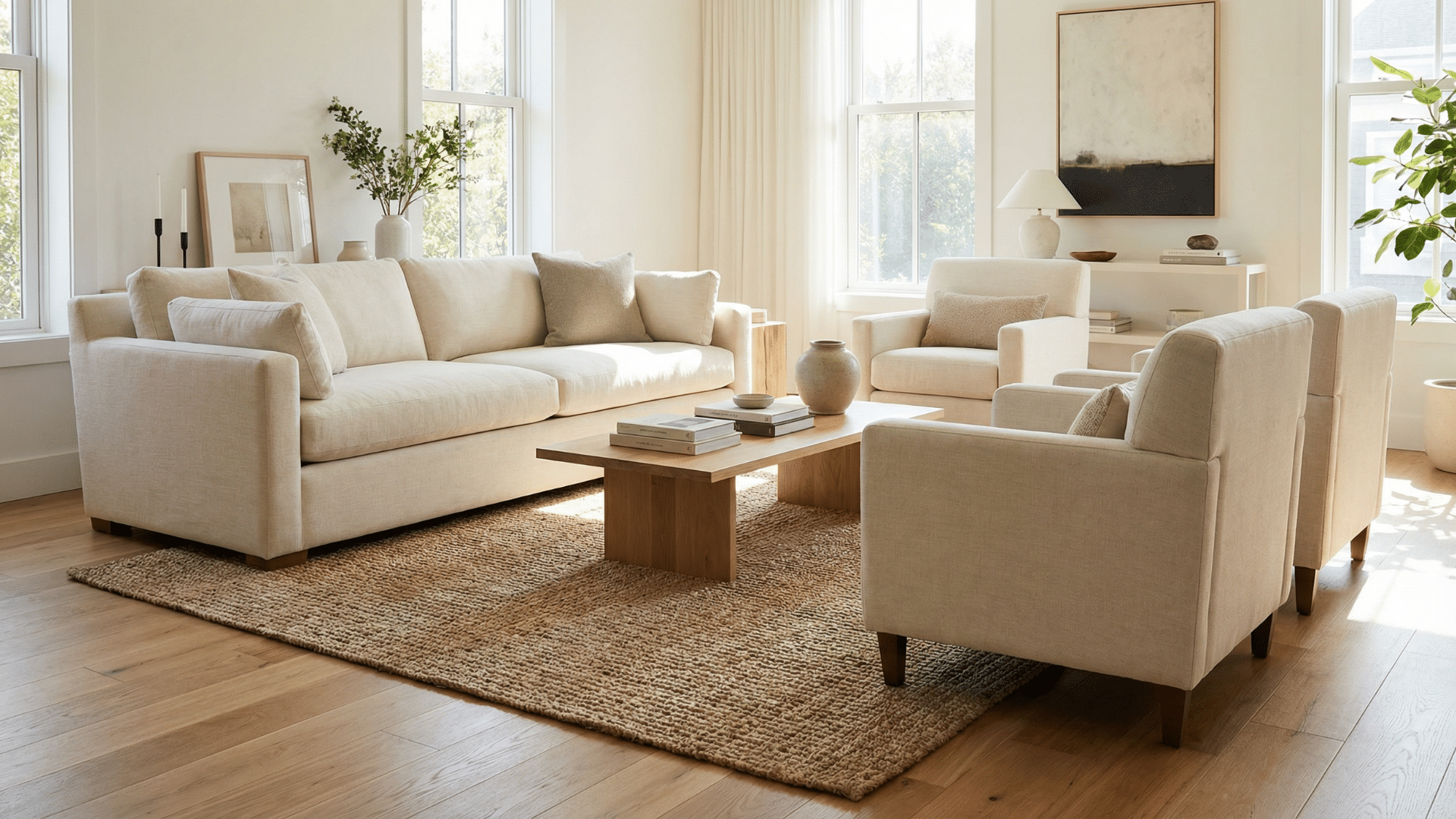
The size of a rug plays a major role in how a room comes together. When the dimensions are off, the space can feel unbalanced or awkward.
Furniture may look disconnected, and the layout may not feel complete. For this reason, understanding standard rug sizes in feet is an important first step before buying.
Many shoppers find it hard to picture measurements without a clear frame of reference. Clear charts and simple explanations can make that task easier.
This guide provides straightforward information to help readers understand common rug dimensions and feel more confident when planning a well-proportioned room layout.
Why Choosing the Right Rug Size is Essential
A rug serves as the visual anchor of a room. It ties furniture together and helps define a specific area within an open layout. When a rug is too small, furniture legs fall outside its edges, making the space feel disconnected and incomplete.
On the other hand, a rug that is too large can dominate the room and reduce the visible flooring that adds contrast and texture.
Choosing the correct size improves several key aspects of a room:
- Visual balance
- Comfort underfoot
- Proper furniture alignment
- Proportion within the space
- Overall design consistency
Using standard rug sizes in feet simplifies the decision-making process because most manufacturers produce rugs in widely accepted dimensions that suit common room layouts.
Standard Rug Sizes in Feet (Quick Chart)
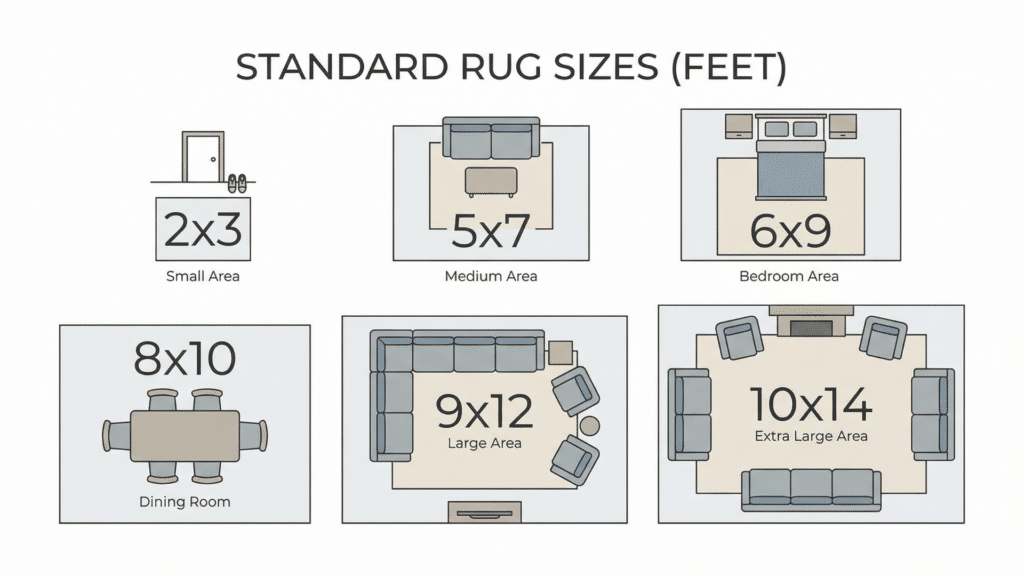
Below is a general rug size chart in feet that shows the most common dimensions available in stores:
| Rug Size (Feet) | Best For |
|---|---|
| 2 x 3 | Entryways, small spaces |
| 2.5 x 7 or 2.5 x 8 | Hallways (runners) |
| 3 x 5 | Small bedrooms, offices |
| 4 x 6 | Small seating areas |
| 5 x 7 | Apartments, under coffee tables |
| 6 x 9 | Medium living rooms |
| 8 x 10 | Standard living rooms |
| 9 x 12 | Large living rooms |
| 10 x 14 | Open floor plans, large spaces |
| 12 x 15 | Extra-large rooms |
These standard rug dimensions in feet are widely available and fit most residential layouts.
Standard Rug Sizes in Feet by Room Type
Rug size should always be determined by the function, layout, and furniture placement of each room. While standard rug sizes in feet remain consistent across manufacturers, the ideal dimensions vary depending on where the rug will be placed.
1. Living Room Rug Sizes in Feet
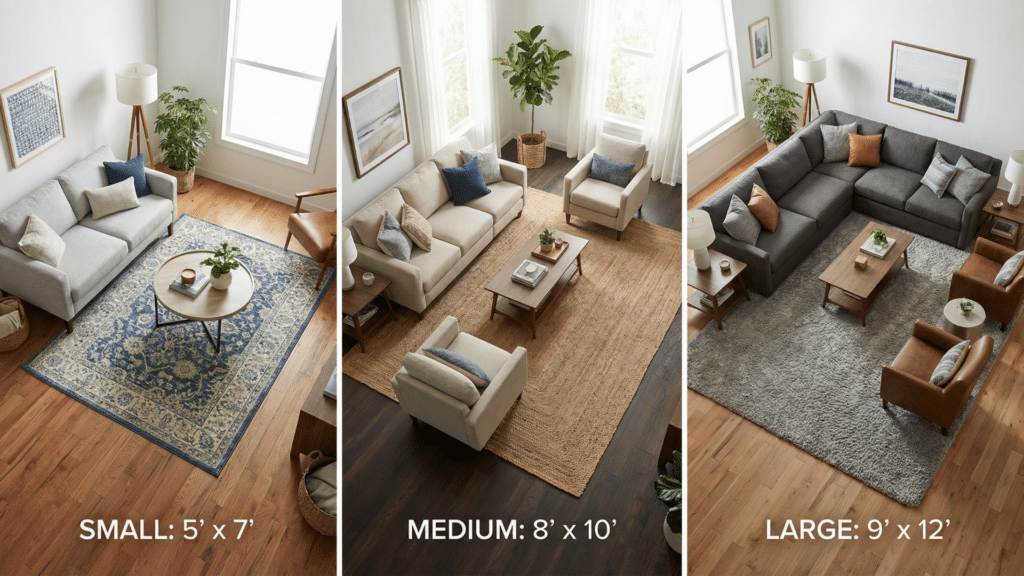
The living room is where rug size matters most. The rug should anchor the seating area and create visual unity.
Small Living Room (Under 12 x 12 Feet)
Recommended rug sizes:
- 5 x 7 feet
- 6 x 9 feet
In compact spaces, a 5 x 7 rug works well under a coffee table with front sofa legs placed on the rug. A 6 x 9 rug allows more furniture legs to sit on the surface, creating a more grounded look.
Medium Living Room
Recommended rug sizes:
-
8 x 10 feet
An 8 x 10 rug is one of the most common standard rug sizes in feet for living rooms. It typically allows the front legs of sofas and chairs to rest comfortably on the rug while maintaining clear borders around the edges.
Large Living Room
Recommended rug sizes:
- 9 x 12 feet
- 10 x 14 feet
In larger rooms, the rug should be big enough to accommodate all major seating pieces. Ideally, every front leg should sit on the rug, or in formal settings, all legs can be placed fully on it.
2. Bedroom Rug Sizes in Feet
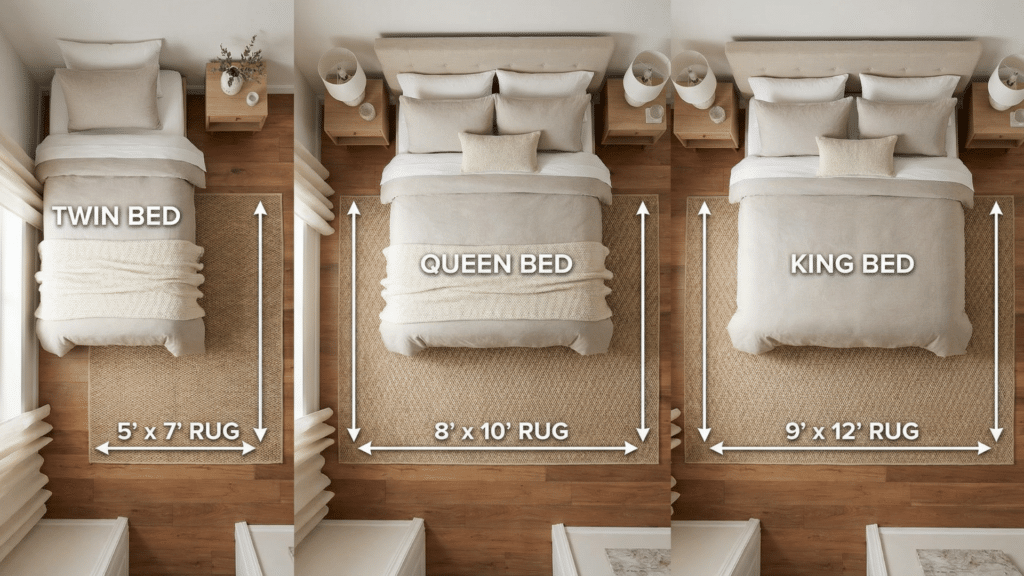
Rugs in bedrooms add comfort and soften hard flooring. Size selection depends on bed dimensions and layout.
Twin Bed
Recommended rug sizes:
- 5 x 7 feet
- 6 x 9 feet
A 5 x 7 rug placed horizontally under the lower two-thirds of the bed works well. It leaves visible flooring at the head of the bed while providing comfort underfoot.
Full or Queen Bed
Recommended rug sizes:
- 6 x 9 feet
- 8 x 10 feet
An 8 x 10 rug is ideal for a queen bed, allowing nightstands and bed legs to sit comfortably on the rug. A 6 x 9 option works in tighter layouts but offers less border space.
King Bed
Recommended rug sizes:
- 8 x 10 feet
- 9 x 12 feet
A 9 x 12 rug creates the proper proportion for king beds. It extends beyond both sides and the foot of the bed, providing balance and symmetry.
3. Dining Room Rug Sizes in Feet
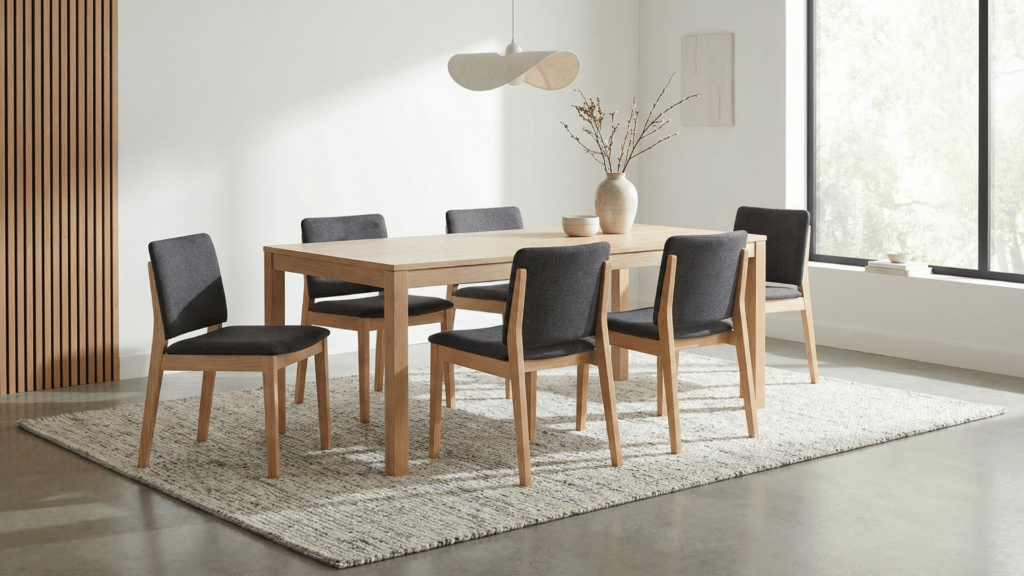
Dining room rugs must accommodate the table and chairs, even when chairs are pulled out.
Standard Rule: The rug should extend at least 24 to 30 inches beyond the table on all sides.
Common Dining Table Sizes and Rug Pairings
| Table Size | Recommended Rug Size |
|---|---|
| 4-seat table | 6 x 9 feet |
| 6-seat table | 8 x 10 feet |
| 8-seat table | 9 x 12 feet |
Choosing the correct size ensures chairs remain fully on the rug when in use, preventing tipping or uneven movement.
4. Hallway Runner Sizes in Feet
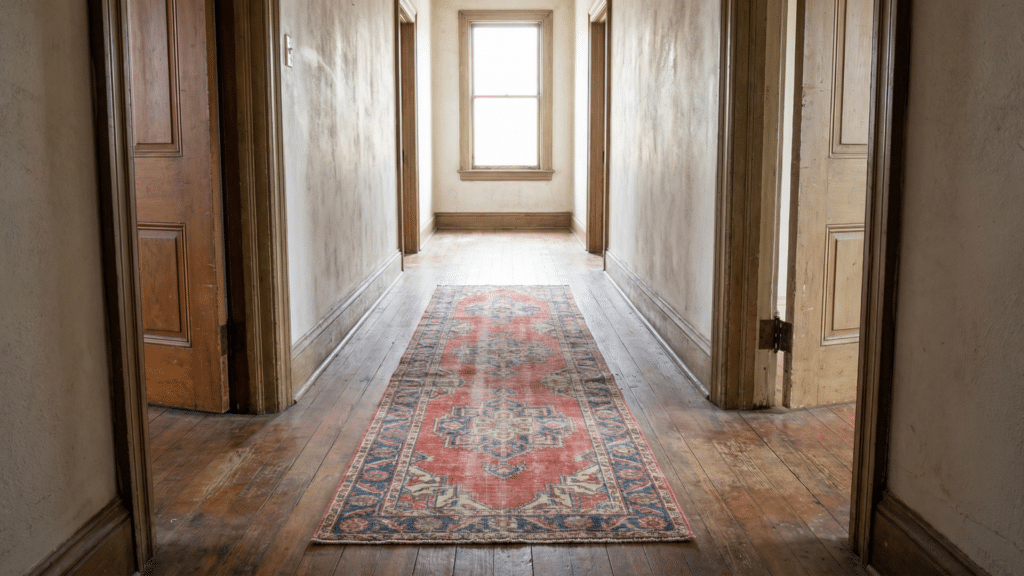
Runner rugs are long and narrow. Standard runner sizes in feet include:
- 2.5 x 7 feet
- 2.5 x 8 feet
- 3 x 10 feet
For proper placement, leave 4 to 6 inches of visible flooring on each side. In longer hallways, multiple runners can be spaced evenly.
5. Entryway Rug Sizes in Feet
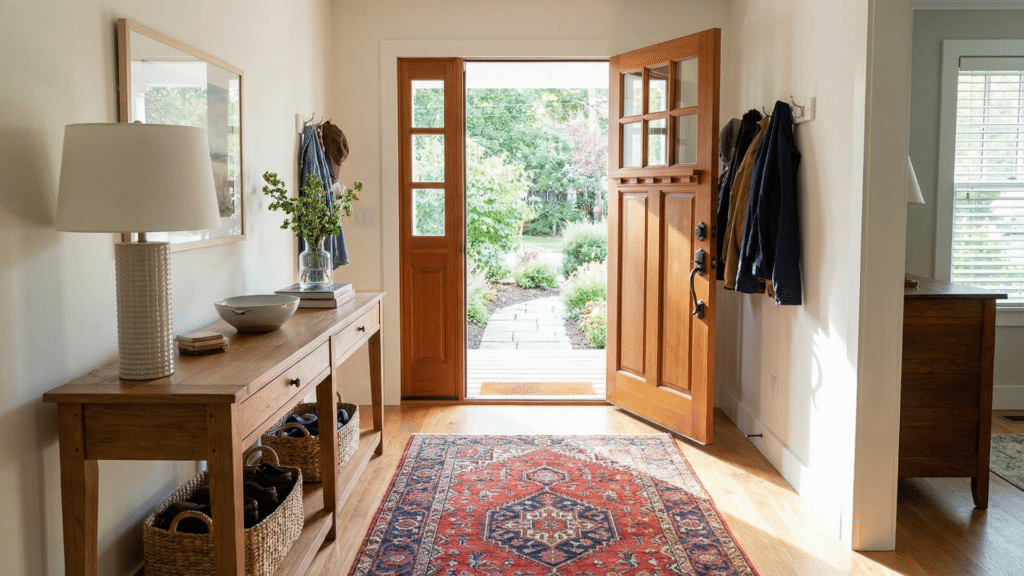
Entry rugs create a strong first impression while protecting flooring.
Common sizes:
- 2 x 3 feet
- 3 x 5 feet
- 4 x 6 feet
The rug should not block door movement. Measure door clearance before selecting a height.
6. Home Office Rug Sizes in Feet
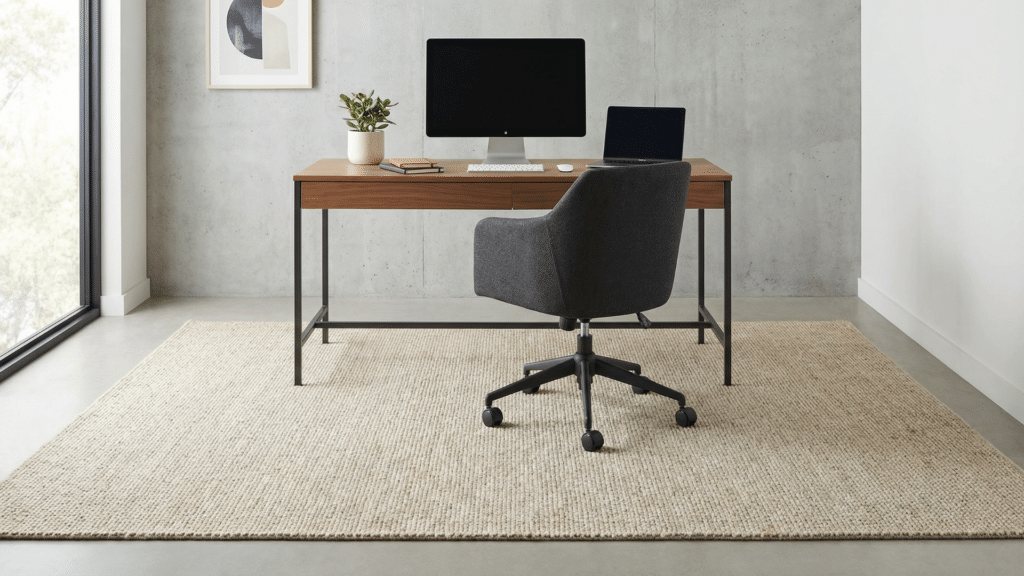
In a home office, rugs add warmth and reduce noise.
Recommended sizes:
- 4 x 6 feet
- 5 x 7 feet
- 6 x 9 feet
The rug should extend beyond the desk and chair area. Rolling chairs require low-pile rugs for smooth movement.
How to Measure for a Rug in Feet
Accurate measurements are essential when selecting from standard rug sizes in feet. Even a small miscalculation can result in a rug that feels too tight or too small for the space.
Step 1: Measure the Full Room Dimensions
Start by measuring the length and width of the room in feet. Record these numbers clearly. This provides a baseline understanding of the available floor space and helps narrow down suitable standard rug dimensions in feet.
Step 2: Map Out Furniture Placement
Before choosing a rug size, determine exactly where the furniture will sit. Measure the seating area, bed frame, dining table, or desk arrangement. The rug should relate to the furniture grouping rather than just the overall room size.
Step 3: Plan for Border Space
Leave visible flooring around the edges of the rug to create balance. In most living rooms, 12 to 18 inches of exposed floor between the rug and the walls creates a well-proportioned look. In smaller rooms, 8 to 12 inches may be more appropriate.
Standard Area Rug Sizes in Feet vs Custom Sizes
When choosing a rug, buyers often decide between standard area rug sizes in feet and custom-made options.
| Feature | Standard Area Rug Sizes in Feet | Custom Rug Sizes |
|---|---|---|
| Availability | Readily available in stores and online | Made to order |
| Common Dimensions | 5 x 7, 6 x 9, 8 x 10, 9 x 12, 10 x 14 feet | Any size based on request |
| Cost | Generally more affordable | Usually more expensive |
| Production Time | Immediate purchase or fast shipping | Longer production and delivery time |
| Design Options | Wide variety of colors, patterns, and materials | May have limited material options depending on the vendor |
| Best For | Standard room layouts | Irregular rooms or custom-built spaces |
| Replacement Ease | Easy to replace due to common sizing | Harder to replace with an identical size later |
| Return Policy | Often eligible for returns | Frequently non-returnable |
In most residential settings, standard rug sizes in feet effectively meet layout needs. Custom sizes are most useful when working with unusual dimensions, built-in features, or specific design requirements.
How Rug Shape Affects Standard Dimensions
While rectangular rugs dominate the market, other shapes influence layout:
- Square rugs (6 x 6, 8 x 8 feet) work well in square rooms.
- Oval rugs soften formal dining spaces.
- Round rugs add contrast in angular layouts.
Choose a shape based on the room proportions.
Common Rug Size Mistakes to Avoid
Even when selecting from standard rug sizes in feet, common planning mistakes can affect the overall look and function of a room.
- Choosing a Rug That is Too Small: A rug that is too small can make a room feel disconnected and unfinished. When uncertain, selecting a slightly larger size usually creates better balance and anchors the furniture properly.
- Ignoring Furniture Layout: A rug should connect to the furniture arrangement, not float in the center of the room. At minimum, the front legs of major seating pieces should rest on the rug.
- Not Considering Door Clearance: Thick rugs may block doors from opening smoothly. Always measure door clearance before buying.
- Skipping a Rug Pad: A rug pad prevents slipping, adds comfort, and helps extend the life of the rug.
Final Thoughts
Selecting a rug is not just a finishing touch; it is a structural decision that shapes how a room functions day to day.
The right dimensions support movement, define seating areas, and protect flooring without overwhelming the layout.
Using clear size charts and understanding standard rug sizes in feet makes the process more practical and less confusing. Careful measuring and planning lead to better long-term results and fewer replacement costs.
Before buying, review your room layout, confirm measurements, and compare options carefully so your final choice fits both the space and your needs.