

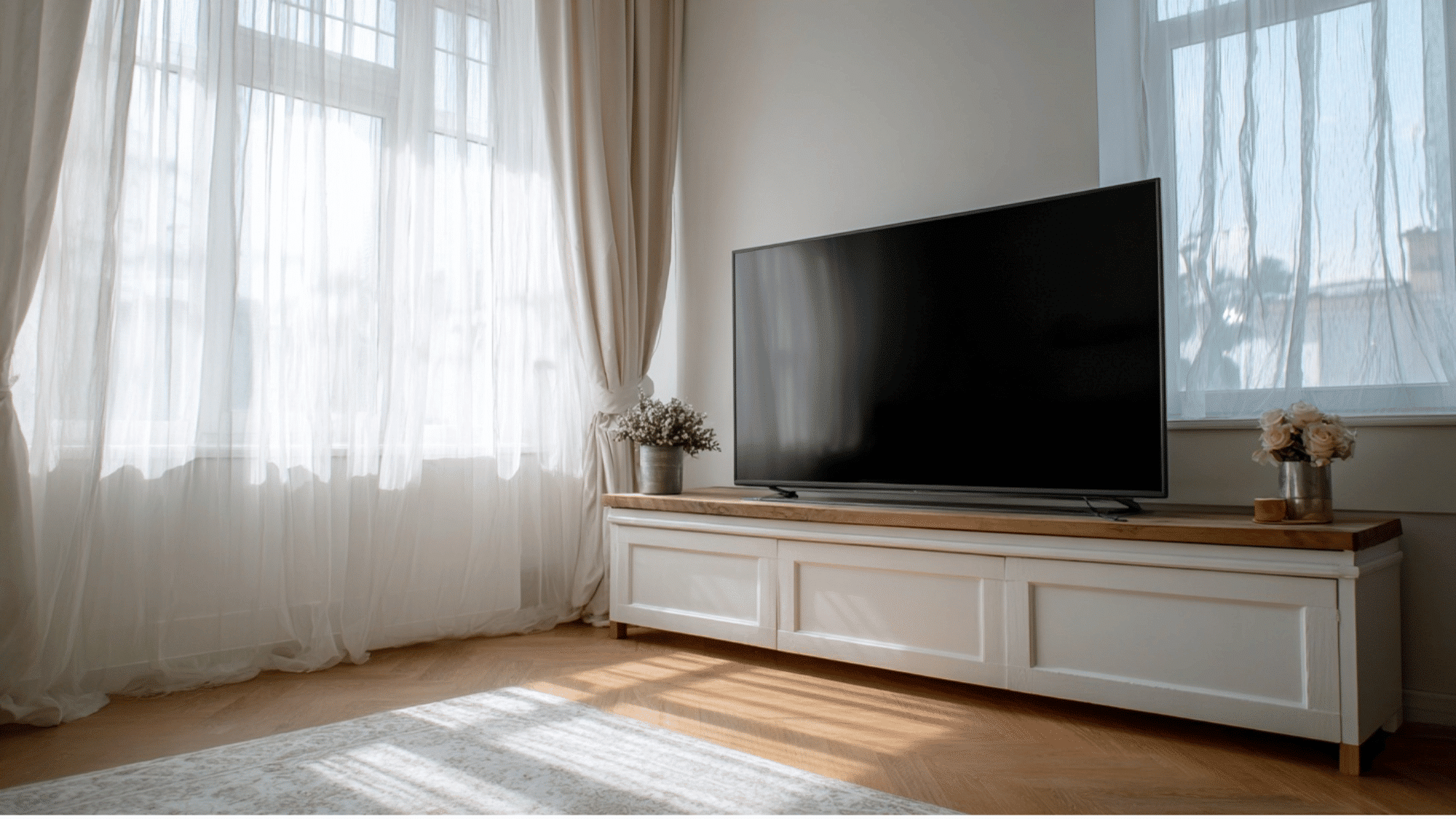
Placing a TV in front of a window sounds like a simple enough idea. But is it really?
Most people pick a spot for their TV based on what fits the room. They rarely stop to think about what happens when sunlight hits the screen.
The glare alone can turn a movie night into a squinting contest. And that’s just one piece of the puzzle.
There are a few more things worth thinking about before mounting that screen. From how the light affects picture quality to what it does to the TV itself. Read on to find out if this setup is worth it or not.
Can You Put a TV in Front of a Window?
Putting a TV in front of a window is something many people consider.
Maybe the wall space is limited. Maybe it just seems like the most practical spot in the room. It’s a common setup, and it’s easy to see why people go for it.
That said, it’s not as simple as it looks. The position of a TV matters more than most people think. Light, heat, and viewing angles all play a role.
So before making a final call, it helps to look at what this placement actually means for the viewing experience and the TV itself.
Pros and Cons of Placing a TV in Front of a Window
Every setup has its trade-offs. This is what works and what doesn’t with this placement.
Pros:
- Saves wall space: Placing the TV in front of a window frees up other walls for shelves, art, or furniture.
- Creates a focal point: The window wall often draws the eye naturally, making the TV feel like a central part of the room.
- Works well at night: Without natural light streaming in, the setup can actually look great after dark.
- Flexible furniture layout: It can make arranging seating easier, especially in smaller rooms.
Cons:
- Glare is a big problem: Sunlight hits the screen directly, making it hard to see the picture clearly.
- Heat can damage the TV: Direct sunlight exposes the TV to heat, which can affect its performance over time.
- Washes out the picture: Bright light from behind reduces contrast, making colors look dull and flat.
- Eye strain for viewers: Watching TV with a bright window behind it puts stress on the eyes fairly quickly.
Biggest Problem: Glare and Natural Light Issues
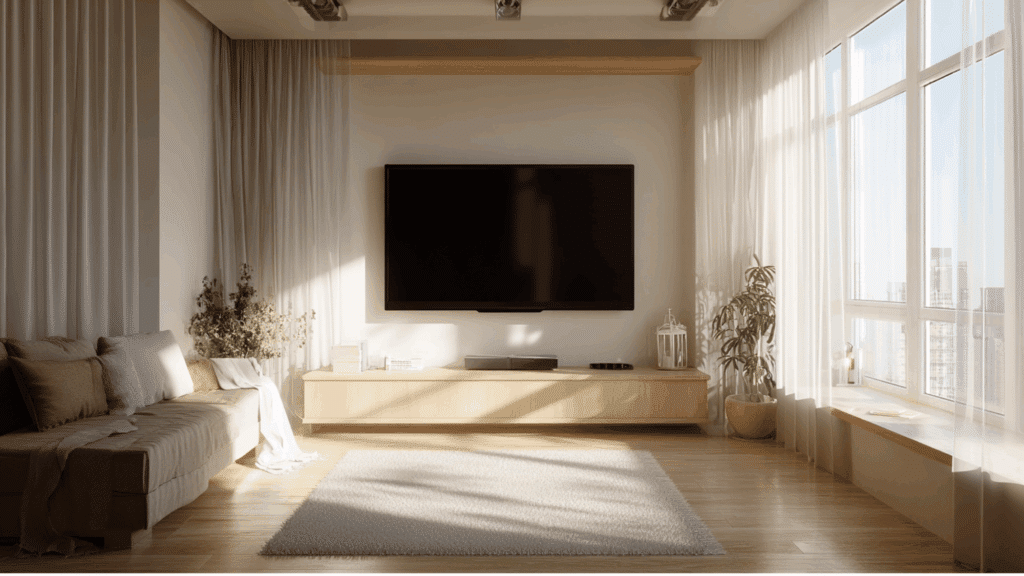
Glare is the number one complaint when it comes to placing a TV in front of a window.
Natural light and screens simply don’t get along well. When sunlight streams in from behind the TV, it hits the screen and creates a bright, washed-out look. The picture quality drops fast.
This isn’t just a minor annoyance. On sunny afternoons, the glare can make the screen nearly impossible to see. Dark scenes become invisible. Colors lose their punch. Even a moderately bright day can cause problems.
The bigger the window, the worse it gets. And unlike a lamp, sunlight isn’t something that can just be switched off.
Will Sunlight Damage a TV Placed in Front of a Window?
Glare is one thing, but actual damage is a whole different concern. Sunlight carries heat, and heat is not kind to electronics. When a TV sits in front of a window, it gets hit with direct sunlight for hours at a time. That kind of constant heat exposure adds up.
Over time, the internal components of the TV start to feel the effects. The screen can fade or develop uneven patches. The casing may warp or discolor. In some cases, the heat builds up fast enough to cause serious internal damage.
Most TVs are not built to handle prolonged sun exposure. Manufacturers rarely account for it. So yes, sunlight can and does shorten the lifespan of a TV placed in front of a window.
When Is It Okay to Put a TV in Front of a Window?
It’s not always a bad idea. There are certain situations where this placement can actually work without causing too many problems.
- The window faces north: North-facing windows get little to no direct sunlight throughout the day, which means glare and heat are much less of an issue.
- Heavy curtains or blinds are in place: Blackout curtains or thick blinds can block out most of the light when the TV is in use, making the setup far more manageable.
- The TV is only used at night: If the TV is mostly watched after dark, the window behind it makes almost no difference at all.
- The window is small: A small window lets in far less light than a large one, so the glare and heat impact stay minimal.
- The room has good light control: Tinted windows or smart glass that adjusts to light levels can make this placement work much better during the day.
- The TV has an anti-glare screen: Some modern TVs come with anti-glare coatings that help cut down on reflection, making them better suited for brighter spots in the room.
Design Tips to Make a TV in Front of a Window Look Intentional
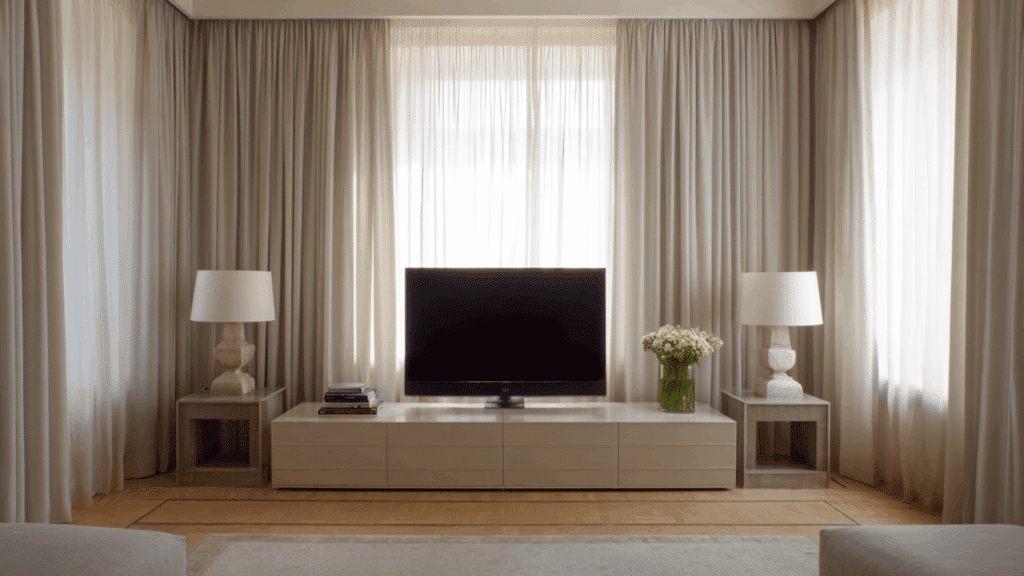
With the right design choices, this setup can actually look planned and polished. Here are some tips that make a real difference.
1. Use Blackout or Sheer Curtains:
Curtains serve a bigger purpose than just blocking light. The right pair can frame the TV beautifully, giving the wall a clean and put-together look without making the space feel closed off or heavy.
2. Mount the TV at the Right Height:
A TV placed too high or too low throws off the whole look of a room. Mounting it at eye level makes watching more comfortable and gives the entire setup a much more intentional feel.
3. Add a TV Console or Media Unit Below:
A well-chosen console beneath the TV anchors the whole setup. It adds useful storage, fills the wall space naturally, and keeps the TV from looking like an afterthought in front of the window.
4. Use the Curtains as a Backdrop:
Curtain color matters more than most people think. Shades that complement the TV and surrounding furniture help pull the room together, with neutral tones keeping the focus right where it belongs on the screen.
5. Incorporate Ambient Lighting Around the TV:
Soft lighting placed around the TV, such as LED strips or a floor lamp nearby, helps even out the brightness in the room and softens the contrast between the screen and the window behind it.
Better Alternatives to Putting a TV in Front of a Window
Not sold on the window placement? There are smarter spots in the room that work better for both the TV and the viewing experience.
1. Place the TV on a Perpendicular Wall: A wall that is perpendicular to the window is often the best option. It keeps sunlight from hitting the screen directly while still making good use of the room layout.
2. Use an Adjacent Wall Instead: The wall next to the window works surprisingly well. It stays out of the direct light path and usually offers a comfortable viewing angle from most seating positions in the room.
3. Try a TV Stand With Swivel: A swivel TV stand gives the freedom to adjust the screen angle throughout the day. It’s a flexible option that works well in rooms where light shifts from one side to another.
4. Install the TV Inside a Media Wall: A built-in media wall adds structure to the room and keeps the TV away from window light entirely. It also creates a strong visual centerpiece that looks clean and well-planned.
5. Use a Pull-Down Projector Screen: For those who want a big-screen feel without the glare problems, a pull-down projector screen is worth considering. It tucks away neatly and works best in rooms with good light control.
6. Place the TV Opposite the Window: Mounting the TV on the wall directly across from the window keeps it out of the sun’s path. It also lets natural light work in favor of the room without affecting the screen.
To Conclude
Placing a TV in front of a window isn’t the worst idea in the world. But it does come with real trade-offs that are hard to ignore.
Glare, heat damage, and washed-out picture quality are problems that add up over time.
There are plenty of ways to work around it. Blackout curtains, better wall placements, and smarter room layouts can all make a big difference.
Take a look around the room before making a final call. The perfect spot for the TV might already be there; it just needs a little attention.