

Creating a beautiful home is not just about buying nice furniture. It’s about understanding the principles of interior design and how they work together.
These simple rules help you arrange colors, furniture, and decor in a way that feels balanced and comfortable.
Even small updates, like shifting furniture or simplifying your color palette, can quickly improve how a room feels without spending much.
I’ve seen how a few deliberate adjustments can change a flat, forgettable room into a space people genuinely want to return to. The changes are rarely expensive. They are almost always intentional.
When you focus on balance, harmony, and proportion, your home starts to feel more organized and inviting. The best part is, you don’t need a big budget or expert skills to get started.
With a little planning and attention, you can improve any room step by step and create a space that truly feels like your own.
What Makes a Room Look Well Designed?
A room looks well designed when everything feels clear, balanced, and easy to use. It is not about expensive items, but how things are placed and work together.
The furniture should fit the space, not feel too big or too small. Colors should connect, not compete.
Lighting should help the room feel bright and comfortable. When these parts come together, the space feels calm and put together.
Good design follows simple rules that guide how you arrange and choose items.
Without these rules, a room can feel messy or confusing, even with nice decor. You may not always notice what is wrong, but you can feel it.
Once you understand these basics, it becomes much easier to fix small issues and improve any room step by step.
Interior Design Elements vs Principles
Interior design works better when you understand both the building blocks and the rules that guide them. These two ideas help you create a space that feels clear, balanced, and easy to use.
| Aspect | Interior Design Elements | Interior Design Principles |
|---|---|---|
| Meaning | Basic parts used to create a room | Rules that guide how those parts are arranged |
| Purpose | Build the look and feel of a space | Bring order and balance to the design |
| Focus | What do you use in a room | How you use and arrange those items |
| Examples | Color, texture, pattern, light, space, shape | Balance, harmony, contrast, rhythm, emphasis, proportion |
| Role in Design | Acts as the foundation of the room | Controls how everything works together |
| Result | Defines the style and mood | Makes the space feel organized and complete |
What Are the Principles of Interior Design?
The principles of interior design are simple rules that help create a balanced, comfortable, and visually appealing space.
1. Balance
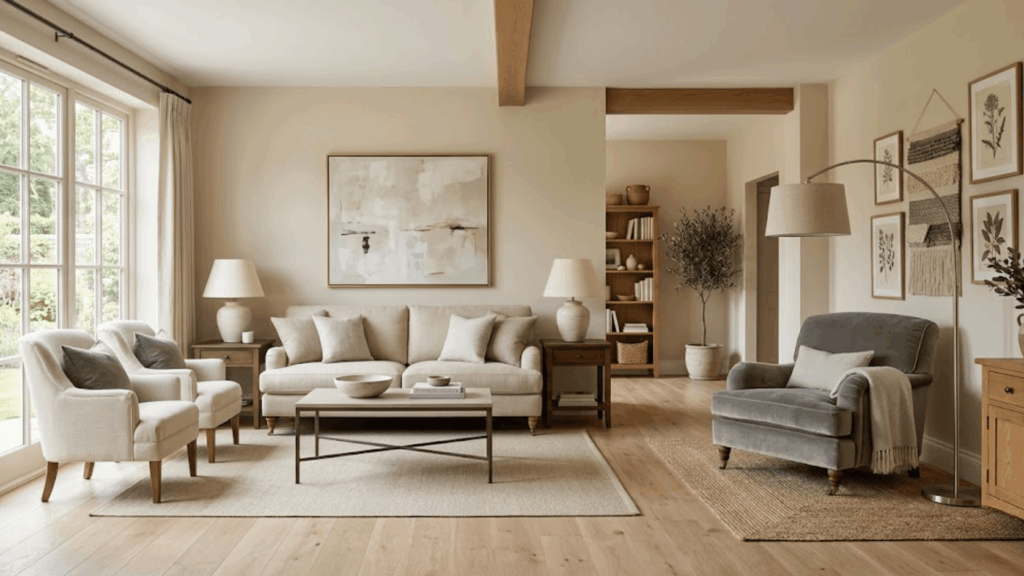
Balance in interior design refers to the distribution of visual weight within a room to create a sense of stability and comfort. When a room feels balanced, it reads as calm and considered.
When it doesn’t, something feels off, even if a visitor can’t name exactly why. This can be achieved in two main ways:
| Balance Type | Description | Example |
|---|---|---|
| Symmetrical Balance | Elements are mirrored on both sides for a neat and stable look. | Matching chairs or lamps on each side |
| Asymmetrical Balance | Different items still feel balanced in visual weight for a relaxed look. | Large chair paired with a floor lamp |
A well-balanced room feels calm and organized, while poor balance can make a space feel awkward or cluttered.
Pro Tip: If one side has a tall item (like a bookshelf), balance it with something vertical like a floor lamp or artwork.
2. Harmony and Unity
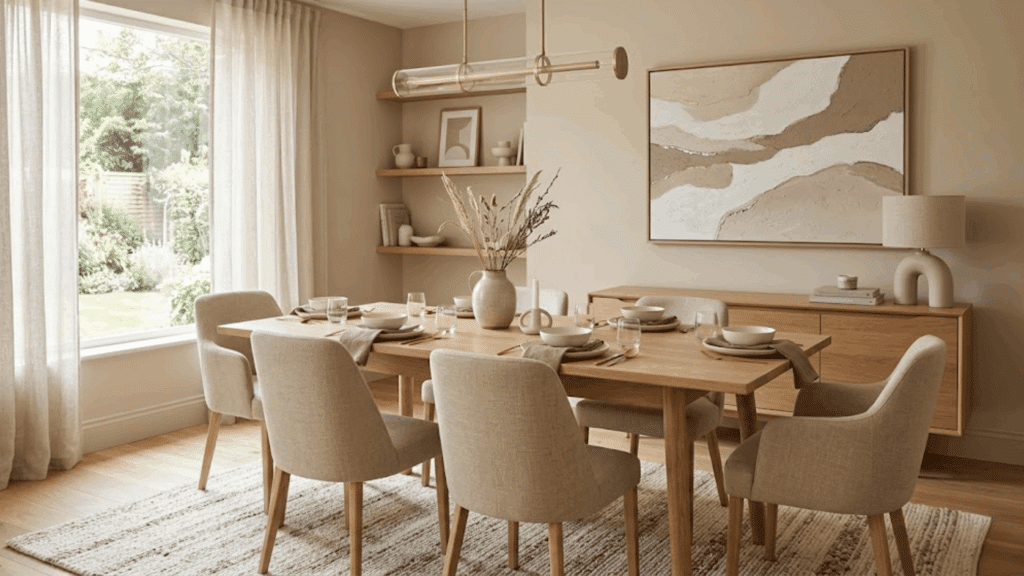
Harmony and unity ensure that every element in a room contributes to a single, cohesive visual story.
Colors, textures, furniture styles, and decorative objects should all feel like they belong to the same design family.
The most reliable technique is repetition: carry a color, a material, or a shape through at least three places in the room, and the eye will register it as intentional rather than accidental.
I’ve seen rooms change simply by removing one or two pieces that introduced a competing visual language, even when those pieces were objectively attractive on their own.
3. Contrast
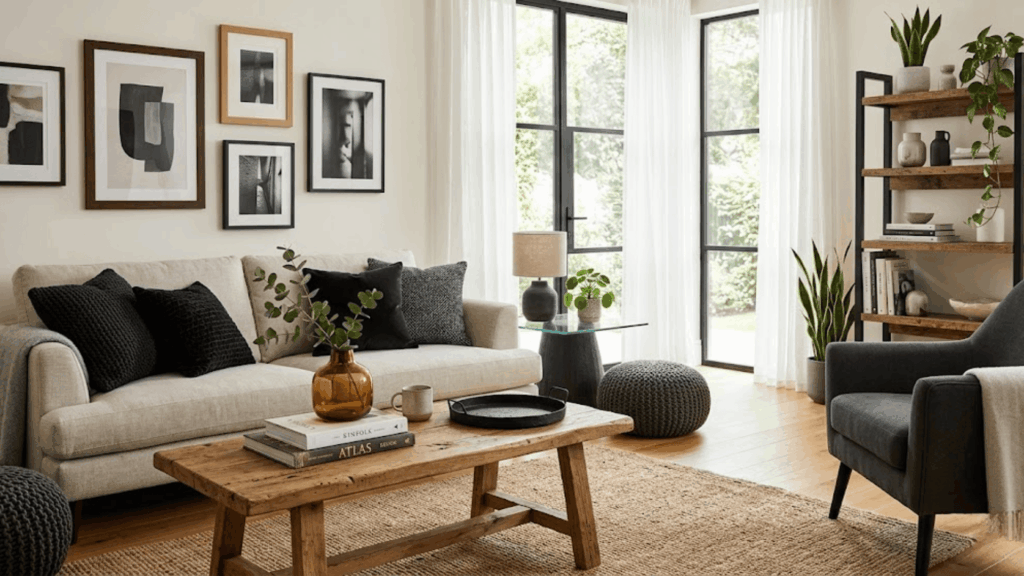
Contrast adds visual interest and prevents a room from reading as flat or monotonous. It works by placing opposing elements next to each other: light against dark, rough against smooth, organic shapes alongside geometric ones.
Used well, contrast gives a room energy and direction. Used poorly, it produces visual noise.
A reliable approach is to introduce one strong contrast per room and let everything else support it.
In a project I completed in Boston, pairing a matte plaster wall with polished brass fixtures created the right amount of tension without overwhelming the otherwise quiet palette.
Quick fix: Add one dark or bold element in a light room.
4. Rhythm
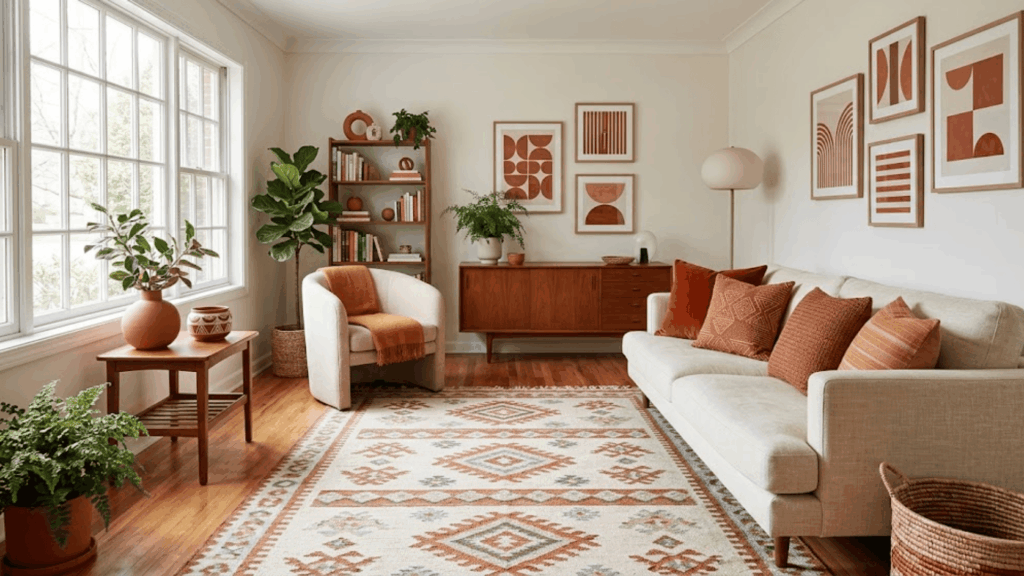
Rhythm in interior design creates a sense of movement that guides the eye smoothly throughout the room. This is achieved by repeating colors, shapes, patterns, or lines in a consistent way.
For instance, using the same color in cushions, rugs, and artwork helps create a natural flow.
Rhythm creates a sense of visual connectedness and ease of movement, while adding a gentle structure that keeps the design from feeling random or disconnected.
Pro Tip: Use the same color but in different shades or textures to avoid a boring look.
5. Emphasis
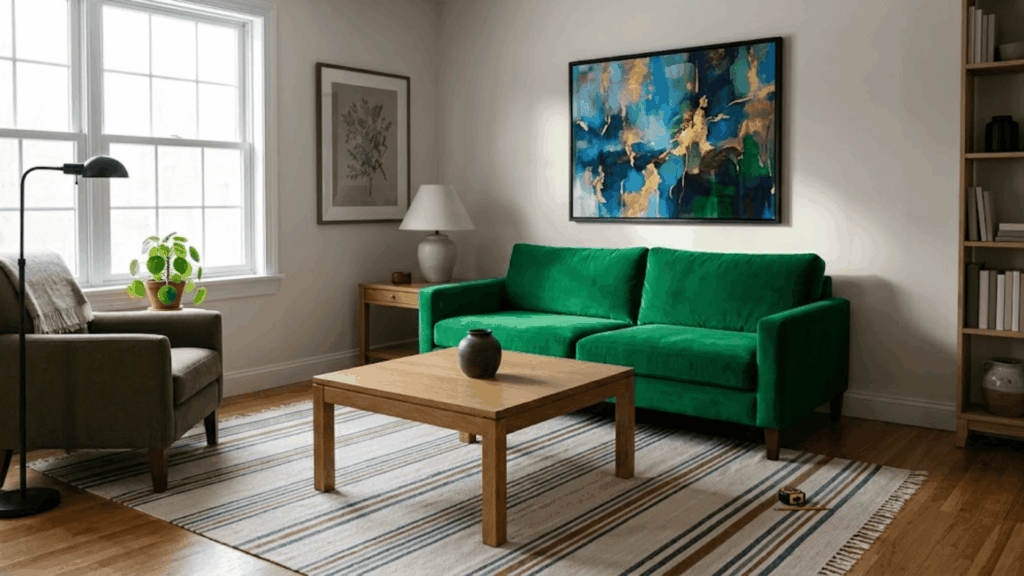
Emphasis is about creating one strong focal point that anchors the room and gives the eye somewhere to land when entering the space.
That focal point can be architectural, like a fireplace or a bay window, or it can be introduced through furniture, art, or a feature wall.
Once you establish the focal point, every other element should support it rather than compete with it.
The practical rule to use with clients is the 70/30 principle: keep approximately 70 percent of the room visually neutral and reserve the remaining 30 percent for the focal area.
This proportion reliably produces a room that feels both interesting and composed.
Pro Tip: Let about 70% of the room stay neutral so the 30% focal area can stand out clearly.
6. Proportion and Scale
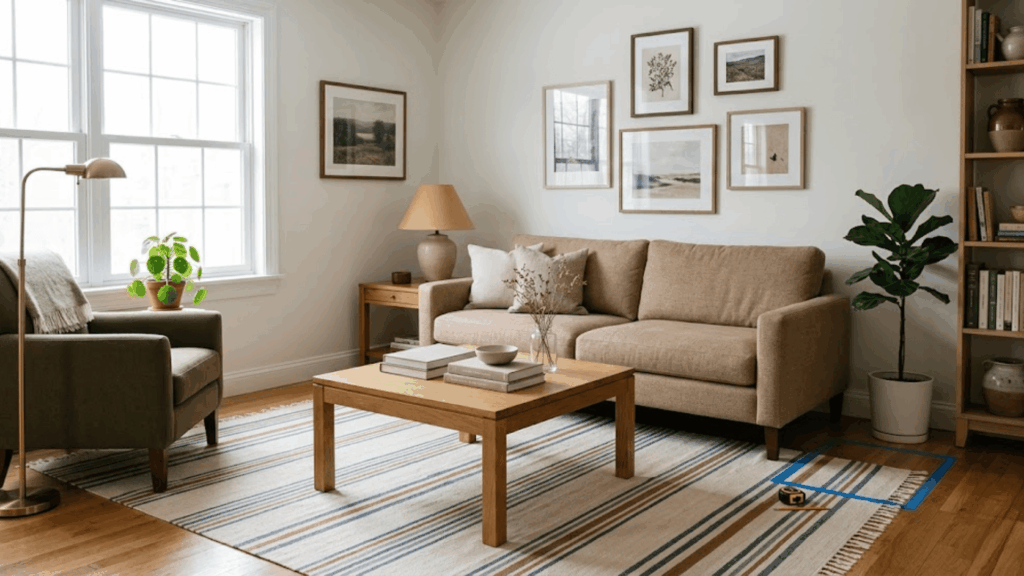
Proportion and scale relate to the size of objects in comparison to each other and the overall space.
I’ve noticed that when sizes are well-matched, a room feels much more comfortable and easy to use. Pro tip: I usually test furniture size by marking space on the floor before buying.
Furniture and decor should fit naturally within the space without looking too large or too small.
For example, a large sofa in a small room can feel overwhelming, while tiny decor in a big space can feel lost.
Keeping the right proportion helps the room feel balanced, functional, and visually pleasing.
Pro Tip: Keep large furniture as the main piece and add smaller items around it for balance.
7. Pattern and Texture
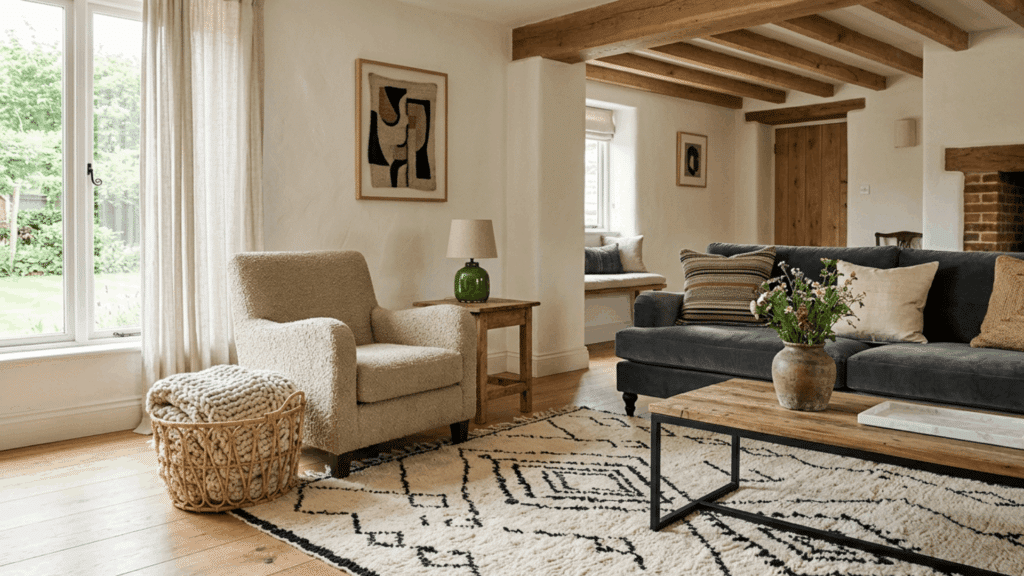
Pattern and texture are among the most underused principles, yet they do more layering work than almost any other design element.
Texture refers to the physical or visual surface quality of materials: a nubby linen, a glossy ceramic, a raw timber beam. Pattern refers to repeated decorative motifs on fabric, wallpaper, tile, or rugs.
Together, they create depth and tactile richness that color alone cannot achieve.
A room furnished entirely in smooth, matte surfaces will feel sterile no matter how carefully the color palette was chosen.
My general approach is to introduce at least three distinct textures per room and limit bold patterns to one surface, typically a rug or a single upholstered piece.
Pro Tip: Mix at least three textures like fabric, wood, and metal to add depth.
Interior Design Quick Checklist
A simple checklist can make it easier to apply the principles of interior design and create a balanced, well-organized space.
| Element | What to Do |
|---|---|
| Color Selection | Choose 2–3 main colors to keep the space clean and coordinated |
| Balanced Layout | Arrange furniture evenly to create visual stability |
| Focal Point | Add one main feature like a sofa, artwork, or light fixture |
| Right Furniture Size | Use pieces that match the room’s size and scale |
| Layered Lighting | Combine ceiling lights, lamps, and natural light |
| Mix Textures | Use different materials to add depth and interest |
The 60-30-10 Color Rule of Interior Design
The 60-30-10 rule is a simple color guide used in interior design. Many beginners miss it, but designers use it all the time.
It breaks a room’s colors into three clear parts. About 60% should be one main color. This is often your walls or a large piece like a sofa, and it sets the overall mood.
Next, 30% should be a second color. This supports the main color and adds some contrast.
You usually see this in items like curtains, rugs, or chairs. The last 10% is for an accent color. Use it in small touches like cushions, art, or decor.
When you follow this rule, the room feels planned and balanced, not random.
| Role | Proportion | Typical Surfaces |
|---|---|---|
| Dominant Color | 60% | Walls, a large sofa, and flooring |
| Secondary Color | 30% | Curtains, accent chairs, large rug |
| Accent Color | 10% | Cushions, artwork, decorative objects |
Why Interior Design Principles Matter in Every Space?
Interior design principles help create spaces that are both functional and visually appealing, making everyday living more comfortable and organized.
- Creates Balance and Comfort: Helps every room feel stable, relaxing, and well-arranged
- Improves Functionality: Makes spaces easier to use and more enjoyable every day
- Reduces Clutter: Keeps the room clean and avoids a messy, crowded look
- Builds Visual Harmony: Connects all design elements for a smooth, unified feel
- Enhances Overall Appeal: Makes any space look more attractive and thoughtfully designed
- Supports Better Space Planning: Helps make the most of both small and large rooms
How Do These Principles Work in Different Rooms?
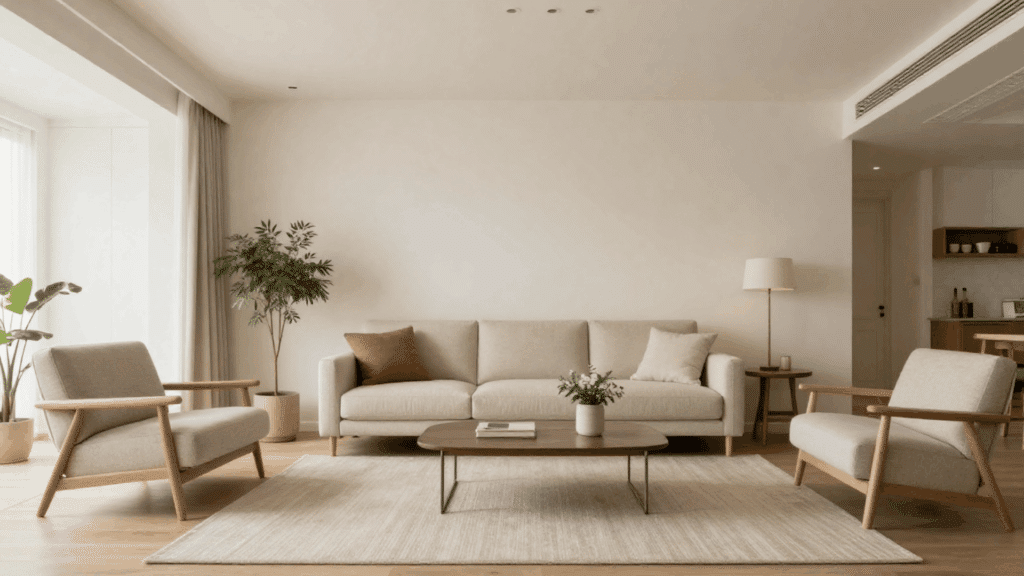
Each room uses the same design rules, but the way you apply them can change based on how the space is used.
Small changes in layout, color, and scale can make each room feel more balanced and easy to live in.
1. Living Room
The living room is where balance and emphasis matter most. I usually start by placing the main sofa first, then build around it to keep the layout even.
A clear focal point, like a TV wall or fireplace, helps guide the design. Colors should stay simple so the room feels calm, while contrast can be added through cushions or rugs.
Lighting should be layered with ceiling lights and lamps to keep the space useful and comfortable for daily use.
2. Bedroom
In a bedroom, symmetry works really well to create a calm and restful feel. Place matching side tables or lamps on both sides of the bed to keep things balanced.
Soft colors help build harmony, while textures like bedding and curtains add depth without making the room busy.
Furniture size should match the space so it does not feel crowded. Keeping decor simple also helps the room feel clean, relaxing, and easy to unwind in every night.
3. Dining Room
The dining room often uses radial balance, especially with a table placed at the center. Use a light fixture above the table to create a strong focal point.
Chairs, table size, and spacing should all match the room so movement feels easy.
Repeating colors in tableware, rugs, or artwork helps build rhythm. Lighting is important here, as it should feel warm and inviting without being too bright or harsh during meals.
4. Small Spaces
Small spaces need careful use of proportion and scale. I always choose furniture that fits well without taking over the room.
Light colors help the space feel open, while one small focal point keeps it from looking plain. Avoid using too many items, as clutter can quickly make the room feel tight.
Mirrors and lighting can also help create a sense of depth.
When everything is planned well, even a small room can feel balanced and comfortable.
Easy Interior Design Rules to Remember
These simple rules make it easier to apply design ideas without overthinking every choice. They give you a clear starting point and help you avoid common layout and styling mistakes.
| Rule | What It Means | How to Use It |
|---|---|---|
| 60-30-10 Rule | Divide colors into 60% main, 30% secondary, 10% accent | Use one main wall color, add a second tone in furniture, and finish with small accents |
| Rule of Three | Items look better in groups of three | Style shelves or tables with three objects of different heights |
| 3-5-7 Rule | Odd-number groupings feel more natural | Use 3, 5, or 7 decor pieces for a balanced look |
| Focal Point Rule | Every room needs one main feature | Choose one item, like a sofa, bed, or artwork, to stand out |
| Scale Rule | Furniture should match the room size | Avoid oversized pieces in small rooms and tiny decor in large spaces |
| Layered Lighting | Use multiple light sources | Combine ceiling lights, lamps, and natural light for a better balance |
| Negative Space Rule | Leave some areas empty | Avoid filling every corner so the room feels open and clear |
Common Mistakes to Avoid in Interior Design
Avoiding common mistakes can make a big difference in how a space looks and feels. Simple design errors can quickly make a room feel unbalanced or uncomfortable.
- Overcrowding the Space: Adding too much furniture makes the room feel tight and uncomfortable
- Ignoring Balance: Placing heavy items on one side can make the room look uneven
- Too Many Colors: Using multiple colors without a clear plan creates a messy look
- No Focal Point: Without a main feature, the room can feel plain and unfocused
- Poor Lighting Choices: Not using enough lighting can make the space feel dull and uninviting
- Wrong Furniture Scale: Oversized or undersized furniture can disrupt the overall look of the room
Conclusion
A well-designed home does not come from perfect decor. It comes from small, thoughtful choices that work together.
When you understand these principles, you start to see your space differently. You notice what feels off and know how to fix it without guessing.
The best part is you can start right now. Move one piece, adjust your lighting, or simplify your colors.
These small steps can quickly change how your room feels and functions. Over time, your home will feel calmer, clearer, and truly yours.
You do not need to rush the process. Just keep improving one area at a time.
I would love to hear from you. What changes have you tried in your space? Share your experience in the comments below.
Frequently Asked Questions
Can Interior Design Principles be Applied on a Budget?
Yes, and in most cases, rearranging what you already own works better than buying new items.
How Many Colors Should Be Used in One Room?
Using 2–3 main colors helps maintain a clean and coordinated look.
Do Small Spaces Need Interior Design Principles?
Yes, applying these principles helps small spaces feel more open, organized, and functional.
What Is the Most Important Principle of Interior Design?
Balance is the most important principle in interior design. It keeps a room stable and comfortable by arranging furniture, colors, and decor evenly for a calm and organized look.
How to Find the Focal Point in a Room that Doesn’t Have One?
Look for the largest or most used item in the room, like a sofa or bed. Use lighting, artwork, or a rug to highlight it and create a clear focal point.