

Most people walk into a furniture store and immediately feel lost. Slatted base or solid? Box spring or no box spring? Panel bed or platform bed?
If you have asked yourself any of these questions, you are not alone. A platform bed is one of the most popular bed frame styles right now, yet a lot of buyers still are not sure what sets it apart from a regular bed.
This guide covers everything you need to know about platform beds, from how they work to what mattress fits best, so you can make the right call before spending a single dollar.
What Is a Platform Bed?
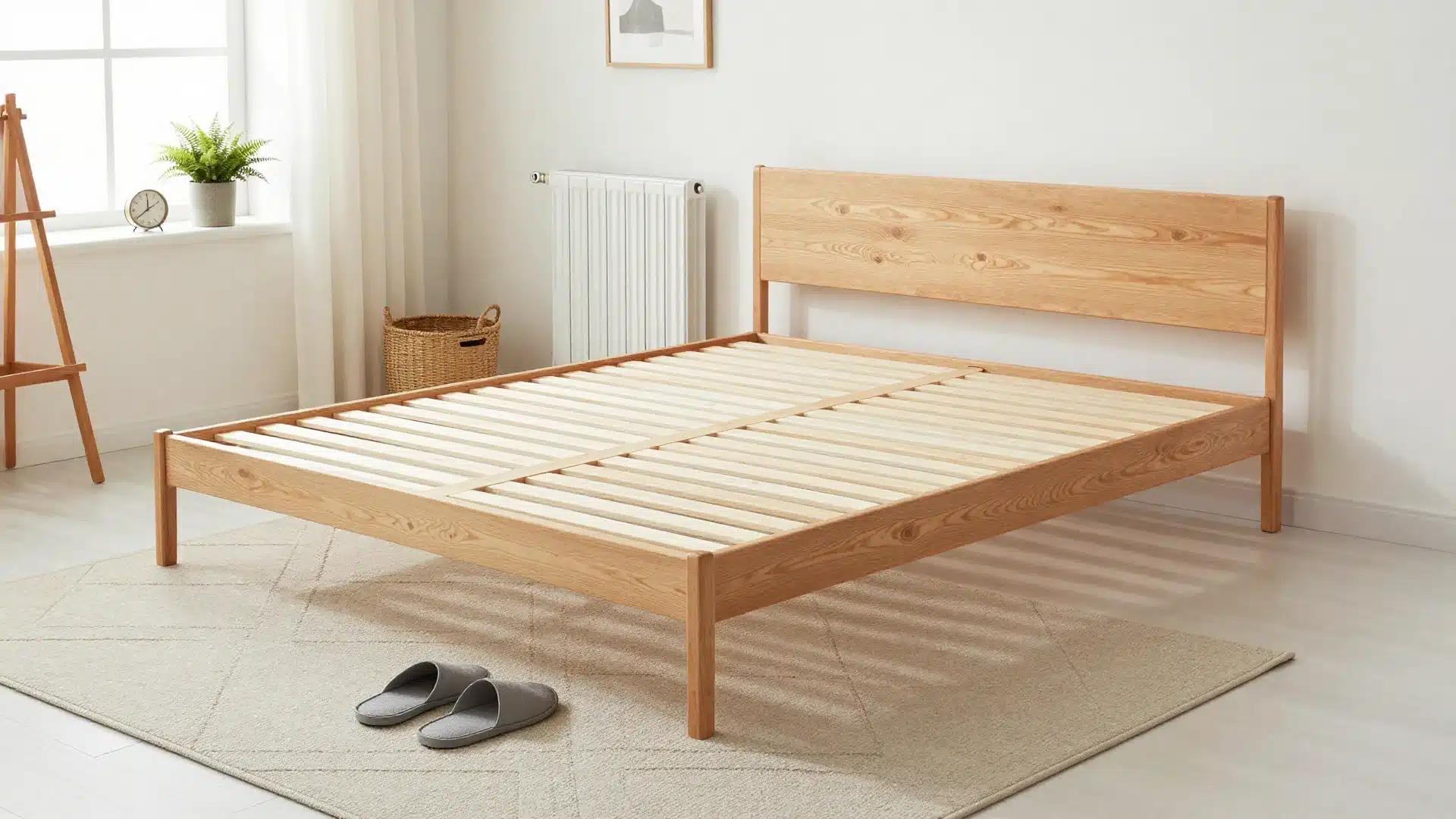
A platform bed is a low-profile bed frame with a built-in support surface made of wood slats, solid panels, or metal that holds a mattress directly without needing a box spring.
It sits closer to the floor than a traditional bed frame, usually between 5 and 12 inches off the ground, and works with most mattress types right out of the box.
How Does a Platform Bed Work?
Instead of relying on a box spring to hold up the mattress, a platform bed uses either a flat solid surface or a set of wooden or metal slats placed a few inches apart.
The slats carry the weight of the mattress and the sleeper evenly across the frame. On slatted models, gaps between the slats also let air move underneath the mattress, which helps it stay cooler and last longer over time.
Types of Platform Beds

Platform beds come in more styles than most people expect. Here is a quick look at the most common options so you can figure out which one fits your space and budget.
- Low-Profile Platform Bed: Sits very close to the floor and makes the room feel more open, especially in smaller bedrooms with low ceilings.
- Storage Platform Bed: Has built-in drawers or an under-bed compartment so you get extra storage without buying a separate dresser or shelving unit.
- Floating Platform Bed: Uses a recessed or center-mounted base so the frame appears to hover above the floor, giving the room a clean, open look.
- Upholstered Platform Bed: Covered in fabric or leather with a padded frame and headboard, which makes it comfortable to sit up against and adds warmth to the room.
- Solid Platform Bed: Has a completely flat wooden or plywood surface with no slats, offering the most stable and firm support for the mattress.
- Canopy Platform Bed: Combines the low platform structure with four vertical posts, adding height and a bold visual presence without needing a box spring.
Platform Bed vs. Panel Bed: Key Differences
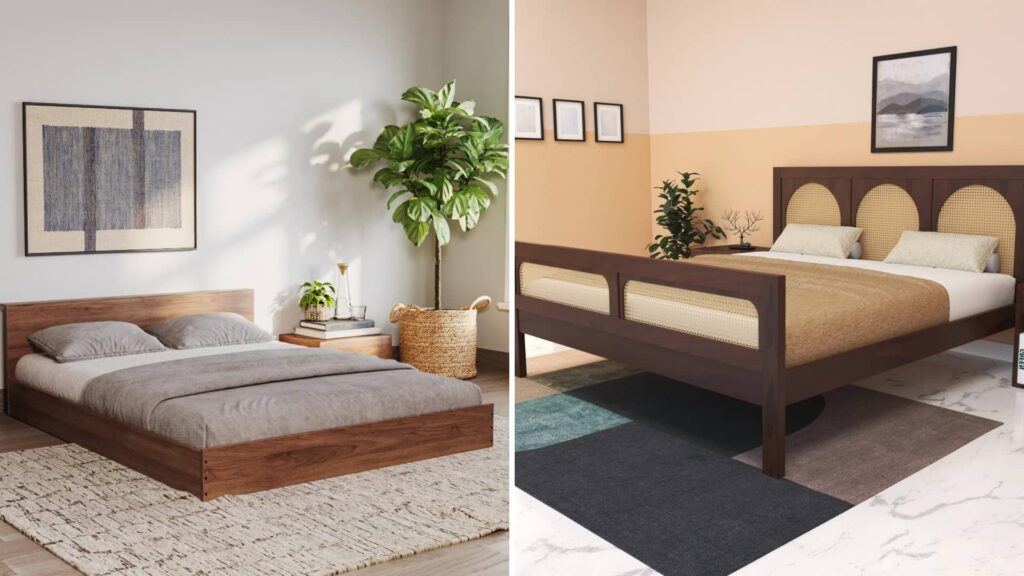
A lot of shoppers confuse these two, and it is easy to see why. Both are bed frames, both come in wood and metal, and both support a mattress. But how they do it is quite different, and that difference matters when you are comparing cost, comfort, and room size.
| Feature | Platform Bed | Panel Bed |
|---|---|---|
| Box spring required | No | Yes |
| Height off floor | Low (5 to 12 inches) | Higher (due to box spring) |
| Design style | Modern, minimal | Traditional, decorative |
| Price (typically) | Lower | Higher |
| Storage options | Often included | Rarely included |
| Best mattress match | Foam, latex, hybrid | Innerspring |
| Ideal room size | Small to medium | Medium to large |
| Mobility (getting in/out) | Harder for some | Easier due to height |
Pros and Cons of a Platform Bed
Before you buy, it is worth knowing what you are getting into. Platform beds work very well for most people, but they are not a perfect fit for everyone.
Pros:
- No box spring needed: You only buy the frame and the mattress, which cuts down the total cost right away.
- Works with most mattress types: Memory foam, latex, and hybrid mattresses all sit well on a platform base without any extra support underneath.
- Built-in storage on many models: Drawers or under-bed space come standard on a lot of platform frames, which is a big plus in smaller rooms.
- Makes a room feel larger: The low height keeps the visual weight of the bed down, so the room does not feel crowded.
- Better airflow on slatted models: The gaps between slats allow air to circulate under the mattress, which can help with cooling and reduce moisture buildup.
Cons:
- Lower height is not for everyone: Older adults or anyone with knee, hip, or back problems may find it harder to get in and out of a low bed each day.
- Slats can break over time: Wooden slats, especially on cheaper frames, can crack or shift under heavy use and will need to be replaced.
- Needs a better quality mattress: Without a box spring adding extra cushioning underneath, the mattress does more work on its own, so a thin or low-quality mattress may feel firmer than expected.
- Not easy to move: Platform frames are often heavier and more solid than panel beds, which makes rearranging furniture or moving to a new home more of an effort.
What Mattress Works Best on a Platform Bed?
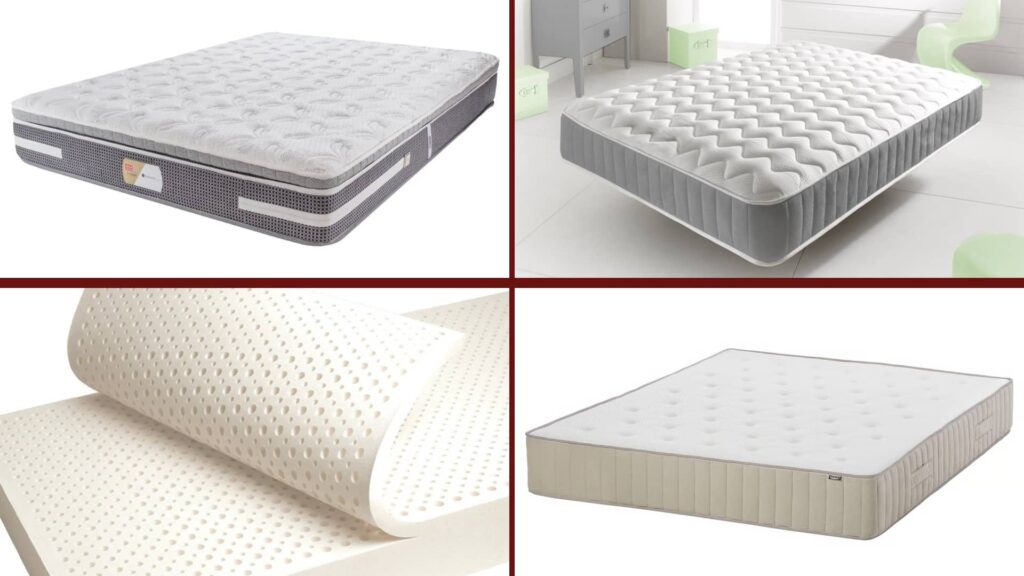
Picking the wrong mattress for a platform bed can lead to sagging, poor support, or even a voided warranty. The base type matters, whether solid or slatted, and so does the slat spacing.
1. Memory Foam
Memory foam is one of the most compatible choices for a platform bed. Its dense structure works well on both solid and slatted bases. If the bed has slats, keep the spacing at 3 inches or less.
Wider gaps can cause the foam to sink between the slats over time, which affects both comfort and mattress life. A thickness between 10 and 12 inches tends to work best.
2. Hybrid (Foam and Coils)
Hybrid mattresses combine coil support with foam layers on top, and they pair well with platform beds that have closely spaced or solid slats.
The coils need a stable base underneath to work correctly, so confirm the slat spacing before buying. A thickness of 12 to 14 inches is the common range for hybrid models on a platform frame.
3. Latex
Latex mattresses are heavier than foam, so they need a strong, well-built base to avoid sagging or uneven support over time. A solid panel platform or a slatted base with narrow spacing works best. Thickness between 10 and 13 inches is generally the right range.
4. Innerspring
Traditional innerspring mattresses were built to be used with a box spring, and many warranties actually require one.
You can place an innerspring on a platform base, but it may raise the overall bed height if you add a box spring on top. Check the warranty terms before skipping the box spring with this mattress type.
Platform Bed Sizes: What You Need to Know
Platform beds come in every standard US mattress size, so finding a match for your existing mattress is rarely a problem. That said, the size of the frame affects more than just how the bed fits, it also affects how the room feels and how easy the frame is to assemble and move.
| Size | Dimensions | Best For |
|---|---|---|
| Twin | 38 x 75 inches | Kids’ rooms, single sleepers in small spaces |
| Twin XL | 38 x 80 inches | Taller single sleepers, college dorms |
| Full | 54 x 75 inches | Single adults who want more sleeping space |
| Queen | 60 x 80 inches | Couples or single adults in standard bedrooms |
| King | 76 x 80 inches | Couples who want more room, larger bedrooms |
| California King | 72 x 84 inches | Taller sleepers, larger master bedrooms |
Note: Platform beds typically sit 12 to 24 inches off the ground depending on the frame design. For floating styles in King or Cal King sizes, confirm the frame has center support to prevent the middle from bowing under weight.
Platform Bed Materials: Which One Should You Choose?
The material of the frame affects how long it lasts, how heavy it is, and how it looks in your room. There is no single best option since it depends on your budget and bedroom style.
- Solid Wood (Oak, Walnut, Teak, Rosewood, Mango Wood): Durable, warm looking, and long lasting. Works well in both classic and modern rooms. Heavier than other materials, but holds up well under daily use.
- Metal (Steel or Iron): Lightweight, affordable, and often the easiest to assemble. Works best in industrial or minimal room styles. Can create some noise if the joints loosen over time.
- Upholstered (Fabric or Leather): Adds a soft, padded feel to the frame and headboard. Comfortable to lean against. Requires more regular cleaning to keep it looking good.
- Engineered Wood or MDF: More affordable than solid wood and offers a clean, finished look. Less durable under heavy use or moisture exposure compared to solid wood.
How to Set Up a Platform Bed: Step-by-Step
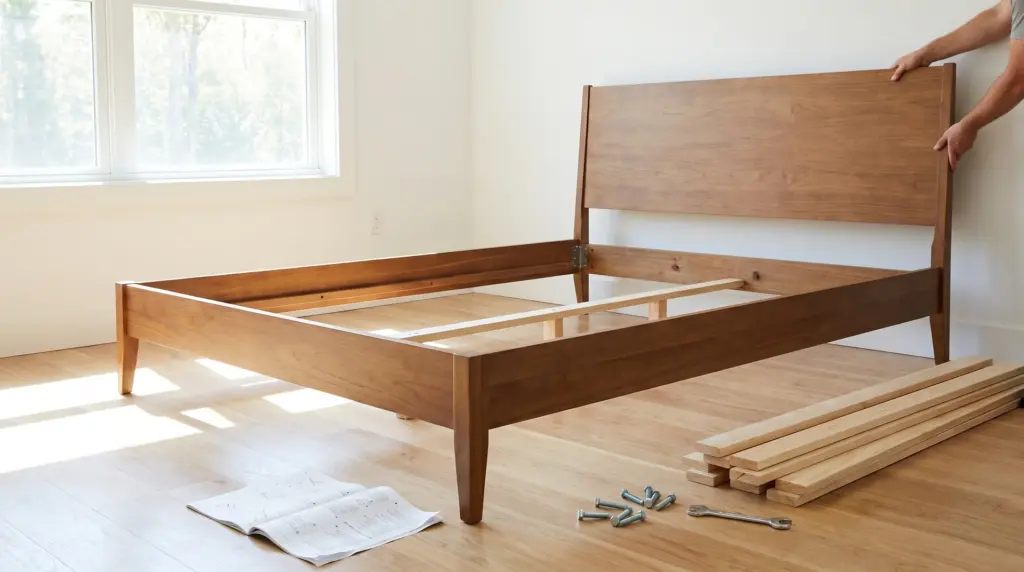
Setting up a platform bed is straightforward, and most frames can be assembled in under an hour with one other person helping. Here is how to do it without frustration.
Step 1: Unbox and Lay out All Parts
Spread the pieces out on the floor and cross-check each part against the instruction list. Missing a bolt at this stage is easier to fix before you start than after.
Step 2: Attach the Headboard and Footboard to The Side Rails
Connect the pieces using the provided bolts or screws. Do not fully tighten yet since you may need to adjust alignment as you go.
Step 3: Lock the Side Rails Into the Frame
Once the headboard and footboard are connected, tighten all bolts fully and check that the frame sits level and does not wobble.
Step 4: Place the Slats Across the Frame
Lay each slat evenly from one side rail to the other. If you have a memory foam mattress, keep slat spacing at 3 inches or less. For hybrid or latex, 3 to 5 inches is generally fine.
Step 5: Add Plywood if Included
Some frames come with a plywood sheet to place on top of the slats for a fully solid surface. Lay it flat and confirm it covers the entire slat area.
Step 6: Set the Mattress in Place
Place the mattress on the base and check that it sits flat with no overhanging edges. Give the frame a gentle push from each side to check for stability.
Step 7: Make the Bed and Check Again
Add your sheets and bedding, then sit and lie on the bed for a moment. If anything feels unsteady or creaky, go back and tighten the joints before regular use.
Who Should Buy a Platform Bed?
A platform bed is a solid fit for anyone who wants a modern looking bedroom without spending on a box spring, needs extra storage in a small apartment or room, sleeps hot and benefits from airflow under the mattress, or uses a memory foam, latex, or hybrid mattress.
It is also a good choice for children’s rooms since the lower height reduces fall risk.
On the other hand, if you have joint or mobility concerns, prefer the taller height of a classic bed, or already own an innerspring mattress with a box spring, a panel bed may feel more comfortable for your daily routine.
The Bottom Line
A platform bed is one of the more practical furniture choices you can make for a bedroom. You skip the box spring, often get built-in storage, and end up with a frame that works with most modern mattresses.
The low profile suits most room sizes, and the range of materials means you can find one that fits both your budget and the way your room looks.
If you are comparing a platform bed to a panel bed, the main question to ask is how high you want your sleeping surface and whether you need that extra storage space underneath.
Either way, knowing exactly what a platform bed is and how it works puts you in a much better position to shop smart.
Got a question about your specific room setup or mattress? Drop it in the comments below.