

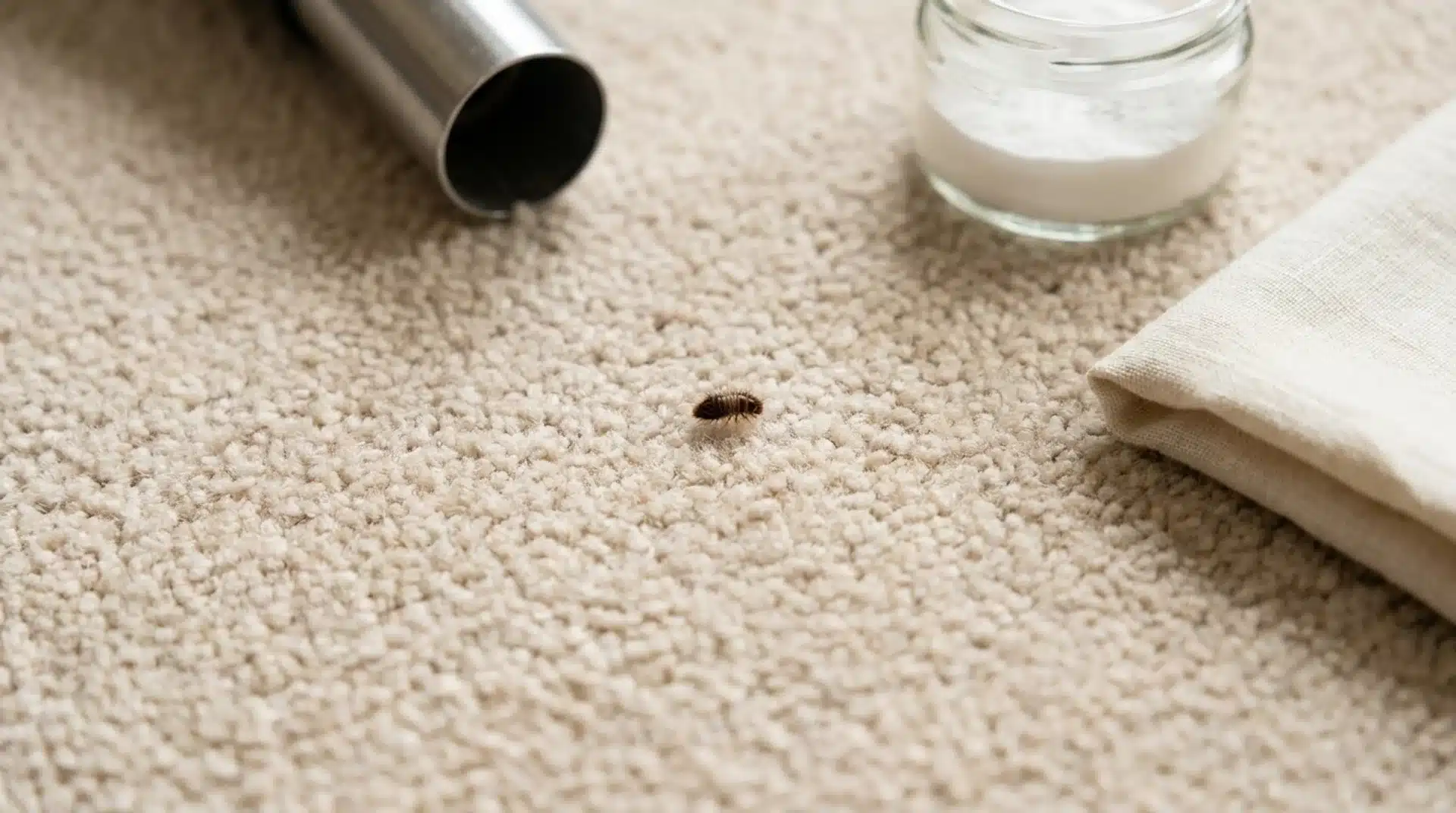
You pull your favorite wool sweater out of the closet, and there it is, a hole right through the front. No moths in sight. No obvious reason. Just damage that was not there last season.
If this sounds familiar, carpet beetles are likely the reason. These small insects are hard to spot until the damage is already done.
This guide walks you through identifying carpet beetles, removing them from every part of your home, and preventing them from coming back.
What Are Carpet Beetles?
Carpet beetles are tiny, oval-shaped insects from the Dermestidae family, roughly 1/16 to 1/8 inch long. Adults feed on pollen and nectar outside and rarely cause problems indoors.
The larvae are the real threat. They feed on natural fibers like wool, silk, fur, leather, and feathers, and they do it quietly, in dark corners, long before anyone notices.
They are among the most common household pests across the U.S., and they cause more fabric damage each year than most homeowners expect.
Types of Carpet Beetles
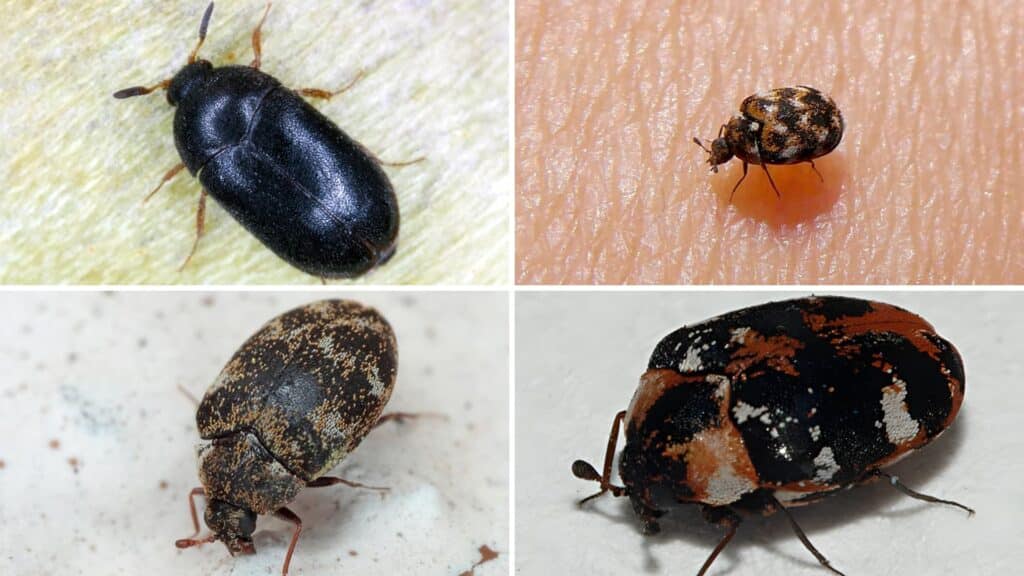
Knowing which carpet beetle species is in your home will not change how you treat it, but it helps you check the right hiding spots. Here is a quick breakdown of the four most common types found in U.S. homes.
- Black Carpet Beetle: The most widespread and destructive species in the U.S., solid black or reddish-brown, with golden-to-dark brown larvae that have a long tail of hairs.
- Varied Carpet Beetle: Common across the entire country, small and round with white, brown, and yellow scale patterns on its back, and striped larvae that are broader at the rear.
- Furniture Carpet Beetle: Slightly rounder than the varied carpet beetle, with mottled black, white, and orange-yellow scales; larvae start white and turn dark red or chestnut brown as they grow.
- Common Carpet Beetle: Gray to black with a band of orange-red scales along the back, less common in southern states but found nationwide, with reddish-brown, hair-covered larvae.
How Do Carpet Beetles Get Into Your Home?
Carpet beetles do not need a wide-open door to get inside. They are small, they fly, and they are very good at finding ways in through gaps you would never think to check.
| Entry Method | Details |
|---|---|
| Open windows and doors | Adults fly in from outdoor flowering plants where they feed on pollen |
| Torn or missing screens | Small gaps in window or door screens are enough for adults to pass through |
| Cracks around vents and baseboards | Larvae and eggs can come through tiny openings in walls and floor joints |
| Cut flowers brought inside | Adult beetles often ride in on fresh flowers from the garden |
| Second-hand furniture and clothing | Eggs or larvae hidden in fabric can hitch a ride into your home unnoticed |
| Pets | Pet fur, dander, and bedding attract beetles and can carry eggs inside |
| Bird or rodent nests in attics | Nests in wall voids or attics are a major hidden food source that draws beetles in |
Signs You Have a Carpet Beetle Infestation
The tricky part about carpet beetles is that you rarely see them at first. By the time they show up, damage is already happening somewhere in your home. Here are the clearest signs to look for.
- Holes in fabric and carpet: Irregular holes in wool clothing, silk, blankets, or rugs, usually in one large area rather than scattered spots.
- Shed skins near baseboards: Bristly, hollow casings left behind by growing larvae, often found along baseboards, inside closets, and under furniture.
- Dead adult beetles near windows: Adults are attracted to light, so finding small dead beetles on windowsills or near light fixtures is a common first sign.
- Tiny eggs in dark areas: Off-white eggs less than 1 mm long, found in air ducts, behind furniture, or inside storage boxes.
- Skin rash or unexplained irritation: Red, itchy bumps that look like insect bites, usually caused by larval hairs making contact with skin through infested clothing or bedding.
How to Get Rid of Carpet Beetles: Step-by-Step
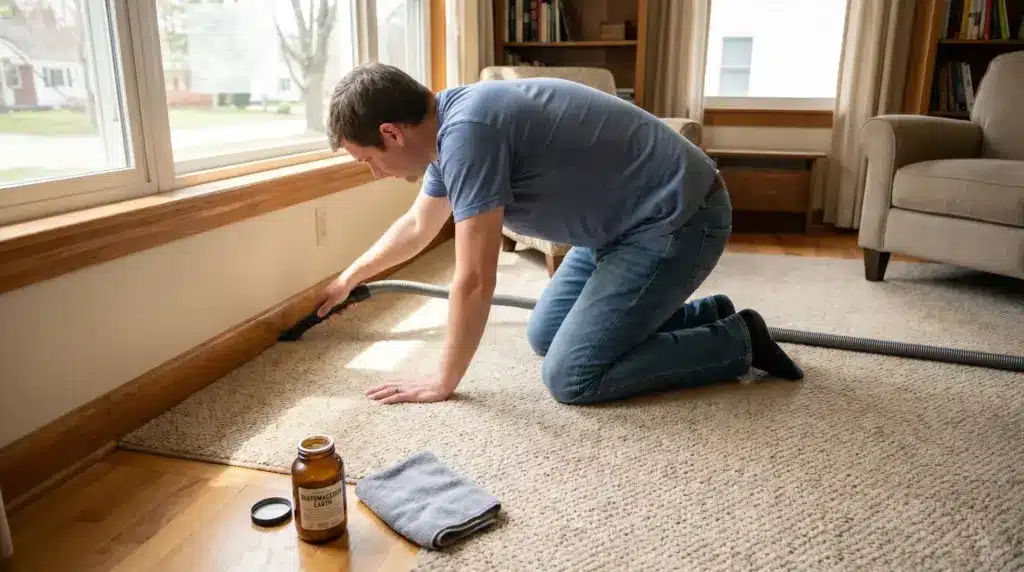
Treating carpet beetles takes more than one product or one afternoon of cleaning. The key is working through a clear process, starting with finding where they are and ending with blocking every route they used to get in.
Step 1: Find the Source First
Before anything else, locate where the larvae are feeding. Check closets, the undersides of furniture, air vents, baseboards, and any stored fabrics. Look for larvae, shed skins, or fabric damage.
Do not skip the attic or crawlspace. Dead rodents, old bird nests, and insulation debris in those areas are among the most common hidden sources of a carpet beetle problem that keeps coming back after treatment.
Step 2: Vacuum Thoroughly and Often
Vacuuming is the most effective first action you can take. Use attachments to reach deep along baseboards, under furniture, inside closet corners, and along carpet edges.
Vacuum at least once a week until you see no further signs of activity. Empty the canister or throw away the bag outside immediately after each use, since eggs and larvae can survive inside and make their way back out if left in the machine.
Step 3: Wash and Heat-Treat Infested Items
Wash clothing, bedding, and curtains in the hottest water the fabric can handle. High heat kills eggs, larvae, and adults on contact. Items that cannot be washed in a washing machine should be dry-cleaned.
For rugs and upholstery, a steam cleaner works well. Repeated slow passes with a professional-grade or home steam cleaner over seams, edges, and dark corners will clear out all life stages.
Step 4: Apply Diatomaceous Earth or Boric Acid
Food-grade diatomaceous earth (DE) is a low-toxicity powder that kills crawling larvae by damaging their outer layer. Sprinkle it over affected areas, leave it for up to 48 hours, then vacuum.
Boric acid works similarly but acts as a digestive poison for insects. Apply a light, even coat over infested carpet or floor areas, wait three hours, then vacuum.
Wear gloves and a dust mask for both. Keep children and pets away from treated areas until you have vacuumed thoroughly.
Step 5: Use Insecticide Sprays for Moderate to Severe Infestations
If natural methods are not enough after two weeks, insecticide sprays are the next step. Active ingredients effective against carpet beetles include bifenthrin, lambda-cyhalothrin, permethrin, and beta-cyfluthrin.
Apply along carpet edges, closet floors, and baseboards. Do not spray directly onto clothing, bedding, or food-preparation surfaces.
Leave the home for a few hours after treatment and follow all label instructions carefully. For ongoing infestations, follow-up treatment is often needed two to four weeks after the first round.
Step 6: Set Sticky Traps to Track Remaining Activity
Pheromone sticky traps attract adult carpet beetles and provide a clear picture of where activity is still occurring after treatment. Place them near windows, along walls, and inside closets.
They will not clear an infestation on their own, but they are very useful for monitoring whether your treatment is working and where further attention is needed.
How to Get Rid of Carpet Beetles in Specific Areas
Carpet beetles do not stay in one place. They spread wherever they can find food and dark, undisturbed space. Here is how to treat each area of your home.
1. In Carpets and Rugs
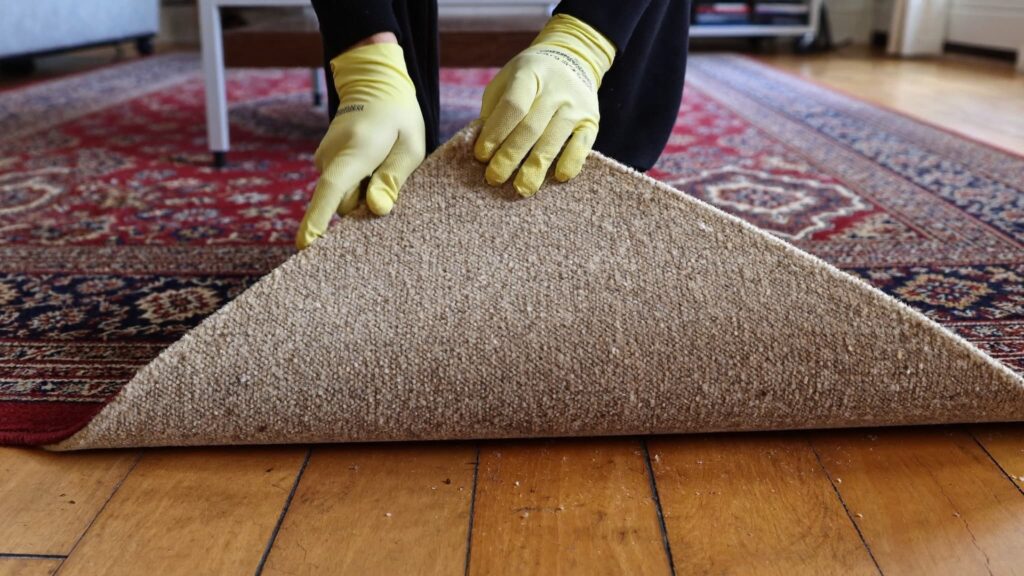
This is the most common place people find carpet beetle damage, but it is rarely the only place they are living.
- Vacuum both sides of the area rugs, including the underside
- Steam clean after vacuuming, focusing on edges and corners
- Treat both sides with an appropriate insecticide if live larvae are found
- Roll up and store clean rugs in sealed plastic if they are not in regular use
2. In Closets and Clothing
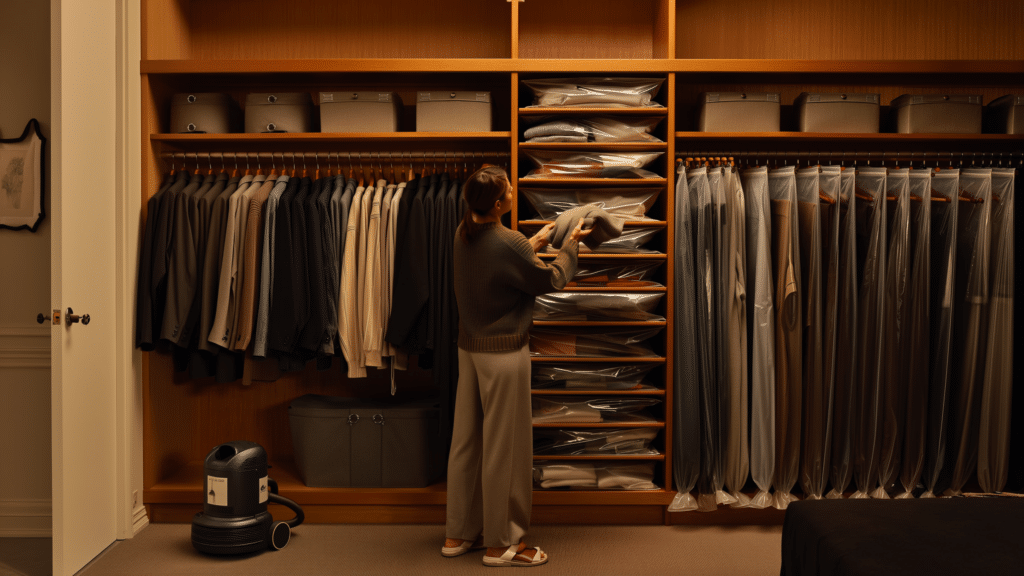
Closets are among the favorite feeding grounds for carpet beetle larvae because they are dark, quiet, and full of natural-fiber clothing.
- Remove all clothing and inspect each item before washing or discarding
- Wash or dry-clean everything, even items that look undamaged
- Vacuum the closet floor, walls, ceiling, corners, and door frames thoroughly
- Store clean, treated clothing in airtight bags or sealed containers
3. In Furniture and Upholstery
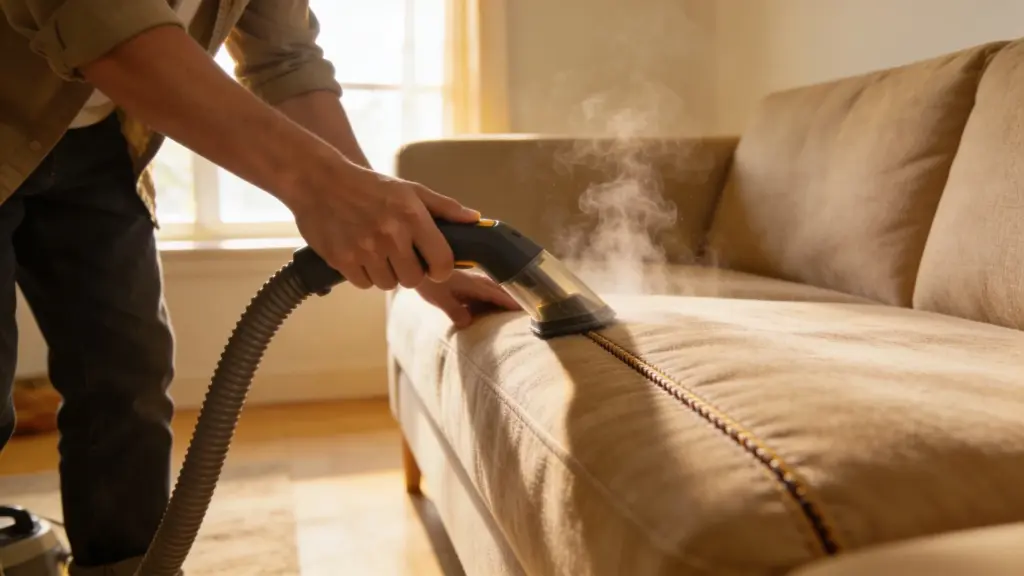
Upholstered furniture holds warmth, natural fiber stuffing, and often pet hair, making it a prime spot for larvae.
- Vacuum seams, cushions, and undersides of all furniture
- Steam clean cushion covers on the highest safe setting
- Check the back panels and the area beneath seat cushions, where larvae hide undisturbed
- Use a pheromone trap nearby to check for continued adult activity after treatment
4. In the Pantry and Dry Foods

The black carpet beetle, in particular, is drawn to stored dry goods like cereals, grains, flour, and spices.
- Check all open or loosely stored dry food items for larvae or fine debris
- Discard infested food in sealed plastic bags before putting it in the trash
- Wipe shelves clean with a vinegar and water solution
- Store all pantry items in airtight glass or plastic containers going forward
5. In the Attic, Basement, and Crawl Spaces
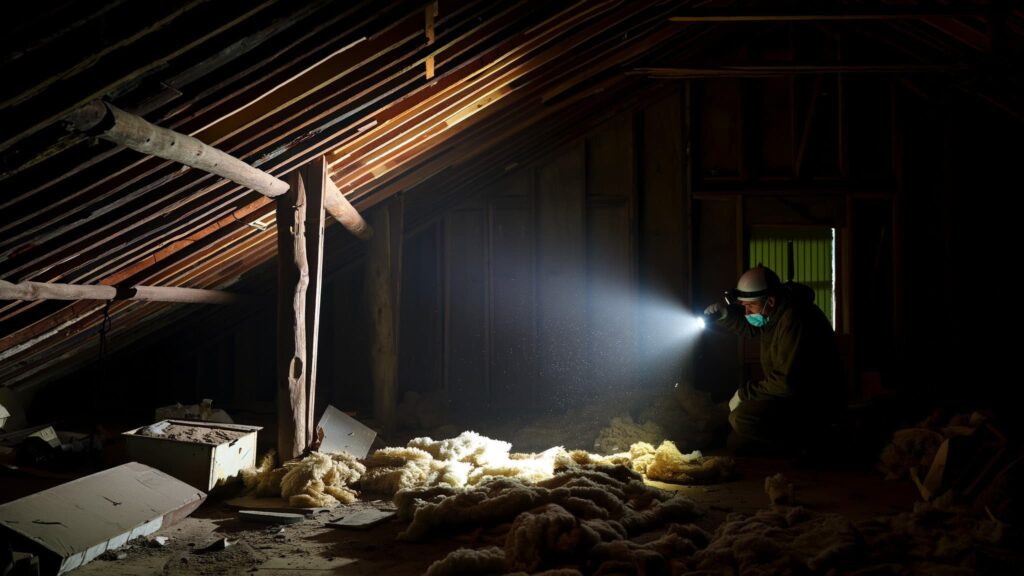
These areas are often overlooked in most home treatments, which is why an infestation can come back after the main living areas have been treated.
- Inspect for dead rodents, bird nests, or wasp nests, all of which attract carpet beetles
- Vacuum lint and debris from corners and insulation surfaces
- Apply insecticidal dust to wall voids and hard-to-reach gaps
- Seal any cracks or gaps that connect these spaces to the rest of the home
6. In Your Car
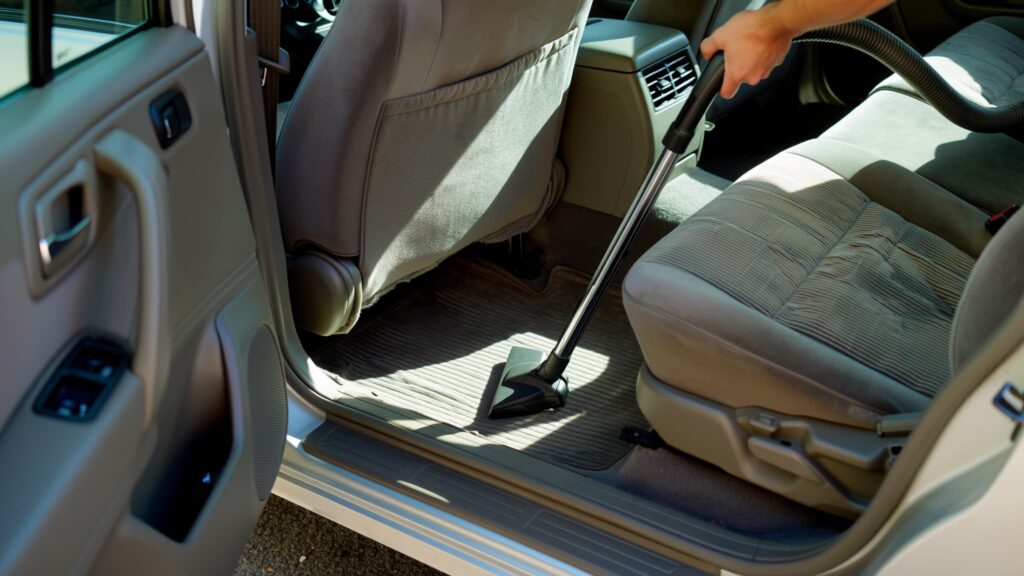
Car interiors are often overlooked, but carpet beetles can live in floor mats and fabric seats.
- Vacuum all fabric seats and floor mats, including under the seats
- Use a portable steam cleaner on fabric seats if possible
- Leave car windows open on very hot days to raise the interior temperature and dry out potential nesting spots
- Check any bags or clothing kept regularly in the car
DIY vs. Professional Exterminator: Which One Do You Need?
Choosing between handling it yourself and calling a professional depends on how far the infestation has spread and how long it has been going on. Here is a clear comparison.
| Factor | DIY Treatment | Professional Exterminator |
|---|---|---|
| Best for | Small, contained infestation in one area | Moderate to severe infestations across multiple rooms |
| Cost | $50 to $150 for products | $150 to $4,000, depending on severity and method |
| Effectiveness | Works well when caught early | Higher success rate for serious or recurring infestations |
| Time to results | 2 to 3 weeks with consistent effort | 2 to 3 professional visits over several weeks |
| Access to hidden areas | Limited without professional tools | Treats wall voids, attics, and ducts with insecticidal dust |
| Risk of incomplete treatment | Higher if the source is not fully found | Lower, as professionals inspect and treat all life stages |
| Follow-up visits | Up to you | Usually included or offered as part of a plan |
| Best situation | First infestation, caught before major damage | Repeated infestations, heavy damage, or spread to multiple areas |
When to call a professional:
- DIY methods have not worked after three weeks
- Infestation has spread to more than two rooms
- Larvae are found in wall voids, the attic, or the crawlspace
- Someone in the home is having ongoing skin or respiratory reactions
- This is not the first time you have dealt with carpet beetles in the same home
According to cost data from Angi and HomeAdvisor, professional carpet beetle extermination averages $200 to $350 per visit, with heat treatment for severe whole-home infestations reaching up to $4,000. Most moderate infestations require two to three visits spaced two to four weeks apart.
How to pick the right company:
- Confirm they are licensed and insured in your state
- Ask whether follow-up visits are included in the quoted price
- Get quotes from at least three companies
- Check reviews on Google and HomeGuide before booking
- Choose a company with at least five years of experience in residential pest control
Carpet Beetles vs. Bed Bugs vs. Clothes Moths
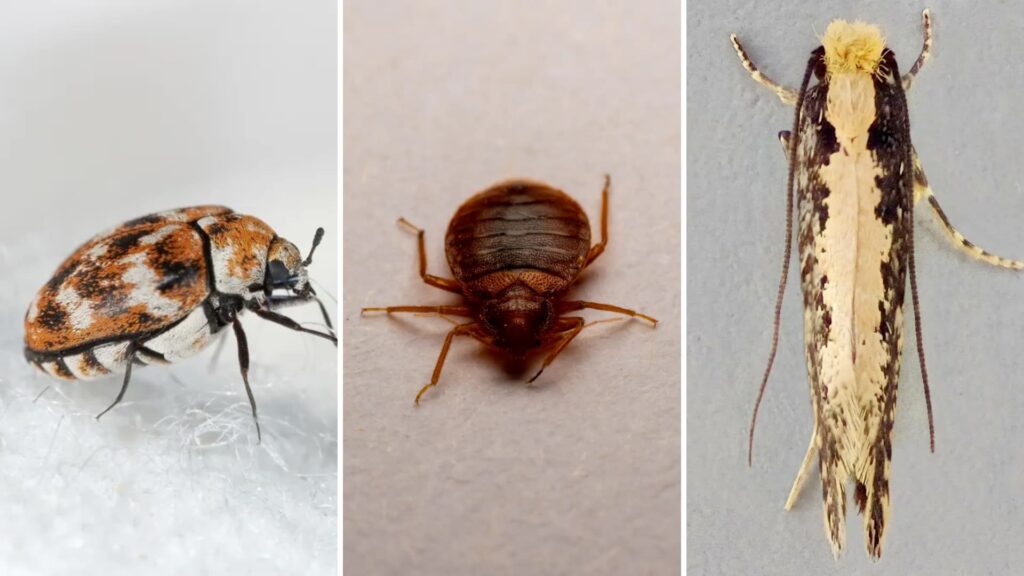
These three pests often get confused because they all appear in similar places and cause similar-looking damage. Knowing the difference helps you treat the right problem from the start.
Appearance (adult): Carpet beetles are oval, 1/16 to 1/8 inch, with mottled brown, black, or yellow patterns. Bed bugs are flat, reddish-brown, and about 1/4 inch long. Clothes moths are small, tan or gold-colored flying insects.
What they eat: Carpet beetles and clothes moths both feed on natural fibers like wool, silk, and fur. Bed bugs feed only on human and animal blood.
Do they bite?: Bed bugs bite humans. Carpet beetles and clothes moths do not bite, though carpet beetle larvae can cause skin irritation.
Signs of damage: Carpet beetles leave one large area of damage on fabric. Clothes moths leave scattered small holes. Bed bugs leave blood spots on sheets and rows of bite marks on skin.
Where they hide: Carpet beetles and clothes moths hide in closets, under furniture, and in stored fabrics. Bed bugs hide in mattress seams, bed frames, and walls near sleeping areas.
Treatment: Carpet beetles respond to vacuuming, heat treatment, and insecticide. Clothes moths are treated similarly. Bed bugs require a separate, more intensive treatment plan, often including whole-room heat treatment.
How to Prevent Carpet Beetles From Coming Back
Once you have cleared a carpet beetle infestation, the goal is to make sure it does not return.
Store natural fiber clothing and bedding in airtight containers, and clean fabrics before putting them away, since perspiration and food residue attract beetles.
Vacuum carpets, furniture, and baseboards at least once a week and pay attention to corners, under beds, and behind large appliances where lint and pet hair collect.
Check window and door screens for gaps, seal cracks around baseboards and vents, and inspect any second-hand furniture or clothing before bringing it inside.
Shake out and wash secondhand items on a hot cycle right away.
The Bottom Line
Finding holes in your clothes or bald patches in your carpet is frustrating, especially when you do not know the cause right away.
Carpet beetles are among the pests that do real damage long before anyone spots them. The good news is that with a clear plan, consistent cleaning, and the right products, getting rid of carpet beetles is very doable.
Start by finding the source, heat-treat everything that can be washed, and seal entry points once the infestation is cleared.
If the problem keeps coming back despite your efforts, a licensed pest control professional is the right next call.
Have questions about your specific situation? Drop them in the comments below.