

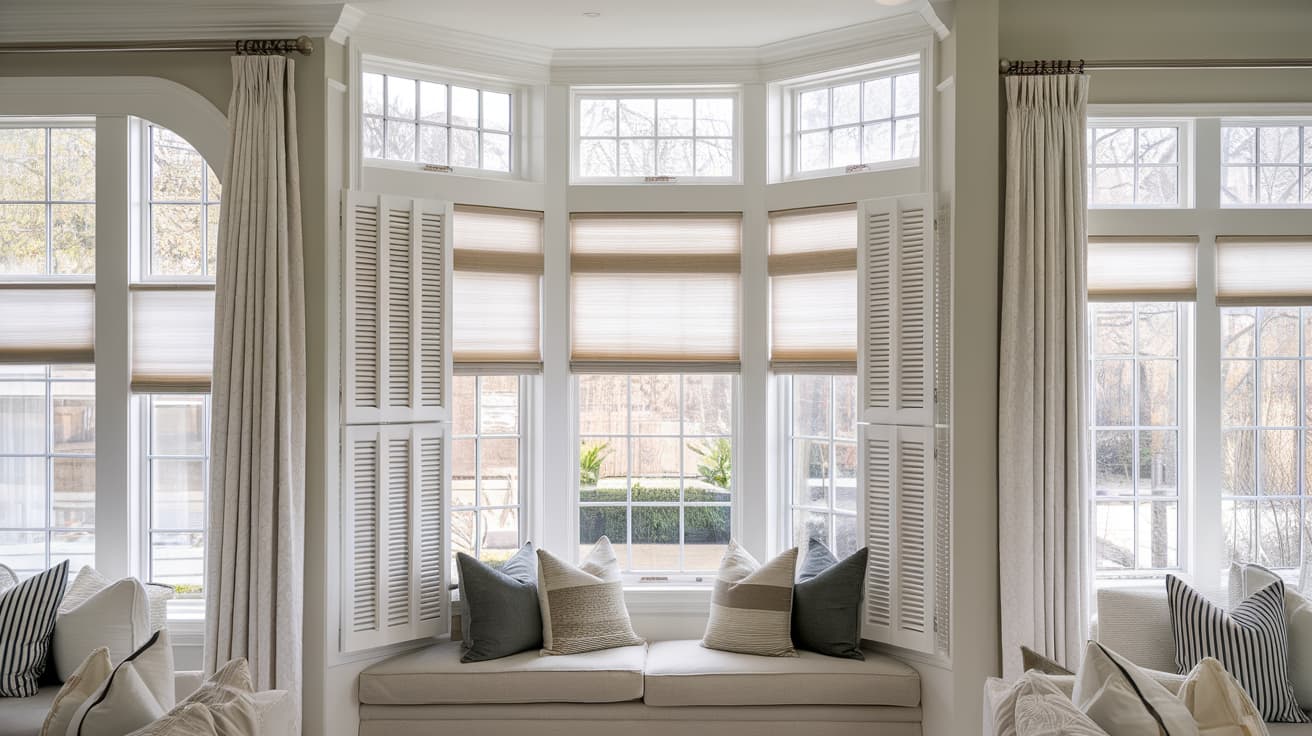
Windows do more than just let light into a home; they also influence privacy, comfort, and the overall look of a room. That’s where window coverings come in.
From simple curtains to modern blinds and shades, the right choice can help me control sunlight, add style, and make a space feel more comfortable.
In this guide, I’ll walk you through the most popular types of window coverings used in homes today. Each option serves different purposes, whether it’s privacy, light control, or enhancing the room’s style.
Some choices can even help me manage indoor temperature and serve as energy-efficient window coverings.
By the end of this list, I’m sure you’ll have a clear idea of which window covering suits your home, daily needs, and personal taste.
What Are Window Coverings?
Window coverings are essential elements in any home, offering control over light, privacy, and comfort. They enhance a room’s ambiance and functionality. Here are some popular types:
- Curtains: Lightweight fabric that softens sunlight and adds decorative appeal. Common in living rooms and bedrooms.
- Drapes: Heavier fabric that blocks light effectively and provides extra insulation. Great for bedrooms and colder climates.
- Blinds: Slatted coverings made from wood or metal, providing adjustable light control and privacy. Ideal for offices and kitchens.
- Shades: Fabric or woven materials that roll up or down, offering versatile light filtering. Often used in modern homes.
- Shutters: Solid panels that can be adjusted for light and privacy. Perfect for classic or rustic home styles.
Window coverings combine function and style to create a comfortable, private space that suits any room’s needs.
Types of Window Coverings
Below are some common window coverings used in homes and offices, along with their key features and ideal uses.
1. Curtains
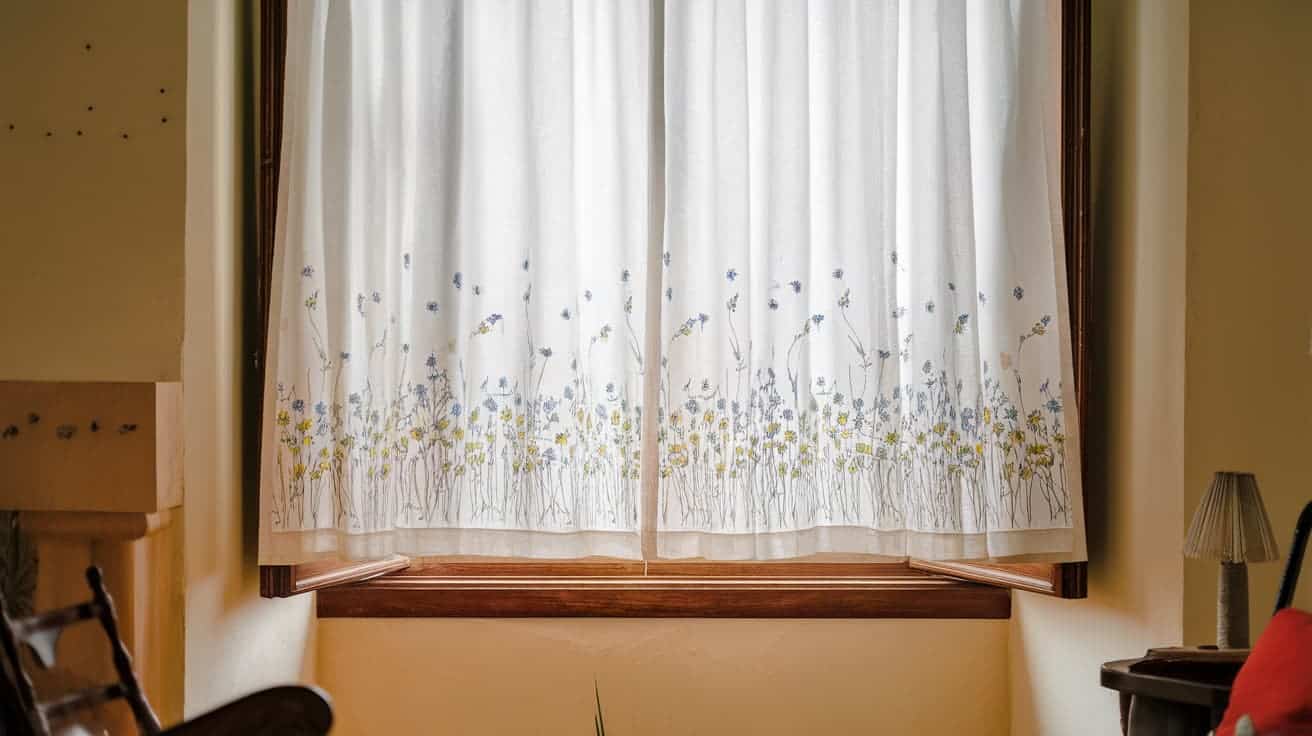
Curtains are one of the most common types of window coverings used in homes. They are fabric panels that hang from a rod above the window and come in many colors, patterns, and lengths.
Common materials include cotton, linen, polyester, and sheer fabrics. Curtains provide softness and decoration while allowing gentle light to enter the room.
They work well for casual privacy and relaxed spaces. Curtains are often used in bedrooms, living rooms, and dining areas to create a comfortable, inviting feel.
2. Drapes
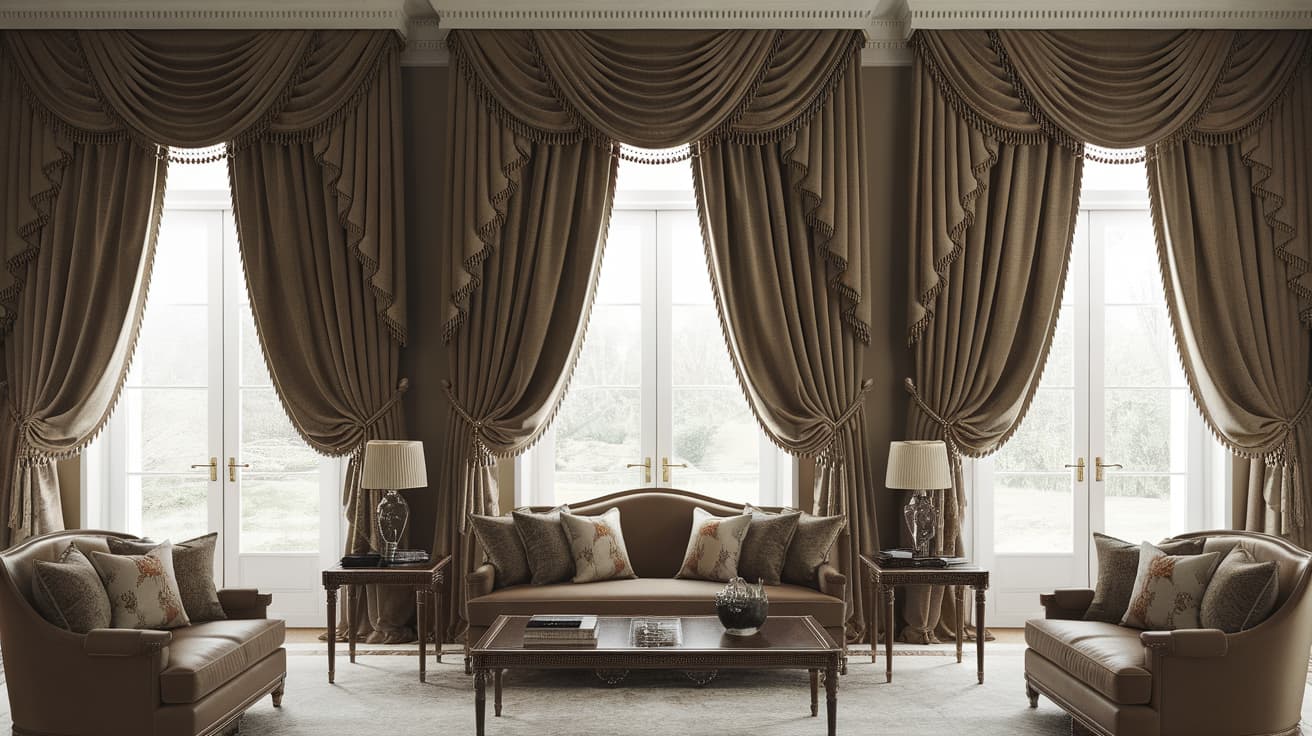
Drapes are similar to curtains but are usually made from thicker and heavier fabric. This extra weight allows them to block more light and offer better insulation for a room.
Many drapes also include lining, which improves their ability to keep heat in during winter and reduce sunlight during summer.
Blackout and thermal drapes are common choices for bedrooms where darkness and temperature control matter.
Drapes often create a more formal look, making them popular in living rooms, dining rooms, and large window spaces.
3. Blinds
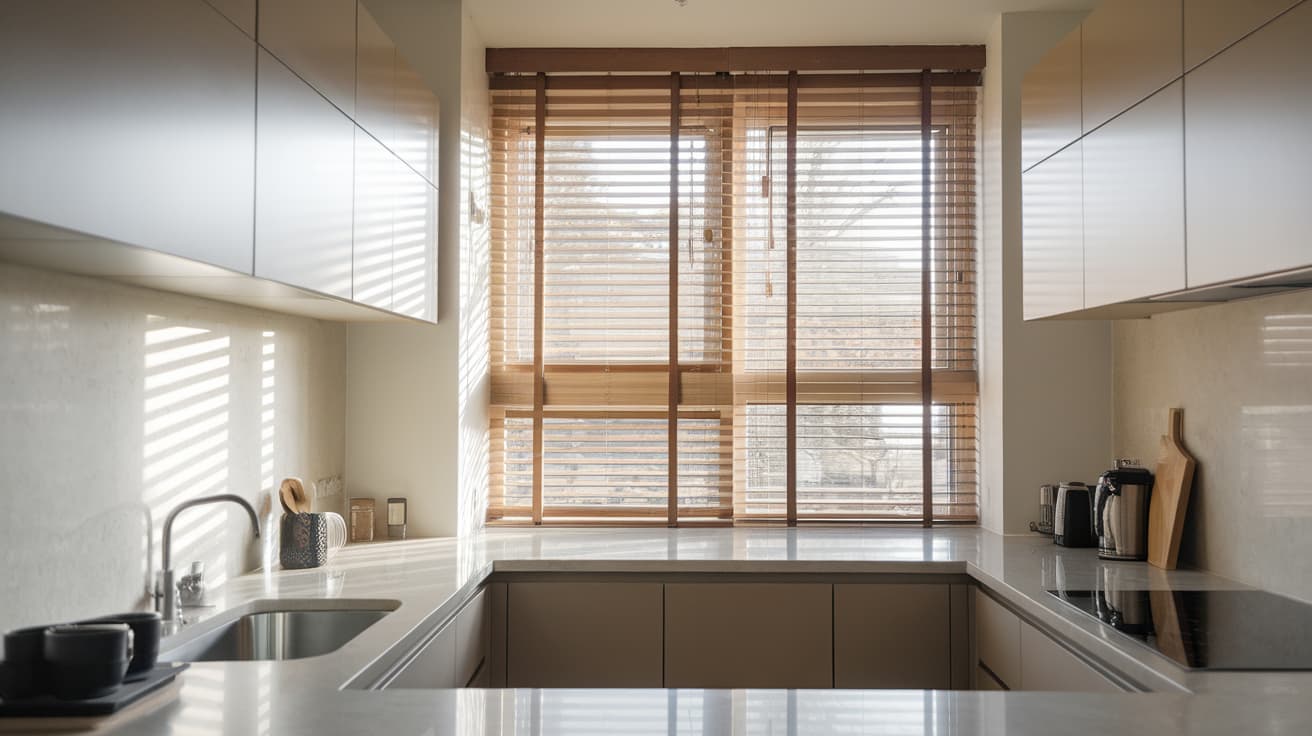
Blinds are window coverings with horizontal or vertical slats that can tilt to control light. These slats are commonly made from vinyl, wood, aluminum, or faux wood.
Blinds allow users to easily adjust the amount of sunlight entering a room while maintaining privacy. They are practical, durable, and easy to clean, which makes them a popular choice for kitchens, bathrooms, and office spaces.
Their simple design also works well in modern, minimalist interiors, where clean lines are preferred.
4. Roller Shades

Roller shades are a simple and modern window covering made from a single piece of fabric that rolls up around a tube at the top of the window. They are easy to raise or lower using a chain, spring, or motorized system.
Roller shades come in many materials, including light-filtering fabrics that soften sunlight and blackout options that block it completely.
Their smooth and minimal design fits well in contemporary interiors. Roller shades are a good choice for bedrooms, living rooms, and offices where a neat appearance is preferred.
5. Roman Shades
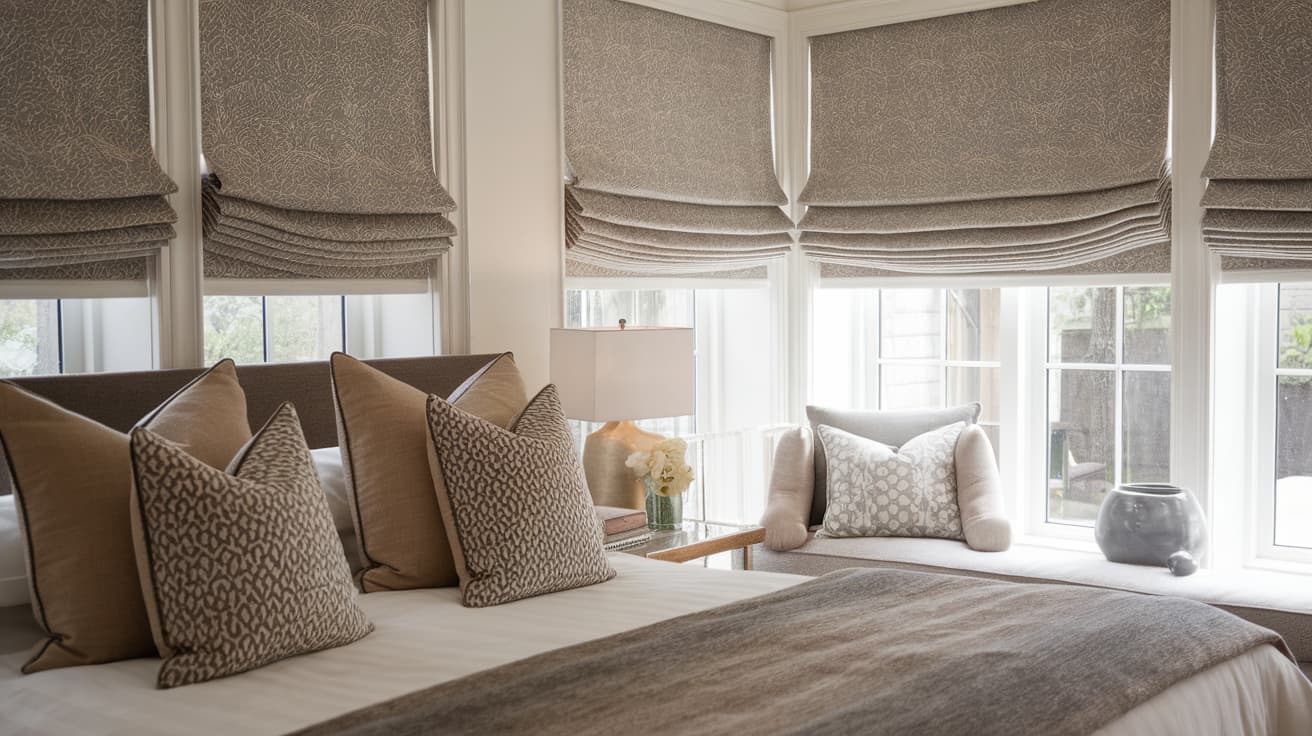
Roman shades are fabric window coverings that fold neatly into soft horizontal pleats when raised. This design gives them a polished and elegant appearance that combines the softness of curtains with the structure of shades.
Roman shades come in many fabrics, patterns, and textures, making them suitable for a range of interior styles. They work well in bedrooms, dining rooms, and living rooms where both beauty and practicality are important.
Depending on the fabric thickness and lining, Roman shades can also help reduce heat loss and improve insulation.
6. Cellular Shades
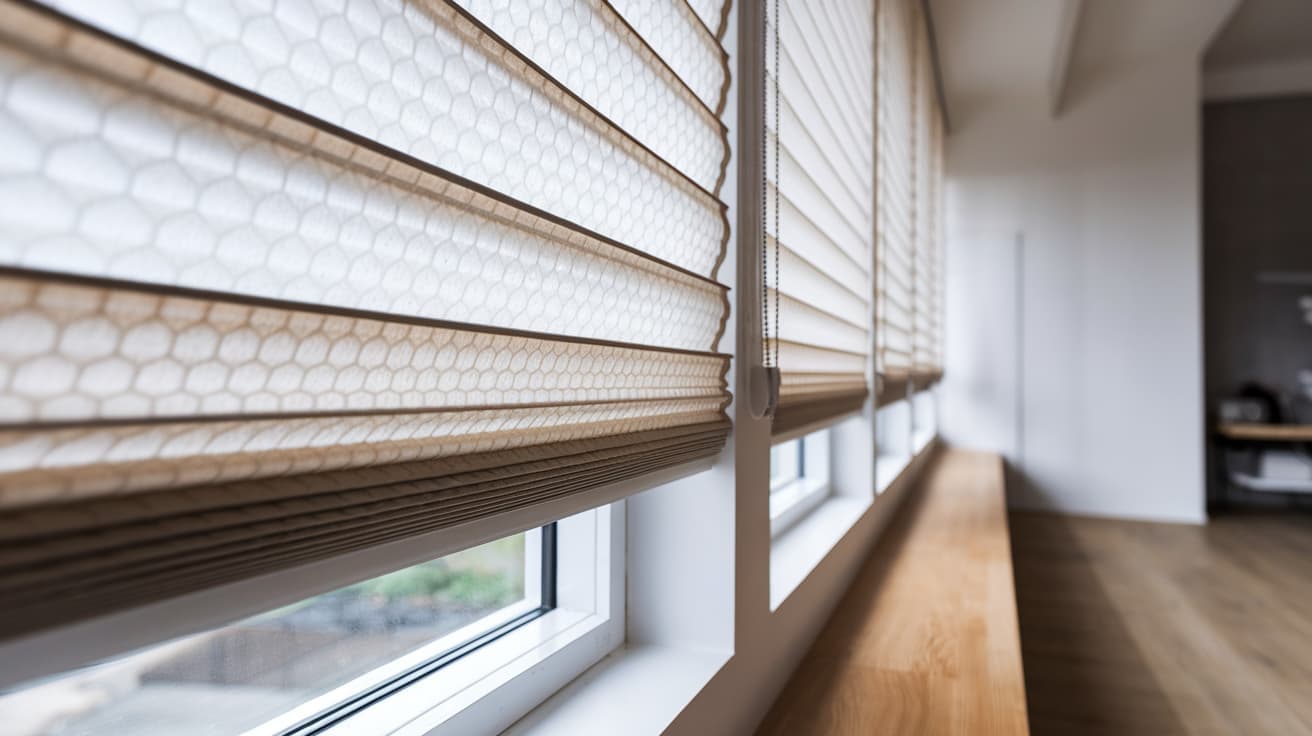
Cellular shades have a unique honeycomb design that traps air inside small pockets within the fabric. This structure helps create a layer of insulation between the window and the room.
Because of this design, cellular shades are among the most energy-efficient window coverings available today. They help reduce heat loss during colder months and limit heat gain when the weather is warm.
Cellular shades are a practical choice for bedrooms, living rooms, and large windows where maintaining indoor comfort and controlling energy use is important.
7. Solar Shades
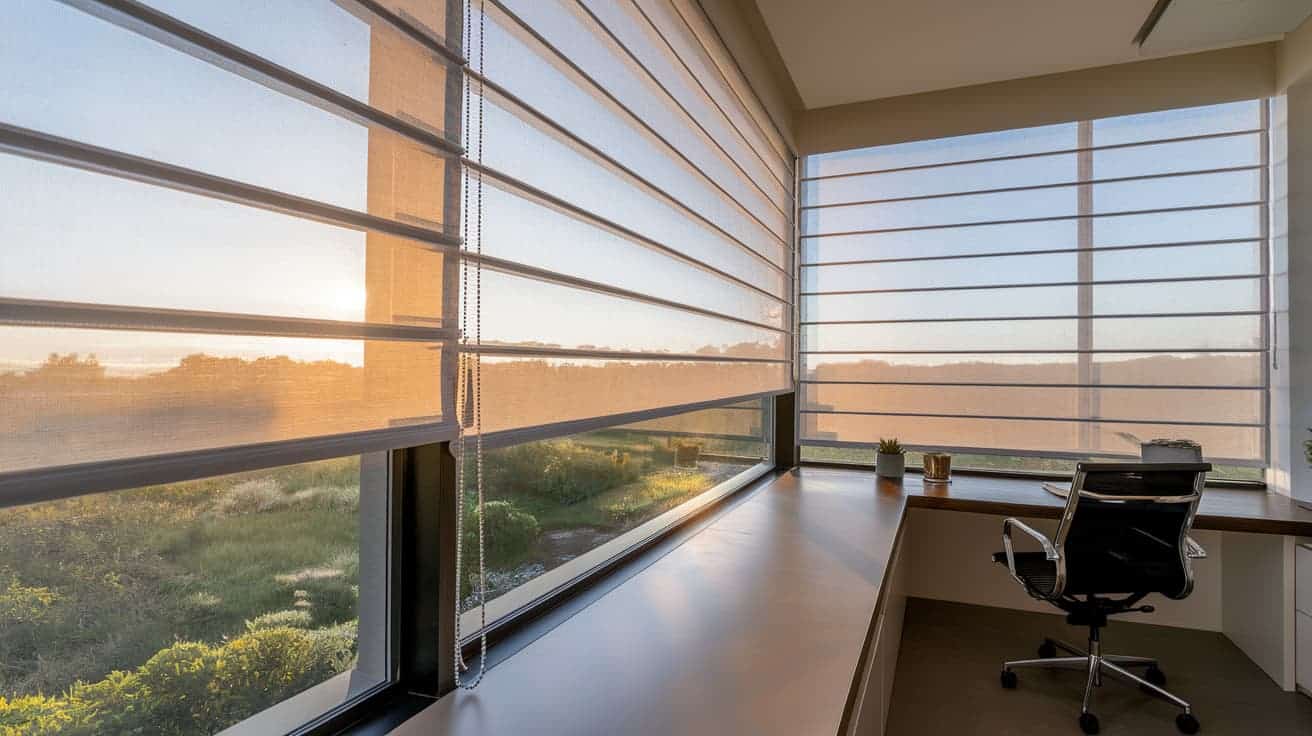
Solar shades are designed to reduce glare and block harmful UV rays while still allowing you to see outside. The fabric used in these shades filters sunlight, helping lower the brightness without completely darkening the room.
This makes them ideal for spaces with large windows or strong sunlight. Solar shades also help protect furniture and flooring from fading over time.
Their sleek and modern appearance works well in contemporary homes. They are commonly used in sunny living rooms, media rooms, and home offices.
8. Zebra Shades
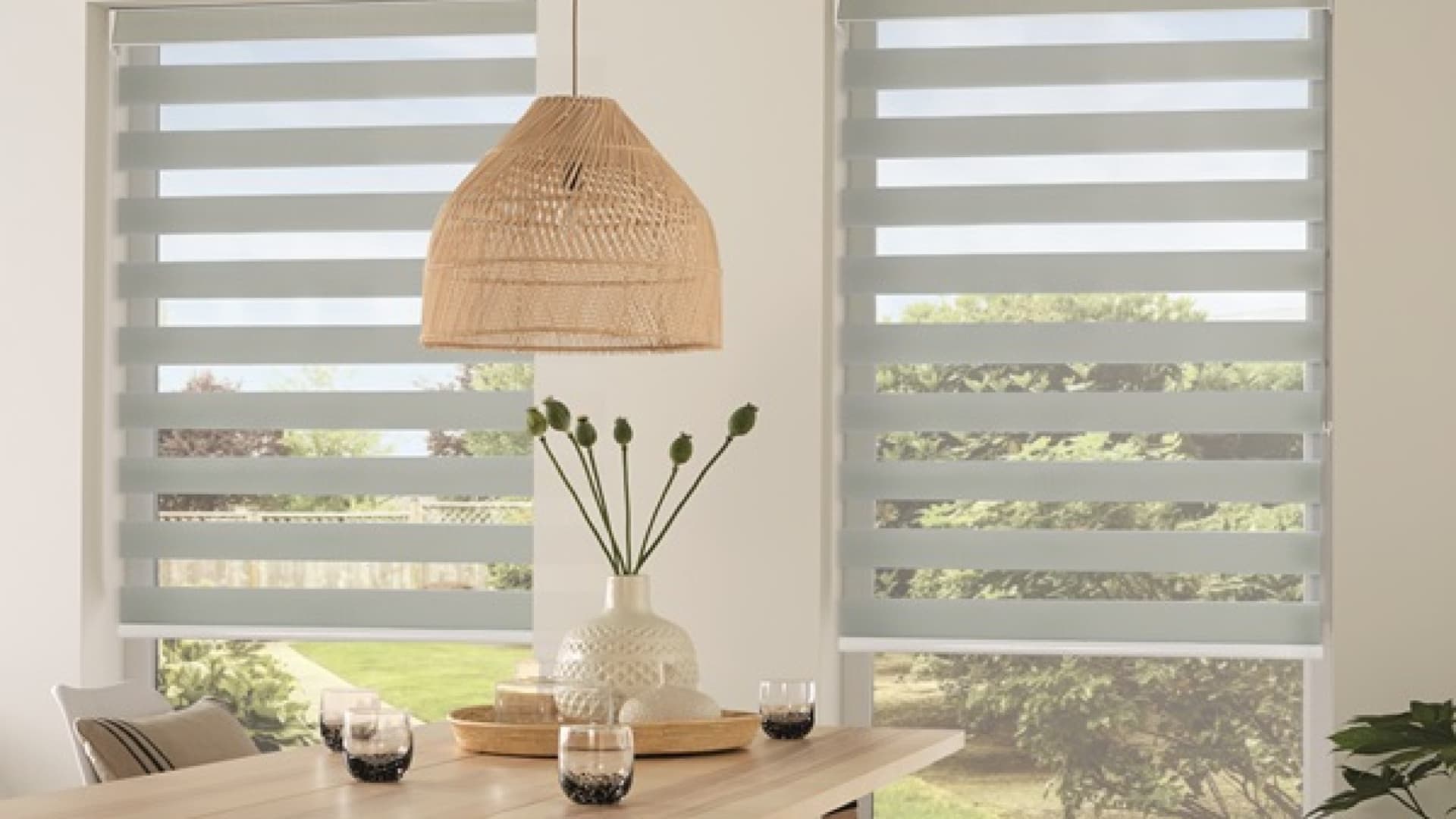
Zebra shades feature alternating bands of sheer and solid fabric that move past each other when the shade is adjusted.
This design allows flexible light control because the sheer sections can be aligned to let light in, while the solid bands provide more privacy.
Zebra shades combine the function of blinds with the soft look of fabric shades. Their stylish appearance fits well in modern homes and contemporary interiors.
Many homeowners install zebra shades in living rooms, family rooms, and other shared spaces where both light control and design matter.
9. Sheer Shades
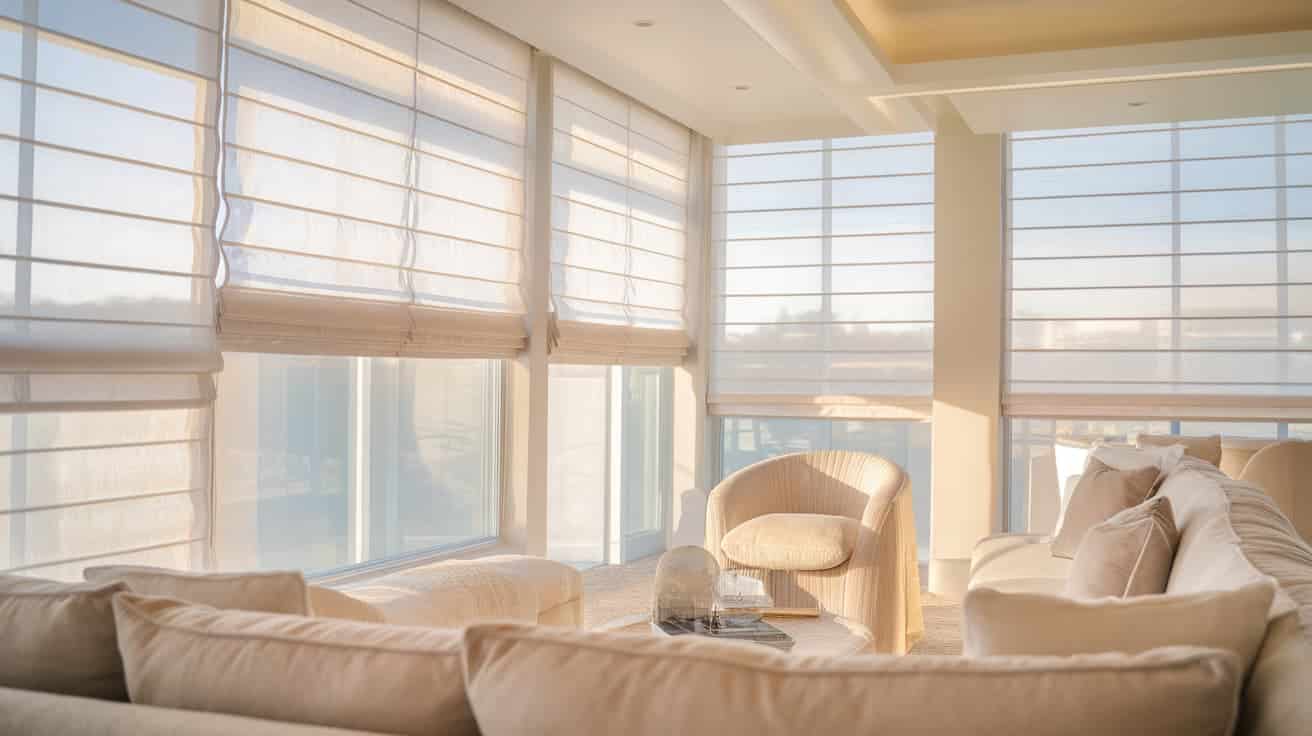
Sheer shades are designed to gently filter natural light while maintaining a light and airy appearance in a room. These shades often combine soft sheer fabric with internal fabric vanes that help manage sunlight and privacy.
The design allows daylight to enter without making the room feel overly bright or exposed. Sheer shades add a soft, elegant touch to windows, making them popular in refined, bright interiors.
They are commonly used in living rooms, dining areas, and other spaces that benefit from natural light.
10. Vertical Blinds
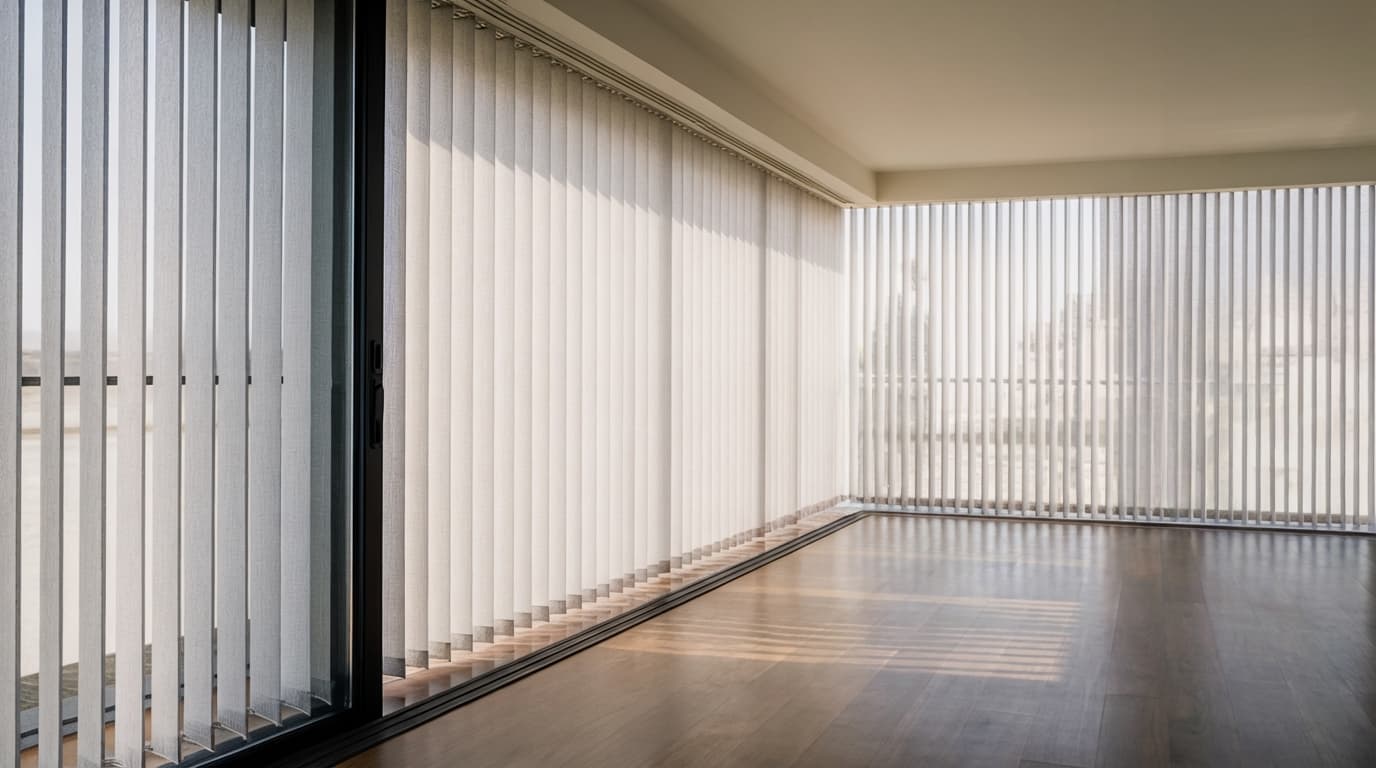
Vertical blinds consist of long vertical slats that hang from a track above the window or door. These slats can tilt to control light or slide to the side to fully open the window.
Vertical blinds are especially useful for sliding glass doors and wide windows where traditional horizontal coverings may not work well.
They are simple to operate and durable, which makes them suitable for busy areas in a home. Vertical blinds are available in several materials, including fabric and vinyl, offering both decorative and practical options.
11. Plantation Shutters
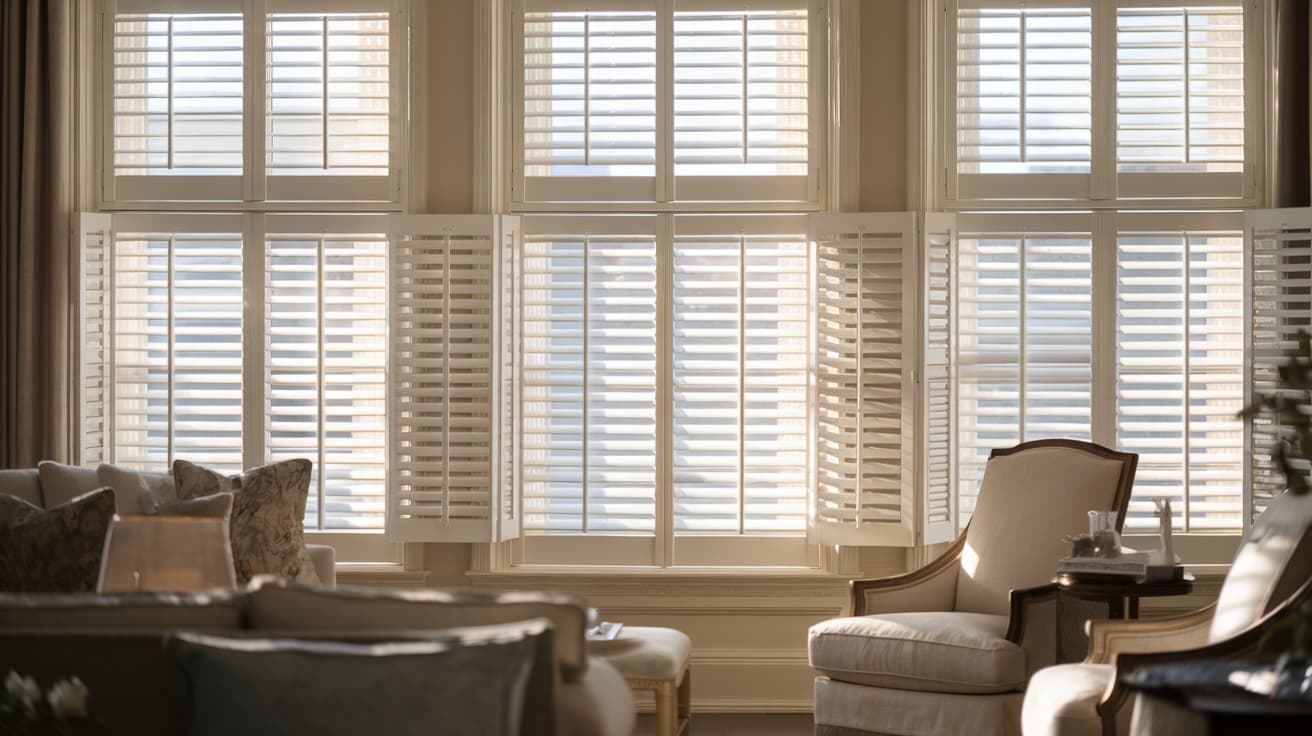
Plantation shutters are solid window coverings made from wood or composite materials with wide horizontal louvers. These louvers can be tilted to control the amount of light and airflow entering a room.
The sturdy frame is installed directly on the window, creating a clean, built-in appearance. Plantation shutters are known for their durability and timeless style.
They provide excellent privacy while still allowing adjustable natural light. Plantation shutters are commonly used in living rooms, bedrooms, and kitchens where homeowners want both beauty and long-lasting function.
12. Layered Coverings
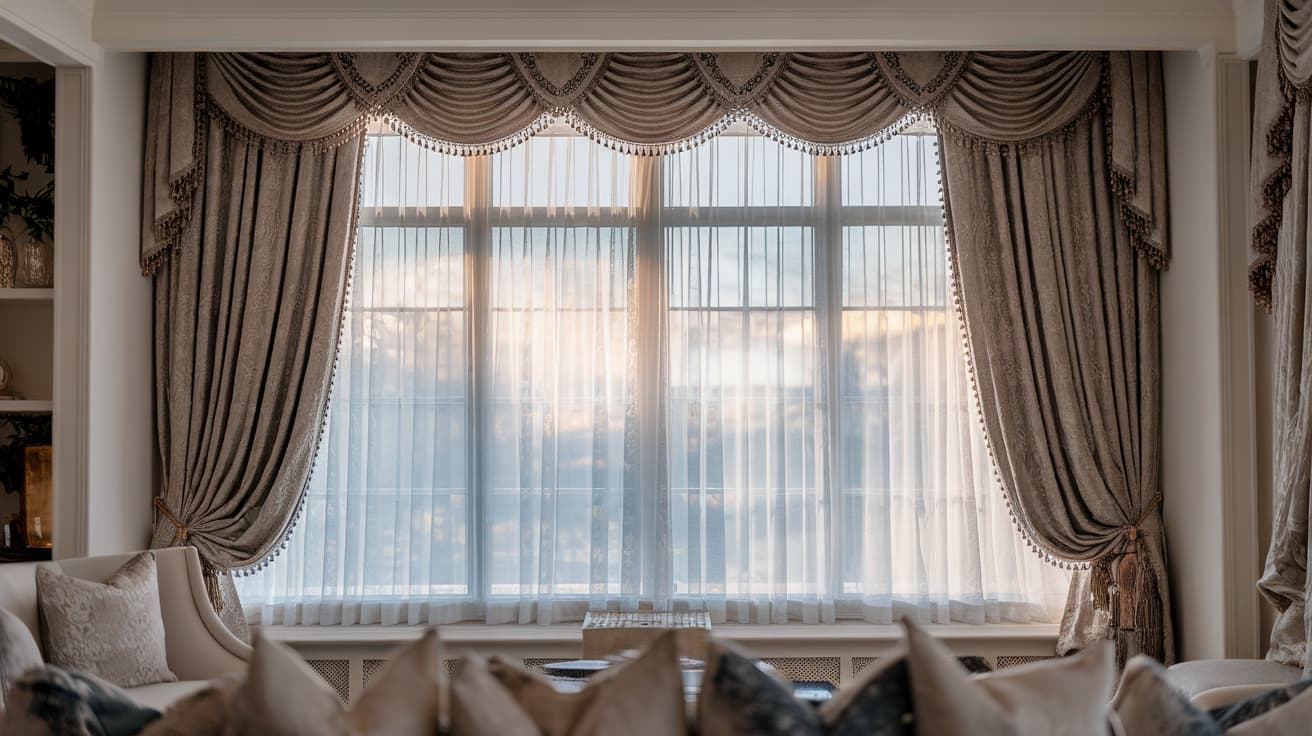
Layered window coverings combine two or more types of window treatments on the same window. Common examples include pairing sheer curtains with heavier drapes or combining shades with decorative curtains.
This layered design allows homeowners to control light, privacy, and style more effectively. Sheer layers can soften daylight during the day, while heavier layers provide privacy and darkness when needed.
Layered coverings also add depth and texture to a room’s design. They are often used in living rooms, bedrooms, and formal spaces where both decoration and flexibility are important.
How to Choose Between Different Types of Window Coverings
Choosing the right window covering depends on factors like light control, style, maintenance, and cost. Comparing the features of different options can help you choose a covering that fits your room and daily needs.
| Type | Best for | Light Control | Energy Efficiency |
|---|---|---|---|
| Curtains | Living rooms, bedrooms, decorative spaces | Moderate – depends on fabric thickness | Low to moderate |
| Drapes | Bedrooms, formal living areas | High – thick fabric blocks light well | Moderate to high |
| Blinds | Kitchens, offices, bathrooms | Adjustable slats allow flexible control | Moderate |
| Roller Shades | Modern homes and offices | Good control with light-filtering or blackout options | Moderate |
| Cellular Shades | Bedrooms and energy-efficient homes | Good light control, depending on the fabric | High |
| Plantation Shutters | Living rooms, kitchens, long-term installations | Adjustable louvers provide flexible control | Moderate to high |
Energy Efficient Window Coverings for Savings
Window coverings help control heat and sunlight, keeping rooms cooler in summer and warmer in winter. The right fit and material make a big difference; closely fitted, thicker coverings trap air and improve comfort.
Cellular shades have a honeycomb design that provides insulation and reduces heat gain. Thermal drapes use thick fabric to block sunlight and lower indoor temperatures.
Plantation shutters fit tightly and give strong control over light and airflow. Layered coverings, like combining shades and curtains, enhance insulation and allow precise light control.
Using energy-efficient window coverings leads to better insulation, lower heat gain, more comfort, and improved light control.
Common Mistakes to Avoid
Choosing the right style for your home makes a noticeable difference in temperature and energy use, helping you stay comfortable and save money.
- Picking style only and ignoring function
- Forgetting privacy needs
- Choosing materials that do not fit humid rooms
- Not measuring correctly
- Overlooking insulation benefits
- Buying without checking cleaning needs
Final Thoughts
There are many types of window coverings, each designed to meet different needs. From shades and drapes to shutters and layered options, the choices can feel endless.
The key is to focus on what matters most for my home: privacy, light control, style, and energy savings. A covering that looks great but doesn’t block heat or provide enough privacy won’t serve me well in the long run.
I also consider each room individually: a kitchen may need easy-to-clean materials, while a bedroom might prioritize light blocking and insulation. Ultimately, the best choice depends on my space and personal preferences.
I’d love to hear from you! What window coverings work best in your home? Feel free to share your experiences and tips in the comments below.