


I’ve arranged beds in some tricky spots over the years, and placing one in front of a window is more common than you might think. At first, it can feel hard to make the room look balanced or comfortable.
If you’ve been wondering how to style a Bed in Front of a Window, you’re not alone. In this guide, I’ll walk you through simple ways to make the layout look neat and inviting, especially in small rooms or bedrooms with unusual layouts.
You’ll learn how to choose the right headboard and how to handle curtains, lighting, and the space around the bed so the layout feels natural.
I’ll also share small styling tips that help the bed look like it belongs there rather than look awkward.
By the end, you’ll have clear, practical ideas you can use right away to make your bedroom feel calm, tidy, and well put together without making the room feel crowded.
Is It a Good Choice to Put a Bed in Front of a Window?
Yes, it is okay to put a bed in front of a window, and many bedrooms use this layout successfully. In some rooms, it is the most practical option because other walls are taken up by doors, closets, or large furniture.
Placing the bed under a window can help you use space more efficiently, especially in smaller bedrooms or rooms with unusual layouts. When styled properly, the bed can even become the main focal point of the room.
Simple design choices make a big difference. For example, a low or open headboard allows natural light to pass through, while curtains or blinds help control brightness and privacy.
Leaving a small gap between the bed and the window can also improve airflow and comfort. With thoughtful planning, this layout can look intentional, balanced, and stylish rather than awkward.
Stylish Ideas for a Bed in Front of a Window
Styling a bed in front of a window can look intentional and cozy. With the right design choices, the window can frame the bed beautifully.
1. Use Floor-to-Ceiling Curtains
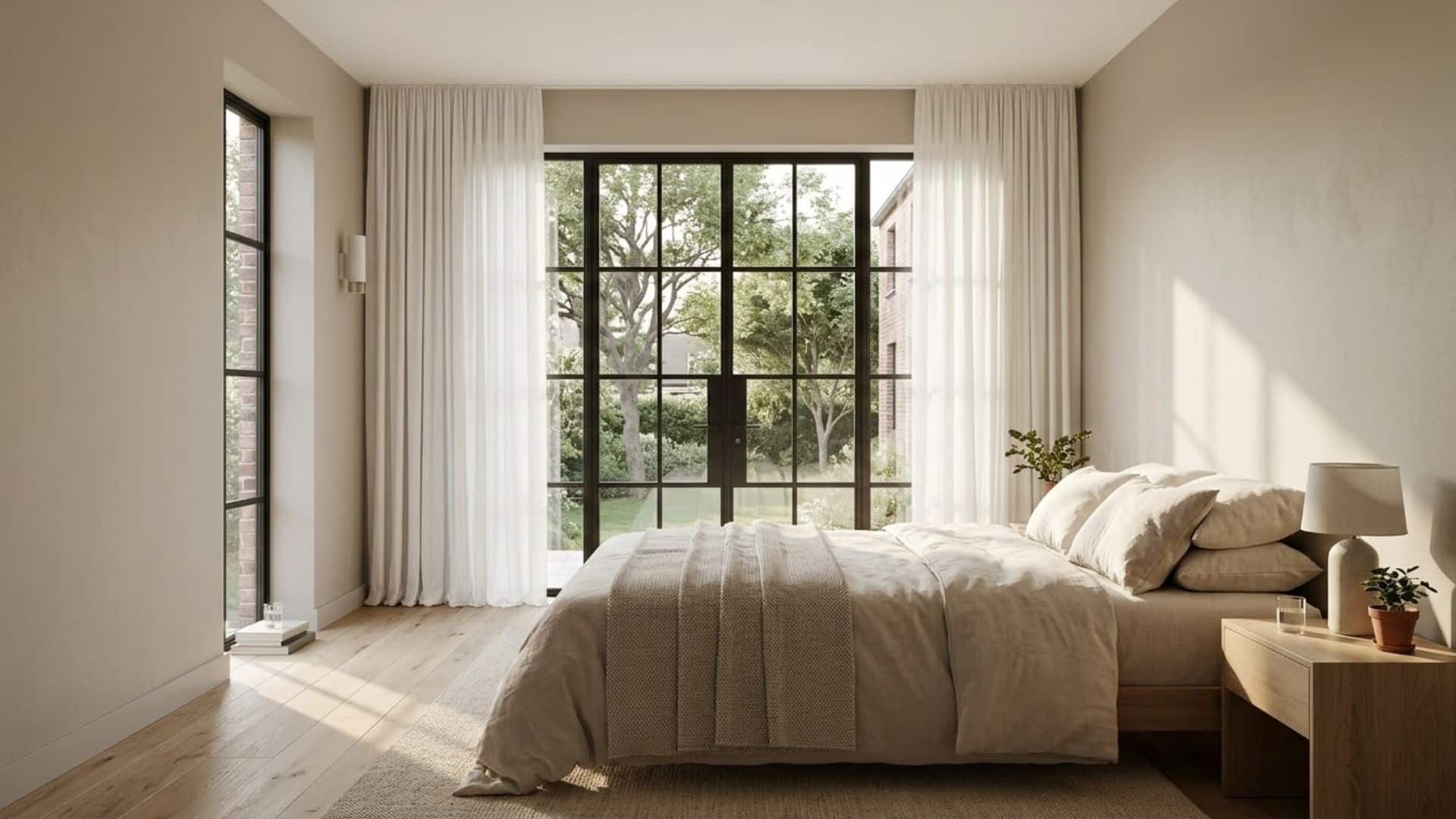
Floor-to-ceiling curtains are one of the easiest ways to make a bed in front of a window look polished. Long curtains create a soft backdrop behind the bed, helping the layout feel intentional rather than awkward.
Choose light fabrics like linen or sheer panels to let sunlight through during the day. At night, thicker curtains can add privacy and warmth.
Hanging the curtain rod slightly higher than the window can also make the room appear taller. This simple styling trick works especially well in small bedrooms because it adds elegance without taking up extra space.
2. Choose a Low or Open Headboard

A low or open headboard works well when placing a bed in front of a window. Tall headboards can block natural light, making the room feel crowded.
Instead, choose a simple wooden frame, metal bars, or a low upholstered design that allows light to pass through. This keeps the room feeling bright and airy while still giving the bed a defined structure.
Neutral colors also help the design blend smoothly with the window area. With the right headboard, the bed feels balanced, and the window still remains an important design feature.
3. Frame the Bed With Matching Nightstands

Adding matching nightstands on both sides of the bed can make the layout look balanced and complete. When a bed sits in front of a window, symmetry adds an intentional feel to the design.
Choose compact nightstands so they do not block the window too much. You can place small lamps, books, or decorative items on them to add personality.
If space is limited, floating night shelves are another good option. This simple arrangement creates structure around the bed and helps the entire room feel more organized and thoughtfully designed.
4. Layer Soft Bedding and Textures
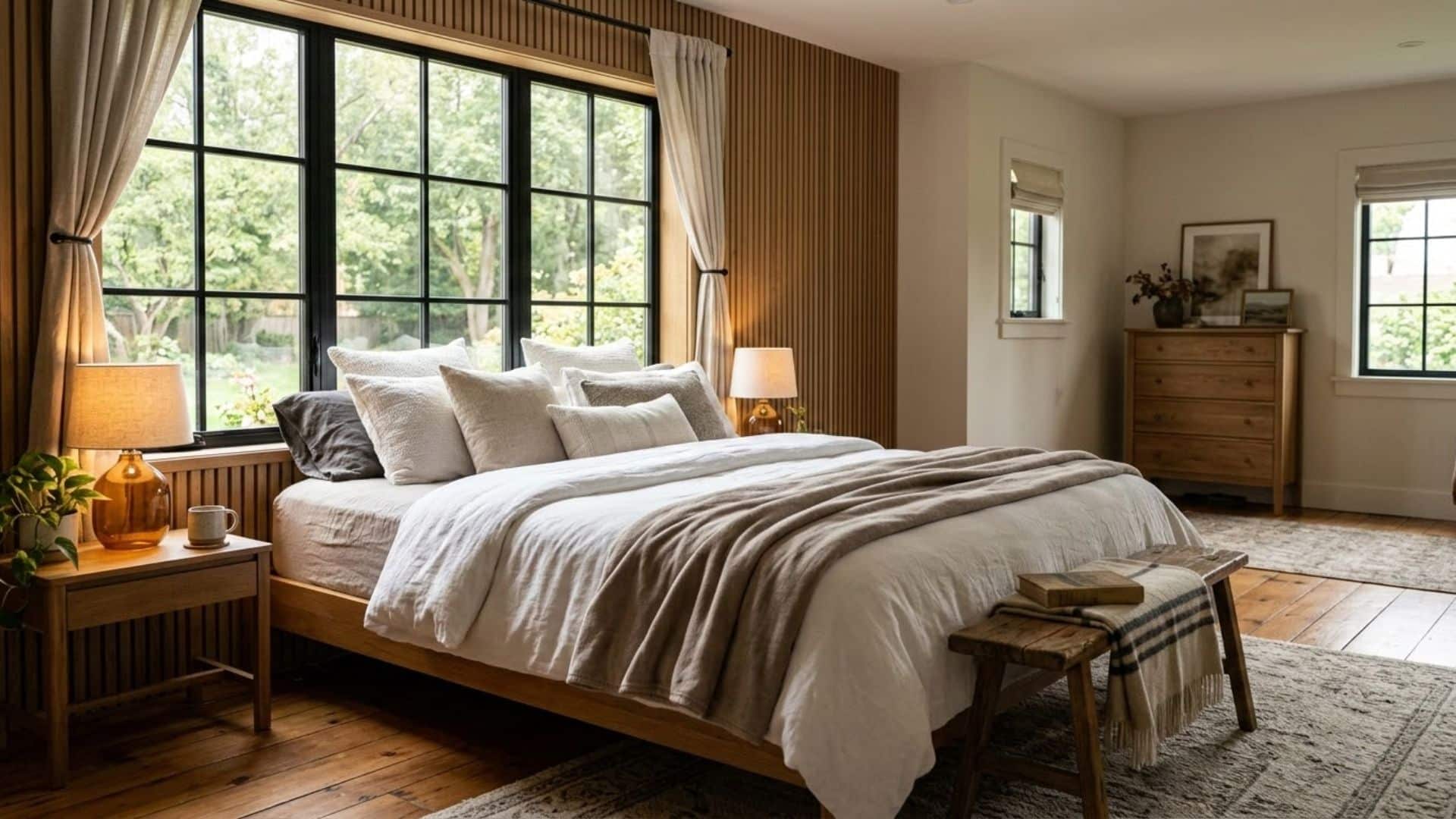
Layering bedding can make a bed placed in front of a window look inviting and comfortable. Use soft blankets, textured throws, and neatly arranged pillows to create a cozy focal point.
Neutral colors like white, beige, or light gray often work well because they reflect natural light from the window. Adding a textured blanket at the foot of the bed can also bring warmth and visual interest.
These layers make the bed feel styled rather than simply placed in front of the window. Even small changes in fabric and texture can change the entire look.
5. Add Sheer Curtains for Soft Light

Sheer curtains can soften sunlight while still allowing brightness to fill the room. When a bed sits in front of a window, harsh light can sometimes feel uncomfortable.
Sheer fabric gently filters the sunlight and creates a calm atmosphere. These curtains also add a light, airy look that works well in many bedroom styles.
White or light-colored sheers are especially popular because they brighten the space without feeling heavy. During the evening, you can pair them with thicker drapes for extra privacy and comfort.
6. Turn the Window Into a Natural Headboard

Instead of hiding the window, you can treat it as part of the design. In this idea, the window itself acts like a visual headboard behind the bed.
Decorative curtains, window trim, or a stylish frame can help highlight this effect. When done well, the bed feels perfectly centered under the window and becomes the main focus of the room.
This style works nicely in minimalist or modern bedrooms where simple design elements create a clean look. The natural light behind the bed adds warmth and character.
7. Use a Window Frame Accent Trim
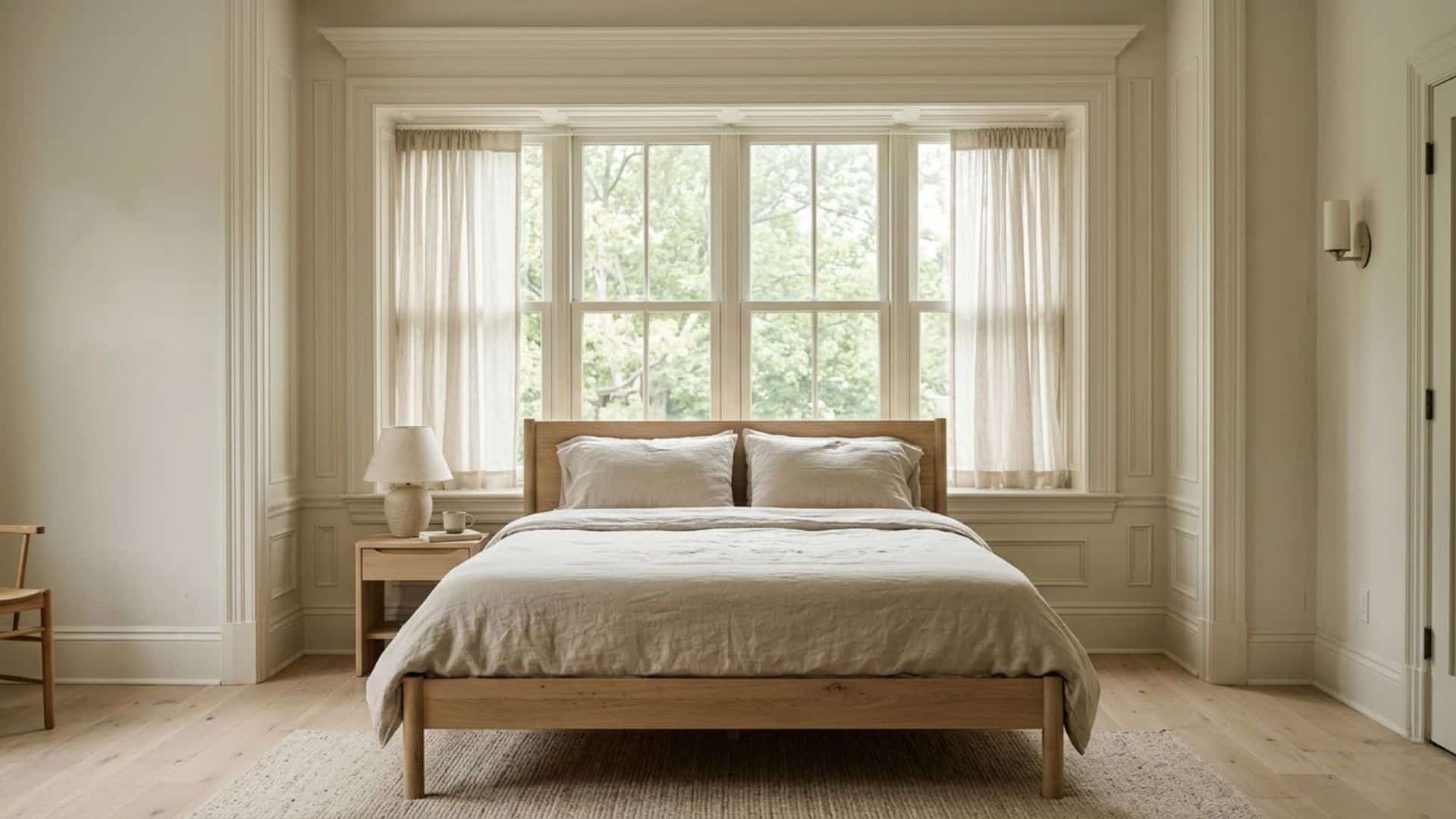
Adding decorative trim or molding around the window can turn it into a beautiful design feature behind the bed. Instead of covering or hiding the window, this idea highlights its shape, making it feel intentional.
You can paint the trim in a slightly contrasting color to make it stand out or keep it the same shade for a subtle, clean look. This works well in both modern and classic bedrooms.
It adds detail to the wall without needing extra furniture. The result is a more finished, balanced appearance in which the bed and window feel connected.
8. Add Plants Near the Window

Plants can help connect the bed area with the window and natural light. Small indoor plants placed near the window or on nightstands can bring life into the bedroom.
Greenery also softens the overall look and adds color without overwhelming the space. Choose low-maintenance plants such as snake plants or pothos that thrive in natural light.
When arranged carefully, plants can frame the bed and make the room feel fresh and calm. This styling idea works well for both modern and cozy bedroom designs.
9. Use a Minimalist Bed Frame
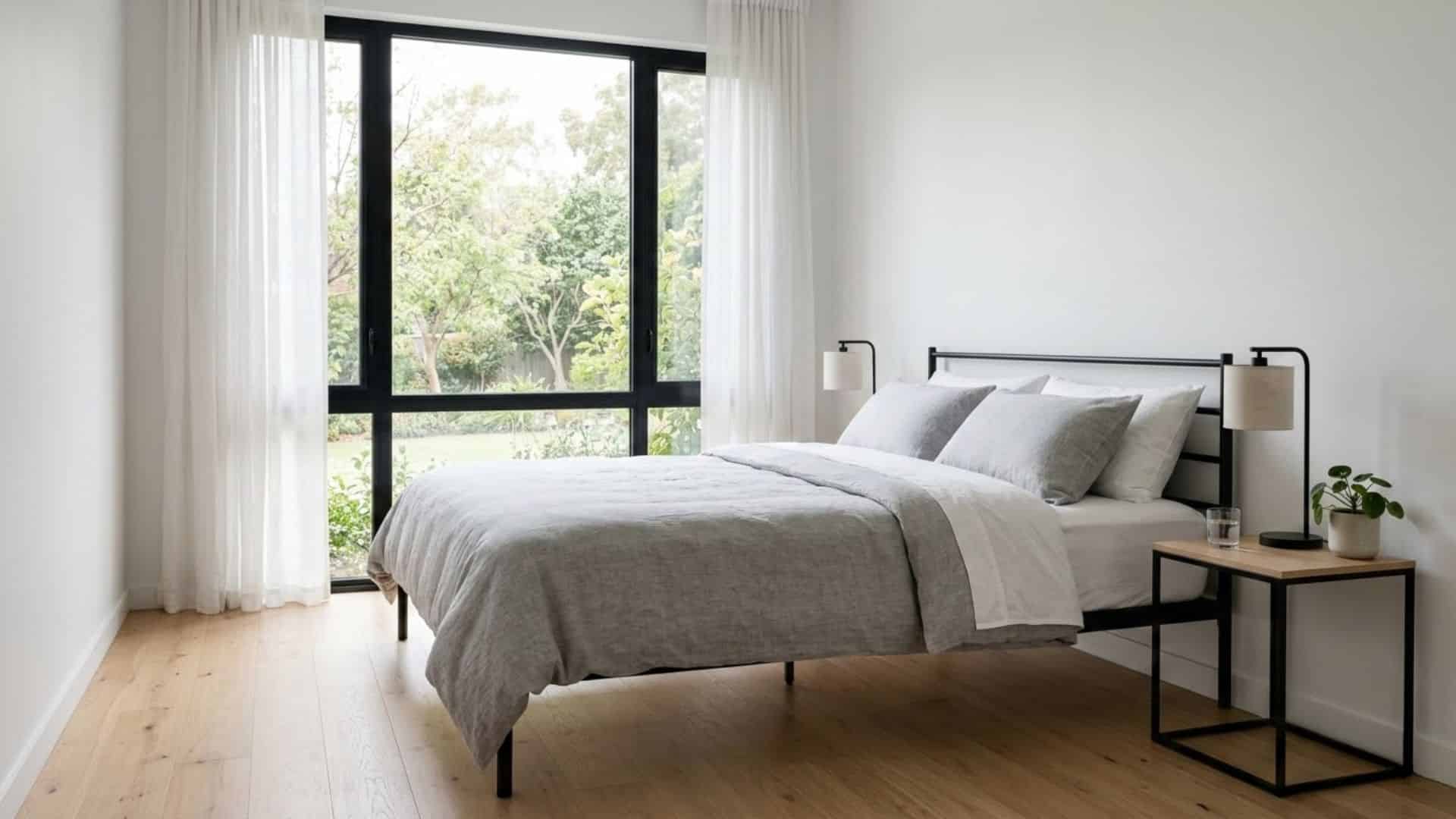
A simple bed frame can make the window stand out more while keeping the room feeling open. Minimalist frames with clean lines work especially well in front of windows because they do not block light or feel heavy.
Wooden or metal frames with thin edges are good choices. They keep the space looking modern and uncluttered.
When paired with neutral bedding and light curtains, the result is a calm and airy bedroom design. This approach is especially useful in small rooms where bulky furniture can make the space feel crowded.
10. Add Soft Lighting Around the Bed

Lighting can make a bed in front of a window feel cozy during the evening. Since the window brings natural light during the day, adding warm lighting helps balance the room at night.
Bedside lamps, wall sconces, or small hanging lights can create a soft glow around the bed. Choose warm bulbs to keep the atmosphere relaxing.
This lighting not only improves comfort but also highlights the bed as the center of the room. With the right lighting, the layout feels inviting at any time of day.
11. Use a Slim Console Between the Window and the Bed
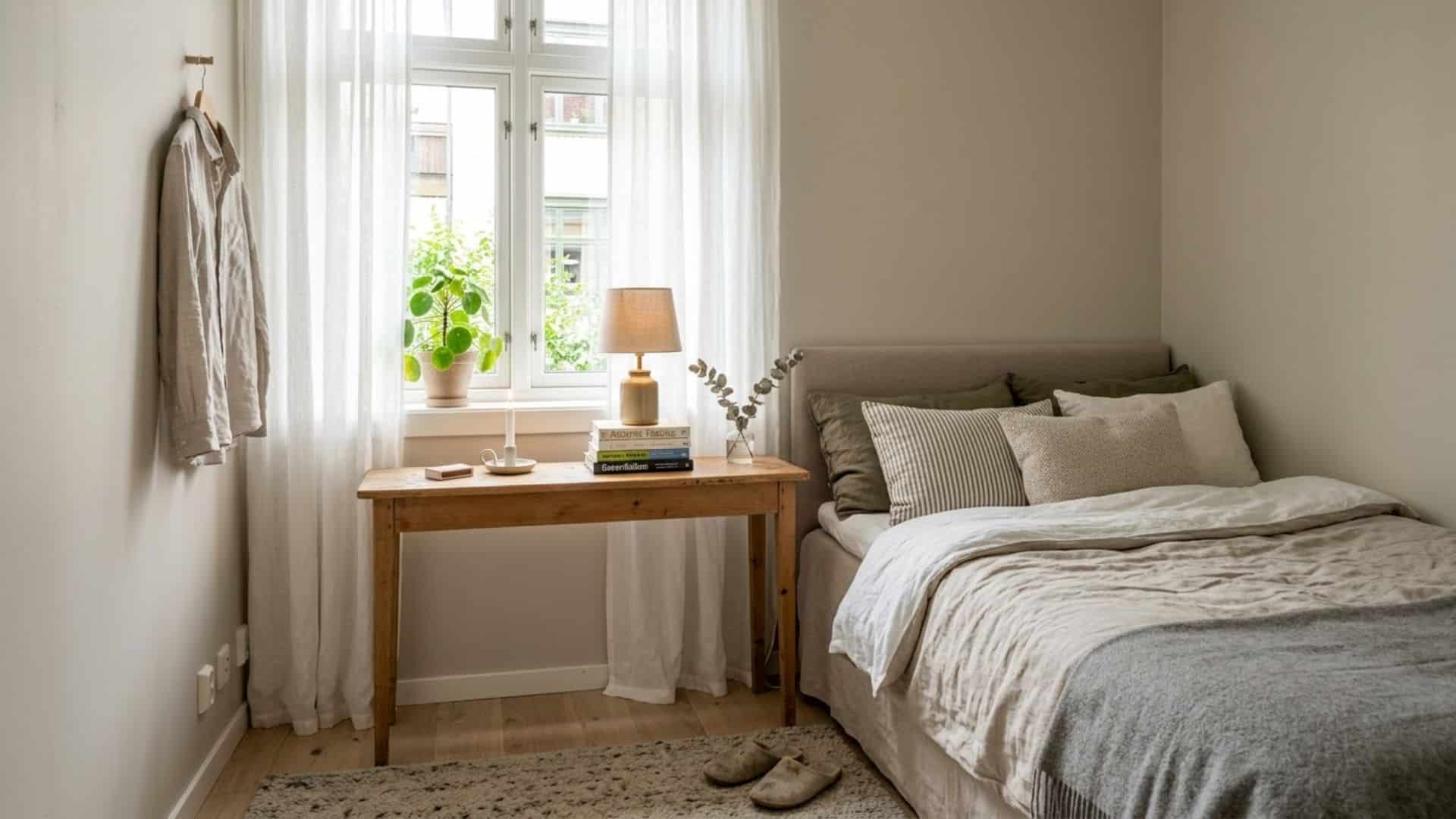
Placing a slim console table between the bed and the window is a smart way to create a soft separation. It prevents the bed from sitting directly against the glass, making the layout feel more intentional.
You can style the console with small décor pieces like candles, books, or a small lamp to add personality. It also gives you a practical surface without taking up much space.
This idea works especially well in tight bedrooms where every inch matters, helping the room feel more layered and thoughtfully arranged.
12. Add a Decorative Window Film
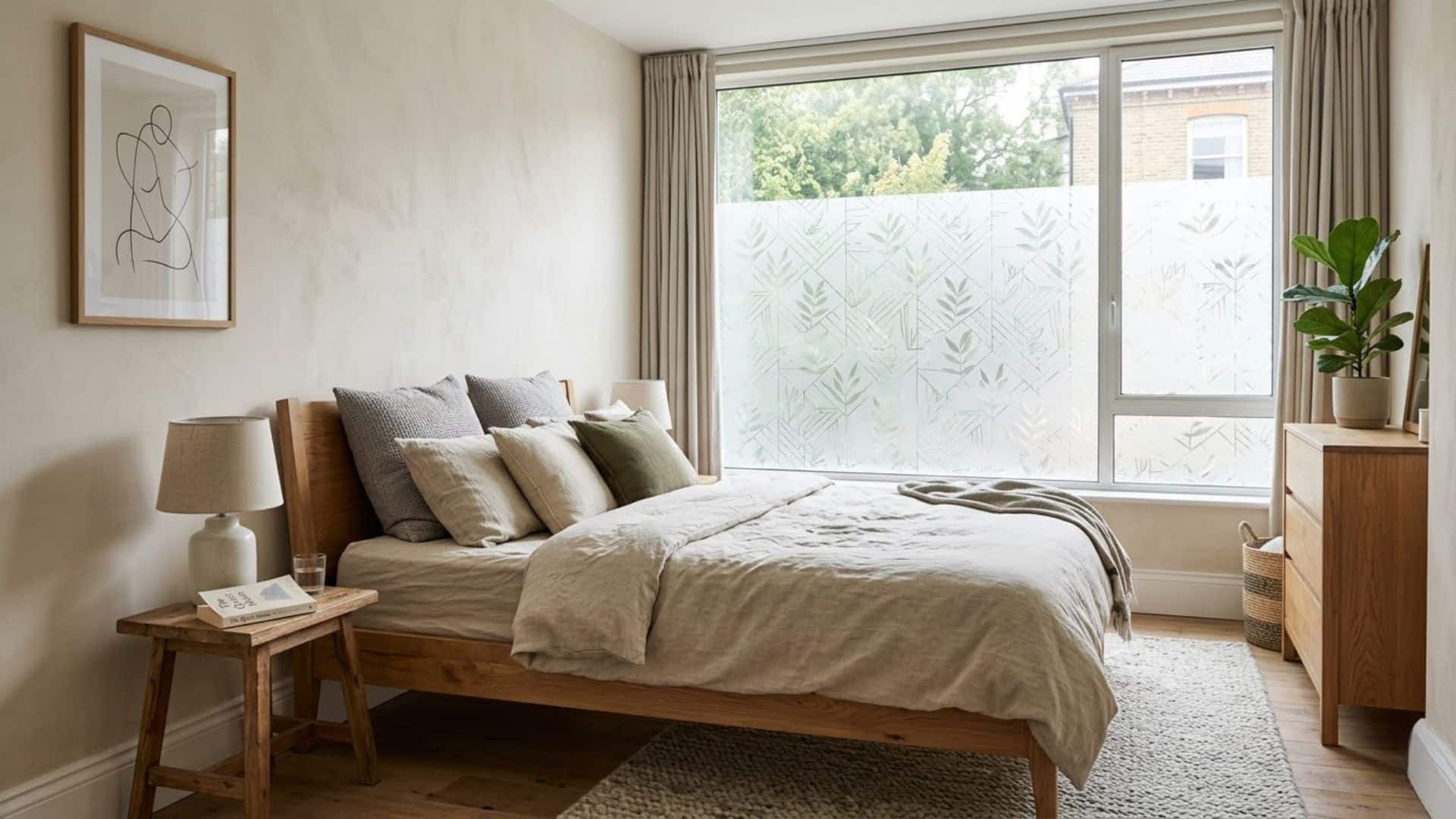
A decorative window film is a simple way to enhance privacy and style without heavy curtains. Frosted, patterned, or tinted films can soften incoming light while still keeping the room bright.
This is especially helpful if your bed faces a window with outside views. The film also adds a subtle design element that can make the window look more polished.
It is easy to apply and remove, making it a flexible option if you like to update your bedroom style from time to time.
13. Add a Narrow Storage Shelf Between the Bed and Window
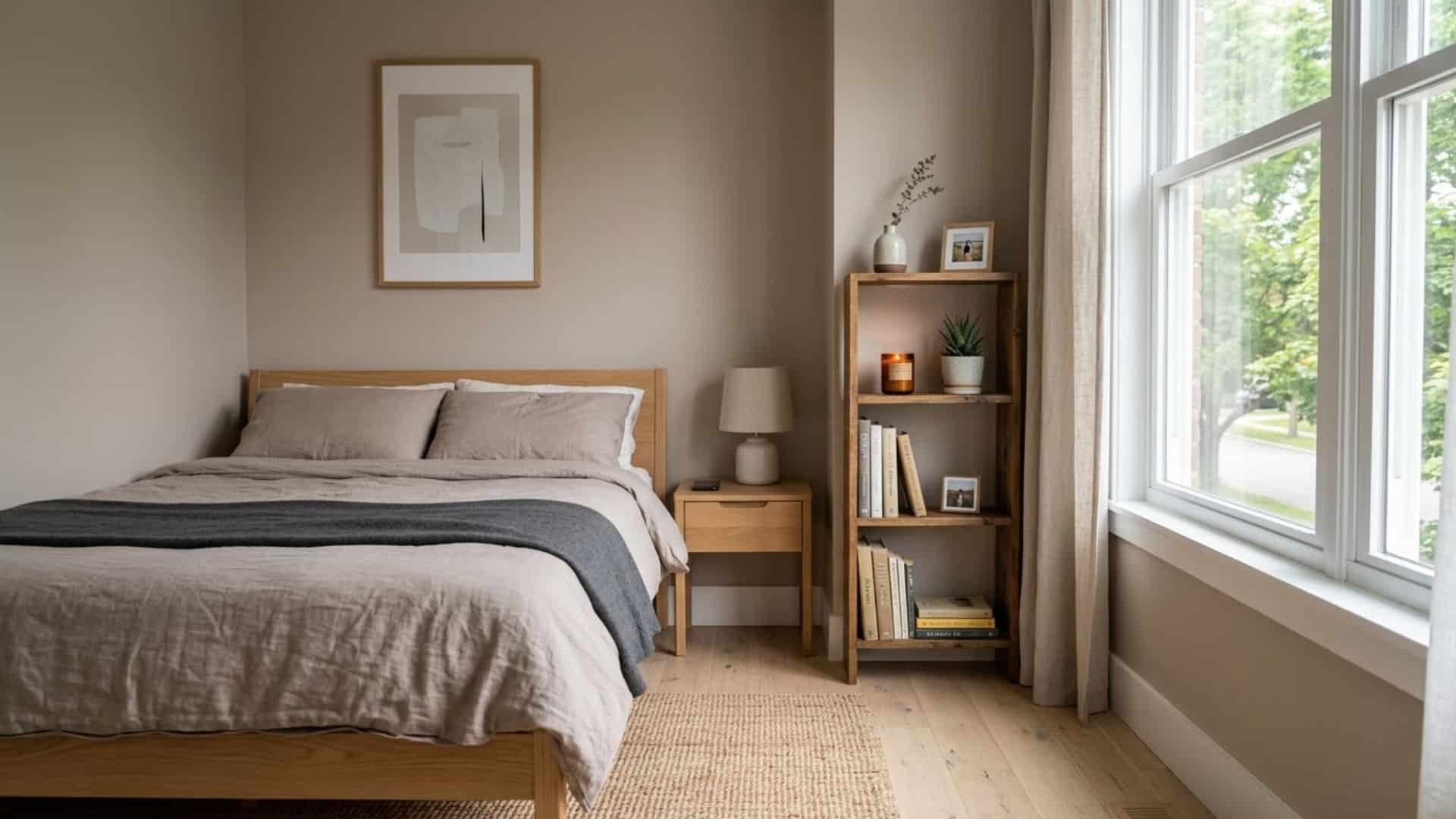
A narrow storage shelf between the bed and window adds function and style. It creates space, improves airflow, and keeps the bed from sitting directly against the window.
This shelf can hold everyday items like books, candles, or small décor, keeping them within easy reach without cluttering nightstands. It also helps define the bed area more clearly, making the layout feel intentional.
Since the shelf is slim, it does not block natural light. This idea works especially well in small bedrooms where space is limited but smart storage is needed.
14. Use a Bench at the Foot of the Bed

Adding a bench at the foot of the bed is a simple way to improve balance when the bed is placed in front of a window. It draws attention forward and helps create a complete, finished look.
A wooden or upholstered bench adds function and style. It offers seating, holds clothes or blankets, and helps the bed feel more grounded and intentionally placed.
It also adds depth to the room layout. Even in small spaces, a slim bench can enhance both function and style without making the room feel crowded.
15. Layer a Large Area Rug Under the Bed
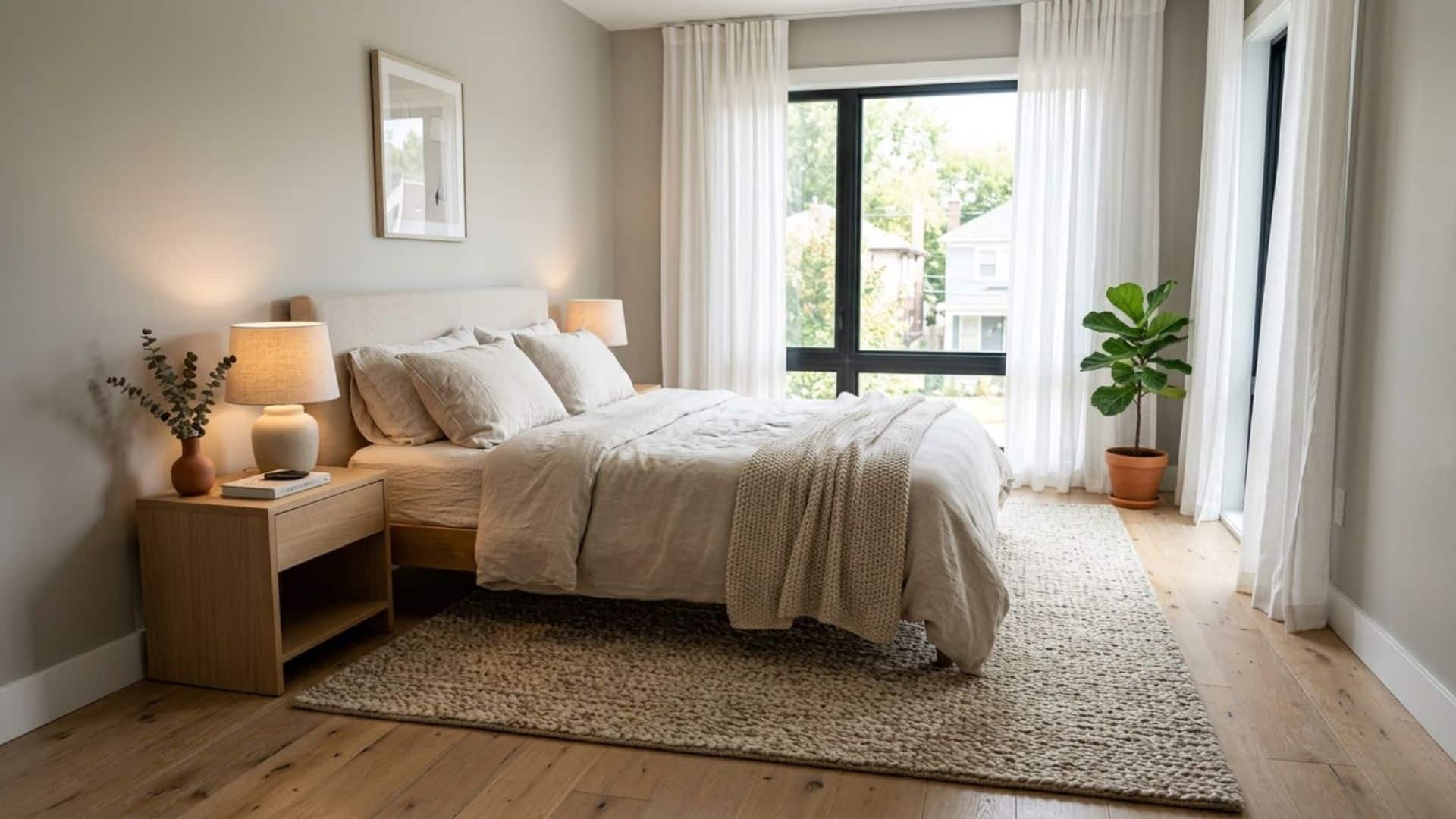
A large area rug placed under the bed can help define the sleeping space and make the placement feel more intentional. When a bed sits in front of a window, it can sometimes feel disconnected from the rest of the room.
A rug brings everything together visually and adds warmth underfoot. Choose a size that extends beyond the bed on all sides for the best effect.
Soft textures and neutral tones work especially well, helping the room feel cozy, balanced, and visually pleasing without adding clutter.
16. Use a Foldable Screen Beside the Bed

A foldable screen beside the bed creates a soft divider, adds style, and prevents the bed from feeling pushed against the window, making the layout more intentional.
You can choose lightweight materials like wood, fabric, or woven panels so light can still pass through. This keeps the room bright while adding a layer of privacy and comfort.
The best part is that a foldable screen is easy to move or adjust when needed. This idea works well in small bedrooms and adds depth without making the space feel crowded.
17. Use a Light-Colored Headboard Fabric
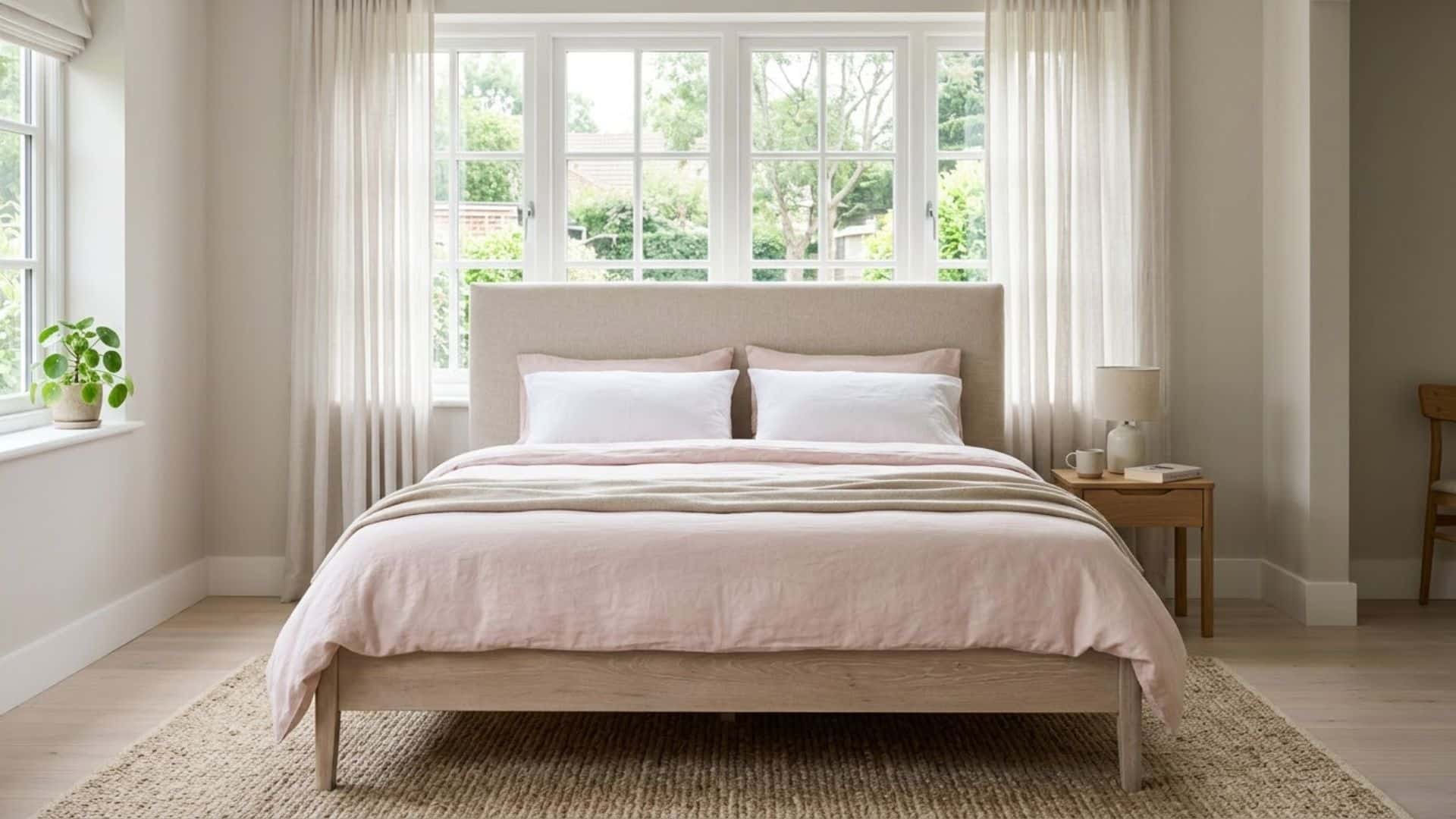
Choosing a light-colored headboard fabric can make a big difference when your bed is placed in front of a window. Soft shades like cream, beige, or light gray help reflect natural light rather than absorb it.
This keeps the area looking bright and airy throughout the day. Dark or heavy fabrics can make the space feel smaller or block the softness of the light.
A fabric headboard also adds a layer of comfort and texture without feeling too heavy. This simple design choice helps the bed blend naturally with the window and keeps the overall look calm and balanced.
18. Keep Window Décor Minimal
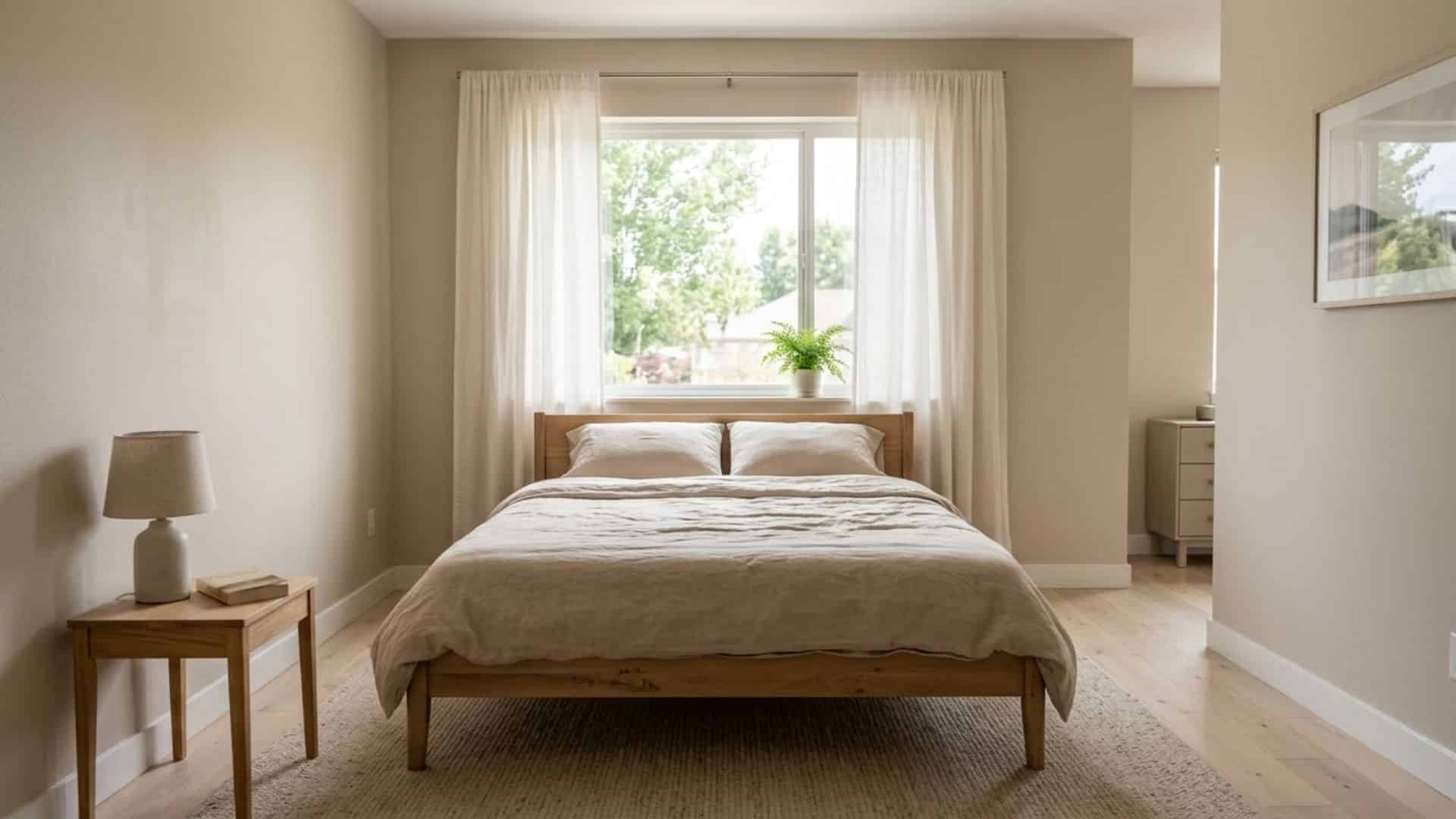
Keeping window décor simple is important when the bed sits directly in front of it. Too many layers, patterns, or heavy fabrics can make the area feel crowded and visually busy.
Instead, choose clean designs like plain curtains, neutral blinds, or light sheers. This allows natural light to flow easily into the room while keeping the space feeling open.
A minimal approach also helps the bed remain the main focal point without competing elements. This idea works especially well in smaller bedrooms where too much detail can overwhelm the layout and make the room feel tight.
19. Add a Soft Throw at the Head of the Bed
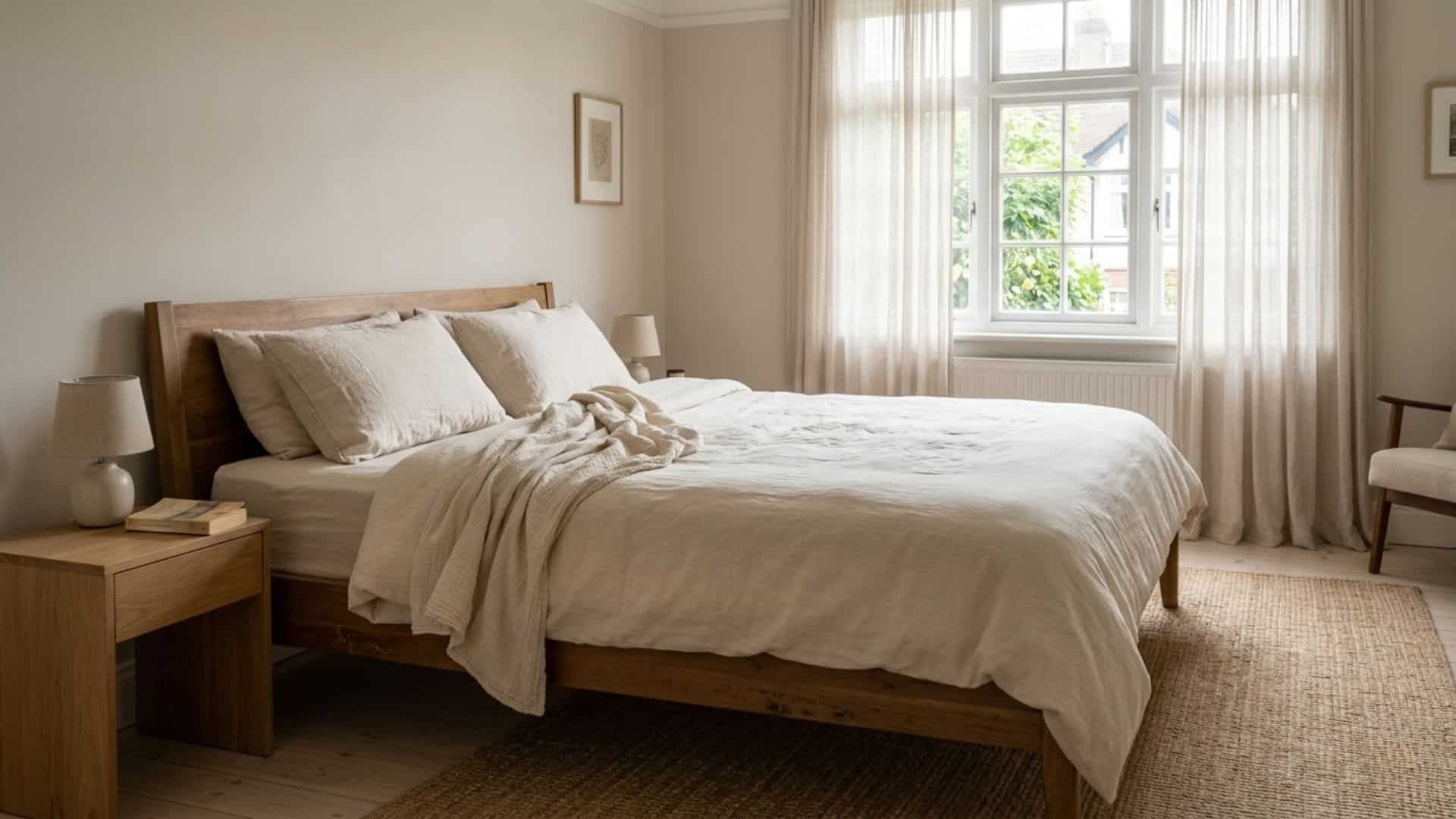
Adding a soft throw near the head of the bed is a simple way to make the setup feel more cozy and complete. It creates a gentle transition between the bed and the window behind it.
Choose a lightweight fabric like cotton or a soft knit to keep the look relaxed and comfortable. Neutral or light colors work best because they reflect natural light and blend easily with the rest of the room.
This small detail adds warmth without cluttering the space. It also makes the bed look thoughtfully styled while improving comfort for everyday use.
20. Use Symmetrical Wall Art on Both Sides

Symmetrical wall art on both sides of the bed can help balance the overall layout when a window is behind it. Since the window already draws attention, adding matching artwork on the side walls creates structure and harmony.
Choose simple frames or artwork that match your room’s color scheme to keep the design consistent. This symmetry makes the bed feel centered and intentional rather than randomly placed.
It is an easy way to improve the visual balance without moving furniture. The result is a cleaner, more organized look that makes the bedroom feel calm and well-arranged.
21. Add a Soft Upholstered Window Cushion Backing

Adding a soft upholstered panel behind the bed improves comfort and style. It creates a gentle buffer from the window, making the space feel warmer and more inviting.
You can choose neutral fabrics to keep the look light or textured materials for added depth. It also makes sitting up in bed more comfortable for reading or relaxing.
This idea works especially well in cozy bedrooms, helping the bed feel supported and intentionally placed rather than directly pushed against a hard surface.
Benefits of Placing a Bed in Front of a Window
Placing a bed in front of a window can improve bedroom layout and brightness. This setup often works well in small rooms and creates a balanced, practical design.
- Natural light in the morning: Waking up to soft daylight can make mornings feel more refreshing. The window behind the bed allows sunlight to enter the room naturally.
- Brighter and more open space: Light flowing through the window spreads across the room, helping the bedroom feel larger, more open, and less crowded.
- Unique bedroom focal point: A window behind the bed can frame the sleeping area nicely, turning the bed into the main visual feature of the room.
- Better use of wall space: Placing the bed here frees other walls for furniture like dressers, shelves, or seating, improving room flow and making the layout more practical.
Common Problems With a Bed in Front of a Window
While placing a bed in front of a window can look stylish, it may create a few challenges. The good news is that most problems have simple design solutions.
| Problem | Description | Simple Solutions |
|---|---|---|
| Too Much Sunlight | Bright morning light can disturb sleep and heat the room. | Use sheer + blackout curtains for control. |
| Privacy at Night | Indoor lights make the room visible from outside. | Combine sheer (day) and blackout (night) layers. |
| Cold Drafts | Windows may let in cold air. | Use thick curtains, seal gaps, and add warm bedding. |
| Blocked Access | Bed placement limits window use. | Leave space or use a low bed frame. |
| Curtain Issues | The headboard can block the curtain setup. | Install higher rods or ceiling tracks. |
Mistakes to Avoid When Placing a Bed in Front of a Window
Placing a bed in front of a window can work well, but small design mistakes may make the layout look awkward or uncomfortable. Avoiding these issues keeps the bedroom balanced.
- Using a Very Tall Headboard: A tall headboard can block sunlight, making the window feel hidden. Choose a low or open headboard so natural light can still enter.
- Blocking the Entire Window: Pushing the bed tightly against the window may stop airflow and reduce natural light. Leave part of the window visible to keep the room bright.
- Ignoring Curtain Placement: Curtains that are too short or poorly placed can look messy. Install curtain rods higher and wider so the fabric frames the bed properly.
- Leaving No Space Between the Bed and The Window: Placing the bed directly against the window can make cleaning and opening it difficult. A small gap improves comfort and accessibility.
- Forgetting Lighting Balance: When the window sits behind the bed, the lighting can feel uneven at night. Add bedside lamps or wall lights to create a balanced and cozy atmosphere.
At the End
Placing a bed in front of a window might feel challenging at first, but with thoughtful styling, it can become one of the most beautiful features in your bedroom.
Small details such as the right curtains, a low or open headboard, cozy bedding, and balanced lighting can help the layout feel intentional rather than awkward.
Instead of seeing the window as a problem, think of it as a natural frame that highlights the bed and brings warmth and brightness to the room.
This setup can even make the space feel larger and more inviting. With a little creativity and the right design choices, even small or unusual bedrooms can feel calm, open, and well-arranged.
Share your experience or styling tips for placing a bed in front of a window in the comments below.