

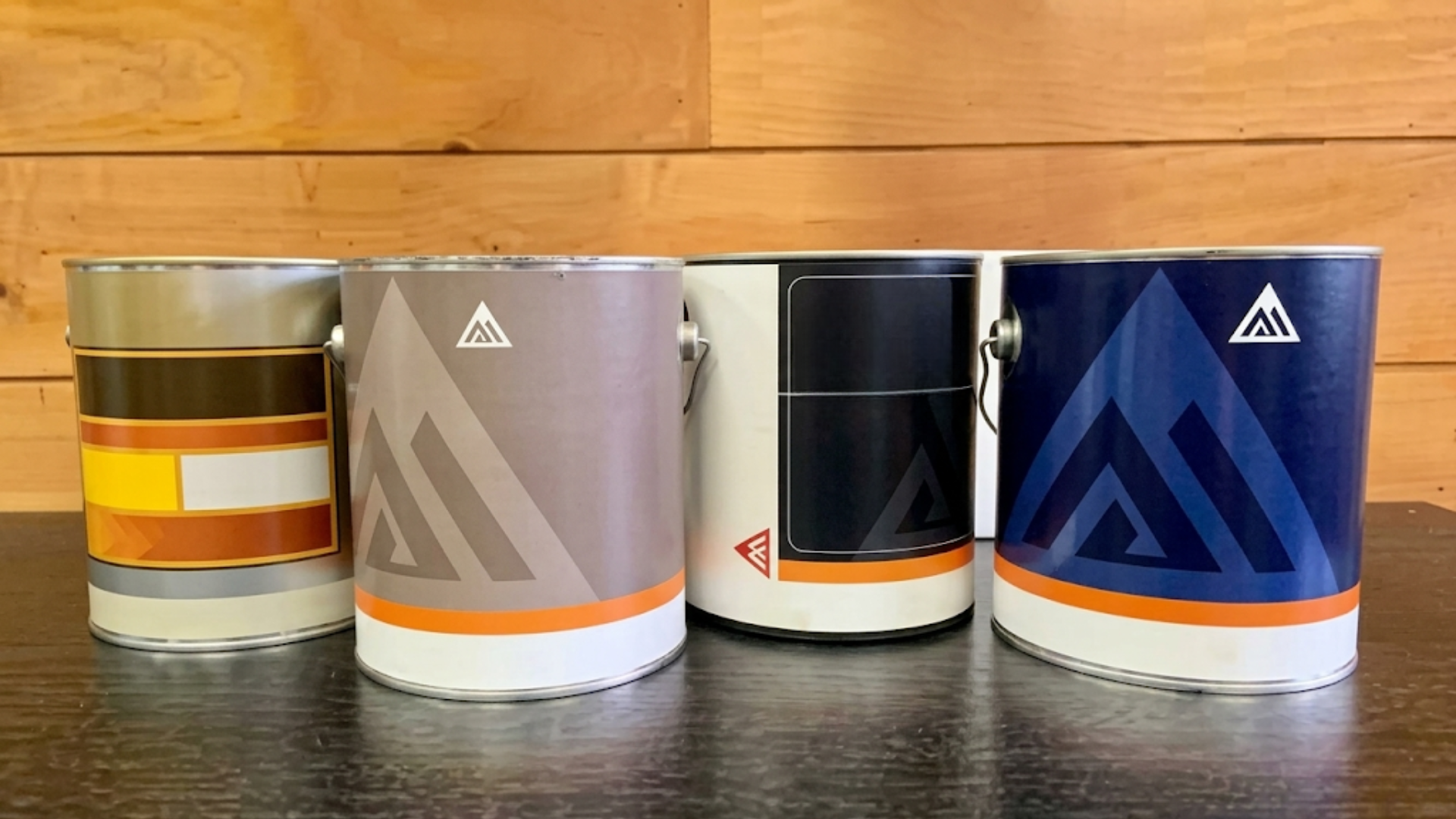
Most people spend hours picking the right paint color and barely think about the finish or formula. Then the paint chips, yellows, or scuffs within a year.
On a recent renovation project I consulted on, the client had used a budget big-box paint on her baseboard trim.
Within eight months, the corners near the front door were visibly scuffed, and the finish had yellowed.
Switching to a water-based alkyd on the second pass made a noticeable difference within the first season. That experience shaped how I research and recommend trim paints today.
It cracks at corners, picks up fingerprints, and dulls after a few cleanings. The right one holds up and still looks fresh years later.
In this guide, I’ll share some of the best interior trim paints for doors and trim. You’ll find out what makes each one worth using, how they compare, and which one fits your project best.
What Makes a Good Interior Trim Paint?
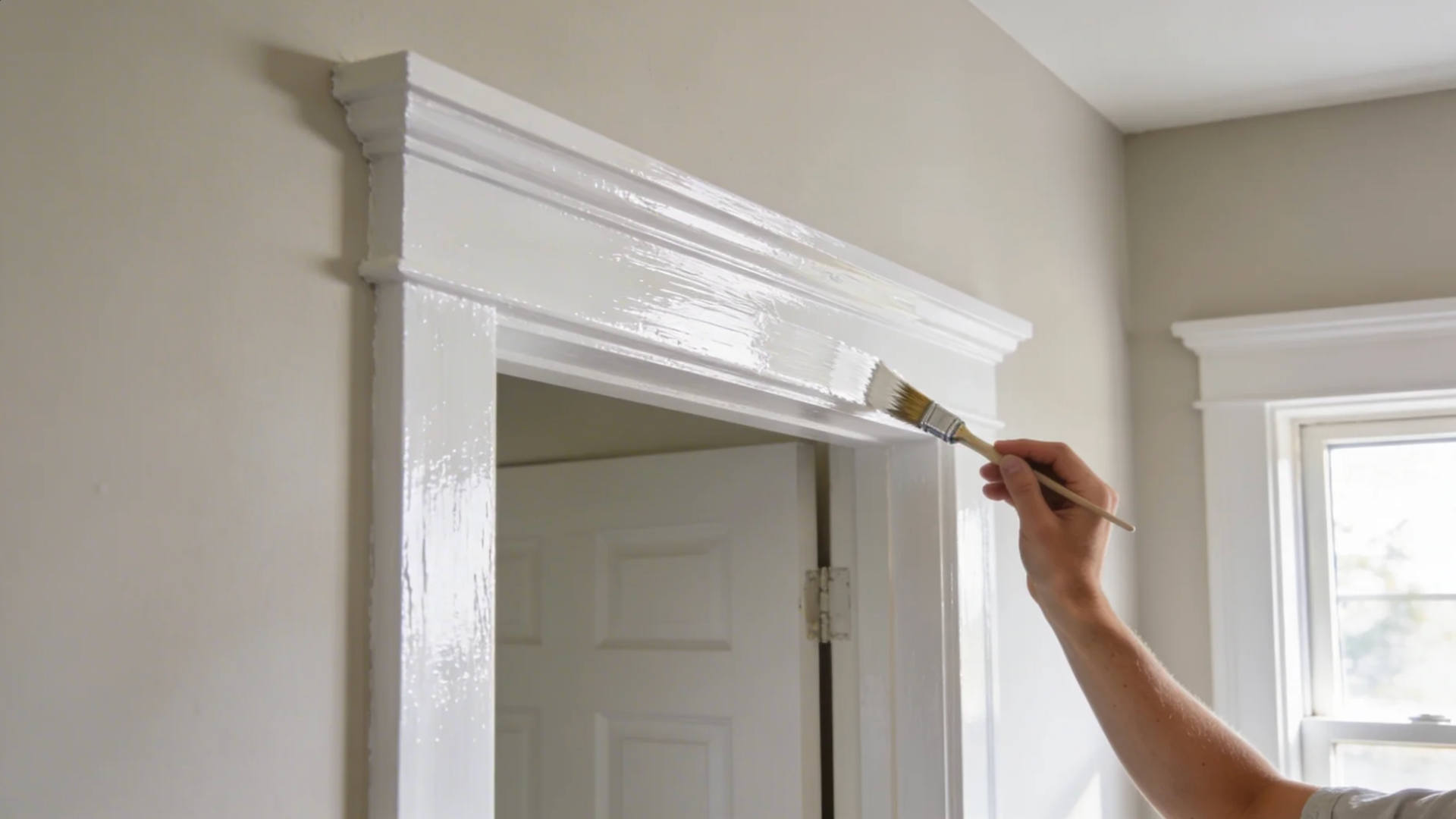
A good interior trim paint should be strong, smooth, and easy to clean. Trim and doors get touched often, so the paint must handle daily use without chipping or fading.
Many homeowners prefer paints that spread evenly and leave fewer brush marks after drying. Durability is another key factor.
The best paint for trim should resist scratches, dirt, and moisture. This helps the trim stay neat even in busy areas like hallways, kitchens, and living rooms. Good coverage also matters because it reduces the number of coats needed.
Most people also look for a finish that highlights the trim without looking dull.
Semi-gloss and satin finishes are popular choices for interior trim paint because they reflect light slightly, making the trim stand out from the wall color.
One specification detail worth knowing is that trim paints that cure to a hardness rating of 2H or higher on the pencil hardness scale tend to resist everyday scuffs far better than softer wall paints.
Best Paint for Doors and Trim
Homeowners often share their experiences with trim paints in forums and DIY groups. These paints are often recommended for durability, a smooth finish, and easy application.
| Paint name | Finish options | Best for | Skill level | Price range (per gallon) | Key trade‑off |
| Benjamin Moore Advance | Matte, Satin, Semi‑Gloss, High Gloss | Cabinets, doors, detailed trim | Beginner to Pro | $35.99 – $88.99 | Long cure time (up to 30 days for full hardness) |
| Sherwin‑Williams ProClassic | Satin, Semi‑Gloss, Gloss | Baseboards, door frames, and general trim | Beginner–Intermediate | $50 – $80 | Brush marks are more visible without the foam roller |
| Behr Alkyd Enamel | Semi‑Gloss, Gloss | Budget‑friendly large trim jobs | Intermediate | $35 – $55 | Slower dry time; mild odor during application |
| Sherwin‑Williams Emerald Urethane Trim Enamel | Satin, Semi‑Gloss, Gloss | High‑traffic areas, pet homes | Any | $85 – $110 | Premium price; overkill for low‑contact trim |
| Benjamin Moore Scuff‑X | Eggshell, Satin, Semi‑Gloss | High‑touch areas, baseboards, doors | Beginner to Pro | $55 – $85 | Slightly less smooth leveling than Advance |
Best Paint for Doors and Trim According to Users
Homeowners often share their experiences with trim paints in forums and DIY groups. These paints are often recommended for durability, a smooth finish, and easy application.
1. Benjamin Moore Advance
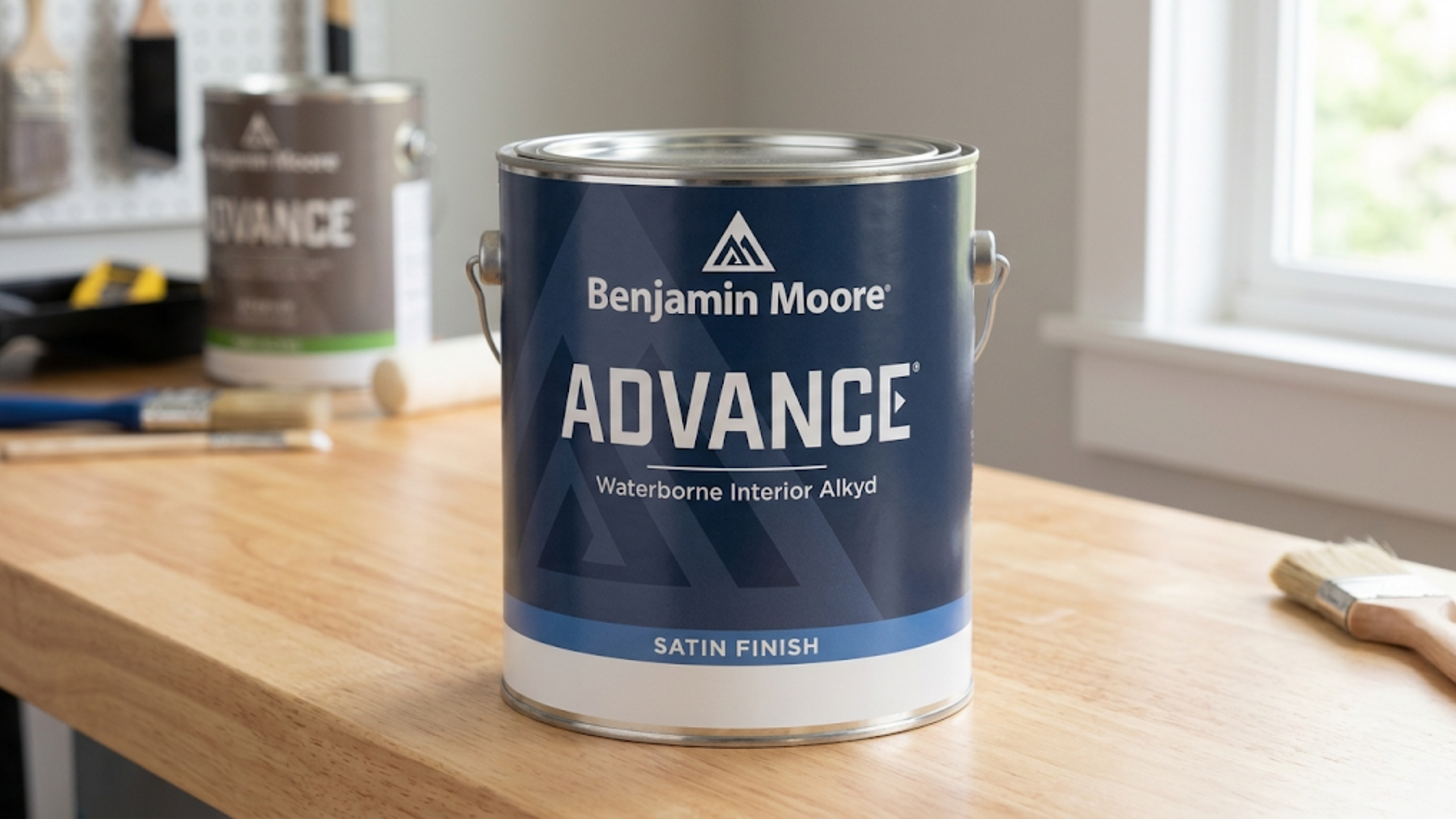
Benjamin Moore Advance often appears in user discussions about the best paint for doors and trim.
Many homeowners like it because it dries into a smooth, hard surface that looks clean and professional. The paint levels well during drying, helping reduce visible brush strokes.
People also mention that it works well for baseboards, door frames, and cabinets.
Another reason users suggest is durability. Once fully cured, the finish holds up well against fingerprints, cleaning, and daily contact, making it a strong choice for interior trim paint.
Advance takes up to 30 days to reach full hardness, so avoid heavy scrubbing in the first few weeks, even after it feels dry to the touch.
2. Sherwin-Williams ProClassic
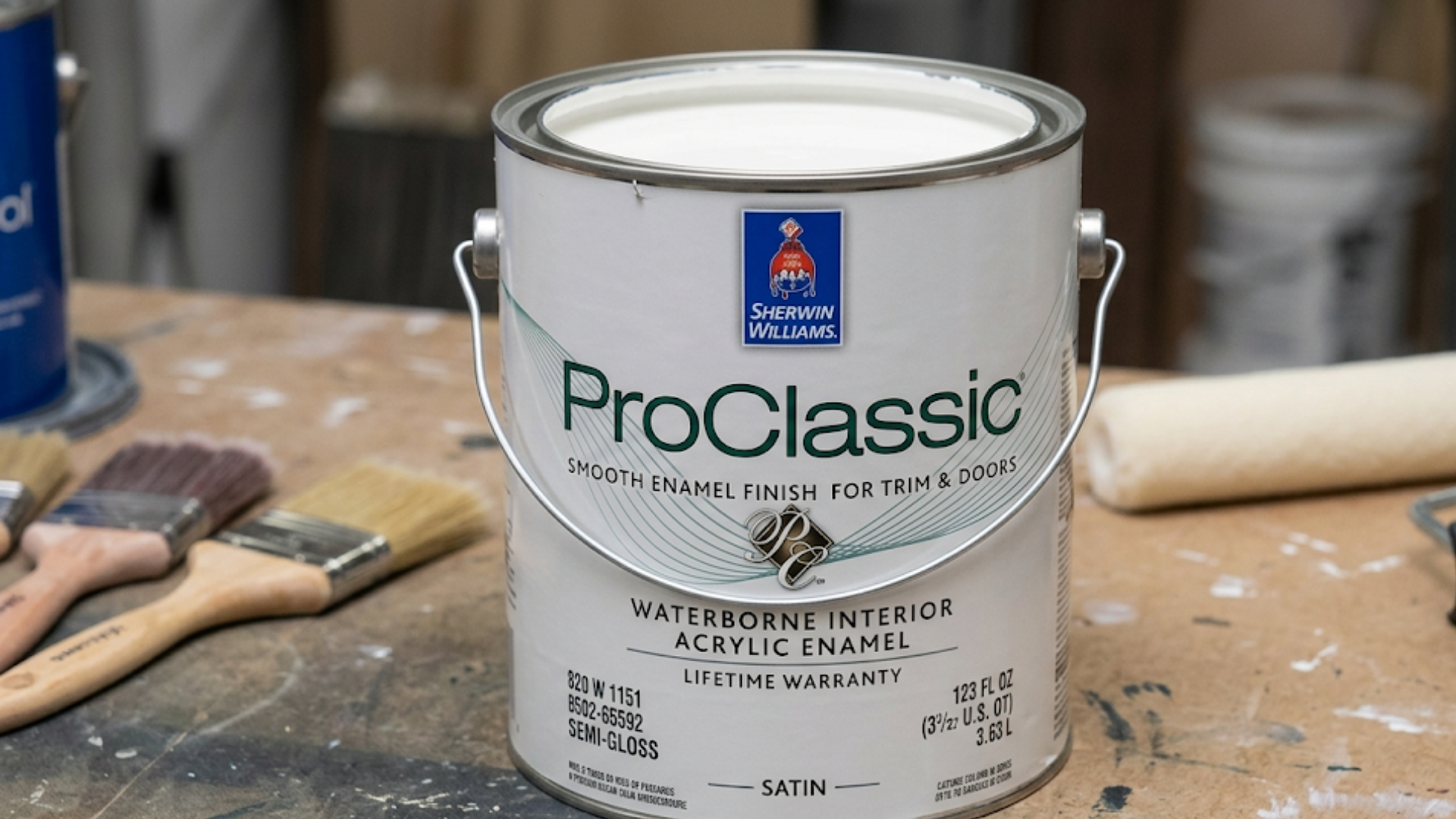
Sherwin-Williams ProClassic is another paint that many DIYers and painters recommend for trim and doors.
People often say it spreads easily and gives a consistent finish across trim surfaces. The formula helps reduce streaks, making it easier for beginners to achieve good results.
Users also mention that the paint dries into a durable coating that handles regular cleaning.
In painting communities, ProClassic in the acrylic-alkyd hybrid formula specifically gets higher marks than the straight acrylic version for leveling and reducing brush drag on wide casings. Worth asking for the right SKU at the counter.
Because of its smooth finish and reliable coverage, many homeowners choose ProClassic for the best paint for trim in busy areas.
3. Behr Alkyd Enamel
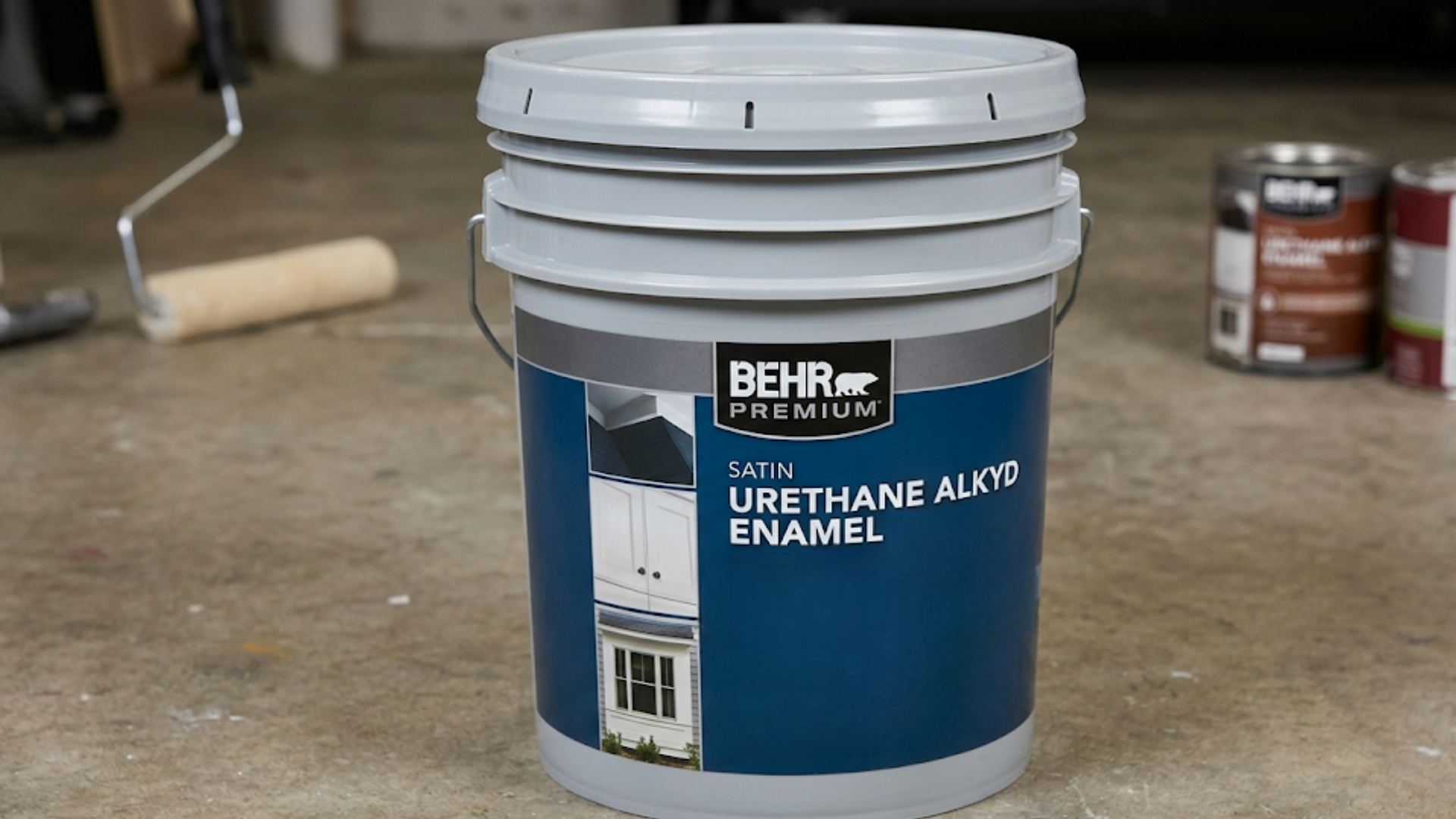
Behr Alkyd Enamel is frequently mentioned by homeowners who prefer paints available in major home stores.
Users often say this paint provides a strong, smooth finish on interior trim and doors. It behaves similarly to traditional oil-based paint but is easier to apply and clean up.
Many people also note that it leaves fewer brush marks when applied with a good brush or roller.
Because it balances durability and ease of use, Behr Alkyd Enamel remains a popular option for trim projects.
For best results, users on DIY forums consistently suggest applying it in a cooler room (under 75°F) to extend open time and allow the paint to level before skinning over.
4. Sherwin-Williams Emerald Urethane Trim Enamel
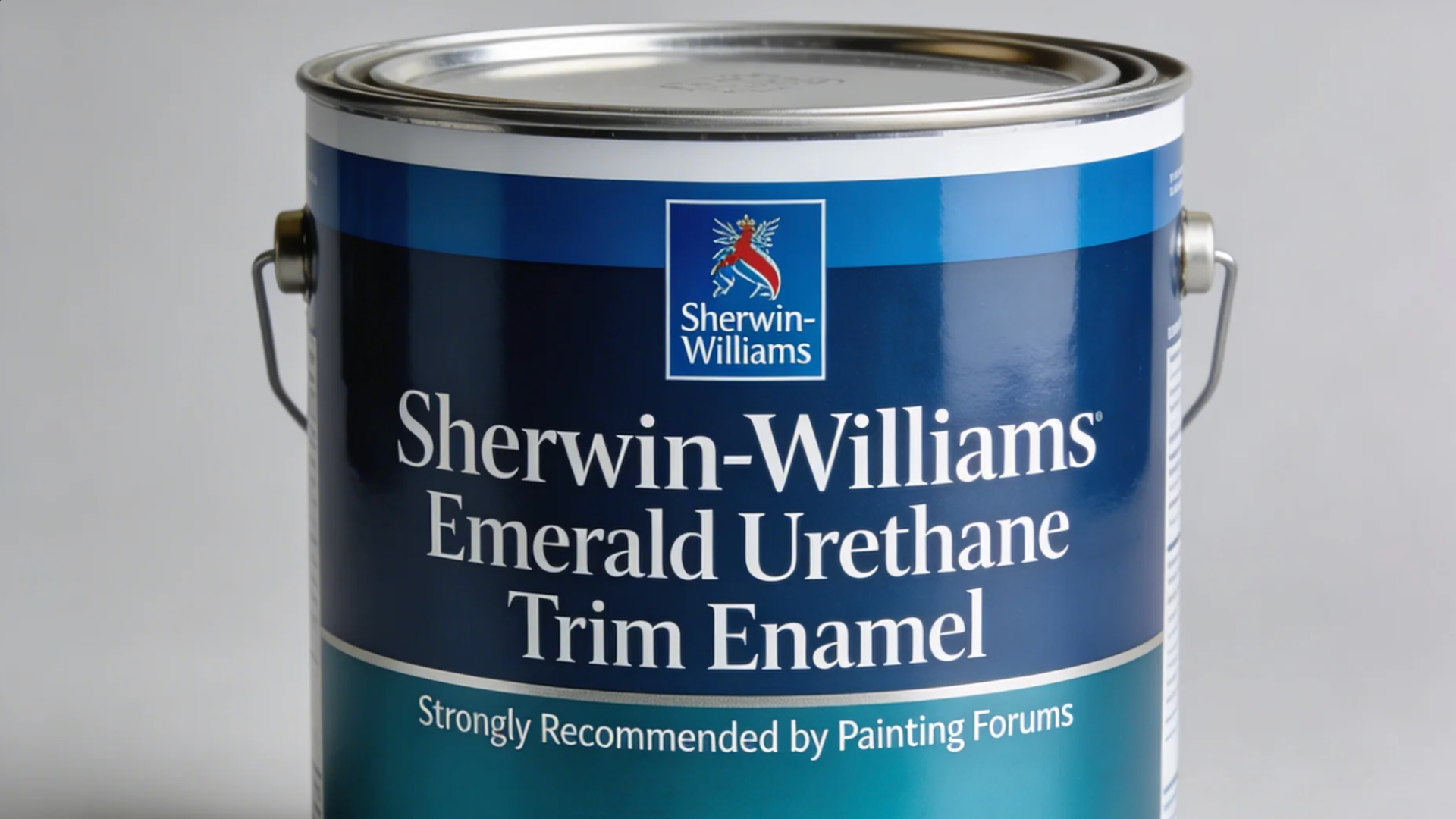
Sherwin-Williams Emerald Urethane Trim Enamel receives strong recommendations in many painting forums.
Homeowners often say the paint levels out nicely, creating a smooth finish on doors and trim. It also dries into a durable coating that resists scratches and marks.
Users report that the paint holds up well in busy areas where doors and trim are frequently touched.
Households with dogs or young children especially mention the Emerald Urethane for its resistance to paw prints and crayon marks, wiping clean without lifting the finish.
That is a real-world durability signal that most product pages do not highlight.
5. Benjamin Moore Scuff-X
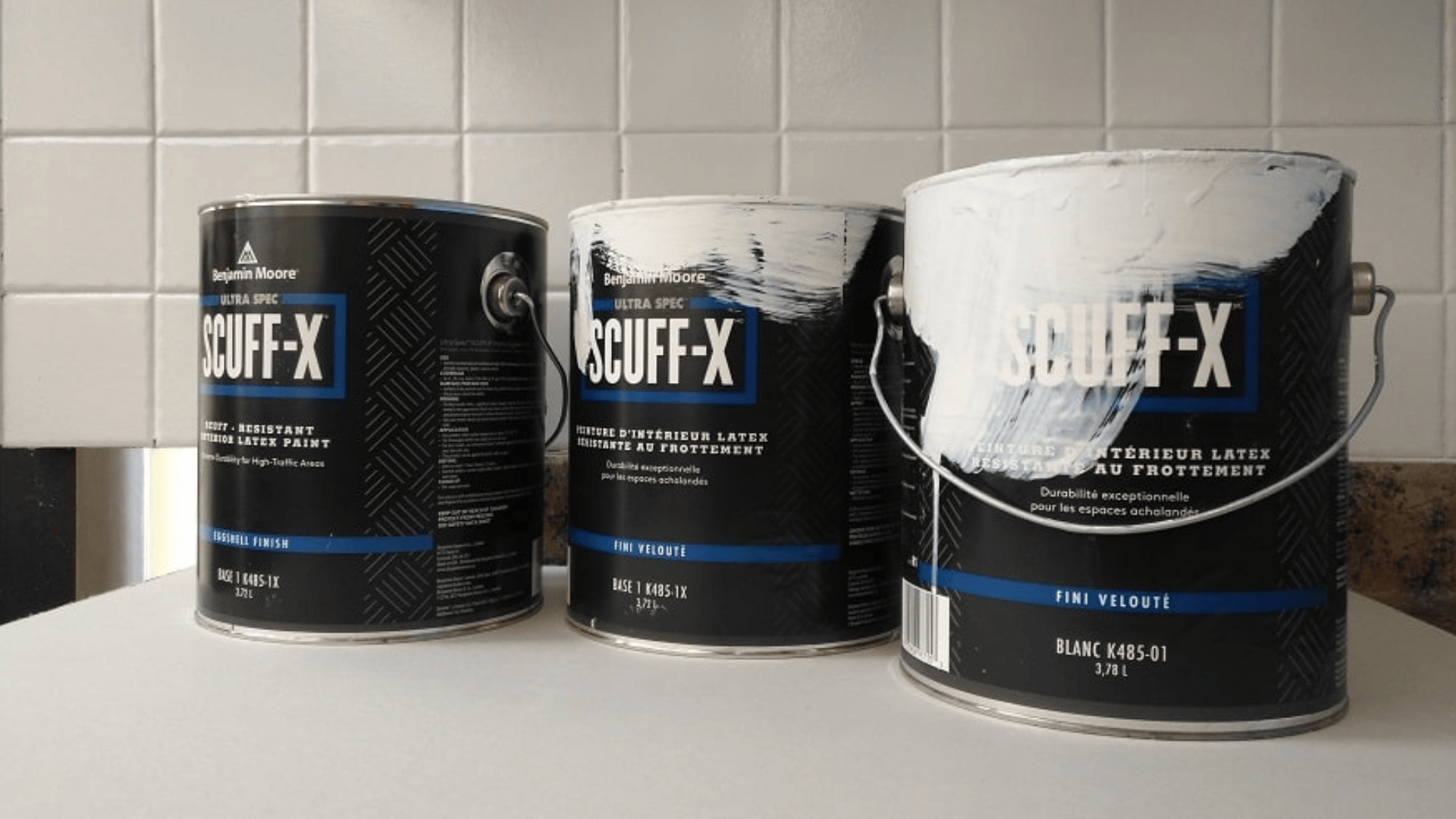
Benjamin Moore Scuff-X is often recommended for high-traffic areas where trim gets touched a lot. Many users say it resists scuffs, marks, and stains better than standard paints.
It dries to a smooth finish and holds up well on baseboards, doors, and trims in busy homes.
People also like that it cleans easily without damaging the surface. Because of its durability and low maintenance, many consider it a strong choice for long-lasting interior trim paint.
Simple Tips to Paint Trim Clean and Smooth
Small preparation steps and careful application often make the biggest difference in trim painting results. Many homeowners share simple habits that help the paint look smoother and last longer.
- Sand The Trim First: Light sanding helps remove small bumps and old gloss from the surface. It also allows the new interior trim paint to stick better and spread more evenly.
- Clean The Surface: Dust, grease, and dirt can affect how paint dries on trim. Wiping the trim with a damp cloth before painting helps create a cleaner surface.
- Use a Good-Quality Angled Brush: a high-quality angled brush helps apply paint neatly along edges and corners. It also reduces streaks and gives doors and trim a smoother finish.
- Apply Thin Coats: Thin coats dry more evenly, reducing the risk of drips or brush lines. Many homeowners say two light coats give better results than one thick layer.
- Allow Enough Dry Time: Each coat needs time to dry to help prevent marks and uneven texture. Proper drying also helps the finish stay strong for longer.
- Use Painter’s Tape For Clean Lines: Painter’s tape helps keep paint from running onto nearby walls and surfaces. It also creates cleaner edges around trim and door frames.
Best Finish for Interior Trim Paint
The finish you choose can change how trim looks and how well it holds up over time. Many homeowners prefer finishes that stay smooth and are easy to clean.
1. Semi-Gloss Finish
Semi-gloss is one of the most common finishes used for interior trim paint. It gives trim a light shine that helps it stand out from the wall color without looking too bright.
Many homeowners prefer this finish because it handles cleaning well and resists stains.
Trim areas like baseboards and door frames often get touched, so durability matters. Semi-gloss also reflects some light, which can help highlight molding and edges.
Because of its balance between shine and durability, many painters recommend it for doors and trim.
It also telegraphs surface imperfections more than satin, so prep work matters more with this finish.
2. Satin Finish
Satin is another finish people often choose for trim, especially when they want a softer look. It has less shine than semi-gloss, resulting in a smoother, more subtle appearance.
Many homeowners like satin because it still cleans up easily while keeping the trim from looking overly glossy.
This finish works well in living rooms, bedrooms, and hallways where a gentle finish feels more natural.
Satin paint also spreads easily during application, helping reduce brush marks and creating a neat surface on doors and interior trim.
In design practice, I often recommend satin when the trim color is a soft white or off-white, as it avoids the hard, clinical look that semi-gloss can produce in well-lit rooms.
3. Gloss Finish
Gloss finish provides the highest level of shine among common trim paints. This finish reflects more light, making the trim and doors stand out more against the wall color.
Many homeowners choose gloss for bold contrast and easy cleaning. The surface becomes very smooth once dry, which helps dirt and marks wipe off quickly.
Because gloss is highly reflective, careful application is important to keep the finish looking even.
It is often used on doors, cabinets, and detailed trim that people want to highlight.
If the trim has any dents, dings, or old filler repairs, gloss will expose all of them. Fill and sand carefully before applying, or consider dropping to semi-gloss to buy some visual forgiveness.
Most Recommended Types of Interior Trim Paint at a Glance
Many homeowners choose trim paint based on durability and finish. The right type helps trim stay clean and smooth even after frequent use.
| Type | Description | Best For | Dry / Recoat Time | VOC Level |
| Semi-Gloss Paint | Smooth with a light shine, easy to clean | Baseboards, door frames, and window casings | 1 hr dry / 2 hr recoat | Low to medium |
| Satin Paint | Soft, low shine with a smooth look | Living rooms, bedrooms, hallways | 1 hr dry / 2 hr recoat | Low |
| Gloss Paint | High shine, very durable, easy to wipe | Exterior doors decorative trim | 2 hr dry / 4 hr recoat | Low to medium |
| Water-Based Enamel | Fast drying, low odor, strong finish | Kitchens, bathrooms, high humidity rooms | 45 min dry / 2 hr recoat | Very low |
| Alkyd Enamel Paint | Hard smooth finish with fewer brush marks | All trim types DIY oil-like results | 6–8 hr dry / 16 hr recoat | Medium |
Oil-Based vs. Water-Based Trim Paint: Which One Should You Choose?
This is one of the most debated questions in painting forums, and the answer depends on your priorities.
Oil-based paints level beautifully and cure to an extremely hard finish, but they take 24 hours or more between coats, require mineral spirits for cleanup, and yellow over time, particularly in low-light areas.
Water-based enamels and alkyd hybrids dry faster, clean up with soap and water, hold their color longer, and have improved significantly in hardness over the past decade.
For most interior trim projects today, a water-based alkyd hybrid gives you the best of both options without the downsides of true oil-based paint.
Common Mistakes People Make when Painting Trim
Small errors during prep or painting can affect how the final trim looks. Many homeowners learn these issues the hard way.
- Skipping Surface Prep: Painting over dust, grease, or old gloss can cause poor adhesion. Cleaning and light sanding help the paint stick and create a smoother finish.
- Not Using Primer When Needed: Primer helps paint bond better, especially on glossy or stained trim. Skipping it can lead to uneven coverage and faster wear.
- Applying Thick Coats: Heavy coats take longer to dry and often leave drips or brush marks. Thin, even layers usually produce a smoother and more durable result.
- Using The Wrong Brush: Low-quality brushes can leave streaks and uneven edges. A good angled brush helps create clean lines along trim and door frames.
- Rushing Drying Time: Painting over coats that are not fully dry can cause texture issues. Allowing proper drying time helps maintain a smooth surface.
- Using Wall Paint on Trim: Wall paint is not designed for high-contact surfaces. Trim paint is stronger and better suited for doors, baseboards, and frames.
What Reddit Users are Saying About the Best Paint for Trim?
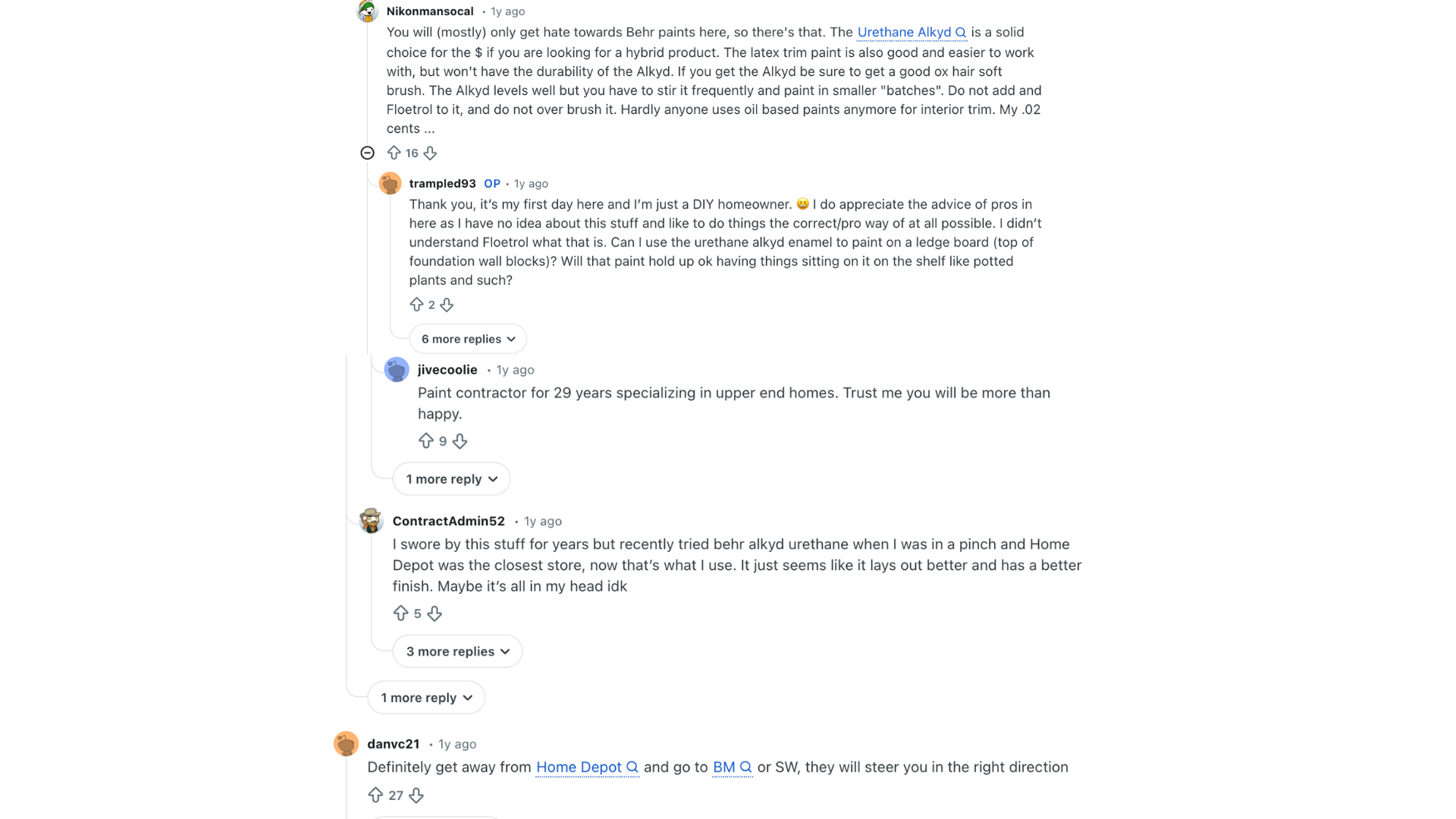
Reddit users often share practical advice based on their own painting projects.
Many users say semi-gloss paint is the most common choice for trim because it is durable and easy to clean.
They mention that baseboards and door frames are often touched, so a finish that wipes clean quickly works better in busy homes.
Semi-gloss also reflects more light, which helps trim stand out from the walls. However, some Reddit discussions show a growing preference for satin finish.
Users say satin has a softer sheen and hides small wood or old trim flaws better than semi-gloss.
It still offers decent durability while looking less shiny, which many people prefer in modern interiors.
Overall, Reddit opinions often come down to personal taste.
Many users still recommend semi-gloss for durability and easy cleaning, while others choose satin for a smoother, less shiny look.
If you want to read real opinions, you can check and participate in the discussions at Reddit.
How to Choose the Best Paint for Trim?
Choosing the right trim paint affects how long it lasts and how clean it looks. A few simple factors can help you avoid common mistakes and get better results.
- Durability: Trim gets touched often, so pick paint that resists scuffs, scratches, and stains
- Finish type: Semi-gloss works best for easy cleaning, while satin gives a softer look
- Ease of cleaning: Choose paint that wipes clean without losing its color or shine
- Application: Paint that levels well helps reduce brush marks and uneven texture
- Dry and cure time: Faster dry time helps with quick projects, but full curing builds long-term strength
- Coverage: Good coverage means fewer coats and a smoother final finish
- Room conditions: Use moisture-resistant paint for kitchens, bathrooms, and humid areas
To make things even easier, here’s a quick guide based on common situations and what works best for each one:
| Your Situation | Recommended Paint Type | Recommended Finish |
| High-traffic home with kids or pets | Urethane trim enamel or water-based alkyd | Semi-gloss |
| Older home with imperfect trim | Water-based alkyd hybrid (levels well) | Satin (more forgiving) |
| First-time DIY painter | Water-based enamel (easy cleanup, fast dry) | Satin or semi-gloss |
| Repainting over existing oil-based paint | Use bonding primer first, then water-based alkyd | Semi-gloss |
| Budget-conscious large project | Behr Alkyd Enamel or SW ProClassic acrylic | Semi-gloss |
| High-end finish/cabinetry or detailed millwork | Benjamin Moore Advance | High gloss or semi-gloss |
Conclusion
Trim paint tends to show wear faster than wall paint, so the choice you make matters over time. A better-quality paint usually holds up longer, stays easier to clean, and keeps a more even finish.
Lower-quality options may start to show marks, chips, or dull spots sooner, especially on doors and baseboards.
It helps to think about how often your trim is used and how much cleaning it will need. Taking time with prep and using the right finish can make the results last longer and look more consistent.
If you’ve painted trim before, share what worked for you. Let others know which paint you used and how it held up in your space in the comments below.
Frequently Asked Questions
Is Primer Needed Before Painting Trim?
Prime if trim is bare wood, oil-based, or stained surfaces. For clean latex-painted trim, light sanding may be enough. A bonding primer helps improve adhesion.
How Long Does Trim Paint Take to Fully Cure?
Trim paint dries in 1 to 2 hours and recoats in 2 to 4 hours. Full cure takes 7 to 30 days. Avoid heavy use during this time.
What Is the Difference Between Trim Paint and Wall Paint?
Trim paint is harder and resists wear, cleaning, and touch. Wall paint is softer and made for flat surfaces. It wears faster on the trim.