

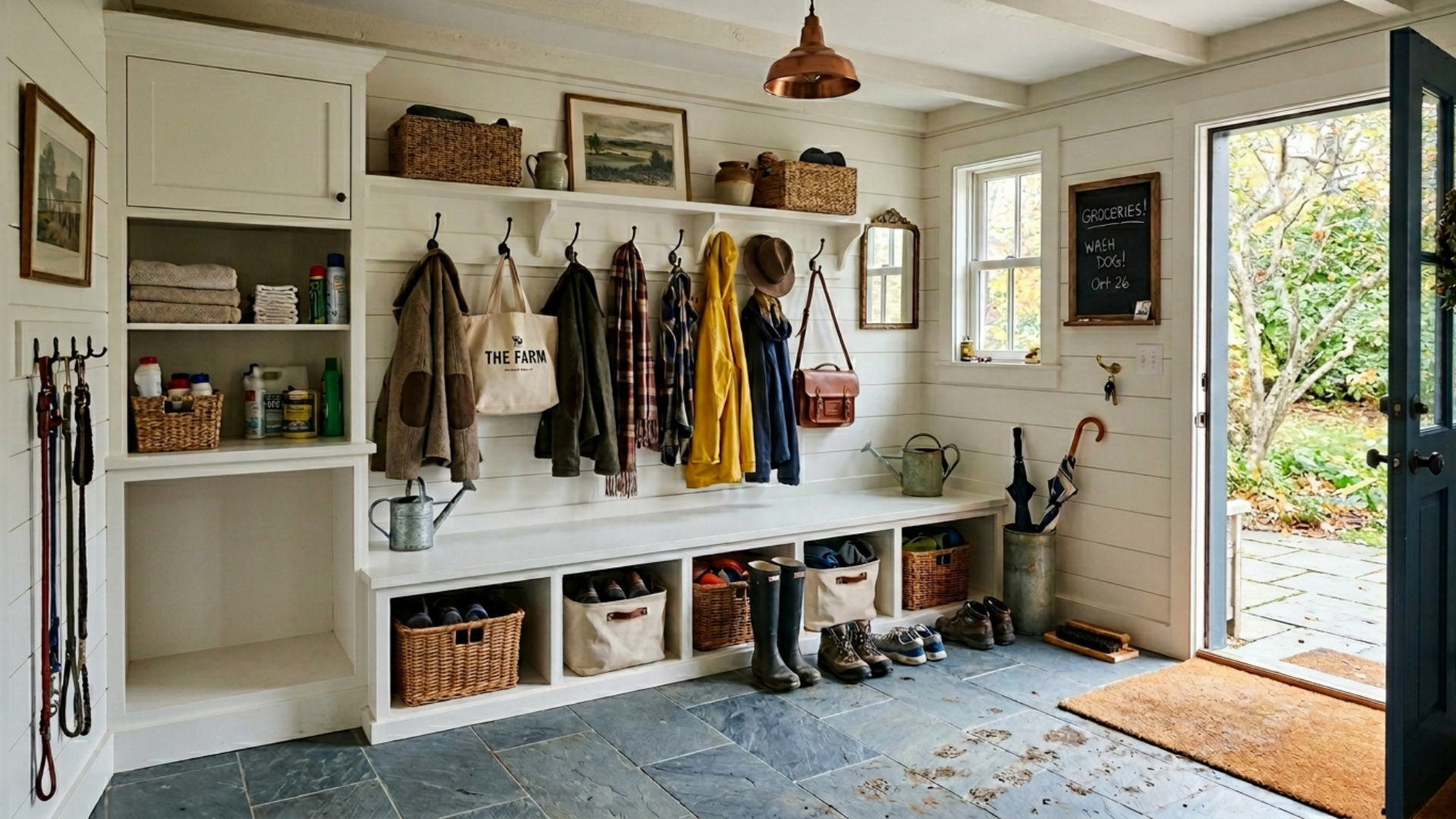
A mudroom might sound like a fancy extra space, but it’s actually one of the most useful areas in any home.
It’s the spot where shoes come off, bags get dropped, and daily mess stays contained.
If you’ve ever walked into a house and wished there was a place to keep things organized right at the door, that’s exactly what a mudroom does.
The good news? You don’t need a big home to have one. With the right setup, even a small corner can work.
In this guide, you’ll learn what a mudroom is, why it matters, and how to create a clean, organized entry space even in a tight spot.
What is a Mudroom?
A mudroom is a small space near your main entrance or back door where outdoor items like shoes, coats, bags, and umbrellas get stored.
Think of it as a buffer between the outside world and your clean living space. Dirt, mud, and clutter stop here instead of spreading through your home.
Most mudrooms include hooks, shelves, benches, and storage bins. Even a simple corner setup can do the job, you don’t need a dedicated room to make it work.
Key Features of a Functional Mudroom
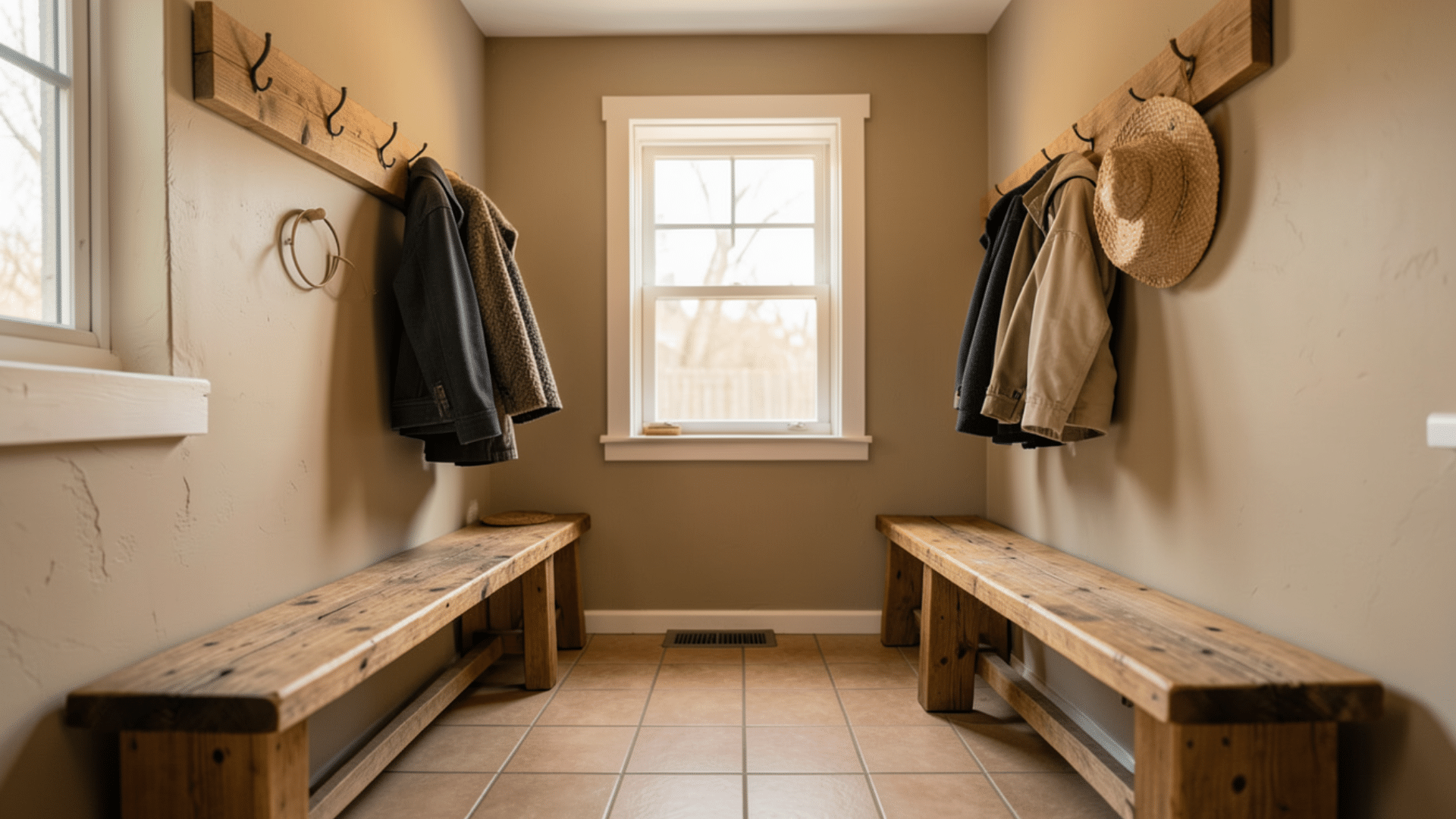
A well-designed mudroom doesn’t need to be complicated. It just needs to handle daily mess without becoming part of it.
These are the features that actually earn their place:
- Storage Solutions: Hooks, shelves, and cabinets keep coats, bags, and daily items off the floor and out of the way.
- Seating Area: A bench or stool lets you sit while putting on or taking off shoes; small detail, big difference.
- Durable Flooring: Tile or vinyl cleans up with a single wipe. Carpet holds moisture and stains, so skip it here.
- Shoe Organization: Racks or cubbies keep footwear in one place. If shoes don’t have a spot, they end up everywhere.
- Lighting: A dim entryway makes everything harder. Good light means you actually use the space properly.
- Multi-Use Space: The best mudrooms pull double duty, laundry area, pet station, or a small utility sink if the layout allows.
Of all these, flooring and hooks do the most work day-to-day. Get those two right first, then layer in the rest.
A second row of hooks at kid height is one of those details that sounds minor until you actually have it. Kids use what they can reach, everything else ends up on the floor.
Why a Mudroom Matters in Modern Homes
In a busy household, clutter doesn’t stay in one place. It migrates; shoes by the couch, bags on the kitchen counter, jackets draped over chairs.
A mudroom stops that from happening because it gives everything a place the moment you walk in. You’re not deciding where to put things. The space decides for you.
It also keeps your home noticeably cleaner. Dirt, moisture, and outdoor mess stay at the door instead of tracking through every room.
For families with kids or pets, that matters every single day. Mornings get faster too, you stop retracing your steps looking for keys or a missing shoe.
Even a small setup delivers this. The size of the mudroom matters less than having one at all.
Small Mudroom Ideas for Compact Spaces
You don’t need a dedicated room or a big renovation budget to make this work. These ideas are built for tight spaces, choose the ones that fit your layout.
1. Wall Hook System
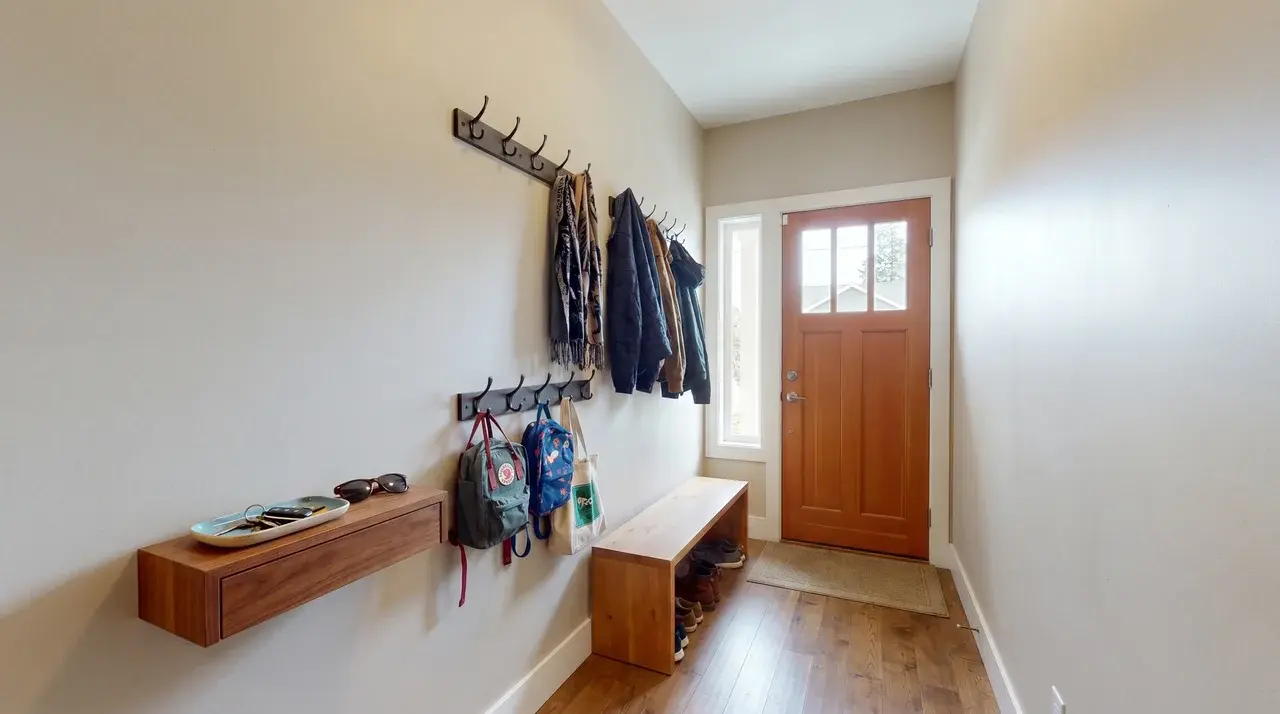
A wall hook setup costs almost nothing to install and works in spaces too narrow for furniture. Mount sturdy hooks at two heights; adult level for coats and bags, lower down for kids’ things.
Label each hook by family member and suddenly everything has an owner. Add a small tray or basket at the base for keys, sunglasses, and loose items.
This is the lowest-commitment mudroom setup you can build. It works in apartments, rental homes, and any entryway that’s too tight for a bench.
2. Bench with Hidden Storage
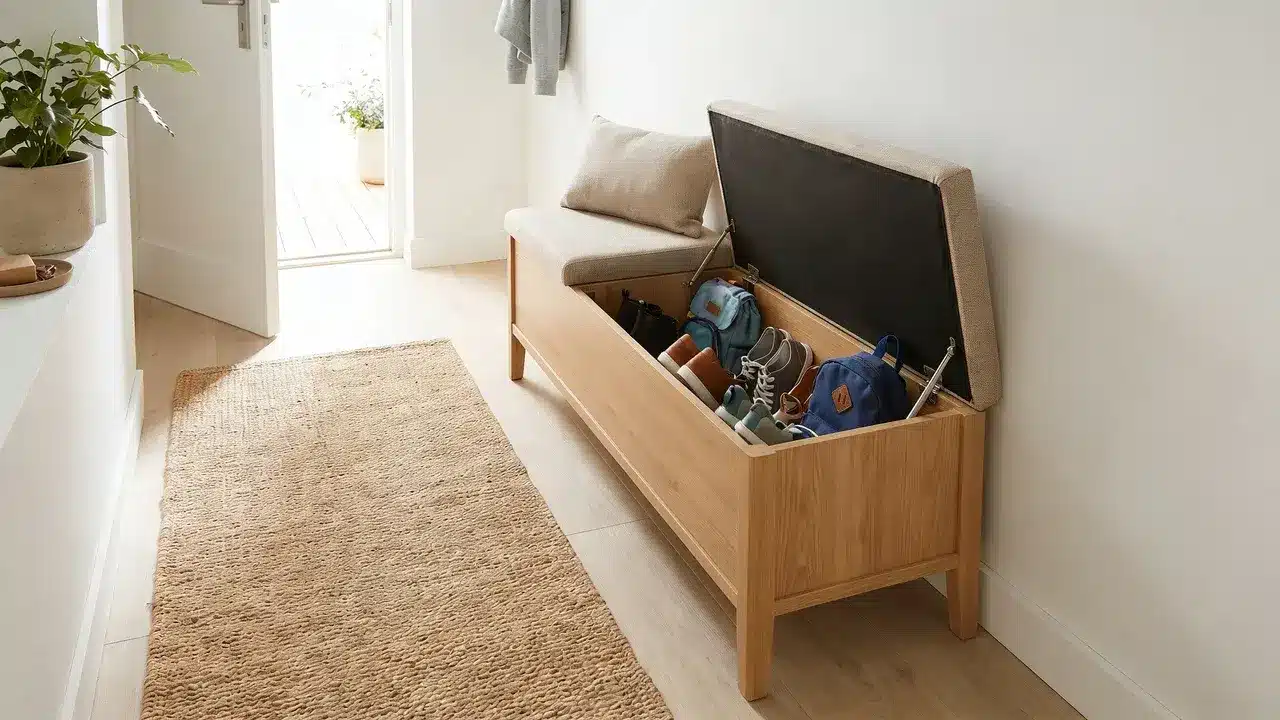
A bench with built-in storage earns its footprint by doing two jobs at once. You sit on it to put shoes on, and everything you want out of sight goes inside.
Seasonal items, extra bags, shoes you don’t wear daily; all of it disappears. Keep the bench slim enough that the walkway stays clear.
A cushion on top makes it comfortable and pulls the space together visually. This is one of the tidiest single-piece solutions for a compact entryway.
3. Vertical Shelving Units
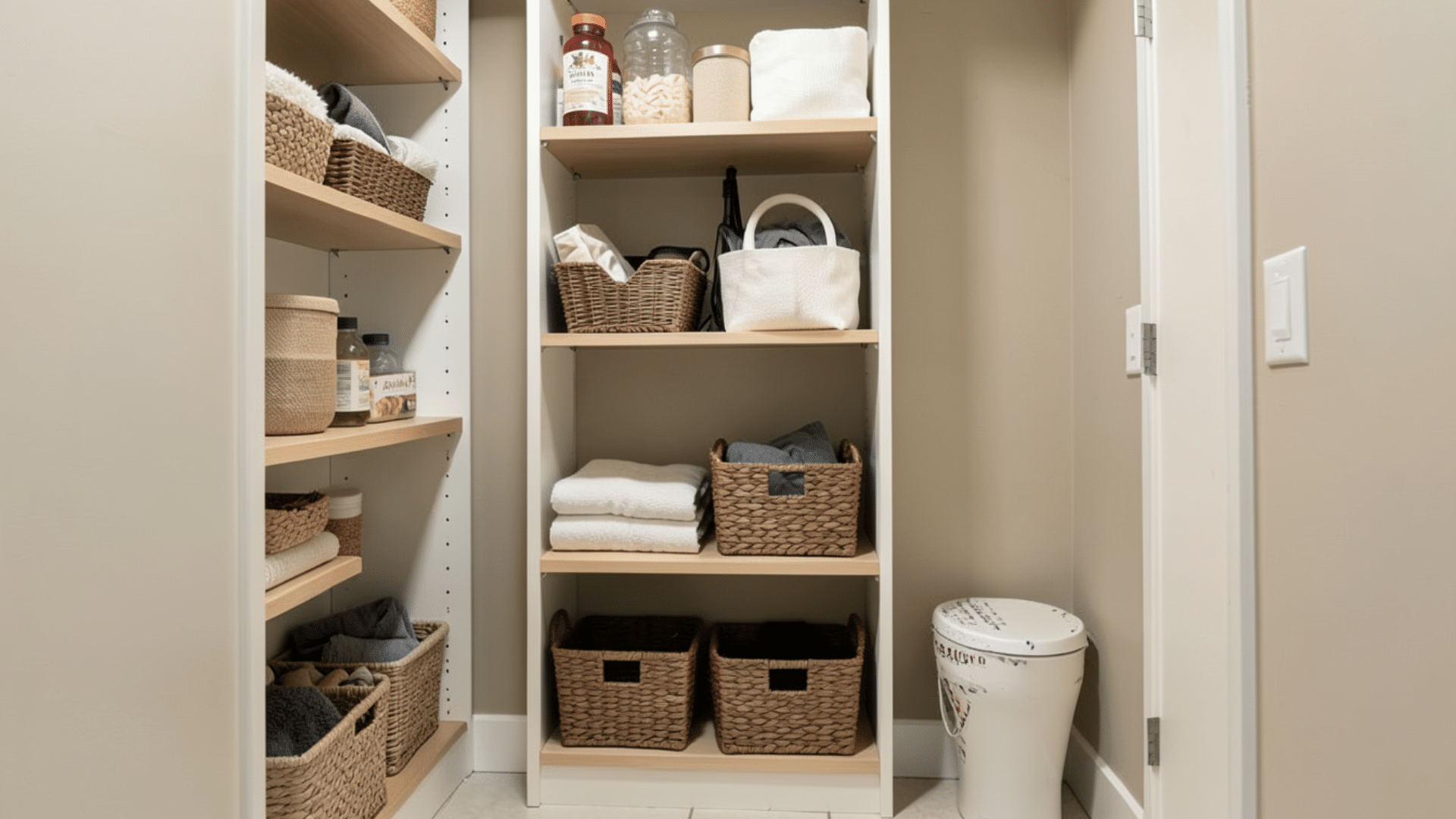
When floor space is tight, going vertical opens things up immediately. A tall shelving unit takes up the same floor footprint as a small stool but gives you several times the storage.
Use labeled bins so you’re not digging through everything to find one item. Keep the things you grab daily at eye level, everything else goes higher or lower.
This works especially well in narrow hallways where wider furniture simply won’t fit.
4. Slim Cabinet Storage
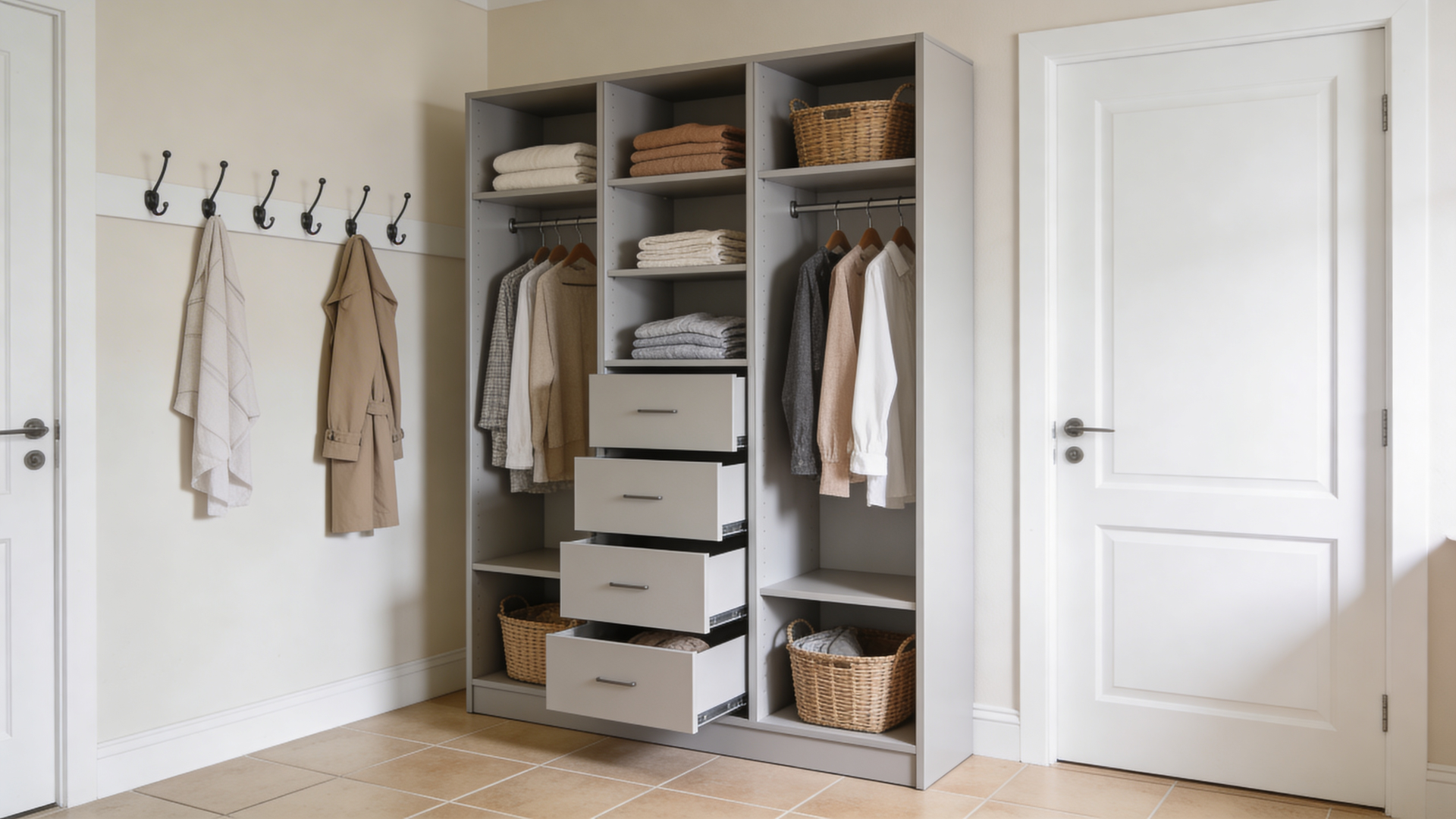
Slim cabinets work where standard furniture won’t; anything under 12 inches deep keeps the walkway clear while still hiding a surprising amount of clutter behind closed doors.
Shoes, cleaning items, outdoor gear, all out of sight. The entryway looks clean even on the messiest days.
A small tray or a plant on top gives the cabinet a finished look without requiring anything extra. This is the right call when you want the space to look intentional, not improvised.
5. Corner Mudroom Setup
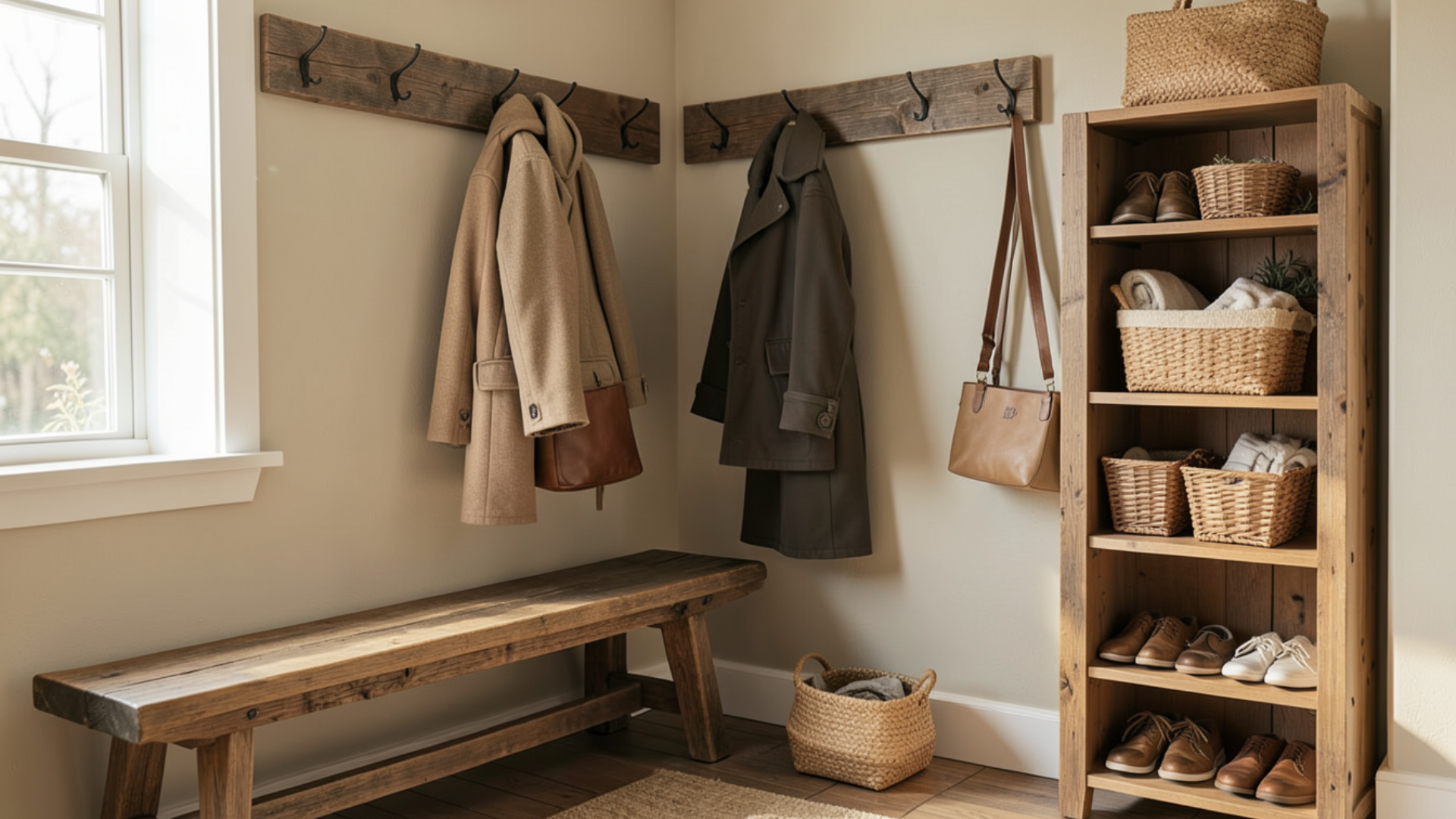
Corners are some of the most overlooked storage spots in a home. A small corner bench, a few hooks, and a shelf above it turn dead space into a working mudroom.
Because everything sits in the corner, the main walkway stays completely open. You’re not sacrificing movement for storage; you’re using space that was doing nothing anyway.
This works well in homes where the door opens directly into a living area and there’s no obvious wall to work with.
6. Under-Stairs Mudroom
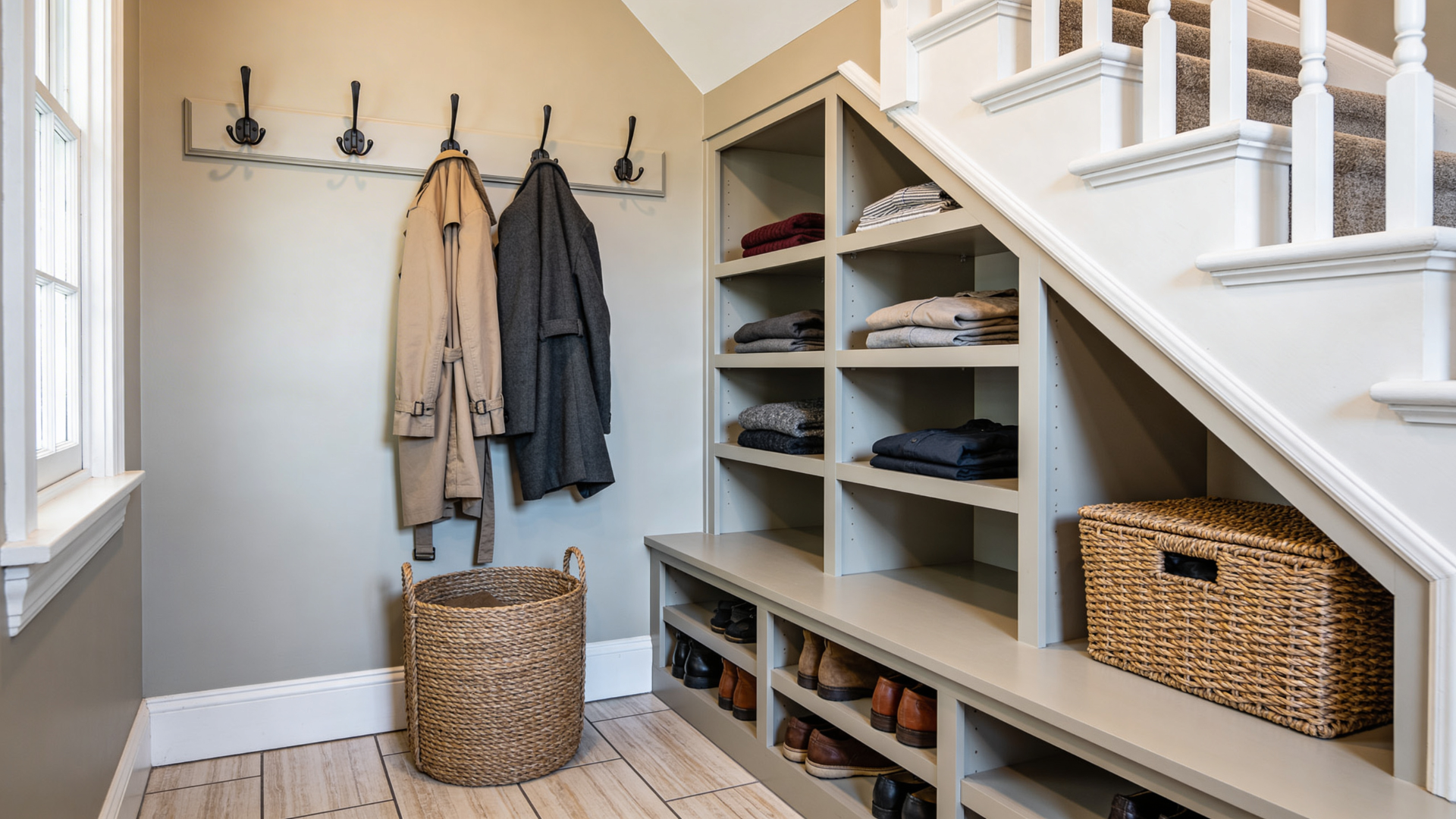
The void under your stairs is one of the most overlooked storage spots in the house. Built-in shelves, hooks, and a bench tucked into that space create a fully functional mudroom without claiming any extra square footage.
Baskets or bins keep shoes and bags organized inside the nook. The area stays out of the main flow of the house, so even a busy setup looks contained.
If you have stairs and a tight home, this is worth looking at seriously before spending anything on furniture.
7. Entryway Rug Zoning
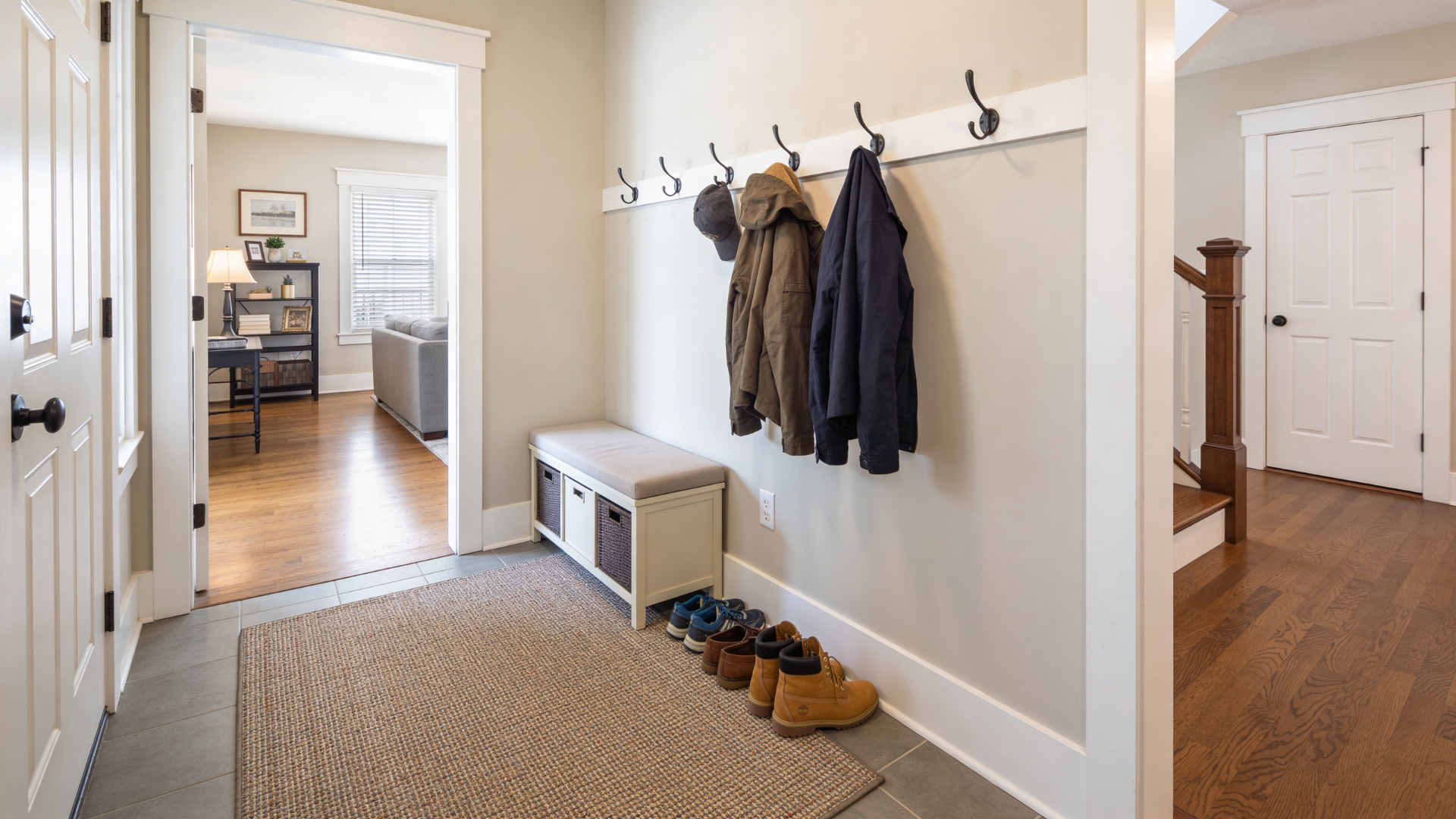
A rug can define a mudroom zone without a single nail or permanent installation. Done right, it functions as a real drop zone, not just a floor covering.
Choose a flat-weave or rubber-backed rug. High-pile rugs trap dirt and hold moisture, exactly what you don’t want here. Position it directly inside the door so shoes come off on it, not past it. That’s the whole point.
Pair it with a wall rack for hooks and a slim shoe tray sitting on the rug itself. The tray keeps wet shoes contained and off the floor. Add a basket nearby for bags and hats.
Three pieces — rug, hooks, tray — replicate the core function of a built mudroom with no permanent changes. This is the go-to for renters and apartments.
8. Floating Shelves with Hooks for Vertical Storage
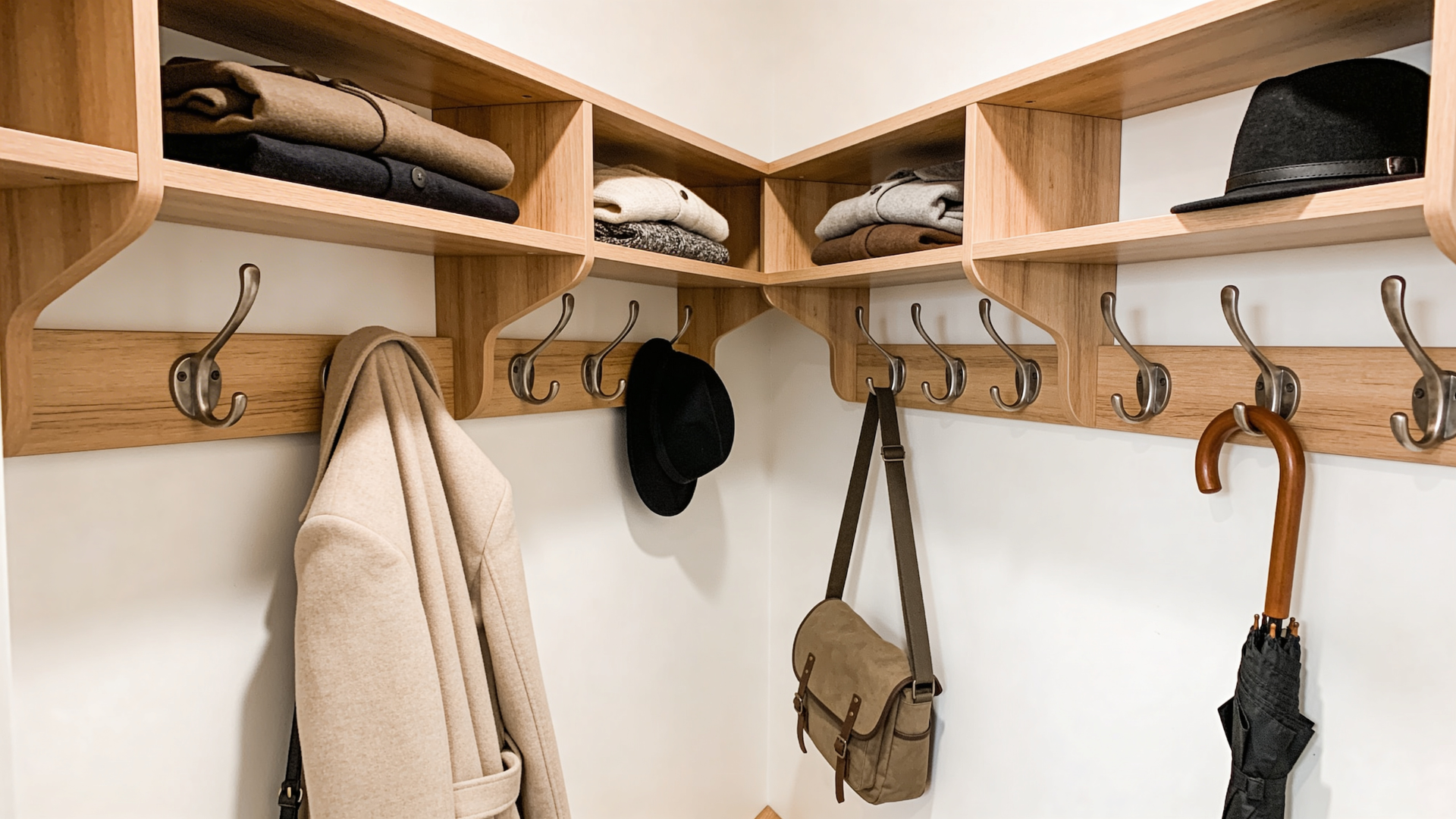
Floating shelves with hooks below keep the floor completely clear while covering the two things a mudroom actually needs — somewhere to hang things and somewhere to store them.
Baskets on the shelves handle smaller items like gloves, keys, and scarves. Hooks below take coats and bags. Everything is visible and reachable without any digging.
This setup reads clean and open, which matters in narrow spaces where heavy furniture makes a room feel smaller than it is.
9. Slim Shoe Rack with Wall-Mounted Hooks
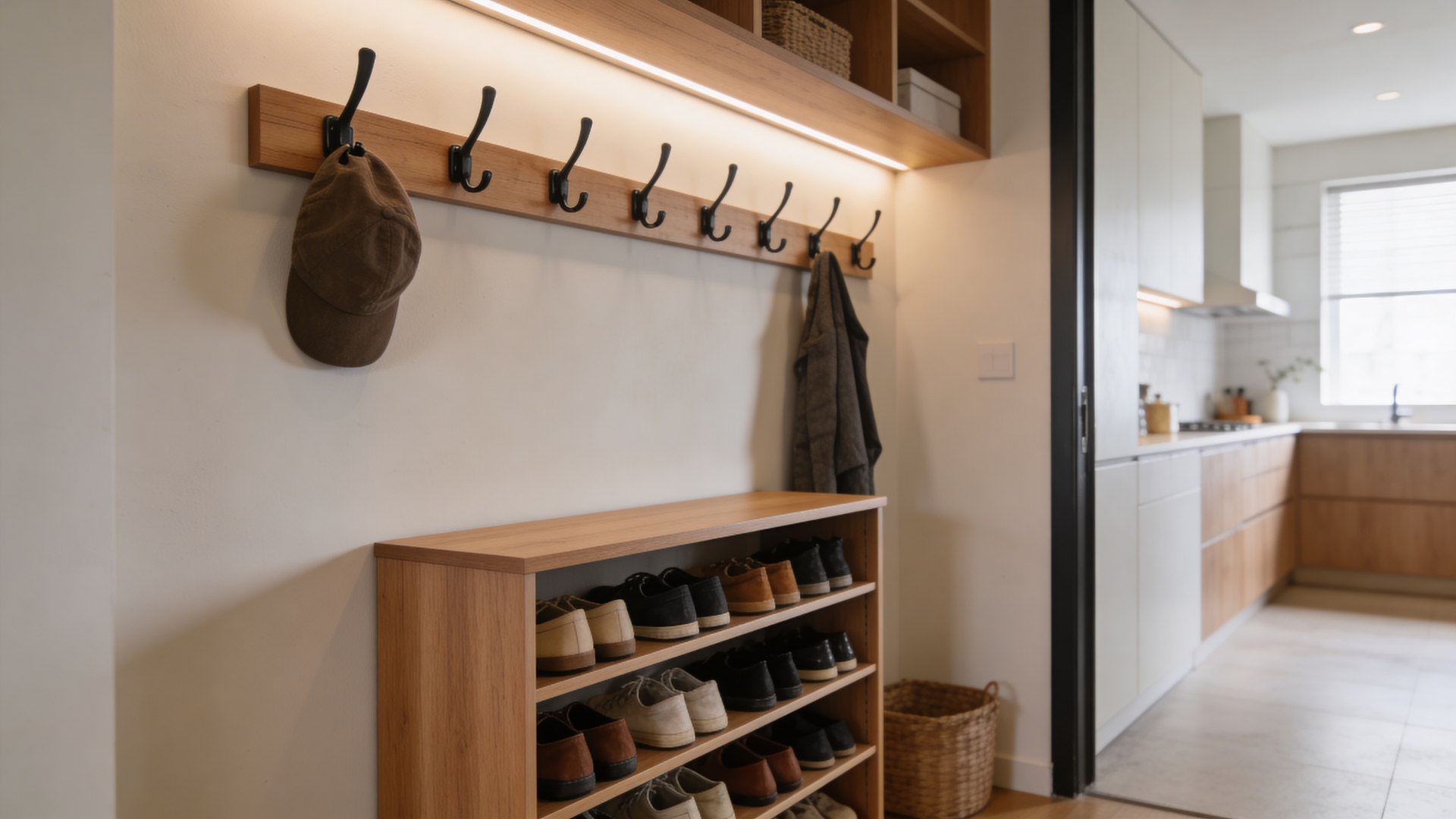
A slim shoe rack paired with wall hooks handles the two biggest sources of entryway clutter in one tight footprint. The rack keeps footwear stacked and off the floor; the hooks above take care of coats, hats, and bags.
Keeping items off the floor also makes cleaning easier, you’re not moving things around to sweep or mop.
This is a reliable, low-cost setup that works in almost any entry space, including hallways where you’d normally think storage isn’t possible.
Budget-Friendly and Rental-Safe Mudroom Ideas
You don’t need a contractor or a renovation budget to get a functional mudroom running. These approaches work for renters, apartment dwellers, and anyone who wants results without committing to built-ins.
Here’s what actually works at different price points:
- IKEA Mackapar unit: This freestanding piece combines a coat rack, bench, and shoe storage in one compact footprint. No wall drilling required, which makes it a solid choice for renters. It fits most narrow entryways and runs around $150–$200.
- IKEA Billy or PAX as locker-style storage: A Billy bookcase with added baseboard trim looks close to a built-in mudroom cabinet at a fraction of the cost. PAX wardrobes let you hang coats behind closed doors, which cuts visual clutter immediately.
- IKEA Boaxel wall system: This wall-mounted, adjustable system mixes mesh baskets, clothes rails, and wooden shelves. Because it has no side panels, it feels lighter in tight spaces and lets you see everything at a glance; useful for wet coats and umbrellas.
- Full DIY approach: A floating shelf, a row of hooks, and a shoe rack from a hardware store can come together for under $100. This is the most flexible option and takes less than a weekend to set up.
Start with the IKEA Mackapar or a basic hook-and-tray setup if you’re unsure. Both are easy to expand later without starting over.
Smart Layout Tips for Small Mudrooms
The layout determines whether your mudroom actually gets used or just collects overflow. A few simple decisions make the difference between a system that holds and one that collapses within a week.
Keep these in mind before you start placing anything:
- Use Vertical Space: Tall shelves and stacked hooks store more than wide furniture while taking up less floor area.
- Keep Essentials Accessible: Keys, daily shoes, and bags go at eye level or within easy reach — not buried behind seasonal items.
- Create Personal Zones: Assign a hook, shelf, or cubby to each person. When everyone has a spot, items stop getting mixed up.
- Choose Multi-Use Furniture: A bench that opens for storage, or a cabinet with both hanging and shelving space, earns more per square foot than single-use pieces.
- Avoid Overcrowding: If it doesn’t belong in the entry, it doesn’t belong in the mudroom. Keeping the space lean is what makes it functional.
- Use Baskets and Bins: Group smaller items like gloves, scarves, and dog leashes into labeled containers so they don’t scatter across every surface.
The biggest layout mistake is trying to store too much. A mudroom that handles daily items well beats a mudroom packed with everything that has nowhere else to go.
Mudroom vs. Entryway
Both spaces are near your home’s entrance, but they’re built for different purposes. Knowing the difference helps you design the right one for how you actually live.
| Feature | Mudroom | Entryway |
|---|---|---|
| Purpose | Storage and organization | First impression and decor |
| Functionality | Highly practical and utility-focused | Basic use with limited storage |
| Storage | Includes hooks, shelves, benches, and cubbies | May have minimal storage or none |
| Mess Control | Designed to contain dirt, shoes, and clutter | Not built for handling heavy mess |
| Design Style | Simple and functional | Often styled with decor and furniture |
| Location | Near back or side entrance (sometimes front) | Usually at the main front entrance |
Common Mistakes to Avoid
A mudroom should make your life easier. These are the mistakes that flip it the other way — turning a useful space into another source of clutter.
- No Storage Plan: Placing random items without a system creates a pile-up, not an organized entry.
- Overcrowding the Space: Too much furniture in a small mudroom makes it harder to use than having nothing at all.
- Ignoring Vertical Space: Skipping wall hooks and high shelves leaves your best storage opportunity untouched.
- Poor Lighting: A dim entry makes it harder to find what you need and makes the space feel like a problem to avoid, not use.
- Hard-to-Clean Materials: Carpet, rough textures, and fabric that absorbs moisture will make cleaning the one space that needs it most a real chore.
- No Personal Zones: Shared hooks and shelves without clear ownership mean everyone’s things end up mixed together within a week.
Final Thoughts
A mudroom doesn’t need to be large or expensive to work. It just needs to be in the right place with the right pieces.
When shoes, bags, and coats have a fixed spot at the door, clutter stops spreading into the rest of your home. Mornings get faster. Cleaning gets easier. The house feels more settled.
Pick the idea that fits your space; one hook setup, one bench, one rug zone, and start there. A small, functional mudroom built around how you actually live will do more for your daily routine than a large one that’s hard to maintain.
Frequently Asked Questions
Can A Mudroom Be Customized For Different Seasons?
Yes. Rotate items in and out based on what you actually need; heavy coats and boots in winter, lighter jackets and rain gear in spring. Labeled bins make seasonal swaps fast and keep the space from getting overloaded year-round.
Is It Possible To Create a Mudroom in a Rental Home?
Absolutely. Removable adhesive hooks, freestanding shelving units, and a portable bench require no drilling or permanent changes. The IKEA Mackapar unit is a popular option, it’s compact, self-contained, and easy to take with you when you move.
How Can a Mudroom Support Daily Routines Better?
A mudroom cuts down on the back-and-forth that slows busy mornings. When shoes, bags, and keys all live in one spot by the door, you stop retracing steps through the house. Assign a hook and a tray to each family member and the system runs itself.
What Safety Considerations Should Be Kept in Mind For a Mudroom?
Use non-slip flooring or a rubber-backed rug. Wet shoes and a slippery floor is a real hazard in a high-traffic entry. Make sure shelves and hooks are properly anchored, especially in households with young children who may hang or pull on them.