

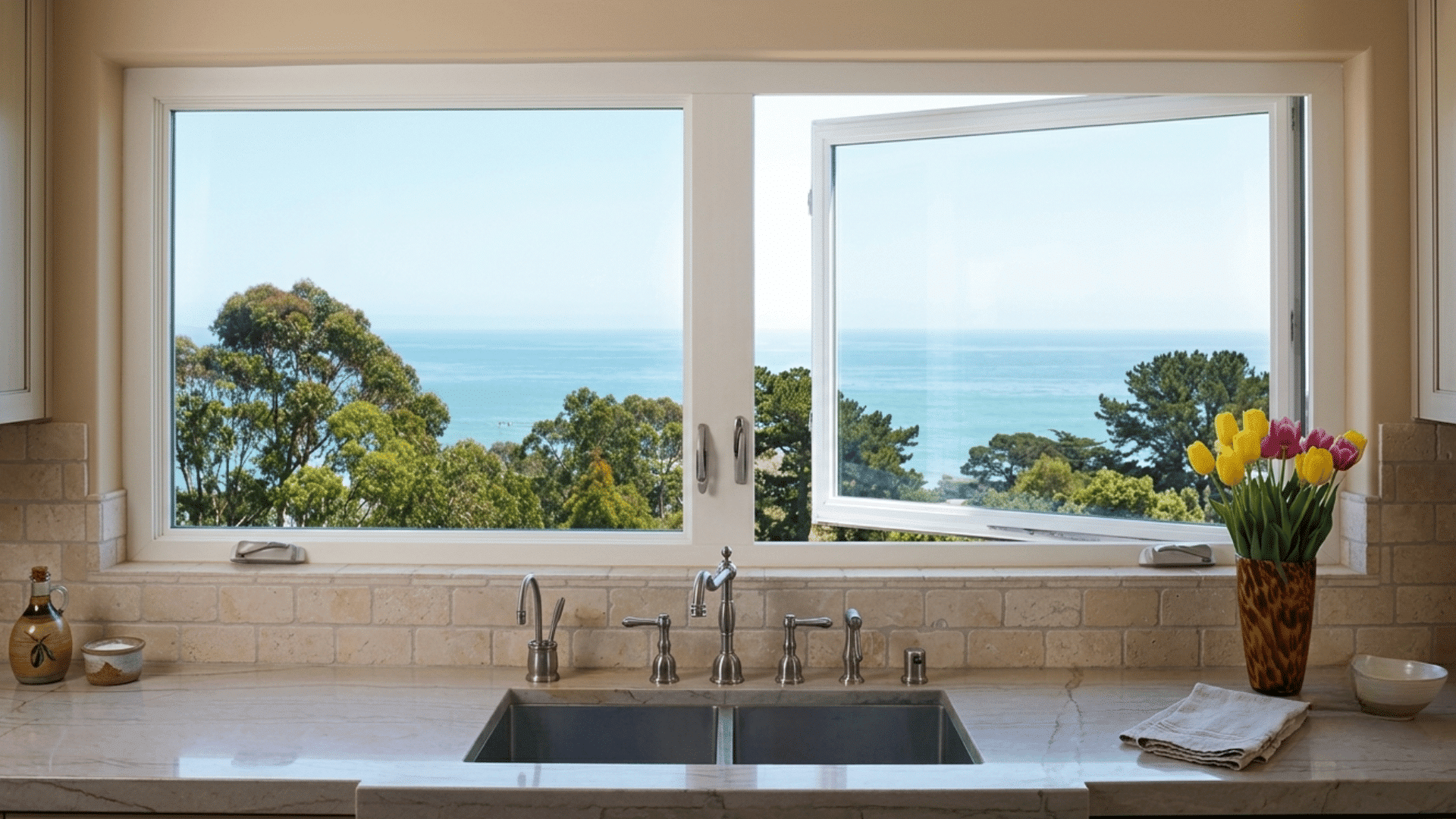
Casement windows are widely used in residential and commercial spaces for controlled ventilation and clear outward visibility.
They operate on side hinges and open fully like a door, allowing strong airflow and natural light inside rooms. Their structure includes secure sealing, durable hardware, and flexible material options suitable for a range of building requirements.
They fit apartments, villas, and office units while supporting energy control and indoor comfort across changing weather conditions.
Many installations use uPVC, wood, or aluminum frames depending on design needs and performance expectations in daily use. These windows support efficient airflow management and long-term functional reliability daily.
Quick Answer: What Is a Casement Window?
A casement window is a window style fixed on side hinges that opens inward or outward using a handle or crank system. It allows full ventilation and provides a clear view outside.
This design ensures a tight seal when closed, helping to control airflow and reduce outside noise.
Casement windows are commonly used in homes and offices due to their simple operation, durability, and compatibility with materials like uPVC, wood, and aluminum.
How Does a Casement Window Work?
A casement window works through a simple side-hinged mechanism that allows smooth opening and closing for better airflow and usability.
- Frame: Supports the entire structure and holds all moving parts in place
- Hinges: Fixed on one side, enabling inward or outward swing movement
- Handle or crank: Used to rotate and control the opening of the window
- Lock system: Secures the sash tightly when the window is closed
- Sash movement: The movable panel swings fully to allow ventilation and light
- Sealing strips: Help maintain a tight closure to reduce air leakage and noise
- Opening action: Turning the handle releases the latch and moves the sash outward or inward smoothly
Types of Casement Windows
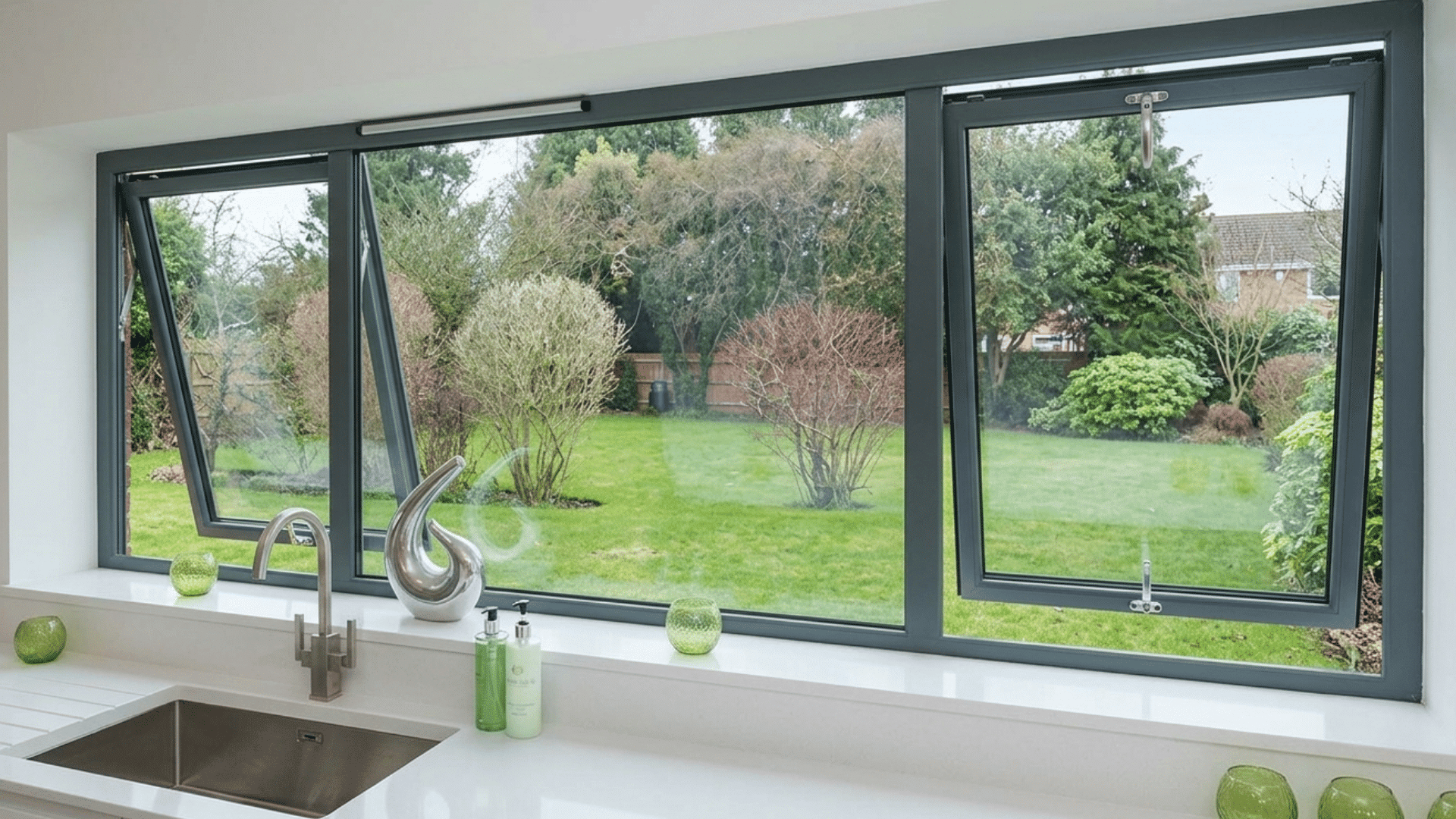
Casement windows come in multiple variations based on opening style, structure, and modern design needs.
1. Single Casement Window
A single casement window consists of one movable sash attached to side hinges, allowing it to open in one direction, either inward or outward.
It is commonly used in residential buildings due to its simple structure and easy handling. This design provides effective ventilation and clear outside visibility.
Making it suitable for bedrooms, kitchens, and small- to medium-sized rooms where practical airflow and basic window operation are required for everyday use in modern housing layouts.
2. Double Casement (French Style)
Double casement windows feature two operable panels that open outward from the center, creating a wide, unobstructed opening.
This design allows enhanced airflow and a broader viewing area compared to single units.
It is often installed in living rooms, balconies, and premium residential spaces where openness and improved ventilation are preferred.
The symmetrical structure also supports balanced design aesthetics in modern architectural layouts and interior planning concepts widely used in recent builds today.
3. Push-Out Casement Window
A push-out casement window operates without a crank mechanism and opens by pushing or pulling.
It offers a clean appearance due to reduced hardware visibility and minimal mechanical components.
This style is commonly used in modern interiors that prefer simplicity and smooth surface design. It provides adequate ventilation and is suitable for residential and commercial spaces.
Focusing on low-maintenance functionality and contemporary architectural styling requirements in modern building applications across urban developments.
4. Top-Hung or Bottom-Hung Variants
Top-hung and bottom-hung casement windows are designed for controlled ventilation and safety-focused usage.
Top-hung windows open outward from the upper edge, while bottom-hung variants open from the lower edge.
These types are commonly used in bathrooms, staircases, and compact spaces where limited opening is required. They help regulate airflow while ensuring safety.
Making them suitable for high-rise buildings and areas where controlled ventilation and secure window positioning are essential in modern city construction projects.
5. Modern Slim-Frame Casement Windows
Modern slim-frame casement windows are widely used in recent architectural designs due to their large glass area and minimal frame visibility.
They allow maximum natural light entry while maintaining structural strength and durability. The reduced-frame design creates a clean, modern appearance.
Suitable for urban homes and commercial buildings. These windows support energy efficiency and improved visibility.
And alignment with current construction trends focused on simplicity, brightness, and functional performance in modern infrastructure projects today.
Where Are Casement Windows Commonly Used?
Casement windows are installed in residential and commercial spaces for their airflow control, visibility, and practical operation across varied building environments.
- Bedrooms: Used for natural airflow, daylight entry, and comfortable indoor conditions in private living spaces
- Living rooms: Preferred for wider opening, better outdoor visibility, and improved air circulation in main family areas
- Kitchens: Installed to support smoke release, odor control, and continuous ventilation during cooking activities
- Offices: Help maintain fresh airflow and a balanced indoor environment for productivity in workspaces
- Clinics: Support controlled ventilation and hygienic indoor conditions in medical and patient areas
- High-rise apartments: Used with proper installation to manage wind pressure while ensuring safe operation and effective ventilation in elevated buildings
Best Regions and Locations for Casement Windows
Casement windows perform well in areas where natural ventilation, energy efficiency, and weather protection are important.
They are widely used in coastal regions because their tight seal helps reduce air leakage from strong winds.
In colder climates, the compression seal improves insulation and helps maintain indoor temperatures.
Temperate regions benefit from improved airflow in mild weather, while warm, humid locations use casement windows to enhance cross-ventilation and indoor comfort.
They are also suitable for urban homes, suburban properties, and rural houses where fresh air, natural light, and energy performance are priorities.
Key Features of Casement Windows
Casement windows are designed with functional elements that improve ventilation, security, durability, and compatibility with modern building materials used in residential and commercial spaces.
| Feature | Description |
|---|---|
| Side-hinged opening system | The window is fixed on side hinges, allowing smooth inward or outward swing operation for easy access and airflow control |
| Wide ventilation capability | Full opening design supports maximum air movement and improves indoor freshness in rooms |
| Strong locking mechanism | A multi-point locking system enhances safety and improves resistance against forced entry |
| High sealing efficiency | A tight-sealing structure reduces air leakage, noise entry, and improves temperature control indoors |
| uPVC frame compatibility | Supports energy efficiency, low maintenance, and long-term durability in residential use |
| Aluminum and wood support | Works with both modern aluminum frames and traditional wooden frames for design flexibility |
Casement Window Materials
Casement windows are available in several materials, including uPVC, aluminum, wood, and steel.
Each material offers distinct advantages in durability, insulation, maintenance, appearance, and overall performance, so the right choice depends on your home’s needs and budget.
uPVC casement windows are popular because they require very little maintenance, resist moisture, and provide excellent thermal insulation.
Aluminum casement windows are lightweight, durable, and well-suited to modern homes.
Wooden casement windows offer natural beauty, timeless appeal, and good insulation but need regular maintenance to protect against weathering.
Steel casement windows offer strength, security, and durability for industrial, heritage, and residential properties.
How to Identify a Casement Window from Outside?
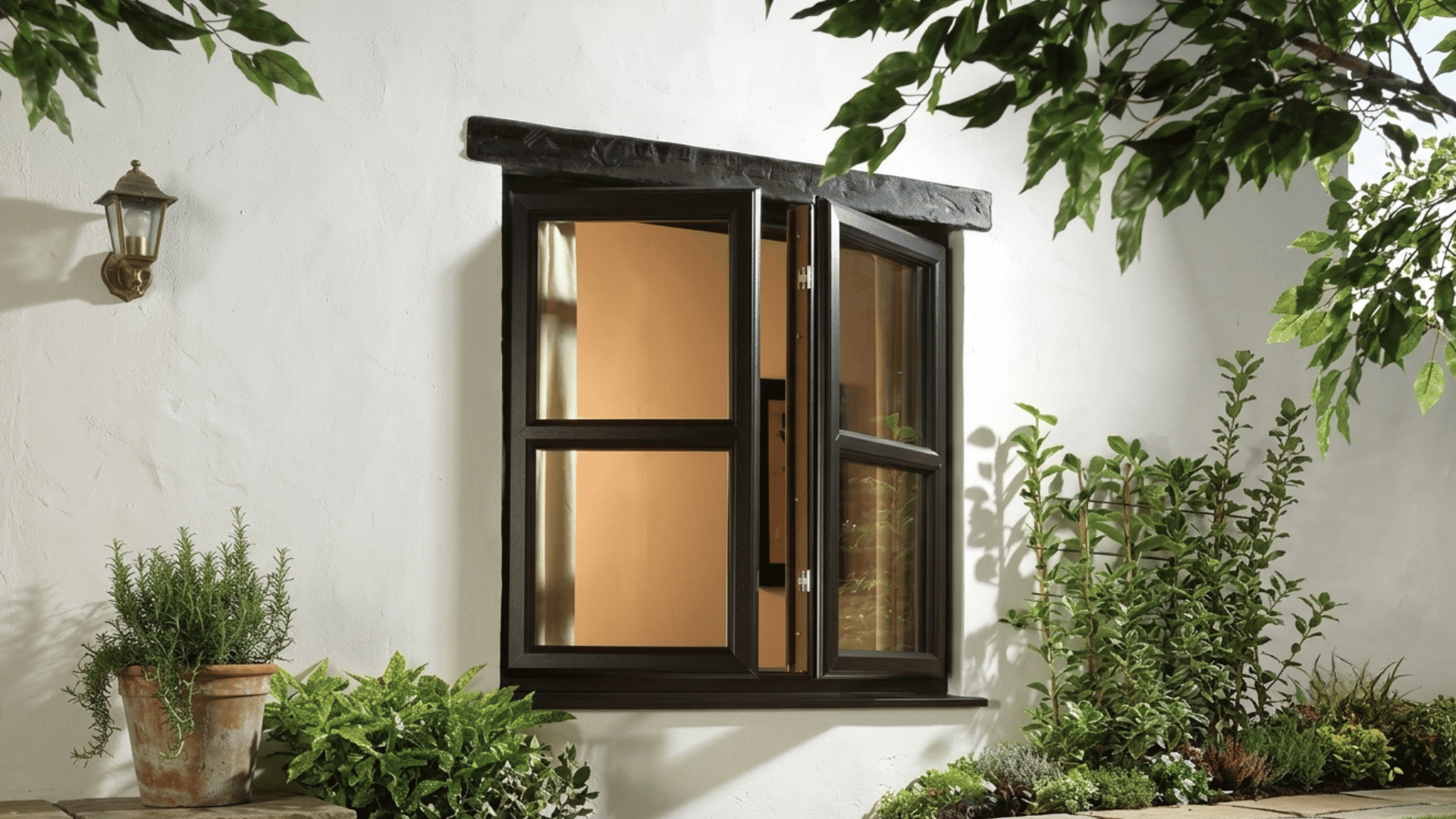
Identifying a casement window from outside is straightforward when you know the key visual and functional features that distinguish it from other window styles.
- Flush sash design: The glass panel sits flat within the frame without a horizontal divider, unlike double-hung windows that have separate upper and lower sashes
- Crank handle presence: A crank handle or operating mechanism is usually located inside the frame, indicating a casement window instead of a sliding or fixed design
- Outward swing opening: The entire sash opens outward like a door using side hinges rather than moving up, down, or sideways
- Visible hinge location: Hinges are positioned along either the left or right side of the frame, making the opening direction easy to identify from outside
- Left-venting and right-venting design: Left-venting (FCL) windows have hinges on the left when viewed from the outside, while right-venting (FCR) windows have hinges on the right when viewed from the outside.
Key Pros and Cons of Casement Windows
Casement windows offer excellent ventilation, energy efficiency, and unobstructed views, making them a popular choice for many homes. However, they also have a few limitations to consider before selecting them for your space.
| Pros | Cons |
|---|---|
| Excellent ventilation because the entire sash opens outward. | Requires enough outdoor clearance to open fully. |
| Creates a tight seal when closed, improving energy efficiency. | Larger sashes may be affected by strong winds when open. |
| Provides clear, unobstructed outdoor views due to minimal framing. | Window hardware and hinges may require periodic maintenance. |
| Easy to operate with a crank handle, making it suitable for hard-to-reach areas. | Crank mechanisms can wear out over time and may need replacement. |
| Works well in modern and traditional home designs. | Generally, it costs more than basic sliding or single-hung windows. |
| Offers good security with multi-point locking systems on many models. | Air conditioners cannot usually be installed in these windows. |
Modern Trends in Casement Windows Update
Casement window designs reflect a strong focus on performance, efficiency, and modern building needs.
Smart locking systems are being used to improve safety and convenience in residential and commercial spaces.
Noise-reduction double glazing helps control outside sound for better indoor comfort. Ultra-slim frames are preferred in luxury homes to increase glass area and natural light entry.
Eco-friendly materials support sustainable construction practices. Large glass panels enhance brightness.
Rising demand in urban housing projects continues to drive adoption of these features across apartments, villas, and office developments in growing cities.
Casement vs Other Windows
Different window types vary in airflow, space usage, functionality, and weather performance, making each suitable for specific building needs and room conditions.
| Feature | Casement Windows | Sliding Windows | Fixed Windows | Awning Windows |
|---|---|---|---|---|
| Opening style | Side-hinged full swing for maximum opening | Horizontal sliding on tracks | No opening, sealed frame | Top-hinged outward tilt |
| Airflow performance | Strong airflow due to full opening | Moderate airflow depending on slide size | No airflow, only light entry | Controlled airflow even during rain |
| Space requirement | Needs swing space for operation | No extra space required | No space required | Requires outward clearance at top |
| Functionality | High ventilation and usability | Simple operation with limited ventilation | Only view and lighting purpose | Ventilation with partial weather protection |
Do Casement Windows Meet Egress Code Requirements?
Yes, casement windows can meet egress code requirements and are often used for bedroom and basement emergency exits.
The outward-swinging sash provides a larger opening than many sliding or double-hung windows.
According to the International Residential Code (IRC) Section R310, an emergency escape and rescue opening must provide a minimum net clear opening of 5.7 square feet, with at least 20 inches of clear width and 24 inches of clear height.
The maximum sill height is 44 inches above the finished floor, ensuring the window can be reached and used safely during an emergency.
Casement windows often meet these requirements, but compliance depends on the specific model.
Always verify the manufacturer’s published net clear opening dimensions before installation, as the frame, sash, and hardware can reduce the usable opening.
Maintenance Tips of Casement Window
Casement windows require simple care practices to maintain smooth operation, durability, and long-term performance in residential and commercial spaces.
- Clean hinges regularly: Remove dust and dirt buildup from hinges to ensure smooth movement and prevent rust formation
- Lubricate moving parts: Apply suitable lubricant to hinges and handles for easy operation and reduced friction during opening and closing
- Check rubber sealing strips: Inspect seals for wear or damage to maintain proper insulation and prevent air or water leakage
- Avoid forceful handling: Operate the window gently to avoid damage to hinges, locks, and frame alignment
- Seasonal inspection for smooth performance: Perform regular checks during seasonal changes to ensure all components function properly and maintain efficiency throughout the year
Cost Factors of Casement Window
Casement window pricing varies based on material quality, glass type, size, and installation requirements, with differences across residential and commercial projects.
| Cost Factor | Description | Approximately Cost Range |
|---|---|---|
| Material type impact | Costs vary by uPVC, aluminum, wood, or fiberglass, each offering different durability, insulation, and maintenance needs | $300–$1,200+ per window |
| Size and customization | Larger or custom-shaped windows require more materials and fabrication effort, increasing overall pricing | $400–$1,800+ per window |
| Glass type (single vs double glazing) | Double or triple glazing improves insulation and noise control but increases cost compared to single-pane glass | $350–$2,000+ per window |
| Hardware quality | Premium hinges, locks, and crank systems improve security and lifespan but add to total cost | $50–$250 per unit |
| Installation complexity | Labor costs increase for multi-story buildings, structural modifications, or difficult access installations | $150–$600+ per window |
Conclusion
Casement windows offer a practical combination of ventilation, security, and modern design, making them suitable for residential and commercial spaces.
Their side-hinged structure supports full airflow, strong sealing, and clear outdoor visibility, while material options like uPVC, aluminum, and wood provide flexibility for different budgets and styles.
With rising demand for energy efficiency and clean architectural layouts, this window style continues to remain a preferred choice for construction trends.
For better home planning, choose a design that matches your space and needs, and consult a professional installer today to get the right casement window solution for your property.
Frequently Asked Questions
Are Casement Windows Outdated?
Casement windows are not outdated. They remain widely used in modern construction due to strong ventilation, tight sealing, and energy efficiency. Updated slim-frame designs keep them relevant in current housing trends.
Which Window Type Adds More Home Value?
Window types that improve energy efficiency, insulation, and natural light increase home value. Casement windows are often preferred due to strong sealing, airflow control, and modern architectural compatibility in residential properties.
What Is the Lifespan of a Casement Window?
A casement window typically lasts 20 to 40 years depending on material quality, installation, and maintenance. uPVC and aluminum frames usually offer longer durability compared to traditional wooden window systems.
Which Window Is Trending Now?
Current trends favor slim-frame casement windows with large glass panels. These designs enhance natural light entry, improve ventilation, and match modern architecture focused on energy efficiency and minimal structural appearance.