

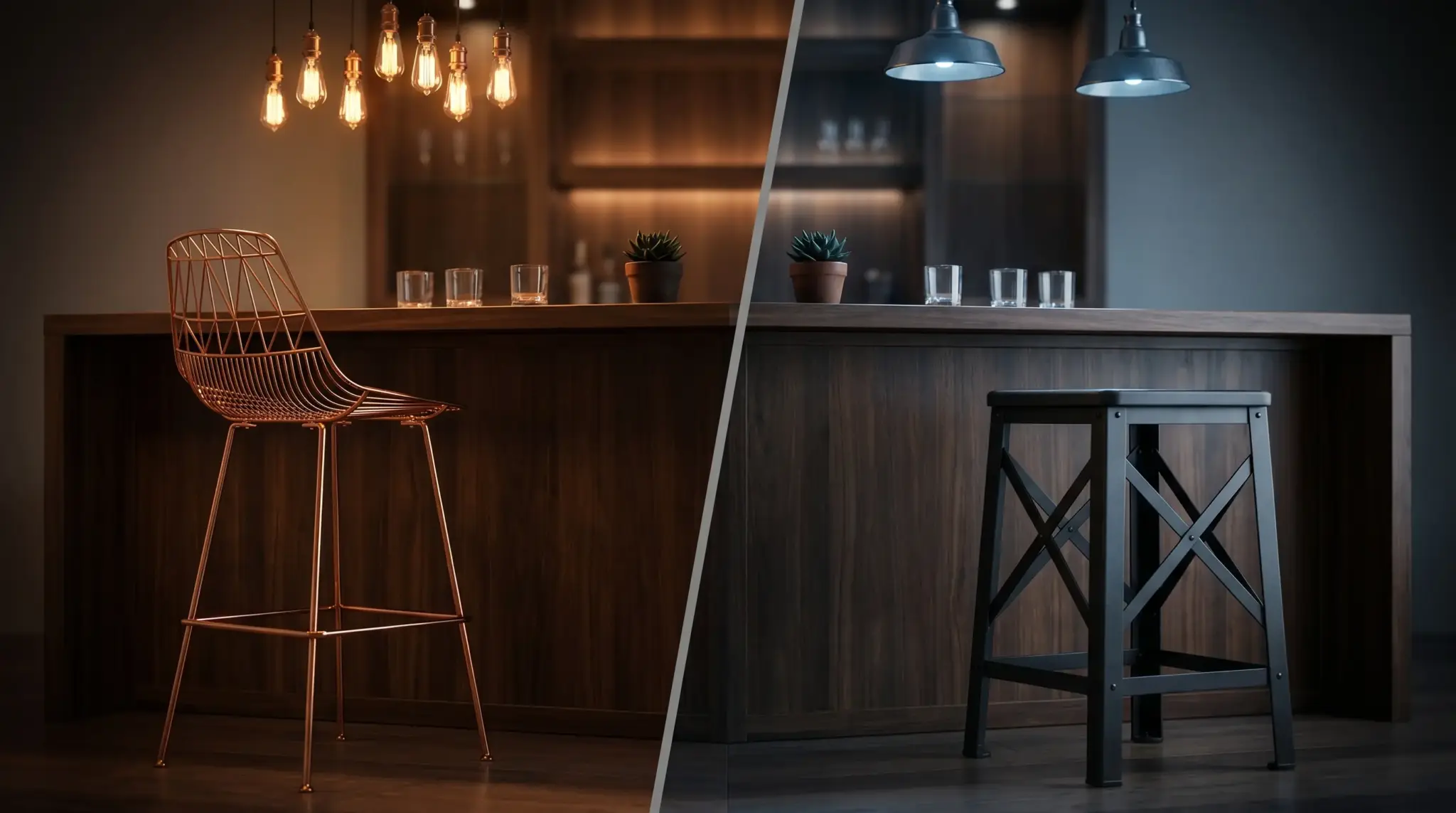
The home bar starts as a fantasy about looks. You picture the stools first, the silhouette against the counter, the finish catching the pendant light, the way the whole corner will photograph when friends come over.
Then someone heavier than you sits down hard, the joint gives a small creak, and the fantasy meets physics. The prettiest stool in the showroom and the one that survives a decade of game nights are rarely the same stool.
This is the trade-off every serious home bar runs into, usually after the wrong purchase. Decorative stools chase the look. Commercial-grade stools chase the lifespan. The buyers who get it right stop shopping the residential aisle and start reading the spec sheets behind commercial grade bar stools, because a home bar that actually gets used has more in common with a real bar than with a dining set.
Why the Looks-First Stool Fails Quietly
A decorative stool is engineered to sell from a photo. The lines are clean, the materials look rich, and the price flatters the budget. What it is not engineered for is a 250-pound guest dropping into it twice a week for eight years. Residential hardware uses lighter frames, thinner welds or simple bolted joints, and weight ratings that assume gentle, occasional use.
The failure is rarely dramatic. The stool does not collapse; it loosens. A joint develops play, a glide works free, the swivel starts to grind, and over a couple of years the seat goes from solid to slightly alarming. By then the look that sold it is the least of anyone’s concerns, and the replacement order proves the decorative stool was the expensive option all along.
What Commercial Construction Actually Means
The phrase commercial-grade is not marketing when it appears on a real spec sheet. It points to measurable construction. The frame standard that holds up under heavy use is steel tubing in the 16 to 18 gauge range, with 16-gauge 1.25-inch tube being a common commercial baseline, joined with fully welded MIG joints rather than bolts that loosen. That construction handles repeated heavy loads without developing the play that ruins a residential stool.
A few specifics clearly separate the two grades.
- Frame: welded steel tubing, 16 to 18 gauge, versus lighter bolted residential frames.
- Joints: MIG-welded and reinforced, not screwed together with hardware that backs out.
- Finish: scratch-resistant powder coating built for daily abuse and indoor-outdoor use.
- Hardware: commercial bolts, adjustable glides, and anti-tip detailing.
- Testing: rated under recognized standards with replacement-part support behind it.
The Weight Rating Is the Honest Number
Every stool implies a weight limit; commercial stools state one. Residential pieces commonly assume a polite, average user, while a commercial bar stool carries at least a 300-pound static rating, and high-volume venues specify 400 to 500 pounds. For a home bar, that headroom is not overkill. It is the margin that absorbs the guest who sits down hard, the person who leans back to laugh, and the years of cumulative use a decorative rating never planned for.
That static rating traces back to anthropometry, the study of human body measurements that durability standards use to define a realistic load. A stool rated to 300 pounds is built around the upper end of the person who actually sits on it, not the average. Buy to that number and the stool stops being a question every time a larger guest approaches the bar.
The Finish Is the Part That Meets Spills
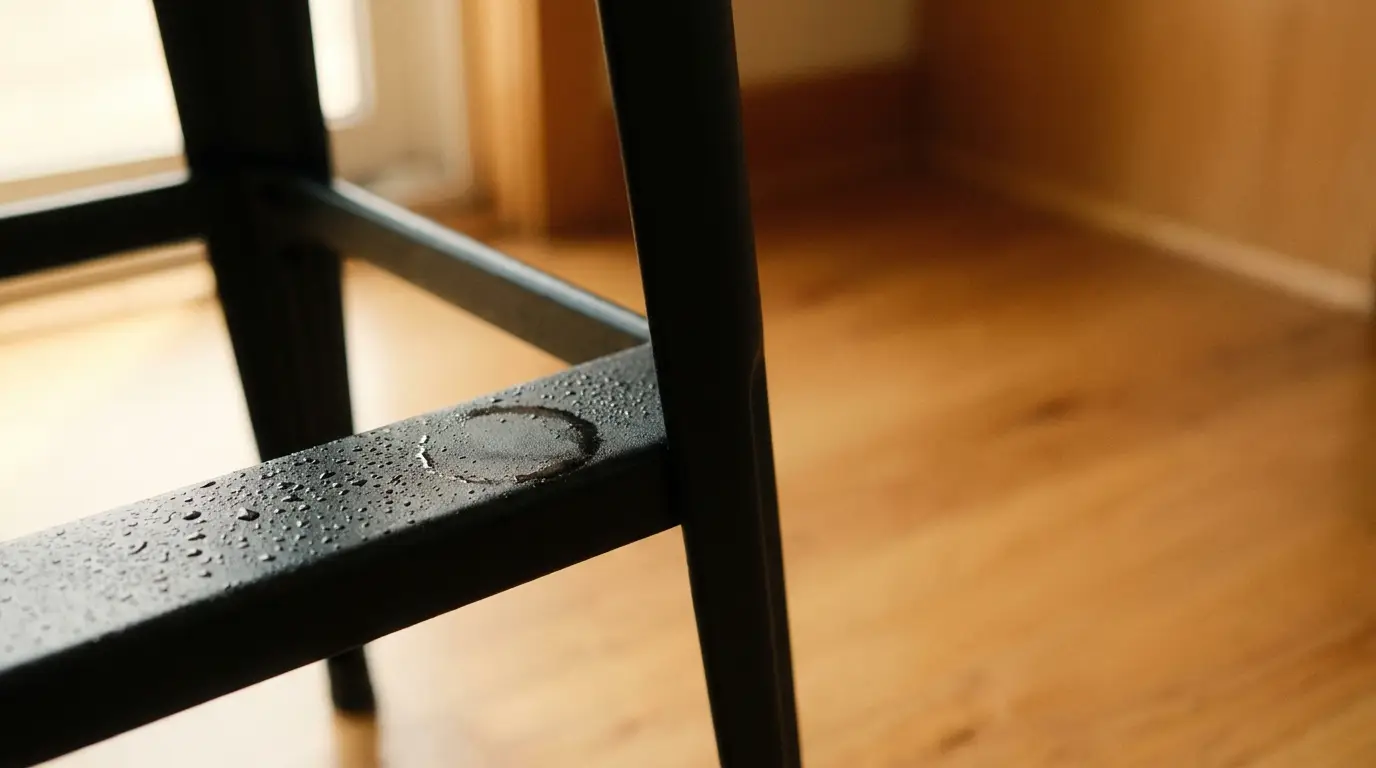
Frames get the attention, but the finish is what actually contacts spilled drinks, wet glasses, and the daily wipe-down a home bar collects. Decorative stools often wear a finish chosen for sheen, which scratches and dulls under that kind of use. Commercial stools carry a scratch-resistant powder-coat layer built to take abuse and to hold up whether the bar lives indoors or spills onto a patio.
That coating is not paint. The process called powder coating bonds a hard, even shell to the metal that resists chips and corrosion far better than a sprayed finish. On a stool that will see beer, citrus, and cleaning spray for years, the finish is the difference between a frame that still looks like it was bought yesterday and one that looks tired by the second summer.
Get the Height Right or the Grade Will Not Save You
Durability buys nothing if the stool sits at the wrong height, because an uncomfortable bar goes unused regardless of how well the stool is built. Match the seat to the surface: a 40- to 42-inch bar counter wants roughly a 30-inch seat, and a 34- to 36-inch counter wants a 24- to 26-inch seat. The dependable shortcut is to subtract 10 to 12 inches from the counter height to land the seat.
Get the height right and the commercial frame finally earns its keep, holding a comfortable guest through a long evening without complaint. Get it wrong and the sturdiest stool in the world becomes the one nobody chooses, which is its own kind of waste.
The Trade-Off Is Real, but It Is Not Even
Here is the part the showroom does not say out loud. The trade-off between decorative and heavy-duty is genuine, but it is not balanced. Commercial-grade stools come in plenty of finishes that photograph beautifully, so choosing durability rarely means choosing ugly. The reverse is not true: a decorative stool cannot be upgraded into a durable one after the fact. You cannot weld toughness onto a frame that was never built for it.
So the serious home bar buyer buys the durable stool that happens to look good rather than the good-looking stool that happens to be flimsy, and loses almost nothing on appearance for it. The trade-off feels like a fork in the road, but for any bar that gets real use, only one branch leads anywhere worth being in five years. Buy the stool that survives the party, and let it be handsome on its way to lasting.