

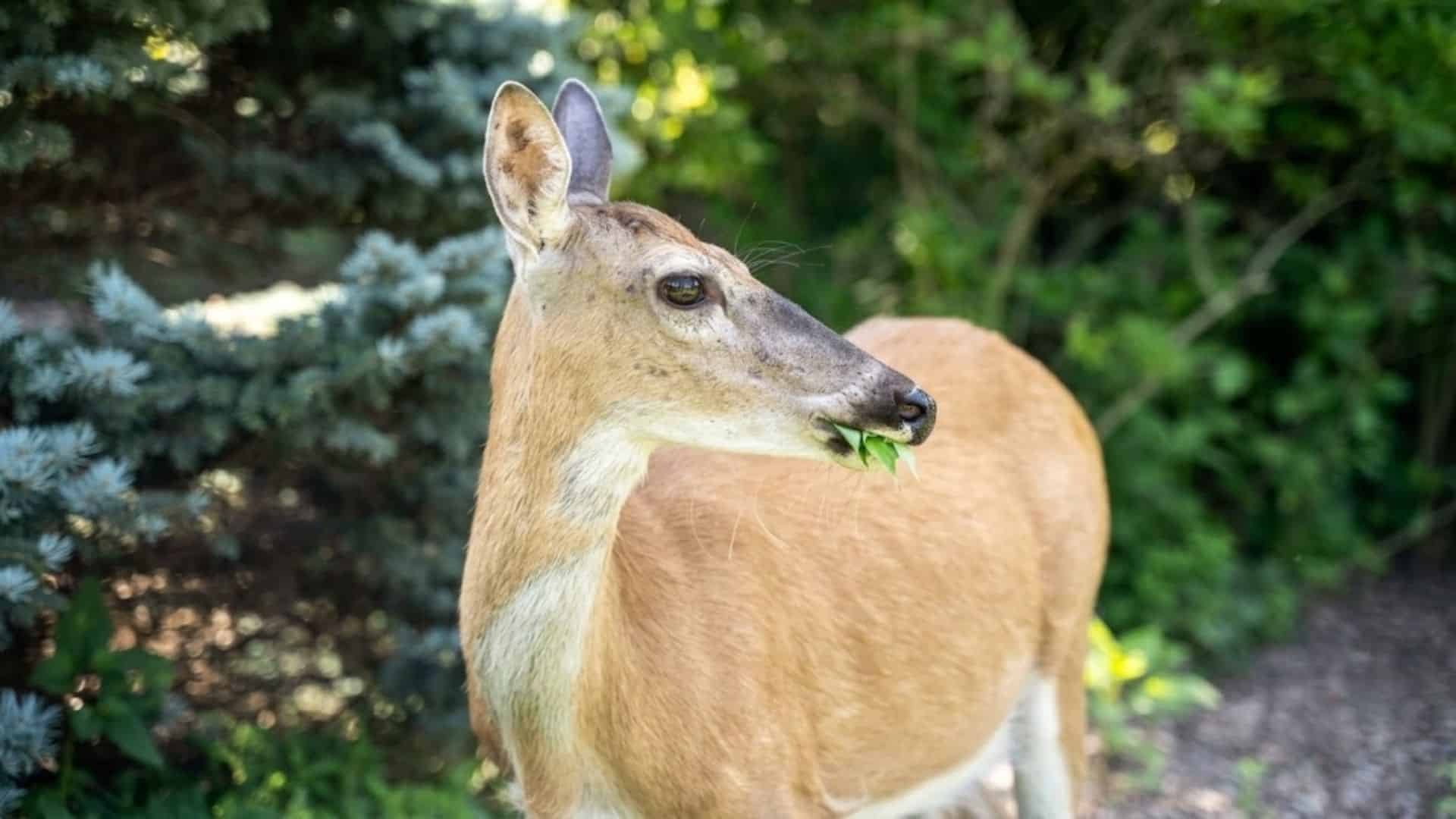
Every spring, many gardeners are surprised to find chewed geraniums even though these flowers are often recommended as deer-resistant.
“Do deer eat geraniums?” is a common concern because deer-resistant plants are less likely to be eaten, but not completely protected from browsing.
Hungry deer may still nibble geraniums when natural food is scarce, local deer pressure is high, or young plants are easy to reach. As a result, one garden may see little damage while another experiences frequent visits.
I’ll share ways to reduce deer damage so you can better understand what to expect. Keep reading to learn how to give your geraniums the best chance of staying untouched.
Quick Answer: Do Deer Eat Geraniums?
Yes, deer can eat geraniums, but they usually avoid them because of their strong scent and textured leaves.
However, geraniums are deer-resistant, not deer-proof. Hungry deer, food shortages, seasonal conditions, and local browsing habits can all lead to occasional damage.
No plant is completely safe from deer. Feeding habits change based on hunger, weather, and the availability of natural food.
Fresh spring growth and newly planted geraniums are often more appealing than mature plants.
Gardens near wooded areas may experience more browsing than those in urban neighborhoods.
While many gardeners report little or no damage, others occasionally find nibbled leaves or flowers. Pairing geraniums with other deer-resistant plants can help reduce the risk.
Signs that Deer Have Been Eating Your Geraniums
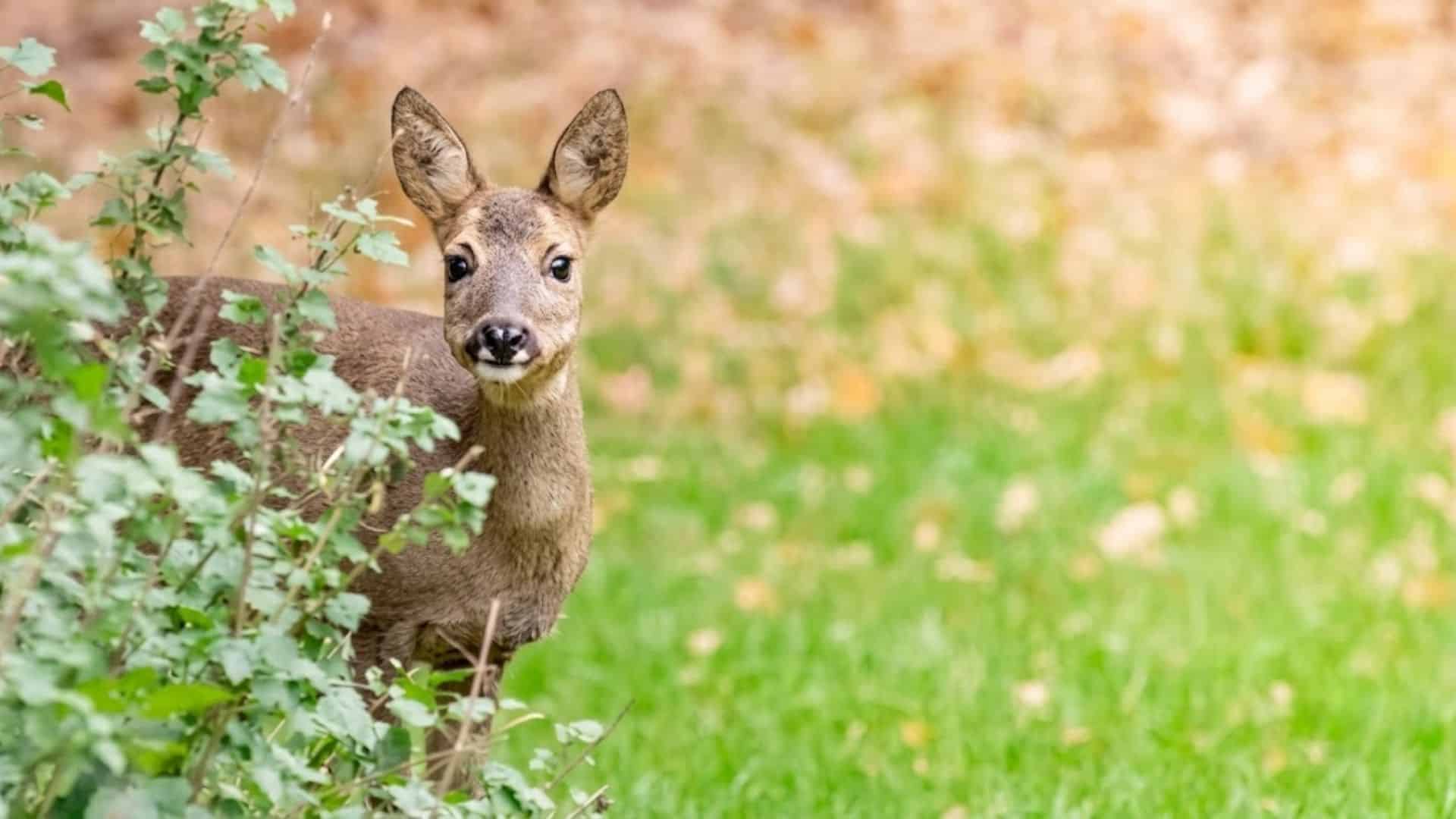
These common signs can help you determine whether deer are responsible for the damage to your geraniums.
- Missing Flower Buds or Blooms: Deer often eat tender buds and fresh flowers first, leaving plants with noticeably fewer blooms.
- Ragged or Torn Leaves Instead of Clean Cuts: Deer lack upper front teeth, so they tear foliage rather than making smooth, clean cuts.
- Stems Snapped at Varying Heights: Browsing deer may leave broken stems at uneven heights, depending on how they reach the plant.
- Deer Tracks or Hoof Prints Near Flower Beds: Heart-shaped hoof prints around the garden are a strong sign that deer have visited recently.
- Pellet-Shaped Droppings Around the Garden: Small, oval droppings scattered near plants often indicate deer activity in the area.
- Damage Appearing Overnight or Early Morning: Deer are most active from dusk until dawn, so fresh damage is commonly noticed the following morning.
How to Tell Deer Damage from Rabbits or Other Garden Pests?
Different garden pests leave distinct feeding patterns, making it easier to identify the cause of damage.
| Garden Visitor | Typical Signs of Damage |
|---|---|
| Deer | Ragged, torn leaves and broken stems are caused by deer tearing at plants rather than making clean cuts. |
| Rabbits | Clean, angled cuts made close to the ground, usually on young shoots and stems. |
| Slugs and Snails | Small, irregular holes in leaves, often accompanied by shiny slime trails. |
| Insects | Chewed leaf edges, skeletonized foliage, or numerous tiny holes depending on the insect species. |
| Groundhogs | Large portions of plants were eaten, with stems clipped cleanly and substantial foliage missing. |
| Squirrels | Soil disturbed around pots, dug-up plants, or occasional flower damage rather than consistent browsing. |
Why Are Geraniums Considered Deer-Resistant?
Several natural characteristics make geraniums less attractive to deer than many other flowering plants.
1. Strong Fragrance Naturally Deters Deer
Geraniums produce a noticeable scent that many deer find unpleasant. Deer rely heavily on their sense of smell when searching for food, and strongly scented plants are often skipped in favor of milder options.
The fragrance becomes more noticeable when leaves are brushed or damaged, creating an even stronger deterrent.
Although scent alone cannot guarantee protection, it is one of the main reasons geraniums are widely considered deer-resistant.
Local deer populations and food availability can still influence browsing behavior.
2. Fuzzy and Thick Leaf Texture Reduces Browsing
The leaves of many geranium varieties have a slightly fuzzy, rough, or thick texture that deer generally avoid.
Deer typically prefer tender, smooth foliage because it is easier to chew and digest. The coarse surface of geranium leaves makes them less appealing compared with softer garden plants.
While texture discourages casual feeding, it does not completely prevent damage.
During periods of scarce food, hungry deer may still sample plants they would normally ignore.
3. Naturally Bitter Taste Makes Geraniums Less Appealing
Geranium leaves contain compounds that create a bitter taste, making them less attractive to browsing deer.
Since deer usually seek plants that provide the most nutrition with the least effort, they often avoid bitter-tasting foliage when other food is available.
This natural defense helps reduce repeated feeding and protects the plant from frequent browsing.
However, taste preferences can vary among deer, so occasional nibbling is still possible, particularly in areas with limited vegetation.
4. Essential Oils Act as a Feeding Deterrent
Many geranium varieties contain aromatic essential oils that contribute to their distinctive smell.
These oils can discourage deer from feeding because the strong aroma and flavor are less appealing than those of many ornamental flowers.
The oils are naturally present in the leaves and stems and become more noticeable when the plant is disturbed.
While essential oils improve deer resistance, they should not be viewed as complete protection because extremely hungry deer may still browse the plants.
5. Deer Learn to Avoid Geraniums Over Time
Deer often remember plants that provide an unpleasant feeding experience.
After encountering the strong scent, coarse leaves, or bitter taste of geraniums, they may avoid similar plants on future browsing trips.
This learned behavior can reduce repeated damage in gardens where alternative food sources are available.
However, young deer or those unfamiliar with geraniums may still investigate them. Seasonal food shortages can also override these learned preferences, leading to occasional feeding.
6. Resistance Varies Between Annual and Hardy Geraniums
Not all geraniums offer the same level of deer resistance. Annual geraniums (Pelargoniums), commonly grown in containers and flower beds, usually have a stronger fragrance and thicker foliage that deer tend to avoid.
Hardy geraniums (Geranium species), often called cranesbills, are also considered deer-resistant, but this can vary slightly depending on the variety and growing conditions.
Regardless of type, neither annual nor hardy geraniums should be considered completely deer-proof under every circumstance.
How Does Deer Resistance Differ Between Geranium Types?
The level of deer resistance depends on the specific type of geranium you grow. While many geraniums are considered deer-resistant because of their fragrance and leaf texture, some varieties are browsed more often.
| Geranium Type | General Deer Resistance |
|---|---|
| Annual Geranium (Pelargonium spp.) | Occasionally damaged; strong scent and thick leaves help discourage browsing. |
| Geranium macrorrhizum | Seldom damaged; one of the most deer-resistant hardy geraniums. |
| Geranium sanguineum | Occasionally damaged under moderate deer pressure. |
| Geranium cantabrigiense | Occasionally damaged; generally less appealing than many flowering plants. |
| Geranium endressii | Frequently damaged; a less suitable choice in areas with high deer populations. |
Deer feeding habits can vary based on local populations, food availability, and seasonal conditions, so no geranium variety is completely deer-proof.
What Reddit Users Say About Deer Eating Geraniums?
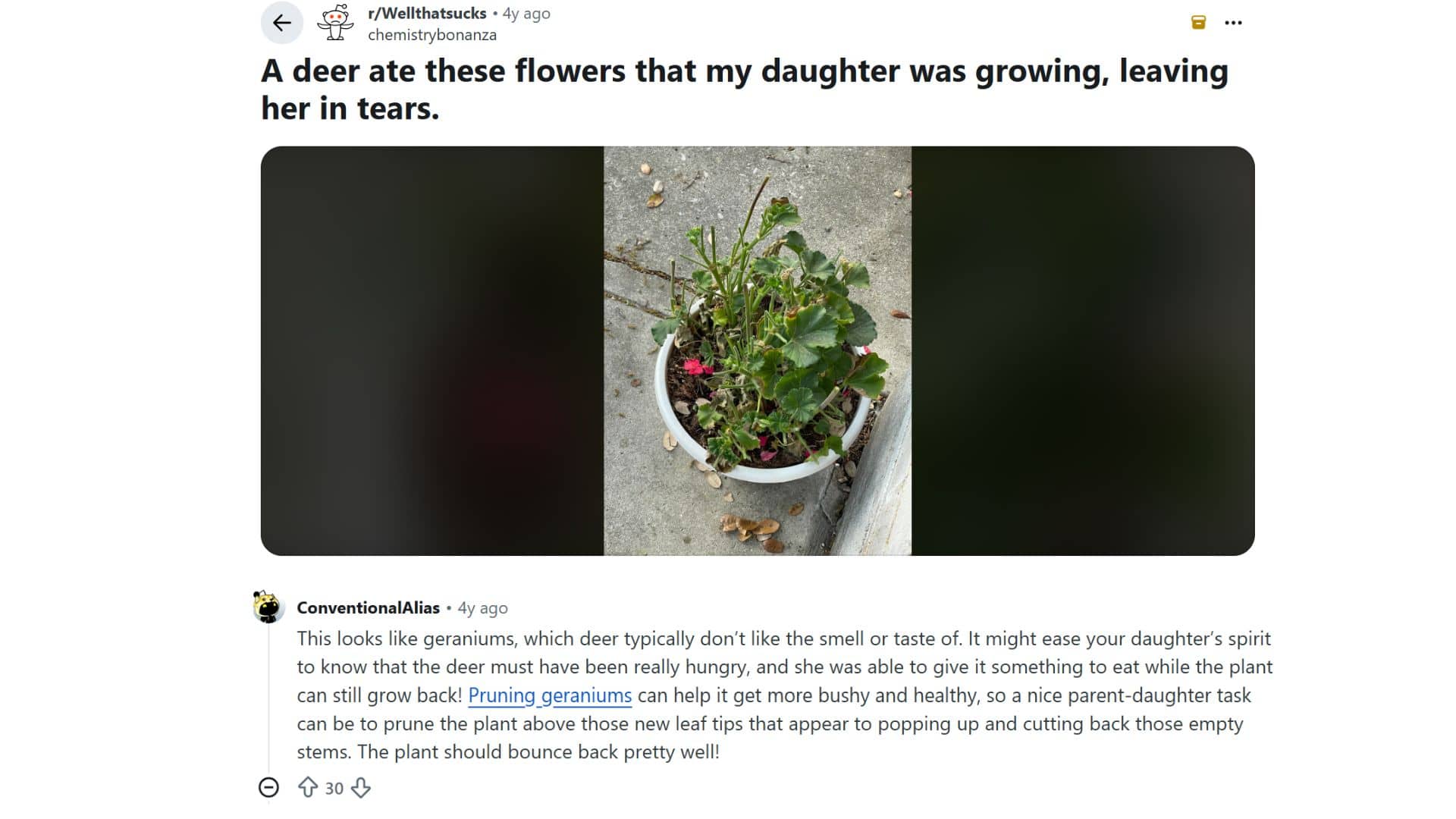
Reddit discussion provides a good real-life example of why geraniums are considered deer-resistant rather than deer-proof.
In the post, a parent shared that a deer had eaten the geraniums their daughter was growing, despite the plant’s reputation for discouraging browsing.
Other Reddit users explained that deer generally avoid geraniums because of their strong scent and taste. However, they may still eat them when natural food is limited, or they are especially hungry.
Several commenters also pointed out that the damaged plant was likely to recover with proper pruning and care.
This experience reflects what many gardeners report: deer usually leave geraniums alone, but occasional browsing can still happen under certain conditions.
How to Protect Geraniums from Deer?
A combination of physical barriers and deterrents offers the best protection against deer browsing.
- Install Deer Fencing Around Vulnerable Beds: A properly installed fence is one of the most reliable ways to keep deer away from geraniums.
- Apply Deer Repellents Consistently: Use commercially available deer repellents as directed and reapply after heavy rain or regular watering.
- Grow Strongly Scented Companion Plants Nearby: Plant herbs or flowers with strong fragrances, such as lavender, rosemary, or sage, to help discourage deer.
- Use Motion-Activated Sprinklers or Lights: Sudden movement, water sprays, or lights can startle deer and make your garden less inviting.
- Rotate Deterrent Methods to Prevent Deer From Adapting: Change repellents and deterrent strategies periodically to reduce the likelihood that deer become accustomed to them.
- Remove Fallen Fruit or Other Food Sources That Attract Deer: Keeping the garden free of easy food sources reduces the chances of deer returning to the area.
Comparing Geraniums with Other Deer-Resistant Flowers
The table below compares geraniums with other popular deer-resistant plants based on deer resistance, maintenance, and overall garden performance.
| Comparison With | Geraniums | Other Flower |
|---|---|---|
| Marigolds | Strong scent and textured leaves help discourage deer. | Pungent fragrance makes marigolds highly unappealing to deer. |
| Lavender | Good deer resistance with colorful, long-lasting blooms. | Intense aroma makes lavender one of the most deer-resistant flowers. |
| Salvia | Offers good resistance and reliable seasonal color. | Fragrant foliage makes salvia rarely browsed by deer. |
| Catmint | Attractive blooms but may need more routine care. | Aromatic leaves and drought tolerance provide excellent deer resistance. |
| Russian Sage | Good overall deer resistance with colorful flowers. | Woody stems and strong fragrance make it highly deer-resistant. |
| High Deer Pressure | May require repellents or fencing for added protection. | Lavender, Russian sage, salvia, and catmint generally perform better. |
What Flowers Do Deer Prefer Over Geraniums?
Deer usually browse hostas, tulips, lilies, impatiens, petunias, pansies, and daylilies before turning to geraniums.
These plants have soft leaves, tender stems, or flowers that deer find easy to eat.
Tulips, lilies, and daylilies are especially attractive in spring, when fresh growth is abundant, while hostas are a favorite for their broad, succulent leaves.
Impatiens, petunias, and pansies also provide tender blooms that deer readily consume.
In comparison, geraniums have a stronger fragrance, thicker leaves, and a slightly bitter taste that makes them less desirable.
However, if food is scarce, deer may still feed on geraniums despite these natural defenses.
Reasons Deer Still Eat Geraniums
Geraniums are generally deer-resistant, but certain conditions can still lead to browsing.
- Limited Food Availability: Deer are more likely to eat geraniums when their preferred food sources are scarce.
- Extreme Hunger: During droughts, winter, or periods of high deer populations, hungry deer become less selective.
- Young or Curious Deer: Younger deer may sample unfamiliar plants as they learn what is safe to eat.
- Seasonal Changes: Food preferences can shift throughout the year as natural vegetation becomes less available.
- Local Feeding Habits: Deer in some regions adapt to available plants and may regularly browse geraniums.
- Tender New Growth: Fresh shoots and young leaves are softer and may be more appealing than mature foliage.
- Lack of Better Options: Gardens with few alternative plants can make geraniums a more likely target.
Common Myths About Deer and Geraniums
Many common beliefs about deer-resistant plants are only partly true and can lead to unrealistic expectations.
| Myths | Reality |
|---|---|
| Deer Never Eat Geraniums | Deer can eat geraniums, especially when natural food is limited or local browsing pressure is high. |
| Deer-Resistant Means Deer-Proof | Deer-resistant plants are less attractive to deer, but no plant is completely safe under all conditions. |
| All Geranium Varieties Offer the Same Level of Resistance | Annual and hardy geraniums can differ in fragrance, foliage, and overall resistance to deer browsing. |
| Repellents Work All Season With One Application | Most deer repellents require regular reapplication, particularly after rain or overhead watering. |
| Deer Avoid Scented Plants in Every Situation |
Strong scents often discourage deer, but hungry deer may still feed on scented plants when other food is unavailable. |
Conclusion
Geraniums are widely regarded as deer-resistant plants, but real-world experiences show they are not completely deer-proof.
Reports from gardeners, community discussions, and expert gardening resources consistently indicate that deer may still eat geraniums when food is scarce or local conditions make them less selective.
Knowing these exceptions helps you choose suitable plants and protection methods.
With the right approach, geraniums can remain a beautiful and practical option even in areas where deer are common.
Use these insights to make informed planting decisions and keep the garden healthy throughout the growing season.
Frequently Asked Questions
Do Geraniums Grow Back After Deer Damage?
Yes, healthy geraniums often recover after light to moderate browsing by producing new leaves and blooms, provided the roots and main stems remain undamaged.
What Time of Year Do Deer Eat Geraniums Most?
Deer are most likely to browse geraniums during drought, winter, early spring, or periods of limited natural forage.
Do Rabbits Eat Geraniums Too?
Yes, rabbits occasionally eat geraniums, especially young plants, although they usually prefer more tender vegetation.
Are Scented Geraniums More Deer-Resistant?
Yes, scented geraniums are often more resistant because their aromatic leaves are less appealing to deer.