

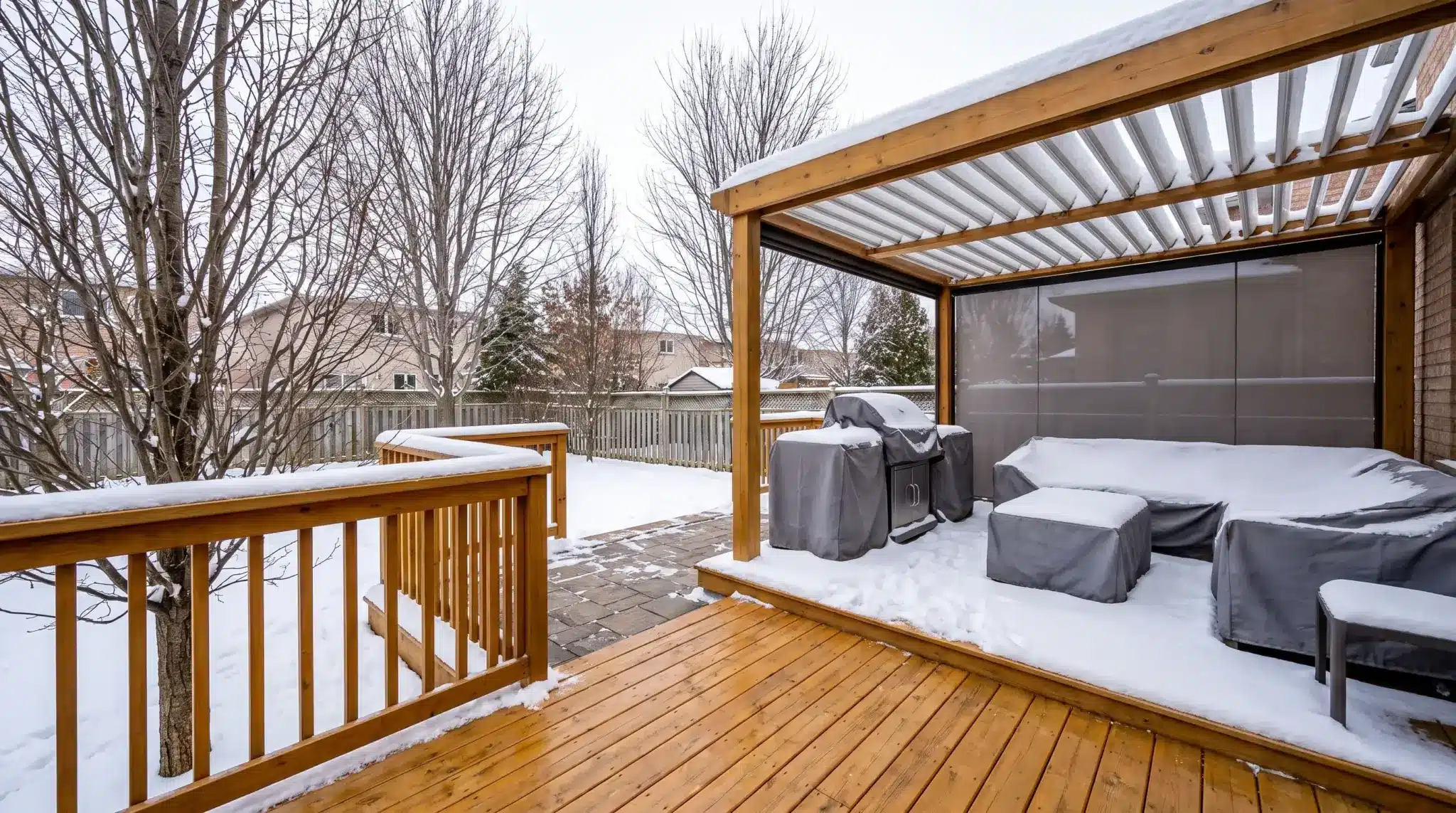
If you live anywhere in the GTA, you know our winters don’t play around. We get hit with freeze-thaw cycles every couple of weeks, heavy snowstorms out of nowhere, and ice that gets into every tiny crack.
If you just walk away from your deck, patio, or outdoor kitchen in October and hope for the best, you’re looking at a pretty miserable setup—and a big bill—come spring. But if you take a Saturday afternoon to knock out a few basic maintenance chores, you can save yourself a ton of headaches.
Decks: Stopping Rot and Board Damage
Snow sitting on a deck for three months puts a crazy amount of stress on the boards and the underlying frame, whether you have pressure-treated wood or composite decking.
- Remove any stuck gunk: Use a putty knife or a brush to clear dirt, damp leaves, and pine needles lodged between your deck planks. Wood begins to deteriorate quickly when moist debris remains in such spaces during the winter, and composite boards develop unpleasant mildew stains that are difficult to remove later.
- Take a glance at the framing: Examine your railing posts, joists, and ledger board. Replace any rusty brackets or loose screws right away. Before a foot of heavy snow falls on that structure, you want it to be absolutely sturdy.
- Watch how you shovel: Unless you want huge gouges all over your boards, avoid using a metal shovel on a deck. Push snow along the length of the boards while holding onto a plastic shovel. If you have ice, use pet-safe calcium chloride pellets rather than inexpensive rock salt, which corrodes metal hardware and chips away at wood finishes.
Interlock and Pavers: Preventing Frost Heave
When Toronto temperatures are close to freezing, concrete and stone suffer. Snow that has melted seeps between the pavers, freezes overnight, expands, and causes the stones to spring out of place.
- Close any gaps in open joints: Clean up any dirt that has gathered in between your pavers and remove any weeds. Use your yard hose to apply fresh polymeric sand to the cracks once the stone has cured. It securely ties the stones together to keep water from seeping beneath the patio.
- Porous stone protection: To stop natural stone or raw concrete from collecting groundwater before the soil freezes solid, cover porous stone with a high-quality permeable stone sealer that functions as a raincoat.
- Fix dips before they get worse: Don’t leave any tripping hazards or depressed pavers close to your back entrance for the winter. Hiring a workforce from the area like M.E. By hiring contractors to level and raise such trouble locations can prevent the entire portion from being completely destroyed by frost by March.
Water Lines and Outdoor Kitchens: No Burst Pipes
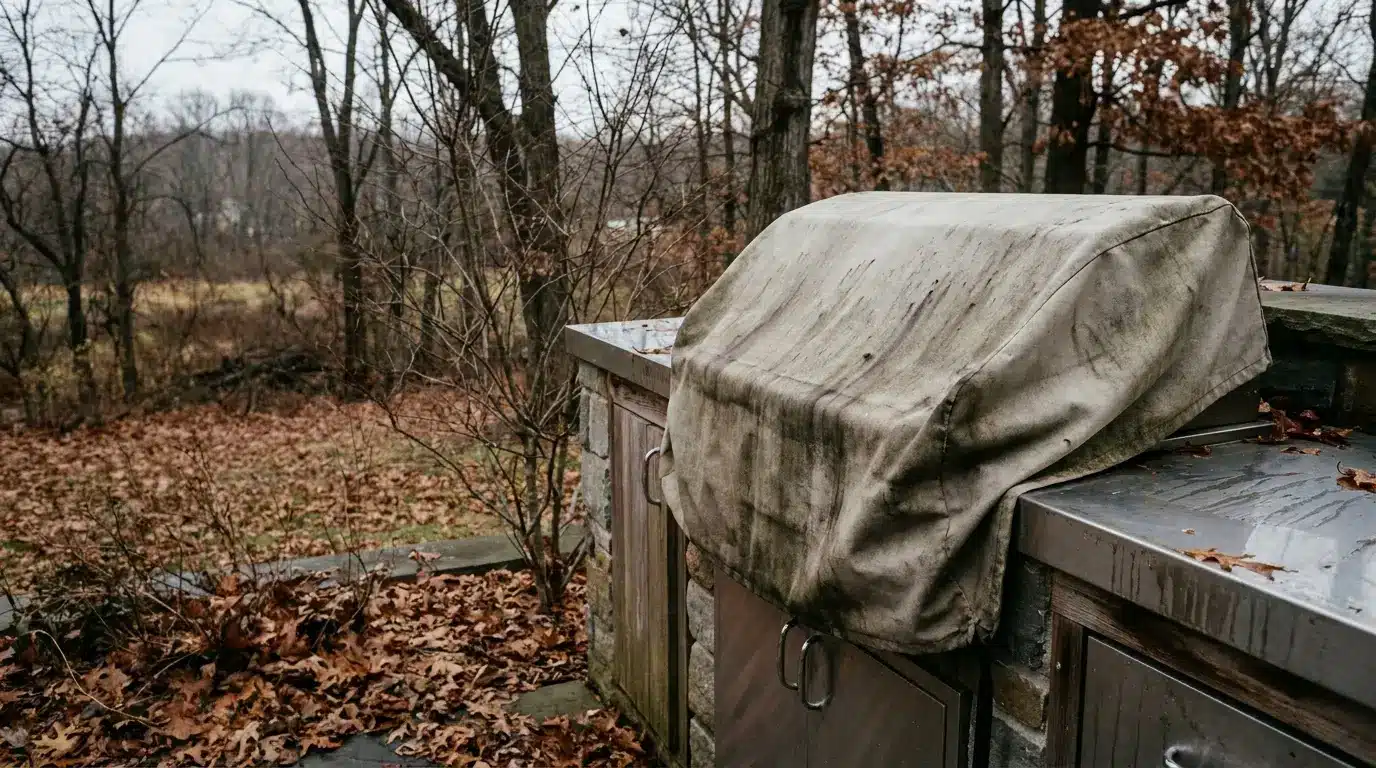
Leftover water inside an outdoor pipe is the fastest way to split lines and cause thousands in hidden damage behind your walls.
- Pool shutdown: Lower the water level below your skimmer, empty the pumps, heater, and filter, and blow out the pipes so no water remains in the plumbing. Add your winter chemicals, then securely fasten a sturdy safety cover over the top.
- Outdoor water line shutdown: Shut the primary indoor supply valve that feeds your outdoor spigots, sink, and ice machine. Head outside, open all the faucets, and blast out any leftover water in the line using a small air compressor.
- Protect your grill and kitchen gear: Wipe down stainless steel counters and grills to get rid of grease that attracts mice or squirrels. Put heavy-duty, breathable covers on appliances, and store your propane tanks standing upright outside in a spot with decent airflow.
Pergolas, Walls, and Water Runoff
Take five minutes to look at your overhead features and where water flows around your house.
- Pergolas and shade structures: Remove fabric shade sails and open up louvered roofs so heavy, wet snow falls right through instead of piling up and twisting the support beams.
- Clean out retaining wall drains: Examine the little weep holes at the base of your retaining walls and remove any dead leaves or packed dirt. Heavy concrete blocks will be pushed out of alignment if contained groundwater freezes behind a wall.
- Pipe meltwater away: Install extensions on your downspouts so that meltwater drains at least six feet away from your foundation and stone pathways. Otherwise, where you walk, that runoff freezes into hazardous ice sheets.
Finishing Up
It makes a big difference to put just a few hours of effort in the fall. Your garden will continue to look fantastic year after year if you remove dirt, empty your water lines, and seal stone surfaces.
If you have a bigger yard with custom features, working with experienced Toronto landscaping contractor like M.E. Contracting is a smart way to make sure your space is built to survive whatever weather winter brings.