

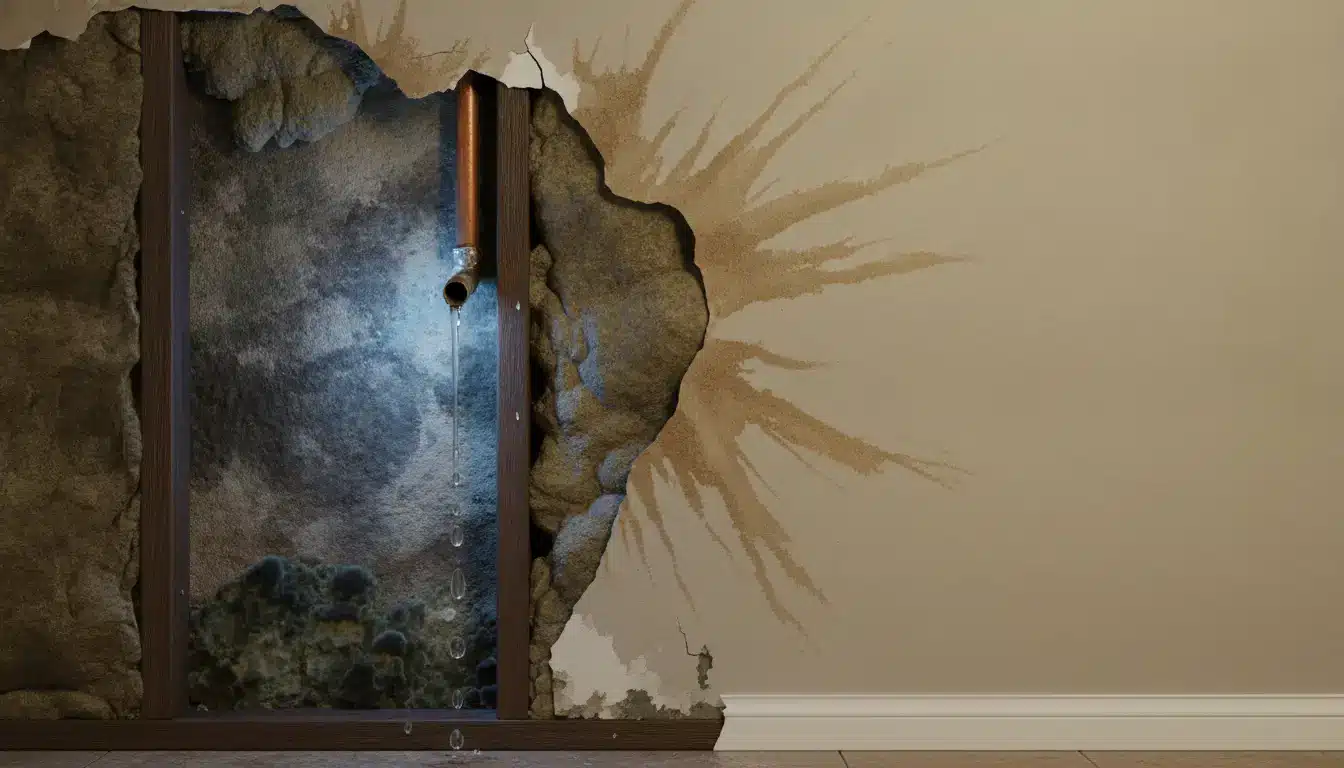
A hidden plumbing leak can cause damage long before you see water on the floor. Moisture may spread through drywall, insulation, subflooring, cabinetry, or framing while the leak itself stays out of sight. By the time a stain appears, some materials may already have been wet for days or weeks.
Once the plumbing repair is complete, it is worth checking what happened around the leak. The surrounding materials may still hold moisture, and mold can begin to grow when damp conditions last long enough.
The next steps usually involve drying the area, checking affected materials, and deciding whether mold testing is appropriate.
Why Hidden Plumbing Leaks Can Cause So Much Damage
Water Can Travel Far From the Source
Water does not always drip straight down from a leaking pipe. It can follow framing, run along plumbing lines, soak into insulation, or spread beneath finished flooring before it finally becomes visible.
That can make the first stain misleading. A damp spot on the ceiling may appear several feet away from the actual leak. Water inside a wall can also collect near the bottom plate or floor assembly while the drywall above still looks normal.
This is why plumbers and restoration professionals often inspect a larger area than the spot where water first appeared.
Small Leaks Can Stay Active for a Long Time
A burst pipe usually gets immediate attention. A slow leak is easier to miss.
Loose fittings, pinhole leaks, deteriorating supply lines, drain connections, and small valve leaks can release relatively little water at a time. The problem is the duration. A steady drip behind a wall can keep nearby materials damp day after day.
That continued moisture gives mold more opportunity to develop and can also lead to swelling, staining, or deterioration in nearby materials.
What Materials Are Usually Affected First?
Drywall and Insulation
Drywall absorbs water easily, especially through exposed edges and the paper facing. Once moisture reaches the wall cavity, insulation may also become wet.
A small section of damp drywall may dry successfully when the leak is caught early and airflow is good. Materials that stay saturated for longer periods require closer evaluation.
Insulation can be more difficult because it sits inside enclosed spaces with limited airflow. Wet insulation may hold moisture against framing or drywall even after the pipe itself has been repaired.
Flooring and Subfloors
Water from a plumbing leak can travel beneath flooring without creating an obvious puddle.
Hardwood may cup, swell, or develop dark staining. Laminate products can separate or swell at the seams. Carpet padding may stay damp underneath a surface that appears dry.
Subflooring can also retain moisture. That becomes especially important when water reaches plywood or oriented strand board beneath finished flooring.
Framing and Cabinetry
Wood framing can absorb water and remain damp after surrounding surfaces dry. Cabinets are also vulnerable when leaks occur beneath sinks, behind refrigerators, around dishwashers, or inside bathrooms.
Particleboard and similar manufactured materials tend to swell after prolonged water exposure. Solid wood may dry more successfully, depending on how long it remained wet and whether the moisture source has been fully corrected.
How Quickly Can Mold Develop After a Leak?
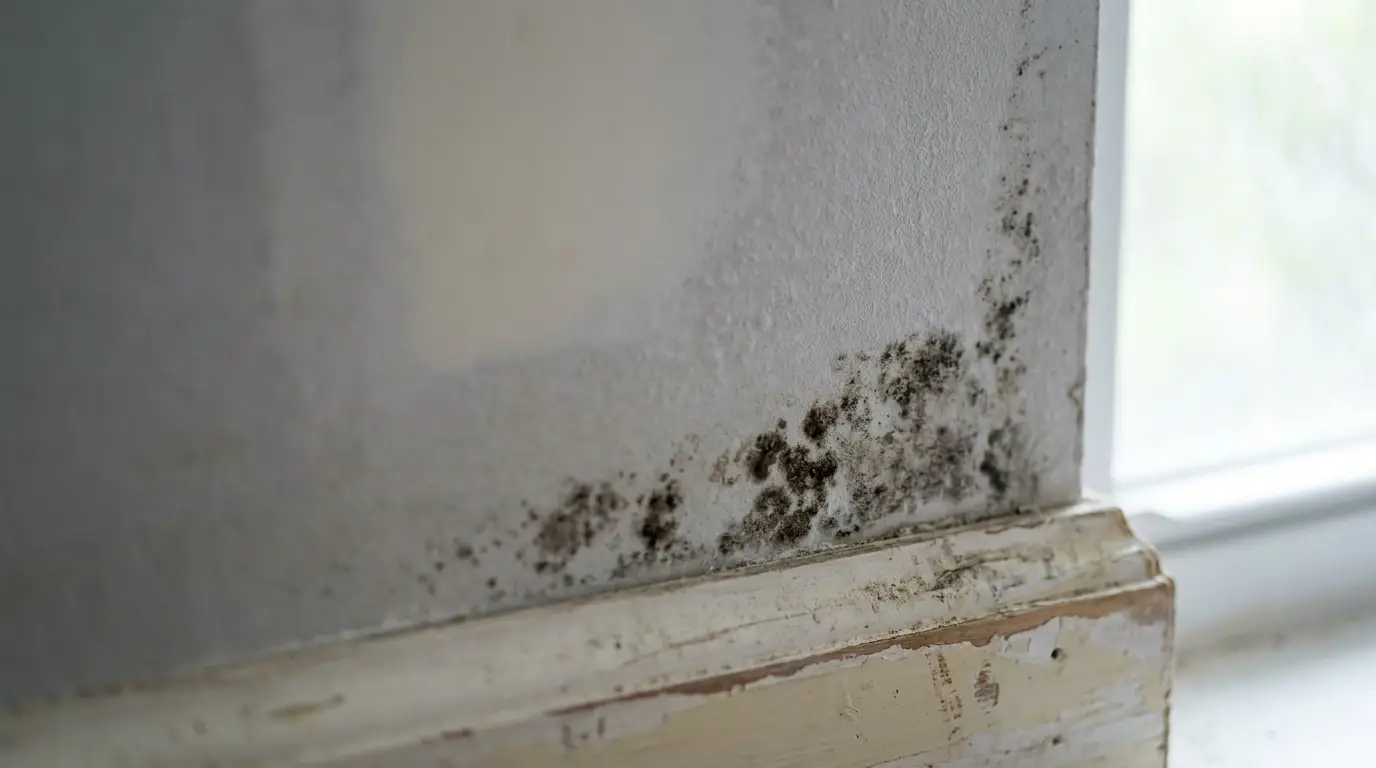
Mold growth depends heavily on moisture and drying time.
The EPA recommends drying water-damaged materials within 24 to 48 hours when possible. Materials that dry within that window are less likely to develop mold, while prolonged dampness creates more favorable conditions for growth.
That timeline does not mean every damp wall will suddenly become covered with mold after 48 hours. Temperature, material type, airflow, humidity, and the amount of water involved all affect what happens next.
Moisture Matters More Than the Size of the Leak
A minor leak can create a significant moisture problem when it continues for weeks.
A larger leak that is found quickly may sometimes cause less mold-related trouble because the water source gets repaired immediately and the area is dried aggressively. Slow leaks often receive less attention simply because nobody knows they are there.
The length of time materials remain damp is one of the most useful pieces of information when deciding whether mold evaluation is worthwhile.
Hidden Cavities Dry Slowly
Wall cavities, cabinet bases, floor assemblies, and spaces behind built-ins receive very little natural airflow.
Surface drywall may seem dry while insulation or framing inside the cavity remains damp. Flooring can present the same problem when moisture becomes trapped underneath finished materials.
EPA guidance specifically recommends checking materials such as drywall, carpeting, and paneling after leaks because hidden moisture can support mold growth.
Signs There May Still Be a Problem After the Leak Is Fixed
Musty Odors
A persistent musty smell can indicate that damp materials or mold remain somewhere in the affected area.
The EPA notes that mold can produce volatile compounds associated with the familiar musty odor people notice in damp buildings. An unexplained moldy smell warrants investigation, particularly after a known plumbing leak.
Odor alone cannot tell you exactly where the problem is located, but it can point inspectors toward enclosed areas that deserve closer attention.
Staining, Swelling, or Soft Materials
Water damage often leaves physical clues. Paint may bubble or peel. Drywall can become soft or crumbly. Trim can swell. Flooring may warp or lift at the edges.
These changes do not prove that mold is present, but they show that moisture reached the material at some point.
Moisture That Keeps Returning
A repaired leak should stop adding new water to the area.
If moisture readings remain elevated or staining continues to spread, there may be another leak, poor drying conditions, condensation, or water trapped inside the assembly.
Recurring moisture deserves further investigation before damaged surfaces are covered or refinished.
How Professionals Check for Remaining Moisture
Moisture Meters
Moisture meters help determine whether building materials are still damp.
Different meters are designed for different materials, but the basic goal is to compare suspect areas with nearby dry materials. Elevated readings can help narrow down where moisture remains after a leak.
These measurements are especially useful in drywall, wood framing, subfloors, and other materials that may look dry from the surface.
Thermal Imaging
Thermal cameras show temperature differences across surfaces. Wet building materials can sometimes appear cooler because evaporation changes surface temperature.
Thermal imaging can help locate areas that deserve further testing, though it does not directly confirm the presence of water or mold.
A moisture meter is often used afterward to verify suspicious areas.
Visual Inspection
A careful visual inspection still provides a lot of useful information.
Inspectors may look around baseboards, beneath cabinets, around plumbing penetrations, behind removable access panels, and near flooring transitions. Water staining, deterioration, swelling, or corrosion can help show how far the leak traveled.
When Mold Testing Makes Sense
Mold testing is not necessary after every plumbing leak. A small leak that was discovered immediately, repaired, and completely dried may not justify laboratory sampling.
Testing becomes more useful when there is uncertainty.
After a Leak That Went Undetected
If nobody knows how long the leak was active, mold testing can provide useful information about conditions inside the home.
A slow pipe leak may have been present for weeks before staining appeared. Air sampling or targeted surface sampling can help determine whether mold growth developed during that period.
The inspection should also include moisture evaluation so the source of the problem and the condition of surrounding materials can be considered together.
When Odor or Discoloration Remains
A musty smell after the leak has been repaired deserves attention.
Suspicious discoloration may also justify testing when it is unclear whether the material is mold, dirt, staining, or another substance.
Surface samples can identify material collected from a specific area, while air samples provide information about mold spores present in indoor air.
Before Closing a Wall or Rebuilding
Repairs often move quickly once a pipe has been fixed.
Before new drywall, flooring, insulation, or cabinetry covers the affected area, it can be helpful to confirm that materials are dry and any mold concern has been evaluated.
Rebuilding over damp material can trap moisture inside the assembly and make future inspection much harder.
What Mold Testing Can Tell You
Air Sampling
Air samples collect airborne particles from selected areas of the home.
A laboratory can identify mold spore types and report their concentrations. Indoor results are often considered alongside an outdoor comparison sample because mold spores naturally occur outside and routinely enter buildings.
The results are most useful when interpreted with inspection findings and moisture conditions.
Surface Sampling
Surface sampling focuses on a specific material.
Swabs or tape samples may be collected from visible growth, stained drywall, wood, or other suspect surfaces. Laboratory analysis can help determine whether the material contains mold and what type was identified.
Laboratory Analysis
Laboratory reports provide objective information that visual inspection alone cannot supply.
A qualified inspector can explain what the results mean in the context of the leak, the location sampled, and conditions elsewhere in the building.
Does Everything That Gets Wet Need to Be Replaced?
Replacement depends on the material, how wet it became, and how quickly it dried.
Hard surfaces often respond well to cleaning and drying. Structurally sound wood can also remain in place in many situations once moisture levels return to normal.
Highly absorbent materials require more caution. Ceiling tiles, heavily saturated drywall, carpet padding, and some insulation products can be difficult to dry or clean once contamination develops.
EPA guidance notes that absorbent materials that become moldy may need replacement.
The decision should come from the condition of the material rather than the mere fact that water touched it.
Fix the Plumbing Problem First
Stop the Water Source
The pipe, fitting, valve, appliance connection, or drain causing the leak needs to be repaired first. Drying equipment cannot solve a moisture problem when water continues to enter the space.
Dry the Area Thoroughly
Fans, dehumidifiers, and other drying equipment may be used depending on the size of the affected area.
EPA guidance recommends fast drying and notes that increased air circulation and appropriate temperature can help speed the process. Moisture measurements can help determine when materials have returned to an acceptable range.
Confirm Conditions Before Repairs Are Finished
Once materials are dry, damaged drywall or insulation can be replaced and finished surfaces restored. If mold was found, remediation may need to occur before rebuilding.
If mold was suspected but never confirmed, testing may help answer that question before the area becomes inaccessible again.
What to Do If You Suspect a Hidden Plumbing Leak
Start by getting the water source under control. A plumber can identify the leak and determine what needs repair.
Document visible damage if insurance may become involved. Photos taken before demolition or drying work can be useful when explaining what happened later.
Then look at the surrounding area rather than concentrating only on the pipe. Determine how far the moisture traveled and which materials became wet. Moisture readings can help with that assessment.
If the leak may have been present for more than a short period, or if musty odors and suspicious staining remain afterward, a mold inspection may provide useful answers before restoration work is completed.
Fix Your Plumbing and Your Air Quality
A hidden plumbing leak can affect a much larger area than the section of pipe that failed. Water may reach drywall, insulation, flooring, cabinetry, and framing before anyone realizes there is a problem.
Once the plumbing repair is complete, the surrounding materials still deserve attention. Check moisture levels, allow enough time for proper drying, and investigate lingering odors or visible changes.
Mold testing can also help when the leak went unnoticed or the condition of hidden materials remains uncertain.
The sooner the full extent of the water damage is understood, the easier it becomes to make sensible decisions about drying, cleanup, and repairs.