

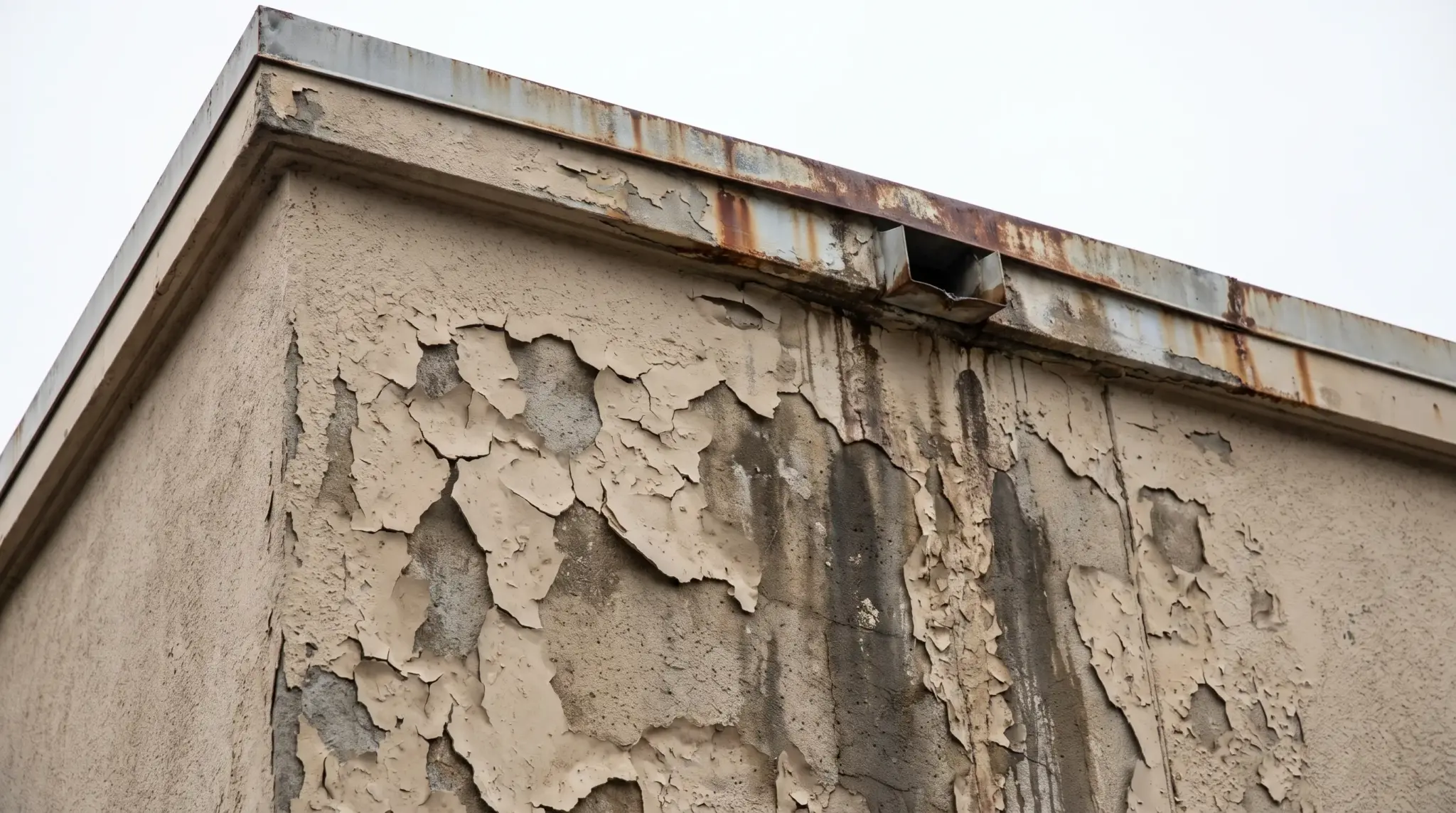
Peeling paint near the top of a commercial building can give you useful insight as to bigger problems on the roof.
The roof edge, parapet walls, flashing, gutters, scuppers, drains, and nearby wall surfaces all deal with a steady mix of rain, wind, sun, temperature changes, and runoff.
When one of those systems starts letting too much moisture into the wall, the paint may be the first thing that visibly reacts.
Sometimes the problem really is paint-related, but other times, the finish is only showing you what has been happening behind the surface.
Looking at where the paint is failing, how quickly it returns after repainting, and what is happening at the roofline can help narrow down the cause.
Why Paint Near the Roofline Can Fail First
The upper portions of a commercial wall often see more direct weather exposure than lower areas.
Wind-driven rain can hit parapets and coping, roof runoff can move across wall surfaces, and sunlight can heat those areas for hours at a time. Repeated wetting and drying eventually put stress on exterior coatings.
Water management also matters. A gutter that overflows, a scupper that dumps water too close to the wall, or a downspout connection that leaks can keep one section of the exterior damp far longer than the rest of the building.
Paint adhesion suffers when the underlying surface stays wet, especially on masonry, stucco, wood trim, and older coated metal.
If the peeling appears mostly near the top of the wall, take a look at what sits directly above it before assuming the paint itself is the only problem.
How Flat Roof Problems Can Affect Exterior Paint
Commercial flat roofs have several transition points where water can find its way into nearby walls. Coping caps, edge metal, flashing, parapet walls, roof-to-wall joints, drains, and scuppers all need to move water away without letting it slip behind the exterior surface.
Seals that were tight just a few years ago may start to open up around the edges. Metal can shift slightly, sealant can dry out, and flashing details can loosen as the building moves through seasonal temperature changes.
Once water gets behind one of those areas, it can travel into masonry or wall assemblies and eventually push paint away from the surface.
Ponding water can add to the problem. If water sits near the edge of the roof because of poor slope, a clogged drain, or a low spot, moisture stays close to wall transitions for longer periods.
A small opening that might stay dry during a quick rain can become a leak point when water sits against it for hours.
Drains, Scuppers, and Gutters Can Leave Clues
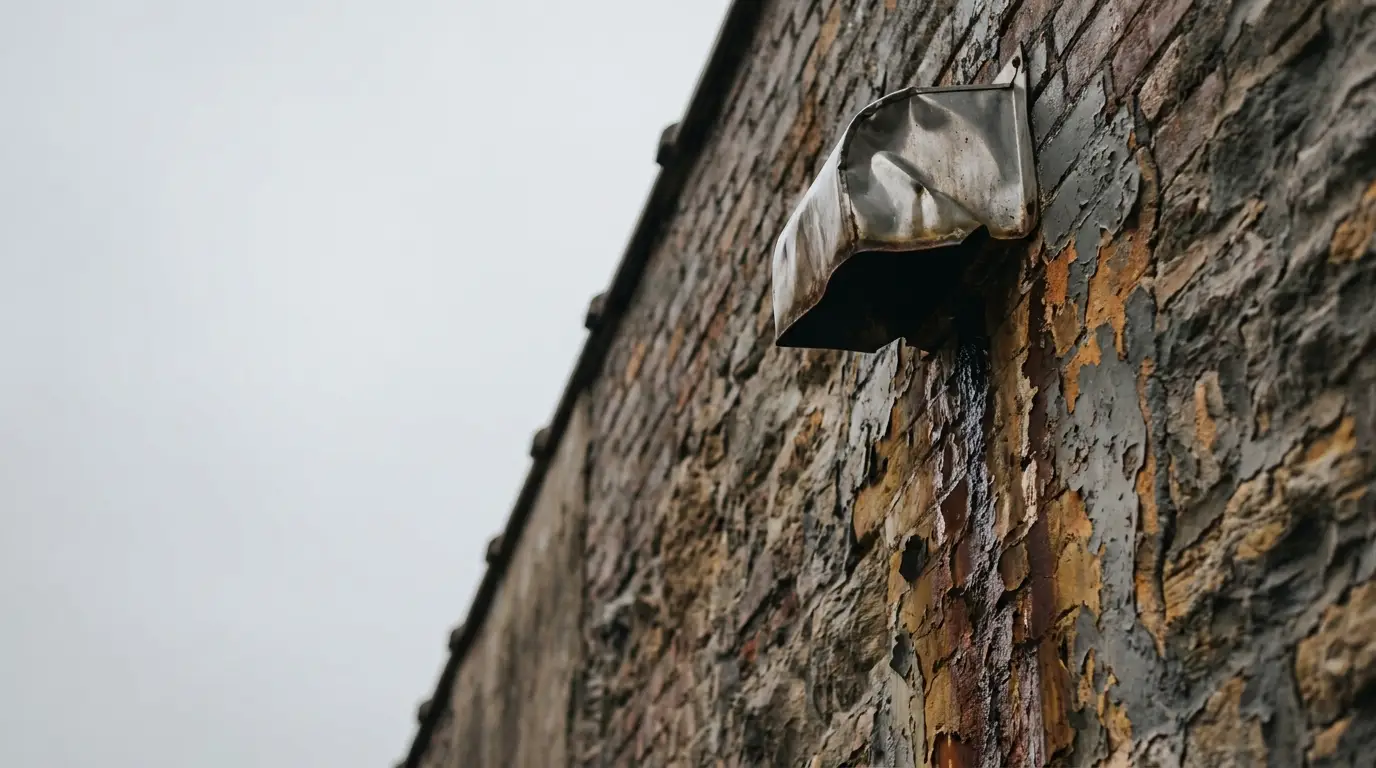
Peeling paint concentrated below drainage points is worth paying attention to. Scuppers, conductor heads, commercial gutters, and downspouts handle large volumes of water during storms, and any overflow or leak can send that water directly onto the wall.
You may notice dark staining, algae, mineral deposits, rust trails, or paint failure directly below one of these areas. Those signs can help narrow down where the moisture is coming from.
Clogged drainage can create trouble even when the drain itself is still intact. Leaves, debris, roofing material, or organic buildup can slow the flow of water enough to make it back up across the roof.
Once that happens, weak flashing and old roof details get exposed to more water than they normally would.
When the Paint Itself Is the Problem
Peeling near the roofline is not always tied to roofing. Poor surface preparation can cause an otherwise good paint to fail early, especially if the old finish was dirty, chalky, damp, or loose when the new coating went on.
The wrong paint can cause trouble too. Masonry, metal, stucco, wood, and previously coated surfaces all have different needs. A product that works well on one substrate may not bond or move correctly on another.
A good painting company earns its keep by paying attention to surface preparation, primer selection, moisture levels, and the condition of the existing coating all matter before any new finish goes on.
Paint should also be applied to a dry surface. Coating damp masonry or a wall that has moisture trapped behind it can lead to blistering, bubbling, and peeling, sometimes surprisingly soon after the work is complete.
Repeated Peeling Usually Points to a Cause That Was Missed
If the same area keeps peeling after repainting, look for the genuine cause instead of simply adding another coat. Water may be getting behind the wall through failed flashing, a leaking roof edge, an overflowing scupper, or a problem around a parapet.
The pattern can help. Paint failure that is spread evenly across a large wall may point more toward age, exposure, or poor preparation.
Peeling that clusters below the roof edge, around drainage points, or beneath one section of coping often suggests that water movement from above is involved.
Look for other signs nearby as well. White mineral deposits on masonry, rust stains, swollen trim, soft materials, dark streaks, or bubbling paint can all indicate that the wall has been taking on moisture.
Rooftop Equipment Can Play a Role
Air conditioning units, vents, plumbing penetrations, and other rooftop equipment can create leak paths that eventually affect exterior walls. Water that enters around a curb, pipe, or flashing detail may travel before it reaches the interior or exterior surface.
Service traffic can also add wear. HVAC technicians, plumbers, and other contractors regularly work around rooftop units, and tools or repeated foot traffic can damage membranes near those areas.
A small puncture near a piece of equipment may eventually allow water into the roof system, especially if it sits near a low spot.
When peeling paint appears below an area with a lot of rooftop equipment, it makes sense to include those details in the inspection.
Who Should Look at the Problem First?
The location of the peeling usually gives you a good starting point. If the coating is failing evenly across the building and there are no signs of water intrusion, a painting company may be the right first call.
If the peeling is concentrated below coping, parapet walls, scuppers, drains, or roof edges, flat roofers in Allentown may need to inspect the roofline first. The same applies if there are water stains, repeated leaks, ponding water, or obvious drainage trouble nearby.
In some cases, both trades may need to be involved. The roof or drainage issue gets corrected first, the wall is allowed to dry, and the painter can then prepare and refinish the damaged surface without new moisture working against the coating.
Thank the Paint: It’s a Useful Sign
Peeling paint near a commercial roofline can be a useful warning sign. The paint may be old, the surface prep may have been poor, or the coating may not suit the substrate.
It can also point to water getting where it should not through flashing, drainage, coping, parapet walls, or roof penetrations.
Pay attention to where the failure is happening and what sits directly above it. Solving the moisture problem before repainting usually gives the new finish a much better chance of lasting.