

Looking at paint swatches can feel overwhelming. Too many whites, too many creams, and somehow they all look different under every light.
Shoji White and Alabaster are two popular choices that keep popping up in design blogs. Both promise that perfect neutral backdrop, but they’re not quite the same.
One leans warmer, the other plays it cooler. One works better in bright spaces, while the other shines in rooms with less natural light.
Choosing between them isn’t just about picking a prettier swatch. It’s about understanding how each color behaves in real homes, with real lighting, and real furniture. Let’s break down what makes each one different.
Shoji White vs Alabaster: Overview of The Colors
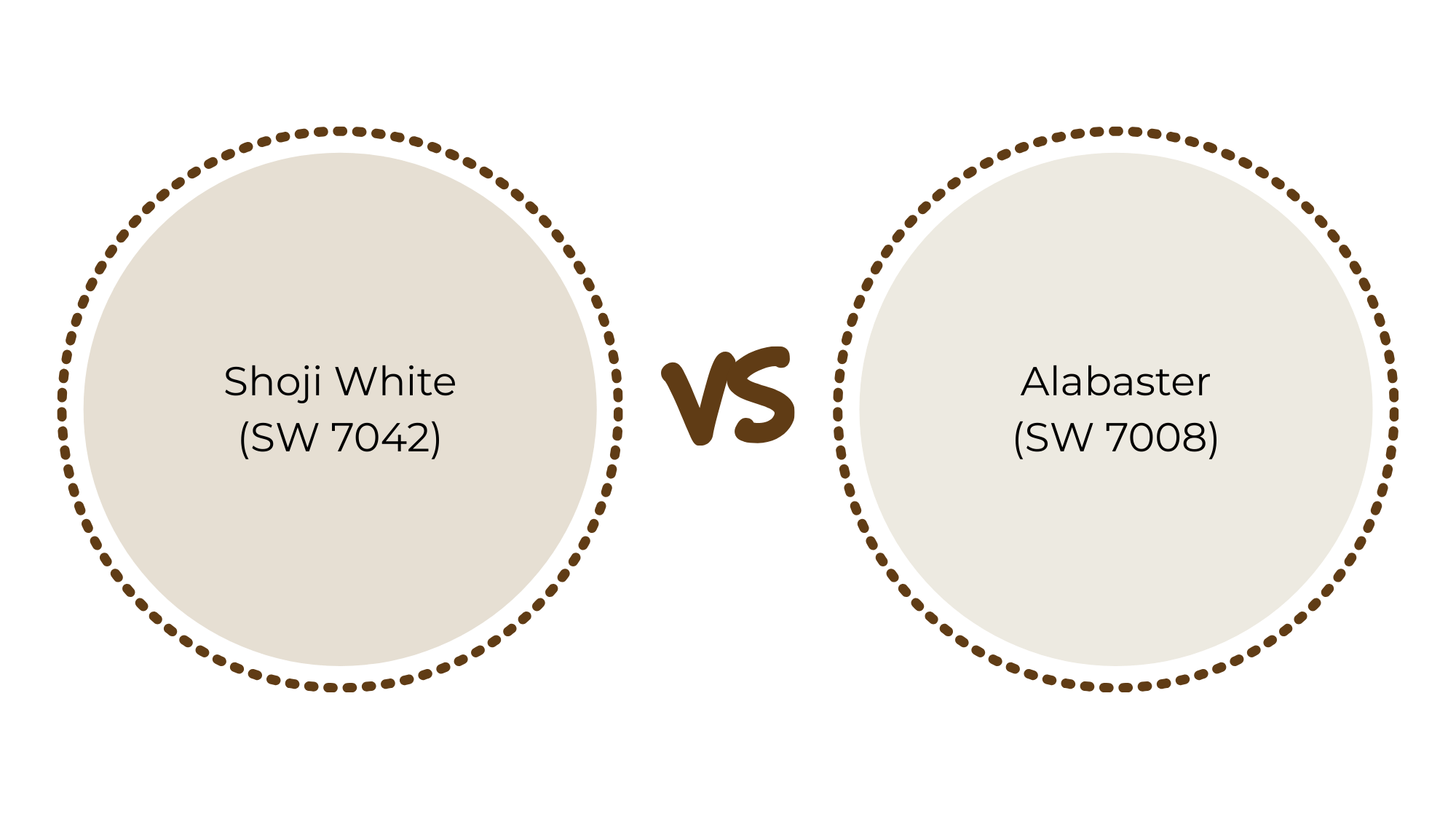
Shoji White and Alabaster are popular Sherwin-Williams soft whites, with Shoji White offering warmer beige-gray undertones for cozy spaces, while Alabaster provides a brighter, creamier neutral ideal for light-filled rooms
| Feature | Shoji White (SW 7042) | Alabaster (SW 7008) |
|---|---|---|
| LRV | 74 | 82 |
| Undertones | Warm beige-gray (greige) | Subtle creamy/warm |
| RGB | 227, 219, 205 | 242, 234, 224 |
| Best For | Modern, balanced lighting | Bright or dark rooms |
How Shoji White and Alabaster Look in Different Lighting
Lighting changes everything when it comes to paint colors.
What looks perfect in the store can turn completely different once it’s on the walls at home. Shoji White and Alabaster both shift throughout the day, but not in the same ways.
Morning light brings out different tones than afternoon sun, and artificial lighting adds another layer of complexity.
North-facing rooms behave differently from south-facing ones. Natural light intensity matters too. A color that glows beautifully in a bright, sunny space might look flat or dingy in a darker room.
Understanding these shifts helps avoid expensive repainting mistakes. Let’s see how each color performs under various lighting conditions.
Best Rooms and Surfaces for Alabaster vs Shoji White
Each color has its sweet spot. Certain rooms and surfaces bring out the best in Shoji White, while others make Alabaster shine brighter.
Kitchen
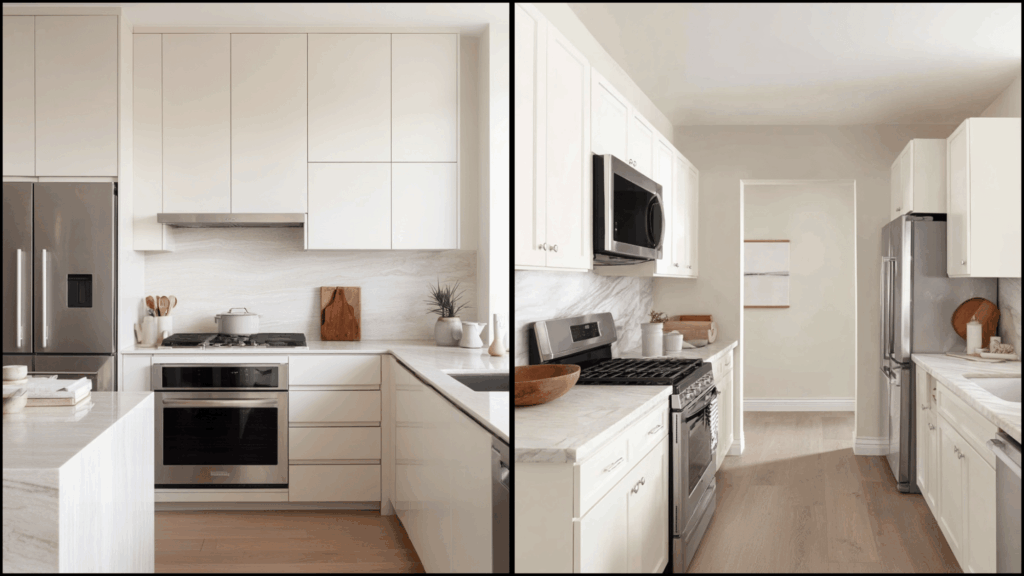
Alabaster works beautifully in kitchens with white or light-colored cabinets. It creates a clean, crisp backdrop without feeling too stark or clinical.
The subtle warmth keeps the space inviting, especially in kitchens with stainless steel appliances.
Shoji White can work too, but watch for yellow undertones clashing with cool-toned countertops or backsplashes in spaces with abundant natural light.
Bathroom
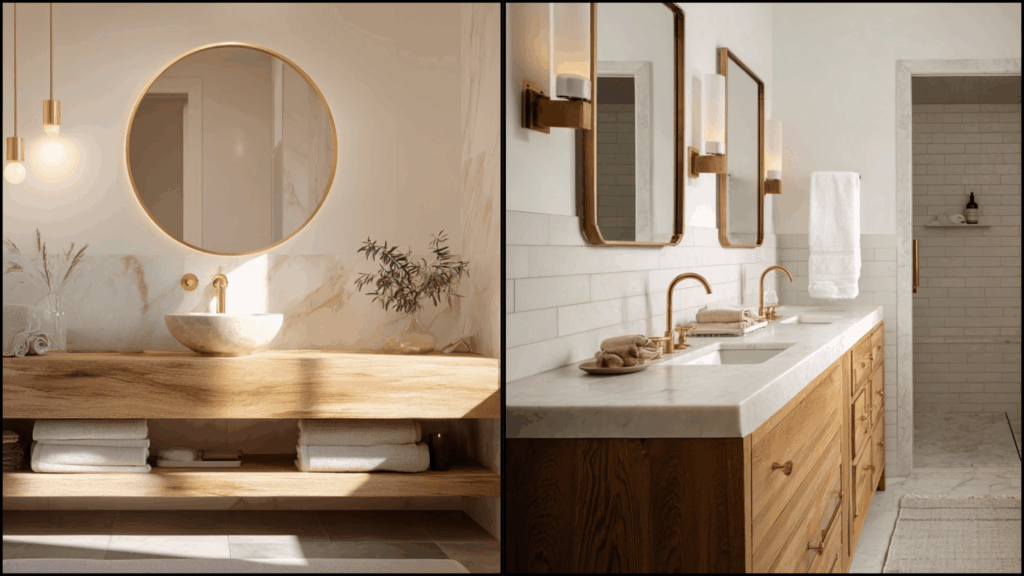
Shoji White softens bathroom spaces nicely, creating a spa-like feel. It pairs well with natural wood vanities and warm metals like brass or gold.
Alabaster suits bathrooms with marble or white tile better, keeping things bright and fresh.
Both colors handle moisture-prone areas well, but Alabaster’s higher LRV helps smaller, windowless bathrooms feel less cramped and more open.
Bedroom
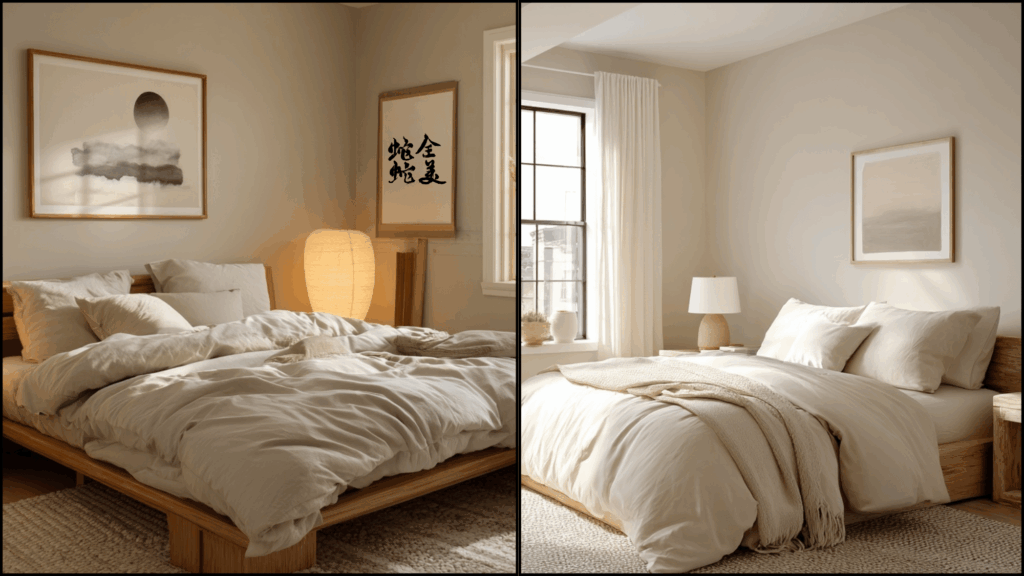
Bedrooms feel cozy with Shoji White on the walls. The warmer undertones create a restful atmosphere that works particularly well in master suites and guest rooms.
Alabaster keeps bedrooms feeling airy and light, perfect for smaller spaces or rooms where crisp, clean aesthetics matter more than warmth.
Either works fine, but consider which undertone complements existing bedding and furniture better.
Living Room
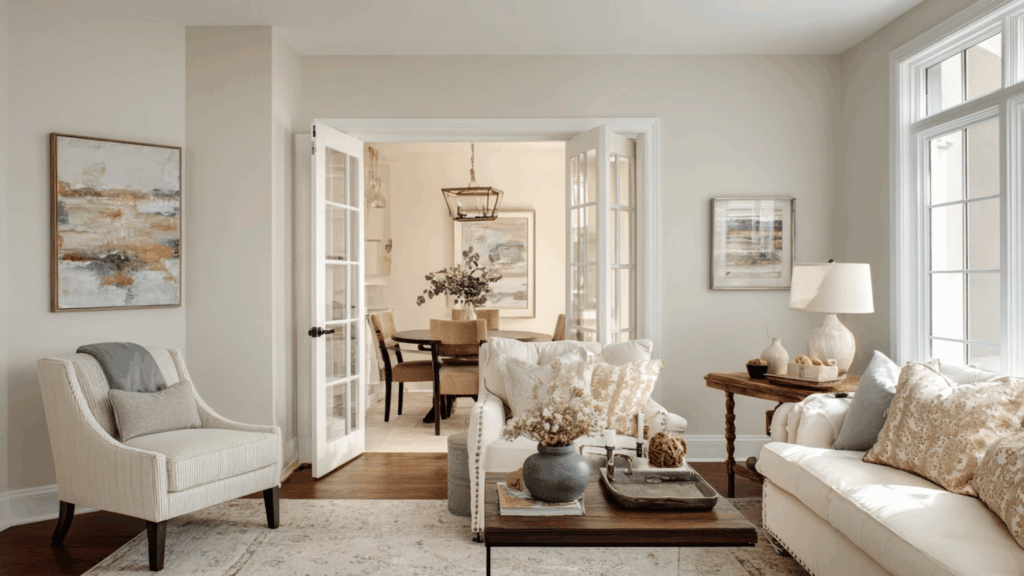
Living rooms get tons of different light throughout the day, making color choice tricky. Alabaster handles this shift gracefully, staying consistent from morning to evening.
Shoji White brings warmth to living spaces with cooler furniture or minimalist decor.
South-facing living rooms can handle either color, but north-facing ones typically look better with Shoji White’s extra warmth to counter the cool natural light.
Trim and Molding
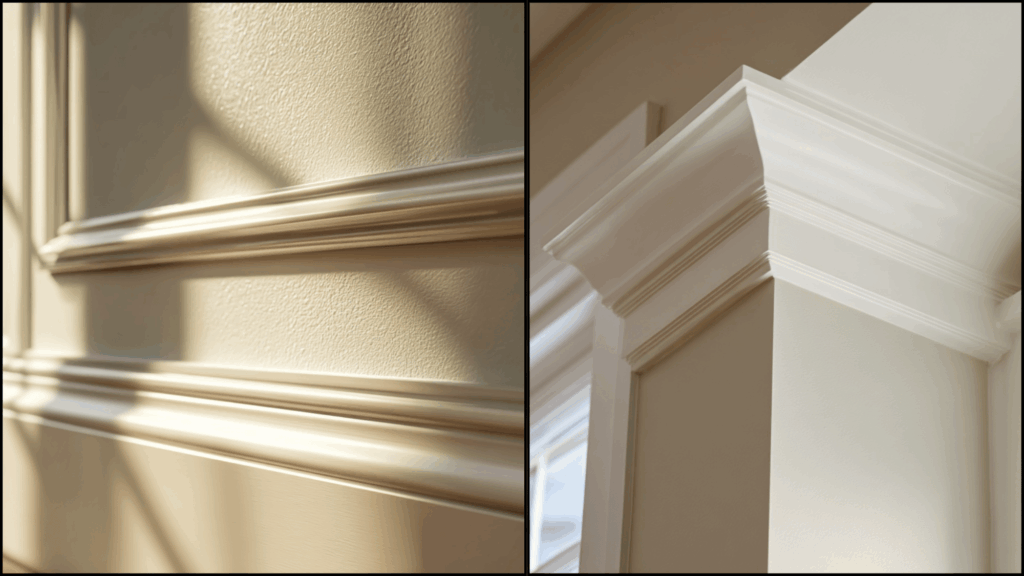
Alabaster excels as a trim color when paired with slightly darker wall colors. Its brightness creates beautiful contrast without harsh lines.
Shoji White works as trim in spaces where walls are already warm-toned, maintaining flow without disappearing completely.
For ceiling work, Alabaster’s higher reflectance bounces more light around the room. Both colors pair well with white doors and window frames seamlessly.
What Colors Go with Shoji White vs Alabaster?
Pairing colors with these neutrals opens up design possibilities. The right combinations create cohesive spaces that feel intentional and well thought out.
| Color Palette | With Shoji White | With Alabaster |
|---|---|---|
| Grays | Warm grays like Agreeable Gray, Accessible Beige | Cool grays like Repose Gray, Mindful Gray |
| Blues | Soft navy, muted teal, warm blue-grays | Crisp navy, true blue, coastal blues |
| Greens | Olive, sage, warm forest greens | Fresh sage, seafoam, mint, eucalyptus |
| Neutrals | Beige, tan, cream, warm taupe | Greige, cool taupe, soft white |
| Accent Colors | Terracotta, rust, warm gold, caramel | Charcoal, black, brushed nickel tones |
| Wood Tones | Honey oak, natural wood, warm walnut | White oak, gray-washed wood, cool walnut |
Can You Use Shoji White and Alabaster Together?
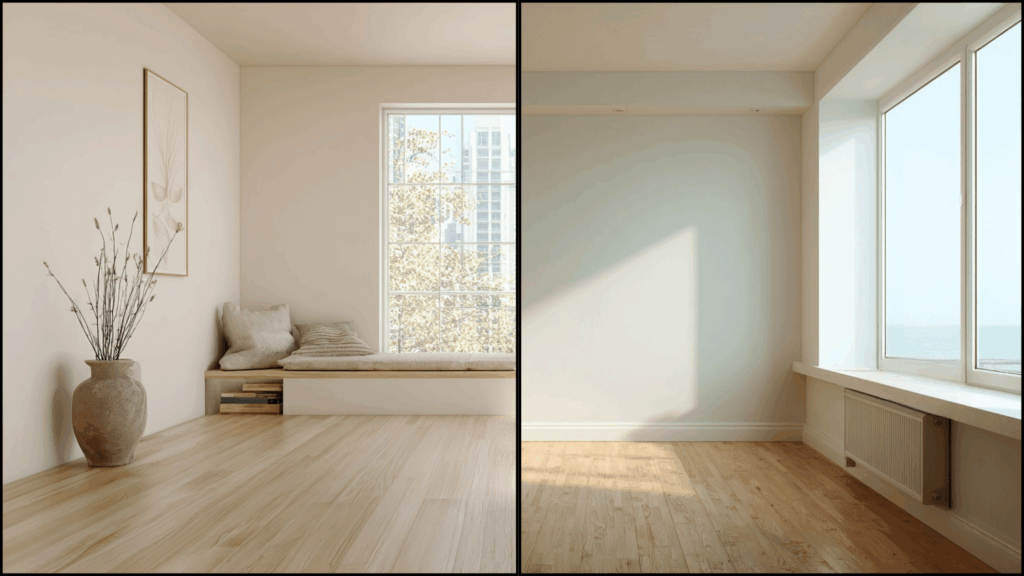
Mixing these two colors in the same home sounds risky, but it can actually work when done thoughtfully.
The key is understanding where each color performs best and using that to guide placement. Since they’re both neutral off-whites, they won’t create a jarring contrast, but their different undertones need careful consideration.
Transition points matter most. Moving from one room to another shouldn’t feel like a sudden color shift. Open floor plans require extra attention because both colors will be visible at the same time.
Some designers use one for walls and the other for trim throughout the house. Others designate specific rooms for each based on lighting conditions and function.
Shoji White vs Alabaster: What Most People Get Wrong
Most paint mistakes happen before the first brushstroke. These misconceptions about Shoji White and Alabaster lead to disappointing results and costly do-overs.
- Assuming both colors are “just white” without testing them in actual room lighting conditions first.
- Choosing based solely on paint chips instead of painting large sample boards and observing them throughout the day.
- Ignoring existing undertones in flooring, furniture, and fixed elements that will interact with the wall color.
- Picking the brighter LRV color, thinking it automatically makes small rooms feel larger, without considering undertones.
- Using the same color in every room regardless of natural light direction and intensity levels.
To Conclude
Choosing between Shoji White and Alabaster isn’t about which color is better. It’s about which one fits the room better.
Test samples on actual walls. Live with them for a few days. Watch how morning light hits differently from the afternoon glow. Notice what happens when lamps come on at night.
Pay attention to what’s already in the space. Flooring, furniture, and fixed elements all influence how these colors perform.
The right white makes everything else in the room look better. The wrong one fights against the space instead of supporting it. Take the time to choose wisely, and the walls will reward that patience.